Laura Silver Bell by Joseph Sheridan Le Fanu (Irish Short Story Week)

This week (14-20 March) Mel U of The Reading Life is hosting an Irish Short Story Week. If you’d like to participate all you need to do is read at least one short story by an Irish author. There are plenty of these available to read for free online, including stories by classic authors such as Oscar Wilde, James Joyce and Bram Stoker.
I thought this would be a good opportunity to try a short story by Joseph Sheridan Le Fanu. Le Fanu is probably most famous for his vampire novella, Carmilla, and gothic novel Uncle Silas, but has also written a lot of shorter fiction. As I’m not familiar with his short stories at all, I chose one at random from The Literature Network.

Laura Silver Bell is a simple but effective story. It is set in the north of England, in an isolated rural area. Laura Lew, known as Laura Silver Bell, has been raised as a farmer’s daughter after the death of her mother.

So Farmer Lew called the little girl Laura; and her sobriquet of “Silver Bell” was derived from a tiny silver bell, once gilt, which was found among her poor mother’s little treasures after her death, and which the child wore on a ribbon round her neck.

When Laura falls in love with a tall man dressed in black whom she meets while walking home one night, she receives a warning from Mother Carke, a former sage femme (midwife) who is believed to be a witch. Mother Carke suspects that the man is a fairy and she advises Laura to stay away from him. But will Laura take her advice or will she be tempted to go with the fairy – and what will happen to her if she does?

“Say yer prayers, lass; I can’t help ye,” says the old woman darkly. “If ye gaa wi’ the people, ye’ll never come back. Ye munna talk wi’ them, nor eat wi’ them, nor drink wi’ them, nor tak a pin’s-worth by way o’ gift fra them – mark weel what I say – or ye’re lost!”

Although this is not a horror story exactly, it does have quite an eerie atmosphere, due to the lonely setting and the grounding in traditional folklore – there are frequent references to fairies, witchcraft and black magic (fairies, in this sense, are not the pretty winged creatures that are often depicted in modern culture, but something more sinister). It seems that Le Fanu had a particular interest in the legends of humans being stolen away by fairies – after reading this story I read another one by the same author called The Child that Went with the Fairies which, as the title suggests, is on the same theme as Laura Silver Bell.

Have you read this story or anything else by Le Fanu? Which of his stories or novels would you recommend I read next?
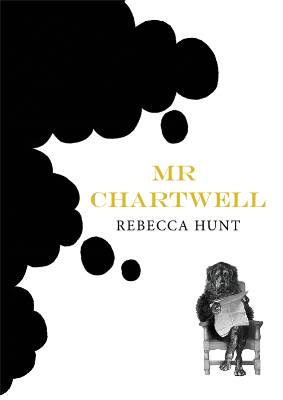
Mr Chartwell by Rebecca Hunt

It’s a well-known fact that British Prime Minister Winston Churchill experienced periods of depression which he referred to as ‘the black dog’. Just a metaphor, of course, but what if the black dog was real? Rebecca Hunt has used this idea as her inspiration for one of the most bizarre books I’ve read for a long time!

It begins with the 89-year-old Churchill waking up one morning in 1964 to find that he’s not alone in the room; someone – or something – is sitting in the opposite corner. Later that morning, librarian Esther Hammerhans is preparing to welcome the new tenant who’s going to be renting her spare room. When she opens the door and is confronted by a huge black dog who introduces himself as Mr Chartwell, Esther is shocked but agrees to let him have the room. He needs to stay in the area for a few days, he says, while he’s visiting a client. But what is Mr Chartwell’s job and who is his mysterious ‘client’?

If you’re going to read Mr Chartwell you need to be prepared to keep an open mind and just accept that one of the protagonists is a dog or you’re not going to get very far with this book! I thought bringing the ‘black dog’ of depression to life was a wonderful idea. Mr Chartwell, or Black Pat as he calls himself, is a fascinating character (and not just because he’s a huge talking dog). He’s manipulative and controlling but sometimes behaves in a more dog-like manner and can even be quite charming and likeable. But although the reader knows what the dog represents (and Churchill knows it too, having been well acquainted with him for many years) Esther has no idea what’s going on and is completely in the dark as to why Mr Chartwell has chosen her house to visit.

Another interesting aspect of the book is that there are little details of Churchill’s life incorporated into the plot, both directly and indirectly. Some of the things he says in the book are based on things that the real Churchill was quoted as saying. And even the dog’s name, Chartwell, was the name of the Churchill family home in Kent.

I loved the opening chapters of this book but started to lose interest a little bit as I got further into the story. The overall tone was quite light (which I know it was probably intended to be) but I think it would have worked better for me if it had been more serious in places and if Mr Chartwell had been portrayed as a less likeable character. The first half of the book in particular is very whimsical, though it does turn darker towards the end where Hunt starts to explain the significance of some of the metaphors and how they relate to depression. Overall though, I thought this was an impressive debut novel and I’ll be looking out for more Rebecca Hunt books in the future.

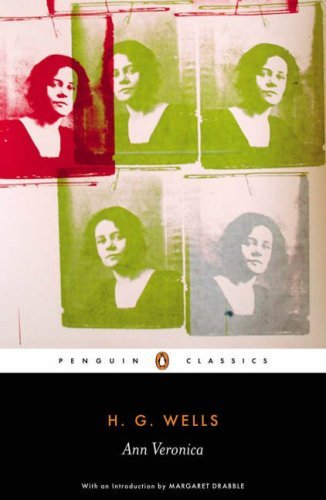
Ann Veronica by H.G. Wells

I’ve never read anything by H.G. Wells before and never thought he would be an author I would enjoy. In fact, I hadn’t even realised he had written anything other than the science fiction books he’s famous for (The War of the Worlds, The Invisible Man, The Time Machine etc) and as I’m not a lover of science fiction, none of those have ever really appealed. So when I noticed this one in the library, sounding entirely different to the books I’ve just mentioned, I was intrigued and decided to give it a try.

The story is set in the early years of the 20th century and the title character is twenty-one-year-old biology student Ann Veronica Stanley. Tired of being locked in a constant battle of wills with her father, a strict and conservative solicitor who has very strong opinions about women and their place in society, she decides to run away to London to start an independent life of her own. In London, she is exposed to a range of influences and experiences (including the suffragette movement), becomes involved with several different men, and discovers that life can be difficult for a young single woman living on her own.

I wouldn’t recommend this novel to people who are looking for something with lots of action but if you’re in the mood for a slower, more character-driven story this is a very interesting read. And as a book about feminism written by a male author, I’m sure it must have caused controversy when it was first published in 1909. The book wasn’t perfect though – the main character started to irritate me after a while and at times it felt less like a novel and more of a vehicle for Wells to express his views on feminism, politics and science.

The first half of the book is concerned mainly with Ann Veronica’s struggle to gain independence from her father. She considers it unreasonable that he won’t let her go to a party in London with her friends and that he refuses to let her attend Imperial College to study for her science degree. And yet Ann Veronica’s father clearly loves his daughter and is not trying to be unkind to her – he truly believes women should behave in a certain way and it puzzles him that Ann Veronica doesn’t want to conform.

After a promising beginning, the second half of the book was dominated by a romantic storyline which became very sentimental and started to bore me. And although I can’t say too much because I don’t want to spoil the story for anyone, I was quite disappointed with the way the book ended and felt confused as to exactly what point Wells was trying to make. So, although I was left with mixed feelings about this book, at least it’s taught me not to have pre-conceived ideas about certain authors. I do feel happier about maybe trying one of his science fiction books now.

The version I read was the Penguin Classics one, but for those of you who like to collect Virago Modern Classics it has also been published as a VMC (and is one of the few written by a man).

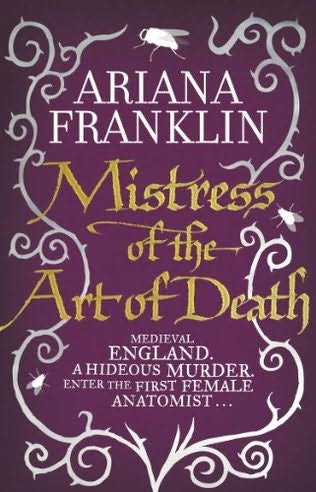
Mistress of the Art of Death by Ariana Franklin

This is my second book for the Great Transworld Crime Caper and is the first in a series of historical mysteries by the late Ariana Franklin. I knew nothing about this series but Mistress of the Art of Death appealed to me because of the medieval setting (I love books set in medieval England).

This book has an unusual heroine. Her name is Adelia Aguilar and she is a trained doctor, very rare in the year 1171. Adelia is from Salerno, where women are allowed to attend medical school. Her speciality, however, is as a ‘doctor of the dead’ – in other words, she is skilled in performing autopsies and finding out the causes of death. When several young children go missing in Cambridge and the city’s Jews are blamed for the disappearances, Adelia is sent to England to investigate.

As I said, I love reading about medieval history and Franklin touches on many different aspects of the period – from the big things, such as the relationship between the church and the monarchy, to the small, such as the clothes people wore and the food they ate. Adelia, being Italian, is unfamiliar with the politics and customs of 12th century England, which allows the reader to learn along with her – so no need to worry if you don’t have much knowledge of the period. Despite some very modern dialogue and Adelia’s distinctly 21st century thought processes, everything else felt suitably ‘medieval’. Setting and atmosphere are so important in fiction and this is an area in which I thought Franklin excelled. It wouldn’t really be fair for me to comment on the historical accuracy as I haven’t studied the 12th century in any detail but I would say that if you’re looking for a serious piece of historical fiction which is correct in every detail then you need to look elsewhere. Accept this book for what it is though, and it’s an enjoyable read.

The writing in the prologue and opening chapters feels quite light and humorous and I expected the whole book to have the same tone, but when Adelia begins to investigate the mystery things start to feel a lot darker. I should point out that the story does revolve around the abduction and murder of children which isn’t nice to read about; it’s quite graphic in places and a bit disturbing. As for the mystery itself, I didn’t guess who the murderer was, but then I wasn’t really trying to guess. Sometimes I prefer not to attempt to work things out and just enjoy the story – and this was one of those occasions.

I found Adelia a fascinating and engaging character although, as I mentioned earlier, she thought, spoke and behaved more like a woman from the 21st century than the 12th. She’s a strong, independent person who is constantly questioning the role of women in society and has a very modern outlook on medicine, the law and life in general; I liked her but she wasn’t a believable medieval woman. Most of the secondary characters are well-rounded and interesting, particularly Adelia’s housekeeper, Gyltha, and her surly but endearing grandson, Ulf – and I loved the depiction of Henry II.

I enjoyed Mistress of the Art of Death and I look forward to being reacquainted with Adelia Aguilar in the other three books in the series. Sadly, Ariana Franklin (Diana Norman) died in January this year aged 77.

I received a copy of this book from Transworld for review.

The Postmistress by Sarah Blake

It’s 1940. Frankie Bard is an American radio reporter working in London for CBS, broadcasting news on the Blitz into American homes. Frankie is right in the heart of the action, spending her nights sheltering from the bombs and her days reporting on homes that have been destroyed, families torn apart and children left orphaned.

Meanwhile on the other side of the Atlantic, we see the effects the war is having on the small town of Franklin, Massachusetts. In Franklin, we meet the postmistress (or actually, postmaster, as she prefers to be called): Iris James, a middle-aged single woman. And we also meet Emma Fitch, the doctor’s wife. When Emma’s husband travels to London to offer his medical skills to the war effort, it sets a chain of events in motion which will affect the lives of all three women.

I seem to have been reading a lot of books about World War II recently – books written during the war, set during the war and about the aftermath of the war. The Postmistress is a book I’ve had my eye on for a while and I was looking forward to reading it. Unfortunately, it turned out not to be one of the better WWII books I’ve read. In fact, it’s probably the most disappointing book I’ve read so far this year and I very nearly gave up on it after a few chapters. Although the writing was very elegant, it felt impersonal somehow and scenes that I’m sure should have made me cry left me unmoved.

The biggest problem I had was that I didn’t feel a real connection to any of the characters. The only one who came alive for me at all was Frankie Bard. I thought the book lacked focus and might have worked better if it had concentrated more on one central character. As it was, I’m not sure The Postmistress was the best title for this book. It implies that the postmistress (i.e. Iris) would be the main focal point of the book, which she wasn’t – this was really Frankie’s story in my opinion – and although Iris does play an important part in the plot, her character’s potential was never fully explored. As for the third main female character, Emma, she seemed very two-dimensional and I never felt that I got to know her at all.

It’s not all bad, though: there were some things that I did like about this book. I enjoyed the section where Frankie was sent to report on the refugee trains departing from Berlin and to attempt to interview some of the Jewish families who were leaving the city. I’m sure she wouldn’t really have found it quite so easy to travel by ferry from England to France in the middle of the war and then to catch a train to Berlin, though! Despite this and a few other inaccuracies (in the author’s note, for example, Sarah Blake admits that the recording equipment Frankie was carrying hadn’t been invented until 1944), I thought this was easily the most compelling part of the novel. This was around 150 pages into the book and was the first time I’d found myself becoming absorbed in the story, which made me glad I hadn’t abandoned it. Sadly though it didn’t continue to hold my attention and I quickly started to lose interest again when the focus returned to Iris and Emma.

I did find it interesting to read about the various ways in which the war was affecting the lives of people in Massachusetts, thousands of miles away from the fighting. We see people worrying about loved ones in Europe, people feeling frightened and expecting a German U-boat to land at any minute, people tuning into the radio every day to hear the latest news and wishing there was some way they could help. Most of the WWII books I’ve read have been from a European perspective so this was something different and I really liked that aspect of the book.

The Postmistress didn’t work for me personally, but I’ve seen a lot of reviews that are much more positive than mine, so clearly other readers have been able to connect with the characters and the story better than I have. I do however think it would make a good book group choice, as it raises some issues which would be perfect for a discussion, such as the importance of truth and whether the truth should always be told – and what happens to the people we hear about on the news after the reporter stops speaking and the radio is turned off.

Villette by Charlotte Bronte

I wanted so much to love this book. Jane Eyre is one of my all-time favourite books and although it has taken me a long time to get round to reading another Charlotte Bronte novel, I had high hopes for this one. Unfortunately, for a long time Villette just wasn’t working for me and I’m not really sure why not.

I actually read this book at the end of January and discovered too late that there was a readalong taking place in February/March. I wonder whether reading it along with other people would have helped, as there were times when I really started to lose the motivation to continue with the book. There was a point where I didn’t think I was going to be able to keep reading, but eventually things improved and I finally became immersed in the story. I ended up enjoying it, but sadly it was too late for this book to become another favourite.

Villette is the story of Lucy Snowe who, after an unspecified family tragedy, finds herself completely alone in the world. She travels to Europe on her own and starts a new life teaching English to the girls at Madame Beck’s school in the city of Villette.

I think part of my problem with the first half of the book was that it took me a long time to warm to Lucy Snowe. I didn’t like her at all at the beginning of the novel, but eventually I did begin to feel a lot more sympathetic towards her and this coincided with the point where I started to enjoy the story more. My perceptions of Lucy changed as I learned more about her and saw how badly other people treated her. She was so lonely and isolated and my heart broke for her at times. Despite her cold exterior, underneath she was a person who desperately needed love and friendship. It’s quite sad that she doesn’t make this observation until two thirds of the way through the book:

“I liked her. It is not a declaration I have often made concerning my acquaintance, in the course of this book: the reader will bear with it for once.”

Lucy is also quite secretive and often withholds important information from the reader. And throughout the early chapters, although Lucy is our narrator, we learn more about the people around her than we do about Lucy herself. She’s an intensely private person and doesn’t open up to the reader very often. But as I got to know Lucy better, I found a lot of things to admire about her – her independence, for example, and her bravery in leaving England and travelling to another country with no idea of where she would go once she got there.

There is a romantic aspect to the book, but it’s not the most passionate of romances and not love at first sight. I already knew who Lucy’s love interest was going to be because it told me on the back cover, but things developed so slowly and so subtly it might not have been immediately obvious to me otherwise. Because of this though, the relationship feels believable and real.

Apart from the length of time it took me to get into the book, there are a couple of other negative points I should mention. Firstly, I thought the racism and religious prejudice was excessive, even by the standards of Victorian literature. Lucy considers the girls at Mme Beck’s school to be inferior to English girls in every way, and she doesn’t like Catholics or the Irish much either. Also, a lot of the book is written in French. I do have a basic understanding of French and am fine with books incorporating a few French phrases but this one has whole paragraphs where I kept wondering if I was missing something crucial.

Although I did end up enjoying this book and could eventually appreciate the complexity of Lucy Snowe’s character, it still doesn’t come close to Jane Eyre in my opinion. However, I know a lot of people think Villette is the better of the two. If you’ve read them both, what do you think?

February Reading Summary

I had another good reading month in February. I read thirteen books and enjoyed most of them, although a few were slightly disappointing.

February Stats:

Books read: 13
New-to-me authors: 10
Male to female author ratio: 2:11
Publication dates: 19th century – 1; 20th century – 3; 21st century – 9
Countries visited in my reading: England, USA, Guernsey, Scotland, Spain, Egypt, France

~

Favourite books read in February:

South Riding by Winifred Holtby
I loved this – and managed to finish it just in time for the start of the new BBC adaptation!
The Help by Kathryn Stockett
I realise I’m one of the last people in the world to read this but at least I’ve read it now and can see why so many people seem to love it so much!
Little Boy Lost by Marghanita Laski
One of the most emotional books I’ve read for a long time.

~

Other books read in February:

We Had It So Good by Linda Grant
Sacrifice by S.J. Bolton
By Fire, By Water by Mitchell James Kaplan
The Moorland Cottage by Elizabeth Gaskell
The Guernsey Literary and Potato Peel Pie Society by Mary Ann Shaffer
Mr Chartwell by Rebecca Hunt
The News Where You Are by Catherine O’Flynn
Moon Tiger by Penelope Lively
The Postmistress by Sarah Blake
The Anatomy of Ghosts by Andrew Taylor

As you can see, my reading rate has overtaken my blogging rate so I still have a lot of February books to review. I’d like to catch up with these over the next couple of weeks before I get much further behind.

~

Challenge progress:

Victorian Literature Challenge: 3/15
Gaskell Reading Challenge: 1/2
Historical Fiction Challenge: 5/20

~

Other reading/blogging activities in February:

This past weekend was Persephone Reading Weekend, as many of you will know. Little Boy Lost was the only Persephone I had time to read and review this weekend, but I enjoyed reading everyone else’s posts. I was even lucky enough to win a copy of Family Roundabout by Richmal Crompton in one of the giveaways!
I also took part in a group read of Elizabeth Gaskell’s The Moorland Cottage in February. This was the first of Gaskell’s works I’ve read (apart from a short story) and I’m looking forward to reading one of her other books soon.

In February I read a lot more contemporary/21st century books than I normally do. In March I’m hoping to have more of a balance between classics and newer books. Also in March I’m planning to take part in Irish Short Story Week, which will be hosted by Mel of The Reading Life from 14-20 March. If you’d like to participate too, there are plenty of classic short stories by Irish authors available online – so no need to buy any new books!

How was your February?