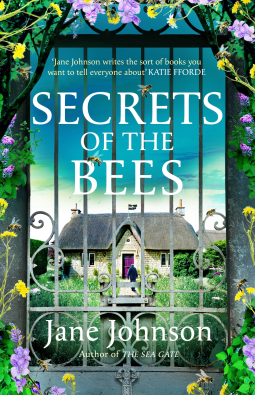
 Ezra Curnow is almost eighty years old and has spent his whole life living in a little cottage on the Trengrose estate in Cornwall. It was home to his father and grandfather before him and Ezra can’t imagine living anywhere else. His cottage has no modern appliances or conveniences, not even a television, but Ezra doesn’t see the need; he spends most of his time outdoors with his cat and tame jackdaw, growing his own fruit and vegetables and tending to his bees in their hive.
Ezra’s peaceful life is shattered when Eliza Rosevear, mistress of Trengrose House, dies without leaving a will. The estate goes up for sale and is bought by Toby Hardman, a London businessman, who arrives with his wife Minty, an interior designer, and their teenage son, Dom. As soon as they move in, they begin converting part of the estate into a glamping site and looking for other ways to bring in tourists. Ezra is horrified, particularly when they remove the ancient Celtic cross that gives Trengrose its name. Worse still, it seems that the Hardmans also have their eye on Ezra’s cottage and with no official paperwork to prove that it’s his, he could be at risk of losing his home.
Secrets of the Bees is Jane Johnson’s latest novel and one of several, including The White Hare, that are set in her native Cornwall. Her love for the Cornish landscape, history, customs and people comes through strongly in her descriptive writing and in her creation of Ezra Curnow. Ezra represents tradition and a way of life that has almost disappeared; he has very little in terms of material possessions, but is happy and content. The Hardmans are the complete opposite – they represent change and progress, they have money, cars, technology, yet what they don’t have is happiness. Toby and Minty’s marriage is strained and lacking in trust, while Dom has been expelled from his expensive school for dealing drugs. Although Toby is the villain of the book and seems to be a lost cause, there’s still hope for Minty and Dom and we see them begin to improve and grow as people through their association with Ezra and the Cornish countryside. Dom even became one of my favourite characters, which I certainly hadn’t expected at first.
It’s very common, of course, for residents to object to new developments in their area, particularly ones that could damage the environment or cause noise and disruption, but Ezra takes his protests a step further. He comes up with some very inventive and amusing ways to throw the Hardmans’ plans into disarray, which adds some humour to a serious subject. Proving ownership of his cottage is much more difficult for him – there’s always been an understanding between the Rosevears and the Curnows but apparently nothing has been put in writing. It’s only when we are given some glimpses into the lives of Eliza Rosevear and her family – and into Ezra’s own past, including his National Service in Cyprus in the 1950s – that the truth about the Trengrose estate begins to emerge.
Although the book seemed slow at first and it took a while for things to really start moving, I gradually became completely immersed in the story. I could picture the setting so vividly and I loved everything Jane Johnson had to say about human beings and our relationship with the natural environment. I’ve enjoyed everything I’ve read by Johnson so far, whether set in Cornwall or in other parts of the world, historical or contemporary. I must find time to go back and read the remaining books of hers that I haven’t tried yet.
Thanks to Head of Zeus/Apollo for providing a copy of this book for review via NetGalley.
 She Reads Novels