Six Degrees of Separation: From The Correspondent to The Queen’s Rival

It’s the first Saturday of the month which means it’s time for another Six Degrees of Separation, hosted by Kate of Books are my Favourite and Best. The idea is that Kate chooses a book to use as a starting point and then we have to link it to six other books of our choice to form a chain. A book doesn’t have to be connected to all of the others on the list – only to the one next to it in the chain.

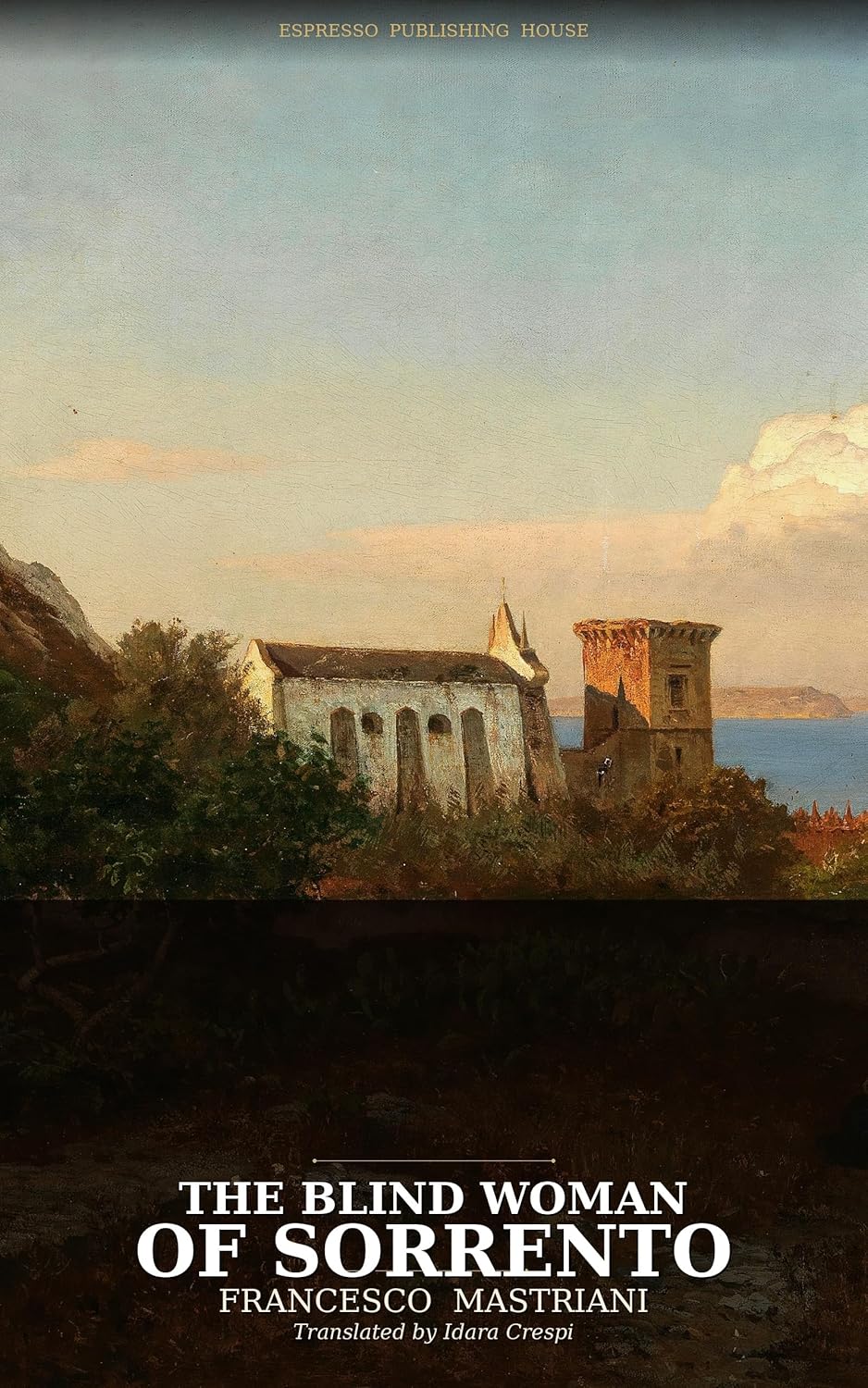
This month we’re starting with The Correspondent by Virginia Evans, an epistolary novel which has been longlisted for the Women’s Prize for Fiction. I haven’t read it, but here’s what it’s about:

Every morning, Sybil Van Antwerp sits down to write letters – to her brother, to her best friend, to the president of the university who will not allow her to attend a class she desperately wants to take, to her favourite authors to tell them what she thinks of their latest books, and to one person to whom she writes often yet never sends the letter.

Because at seventy-three, Sybil has used her correspondence – witty and wise – to make sense of the world. But beyond the page, she has spent the last thirty years keeping the people who love her at arms’ length… Until letters from someone in her past force her to examine one of the most painful periods of her life.

Now, Sybil must send the letter she has been writing for all these years – and find forgiveness within herself in order to move on.

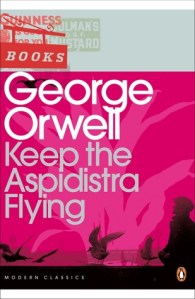
Mollie Panter-Downes was the London correspondent for The New Yorker magazine for almost 50 years, beginning in 1939. I’ve read and enjoyed her collection of short stories, Good Evening Mrs Craven: The Wartime Stories of Mollie Panter-Downes (1). The twenty-one stories in the book originally appeared in The New Yorker and focus on the lives of British people during the war.

A book which shares a word in the title is An Evening with Claire by Gaito Gazdanov (2). Our narrator, Kolya, spends an evening in Paris with Claire, the woman he loves, while her husband is away. Later, when Claire is asleep, he reflects on his life and the events that led to their first meeting. Gazdanov was a Russian émigré living in Paris and the novel feels very autobiographical. I read it in an English translation by Bryan Karetnyk.

The name Claire leads me to Claire Keegan’s Small Things Like These (3). This beautifully written novella is set in a small Irish community and touches on the scandal of Ireland’s Magdalene Laundries – institutions for unmarried mothers and other ‘fallen women’ which became the focus of allegations of abuse and neglect. The story takes place in the winter of 1985, which was a particularly cold one.

Another novel set during a very cold winter is The Land in Winter by Andrew Miller (4). The book follows the stories of two married couples whose relationships become strained as they try to adjust to life in rural England during the winter of 1962-63, one of the coldest on record in the UK.

We’ve just entered spring here and are looking forward to summer, so I don’t really want to spend any more time thinking about winter. Let’s move on to a book with a summery title instead: The Summer Queen by Elizabeth Chadwick (5). This is the first in a trilogy of novels about Eleanor of Aquitaine, who was queen of France as the wife of King Louis VII, and then queen of England as the wife of King Henry II.

Another historical novel with the word ‘Queen’ in the title is The Queen’s Rival by Anne O’Brien (6). It tells the story of Cecily Neville, Duchess of York, who was the mother of two English kings – Edward IV and Richard III – and played an important role during the Wars of the Roses. Written in the form of letters and diary entries, it’s an epistolary novel, so brings the chain full circle!

~

And that’s my chain for April. My links have included: correspondents, the word ‘evening’, the name Claire, cold winters, seasons of the year and queens.

In May we’ll be starting with Wild Dark Shore by Charlotte McConaghy.

The Mill House Murders by Yukito Ayatsuji

Translated by Ho-Ling Wong

This is the third of Japanese author Yukito Ayatsuji’s books I’ve read – I loved The Labyrinth House Murders but found The Decagon House Murders disappointing, so I was curious to see what I would think of this one. All three books are part of Ayatsuji’s Bizarre House series and all of them feature the detective Shimada Kiyoshi and an unusual, sinister house designed by the architect Nakamura Seiji. The Mill House Murders was originally published in Japanese in 1988 and is available from Pushkin Press in an English translation.

This book is set entirely within the walls of the Mill House which, like the Decagon House and Labyrinth House, is one of Nakamura’s creations. It’s home to Fujinuma Kiichi, who sustained terrible injuries in a car accident several years earlier and is now confined to a wheelchair, with a mask and gloves covering the damage to his face and hands. Kiichi is the son of the late artist Fujinuma Issei, and although he normally lives a reclusive life with his wife, Yurie, and their servants, once a year he invites a group of acquaintances to the house to look at his father’s paintings.

In September 1985, the group are making their annual visit when several shocking events occur, all in the space of one night: a woman falls to her death from the tower, one of Issei’s paintings vanishes, one of the guests disappears without explanation and a gruesome discovery is made in the furnace room. A solution is suggested by the police, but it’s not very satisfactory and lots of questions remain unanswered. A year later, in September 1986, the same people have gathered at the Mill House again and this time they are joined by Shimada Kiyoshi, a friend of the man who disappeared (and was largely blamed for everything that happened). Shimada believes he can find out the truth about the events of 1985, but he’ll have to hurry before history begins to repeat itself.

The Mill House Murders is another Ayatsuji novel that I thoroughly enjoyed, so it does seem that it’s only The Decagon House that, for whatever reason, didn’t work for me and I’m glad I decided to give him another chance! Although I often find that Japanese mysteries focus very heavily on complex puzzle solving, often involving alibis, timetables and maps, with characters, relationships and motives pushed into the background, this particular book is more balanced. It does have some floor plans, but I was pleased to find that I could follow the plot quite easily without having to study them too carefully, and the characterisation is stronger than in the Decagon and Labyrinth books.

The timeline switches backwards and forwards throughout the book, with one chapter describing the events of 1985 and the next set in the present day of 1986. This could have become confusing, but as long as I paid attention to the chapter headings, I had no problem keeping them straight in my mind. The mystery itself is a clever one; I partly managed to solve it (mainly because some of Seishi Yokomizo’s novels have similar tropes), but I didn’t get it completely right and was content to let Shimada Kiyoshi, the series detective, explain the full solution for me.

The translator, Ho-Ling Wong, also translated the other books I’ve read in this series and does a great job of making everything very clear and readable. I see there’s a fourth book in the series already in print – The Clock House Murders – and another, The Black Cat House Murders, on its way. I’ll look forward to reading both!