A Court of Betrayal by Anne O’Brien

I enjoyed Anne O’Brien’s last two novels, about the Pastons – one of England’s most influential families in the 15th century, who left behind a collection of correspondence known as the Paston Letters – and I wondered if she would continue to write about them in a third novel. However, with A Court of Betrayal she has chosen to tell a very different story: the story of Johane de Geneville.

Johane (or Joan) de Geneville is not a well known historical figure and most people have probably never heard of her, but as the wife of Roger Mortimer, 1st Earl of March, she played a part in an important and eventful period of English history. Having been imprisoned for leading a revolt against King Edward II, Mortimer escaped to France where he joined forces with Edward’s estranged queen, Isabella, and together they led a successful invasion of England in 1326. With Edward forced to abdicate and his young son crowned in his place, Mortimer and Isabella effectively ruled the country for several years. The Stone Rose by Carol McGrath, The She-Wolf by Maurice Druon and Isabella by Colin Falconer are just a few of the novels I’ve read that cover this period, but the focus is always firmly on Isabella, Edward and Mortimer. What was Johane doing while all of this was happening and how did she feel about it? These are the questions Anne O’Brien sets out to explore in A Court of Betrayal.

The novel is written in the first person from Johane’s perspective and I found her much more likeable and sympathetic than some of O’Brien’s other heroines. Throughout the course of the novel, as the title would suggest, she experiences and witnesses betrayal of many kinds, but the most significant for Johane personally is the betrayal she faces at the hands of her own husband. The marriage between Johane and Roger Mortimer is portrayed as a happy one at first. Although it was an arranged marriage, which was normal amongst the medieval nobility, there seems to be genuine love and affection between them and they go on to have twelve children together. This all changes when Mortimer begins an affair with Isabella and makes no real attempt to hide it, either from Johane or from the public – and even insists on Isabella being accepted as a guest in Johane’s home. I feel bad that, despite having read about the Mortimer/Isabella relationship before, I’ve never really given any thought to the fact that Roger had a wife!

With the story being told from Johane’s point of view, there’s a limit to the things she sees and experiences for herself (particularly as she spends large chunks of the novel imprisoned or under house arrest) and information often comes to her via other people. This doesn’t make the novel boring, however; there’s always something happening in Johane’s personal life and it’s still interesting to read about the political developments happening elsewhere even if we’re not seeing them at first-hand. Like most periods of history, this one has its fair share of controversies, mysteries and other matters on which historians have never been able to agree – how and when did Edward II die, for example, and what was the nature of his relationships with his favourites, Piers Gaveston and Hugh Despenser? O’Brien has her opinions on these things and incorporates them into the plot. It’s all very fascinating, whether you’ve read about this period before or not.

Although I haven’t read all of Anne O’Brien’s books yet, I have read a lot of them and I think this is one of her best. I’ve discovered that her next novel, due in 2025, is going to be set during the Wars of the Roses and will tell the stories of Margaret of Anjou and Anne, Countess of Warwick. Something to look forward to!

Thanks to Orion for providing a copy of this book for review via NetGalley.

Book 36/50 for the Historical Fiction Reading Challenge 2024

In the Upper Country by Kai Thomas

In the Upper Country came to my attention earlier this year when it was shortlisted for the Walter Scott Prize and as I’ve been looking out for historical fiction set in Canada (see my Historical Musings post from last year) it’s one I was particularly interested in reading.

The novel opens in 1859 in Dunmore, Ontario, a fictional town settled by people fleeing slavery in the American South. It is home to Lensinda Martin, a young black journalist who works for a local newspaper. When an old woman who has recently arrived in Dunmore through the Underground Railroad kills a slave hunter and is arrested, Lensinda is sent to interview her in jail. The old woman insists that if she’s going to tell her story, Lensinda must tell one in return and so, over the course of several days, the two women begin to exchange tales.

The stories they tell reveal not only how the old woman came to be in Dunmore and to kill a man, but also the journeys of other slaves and the significance of all of this on Lensinda’s own life. They also explore the connections between the Black and Indigenous communities of North America – something which Kai Thomas in his author’s note points out is usually ignored in other novels about slavery. It’s certainly not a subject I know much about, so I found that aspect of the book interesting.

Although Dunmore is not a real place, Thomas explains that it’s inspired by similar towns that did exist, such as North Buxton, Ontario. It had never occurred to me that there were whole towns settled by slaves in Canada; in fact, everything I’ve previously read about the Underground Railroad has focused more on how the slaves manage to escape and begin their journey rather than on what happens to them after they reach their destination. It’s a book with lots of interesting themes and topics, then – and it’s always good when you reach the end of a novel feeling that you’ve learned something new.

On a more negative note, the structure of the book didn’t work very well for me at all. There were too many different stories, too many different voices and I found it difficult to follow what was happening and engage with the characters. I almost abandoned it several times because I just couldn’t get into the flow of the writing, but I kept going and did manage to finish it. I don’t regret reading it, but for me it was definitely more of an educational book than an enjoyable one!

This is book 17/20 of my 20 Books of Summer 2024.

Book 35/50 for the Historical Fiction Reading Challenge 2024

Top Ten Tuesday: Planes, Trains and Automobiles

This week’s topic for Top Ten Tuesday (hosted by That Artsy Reader Girl) is: “Planes, Trains & Automobiles/Books Featuring Travel (books whose plots involve travel or feature modes of transportation on the cover/title) (submitted by Cathy @ What Cathy Read Next)”.

I have listed below four books featuring planes, four with trains and two with automobiles!

~

Planes

1. The Aviator’s Wife by Melanie Benjamin – The story of Anne Morrow Lindbergh, wife of the famous aviator, Charles Lindbergh, and an accomplished pilot in her own right.

2. The Hazelbourne Ladies Motorcycle and Flying Club by Helen Simonson – I’ve just recently finished this one, so no review yet. A group of ladies in post-WWI England form a motorcycle club, then come up with the idea of expanding to offer flying lessons to women.

3. Death in the Clouds by Agatha Christie – A Poirot mystery in which a woman is found dead on a plane flying between Paris and London. After landing in England, Poirot must decide which of his fellow passengers was responsible for the murder.

4. The Wild Air by Rebecca Mascull – I loved this novel about a young woman who decides she wants to become an aviator and sets out to pursue her dream.

Trains

5. Strangers on a Train by Patricia Highsmith – Only a small part of this psychological thriller is actually set on a train, but it’s the scene of a very significant meeting between a pair of strangers who find themselves discussing a plan to commit two perfect murders!

6. The Mystery of the Blue Train by Agatha Christie – Christie wrote several novels set, or at least partly set, on trains: Murder on the Orient Express and 4.50 from Paddington are two others. In this one, Poirot investigates the murder of an American heiress found dead in her compartment on the famous Blue Train.

7. The Venice Train by Georges Simenon – Another psychological novel in which a man travelling from Venice to Paris by train agrees to deliver another passenger’s briefcase to an address in Switzerland. I read an English translation by Ros Schwartz.

8. The Cautious Traveller’s Guide to the Wastelands by Sarah Brooks – An alternative history/fantasy novel set on the Great Trans-Siberian Express in 1899. A book that leaves us with lots to think about!

Automobiles

9. Madam, Will You Talk? by Mary Stewart – This suspense novel set in Provence is one of my favourites by Mary Stewart and features a very memorable car chase scene.

10. Maureen Fry and the Angel of the North by Rachel Joyce – A sequel to The Unlikely Pilgrimage of Harold Fry, in which Harold’s wife, Maureen, travels by car from the south of England to the north to visit a garden containing a memorial to her son.

~

Have you read any of these? Which other books can you think of featuring forms of transport?

Miss Granby’s Secret: or The Bastard of Pinsk by Eleanor Farjeon

Like many readers who have previously enjoyed books published by Dean Street Press, I was pleased to hear recently that they were continuing with their Furrowed Middlebrow imprint, after a period when the future had looked uncertain. Miss Granby’s Secret: or The Bastard of Pinsk is the first new book since that announcement was made. First published in 1941, it was written by Eleanor Farjeon and this edition also includes an introduction by Elizabeth Crawford.

The novel opens with the death of Miss Adelaide Granby in 1912. Miss Granby had been a prolific and very successful author, publishing forty-nine romance novels and gaining a large readership, but to her great-niece Pamela, she was always just Aunt Addie. Pamela, who considers herself a ‘modern woman’, has long suspected that Addie, who never married, didn’t understand the facts of life – in fact, Addie always insisted that she didn’t want to know, as it would affect the innocence of her writing. When a large, elaborate wreath is delivered to the funeral, then, accompanied by a romantic poem and a card inscribed “from Stanislaw”, Pamela is intrigued by the idea that Addie must once have had a love interest after all.

Pamela has inherited Aunt Addie’s house and her collection of papers, which includes letters, diaries and the unpublished manuscript of her first novel, written when she was just sixteen. This novel is entitled The Bastard of Pinsk (it seems from Addie’s notes that she believes a bastard is “a very noble Hero of Royal Blood”). As Pamela reads the documents she looks for clues to the identity of Stanislaw and wonders if it will be possible to track him down.

The text of The Bastard of Pinsk is included in its entirety, forming a story-within-a-story. Incorporating lots of tropes of the Romantic or Gothic novel, it’s both ridiculous and quite amusing, mainly because Adelaide Granby clearly doesn’t understand the words she’s using or what they imply. Although it was fun for a while, I started to get impatient to go back to the main story, but I’m sure for other readers it will be their favourite part of the book! I can see why the full story was included, though, as some of the things the young Addie writes about have parallels with her own life.

I enjoyed Pamela’s parts of the book and seeing the mystery of Addie’s relationship with Stanislaw unfold and overall I found it a lovely, entertaining read. A good choice for the revival of this imprint!

Thanks to the publisher for providing a copy of this book for review.

The Briar Club by Kate Quinn

Kate Quinn’s new novel, The Briar Club, begins with a murder in a Washington, D.C. boarding house on Thanksgiving, 1954. We don’t know who the victim is – that will be revealed later on – but it does seem that the killer is likely to be one of the seventeen people gathered in the kitchen waiting to be interviewed by the police. To get answers, we have to go back to the day four years earlier when Grace March arrives at Briarwood House and agrees to take the tiny apartment in the attic…

Grace is just one of several women living in the house, all of whom are hiding secrets and in some cases are not quite what they seem. There’s Nora, who works at the National Archives and is in love with a gangster; Bea, a former baseball player forced to give up her dreams; Claire, who is desperately trying to save to buy her own home; Fliss, an Englishwoman with a baby and an absent husband; unhappy, spiteful Arlene whom nobody likes; and Reka, an elderly Hungarian refugee. The novel unfolds through a series of interlinked short stories each focusing on one of these women, interspersed with chapters describing the aftermath of the Thanksgiving murder. The latter are narrated by Briarwood House itself, because the house knows better than anyone else what has been going on within its walls!

I enjoyed The Briar Club, but found some of the women’s stories much more engaging than others. Nora’s story came first and was completely gripping, which maybe raised my expectations too high for the rest of the book. By the time I reached Bea’s section in the middle, I was starting to get bored, although things did pick up again later on. Despite the brief chapters about the murder that are scattered throughout the book, I think anyone who starts to read this expecting a mystery novel or a thriller will be disappointed – but if you like character-driven novels with a slower pace it will probably be more to your taste. Speaking of taste, food and drink play a big part in the story, with each character sharing some of their recipes with us! So if you want to know how to make Bea’s ragù, Arlene’s candle salad or Claire’s potato pancakes, the instructions are all in the book (and even if you’re not a cook, I recommend skipping to the end of each recipe where you’ll find a suggestion for a suitable song to accompany the meal).

Although each woman in the house has her own individual story to tell, they all get together for weekly social gatherings in Grace’s attic room (the ‘Briar Club’ of the title) and over the years most of the women begin to form close bonds. A very different kind of relationship that also develops is between the women of the Briar Club and the two children of their landlady, Mrs Nilsson. Pete Nilsson gets a chapter of his own, but I particularly loved seeing how his younger sister, Lina, grows in confidence (and improves her baking skills) due to the friendship and support of the Briar Club. The novel also provides us with a snapshot of life in America in the early 1950s, with a focus on McCarthy and the fear of communism.

The Briar Club was an enjoyable read overall, but I would have preferred some of the women’s stories to be cut short or left out altogether. So far, The Rose Code is still my favourite of the three Kate Quinn books I’ve read (the other is The Diamond Eye).

Thanks to HarperCollins for providing a copy of this book for review via NetGalley.

This is book 16/20 of my 20 Books of Summer 2024.

Book 34/50 for the Historical Fiction Reading Challenge 2024

Top Ten Tuesday: Ten Favourite Books from Ten Series

This week’s topic for Top Ten Tuesday, hosted by That Artsy Reader Girl, is “Ten Favourite Books from Ten Series” (submitted by A Hot Cup of Pleasure).

I have limited this to one series per author and have only included series where I have read most or all of the published books. I’ve linked to my reviews where available.

1. Agatha Christie’s Miss Marple series: A Murder is Announced

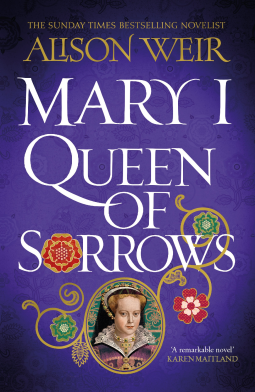
2. Alison Weir’s Six Tudor Queens: Katharine Parr, The Sixth Wife

3. Dorothy Dunnett’s Lymond Chronicles: The Disorderly Knights

4. Anthony Trollope’s Chronicles of Barsetshire: Doctor Thorne

5. Sharon Bolton’s Lacey Flint series: The Dark

6. Lucinda Riley’s Seven Sisters: The Shadow Sister

7. Diana Gabaldon’s Outlander series: Dragonfly in Amber

8. Andrew Taylor’s Marwood and Lovett series: The Royal Secret

9. Anthony Horowitz’s Horowitz and Hawthorne series: Close to Death

10 M.M. Kaye’s Death In… series: Death in Kashmir

~

What do you think? Have you read any of these series – and if so, do you disagree with my choices?

The King’s Witches by Kate Foster

Historical novels based on real-life witch trials seem to be very popular at the moment; I can think of several I’ve read just in the last two or three years. The King’s Witches is another and takes the slightly different approach of telling the story not only of the so-called witches, but also of the woman married to the man behind the witch hunts, King James VI of Scotland.

The novel opens in Denmark in 1589, where Anna, daughter of King Frederick II, is preparing for the arrival of the Scottish ambassador who will escort her across the sea to her new life in Scotland. Anna is betrothed to James VI and before leaving Denmark, they undergo a handfasting ceremony by proxy, with the Earl Marischal standing in for James. Setting sail for Scotland a few days later, Anna’s ship is hit by violent storms and is forced to turn back several times. Witches are blamed for summoning the winds in an attempt to stop the new queen from reaching her destination and by the time Anna eventually arrives in Scotland the fear of witchcraft is becoming widespread.

In the town of North Berwick, another young woman, Jura, is working as a maid in the Kincaid household. Jura has inherited her mother’s skills as a healer and knowledge of herbs and charms, but when the whispers of witchcraft grow louder – and the unwanted attentions of her master become more difficult to avoid – she is forced to flee to Edinburgh. However, escaping both the witch hunts and the Kincaids is not going to be easy…

The King’s Witches is narrated by both Anna and Jura, as well as a third woman, Kirsten, who is Anna’s lady-in-waiting and accompanies her on the journey from Denmark. Kirsten has been to Scotland before, but is very secretive regarding what happened during her previous visit and we will have to wait until later in the book for her full story to emerge. Kirsten and Jura are both fictional characters, but Anna (usually known as Anne of Denmark) was obviously a real person. However, Kate Foster doesn’t stick entirely to historical fact; for example, the real Anna was only fourteen years old when she married James VI, but Foster makes her slightly older at seventeen. She also uses the Celtic tradition of handfasting, which expires after a year, to introduce the idea that Anna was ‘on trial’ and the marriage would only go ahead if she managed to please James. I didn’t feel that this – or the fictional lover Foster creates for Anna – was really necessary or added much to the book and I would have preferred Anna’s story to follow the facts, considering we already had two other entirely fictional viewpoint characters.

The witchcraft aspect of the book is interesting, particularly the connection between the North Berwick witch trials, in which Jura is involved, and previous trials in Germany and Denmark which inspired James VI to take similar action. The storms that delay Anna’s voyage to Scotland in the novel really happened and really were blamed on witches. The King’s paranoia increases until he decides that the town of North Berwick (not to be confused with Berwick-upon-Tweed, by the way) is a nest of witches plotting to kill him, possibly in league with the Earl of Bothwell, and eventually more than 70 people are implicated. Foster explores all of this not just from the perspective of Jura, who is directly affected as a suspected witch, but also Anna from her position close to the King, and Kirsten, who provides a sort of bridge between the two worlds.

Even with the addition of the Anna and James angle, this book felt a bit too similar to other books I’ve read about historical witches, but obviously that won’t be a problem if you haven’t read as many of them as I have! I did still find it enjoyable and will have to look for Kate Foster’s first book, The Maiden, which I haven’t read.

Thanks to Mantle for providing a copy of this book for review via NetGalley.

This is book 15/20 of my 20 Books of Summer 2024.

Book 33/50 for the Historical Fiction Reading Challenge 2024