Classics Club Spin #9: The Result

The Classics Club

Last week I decided to take part in the Classics Club Spin. The rules were simple – list twenty books from your Classics Club list, number them 1 to 20, and the number announced today (Monday) represents the book you have to read before 15th May 2015.

The number that has been selected this time is 2, which means the book I’ll be reading is:

A Country Doctors Notebook

A Country Doctor’s Notebook by Mikhail Bulgakov

I added this book to my Classics Club list because I loved The Master and Margarita and wanted to read more of Bulgakov’s work. All I know about it is that it’s a collection of short stories based on Bulgakov’s experiences as a young doctor in Russia, but I’m looking forward to reading it. I’m happy with my result as I’ve managed to avoid the longer books on my list!

Did you take part in the spin? What will you be reading?

Classics Club Spin #9 – My List

The Classics Club

I love the Classics Club Spins but wasn’t sure whether to take part in this one as I know April and May are going to be busy months for me – and I’ve already started reading The Eustace Diamonds for Karen’s Anthony Trollope Bicentennial Celebration. In the end, though, I couldn’t resist joining in.

If you don’t know what the Spin involves, here are the rules:

* List any twenty books you have left to read from your Classics Club list.
* Number them from 1 to 20.
* Next Monday the Classics Club will announce a number.
* This is the book you need to read by 15th May.

And here is my list:

1. The Return of the Native by Thomas Hardy
2. A Country Doctor’s Notebook by Mikhail Bulgakov
3. The Time Machine by H.G. Wells
4. Crime and Punishment by Fyodor Dostoevsky
5. The Vicomte de Bragelonne by Alexandre Dumas
6. Mary Anne by Daphne du Maurier
7. Cyrano de Bergerac by Edmond Rostand
8. Howards End by E.M. Forster
9. Wuthering Heights by Emily Bronte (re-read)
10. The Moon and Sixpence by W Somerset Maugham
11. Excellent Women by Barbara Pym
12. The Sea-Hawk by Rafael Sabatini
13. Oliver Twist by Charles Dickens
14. Prince of Foxes by Samuel Shellabarger
15. Around the World in Eighty Days by Jules Verne
16. The Day of the Triffids by John Wyndham
17. The Leopard by Giuseppe Tomasi di Lampedusa
18. The Importance of Being Earnest by Oscar Wilde
19. The Glass-Blowers by Daphne du Maurier
20. The Woodlanders by Thomas Hardy

Most of these are books that I’m really looking forward to reading, or at least that I’m not dreading. I don’t need any more stress in my life at the moment! There are some that have been included on almost all of my previous Classics Spin lists and there are others I’m listing for the first time.

Now I just have to wait until Monday to find out what I’ll be reading!

March reading summary

March is over and I can’t say that I’m sorry to see it go. It’s been a stressful month for me at work as the woman I’ve been working with and sharing an office with for the last six years retired last week and the company directors decided to take the opportunity to restructure our department. This means that I’ve spent the whole month not knowing if my job would be changing, who I would be working with and even where I would be working. Things are settling down now and while I’m not exactly thrilled about the changes, at least I know what’s happening now and I’m hoping April is going to be a better month for me.

RomolaIn terms of reading, March got off to a great start with Ross Poldark, the first of Winston Graham’s Poldark series which I really enjoyed and finished just in time for the start of the BBC’s new adaptation. I also finished two long novels that I had begun in February. One of these was George Eliot’s classic novel set in Renaissance Italy, Romola, a detailed and demanding read but one that I loved; the second was Sea of Poppies by Amitav Ghosh, the first in a trilogy set during the Opium Wars. Sea of Poppies ended on a cliffhanger but luckily I had a copy of the sequel, River of Smoke, so I could start that one straight away!

I managed to read two books for Jess’s Forgotten Histories challenge. One was Temeraire by Naomi Novik, an alternate history in which dragons play a part in the Napoleonic Wars. The other was City of God by Cecelia Holland, a novel set in Borgia-ruled Rome. I’m interested in reading more by both of these authors, particularly Naomi Novik – I have the second Temeraire novel, Throne of Jade, and also a review copy of her new novel Uprooted waiting to be read.

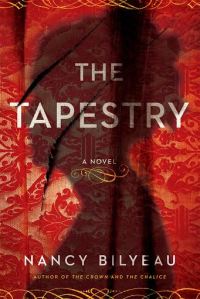
The TapestryI also read two Tudor novels this month – Dark Fire, the second book in CJ Sansom’s Shardlake series, and The Tapestry, the third and final volume of Nancy Bilyeau’s Joanna Stafford trilogy. I read some non-fiction too – An Accidental Tragedy by Roderick Graham, a biography of Mary, Queen of Scots, and Rebellion, the latest book in Peter Ackroyd’s History of England series. And I continued working through Baroness Orczy’s Scarlet Pimpernel books; The League of the Scarlet Pimpernel is a collection of short stories and although they were fun to read I’m disappointed that none of the Pimpernel sequels I’ve tried so far are as good as the original novel.

There were also two books that I started reading towards the end of the month but didn’t finish. I read the first three chapters of The Marigold Chain by Stella Riley, which I was interested in reading because I’d heard that it was similar to Dorothy Dunnett’s Lymond Chronicles; I wasn’t prepared for just how similar it was, to the point where it made me feel uncomfortable and I had to stop reading. I gave up on The Buried Giant by Kazuo Ishiguro as well. It was a very intriguing book with some fascinating concepts and ideas, but somewhere in the middle I accepted that I wasn’t engaging with either the story or the characters and couldn’t go any further. I’ll probably write more about that book soon as I did read more than half of it before abandoning it.

In April I’m hoping to read The Eustace Diamonds for Karen’s Anthony Trollope Bicentennial Celebration. Lory is also hosting an Elizabeth Goudge Reading Week and I would like to read something for that too. And of course, there’s Easter to look forward to this weekend!

What did you read in March? Do you have any plans for April?

Looking back at February

February

February was another good month for me in terms of reading – I read eleven books and enjoyed most of them.

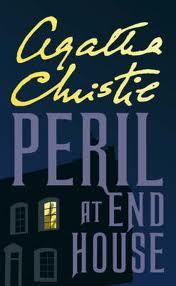
Peril at End House I started the month with a great book – Death in Kashmir by M. M. Kaye, an exciting and atmospheric mystery novel set in Kashmir in 1947. Although I haven’t had an opportunity to read any more yet, there are five other books in the series to look forward to. After reading this book, I was in the mood for another mystery and the one I chose was Agatha Christie’s Peril at End House. I almost guessed the solution to this one, but allowed myself to be misled by the red herrings!

I only managed to read one book from my Classics Club list this month and that was Jerome K. Jerome’s The Idle Thoughts of an Idle Fellow – a fun read (and a quick one), though not as memorable as Three Men in a Boat. I’ve also been reading another classic throughout February, which I hope to finish soon. This is Romola by George Eliot – quite a challenging book to read but I’m loving it.

Two other books I loved this month were Guy Gavriel Kay’s The Last Light of the Sun, historical fantasy based on the Viking, Anglo-Saxon and Welsh cultures, and Small Island by Andrea Levy, a novel about the experiences of Jamaican immigrants in Britain. I also continued with the third book in Patrick O’Brian’s Aubrey-Maturin series, HMS Surprise, which I think is probably my favourite of the series so far. I don’t want to say too much about any of these books here as I haven’t had time to write my reviews yet.

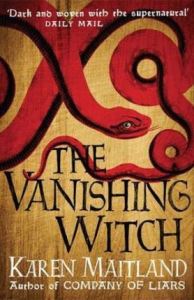
The Vanishing WitchI also enjoyed The Royalist by S.J. Deas, the first in a series of historical mysteries set during the English Civil War – and going further back in time, I read Karen Maitland’s The Vanishing Witch, set in the 14th century at the time of the Peasants’ Revolt.

Only two of the books I read during February disappointed me slightly – they were The Widow’s Confession by Sophia Tobin, yet another mystery (I told you I’d been in a mystery-reading mood this month!) and Jakob’s Colours by Lindsay Hawdon, a book about the Romany Holocaust. Again, I haven’t had time to write about these two books yet, but will do so as soon as I can. Finally, I have just finished reading The Goddess and the Thief by Essie Fox, a novel set in the Victorian period and revolving around the fate of the Koh-i-Noor diamond.

Have you read any of these books? What did you read in February?

The 2015 Walter Scott Prize longlist

I was interested to see that the longlist for the Walter Scott Prize for Historical Fiction was announced today. I’ve been following this prize for the last few years and this is the first time the longlist has been made public. The judges have selected fifteen books, with the shortlist to be announced in March and the winner in June.

You can learn more about the prize on the Walter Scott Prize website.

The fifteen books on the longlist are:

The Zone of Interest by Martin Amis
The Temporary Gentleman by Sebastian Barry
The Miniaturist by Jessie Burton
The Lie by Helen Dunmore
Viper Wine by Hermione Eyre
In the Wolf’s Mouth by Adam Foulds
Mr Mac and Me by Esther Freud
Arctic Summer by Damon Galgut
Wake by Anna Hope
The Wake by Paul Kingsnorth
The Undertaking by Audrey Magee
A God in Every Stone by Kamila Shamsie
The Architect’s Apprentice by Elif Shafak
The Ten Thousand Things by John Spurling
The Paying Guests by Sarah Waters

I have read four of these books – The Temporary Gentleman, The Miniaturist, The Lie and Mr Mac and Me – and have linked to my reviews above so that you can see what I thought of them.

Anna Hope’s Wake is a book I would like to read at some point. I remember hearing a lot about it when it was published last year, but I didn’t read it as I wasn’t in the mood for a First World War novel at that time. I’m sure I’ll read The Paying Guests eventually too as I’ve enjoyed all of Sarah Waters’ previous novels, but I haven’t been in any hurry after seeing some very mixed reviews. The Wake by Paul Kingsnorth first came to my attention when it was longlisted for the Booker Prize last year – having looked at the first few pages I decided the unusual writing style didn’t appeal to me. Maybe I should give it a chance after all?

All of the other titles on the list are new to me, so I’ve had to do some investigating! Viper Wine sounds very intriguing and so does The Architect’s Apprentice.

Have you read any of these books? Are there any that you think I need to try?

Goodbye to January

January

It’s been such a long time since I last posted an end-of-month reading summary! I didn’t bother with them last year or the year before, but now I’ve decided that I miss having a place to reflect on what I’ve read, am reading and am about to read.

Fair Helen January has been a good month for me in terms of number of books read, as the cold weather and dark nights mean more time spent inside reading. At a quick glance, my month has been dominated by historical fiction (I’ve made a great start to the Historical Fiction challenge) but the books I’ve read within that genre have been quite diverse. Two of them were for my Reading the Walter Scott Prize project, coincidentally both by Andrews. Andrew Greig’s Fair Helen was a beautifully written novel set in Scotland and based on a Border Ballad, while Andrew Miller’s Pure was the story of the destruction of a Parisian cemetery in the 18th century.

I also read The King’s Curse by Philippa Gregory which I found to be one of the best of her Cousins’ War series. It’s actually more of a Tudor novel than a ‘cousins’ war’ one, but that’s fine as it got me into the mood for the BBC’s excellent new adaptation of Wolf Hall. Has anyone else been watching it? What do you think?

Going back to the early days of the cousins’ war, or Wars of the Roses as we more commonly call it these days, I read Red Rose, White Rose by Joanna Hickson. I’d been hesitant about reading it as I wasn’t particularly impressed by her earlier novel, The Agincourt Bride, but I was pleasantly surprised by how good this one was.

I was pleased to finally read two books I’ve been meaning to read for years: The Book Thief by Markus Zusak and The Crimson Petal and the White by Michel Faber. I loved the latter but was slightly disappointed with the former – the story was great but I didn’t like the writing style.

BellarionI read two books from my Classics Club list in January as well. The first was Bellarion by Rafael Sabatini, which I enjoyed – not surprisingly, as Sabatini is quickly becoming a favourite author. The other was one of the Charles Dickens novels on my list, David Copperfield. I’ve just finished, so my thoughts will be coming soon.

After reading Kate Atkinson’s Case Histories just before the New Year, I couldn’t wait to read the next in the series, so went straight on to One Good Turn. I loved it and am looking forward to reading the rest of the Jackson Brodie series. I also read The Glassblower of Murano by Marina Fiorato, a dual timeline novel set in Venice. And I reviewed Mercedes Rochelle’s Shakespeare-inspired Heir to a Prophecy for Issue 4 of Shiny New Books.

Mary of CarisbrookeI’ve been making an effort to write about every book I read within a few days of finishing, but I haven’t quite managed it. As well as David Copperfield, there are a few others that I finished towards the end of the month and haven’t had time to review yet. First there was Mary of Carisbrooke, a novel set on the Isle of Wight during the English Civil War, the first book I’ve read by Margaret Campbell Barnes. Then I read Georgette Heyer’s The Quiet Gentleman, which I think might be one of my favourite Heyer novels so far. And finally, I read one of Sarah Dunant’s Italian Renaissance novels, The Birth of Venus, and a historical mystery by Andrew Taylor called The Silent Boy. I’ll be posting my thoughts on all of these books as soon as I can!

Also in January, I brought back my Remember These series, with a selection of books beginning with F and G and I added two new pages to My Journey Through TimeThe Plantagenets and The English Civil War.

As February begins I am reading The Vanishing Witch by Karen Maitland and M.M. Kaye’s Death in Kashmir. I don’t have any plans for the rest of the month as I’m enjoying just reading whatever I want to read!

What about you? Did you have a good start to the year?

My favourite books of 2014

I always enjoy putting together my list of favourites at the end of the year and reminding myself of all the great books I’ve read during the previous twelve months. Of course there have also been some that weren’t so great, but I prefer not to focus on those and concentrate instead on the books that I loved or that I found special or memorable in some way.

And here they are, my favourite books of 2014, in the order I read them. I apologise in advance for the length of this list!

Little Man What Now

Little Man, What Now? by Hans Fallada

From my review: “I’ll be very surprised if this one is not on my list in December! I loved every minute of this funny and charming yet dark and poignant German novel from 1932.”
Falls the Shadow

Falls the Shadow by Sharon Penman

From my review: “Long, complex and emotionally intense…this is the story of Simon de Montfort, 6th Earl of Leicester, the French nobleman who ruled England for more than a year. I didn’t realise quite how much Penman had made me love Simon until I reached the end of his story.”

Can You Forgive Her

Can You Forgive Her? by Anthony Trollope

From my review: “As usual with a Trollope novel, I was completely drawn into the lives of the characters and enjoyed all 690 pages! This is definitely one of my favourite Trollope novels so far and I’m now looking forward to reading the rest of the Pallisers.”
The Convictions of John Delahunt

The Convictions of John Delahunt by Andrew Hughes

From my review: “A wonderfully moody and sinister historical crime novel…I loved this dark and atmospheric book and was completely gripped by John Delahunt’s fascinating story.”

The Moon in the Water

The Moon in the Water by Pamela Belle

From my review:The Moon in the Water follows the story of Thomazine Heron and her family, and is set during the English Civil War. I loved it from the first page to the last…it was a joy to discover this one and to know that I have many more Pamela Belle books still to look forward to.”
Insurrection - Robyn Young

Insurrection by Robyn Young

From my review:Insurrection is exactly the sort of historical fiction I love…I found it to be a fascinating, atmospheric tale of kings and knights, witches and soldiers, treachery, murder and war.”

The Mayor of Casterbridge - Thomas Hardy

The Mayor of Casterbridge by Thomas Hardy

From my review: “I loved this book as much as I expected to and enjoyed being back in Hardy’s Wessex. The plot is a great one, with lots of twists and turns and plenty of drama; I was never bored once.”
The Second Duchess

The Second Duchess by Elizabeth Loupas

From my review: “A fascinating historical novel set in Renaissance Italy and narrated by Barbara of Austria. Although the back cover of this book promised “conspiracy, intrigue and murder”, I was still surprised that the story had such a strong mystery element.”

The Devil in the Marshalsea

The Devil in the Marshalsea by Antonia Hodgson

From my review: “I found The Devil in the Marshalsea very entertaining and fun to read. As a mystery novel, it kept me guessing right until the end..as a work of historical fiction it’s equally impressive.”
Harristown Sisters

The True and Splendid History of the Harristown Sisters by Michelle Lovric

From my review: “I loved this book, the first I’ve read by Michelle Lovric, and I would agree that it really is a ‘splendid history’. One of my favourite books of the year so far.”
An Officer and a Spy

An Officer and a Spy by Robert Harris

From my review: “This is the first book I’ve read by Robert Harris…and guess what? I loved it! An Officer and a Spy really is a fascinating novel and took me through a range of emotions from shock to frustration to absolute outrage!”

Assassin's Apprentice

Assassin’s Apprentice by Robin Hobb

From my review: “Yet again I have book blogging to thank for helping me to discover an author who I think is going to become a favourite…Assassin’s Apprentice, the first book of The Farseer Trilogy seemed the logical place to start, and what a great book it turned out to be!”
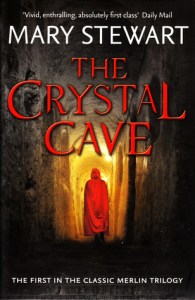
The Crystal Cave

The Crystal Cave by Mary Stewart

From my review:The Crystal Cave introduces us to Myrddin Emrys, better known as Merlin…A great book and now one of my absolute favourites by Mary Stewart.”
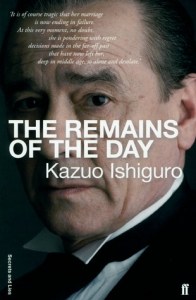
The Remains of the Day

The Remains of the Day by Kazuo Ishiguro

From my review: “It’s a gentle, slow-paced novel but completely compelling and, despite the lack of drama, I found it difficult to put down…The ending is perfect too.”
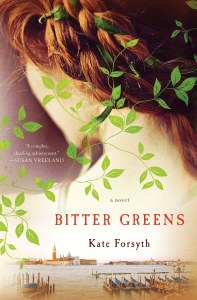
Bitter Greens

Bitter Greens by Kate Forsyth

From my review: “There’s just so much packed into this novel: the scandals and intrigues of the 17th century French court, a version of Rapunzel much darker and more compelling than the one I remember from my childhood, a vivid depiction of Renaissance Italy, magic and witchcraft, religious persecution, stories within stories, and much more.”
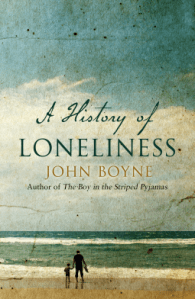
A History of Loneliness

A History of Loneliness by John Boyne

From my review: “A very insightful and thought-provoking novel and my favourite John Boyne book so far. I loved this book and am so glad I still have so many of his earlier novels left to explore!”

Zemindar

Zemindar by Valerie Fitzgerald

From my review: “What a great book! A wonderful setting, a beautiful romance, characters I really cared about, an exciting story and lots of fascinating historical detail…definitely one of my favourite books of the year.”
Don Quixote

Don Quixote by Miguel de Cervantes

From my review: ” It’s fun and imaginative and entertaining – and I loved it… I’m going to miss Don Quixote and Sancho after spending so much time with them this year!”

***

What about you? What are the best books you’ve read this year? Have you read any of the books on my list?