My Top Books of 2011

After a lot of thought, here it is: a list of my favourite books read in 2011! I would have found it almost impossible to put them in order, so I’ve just listed them alphabetically. I should also point out that not all of them were published this year (in fact, most of them weren’t).
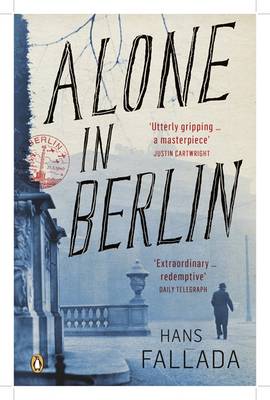
Alone in Berlin by Hans Fallada

(Read in January)

If I had to pick out just one book as my absolute favourite of the year, this would be it. Also published as Every Man Dies Alone, this is the story of two people living in Nazi Germany who launch a postcard campaign in protest against World War II. As well as being a very moving and thought-provoking story, it also has a thrilling plot and although it’s a cliche, I really couldn’t put this book down!

From my review: “I found the plot completely suspenseful, exciting and full of surprises…I would highly recommend it if you enjoy reading World War II fiction and would like to view things from a different perspective and also if you enjoy novels that are both gripping and heartbreaking.”
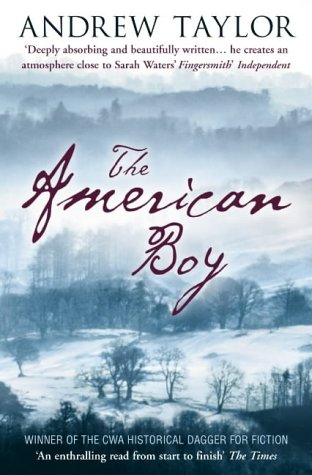
The American Boy by Andrew Taylor

(Read in September)

Although this book was published just a few years ago, it has all the elements of a Victorian sensation novel: murders, mistaken identities, family secrets, betrayal and revenge. The ‘American boy’ of the title is Edgar Allan Poe, though he doesn’t actually play a big part in the story. This was the second book I read by Andrew Taylor this year and I’m looking forward to reading more of his work in the future!

From my review: “A very dark and suspenseful mystery – a perfect book to curl up with and enjoy at this time of year.”
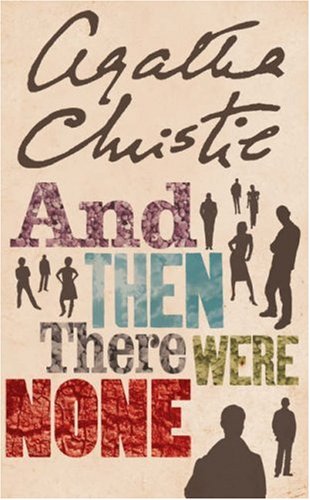
And Then There Were None by Agatha Christie

(Read in March)

2011 is the year I ‘rediscovered’ Agatha Christie. I’ve read five of her books this year and this one is my favourite. Ten people are invited to stay at a house on Soldier Island and one by one they begin to die. Which of the ten is the murderer? I found it impossible to figure out!

From my review: “I admit that solving whodunits is not one of my strong points, but I think most people would be baffled by this one! Christie expertly leads you to believe one thing, then a few pages later proves you wrong.”

The Children’s Book by A.S. Byatt

(Read in October)

The Children’s Book is a long and complex novel which follows the lives of a group of children as they grow up amid the social changes of the Victorian and Edwardian eras. This seems to be the type of book people either love or hate. I’ll admit that it wasn’t an easy read, but I enjoyed almost every page and didn’t have a problem with the slow pace and detailed descriptions.

From my review: “I enjoyed it…but if you’re not interested in the historical and cultural events of the Victorian and Edwardian periods, if you don’t like reading fairy tales, if you prefer books with more action and less description, then this may not be the right book for you.”

Cutting for Stone by Abraham Verghese

(Read in January)

This is the story of Marion and Shiva, the twin sons of an Indian nun and a British surgeon, who grow up within the community of Missing Hospital in Addis Ababa, Ethiopia. I loved this book because not only is it a great story spanning several decades and continents, I was also able to learn a lot about Ethiopia, a country I previously knew nothing about.

From my review: “Even though it’s still only January, I can’t imagine I’ll be reading a lot of books this year that are better than this one.”
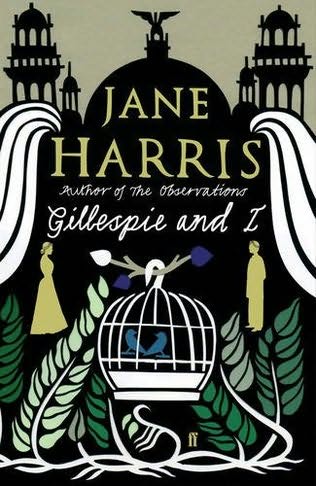
Gillespie and I by Jane Harris

(Read in May)

I was very impressed by this book, my first by Jane Harris, and went on to read her previous novel, The Observations, which I also enjoyed, though not quite as much as this one. I loved the setting (Victorian Glasgow), I loved the voice of the narrator, Harriet Baxter, and I thought some of the plot twists were stunning! This is also one of the few books on my ‘top books of 2011’ list that was actually published in 2011!

From my review: “At times it even felt like a Victorian sensation novel to me, which probably explains why I enjoyed it so much! Gillespie and I has been one of my favourite reads so far this year.”

The House on the Strand by Daphne du Maurier

(Read in January)

Narrated by Dick Young, who agrees to experiment with a new drug that transports the user into the 14th century, The House on the Strand has turned out to be one of my favourite Daphne du Maurier novels so far. This was actually the very first book I finished in 2011 and I knew almost as soon as I started reading it that it would be one of my books of the year.

From my review: “Choosing to begin 2011 with a book by one of my favourite authors was the right decision. The House on the Strand is a strange and unusual book which blends historical fiction, science fiction, time travel and psychology. I loved it!”

Jude the Obscure by Thomas Hardy

(Read in July)

Thomas Hardy is one of my favourite authors and I had been looking forward to reading Jude the Obscure. It definitely lived up to my expectations. I can understand why it wouldn’t appeal to everyone – it really is a tragic, heartbreaking story and contains what must surely be one of the most shocking scenes in literature – but I loved it.

From my review: “Although this one didn’t have quite the same emotional impact on me that Tess did, I was still moved to tears in places. I can’t recommend Jude the Obscure highly enough, unless you really just don’t like this type of book.”
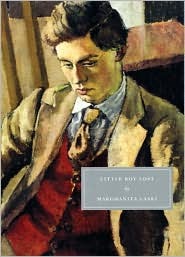
Little Boy Lost by Marghanita Laski

(Read in February)

I chose to read Little Boy Lost for the Persephone Reading Weekend in February. This story of a man searching for his missing son is one of the most emotional books I’ve read for a long time and definitely my favourite of all the Persephone books I’ve read so far.

From my review: “Nicholas Lezard of The Guardian, who is quoted on the back cover, says it best: ‘If you like a novel that expertly puts you through the wringer, this is the one.'”

The Master and Margarita by Mikhail Bulgakov

(Read in May)

The Master and Margarita is one of the most bizarre and original books I’ve ever read. I won’t even attempt to describe the plot here, but I can tell you that you’ll meet the Devil, a talking black cat, Pontius Pilate, and a beautiful witch! I’m so glad I decided to stop feeling intimidated by this book and finally just picked it up and started reading.

From my review: “This was a fantastic book – it was breathtakingly different and original, with so many different layers to it…the engaging writing, weird and wonderful characters and the dark humour all helped to keep me interested.”
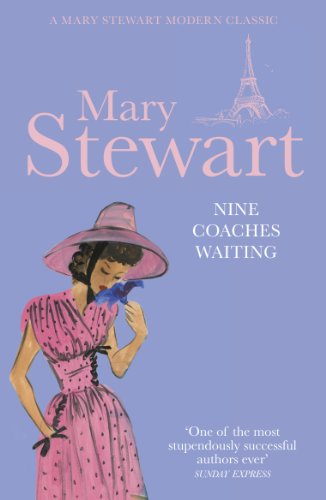
Nine Coaches Waiting by Mary Stewart

(Read in November)

This was my first experience of Mary Stewart’s work. I’ve now read three of her books and she’s already becoming a favourite author! Nine Coaches Waiting is the story of Linda Martin, who arrives in France to start her new job as governess to a nine-year-old orphan, Philippe de Valmy, and finds that both she and the child are in serious danger. This is a wonderful, suspenseful novel with a thrilling plot and a haunting atmosphere.

From my review:Nine Coaches Waiting is one of the best books I’ve read this year. It’s maybe not the most life-changing or the most original, but certainly one of the most enjoyable and exciting.”
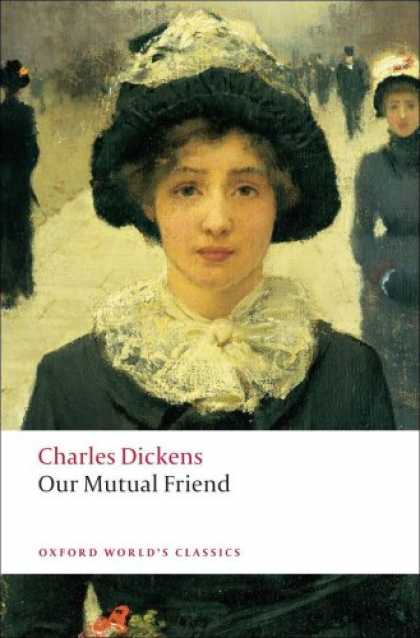
Our Mutual Friend by Charles Dickens

(Read in January)

I read two Dickens books this year, and while I did enjoy The Mystery of Edwin Drood (despite it being unfinished), Our Mutual Friend is the one that has made it onto my list of top books of the year. With its length and complex plot, this was a challenging book but a satisfying one, and with some very memorable characters (who could forget poor Jenny Wren?).

From my review: “It does require the reader to invest a lot of time and effort in it, but it was definitely worth it for me!”
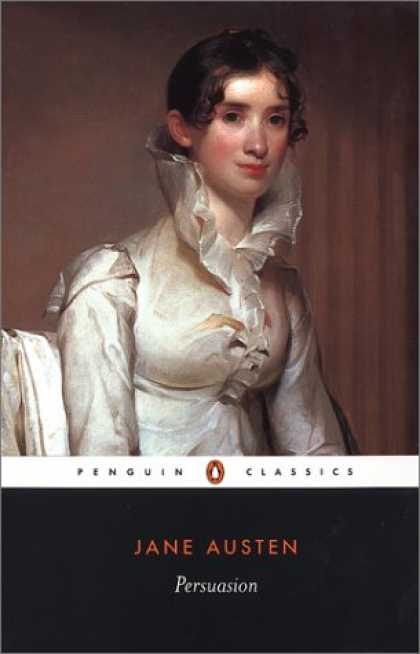
Persuasion by Jane Austen

(Read in April)

I’ve now read all of Jane Austen’s novels and this one is my favourite, even ahead of Pride and Prejudice which I also enjoyed. I loved Anne Elliot and loved the story of her romance with Captain Wentworth. Compared to Austen’s other novels this one has a more serious, mature tone and that appealed to me too.

From my review: “A moving story of mistakes, misunderstandings and second chances…I loved this book.”

The Sisters Brothers by Patrick deWitt

(Read in November)

I would never have expected a western to be one of my favourite books of the year! I’m so glad I decided to take a risk and try something completely different.

From my review: “I loved this book, which I think proves that it doesn’t matter if something is described as a ‘western’, a ‘romance’, a ‘mystery’ or anything else: a good story is a good story and The Sisters Brothers was one of the best I’ve read this year.”

South Riding by Winifred Holtby

(Read in February)

South Riding is a wonderful novel about life in a small Yorkshire community in the 1930s. When I first started reading I wasn’t sure I was going to enjoy it, particularly when I saw the length of the character list at the front of the book, but I couldn’t have been more wrong. The characters all had so much depth it wasn’t hard to keep track of them all and I soon found myself completely absorbed in reading about their lives. I loved this one.

From my review: “I hadn’t expected to love it as much as I did. It was a book I looked forward to returning to every day and I was sorry when I reached the final page.”

Stone’s Fall by Iain Pears

(Read in December)

I finished this one just in time for it to make it onto this list. Moving backwards in time from London in 1909 to Paris in 1890 and then Venice in 1867, Stone’s Fall is a long and complex novel about the mystery surrounding a man’s death. I loved this book and was pleased I hadn’t allowed a previous negative experience of Iain Pears’ work to put me off reading this one!

From my review: “I found the plot completely gripping and was never bored – it was all so wonderfully intricate and clever.”

Three Men in a Boat (To Say Nothing of the Dog) by Jerome K. Jerome

(Read in March)

This is the hilarious story of three men (and a dog) who go on a boat trip along the River Thames. Despite the fact that it was published more than 100 years ago, most of the humour is still relevant today. I must find time to read the sequel, Three Men on the Bummel!

From my review: “I can’t remember the last time I read such a funny book and I would recommend it to anyone who feels daunted by the thought of reading a Victorian classic.”

Have you read any of these books? If not, I hope I’ve convinced you to read some of them in 2012!
November Reading Summary

Favourite books read in November:

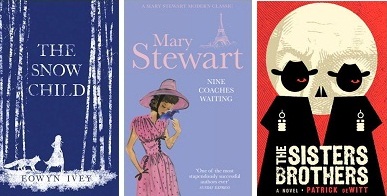
I enjoyed all of the books I read in November, but have chosen three favourites. The first is The Snow Child, a beautiful, enchanting story by Eowyn Ivey set in 1920s Alaska and inspired by a Russian fairy tale. The second, Nine Coaches Waiting, was my first experience of Mary Stewart and turned out to be one of the best books I’ve read all year. And I decided to try something completely different with Patrick deWitt’s The Sisters Brothers and I’m glad I did because it was so much fun to read.

Other books read in November:

The second Mary Stewart book I read last month was Rose Cottage. It was good, but I would describe it as a pleasant book rather than a thrilling one like Nine Coaches Waiting. Blow on a Dead Man’s Embers by Mari Strachan was my most surprising read of the month as I wasn’t expecting to love it as much as I did. It’s a moving and absorbing story set in Wales in the aftermath of World War I and I can highly recommend it.

I also enjoyed The Ghost of Lily Painter by Caitlin Davies, which combines a ghost story and a family mystery with an account of ‘baby farming’ in Edwardian London. The Rose Garden by Susanna Kearsley was another great read. And I was gripped by Dreams of Joy, the sequel to Lisa See’s Shanghai Girls which I read in October.

In New York by Edward Rutherfurd I learned about the history of New York City via the stories of some fictional families who lived there. Rutherfurd’s books are a good example of how historical fiction can be both educational and entertaining. I read some historical non-fiction in November too: The Women of the Cousins’ War: The Duchess, the Queen and the King’s Mother by Philippa Gregory, David Baldwin and Michael Jones. This is the companion book to Gregory’s Cousins’ War series of novels and helped fill some of the gaps in my knowledge.

Also last month, I decided it was time for another Agatha Christie book and thought I’d try The Murder of Roger Ackroyd. I loved it, but did have a slight problem with it which I’ll explain when I post my review! I also read The House of the Wind by Titania Hardie, a dual timeframe story set in modern day San Francisco and 14th century Tuscany. And I read the third book in Alan Bradley’s Flavia de Luce mystery series, A Red Herring without Mustard, which I was pleased to find was as enjoyable as the previous two.

As you’ll have noticed, I haven’t posted my thoughts yet on some of these books, but I’ll get to them eventually. I’ve decided to stop worrying about how many books I still need to write about, though it would be nice to catch up before January!

Did you read any good books in November? What are you hoping to read before the end of the year?

October Reading Summary

I’ve been wondering whether or not to continue with these posts in 2012 – I do find it useful to look back on my reading at the end of every month but I don’t know if my summaries are of much interest to anyone else. What do you think? And if you have your own blog do you post your own monthly (or weekly) reading summary or round-up?

My favourite books read in October:

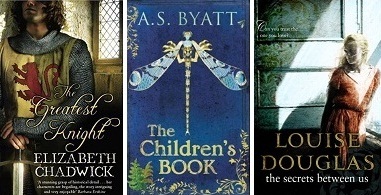
The Greatest Knight by Elizabeth Chadwick was the first book I finished in October and The Secrets Between Us by Louise Douglas was the last one – and both are in my top three books read this month. I also loved The Children’s Book by A.S. Byatt (which I’m pleased about as I wasn’t sure I would like it!) and I’ll be posting my thoughts on that one in the next few days.

Other October reading:

Last Tuesday I took part in the Classics Circuit Gothic Literature Tour with a post on Ann Radcliffe’s 18th century novel A Sicilian Romance. I read a couple of other classics in October too: The Phantom of the Opera by Gaston Leroux, which was a very entertaining read, and Under the Greenwood Tree by Thomas Hardy, a good book but my least favourite Hardy novel so far.

Also in October, I read my second Bryant and May mystery, The Water Room by Christopher Fowler, and I learned about Kat Ashley in The Queen’s Governess by Karen Harper. I participated in Discovering Daphne month by reading The Loving Spirit by Daphne du Maurier and I explained why The Night Circus by Erin Morgenstern left me with mixed feelings.

There were also a few more books I read in October that I haven’t had time to write about yet. These were We Have Always Lived in the Castle by Shirley Jackson, Shanghai Girls by Lisa See, The Land of Green Ginger by Winifred Holtby and Jamaica Inn by Daphne du Maurier (this one was actually a re-read, although the first time I read it was so long ago I had completely forgotten most of the plot).

Have you read any of these books? Was October a good month for you?

Five recent reads that I couldn’t finish

How often do you start a book and find that you can’t finish it? Maybe you didn’t like the writing, maybe you couldn’t connect with the characters, or maybe it was just the wrong book at the wrong time. I hate leaving books unfinished, but sometimes it’s the right thing to do. Luckily it doesn’t happen to me very often, but there have still been quite a few books that I’ve started reading recently and for one reason or another have had to abandon. If you’ve read any of these, do you think they’re worth trying again?


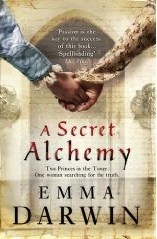
A Secret Alchemy by Emma Darwin

What’s it about?
A present day historian, Una Pryor, researches the lives of Elizabeth Woodville, wife of King Edward IV, and her brother Anthony, and begins to uncover the mystery of the Princes in the Tower.
What was the problem?
With my interest in the Wars of the Roses I really wanted to like this book, but I just couldn’t. There were three different threads of the story, one narrated by Una, one by Elizabeth and one by Anthony – and they were all set in different time periods, which I found very confusing. The historical sections didn’t feel very atmospheric and the modern section seemed too disconnected. I’m sure that if I’d kept reading the three storylines would probably have been brought together eventually, but I gave up after almost 100 pages.
Would I try it again?
Probably not.

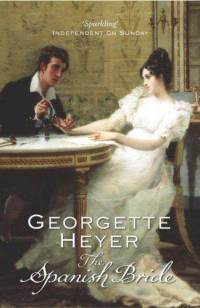
The Spanish Bride by Georgette Heyer

What’s it about?
Set during the Peninsular War, this is the story of Brigade-Major Harry Smith and his Spanish wife, Juana.
What was the problem?
This wasn’t a bad book but it wasn’t really what I’ve come to expect from Georgette Heyer. I read nearly a third of the book and it was very heavy on historical detail, particularly descriptions of army life and battles, which I wasn’t in the right mood for.
Would I try it again?
Maybe, but there are plenty of other Georgette Heyer books I’d like to read first.

Kidnapped by Robert Louis Stevenson

What’s it about?
This is a classic historical adventure novel about seventeen-year-old David Balfour, whose uncle has him kidnapped in an attempt to steal his inheritance.
What was the problem?
I wanted to read some of the children’s classics I’d missed out on when I was younger and started reading this one on my ereader. I loved the opening chapters but when I reached a long section set at sea I started to lose interest.
Would I try it again?
Probably not.

Love and Summer by William Trevor

What’s it about?
Set during one summer in the 1950s, this is a story about the small Irish town of Rathmoye and the people who live there.
What was the problem?
I think it was probably just the wrong time for me to read this book. I had recently finished reading Brooklyn by Colm Toibin and this one seemed to have a very similar feel. I wasn’t in the mood for another quiet, gentle story so I set this book aside after a few chapters.
Would I try it again?
Yes.

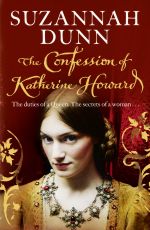
The Confession of Katherine Howard by Suzannah Dunn

What’s it about?
The story of Henry VIII’s wife, Katherine Howard, as seen through the eyes of her lady-in-waiting, Cat Tilney.
What was the problem?
I couldn’t get into this book at all and abandoned it after a couple of chapters. The dialogue was too modern and the characters didn’t feel like real people to me. Maybe if I’d kept reading I would have started to enjoy it more, but my instincts told me this wasn’t the right book for me.
Would I try it again?
No.

Have you read any of these books? Did you have better luck with them than I did?

September Reading Summary

September was a good month for me – I read twelve books and enjoyed all but one of them. Choosing my favourites wasn’t easy, but I think these were the four that really stood out:

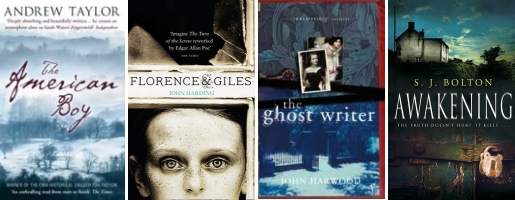
The American Boy by Andrew Taylor – 19th century setting, gothic atmosphere, mystery and adventure, even Edgar Allan Poe. This book was perfect for me!
Florence and Giles by John Harding – A great gothic story inspired by The Turn of the Screw.
Awakening by S.J. Bolton – The second book I’ve read by S.J. Bolton and I’ve loved both. I’m looking forward to reading her other two books soon.
The Ghost Writer by John Harwood – I was very impressed by this book, especially considering I had never even heard of it until I picked it up in the library. I’ll be posting my thoughts on this one soon.

Other books read in September

The Obscure Logic of the Heart by Priya Basil
Framley Parsonage by Anthony Trollope
Theodora by Stella Duffy
Devil Water by Anya Seton
The Last Dickens by Matthew Pearl
The Lady of the Rivers by Philippa Gregory
Ragnarok: the End of the Gods by A.S. Byatt (thoughts coming soon)
Uncle Silas by Joseph Sheridan Le Fanu (thoughts coming soon)

Although I limited myself to picking four favourites this month, I did enjoy all of these books with the exception of The Last Dickens, which was slightly disappointing.

Plans for October


This month Simon of Savidge Reads and Polly of Novel Insights are celebrating the work of one of my favourite authors, Daphne du Maurier, with a “Discovering Daphne” event. I managed to find a copy of The Loving Spirit at the library this morning and will hopefully be starting it this week.


I’ve also signed up for this month’s Classics Circuit tour, which has a gothic literature theme this time. I’m reading A Sicilian Romance by Ann Radcliffe for the tour and will be posting on October 25th.

What else am I reading this month? Well, I’m halfway through The Night Circus by Erin Morgenstern at the moment. I’ve been seeing this one mentioned everywhere and couldn’t resist it any longer! I also need to read my next book for the Transworld challenge, The Water Room by Christopher Fowler.

Did you have a good September? What are you reading in October?

August Reading Summary

For me August was the month when I finally started to catch up with all those outstanding reviews! I read eleven books and have posted my thoughts on ten of them. I know I still have a few books to write about from July, but at least I didn’t get any further behind!

Here are three of my favourite books read in August:

I read two books by Jude Morgan in August. I loved them both but The Taste of Sorrow, a novel about the Brontës, interested me slightly more than Passion, which is about the Romantic Poets. The House by the Sea was the first book I’ve read by Santa Montefiore and was a perfect summer read. And The Sandalwood Tree by Elle Newmark was my first choice for the Transworld Book Group Reading Challenge. It’s a great historical fiction novel set in India, with some beautiful and vivid descriptions of the country.

Other books read:

Possession by A.S. Byatt
When God was a Rabbit by Sarah Winman
Full Dark House by Christopher Fowler
Winter King: The Dawn of Tudor England by Thomas Penn
Princes in the Land by Joanna Cannan
The Parasites by Daphne du Maurier
On Canaan’s Side by Sebastian Barry (Review coming soon)

I hope you all had a great August and have some good books planned for September. Now that summer is coming to an end I’m looking forward to some atmospheric, autumnal reading for the R.I.P. Challenge!

July Reading Summary

Another month over and another ‘Reading Summary’. I loved so many of the books I read in July that I’ve found it almost impossible to choose just two or three favourites like I usually do…so instead I’ve chosen six.

Before I Go to Sleep by S.J. Watson – I was worried this book might not live up to the hype, but I loved it and couldn’t put it down.
Jude the Obscure by Thomas Hardy – one of the Hardy books I was most looking forward to reading and it didn’t disappoint.
Therese Raquin by Emile Zola – my first experience of Zola. I was very impressed and will definitely be reading more of his work.

I also read three books set during World War II and all three were among my favourite books of the month too.

The Novel in the Viola by Natasha Solomons – a great story about an Austrian girl working as a maid in England during the war.
The Invisible Bridge by Julie Orringer – I started reading this in June and finally finished it this month. It’s a long book but I thought it was definitely worth the time and effort.
Hotel on the Corner of Bitter and Sweet by Jamie Ford – I’d been wanting to read this one for ages, so I was pleased to find I loved it as much as I’d hoped I would!

Other books read this month:

The Somnambulist by Essie Fox
The Road to Wanting by Wendy Law-Yone
Powder and Patch by Georgette Heyer
The Swimmer by Roma Tearne
Burned by Thomas Enger
The Observations by Jane Harris
The Mystery of the Blue Train by Agatha Christie
The Birth of Love by Joanna Kavenna
The Secret Lives of Baba Segi’s Wives by Lola Shoneyin
The Champion by Elizabeth Chadwick

All outstanding reviews have been written and will hopefully be posted in the next few weeks, so you shouldn’t have long to wait to find out what I thought about all of these books.

What have you been reading in July? Which books do you hope to read in August?