Truth is the daughter of time…

Richard III
I couldn’t let today pass without mentioning the exciting news that was announced this morning: A skeleton discovered by archaeologists in Leicester has been identified as Richard III, the last Plantagenet king of England who was killed at the Battle of Bosworth in 1485.

As followers of my blog will probably know, Richard III is one of my favourite historical figures and the Wars of the Roses is one of the periods of history I’m most interested in, so I’ve been anxiously awaiting this announcement for months! For those of you in the UK there’s a documentary on Channel 4 tonight at 9pm, The King in the Car Park, which will reveal the details of the archaeological dig and the scientific tests that were carried out on the skeleton. And in honour of today’s news, I have put together a list of the books (both fiction and non-fiction) that I’ve read over the last few years on the subject of Richard III or the Wars of the Roses in general.

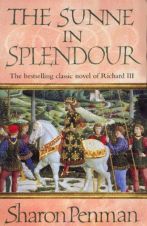
The Sunne in Splendour

The Sunne in Splendour by Sharon Penman

This is one of my favourite historical fiction novels and the best book I’ve read on Richard III. Don’t let the length put you off! Penman does a great job of making a complicated period of history easy to understand as she tells the story of Richard’s life from childhood to his tragic death.

The Daughter of Time

The Daughter of Time by Josephine Tey

Published in the 1950s, this is the story of Inspector Alan Grant who in hospital with a broken leg and decides to investigate Richard III and his alleged crimes from his hospital bed. Reading everything he can find about Richard and the disappearances of the Princes in the Tower, Grant begins to discover that historical sources can’t always be trusted and that history is written by the victors.

Treason

Treason by Meredith Whitford

Like The Sunne in Splendour, this novel also covers Richard III’s life but from the perspective of his cousin Martin Robsart, a fictitious character. I loved this book – it was well-researched, the characters were believable and I could even follow the battle scenes!

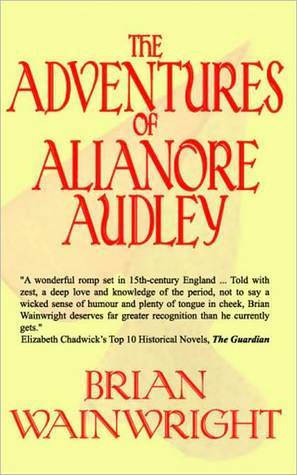
The Adventures of Alianore Audley

The Adventures of Alianore Audley by Brian Wainwright

A parody of the historical novel, this book takes a humorous look at the Wars of the Roses through the eyes of 15th century ‘damosel’, spy and knight’s lady Alianore Audley. Some familiarity with the period is needed to fully understand all the jokes and get the most out of this book.

Review: The White Queen by Philippa Gregory

The Cousins’ War series by Philippa Gregory

I wasn’t a fan of Philippa Gregory’s Tudor court novels but have been following her Cousins’ War series from the beginning because I find this period of history so much more interesting. There are four books in the series so far and each one focuses on a different female historical figure: The White Queen (Elizabeth Woodville), The Red Queen (Margaret Beaufort), The Lady of the Rivers (Jacquetta of Luxembourg) and The Kingmaker’s Daughter (Anne Neville).

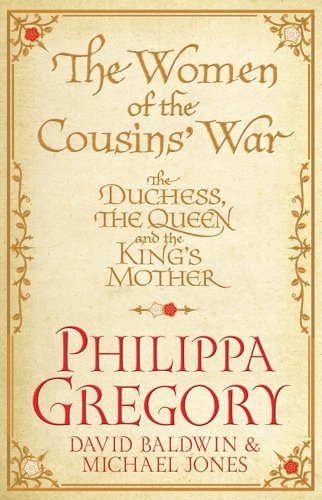
The Women of the Cousins War

The Women of the Cousins’ War: The Duchess, the Queen and the King’s Mother

A non-fiction companion book to the Cousins’ War series mentioned above. The book contains three essays – one by Philippa Gregory on Jacquetta of Luxembourg, another by David Baldwin on Elizabeth Woodville and the final one by Michael Jones on Margaret Beaufort.

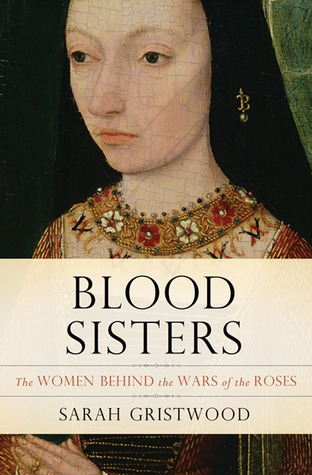
Blood Sisters

Blood Sisters by Sarah Gristwood

I read this book in January and will be posting my review soon. Like The Women of the Cousins’ War this is another non-fiction book that looks at the period from a female perspective.

A Secret Alchemy

A Secret Alchemy by Emma Darwin

A present day historian, Una Pryor, researches the lives of Elizabeth Woodville, wife of King Edward IV, and her brother Anthony, and begins to investigate the mystery of the Princes in the Tower. No review link for this one as I found it difficult to get into and didn’t finish reading it.

This is far from being a comprehensive list as this is a relatively new interest of mine and I have only featured here the titles I’ve read or have attempted to read – there are a lot of other books on the Wars of the Roses and Richard III that I’m looking forward to reading.

Please feel free to recommend your favourites!

A Classics Challenge – January: Charlotte Brontë

This year I am taking part in a Classics Challenge hosted by Katherine of November’s Autumn. The goal is to read seven classics in 2012 and on the 4th day of every month, Katherine will be posting a prompt to help us discuss the book we are reading.

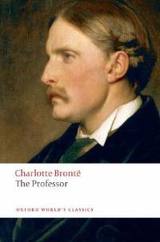
The first book I’ve chosen to read for the challenge is The Professor by Charlotte Brontë. I’m almost halfway through the book and have been enjoying it so far. I’ll be posting my thoughts about the book itself after I’ve finished reading it, but for this month’s prompt, Katherine is asking us to focus on the author – in this case, Charlotte Brontë.

There are three different levels of participation this month depending on how far into the book we are, and I feel I’ve read enough of The Professor to answer the questions for all three levels.

Level 1
Who is the author? What do they look like? When were they born? Where did they live? What does their handwriting look like? What are some of the other novels they’ve written? What is an interesting and random fact about their life?

Charlotte Brontë

Charlotte was born in Thornton, Yorkshire on April 21, 1816, the third of the six children of Reverend Patrick Brontë and his wife Maria Branwell Brontë.

The Brontë Parsonage Museum

The Brontë family lived at Haworth Parsonage, now the Brontë Parsonage Museum.

Charlotte Brontë is the author of four novels: Jane Eyre, one of my favourite classics, Villette, which I read last year, The Professor, and Shirley. I am reading The Professor now and will hopefully have time for Shirley too before the end of the year.

Charlotte Brontë's signature

Here’s an interesting piece of trivia about Charlotte: A tiny manuscript of an unpublished Charlotte Brontë story was sold at auction in 2011 to a French museum. The story was written in 1830 when she was fourteen years old and each page measures only 1.4 x 2.4 inches.

Level 2
What do you think of their writing style? What do you like about it? or what would have made you more inclined to like it? Is there a particular quote that has stood out to you?

I find it hard to explain exactly what I like about Charlotte Brontë’s writing style, but I obviously like it enough to want to read all four of her books! I love the way she expresses the feelings and emotions of her characters; she chooses exactly the right words and phrases to convey their sadness, loneliness and suffering as well as their moments of happiness and love.

However, there are a few aspects of her writing that I don’t like so much. Two problems I’m having with The Professor are the overwhelming number of references to physiognomy (judging a person’s character from their appearance) and also a tendency to include a lot of French dialogue which is not translated, making it difficult for a non-French speaker to follow what’s being said. Overall, though, I do like the way she writes and am looking forward to reading the rest of this book.

Level 3
Why do you think they wrote this novel? How did their contemporaries view both the author and their novel?

The Professor was Charlotte Brontë’s first novel, although it remained unpublished until after her death. The main character, William Crimsworth, is a teacher at a school in Belgium. As Charlotte herself (like her sister Emily) had spent some time studying and teaching in Brussels, she was able to draw on her own experiences when writing this novel. It seems that The Professor wasn’t very highly regarded during Charlotte’s lifetime and she was unable to find a publisher for it, even after she began to have success with her other novels.

Have you read any of Charlotte Brontë’s novels? What do you think of her work?

Don’t forget to visit Katherine’s blog post where you can find links to other participants’ responses. We are all reading different books so a variety of different authors are being highlighted this month.

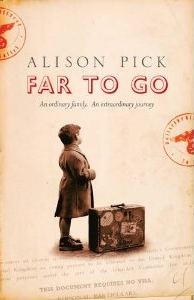
Guest Post: Alison Pick – author of Far to Go

Something slightly different today: a guest post from author Alison Pick! You may remember that I recently posted my review of Alison’s new novel, Far to Go. Alison is visiting She Reads Novels today as part of her UK blog tour and here she tells us what inspired her to write Far to Go.

Growing up, there was a secret in my family. We went to Church, and celebrated Christmas, but we weren’t really Christians. We were hiding something. I didn’t know what.

I got older. There were clues. My great-grandparents had died in Europe. It had something to do with a camp, and with my grandmother’s pearls that she’d smuggled into Canada in a jar of cold cream.

I understood the truth in stages. My great grandparents were murdered in Auschwitz. Why? Because they were Jewish. Which meant their children, my grandparents, were Jewish too. Which meant, of course, that my father was the same.

I both knew this, and did not know it.

The reason for my psychic ambivalence was a moratorium on discussion. My grandmother forbid any and all questions about her parents, their deaths, or their backgrounds. In retrospect this makes perfect sense. Granny was a young woman when she arrived in Canada. Although culturally Jewish, she’d never practiced. Her own parents, who she had been very close to, were supposed to meet her in Canada, but they never made it out of Europe. It was out of a horrific lifelong grief that our family’s silence was sewn.

When my grandmother passed away in the year 2000 I was bereft. I wrote poems about her life following the Holocaust. Although she probably wouldn’t have liked the poems, they were my tribute to her.

Still, they weren’t enough. I grew as a writer, and the desire to write something bigger to honour my history grew too. Finally, in 2007, I began work on the novel that would become FAR TO GO. Paradoxically, I knew that the book would not tell my grandparents story in a literal sense. I wanted to write a gripping novel, one that would keep the reader turning the pages, and I didn’t want the constraint of “what really happened” to get in my way.

In other words, I wanted to forsake their particular story to tell one that was more universal.

Well, it’s done. FAR TO GO sold in five countries, won the Canadian Jewish Book Award for Fiction, and has been optioned for film. More importantly, it has given me incredible pleasure to write something for the family I never knew, and for my grandmother, who I did know and who I miss terribly. I’m not sure what she would have thought. Secrets die hard, especially ones like hers. I have a hunch, though, that she would have been proud.

As Jews around the world say on the anniversary of a loved one’s death: May her memory be for a blessing.

~

Thanks for visiting us today, Alison!

See what Alison said yesterday at Catherine, Caffeinated and don’t forget to visit Get On With It tomorrow to hear more from her!

For a full list of tour stops please see the blog tour button in my sidebar.

Remember These? Books beginning with D and E

Remember These? is a series of posts looking at some of the books I recorded in my old pre-blogging reading diary. The diary spanned my teens to my early twenties, and although I’ve included my original ratings, these ratings do not necessarily reflect what I would feel about the books if I read them again today!

Here are some of the books that appeared on the ‘D’ and ‘E’ pages of my notebook.

Dragonfly in Amber by Diana Gabaldon (5/5)

If there’s any author who really seems to divide opinion, it’s Diana Gabaldon. I personally love her books and have read the whole Outlander/Cross Stitch series several times (there are currently seven books in the series with at least one more to come). Dragonfly in Amber is probably my favourite – I loved the Paris setting and the black magic aspect, and it’s also the most emotional of the seven books, in my opinion.

The Dark Half by Stephen King (5/5)

Between the ages of about fifteen and twenty I read a lot of Stephen King books but haven’t read any since then. I seem to remember this being one of my favourites. It’s about an author, Thad Beaumont, who writes under the name George Stark. But when Thad decides to ‘kill off’ his pseudonym, he discovers that George doesn’t want to die…

Dragonfly by John Farris (4/5)

Synopsis: “Abby Abelard is the hottest-selling romance writer in America. Dr. Joe Bryce, a dedicated physician, has spent the last three years in war-torn Africa. But he has sins on his conscience and a frightening past he can never outrun, even with Abby’s help.”
I have no memories of this book at all, so can’t tell you what it was that I liked about it. Have any of you read it?

Elidor by Alan Garner (3/5)

I first read this at school and later bought my own copy of it. It’s about four children who find themselves drawn into a mystical land called Elidor where evil forces are at work. The book is quite scary in places but I would highly recommend it for older children and young teenagers.

The Dark Cliffs by F.E. Smith (3/5)

This is obviously a very obscure one! I’ve been unable to find any information online at all, although LibraryThing tells me it’s been tagged as gothic suspense. I’d love to hear from anyone who remembers reading this book.

Elric of Melnibone by Michael Moorcock (3/5)

I only came across Michael Moorcock’s books because my dad liked them and passed his collection on to me. I’ve never been very interested in fantasy, but I loved these books. The Elric series (particularly this one, Stormbringer and The Stealer of Souls) were my favourites.

Double Vision by Annie Ross (2/5)

Synopsis: “When an American heiress is murdered, the police charge her British husband with murder. But, when a second murder occurs, there is no solution. UK TV director, Bel Campbell, learns of a third mysterious death, and finds the key to the identity of the murderer.”
Yet another one I don’t have any memories of reading!

The Drowning People by Richard Mason (2/5)

This is a murder mystery with a difference – we are told the identity of the murderer on the first page and the rest of the book attempts to show us why he did it.

Have you read any of these books?

E-readers: The good and the bad

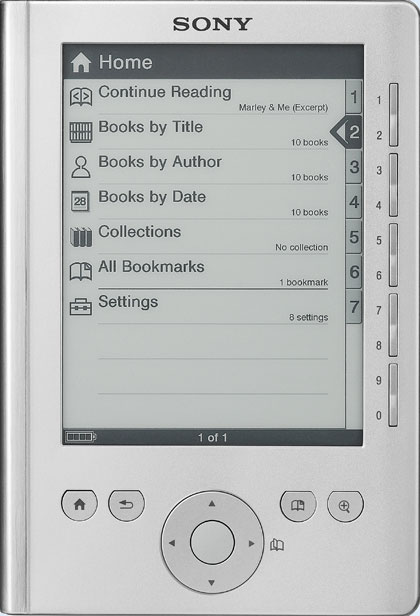
I’ve had my Sony Reader Pocket Edition PRS-300 for over six months now and thought it would be interesting to put together my thoughts on it and how it has affected my reading. I had resisted buying an e-reader for a long time because I felt guilty about doing anything that might contribute to the decline of the physical book. However, I certainly don’t seem to have acquired or read less ‘real’ books since I got my e-reader. I see it as another way to read books in addition to reading physical books, rather than instead of.

Here are some of the advantages and disadvantages of owning an e-reader. Can you think of any more?

Advantages

* They help you to save space on your bookshelves. You can store hundreds of books on an e-reader. Imagine how much shelf space they would take up!

* You can carry an ereader around with you very easily. They’re small (particularly the pocket version that I have) and weigh very little. This makes them perfect to take to work or on holiday or just in case an unexpected opportunity to read arises (I’ve lost count of the number of times I’ve ended up sitting in the car waiting for somebody, for example, and wishing I’d brought a book with me. Now I just take my reader with me when I go out in the car). And with hundreds of books stored on your reader you’ll always have plenty of choice.

* There are literally thousands of free classics and out of print books available to download online from sites such as Project Gutenberg and Girlebooks. This was one of the main reasons I originally wanted an e-reader. Having an e-reader suddenly opens up a whole world of obscure and hard to find books and the choice is overwhelming. I actually haven’t downloaded as many free classics as I thought I would simply because there’s so much choice, if that makes any sense!

* You can use Netgalley to request review copies from publishers in ebook format. I haven’t used this very often as I’m very selective about requesting books for review. It’s nice to know the option is there though, and I’ve enjoyed the few books that I have read though Netgalley.

* My local library has started offering ebooks for download. I’d be interested to know what librarians think about this service. Are we facing a future where everyone sits at home downloading library books and never actually visits the library in person? I can see good and bad points about this system, but so far it seems to be a very popular service. You have to keep the book on loan for a fixed period (you can choose either 7, 14, 21 or 28 days). After the loan period is up, the book automatically expires and can no longer be read. This is good in one way as it means you’ll never ‘forget to take the book back to the library’ and accrue an overdue fine, but it also means that you can’t return the book any sooner if you don’t like it or finish it earlier than expected.

* Most ereaders have some extra features. Mine doesn’t have many (it wasn’t really something that concerned me when I was choosing my reader as I just wanted something basic and easy to use). It is useful sometimes to be able to change the text size, though, and I like being able to bookmark pages with memorable quotes on them.

* Having an e-reader gives you instant access to books, without even having to wait for delivery. Find a book that you want online and you can start reading it in just a few minutes.

Disadvantages

* Although e-readers themselves have come down in price recently and are much more affordable now, in general the prices of ebooks are still usually more expensive than paper books. It’s up to you to decide whether it’s worth paying more for the same book or not.

* I find it hard to tell how long the ebook is going to be. Yes, it tells you how many pages there are, but the page count is usually different to the physical book and I find it difficult to visualise just from a page number how thick the book would be.

* You can’t flip back and forth in the book easily. Sometimes I like to be able to skip back a few pages, to remind myself of who a character is, for example, or to skip forwards to see how many more pages there are in the chapter. Then there are the books that have family trees or maps at the beginning or a glossary at the end. It is possible to move backwards and forwards through the book with my Sony Reader but it’s not very convenient and you really need to know the page number you’re looking for. Maybe this is easier with a different type of e-reader?

* The battery needs to be recharged regularly and once or twice the whole thing has frozen and I had to press the reset button. At least with a paper book there’s no chance of malfunctions, battery running down etc.

* Finally, in my opinion nothing beats reading and owning a real, physical book. With the e-reader you don’t get the beautiful front covers and spines to display on your shelves. You don’t get the feel of the book in your hands. And you don’t get the memories. I’m sure most of us have a favourite torn, battered old book that reminds us of our childhood!

Do you have an e-reader? What do you like and dislike about it? If you don’t have one, would you ever consider buying one?

Remember These? Books beginning with ‘C’

Remember These? is a series of posts looking at some of the books I recorded in my old pre-blogging reading diary. The diary spanned my teenage years to my early twenties, so most of the books mentioned below will have been read during the 1990s and although I’ve included my original ratings, these do not necessarily reflect what I would feel about the books if I read them again today!

I gave the books ratings out of 5. The symbol * means I loved the book. X means I didn’t finish it.

Books beginning with ‘C’

Here are a selection of the books that appeared on the ‘C’ page of my notebook:

The Clan of the Cave Bear – Jean M Auel (5/5*)

This is the first book in the Earth’s Children series which follows the adventures of Ayla, a prehistoric girl who is adopted by a group of Neanderthal people. I loved this one, but for some reason I couldn’t get into the second book at all, so gave up on the series. Should I give these books another chance?

Charley – Joan G. Robinson (5/5*)

Also published under the title, The Girl Who Ran Away. I’d love to hear from anyone else who remembers this children’s book, as it was one of my favourites. It was about a girl called Charley who was sent to stay with her aunt. When a misunderstanding caused her to believe that her aunt didn’t want her, she ran away and tried to survive on her own in the English countryside.

Claudia’s Shadow – Charlotte Vale Allen (4/5)

I can’t remember reading this one at all! Here’s a description from Amazon: “When her sister Claudia dies mysteriously, Rowena Graham cannot accept the verdict of suicide. In a desperate move to learn the facts about her sister’s death, Rowena moves into her sister’s home and takes over the management of Claudia’s restaurant.”

Children of the Dust – Louise Lawrence (3/5)

This is a post-apocalyptic YA novel which follows the story of three generations of people who survive a nuclear war. I read this book at school and remember it being a very effective and harrowing portrayal of both the war itself and the aftermath.

The Christmas Mystery – Jostein Gaarder (3/5)

I first read this as a teenager and re-read it in December 2009 (my review is here). I didn’t like it as much as Gaarder’s other books such as Sophie’s World or The Solitaire Mystery, but it is a perfect book to read at Christmas and has an interesting advent-calendar structure of twenty-four chapters, one for each day of advent.

Choices – Noah Gordon (3/5)

This is the third in a trilogy of books by Noah Gordon about three doctors from three different generations of the Cole family who have all inherited a special ‘gift’: they can sense when a patient is going to die. The first book, The Physician, is set in the 11th century; the second, Shaman, is set during the US Civil War. This one has a more modern setting and I didn’t enjoy it as much as the first two. It was also a lot shorter and didn’t have the same ‘epic’ feel.

The Copper Peacock – Ruth Rendell (2/5)

A short story collection by the crime writer Ruth Rendell. I can’t even remember reading this book or anything else by Ruth Rendell.

The Celestine Prophecy – James Redfield (1/5)

This book was part adventure story, part spiritual self-help book. It was about an ancient manuscript discovered in the rainforests of Peru, which contains nine important insights into life. Although it sounded fascinating I was very disappointed by it.

Crucifix Lane – Kate Mosse (x)

Kate Mosse is better known as the author of Labyrinth, Sepulchre and The Winter Ghosts. This was one of her earlier novels and something a bit different, as it was a science-fiction novel about a woman from the 1990s who travels 11 years forward in time. I didn’t manage to finish this one and haven’t had any better luck with any of her other novels.

Have you read any of the books I’ve mentioned?

Coming soon… Remember These? Books Beginning with ‘D’

Best of 2010

When I sat down to compile a list of my favourite books of 2010, I expected it to be difficult because I loved so many of the books that I read this year. But when I actually looked back at all the books I read in 2010, I found it quite easy to pick out my favourites. So, in no particular order, here are the best books I’ve read this year.

The Sunne in Splendour by Sharon Kay Penman

I read this one at the beginning of December, just in time for it to make my Best of 2010 list. The Sunne in Splendour is a fictional account of Richard III which attempts to dispel some of the myths and misconceptions surrounding one of England’s most controversial kings.
From my review: Not only did it turn out to be the best historical fiction book I’ve read for a long time, it was also one of the best books of any type that I’ve read this year.

The Glass of Time by Michael Cox

This book is the sequel to The Meaning of Night, which I also read in 2010. Although they were both great books, I thought this one was the better of the two.
From my review: I enjoyed The Meaning of Night but I loved The Glass of Time even more…together these two novels are the best examples of neo-Victorian fiction I’ve read: complex, atmospheric and beautifully written.

The Far Pavilions by M.M. Kaye

I wasn’t sure whether or not to include re-reads in my Best of 2010, but as both of the books I re-read this year are two of my favourite books ever, I’ve decided they deserve a place in the list anyway. The Far Pavilions is about a British boy raised in India as a Hindu and is so well-written and well-researched I would highly recommend it to lovers of both historical fiction and literary fiction.
From my review: The term ‘sweeping epic’ is used so often it’s become a cliché, but it’s actually an accurate description of The Far Pavilions…One of my all-time favourite historical fiction novels.

The Sweetness at the Bottom of the Pie by Alan Bradley

I don’t read mysteries as often as I used to, but I really enjoyed this one. I’m planning to read the second Flavia de Luce book, The Weed that Strings the Hangman’s Bag, very soon!
From my review: I had high hopes for this book – and I wasn’t disappointed. It was every bit as enjoyable and delightful as I had been told it was.

Middlemarch by George Eliot

After a couple of previous failed attempts, I finally read Middlemarch this summer. It wasn’t an easy read but was certainly worth the effort.
From my review: After reaching the final page I can now see why so many people love this book so much. I would recommend Middlemarch to all lovers of Victorian fiction who are prepared to invest the time it takes to read such a long and complex novel.

A Pair of Blue Eyes by Thomas Hardy

I was surprised by how much I enjoyed this book, as I had never even heard of it until I saw it on the shelf in the library.
From my review: I’m loving Thomas Hardy more and more with every book of his that I read…I would even say that of all the classics I’ve read so far this year, this might be my favourite.

Watership Down by Richard Adams

This was my second re-read in 2010. Watership Down was one of my childhood favourites and I was pleased to find that I loved it as an adult too!
From my review: Did I still enjoy this book as much as I did when I was 10? Yes, of course I did. No matter how many other books I read, Watership Down will always hold a special place in my heart.

The Black Tulip by Alexandre Dumas

I loved The Count of Monte Cristo and The Three Musketeers, and this one was almost as good. It was an exciting, fast-paced read and one of my favourite books of the summer.
From my review: Who would have thought that a book about growing tulips could be so exciting? And yet Alexandre Dumas managed to write a compelling page turner based on that very subject.

The Scapegoat by Daphne du Maurier

I read three Daphne du Maurier books in 2010 and although I enjoyed them all, this was the one I liked best.
From my review: Wonderfully atmospheric…This was a fascinating and unusual story, one of my favourite du Maurier books so far.

The Tenant of Wildfell Hall by Anne Bronte

I finally read both of Anne Bronte’s books in 2010. Although I was less impressed with Agnes Grey, I loved this one.
From my review: Emily Bronte’s Wuthering Heights and Charlotte Bronte’s Jane Eyre have always been two of my favourite Victorian classics…I feel a bit guilty that it has taken me so long to get round to reading one of Anne’s books, especially as I enjoyed it almost as much as the other two books I’ve just mentioned.

Tess of the d’Urbervilles by Thomas Hardy

This is a book that really seems to divide opinion, but luckily I loved it. Yes, it’s very bleak and miserable but that didn’t actually bother me, and after loving both this book and A Pair of Blue Eyes I can’t wait to read more Hardy in 2011.
From my review: I don’t have a problem with a story being tragic, melodramatic or depressing as long as it’s well-written. And Hardy’s writing is beautiful…if you haven’t read this book yet give it a try – you might hate it, but you might just love it like I did.

Wild Swans by Jung Chang

I don’t read a lot of non-fiction, but I thought this book was excellent. It made a big impact on me and I knew as soon as I started reading it that it was going to be one of my books of the year.
From my review: The most riveting non-fiction book I’ve ever read…Wild Swans is not just the story of three women – it’s much broader in scope than that and is the story of an entire nation.

Have you read any of these books? What’s the best book you’ve read this year?