Top Ten Tuesday: Series I still haven’t finished!

This week’s topic for Top Ten Tuesday (hosted by That Artsy Reader Girl) is “Satisfying Book Series”.

I am very good at starting a series but not so good at remembering to continue with it, let alone finish it! I’ve taken a slightly different approach to the topic and am listing ten series that I’m in the middle of – or, in some cases, still at the beginning of. I’ll be satisfied if and when I finish them!

1. The Wolves Chronicles by Joan Aiken – I somehow missed out on this series as a child but have now read the first two books, The Wolves of Willoughby Chase and Black Hearts in Battersea. I’ve found that the series has a lot to offer an adult reader too, so I’ll continue!

2. Bryant and May by Christopher Fowler – Starting with Full Dark House, I’ve been reading this series about an octogenarian detective duo since 2011 and am still not even halfway through! I did read the fifth book, White Corridor, recently and will be reviewing it soon.

3. The Johnson Johnson series by Dorothy Dunnett – Dunnett is better known for her historical novels, but this is a contemporary mystery series with each book set in a different part of the world. I’ve read three of them: Tropical Issue, Rum Affair and Ibiza Surprise.

4. The Cazalet Chronicles by Elizabeth Jane Howard – There are five books in this series following the Cazalet family from the 1930s to the 1950s and so far I’ve read the first two, The Light Years and Marking Time. I enjoyed them and hope I’ll be able to pick up the threads of the story again when I eventually get round to the next book.

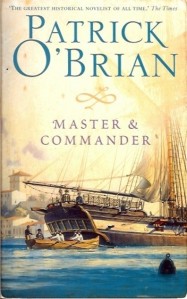
5. The Aubrey/Maturin series by Patrick O’Brian – When I started to read Master and Commander I didn’t really expect to like this nautical historical fiction series (I often struggle with books set on ships), but here I am eight books in and still enjoying it!

6. Daughters of England by Philippa Carr – This is a pseudonym of Jean Plaidy/Victoria Holt. I read an omnibus edition containing the first three books of the series – The Miracle at St Bruno’s, Lion Triumphant and The Witch from the Sea – and did intend to continue with the fourth one, but never have.

7. The Gervase Fen series by Edmund Crispin – I loved the first Edmund Crispin book I read, The Moving Toyshop, but was less impressed with the second, The Case of the Gilded Fly. There are lots more in the series still to try, though, and the good thing is they don’t need to be read in order.

8. The Amelia Peabody series by Elizabeth Peters – I loved Crocodile on the Sandbank, a mystery set in 19th century Egypt, when I read it back in 2012, but thirteen years later I’ve still only read two more books from the series. I do have the next one ready to start!

9. Temeraire by Naomi Novik – I wasn’t sure if I would like this series set in an alternate history version of the Napoleonic Wars (with dragons), but I loved the first book, Temeraire, and went on to read the second one, Throne of Jade. Seven more to go!

10. Barsetshire Chronicles by Angela Thirkell – I liked, but didn’t love, High Rising and Wild Strawberries, set in Thirkell’s fictional Barsetshire (originally created by Anthony Trollope). I’m planning to continue with the series but am happy to work through the books at a slow pace.

~

Have you read any of these? Are you currently reading a series that you would like to finish?

Six Degrees of Separation: From I Want Everything to Soot

It’s the first Saturday of the month which means it’s time for another Six Degrees of Separation, hosted by Kate of Books are my Favourite and Best. The idea is that Kate chooses a book to use as a starting point and then we have to link it to six other books of our choice to form a chain. A book doesn’t have to be connected to all of the others on the list – only to the one next to it in the chain.

This month we’re starting with I Want Everything by Dominic Amerena. I haven’t read it, but here’s what it’s about:

You all know this, of course, but years and years ago, acclaimed Australian novelist Brenda Shales went missing. After two explosive, controversial books that would shape the literary canon of the country for decades to come — and that terrible legal scandal about plagiarism, of course — she was simply gone.

That was, right up until a frustrated young writer sees an elderly woman swimming at his local pool in Melbourne. She looks familiar…very familiar in fact. No. It couldn’t be. Stunned, he returns home to confirm the impossible truth; it’s Brenda Shales, now in her old age and stranded in a retirement home. He’s determined to pursue her, to discover what happened to her all those years ago, and to possibly fulfil his dreams of literary stardom through a tell-all biography. But when he finds her, a case of mistaken identity and Brenda’s own terrible secrets begin to derail his ambitions, and ultimately, his entire life.

~

I’m going to begin this month’s chain with another book about an author who goes missing. In Death of an Author by ECR Lorac (1), the reclusive crime writer Vivian Lestrange disappears without trace, leaving the police questioning whether he ever really existed in the first place. This is the only book I’ve read by Lorac so far and I enjoyed it, although I think it probably wasn’t the best one I could have started with – I must read another one soon!

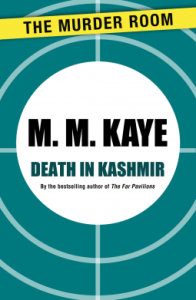
Now a simple link using the word ‘Death’. Death in Cyprus by MM Kaye (2) is one of a series of romantic suspense novels set in different parts of the world. In this one, Amanda Derington visits Cyprus while accompanying her uncle on a business trip. Before the ship even arrives at the port, a murder has taken place and Amanda finds herself the next target. The books are all standalone stories and can be read in any order – this is one of my favourites.

Another book set in Cyprus is The Sunrise by Victoria Hislop (3). The story takes place in Famagusta in 1974, when a luxury hotel, the Sunrise, is evacuated during a Greek military coup and Turkish invasion. Although I found the book quite unevenly paced, I did love the setting and the descriptions of the abandoned city in the aftermath of the invasion.

Amor Towles’ A Gentleman in Moscow (4) is another book with a hotel setting. It tells the story of a Russian Count who is sentenced to spend the rest of his days under house arrest in Moscow’s Metropol Hotel. I loved this book and found it very inspiring to see how the Count managed to lead such a fulfilling life during his confinement.

Room by Emma Donoghue (5) also deals with confinement. It’s narrated by five-year-old Jack, who is being held captive with his mother inside a single room and has never seen the outside world. Although the plot is quite disturbing and it also took me a while to get used to Jack’s narrative voice, I eventually became gripped.

Like Room, Andrew Martin’s Soot (6) has a four letter title with a double o in the middle. This is the only similarity, though, as this book is a mystery set in 18th century York and revolving around the murder of a painter of silhouettes. I really enjoyed this book, so it’s a good place to end my chain!

~

And that’s my chain for this month. My links have included: missing authors, the word ‘death’, Cyprus, hotels, confinement and four letter titles.

In November we’ll be starting with We Have Always Lived in the Castle by Shirley Jackson – at last, a book that I’ve actually read!

Top Ten Tuesday: Literary Candles

This week’s topic for Top Ten Tuesday (hosted by That Artsy Reader Girl) is “Literary/Bookish Candles I’d Make (Pick a book and assign it a fragrance or fragrance combo that would make a nice candle.)” (Submitted by Heather @ The Frozen Library)

I thought this would be difficult, especially as I’m not someone who buys a lot of candles, but I actually found it surprisingly easy and fun to do. I’ve picked a combination of two or three scents for each of the books below, based on either the title or the setting. Let me know what you think!

1. The Language of Flowers by Vanessa Diffenbaugh is about a young woman who works as a florist and learns how to communicate using different flowers to represent emotions. As a companion candle, I’ve chosen a floral fragrance of rose, lily and violet.

2. In Tracy Chevalier’s At the Edge of the Orchard, a couple try to establish an orchard in the Black Swamp of Ohio. An apple and cinnamon candle quickly came to mind!

3. The next one is obvious. I’ve matched Wild Strawberries, the second book in Angela Thirkell’s Barsetshire series, with a strawberry candle. I wasn’t sure which other scents would go well with strawberry, but a quick google search suggested rhubarb.

4. Shadow of the Moon by MM Kaye, a book I loved, is set in India during the Sepoy Mutiny. This made me think of two scents associated with India: jasmine and sandalwood.

5. Moving away from floral and fruity scents for a while, my next candle combines chocolate, vanilla and almond. It represents Midnight in Everwood by MA Kuzniar, a retelling of The Nutcracker set in a sugar-filled fantasy land.

6. In The Beekeeper’s Apprentice, the first in Laurie R. King’s Mary Russell series, Sherlock Holmes has retired to the Sussex countryside to become a beekeeper. I’ve paired a honey and lemon candle with this one.

7. The Seas by Samantha Hunt is set in a lonely coastal town and features a girl who believes she is a mermaid. I think a seaweed and samphire candle is appropriate!

8. Hallowe’en Party by Agatha Christie is a Poirot novel in which a murder takes place at a children’s Halloween party. I’ve put together a warm, autumnal candle of pumpkin, ginger and caramel.

9. In A Dictionary of Mutual Understanding by Jackie Copleton, an elderly woman reflects on her life in Nagasaki and her memories of the atomic bombing. It’s a beautiful novel with some very moving moments. My candle combines Japanese fragrances of cherry blossom, mimosa and pear.

10. I hope it’s not too early to mention Christmas! Inspired by a true classic, A Christmas Carol by Charles Dickens, a suitable candle could include pine, balsam and nutmeg.

~

What do you think? Would you buy any of these candles? And have you read any of the books associated with them?

Six Degrees of Separation: From Ghost Cities to Major Pettigrew’s Last Stand

It’s the first Saturday of the month which means it’s time for another Six Degrees of Separation, hosted by Kate of Books are my Favourite and Best. The idea is that Kate chooses a book to use as a starting point and then we have to link it to six other books of our choice to form a chain. A book doesn’t have to be connected to all of the others on the list – only to the one next to it in the chain.

This month we’re starting with Ghost Cities by Siang Lu. It’s not a book that I’ve read, but here’s what it’s about:

Ghost Cities – inspired by the vacant, uninhabited megacities of China – follows multiple narratives, including one in which a young man named Xiang is fired from his job as a translator at Sydney’s Chinese Consulate after it is discovered he doesn’t speak a word of Chinese and has been relying entirely on Google Translate for his work.

How is his relocation to one such ghost city connected to a parallel odyssey in which an ancient Emperor creates a thousand doubles of Himself? Or where a horny mountain gains sentience? Where a chess-playing automaton hides a deadly secret? Or a tale in which every book in the known Empire is destroyed – then re-created, page by page and book by book, all in the name of love and art?

I had trouble thinking of a first link this month, so I’ve just gone for something very obvious – another novel about China! Edward Rutherfurd’s China (1) tells the story of 19th century China, covering key events such as the Opium Wars and the Boxer Rebellion through the lives of several fictional families.

The word ‘China’ also appears in the title of Bone China by Laura Purcell (2), but this time it refers not to the country but the type of porcelain. This is a Gothic novel set in the 19th century on the coast of Cornwall where our narrator has taken a new position as nurse to Louise Pinecroft, a woman who spends her days sitting silently in a room surrounded by china cups and plates. This book was published in the US as The House of Whispers, just in case there’s any confusion!

One of the characters in Bone China is a doctor who is carrying out research into consumption (tuberculosis). The Victorian Chaise-longue (3), an unsettling novella by Marghanita Laski, features a young woman recovering from tuberculosis in 1950s London. Falling asleep on a chaise-longue in the drawing room, she wakes up to find herself in the year 1864.

Staying with a furniture theme, my next book is The Poison Bed by Elizabeth Fremantle (4). This is a fictional account of the real-life Thomas Overbury murder case, a poisoning which took place in the early 17th century and implicated Robert Carr, a favourite of King James VI and I, and his wife, Frances Howard.

Cyanide is a type of poison, so my next link leads me to Sparkling Cyanide by Agatha Christie (5), in which a beautiful heiress is poisoned while celebrating her birthday in a restaurant. No Poirot or Miss Marple in this one, but it does feature one of Christie’s other recurring characters, Colonel Race.

I looked for another book I’d read with a glass on the cover but struggled to find one, so I’m linking to one with teacups on the cover instead. Major Pettigrew’s Last Stand by Helen Simonson (6) is a lovely book about the relationship between a retired British Army officer and a widowed Pakistani woman.

~

And that’s my chain for September! My links included: Books about China, the word ‘China’, tuberculosis, furniture, poison and pictures of drinks.

In October we’ll be starting with I Want Everything by Dominic Amerena.

20 Books of Summer: Final Recap Questionnaire

With this year’s 20 Books of Summer challenge now over, one of our hosts – Emma of Words and Peace – has compiled a final questionnaire to help us look back at what we read during the summer months.

I’m pleased to say that I completed all 20 books for only the second time since I started participating in 2017. I think the reason for my success this year is that I only listed 14 books in advance and left the other six slots empty so I had the freedom to choose books as I went along (my only rule was that they needed to be books I’d acquired prior to January 2025).

Here’s what I managed to read:

1. Come, Tell Me How You Live by Agatha Christie
2. One, Two, Buckle My Shoe by Agatha Christie
3. Jennie by Paul Gallico
4. A Schooling in Murder by Andrew Taylor
5. The Stepdaughter by Caroline Blackwood
6. The Rush by Beth Lewis
7. These Wicked Devices by Matthew Plampin
8. Sinners by Elizabeth Fremantle
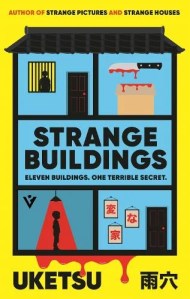
9. Strange Houses by Uketsu
10. The Spiral Staircase by Ethel Lina White
11. The Art of a Lie by Laura Shepherd-Robinson
12. Love and Other Poisons by Lesley McDowell
13. How to Lose a Lord in Ten Days by Sophie Irwin
14. The House at Devil’s Neck by Tom Mead
15. A Caribbean Mystery by Agatha Christie
16. The Lily and the Lion by Maurice Druon
17. The End of the Affair by Graham Greene
18. Fire from Heaven by Mary Renault
19. No Life for a Lady by Hannah Dolby
20. The Silent Companions by Laura Purcell

~

And here are my answers to Emma’s questionnaire.

1. Did you manage to finish all 10/15/20 books? If not, what kept you from completing the challenge?

Yes, I did (see above)!

2. Of all the books you read this summer, which one(s) was/were your favorite and why? Did you DNF any? Why?

My favourites were The Rush by Beth Lewis, Sinners by Elizabeth Fremantle, No Life for a Lady by Hannah Dolby and The Silent Companions by Laura Purcell. I didn’t DNF anything, but I usually don’t anyway.

3. Which book surprised you the most, either by being better or worse than you expected?

I wasn’t expecting Come, Tell Me How You Live to be so funny. Christie’s own personality really shines through in that book.

4. Did you notice any patterns in the genres you chose or enjoyed this summer?

Not surprisingly, most of the books I read were either historical fiction or mystery/crime. I did also manage to include a children’s book, a non-fiction book and some classics.

5. Which one had the best cover?

I like the cover of The Art of a Lie by Laura Shepherd-Robinson.

6. Which one was the longest? And the shortest?

The shortest was The Stepdaughter by Caroline Blackwood at 128 pages. The Lily and the Lion by Maurice Druon, at 432 pages, was the longest.

7. Did you read them mostly in print? ebook? audio?

Most of them were ebooks as they were review copies from NetGalley. The rest were print copies – I don’t tend to listen to audio.

8. Imagine you’re hosting a “20 Books of Summer” book club wrap party.
Which book would you nominate as the guest of honor, and what kind of toast or speech would you give celebrating it?

I would nominate The Rush by Beth Lewis, one of my favourite books of the summer, because it has such an interesting setting – Canada during the Gold Rush. I would invite all three main characters (Kate, Ellen and Martha) to speak to the audience about their experiences of life in such a harsh but fascinating environment.

9. Looking back at all the characters you met over the summer, which one would you want as a summer buddy for a weekend getaway, and what activity would you do together?

There weren’t actually many characters from my summer reading that I would like to spend time with! I did love Violet Hamilton from No Life for a Lady so I would join her in Hastings and we could be Lady Detectives together for the weekend.

~

Did you take part in 20 Books of Summer? How did you do?

Thanks to Emma and Annabel for hosting this year’s challenge! I’m looking forward to 2026.

Top Ten Tuesday: Books with occupations in the title

This week’s topic for Top Ten Tuesday (hosted by That Artsy Reader Girl) is “Books With Occupations in the Title (Submitted by Hopewell’s Public Library of Life)”.

There were lots of books I could have listed here, but I’ve chosen ten with different occupations in the title and have restricted myself to only using books that I’ve reviewed on my blog.

1. The Bookseller of Inverness by SG MacLean – Historical mystery set in Scotland in the aftermath of the failed 1745 Jacobite Rising.

2. The Tutor by Andrea Chapin – A fictional account of a year in the life of William Shakespeare.

3. The Glassmaker by Tracey Chevalier – This novel follows the story of a family of Murano glassmakers through several centuries.

4. The Butcher’s Hook by Janet Ellis – An unusual, unsettling novel set in Georgian London and with a protagonist more anti-heroine than heroine.

5. The Lighthouse Keeper’s Daughter by Hazel Gaynor – Historical fiction about the life of Grace Darling.

6. The Dressmaker of Khair Khana by Gayle Tzemach Lemmon – Non-fiction about a woman who starts her own dressmaking business in Taliban-ruled Afghanistan.

7. The Professor by Charlotte Brontë – Classic Victorian novel narrated by an Englishman who (like Brontë herself) becomes a teacher at a school in Brussels.

8. Death of an Author by E.C.R. Lorac – In this Golden Age crime novel from 1935, an author disappears without trace, leaving the police questioning whether he ever even existed.

9. The Pharmacist’s Wife by Vanessa Tait – A dark historical novel set in Victorian Edinburgh.

10. The Glovemaker by Stacia Brown – A glovemaker’s assistant is accused of killing her illegitimate child in 17th century England.

~

Have you read any of these? Which other books with occupations in the title have you read?

Top Ten Tuesday: Very Long Books!

This week’s topic for Top Ten Tuesday (hosted by That Artsy Reader Girl) is “Books with a High Page Count

The books I’ve listed here all have more than 800 pages. There are others that I read before I started blogging, but I’ve only included books that I’ve actually reviewed on my blog. Not surprisingly, most of them are classics.

1. Clarissa by Samuel Richardson (1536 pages) – I read this epistolary 18th century novel as part of a year-long group read and probably wouldn’t have made it to the end otherwise. I liked it overall but it was so repetitive!

2. Les Miserables by Victor Hugo (1456 pages) – I loved the story but could have done without so many digressions. It’s one of the books on this list that I really think could have been a lot shorter!

3. War and Peace by Leo Tolstoy (1440 pages) – This was another group read, although I abandoned the schedule after a while to finish it at my own pace. I enjoyed it, but liked the peace sections much better than the war!

4. The Count of Monte Cristo by Alexandre Dumas (1312 pages) – This is one of my favourite books of all time, so I don’t mind the length at all and would have been happy for it to be even longer!

5. Kristin Lavransdatter by Sigrid Undset (1168 pages) – This bleak but fascinating Norwegian classic is technically three separate books, but often packaged together in one volume. My edition was translated by Tiina Nunnally.

6. The Sunne in Splendour by Sharon Penman (1080 pages) – This long, detailed and gripping account of the life of Richard III is one of my favourite historical novels.

7. Don Quixote by Miguel de Cervantes (1056 pages) – I read this slowly, over the course of a year, which suited its episodic structure. I found it much more entertaining than I’d expected.

8. David Copperfield by Charles Dickens (1024 pages) – I’ve read a lot of very long Dickens novels, but decided to limit my list to one book per author. This is one I remember enjoying.

9. The Far Pavilions by M.M. Kaye (964 pages) – Another of my favourite historical novels, set in 19th century India and following the story of a British orphan raised as a Hindu.

10. Go Tell the Bees that I am Gone by Diana Gabaldon (930 pages) – I loved the first three or four books in the Outlander series, but I feel that the more recent ones have been getting weaker as they get longer and longer! Still looking forward to book ten, though.

Honourable mentions: The Last Chronicle of Barset by Anthony Trollope (928 pages), Quicksilver by Neal Stephenson (922 pages), The Mirror and the Light by Hilary Mantel (912 pages) Paris by Edward Rutherfurd (848 pages), The Luminaries by Eleanor Catton (832 pages).

~

Have you read any of these? What are the longest books you’ve read? Laura is hosting Doorstoppers in December later this year, if any of these books appeal – but better get started now!