My Commonplace Book: February 2026

A selection of quotes and pictures to represent February’s reading:

commonplace book
noun
a book into which notable extracts from other works are copied for personal use.

~

And I was alone, but I wasn’t really alone. Can a bookworm ever really call herself alone when she’s surrounded by books?

The Astral Library by Kate Quinn (2026)

~

Mrs Oliver cast a glance over the Penguin display.

The Affair of the Second Goldfish,’ she mused, ‘that’s quite a good one. The Cat it was Who Died – that’s where I made a blowpipe a foot long and it’s really six feet. Ridiculous that a blowpipe should be that size, but someone wrote from a museum to tell me so. Sometimes I think there are people who only read books in the hope of finding mistakes in them…’

Mrs McGinty’s Dead by Agatha Christie (1952)

~
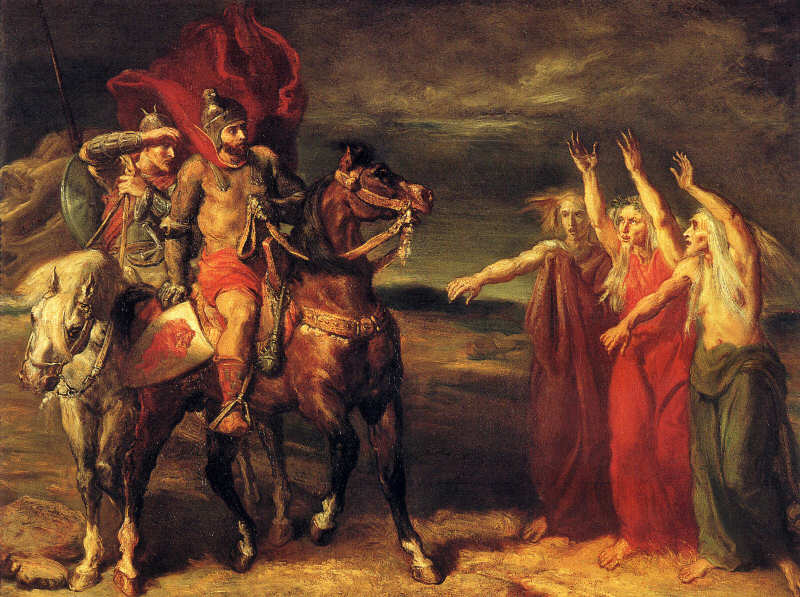
“Macbeth and Banquo meeting the witches on the heath” by Théodore Chassériau, 1855

‘I want to find out her story. Not just the story about a king who ruled well even though the play said he didn’t, but the true story of a woman who’s never been named. Who was portrayed as a hag, but who was sweet and lovely and treated really badly.’ She felt the injustice sweep through her. ‘It’s important.’

The Three Witches by Elena Collins (2026)

~

“Misfortune never comes alone. Sometimes, coincidence creates the impossible,” I said slowly. I truly believed it.

The Mill House Murders by Yukito Ayatsuji (1988)

~

“One of the problems with real life,” I responded, “is that it seldom allows one to learn the complete outcome of a story. Novels have the advantage, as do movies, of being able to explain everything in the final chapter.”

The Final Problem by Arturo Pérez-Reverte (2023)

~
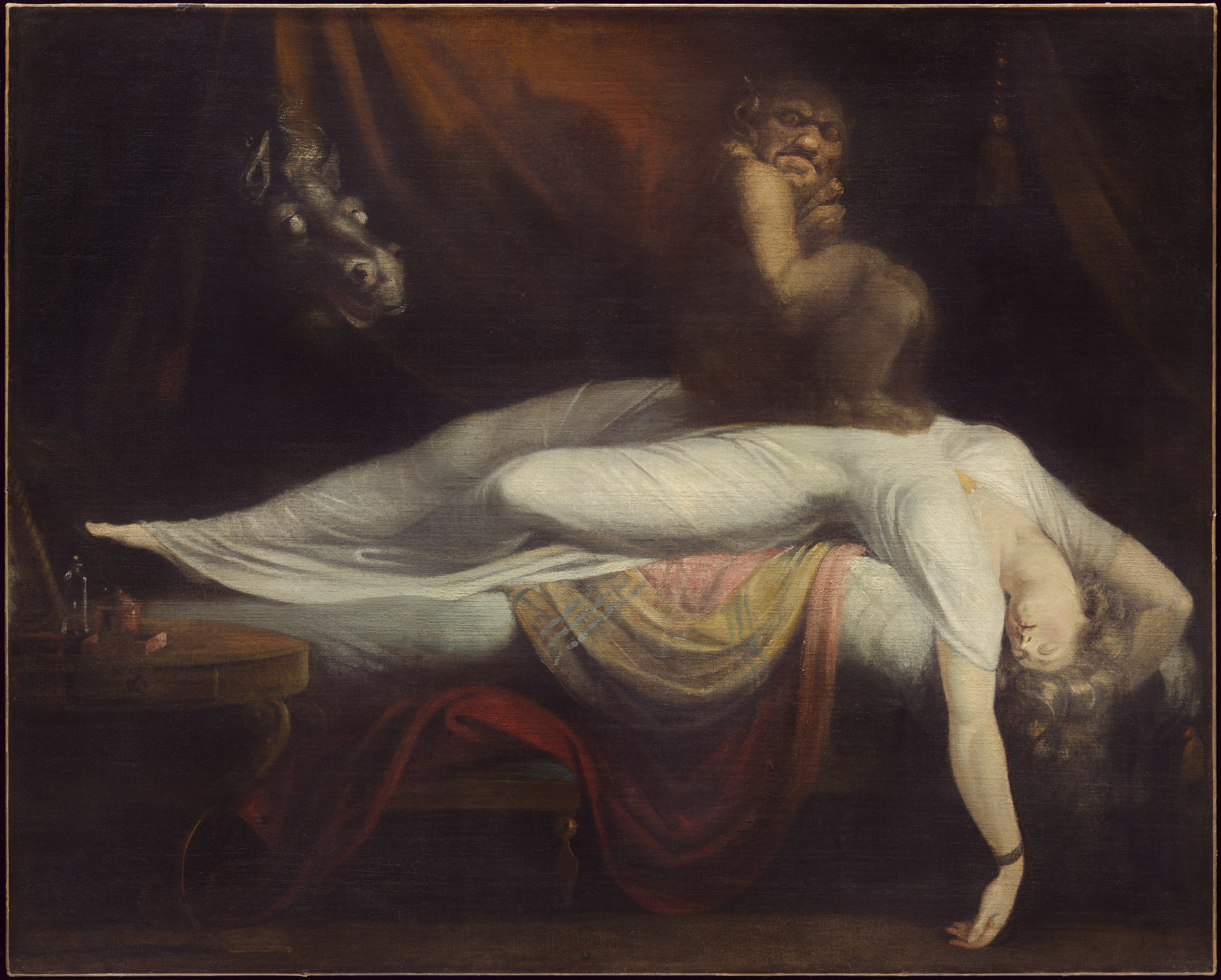
“The Nightmare” by Henry Fuseli (1781)

She preferred the field to the archives, to inhabit bodily the places people had been before. That way she felt she could learn far more than studying an isolated specimen in a museum.

The Night Hag by Hester Musson (2026)

~

People like us, on the lower rungs of the ladder, we are always standing on the edge of a precipice. Disaster is far easier to come by than fortune, but it is so much easier to ignore that truth. How can any of us live if we acknowledge the cheapness of our lives?

The House of Fallen Sisters by Louise Hare (2026)

~

‘Old stories,’ he said. ‘People tell stories about places, and when those people are gone, the stories are all you have left.’

Murder Like Clockwork by Nicola Whyte (2026)

~
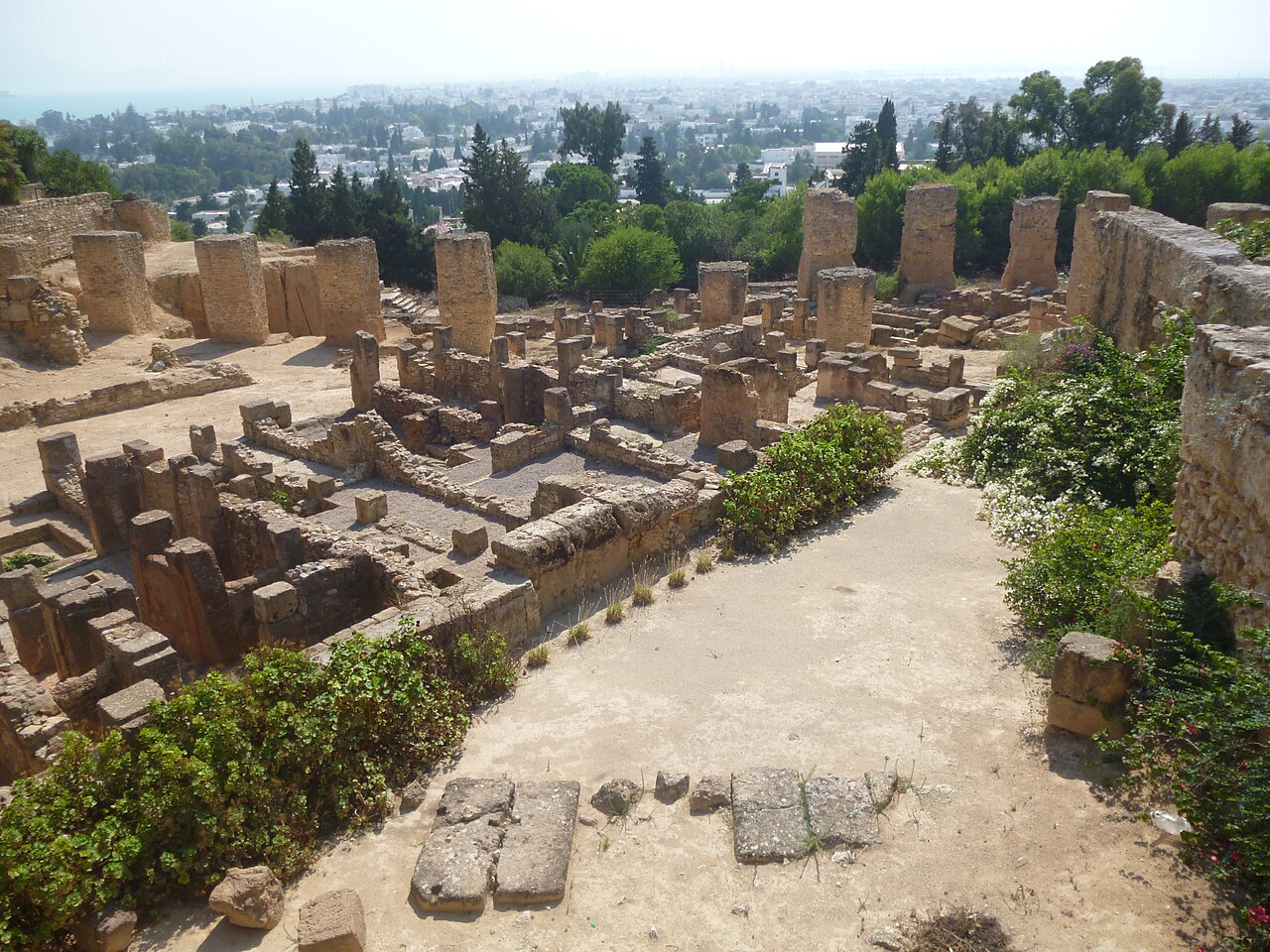
Archaeological Site of Carthage by Christian Manhart

She had allowed herself to be carried by feeling, to live and love more freely than she had dared to in a decade. It had been easier to take each step while she was not looking at the path ahead.

The Wandering Queen by Claire Heywood (2026)

~

One’s life, viewed as a whole, is always the answer to the most important questions. Along the way, does it matter what one says, what words and principles one chooses to justify oneself? At the very end, one’s answers to the questions the world has posed with such relentlessness are to be found in the facts of one’s life.

Embers by Sándor Márai (1942)

~

Favourite books read in February:

The Wandering Queen and Murder Like Clockwork

Authors read for the first time in February:

Claire Heywood, Louise Hare, Sándor Márai, Elena Collins, Nicola Whyte

Places visited in my February reading:

Japan, England, US, Scotland, Greece, Austria, Ancient Tyre and Carthage

~

Reading notes: February was a good month of reading for me. I was pleased to be able to contribute three reviews for Read Indies Month and one for Hungarian Lit Month, as well as taking part in the Read Christie challenge. As you can see, I haven’t reviewed everything I read in February yet, but I’m hoping to catch up soon.

March is another month with plenty of events taking place in the book blogging world: there’s Reading Wales and Reading Ireland, both of which I’m hoping to join in with. Chris of Calmgrove Books is also hosting March Magics, celebrating the work of Diana Wynne Jones and Terry Pratchett. And with an end of March target for finishing our Classics Club Spin books, I have The Trouble with Lichen by John Wyndham lined up to start soon.

How was your February? Do you have any plans for your March reading?

My Commonplace Book: January 2026

A selection of quotes and pictures to represent January’s reading:

commonplace book
noun
a book into which notable extracts from other works are copied for personal use.

~

I love the cycle of it, the repetition. Whatever changes in life, wherever I end up, the patterns of the garden will always be the same.

A Slow and Secret Poison by Carmella Lowkis (2026)

~

Round and round they run in that long-ago, and in the now Angie realizes her face is wet with tears, tears as silent as the space between her and that other life. Nostalgia is nothing more than a trick of the mind, she tells herself. A way to turn plain memories into great ones.

Penitence by Kristin Koval (2025)

~

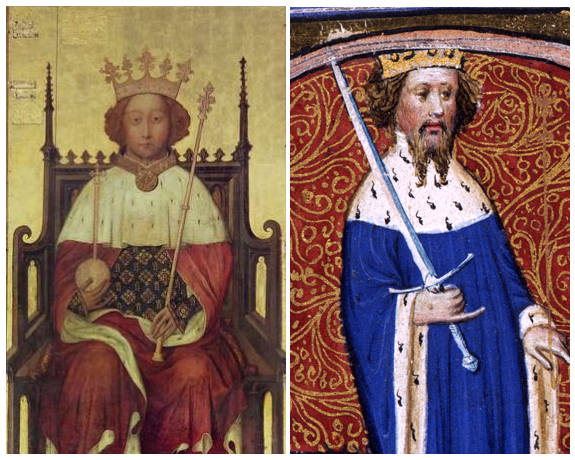
Richard II and Henry IV

They both loved the excitement of the chase, learning to ride with hawks on their wrists and greyhounds at their heels. Otherwise, the two boys were finding that they had little in common, even apart from the suspicions Richard had already begun to harbour about the political intentions of Henry’s father. On both sides, greater familiarity bred, if not contempt, then at least a profoundly wary distance.

The Eagle and the Hart by Helen Castor (2024)

~

‘I wish only to paint well. To please those who employ me, and to create something beautiful to offset the darkness in the world.’

The House of Barbary by Isabelle Schuler (2025)

~

The obvious tactic would be to make a good impression in the courtroom. If she’s deliberately doing the opposite, I think that must be because she really is sure of her innocence. After all, the defendant knows better than anyone else whether they committed the crime.

Suspicion by Seichō Matsumoto (1982)

~

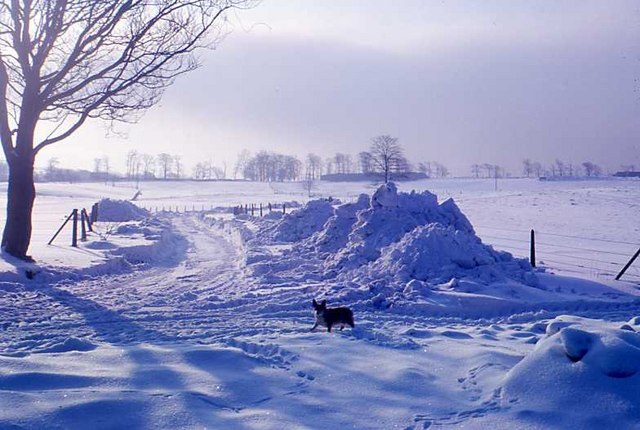
The winter of 1962/63
Photo by Richard Johnson, CC BY-SA 2.0, Link

“And though he was not much given to thinking about love, did not much care for the word, thought it had been worn to a kind of uselessness, gutted by the advertising men and the crooners, and even by politicians, some of whom seemed, recently, to have discovered it, it struck him that in the end it might just mean a willingness to imagine another’s life. To do that. To make the effort.”

The Land in Winter by Andrew Miller (2024)

~

Is it that they reinforce each other’s strengths and compensate for each other’s weaknesses? Or is it the reluctance to be alone that bonds them? It doesn’t apply only to romantic couples either, but to friends, relatives, colleagues. How many good things, and how many crimes, have been the work of a bonded pair?

The Killer Question by Janice Hallett (2025)

~

His profession was strangely intimate: selling an apartment or a house was a big deal. It was selling a piece of your life, a piece of your memories – sometimes even a whole life. It was closing a door that you would never open again.

An Astronomer in Love by Antoine Laurain (2023)

~

Saint Brigid of Kildare
By Octave 444CC BY-SA 4.0, Link

But it is an easy thing to be angry with someone you do not care about. To be angry with one you love, that has weight to it.

Brigid by Kim Curran (2026)

~

What makes you sad about the thought of dying? had been one of the questions. The team had debated whether to ask it. But they had posed the question and none of the interviewees had seemed to mind. She remembered the most poignant of the answers: ‘There will always be unread books.’

Room 706 by Ellie Levenson (2026)

~

That night I really grasped the fact that most of the time we have no notion of what we really want, or we lose sight of it. And the even more important fact that what we really want, just doesn’t fit in with life as a whole, or very seldom. Most folk learn slowly, and never altogether learn at all. I seemed to learn all at once.

All the Fear of the Fair by various authors (2025) – quote from The Swords by Robert Aickman

~

My favourite books read in January:

The Killer Question

Authors read for the first time in January:

Kristin Koval, Seichō Matsumoto, Antoine Laurain, Ellie Levenson, Eleanor Smith, L.P. Hartley, Tod Robbins, W.L. George, Charles Birkin, Robert Silverberg, Richard Middleton, Charles Davy, J.D. Beresford, Gerald Kersh

Places visited in my January reading:

England, US, Switzerland, Japan, Ireland, France, India, Madagascar, Isle de France (Mauritius)

~

Reading notes: January was a good month for me in terms of reading. You’ll have noticed that I tried lots of new authors, which I’m pleased about, although most of them appeared in the short story collection All the Fear of the Fair, a book I’m hoping to review soon. I read Seichō Matsumoto’s Suspicion for the Japanese Literature Challenge and as that particular challenge continues to run throughout February, I’ll see if I can fit in something by another Japanese author as well.

Also in February, Karen of Kaggsy’s Bookish Ramblings is hosting another #ReadIndies month, highlighting books published by independent publishers, and I’m sure I’ll have at least a few reviews to post that will count towards that event. I didn’t take part in the Read Christie challenge in January because I’d already read all of the suggested titles, but I’m planning to join in with Mrs McGinty’s Dead in February.

How was your January? Do you have any plans for your February reading?

My Commonplace Book: December 2025

For the last time this year…

A selection of quotes and pictures to represent December’s reading:

commonplace book
noun
a book into which notable extracts from other works are copied for personal use.

~

“A pity she was so fond of snooping. ‘Knowledge is power,’ she used to say, and I used to tell her ‘If you want to be liked, miss, don’t you be a Poll Pry,’ but she only laughed at me.”

The Art School Murders by Moray Dalton (1943)

~

She would curl up in a secluded corner and read story after story, while her father worked nearby in companionable silence. For Evie – like her father – old stories and legends meant escape into another world, one of boundless possibilities and far horizons.

Circle of Shadows by Marisa Linton (2025)

~

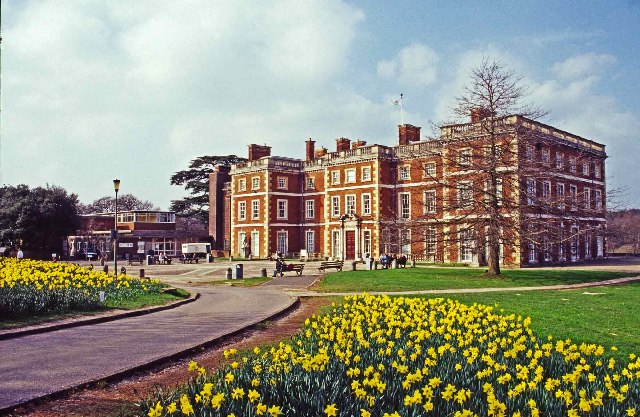
Trent Park House, North London

“Art’s important at a time like this. It gives human life its value. It’s what we’re fighting for.”

Appointment in Paris by Jane Thynne (2025)

~

There was something in the Bible about casting out fear. If you could cast out fear, everything would be all right. But you couldn’t do it. Too many people were frightened of too many things.

Alice by Elizabeth Eliot (1949)

~

“The most difficult thing in this world,” he said, “is to know where one’s duty lies, for duty is a mechanism of the mind, and the heart is forever stepping in and playing havoc with one’s resolutions.”

The Bishop Murder Case by S.S. Van Dine (1929)

~

“Always, everywhere, the Wolves gather on the frontiers, waiting. It needs only that a man should lower his eye for a moment, and they will be in to strip the bones. Rome is failing, my children.”

The Silver Branch by Rosemary Sutcliff (1957)

~

Santa Catalina Monastery, Peru – By Hans Brian Brandsberg Berg

“You think you are brave, because you do not cry to others to help you, but no one,” and here her voice broke down to a whisper, “no one can withstand cruelty on their own. It is vain to think you can do so. There are times when it is a kind and courageous act to cry out, to tell the world what is happening, to warn other victims…”

The Book of Human Skin by Michelle Lovric (2010)

~

We use the same word, ‘story’, to describe a verifiable matter of fact, a self-proclaimed work of the imagination, and the brazen lie. Did we never foresee a problem?

The Tower by Thea Lenarduzzi (2025)

~

“That’s…very noble of you.”

He shrugs. “Maybe. Because if I’ve learned one thing from history, it’s that there’s no point holding on to something when it wants to be free.”

The Inn at Penglas Cove by Lauren Westwood (2026)

~

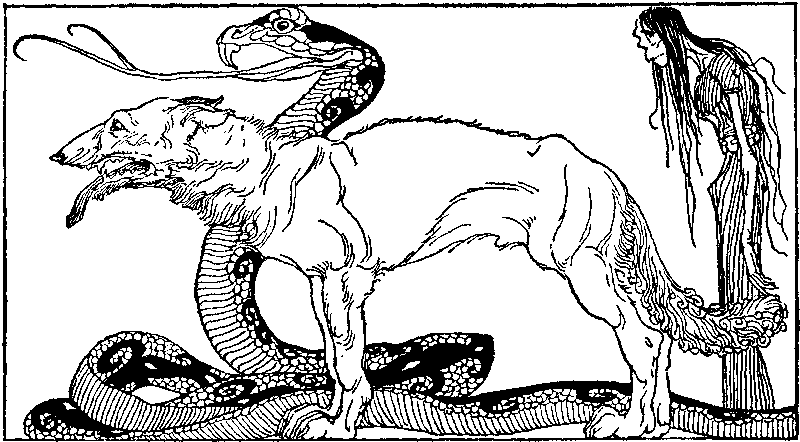
“The children of Loki” (1920) by Willy Pogany.

Grief is complicated. Doesn’t matter whether you think you have a right to feel it. Doesn’t matter how long you’ve carried it. Grief burrows away inside you and sometimes it helps to talk.

The Shapeshifter’s Daughter by Sally Magnusson (2025)

~

He wondered how much kinder all humanity would be if any day the rich and powerful might find themselves the lowest of the low, and those they used to trample suddenly in charge.

The Hill in the Dark Grove by Liam Higginson (2026)

~

Favourite books read in December:

Circle of Shadows and The Inn at Penglas Cove

Authors read for the first time in December:

Moray Dalton, Marisa Linton, Elizabeth Eliot, S.S. Van Dine, Liam Higginson, Thea Lenarduzzi, Lauren Westwood

Places visited in my December reading:

England, France, Italy, Peru, US, Scotland, Wales

~

Reading notes: December was a good month of reading for me. I’m pleased that I managed to read two books for Dean Street December (Alice and The Art School Murders) and one for Doorstoppers in December (The Book of Human Skin as well as making a start on my January NetGalley books. I haven’t had time to review everything I read this month, but I do at least have most of the reviews written and scheduled. I’m looking forward to starting a fresh new year of reading tomorrow!

What did you read in December? Do you have any plans for January?

Happy New Year!

My Commonplace Book: November 2025

A selection of quotes and pictures to represent November’s reading:

commonplace book
noun
a book into which notable extracts from other works are copied for personal use.

~

Over centuries, literature has served as a refuge for the weary, a space where individuals could confront their fears, process trauma, or simply escape into a world kinder than their own.

100 Books to Live By by Joseph Piercy (2025)

~

‘Yes, ’tis a powerful thing, fear. But never forget that loneliness gives you strength. You can spend your life observing others, on the outside looking in. You end up learning a lot about human nature that way.’

The Last Love Song by Lucinda Riley (2025)

~

The classic Cluedo board layout

‘God, Elva, I could kick myself. It’s the first rule of detective fiction – never delay questioning a suspect, because they’re bound to be bumped off before you get to them.’

The Christmas Clue by Nicola Upson (2025)

~

Stupidity is the same as evil if you judge by the results.

Surfacing by Margaret Atwood (1972)

~

‘I do,’ I say. ‘Art is generally about love, one way or another, don’t you think? Every book. Every song. Every film. All of us trying to live with it. Or get over it. Or wonder why we’ve never had it. Not necessarily love in a sexual sense. Love between parents and children. Love for a place.’

Air by John Boyne (2025)

~

Lotus blossoms had to rise from the depths of murky waters in order to bloom. They were survivors. And so was she.

Ghosts of Grayhaven by Amy Newbold and Lark Wright (2025)

~

Illustration of “Twelve Lords a Leaping”, from Mirth Without Mischief

But, as is often the case, some people do not take the advice solicited so passionately from their loved ones, yet find themselves considering the same advice if offered to them by another party…

The Twelve Days of Christmas by Susan Stokes-Chapman (2025)

~

Fear can resemble a crackling sound in a frozen ditch.

The Ice Palace by Tarjei Vesaas (1963)

~

“Is it a ruin now? I love ruins. The ancient sadness of them – the knowledge one is treading through history.”

All of Us Murderers by KJ Charles (2025)

~

Some people are so righteous in their minds they can’t accept mistakes in others. They would rather cradle condemnation at their breasts than help someone in trouble. He can’t understand that kind of bitterness at all.

Seascraper by Benjamin Wood (2025)

~

How had she reached such a state, Cheryl wondered, as they made their laborious way down the stairs, when a few kindly meant words of a stranger were all that stopped her sinking to the floor in despair.

The Token by Sharon Bolton (2025)

~

Jason and Medea by John William Waterhouse (1907)

All love is war, if you are one of the weapons.

No Friend to This House by Natalie Haynes (2025)

~

If one man does not make a move, the other must, and by permitting the adversary to make the attack one learns something about him.

The Big Four by Agatha Christie (1927)

~

With all my heart, I envied those to whom the night was nothing. A fleeting mind full of dreams and nothing, nothing more. Rest and refreshment. The quiet lost hours of the night. But for me it was not so.

The Inn Closes for Christmas by Cledwyn Hughes (1947)

~

There is an old German saying: there are always grounds for hope, it just has to be the right hope.

Tales from the Underworld by Hans Fallada (2014)

~

Favourite books read in November:

The Twelve Days of Christmas and Seascraper

Authors read for the first time in November:

Nicola Upson, Joseph Piercy, Benjamin Wood, KJ Charles, Cledwyn Hughes, Amy Newbold and Lark Wright

Places visited in my November reading:

England, Ancient Greece, Norway, US, Canada, Ireland, Germany, Wales, France, Italy

~

Reading notes: I’ve read a lot more this month than I have over the last few months, which is largely due to Novellas in November. I read five novellas, all of which I enjoyed to varying degrees. One of them counted towards Margaret Atwood Reading Month too and I also managed to read books for German Literature Month and Nonfiction November, as well as joining in with all the nonfiction weekly topics. Other than that, I read a few Christmas books and some review copies from my NetGalley shelf.

There are two more events coming up in December – Doorstoppers in December hosted by Laura Tisdall, a chance for us to read some of the bigger books on our shelves after a month devoted to the shorter ones in November, and Dean Street Press December, hosted as ever by Liz. December and the end of the year also means I’ll be posting my annual preview of upcoming historical fiction releases for the year ahead, as well as revealing my books of the year for 2025 – so look out for both of those posts later in the month!

~

What did you read in November? Do you have any plans for your December reading?

My Commonplace Book: October 2025

A selection of quotes and pictures to represent October’s reading:

commonplace book
noun
a book into which notable extracts from other works are copied for personal use.

~

Very old vampires are anachronisms: they are living history, bringing the past right into the present, with all the traumas of the past. Every one of us who has written about a vampire knows our own vampire very well, because each reflects something of what we thought of humanity at the time we wrote them.

White Teeth, Red Blood: Selected Vampiric Verses by various authors (2025)

~

And so they strolled on over the sand, happy in each other’s company but with their minds full of things they should have said, but didn’t.

A Ghost Hunter’s Guide to Solving a Murder by F.H. Petford (2025)

~

The Cat-sith, a creature from Celtic mythology.

So, give me the unknown any day. Forget what other people learned, discover something new, something no one else knows, that’s when you make a name for yourself. That’s when the big people come looking for you.

Monstrous Tales by various authors (2025)
(Quote from Boneless by Janice Hallett)

~

‘Nor I!’ Granmere laughed again. ‘Thou wouldst never set out to do the impossible?’

Simon reflected. ‘Nay, I think not, sir. Yet I believe that there is very little that is impossible. There is always a way.’

Simon the Coldheart by Georgette Heyer (1925)

~

I was captivated. Each wasp knows its function and performs it: no doubts, no mistakes, no misunderstandings. The beautiful logic of insect lives. A million miles from the messy irrationality of human beings.

Rainforest by Michelle Paver (2025)

~

“It’s sometimes a mistake to remember too much,” said Mitchell Dane. “Half the people in the world make their own troubles by forgetting what they ought to remember, and then they keep ’em alive by remembering what they ought to forget.”

The Black Cabinet by Patricia Wentworth (1925)

~

St Mark’s Square, Venice

But then, I told myself, trying to make sense of it, is that not the case with all of the places, things, and people we dream of, that they seem mundanely familiar and at the same time inexpressibly strange?

Venetian Vespers by John Banville (2025)

~

I thought of it, afterwards, with astonished guilt. I told myself that it is impossible to dissect your friends and separate the good from the bad, that you accept them as they are, imperfect as they are.

The Odd Flamingo by Nina Bawden (1954)

~

But the brightest lights shine only against the darkest of backgrounds…

Murder Most Haunted by Emma Mason (2025)

~

Favourite books read this month:

The Black Cabinet and Monstrous Tales

Authors read for the first time this month:

F.H. Petford, Emma Mason, Sunyi Dean, Jenn Ashworth, Abir Mukherjee – and too many poets to list them all here!

Places visited in my October reading:

England, France, Germany, Scotland, Wales, Italy, Mexico

~

Reading notes: My October reading has been devoted mainly to books for 1925 Club and also the RIP XX challenge, so lots of dark, atmospheric or ghostly reads this month! November is always a busy month in the book blogging calendar (I wrote about my plans here) and I’m looking forward to joining in with Nonfiction November, Novellas in November and, if I have time, Margaret Atwood Reading Month and German Literature Month.

What did you read in October? Do you have any plans for November?

My Commonplace Book: September 2025

A selection of quotes and pictures to represent September’s reading:

commonplace book
noun
a book into which notable extracts from other works are copied for personal use.

~

‘The pandemic was such a strange time,’ she murmured. ‘Everyone in the world lived through a nightmare. So much uncertainty and fear for the future. We couldn’t take anything for granted. Not even in Midwinter. A village like nowhere else.’

Miss Winter in the Library with a Knife by Martin Edwards (2025)

~

Ohio buckeye tree

Therein, she thought, lies the unbearable solitude of a lie: you’re alone when you tell it, alone when you live it, alone when you try to dismantle it.

Buckeye by Patrick Ryan (2025)

~

Kuzunoha may be shown looking sorrowful and with her head downcast, but her eyes are wide open. And neither of them has been painted in. If the finishing touches are the most important part of a painting, then looking at this one will really show you just how important the eyes are to a human face.

Murder at the Black Cat Cafe by Seishi Yokomizo (1947)

~

‘That’s life, Gabriel. None of us knows the full consequences of our decisions. History is the history of unintended consequences. Life is random, unpredictable.’

The Predicament by William Boyd (2025)

~

Eurasian woodcock

It grew late, later than Mattis usually stayed up. All the same, he didn’t feel like going to bed, and went on strolling about outside. When you had something on your mind it was even worse, lying in bed twisting and turning.

The Birds by Tarjei Vesaas (1957)

~

Poems take us to all kinds of strange and surprising intimacies in the past; they invite us into unexpected empathy with individuals and moments far away.

A History of England in 25 Poems by Catherine Clarke (2025)

~

Favourite books read in September:

Buckeye, A History of England in 25 Poems, The Predicament and The Birds

Authors read for the first time in September:

Patrick Ryan, Catherine Clarke, Tarjei Vesaas

Places visited in my September reading:

England, US, Japan, Guatemala, Germany, Norway

~

Reading notes: This was another slower month for me in terms of the number of books I finished, but I enjoyed them all and loved most of them, which is the most important thing. It was also good to discover some new authors and to add Guatemala, a completely new setting for me, to my list of countries visited! I read two books that counted towards the RIP XX challenge and have lots more lined up for October – although I don’t know how many I’ll have time for because October also means 1925 Club, the latest club year hosted by Karen and Simon, which is always something to look forward to!

What did you read in September? Do you have any plans for October?

My Commonplace Book: August 2025

A selection of quotes and pictures to represent August’s reading:

commonplace book
noun
a book into which notable extracts from other works are copied for personal use.

~

“We all wear masks,” he said, in a voice that was soft but impossible to ignore. “Every single one of us. And for different reasons. Some, to conceal. Others, to deceive. But masks are funny things. The very presence of a mask tells us there is something behind it.”

The House at Devil’s Neck by Tom Mead (2025)

~

“No, my friend, I am not drunk. I have just been to the dentist, and need not return for another six months! Is it not the most beautiful thought?”

One, Two, Buckle My Shoe by Agatha Christie (1940)

~

Dummy boards by Georg David Matthieu

Did evil have wants and needs? Surely not, surely that would make it too human. No longer a tug from the depths of the abyss, but something sentient that could surface in anyone.

The Silent Companions by Laura Purcell (2017)

~

Karma is a natural consequence. Badness accrues. It affects the way you live your life, how you perceive the world. When you do evil things, you see the world as petty and selfish and cruel.

Katabasis by RF Kuang (2025)

~

“My goodness, are you all one family?”

“Yes, all one family,” Henny spoke up. “I’m Henrietta, Henny for short; I’m ten. Ella’s twelve, Sarah is eight, Charlotte is six and Gertie is four.”

“A step-and-stairs family!” The librarian laughed and the tiny freckles on her pert nose seemed to laugh with her.

“That’s a good name for us,” said Ella. “Some people call us an all-of-a-kind family.”

All-of-a-Kind-Family by Sydney Taylor (1951)

~

Lamorna, Cornwall

I also toyed with the idea of installing electricity, but Vow Cave was ‘four poles’ away from the nearest house, and the cost was prohibitive. Since then I have sometimes wondered whether this absence of electricity was not a blessing in disguise: does not a dwelling without it breathe more freely? Some of the tension of modern life is due, I think, to the fact that people surround themselves day and night with the pulsations of electricity in one form or other.

The Living Stones: Cornwall by Ithell Colquhoun (1957)

~

Favourite books read in August:

The Silent Companions and All-of-a-Kind Family

Authors read for the first time in August:

RF Kuang, Sydney Taylor

Places visited in my August reading:

England, US, Hell

~

Reading notes: I didn’t finish as many books as usual in August, for various reasons, but on a more positive note I completed the 20 Books of Summer challenge for only the second time in my nine years of participating. I’ll be posting a summary of the challenge next week, but for now I can say that being flexible is the key to success!

In September (and October), I’m looking forward to joining in with RIP (Readers Imbibing Peril). It’s the 20th year of RIP and it has been hosted by @perilreaders on Instagram for the last few years, but I’ve noticed plenty of book bloggers still taking part as well. I won’t be posting a list in advance, but I have plenty of dark, spooky reads lined up for the next two months!

~

How was your August? Do you have any plans for September?