My Commonplace Book: May 2025

A selection of quotes and pictures to represent May’s reading:

commonplace book
noun
a book into which notable extracts from other works are copied for personal use.

~

‘One must accept the fact that we have only one companion in this world, a companion who accompanies us from the cradle to the grave – our own self. Get on good terms with that companion – learn to live with yourself.’

A Daughter’s a Daughter by Mary Westmacott (1952)

~

We regard our own memories as truths, when they are often just the stories we have told ourselves over time. They become the truth we live by, or with. They become our lives.

Written on the Dark by Guy Gavriel Kay (2025)

~

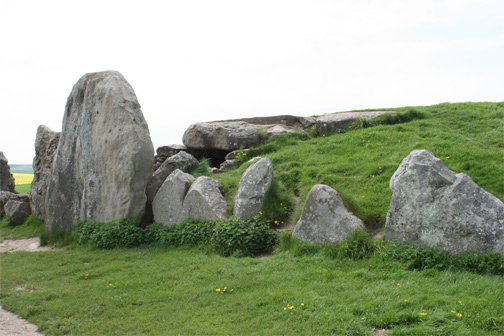
Twelve Bens mountain range, County Galway, Ireland

Language, legend, music, dress, ways of making tools and of building, all belong together; if one goes, it means that the life pattern is broken, and the rest will follow.

The Crying of the Wind: Ireland by Ithell Colquhoun (1955)

~

‘One of their company, a boy of fifteen, has been arrested for the girl’s murder. None of us believe he did it.’

Frances looks interested. ‘Why not?’

‘Because he loved her.’

‘Love does not preclude violence. Ask Master Shakespeare.’

Traitor’s Legacy by SJ Parris (2025)

~

“But still, a tragedy without a tune is like a sun that doesn’t give off heat; dead and nothing will grow from it. When men go to war, they do it to music. When they set sail for better shores and row into the vast blue, they do it to music. Even our hearts beat to some rhythm. And the director who neglects it neglects what makes us men.”

Glorious Exploits by Ferdia Lennon (2024)

~

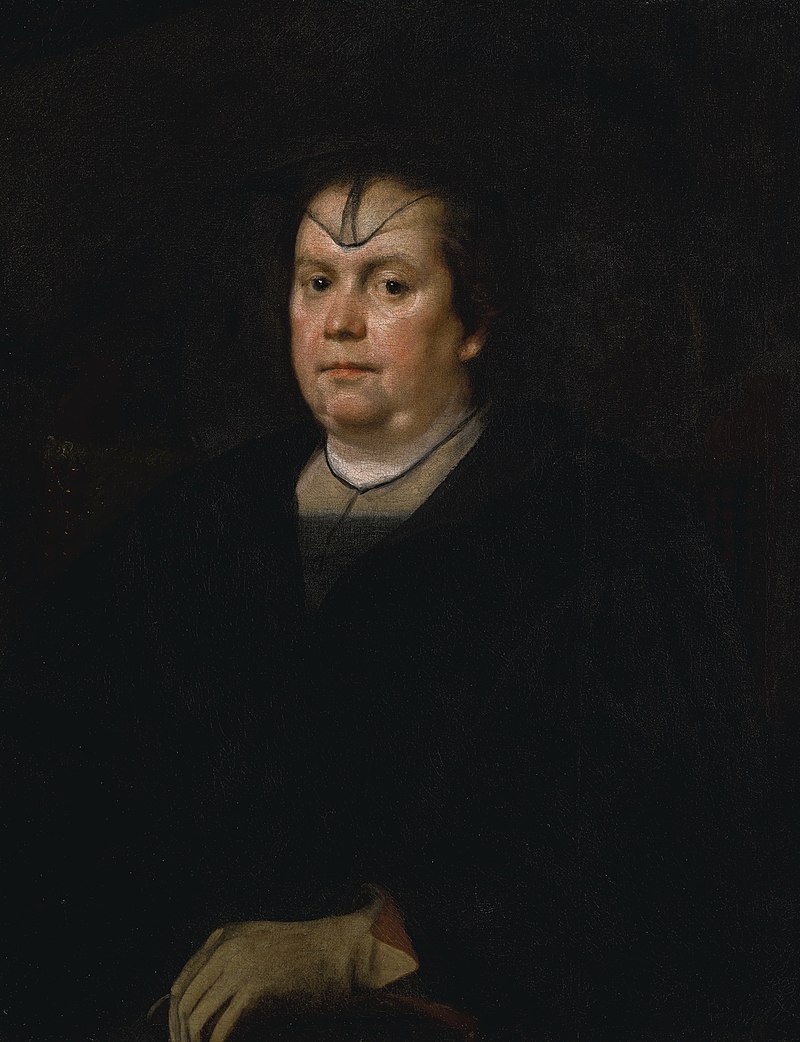
Cardinal Thomas Wolsey, Portrait at Trinity College, Cambridge, c. 1585–1596

Father knew the value of getting on in life. ‘Education is the way to advancement,’ he often said, and while he was not rich, he had somehow found the fees of 8d a quarter to send Tom to the grammar school in Ipswich.

The Cardinal by Alison Weir (2025)

~

Nothing was ever what you expected. That was the beauty and the terror of life.

White Corridor by Christopher Fowler (2007)

~

Yet she had a story, I knew it, and I knew that telling it would help. The girls were encouraged to talk openly about their past lives in order to understand and emphasise with one another. Giving them words made life easier to bear and allowed them to move on.

The Surgeon’s House by Jody Cooksley (2025)

~

Favourite books read in May:

A Daughter’s a Daughter and Written on the Dark

Authors read for the first time in May:

Ferdia Lennon, Ithell Colquhoun, Jody Cooksley

Places visited in my May reading:

England, the fictional kingdom of Ferrieres, Sicily, Ireland, France

~

Reading notes: May was a better reading month for me than last month and I enjoyed everything I read. I’m still behind with reviews, but will try to post the outstanding ones in June. 20 Books of Summer begins tomorrow and the first book I’ll be reading is Jennie by Paul Gallico for Mallika’s upcoming cat-themed Reading the Meow event. I’m looking forward to working through the rest of my list – and in particular, seeing which books will fill the empty spaces I’ve left for reading at whim!

What did you read in May? Do you have any plans for June?

My Commonplace Book: April 2025

A selection of quotes and pictures to represent April’s reading:

commonplace book
noun
a book into which notable extracts from other works are copied for personal use.

~

“What on earth made you bring all those books with you?” said Edmund, looking up from his model, with a note of impatience in his voice. “They’re far more than you can possibly read in the time we’re going to be here.”

“I know,” said Richard, “but I like to choose the book I’m going to read from a lot of other books. That’s half the fun of reading.”

Linden Rise by Richmal Crompton (1952)

~

London in the Great Smog of 1952

“Lying wastes more time than anything else in the modern world.”

The Tiger in the Smoke by Margery Allingham (1952)

~

‘But that leaves us with a bit of a problem,’ Dr Sarah said. ‘We can’t sit idly by and let such a thing happen. No matter the rights and wrongs of it. Do you see?’

The Edinburgh Murders by Catriona McPherson (2025)

~

Les Baux-de-Provence, France

Each day had its own page, which Olive Branson had used not only for her appointments, in themselves scarce, but also to record books she wanted to read and observations about the weather. Here and there, the diary turned into a commonplace book, with short passages in French that had caught her eye.

That Dark Spring by Susannah Stapleton (2025)

~

When Clara had proved right about the drifting back, George blamed her. Blaming inwardly is annoying when the one blamed is ignorant that blaming is taking place.

Aunt Clara by Noel Streatfeild (1952)

~

People are complicated; most people do some good things and some bad things.

The Six Murders of Daphne St Clair by MacKenzie Common

~

Favourite book read this month:

The Tiger in the Smoke

Authors read for the first time this month:

Susannah Stapleton, MacKenzie Common

Countries visited in my April reading:

England, France, Scotland, US, Canada

~

Reading notes: April was a slower reading month for me, compared to the first three months of the year, and it was mainly devoted to reading books for the 1952 Club. Reading less means I’ve had time to start catching up with my backlog of reviews, although I still have some left to post.

I somehow have seven books from NetGalley all with publication dates in May and have so far only read one of them, so that’s what I’ll have to concentrate on for the next few weeks. Otherwise, I don’t have any other reading plans for May and will just see where my mood takes me.

What did you read in April? Do you have any plans for May?

My Commonplace Book: March 2025

A selection of quotes and pictures to represent March’s reading:

commonplace book
noun
a book into which notable extracts from other works are copied for personal use.

~

You never knew in advance if a decision was the right one. All you could do was try to imagine the future and use that to help you make up your mind in a difficult situation, and if you couldn’t imagine the future, well, you had to make up your mind anyway.

Clear by Carys Davies (2024)

~

Fiction, if it is worth anything at all, is about life but it is not life.

The Game is Murder by Hazell Ward (2025)

~

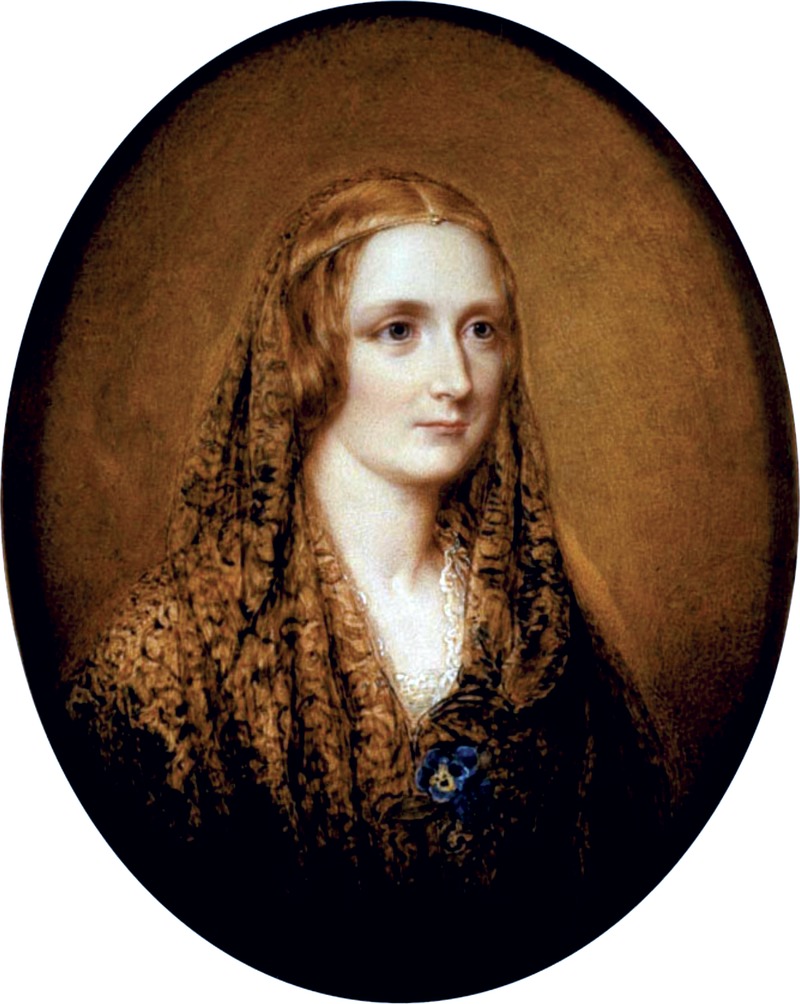
Miniature of Mary Shelley, Reginald Easton c. 1857

Grief marks a person as fire marks a house. You can paint over the soot and repair the boards, but the rooms will be haunted always by the scent of ashes.

Love, Sex & Frankenstein by Caroline Lea (2025)

~

The last winter days went by like weary brokedown soldiers at the end of a war.

The Heart in Winter by Kevin Barry (2024)

~

One does not have to leave the old world to find a new one. A new one can be built by changing the old one for the better, one act of love at a time, seeding new memories among the old, so that both can bloom together.

The Darkening Globe by Naomi Kelsey (2025)

~

Women who adore chocolate to the same degree enjoy a friendship that can’t be shaken.

The Versailles Formula by Nancy Bilyeau (2025)

~

A carved relief of Cleopatra and her son Caesarion at the Temple of Dendera, Egypt, 1st century BC

What survives our mortal death is our ideas, transcribed in art and words and stone, they are the piece of us that remains. But if that can disappear in a single night, consumed by flame? What then for immortality?

Cleopatra by Natasha Solomons (2025)

~

As in life, so in a game of hazard, skill will make something of the worst of throws.

Moonfleet by John Meade Falkner (1898)

~

The lesson, said he, be this – we tell tales of what lurks out in the dark so that we need not acknowledge the truth within.

What truth?

That, oftentymes, the fiend be our fault. Do you understand?

Mother Naked by Glen James Brown (2024)

~

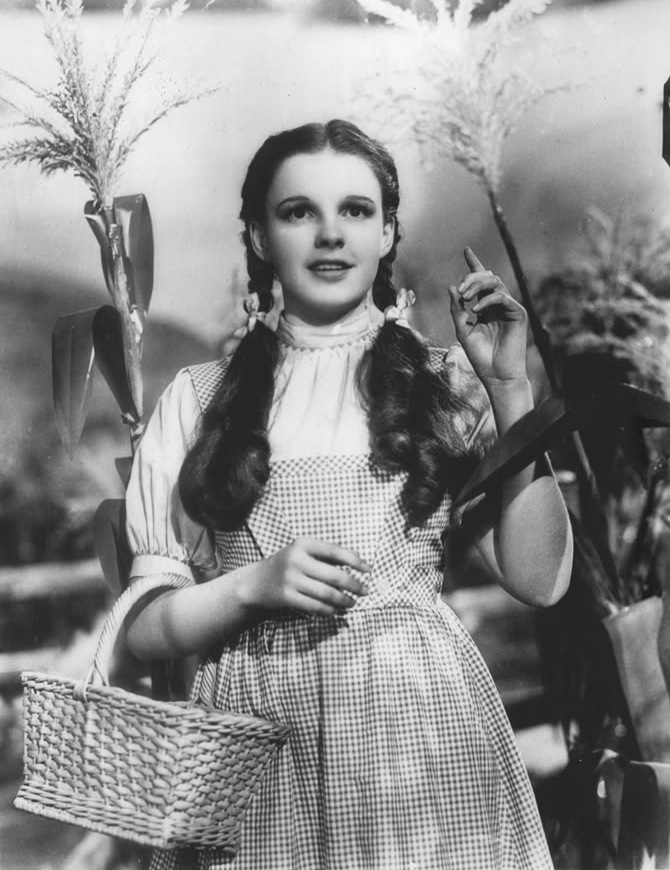
Judy Garland as Dorothy in The Wizard of Oz, 1939

Finally, Annie looked at Emily. ‘You’re right. We must all follow our hearts, even when it scares us, because the most frightening thing of all is to not do the thing we are meant to.’

Before Dorothy by Hazel Gaynor (2025)

~

Trials, like life, always go on to some sort of ultimate conclusion, however shockingly they unfold along the way.

A Case of Life and Limb by Sally Smith (2025)

~

As individuals, none of us matters much. Our joint effort matters, though, when we work together.

Secrets of the Bees by Jane Johnson (2025)

~

Favourite books read in March:

A Case of Life and Limb, Love, Sex & Frankenstein, Mother Naked and The Versailles Formula

Authors read for the first time in March:

Carys Davies, Hazell Ward, Kevin Barry, Naomi Kelsey, John Meade Falkner, Glen James Brown

Countries visited in my March reading:

Scotland, England, USA, Egypt, Switzerland, France

~

Reading notes: I was pleased to be able to take part in both the Reading Ireland and Reading Wales events this month (and read new-to-me authors for both – Kevin Barry and Carys Davies respectively). I also made some progress with my Classics Club list and the Walter Scott Prize longlist, as well as reading some of my upcoming releases from NetGalley. I’ve only posted reviews for a few of these books so far, but the rest will follow, I promise!

In April, I’m looking forward to 1952 Club, which will be hosted by Kaggsy’s Bookish Ramblings and Stuck in a Book. I’m already halfway through my first book for that and have some others I’m also hoping to get to. 21-27 April, if you want to join in.

What did you read in March? Do you have any plans for April?

My Commonplace Book: February 2025

A selection of quotes and pictures to represent February’s reading:

commonplace book
noun
a book into which notable extracts from other works are copied for personal use.

~

Maybe we just have to react the way we want to. Maybe what we feel and how we feel is the right way to feel about losing someone, irrespective of whether it’s sadness or whatever. It’s just us and how we respond to our own feelings. It’s how we are and we can’t help how we are.

The Other People by C.B. Everett (2025)

~

Ah, blogs. The concept now almost seemed quaint. Everyone had a different take on theirs. The blogs came in all sorts of styles: some simple diaries, some hobby sites, others outlets for political rants…

Strange Pictures by Uketsu tr. Jim Rion (2022)

~

Knights obey, and if they don’t, they’re not real knights, and they don’t have honour, and the only thing in the world that’s ever really yours is your honour.

The Hymn to Dionysus by Natasha Pulley (2025)

~

Bamburgh Castle

Hannah was taken aback by her stepmother’s vehemence. ‘All of history is interpretation to one degree or another,’ she said as mildly as she could, ‘and often there is truth at the heart of these myths.’

The Secrets of the Rose by Nicola Cornick (2025)

~

Truth is merely an abstract concept after all, she muses. Everyone has a different version of it.

The Eights by Joanna Miller (2025)

~

‘If there is one thing which stands out more than another in this world – and of course,’ said Derek, ‘one thing always does stand out more than another – it is that there are some things which you cannot explain to a policeman.’

Four Days’ Wonder by A.A. Milne (1933)

~

Nothing has done more damage to modern detective fiction than the invention of the internet. Forget Sherlock Holmes and his ratiocination or Hercule Poirot’s little grey cells. We have all the information in the world at our fingertips and there’s no longer any need for deduction.

Marble Hall Murders by Anthony Horowitz (2025)

~

Hand-carved carousel horse by Allan Herschell Company

Perhaps life is like that, Maisie thinks, perhaps life is like a carousel – it has ups and downs but it eventually comes full circle.

The Midnight Carousel by Fiza Saeed McLynn (2025)

~

‘Aunt Jane,’ said Raymond, looking at her curiously, ‘how do you do it? You have lived such a peaceful life and yet nothing seems to surprise you.’

‘I always find one thing very like another in this world,’ said Miss Marple.

The Thirteen Problems by Agatha Christie (1932)

~

There is no perfect ending. There are an infinite number of endings.

The Queen and the Countess by Anne O’Brien (2025)

~

From the doomed dying world man had ruined, I seemed to catch sight of this other one, new, infinitely alive, and of boundless potential.

Ice by Anna Kavan (1967)

~

Corfu

Corfu light was ineffable, full of shivery tricks that made you see what could not be there, made you unable to see what was there, with an enchantment that meant you heard things too.

The Greek House by Dinah Jefferies (2025)

~

‘The truth is like a water creature,’ he continued. ‘Too large for any single man to catch. He can take hold of one tentacle, or a silver tail, or a fin, but he’ll never catch the whole creature, not on his own.’

The Hounding by Xenobe Purvis (2025)

~

His answer was to create the bicycling detective. This was a two-fold publicity tactic: he had something other agencies did not – not just a lady detective, but a mobile one; and he was creating the impression of a technologically advanced agency using relatively new forms of transport rather than going out on foot. It was novel, but subject to hyperbole, as Slater referred to an ‘army’ of cycling lady detectives in his adverts, which is unlikely.

Britain’s Greatest Private Detective by Nell Darby (2025)

~

Favourite books read in February:

The Midnight Carousel, Marble Hall Murders, Strange Pictures and Four Days’ Wonder

Places visited in my February reading:

England, Japan, Greece, France, USA, Canary Islands

Authors read for the first time in February:

C.B. Everett, Uketsu, Fiza Saeed McLynn, Anna Kavan, Nell Darby, Xenobe Purvis

~

Reading notes: February seems to have been a very quick month, but it has also been a productive one for me in terms of reading. I managed to contribute three reviews to #ReadIndies month, joined in with the Read Christie challenge and read most of my NetGalley books for March and April. I haven’t posted many reviews, but do have most of them written and scheduled.

In March, I’m hoping to read at least one book each for Reading Ireland Month and Reading Wales Month. I would also like to make some progress with the Walter Scott Prize longlist which was announced a few weeks ago (some of the books on the list are by Welsh or Irish authors, which is perfect).

What did you read in February? Do you have any plans for March?

My Commonplace Book: January 2025

A selection of quotes and pictures to represent January’s reading:

commonplace book
noun
a book into which notable extracts from other works are copied for personal use.

~

When freedoms are forbidden, their enjoyment becomes an especially delicious pleasure.

The Ghosts of Rome by Joseph O’Connor (2025)

~

‘It’s a terrible thing you’ve lived through,’ she said. ‘And you won’t forget it easily. Perhaps you won’t forget it ever. But we have a saying in Swedish: you cannot prevent the birds of sadness from flying over your head, but you can stop them from nesting in your hair.’

The Lost Passenger by Frances Quinn (2025)

~

Johannes Vermeer – Woman in blue reading a letter

It is a quiet painting – no bells ring. It is quiet not just because the young woman is reading, but quiet in its colours. There are no shouting bright orange carpets or loud lemon-yellow bodices or flaming red dresses that scream. Everything is muted.

Woman in Blue by Douglas Bruton (2025)

~

Biography and good novels were his favourite reading, a discovery of his own as he grew up since he came from a family who only read if they were ill in bed. But for him such books helped to satisfy the acute curiosity about what people did and why they did it that made him a notable detective.

Tea on Sunday by Lettice Cooper (1973)

~

Most people just want an easy life. It’s unsettling when someone starts pulling apart the stories we’ve stitched together, the things we tell ourselves for comfort.

The Sirens by Emilia Hart (2025)

~

Japanese embroidered Temari balls

“I’m not saying he was a bad man, but when you withdraw from the world like that, you end up closing in on yourself. Take, for example, the stories that everybody talks about, only then to forget them the very next day. Well, he held on to them, you see, deep inside himself.”

The Little Sparrow Murders by Seishi Yokomizo (1959)

~

She wonders when it became so difficult to find answers. Or has the truth always come hard won? People rarely say what they mean, relationships are fraught with misunderstandings, who can really be objective? How can she even hope to pinpoint motives and actions, drives and desires when they are all so muddled and slippery, even in the best of us? Who among us really knows our own heart, let alone someone else’s?

Murder at Gulls Nest by Jess Kidd (2025)

~

‘No, no,’ says Lou, and her top hat shakes in the moonlight. ‘Tastes can develop, certainly, but at any given time, one’s opinion on art is certainly valid. ‘Tis the point of art to stir us whether we have studied paintings for fifty years or are looking upon our first painting. Be confident in your tastes, Alice. But do be open to the notion that they are wilful and unpredictable and will almost certainly change.’

The Portrait Artist by Dani Heywood-Lonsdale (2025)

~

The Tuatha Dé Danann as depicted in John Duncan’s Riders of the Sidhe (1911)

I asked him later if he wanted to know how and when he would die. He laughed and said, ‘Sure, stories don’t die.’ But they do. They die and they are forgotten and new stories take their place, just as kings follow kings.

The Morrigan by Kim Curran (2025)

~

To think of anything else except the way things are is just to live in a world of the imagination – fine for some things but not for real life. Don’t you agree?

This Sweet Sickness by Patricia Highsmith (1960)

~

Favourite books read in January:

This Sweet Sickness, Woman in Blue and The Lost Passenger

Authors read for the first time in January:

Lettice Cooper, Dani Heywood-Lonsdale, Kim Curran

Places visited in my January reading:

Italy, Vatican City, England, Australia, Netherlands, Japan, Ireland, USA

~

January reading notes: This was a good start to the year for me, reading-wise. Most of the books I’ve read are NetGalley books being released over the next few months, so I’ll be posting my reviews around the publication dates. I also managed to read a book for the Japanese Literature Challenge and may even have time to fit in another one in February! Another event I’m hoping to join in with in February is #ReadIndies hosted by Kaggsy’s Bookish Ramblings and Lizzy’s Literary Life. I’m also planning to participate in #ReadChristie2025, as next month’s book, The Thirteen Problems, is one I haven’t read yet.

How was your January? Do you have any plans for your February reading?

My Commonplace Book: December 2024

A selection of quotes and pictures to represent December’s reading:

commonplace book
noun
a book into which notable extracts from other works are copied for personal use.

~

“That,” said Lazare, “is a pity. Have you ever reflected, Miss Sally, how much wasted energy would be saved if people would do at the beginning what, in the end, they will certainly have to do.”

The Red Lacquer Case by Patricia Wentworth (1924)

~

Life was a puzzle box. It was made up of innumerable little drawers – some locked, some not, with glinting clasps and metal teeth. Someone was playing a game with her.

The Queen of Fives by Alex Hay (2025)

~

Interior of the Morgan Library, New York

But at his core, Sean was captivated by Helen as no one else had ever been, and he coaxed from her all that was special. The most important thing to her was that he accepted her, just as she was.

The Ghost of Madison Avenue by Nancy Bilyeau (2019)

~

It reminded her that you can throw away the rules of life and let your creative instinct take over; that you can put strange, unfitting parts together and create something atypical but beautiful, something truly unique.

Carrion Crow by Heather Parry (2025)

~

“We’ve got to take our chance. But if we don’t, it may never come again. Not like this. If we love one another, nothing else matters. Nothing. Get that straight. Love is something which you can’t order on a plate. It just serves itself – or doesn’t – whether you’re German or American. We must just take it – it may never be offered us again.”

A House on the Rhine by Frances Faviell (1955)

~

Guillemot eggs

Each bird laid an egg that was unlike any other that had ever been laid by any other guillemot in history. In the high-density fields of the North Yorkshire cliffs, where birds might roost at the rate of fifty pairs to a square yard, it was required that a bird knew exactly which egg was theirs, so that it didn’t end up warming one six inches to the left, or an inch to the right.

The Impossible Thing by Belinda Bauer (2025)

~

My peers made arguments aplenty in their lilting Latin platitudes: that dreams lack reason, which is the truth of all matters. That dreams defy logic, which is the root of all things. That in dreaming, we surrender our enlightened mindfulness to baser, animalistic instincts and, in doing so, negate the essence of our humanity. I listened to the arguments unconvinced, for it often seemed to me that I was more human for dreaming.

The Resurrectionist by A. Rae Dunlap (2025)

~

“But you know, my dear,” said Poirot gently, “people are never like what you remember them. You make them as the years go by, more and more the way you wish them to be, and as you think you remember them. If you want to remember them as agreeable and gay and handsome, you make them far more so than they actually were.”

Third Girl by Agatha Christie (1966)

~

Canaries, St Lucia

Her enthusiasm always surprised Agnes. ‘How you so, Margaret? You always happy and you have so much energy I wish I had.’

‘My mother always told me life don’t wait for no one. You have to make it yourself.’

Island Song by Pepsi Demacque-Crockett (2025)

~

Also, I got just gently interested in history. I said to the history teacher, Miss Nelson, ‘The reason I like this subject is because everything in it is safely in the past, so I don’t have to get worked up and worried about it,’ and she replied that she thought this was ‘a very odd and ignorant attitude to have and really not true at all.’

Absolutely and Forever by Rose Tremain (2023)

~

‘Sofi!’ There is an unusual edge to her tone and she darts a look at my drawing. ‘Do not speak so when you only see half the story. Why do you always fixate on circumstances that do not concern you, when you could be improving your own?’

The Woman in the Wallpaper by Lora Jones (2025)

~

Favourite books read in December:

The Impossible Thing, The Resurrectionist and Island Song

Authors read for the first time in December:

Heather Parry, A. Rae Dunlap, Lora Jones, Pepsi Demacque-Crockett

Countries visited in my December reading:

England, Scotland, Germany, Wales, USA, France, St Lucia

~

Reading notes: I took part in Dean Street December this month, reading two very different books published by Dean Street Press – The Red Lacquer Case and A House on the Rhine. As you can see, I’ve also been reading some of the books on my NetGalley shelf with publication dates in January and February, which I’ll be reviewing nearer the time.

In January, I’m hoping to read something for Japanese Literature Month but otherwise I’m just looking forward to starting a fresh new year of reading!

What did you read in December? Do you have any plans for your January reading?

Happy New Year!

My Commonplace Book: November 2024

A selection of quotes and pictures to represent November’s reading:

commonplace book
noun
a book into which notable extracts from other works are copied for personal use.

~

‘I don’t study paintings from a technical viewpoint, because I don’t know how. I believe that a painting should be a work of beauty, something that you never cease wanting to look at. With too much knowledge you can find fault with each one and it takes away the sheer joy.’

The Hidden Girl by Lucinda Riley (2024)

~

‘Maybe his conscience got to him,’ suggests Aaron.

‘Maybe,’ I agree. ‘It would be so much easier to go through life if you didn’t have one, don’t you think?’

Fire by John Boyne (2024)

~

There are no words. I cannot describe what happened to my brain. I can only tell my feelings, which never stop. Feelings are beyond words; beyond action; beyond reason. They are the only true and constant indicators we ever have in this cruel life.

What Time the Sexton’s Spade Doth Rust by Alan Bradley (2024)

~

Piazza Maggiore, Bologna

What I do know is that all happiness had been torn from within me, leaving an open wound. But an open wound needs to be cauterised and I have become an adept surgeon, worthy of the medical school at the city’s university. Recollections serve no purpose and I shook my head to chase them away.

City of Silk by Glennis Virgo (2024)

~

But lies are so intriguing, aren’t they? Why people tell them, how little they think through the consequences, how desperate they become when in danger of being found out. To my mind, lies are second only to secrets, and those I find deeply exciting.

The Neighbour’s Secret by Sharon Bolton (2024)

~

‘I’ve heard it all before, officer,’ she says sadly to you. ‘When you get to my age, you lose faith in the authorities. Justice is for the rich and powerful.’

Murder in Tinseltown by Max Nightingale (2024)

~

‘The heart of a woman is a strange thing,’ wrote Fryn. ‘Human beings, especially women, are bound not only by money, by loneliness, but by the hope that they are needed.’

The Peepshow: The Murders at 10 Rillington Place by Kate Summerscale (2024)

~

Portrait of Cassandra by Evelyn de Morgan, 1898

Ordinary people. She’d forgotten how often he uses that phrase, always with the same…well, what is it, exactly? Curiosity? Fascination? As if ‘ordinary people’ were some kind of exotic species you’d be lucky to spot twice in a lifetime.

The Voyage Home by Pat Barker (2024)

~

But few human heads are capable of remaining cool under excitement. Those who are not present think how stupid must have been those who were; those who are reflect afterwards how simple it would have been to do this, that, or the other.

The Dancing Partner by Jerome K. Jerome, from Deadly Dolls: Midnight Tales of Uncanny Playthings (2024)

~

I’ve seen photographs of her, naturally, but when you’re young you’re not storing away memories or impressions. Life just washes over you – it happens, uncommented on.

Gabriel’s Moon by William Boyd (2024)

~

“We are strangers,” Peter said darkly. “Whom do we know? One – if you’re lucky. Not many more. Looks like we’ve got to learn how we can trust each other. How we can tell…How can we dare…Everything rests on trust between strangers. Everything else is a house of cards.”

Mischief by Charlotte Armstrong (1950)

~

Joan of Kent

Jeanette looked round, seeing their environment with new eyes. ‘You have a veritable store of tales and legends,’ she said.

‘Everyone should. Stories stir men’s minds, hearts and souls until they become part of it. And then they live in the tale and the tale lives in them – and both become immortal.’

The Royal Rebel by Elizabeth Chadwick (2024)

~

Eleanor learned another lesson – and that is that the vast majority of people can’t see what’s in front of them. They say they never forget a face, but the same face without makeup, a different setting? John – or Mr Rogers or whoever he really was – was right. It’s easy to become an entirely new person. One only needs audacity…

Poor Girls by Clare Whitfield (2024)

~

‘But drawing is one of the best things in the world! I can’t think how you can live in London and not want to draw! Everything is so beautiful and so interesting I could be drawing for ever. And it is so useful; it helps you to remember what you have seen.’

Black Hearts in Battersea by Joan Aiken (1964)

~

Favourite book read in November:

Deadly Dolls: Midnight Tales of Uncanny Playthings

Places visited in my November reading:

England, USA, Italy, Germany, Spain, Greece, France

Authors read for the first time in November:

Glennis Virgo, Charlotte Armstrong, Clare Whitfield, Max Nightingale, Adèle Geras, Brian Aldiss, Camilla Grudova, Frederick E. Smith, Robert Aickman, Vernon Lee, Ysabelle Cheung

~

Reading notes: November was an excellent month of reading for me. I was able to participate in Novellas in November, Witch Week and Nonfiction November, although I didn’t manage to join in with the other events taking place this month (but I’m halfway through a Margaret Atwood book I picked up for Margaret Atwood Reading Month). Instead, I concentrated on catching up with the books on my NetGalley shelf and am now all up to date for 2024, although I do have some January 2025 releases to read soon.

I have some books lined up for Liz’s Dean Street December, which begins tomorrow, and I’ve already started reading one of them. Also in December, I’ll be posting my annual list of historical fiction to look out for in 2025 as well as choosing my books of the year for 2024!

What did you read in November? Do you have any plans for your December reading?