R.I.P. VII is here!


It’s September tomorrow and summer is coming to an end (not that we’ve had much of a summer here in the UK this year). But as the nights start to get darker it means it’s time for R.I.P. (R.eaders I.mbibing P.eril), one of my favourite reading events! As always, R.I.P. VII is hosted by Carl at Stainless Steel Droppings and runs throughout the months of September and October. The idea is to read books that could be classified as one of the following:

Mystery
Suspense
Thriller
Dark Fantasy
Gothic
Horror
Supernatural
Or anything sufficiently moody that shares a kinship with the above.

There are a few different levels of participation to choose from. I’m planning to participate in Peril the First, which means reading four books.

I’m listing below a selection of books I would like to read that fit the above categories. I certainly don’t expect to have time to read all of these before the end of October, but I wanted to give myself plenty of options. It’s also possible that I’ll change my mind and decide to read some books that I haven’t mentioned. I’m very bad at sticking to lists!

Frankenstein by Mary Shelley – This has been on my R.I.P. list for the last two years and I still haven’t read it!

The House by the Churchyard by Joseph Sheridan Le Fanu – I’ve read Uncle Silas and want to try another Le Fanu book. I might be tempted to read Carmilla instead as it’s much shorter.

The Seance by John Harwood – This was recommended to me after I read and loved John Harwood’s other novel, The Ghost Writer.

The Haunting of Hill House by Shirley Jackson – I’m hoping I’ll enjoy this as much as We Have Always Lived in the Castle.

The Strange Case of Dr. Jekyll and Mr. Hyde by Robert Louis Stevenson – It’s on my Classics Club list along with the Mary Shelley and Sheridan Le Fanu books above, so this is a good opportunity to read all three.

The Quarry by Johan Theorin – Another one that was on my list last year.

Blood Harvest by S.J. Bolton – This is the only book by S.J. Bolton that I still haven’t read.

Dragonwyck by Anya Seton – I love Anya Seton and have been wanting to read this for years!

The Woman in Black by Susan Hill – Another book I’ve been meaning to read for a long time.

A Monstrous Regiment of Women by Laurie R. King – I read the first book in the Mary Russell series in January and loved it, but still haven’t had time to read the second one.

Bleeding Heart Square by Andrew Taylor – I read The American Boy and The Anatomy of Ghosts in 2011 and enjoyed them both, so I’m looking forward to this one.

The Curse of the Pharaohs by Elizabeth Peters – Another series I started and haven’t continued with.

The Romance of the Forest by Ann Radcliffe – I’ve read three of Radcliffe’s other gothic novels, so I’d like to try this one too.

Who else is taking part in R.I.P. this year? See Carl’s post for more information and to sign up.

Classics Challenge August Prompt: Quotes from Jane Austen’s Emma

This year I am taking part in a Classics Challenge hosted by Katherine of November’s Autumn. The goal is to read at least seven classics in 2012 and every month Katherine is posting a prompt to help us discuss the books we are reading. This month we are asked to share some quotes from our current read.

The classic I just finished reading yesterday was Emma by Jane Austen. This was a re-read for me and I’ll be posting my thoughts on the book next week. For now, here are some quotes from Emma. Katherine’s prompt recommended choosing some that were not so well-known. I’m not sure it’s possible to find any quotes from a Jane Austen novel that are not well-known, so I’ve just posted a selection of my favourites. Some might be more obscure than others.

“That is the case with us all, papa. One half of the world cannot understand the pleasures of the other.”

***

“I have none of the usual inducements of women to marry. Were I to fall in love, indeed, it would be a different thing! But I never have been in love; it is not my way, or my nature; and I do not think I ever shall. And, without love, I am sure I should be a fool to change such a situation as mine.”

***

“A sanguine temper, though for ever expecting more good than occurs, does not always pay for its hopes by any proportionate depression. It soon flies over the present failure, and begins to hope again.”

***

“To be sure – our discordancies must always arise from my being in the wrong.”

“Yes,” said he, smiling, “and reason good. I was sixteen years old when you were born.”

“A material difference, then,” she replied; “and no doubt you were much my superior in judgement at that period of our lives; but does not the lapse of one-and-twenty years bring our understandings a good deal nearer?”

“Yes, a good deal nearer.”

“But still, not near enough to give me a chance of being right, if we think differently.”

***

Was it new for any thing in this world to be unequal, inconsistent, incongruous — or for chance and circumstance (as second causes) to direct the human fate?

***

“I cannot make speeches, Emma,” he soon resumed; and in a tone of such sincere, decided, intelligible tenderness as was tolerably convincing. “If I loved you less, I might be able to talk about it more. But you know what I am. You hear nothing but truth from me.”

***

Seldom, very seldom, does complete truth belong to any human disclosure; seldom can it happen that something is not a little disguised or a little mistaken.

A Classics Challenge – February: Joe Gargery

This year I am taking part in a Classics Challenge hosted by Katherine of November’s Autumn. The goal is to read seven classics in 2012 and every month, Katherine will be posting a prompt to help us discuss the book we are reading.

The novel I’m currently reading for the challenge is Great Expectations by Charles Dickens and this month Katherine is asking us to answer some questions about a character from the book we are reading. As you would expect from any Dickens novel there are plenty of memorable characters in Great Expectations to choose from – Miss Havisham, Pip, Estella, Mr Jaggers, Abel Magwitch and many others – but the character I’ve decided to write about is one of my favourites, Joe Gargery.

Level 1
What phrases has the author used to introduce this character? What are your first impressions of them? Find a portrait or photograph that closely embodies how you imagine them.

Joe is the brother-in-law of the novel’s narrator, Pip, and one of the biggest influences on his early life. Joe and his wife (Pip’s sister, referred to throughout the novel as Mrs Joe Gargery) have brought Pip up since he was orphaned as a child. Mrs Joe is a hard, overbearing woman who is often cruel to Pip, but Joe is a kind and loving father figure.

Here is our first introduction to Joe, as seen through Pip’s eyes:

Joe was a fair man, with curls of flaxen hair on each side of his smooth face, and with eyes of such a very undecided blue that they seemed to have somehow got mixed with their own whites. He was a mild, good-natured, sweet-tempered, easy-going, foolish, dear fellow – a sort of Hercules in strength, and also in weakness.

Level 2
How has the character changed? Has your opinion of them altered? Are there aspects of their character you aspire to? or hope never to be? What are their strengths and faults? Do you find them believable? If not, how could they have been molded so? Would you want to meet them?

I haven’t finished the book yet but based on what I’ve read so far, Joe doesn’t really change over the course of the book and my opinion of him hasn’t altered. The thing that does change is the way Pip views him. After Pip meets Miss Havisham and Estella he starts to feel ashamed of Joe because of his lack of education and refinement. Joe doesn’t have much interest in money, property or any of the other things that are so important to most of the other characters in the novel – he seems happy with his simple way of life and doesn’t have any ‘great expectations’, unlike Pip.

Who are your favourite characters from Great Expectations? What do you think of Joe Gargery?

A Classics Challenge – January: Charlotte Brontë

This year I am taking part in a Classics Challenge hosted by Katherine of November’s Autumn. The goal is to read seven classics in 2012 and on the 4th day of every month, Katherine will be posting a prompt to help us discuss the book we are reading.

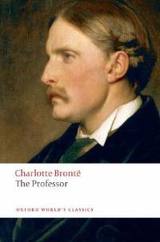
The first book I’ve chosen to read for the challenge is The Professor by Charlotte Brontë. I’m almost halfway through the book and have been enjoying it so far. I’ll be posting my thoughts about the book itself after I’ve finished reading it, but for this month’s prompt, Katherine is asking us to focus on the author – in this case, Charlotte Brontë.

There are three different levels of participation this month depending on how far into the book we are, and I feel I’ve read enough of The Professor to answer the questions for all three levels.

Level 1
Who is the author? What do they look like? When were they born? Where did they live? What does their handwriting look like? What are some of the other novels they’ve written? What is an interesting and random fact about their life?

Charlotte Brontë

Charlotte was born in Thornton, Yorkshire on April 21, 1816, the third of the six children of Reverend Patrick Brontë and his wife Maria Branwell Brontë.

The Brontë Parsonage Museum

The Brontë family lived at Haworth Parsonage, now the Brontë Parsonage Museum.

Charlotte Brontë is the author of four novels: Jane Eyre, one of my favourite classics, Villette, which I read last year, The Professor, and Shirley. I am reading The Professor now and will hopefully have time for Shirley too before the end of the year.

Charlotte Brontë's signature

Here’s an interesting piece of trivia about Charlotte: A tiny manuscript of an unpublished Charlotte Brontë story was sold at auction in 2011 to a French museum. The story was written in 1830 when she was fourteen years old and each page measures only 1.4 x 2.4 inches.

Level 2
What do you think of their writing style? What do you like about it? or what would have made you more inclined to like it? Is there a particular quote that has stood out to you?

I find it hard to explain exactly what I like about Charlotte Brontë’s writing style, but I obviously like it enough to want to read all four of her books! I love the way she expresses the feelings and emotions of her characters; she chooses exactly the right words and phrases to convey their sadness, loneliness and suffering as well as their moments of happiness and love.

However, there are a few aspects of her writing that I don’t like so much. Two problems I’m having with The Professor are the overwhelming number of references to physiognomy (judging a person’s character from their appearance) and also a tendency to include a lot of French dialogue which is not translated, making it difficult for a non-French speaker to follow what’s being said. Overall, though, I do like the way she writes and am looking forward to reading the rest of this book.

Level 3
Why do you think they wrote this novel? How did their contemporaries view both the author and their novel?

The Professor was Charlotte Brontë’s first novel, although it remained unpublished until after her death. The main character, William Crimsworth, is a teacher at a school in Belgium. As Charlotte herself (like her sister Emily) had spent some time studying and teaching in Brussels, she was able to draw on her own experiences when writing this novel. It seems that The Professor wasn’t very highly regarded during Charlotte’s lifetime and she was unable to find a publisher for it, even after she began to have success with her other novels.

Have you read any of Charlotte Brontë’s novels? What do you think of her work?

Don’t forget to visit Katherine’s blog post where you can find links to other participants’ responses. We are all reading different books so a variety of different authors are being highlighted this month.

More challenges for 2012

Despite saying that I wasn’t going to sign up for any more reading challenges, here are three that I couldn’t resist.

The first is the Historical Fiction Challenge hosted by the team at Historical Tapestry. The rules are as follows:

* everyone can participate, even those who don’t have a blog.

* any kind of historical fiction is accepted (HF fantasy, HF young adult,…)

* During these following 12 months you can choose one of the different reading levels:

1. Severe Bookaholism: 20 books
2. Undoubtedly Obsessed: 15 books
3. Struggling the Addiction: 10 books
4. Daring & Curious: 5 books
5. Out of My Comfort Zone: 2 books

The challenge will run from 1 January 2012 to 31 December 2012.

I haven’t made a list of books, but I’m signing up for the Severe Bookaholism level. Historical fiction is one of my favourite genres and I don’t expect to have any problems completing this challenge!

The Classics Challenge is hosted by Katherine at November’s Autumn and the goal is to read seven classics in 2012. Here is what Katherine says about the challenge:

Instead of writing a review as you finish each book (of course, you can do that too), visit November’s Autumn on the 4th of each month from January 2012 – December 2012.

You will find a prompt, it will be general enough that no matter which Classic you’re reading or how far into it, you will be able to answer. There will be a form for everyone to link to their post. I encourage everyone to read what other participants have posted.

This challenge was announced a while ago but I didn’t sign up immediately because I wasn’t sure which classics I would want to read in 2012. Now that I’ve had time to think about it I’ve listed the following seven books which overlap with some of the Victorian reading I’m planning to do next year.

1. The Professor by Charlotte Brontë
2. Great Expectations by Charles Dickens
3. The Small House at Allington by Anthony Trollope
4. Aurora Floyd by Mary Elizabeth Braddon
5. The Mill on the Floss by George Eliot
6. The Return of the Native by Thomas Hardy
7. Wives and Daughters by Elizabeth Gaskell

I might read these in a different order, and I’m sure I’ll be reading other classics too, but all seven of these books are definitely on my list for 2012.

Finally, Risa of Breadcrumb Reads is hosting a read-along of twelve of Shakespeare’s plays throughout 2012. For every play there will be discussion posts for each Act. You can find out more and sign up at the Reading Shakespeare blog.

This is another one I’ve been thinking about for a few weeks. I do have a copy of Shakespeare’s Complete Works, most of which I still haven’t read. At the start of 2010 I had set myself a personal challenge to read some of his plays throughout the year, but I only actually managed to read one. I’m hoping that signing up for Risa’s challenge will be the motivation I need.

The schedule is as follows. I’m not sure I’ll have time for all of these, but would like to join in with at least some of them.

* January — A Midsummer Night’s Dream
* February — Macbeth
* March — Henry V
* April — Much Ado About Nothing
* May — Antony and Cleopatra
* June — Richard III
* July — As You Like It
* August — King Lear
* September — Cymbeline
* October — Twelfth Night
* November — Othello
* December — Pericles

I’m not planning to sign up for any other challenges, as in addition to these three I’ve already signed up for The Victorian Challenge and War Through the Generations. I’m looking forward to January so I can get started with all of these!

Reading the Victorians in 2012

I love Victorian classics but seem to have been neglecting them in recent months, so I’m looking forward to taking part in the 2012 Victorian Challenge hosted by Laura of Laura’s Reviews.

Here are the challenge details:

1. The Victorian Challenge 2012 will run from January 1st to December 31st, 2012. You can post a review before this date if you wish.

2. You can read a book, watch a movie, or listen to an audiobook, anything Victorian related that you would like. Reading, watching, or listening to a favorite Victorian related item again for the second, third, or more time is also allowed. You can also share items with other challenges.

3. The goal will be to read, watch, listen, to 2 to 6 (or beyond) anything Victorian items.

Laura is planning to focus on a different Victorian author for each month in 2012 and I would have liked to have done the same, but I know from experience that scheduling my reading in advance just doesn’t work for me. Therefore I’ll be taking a less structured approach to the challenge. I’ve listed below some of the books and authors I’d like to read, but I’m not planning to read them in any particular order.

The Brontës. I still have two Brontë books to read, both of them by Charlotte – Shirley and The Professor – and I’ll try to read one or both of them in 2012. I’m hoping to spend some time re-reading old favourites next year too, so could also decide to re-read either Jane Eyre or Wuthering Heights. I read both of Anne’s books in 2010 and although I enjoyed them, I don’t think I’ll be reading them again in the near future.

Charles Dickens. It’s Dickens’ 200th birthday in February, which makes the beginning of 2012 the perfect time to read one of his novels. I’ve only read four of his books which leaves me with plenty to choose from. I’m thinking about Great Expectations, but could change my mind.

Thomas Hardy. I’m definitely planning to read at least one Thomas Hardy book for the challenge. I loved Tess of the d’Urbervilles, Jude the Obscure and A Pair of Blue Eyes and enjoyed Under the Greenwood Tree too. I’m not sure which one I should try next but I do want to read all of his books eventually.

Wilkie Collins. I had to include my favourite Victorian somewhere on my list! I’ve read all four of Collins’ most popular novels – The Woman in White, The Moonstone, No Name and Armadale – as well as Poor Miss Finch, Man and Wife, The Law and The Lady, A Rogue’s Life, Basil, The Dead Secret and The Haunted Hotel. If anyone has read any of his other lesser-known novels, I’d love to hear which ones you’d recommend. I do have an e-reader so will be able to download anything that’s available free online.

George Eliot. So far I’ve only read Middlemarch (and Silas Marner at school, though I can’t remember very much about it). I think I’d like to read The Mill on the Floss in 2012.

Anthony Trollope. I’m still working slowly through the Barsetshire novels and hope to finish the series in 2012 by reading The Small House at Allington and The Last Chronicle of Barset. I do also have a copy of Can You Forgive Her? the first in the Palliser series, but it’s probably too ambitious to hope that I’ll have time for that one too.

Elizabeth Gaskell. Again, I have plenty of choices as I’ve only read North and South and The Moorland Cottage so far.

Mary Elizabeth Braddon. Aurora Floyd was on my list for 2011 but I didn’t manage to find time for it. I’ll definitely try to read it next year and hopefully I’ll enjoy it as much as I enjoyed Lady Audley’s Secret and The Doctor’s Wife.

The challenge also allows books that are set during the Victorian period and I’m sure I’ll be reading some of those too.

Are there any Victorian books you think I should definitely read in 2012? Any suggestions or recommendations are welcome! Will you be reading some Victorian literature next year too?

War Through the Generations: 2012 Challenge

I wasn’t planning to sign up for any reading challenges in 2012 but I couldn’t resist this one as it deals with a subject I was hoping to read more about next year anyway. War Through the Generations is a project created by Anna of Diary of an Eccentric and Serena of Savvy Verse and Wit who host reading challenges devoted to books about the impact of war. Previous challenges have included World War II, Vietnam and the US Civil War. The theme for 2012 will be World War I.

The challenge will run from January 1 2012 to December 31 2012.

Here are the rules, taken from the War Through the Generations blog:

This year you have options when reading your fiction, nonfiction, graphic novels, etc. with the WWI as the primary or secondary theme.

Books can take place before, during, or after the war, so long as the conflicts that led to the war or the war itself are important to the story. Books from other challenges count so long as they meet the above criteria.

Dip: Read 1-3 books in any genre with WWI as a primary or secondary theme.

Wade: Read 4-10 books in any genre with WWI as a primary or secondary theme.

Swim: Read 11 or more books in any genre with WWI as a primary or secondary theme.

Additionally, we’ve decided that since there are so many great movies out there about WWI, you can substitute or add a movie or two to your list this year and have it count toward your totals.

I’ve signed up for the Wade level as I’m sure I should be able to include at least four WWI-related books in next year’s reading, though I haven’t decided yet which books I would like to read. Anna and Serena have put together a recommended reading list (which you can find on the challenge blog) and I’ll probably read a few of those. I also received some WWI fiction recommendations in the comments on my recent review post of Blow on a Dead Man’s Embers (thanks to everyone who commented on that post, by the way!) so I have plenty of books to choose from.

If you’re interested in signing up for this challenge please see the War Through the Generations blog for more information – and let me know if you’re planning to participate too!