Classics Challenge October Prompt: Chapter Musings

This year I have been taking part in a Classics Challenge hosted by Katherine of November’s Autumn. Every month Katherine posts a prompt to help us discuss the classic novel we are currently reading. The prompt for October is:

Chapter Musings

Jot down some notes about the chapter you’ve just read or one that struck you the most. It can be as simple as a few words you learned, some quotes, a summary, or your thoughts and impressions.

The classic I’m reading at the moment is A Farewell to Arms by Ernest Hemingway, the story of an American ambulance driver on the Italian front during World War I. This is the first Hemingway book I’ve read and I wasn’t sure what to expect, as he seems to be one of those authors people either love or hate. I’m only seven (very short) chapters into the book so it’s really too early to tell, but so far I’m finding it a lot more readable than I had thought it would be.

Chapter 1, which is the chapter I’ve chosen to focus on for the purposes of this post, is less than two pages long yet it has a lot of significance as it sets the scene and the tone of the novel. We learn almost nothing about our narrator in these two pages, not even his name, and although it’s obvious that he is involved with the army in some way, he seems very detached from what is going on around him.

“Troops went by the house and down the road and the dust they raised powdered the leaves of the trees. The trunks of the trees too were dusty and the leaves fell early that year and we saw the troops marching along the road and the dust rising and leaves, stirred by the breeze, falling and the soldiers marching and afterward the road bare and white except for the leaves.”

I’ve included the quote above because I think it’s a good example of Hemingway’s writing style. He uses simple, direct language and seems to like stringing together very long sentences using the word ‘and’! He also manages to paint vivid pictures of his settings while avoiding flowery descriptions. I’m not sure yet whether I like his writing or not, but I’ll see how I feel after reading a whole book written in this style.

Chapter 1 ends with the following two sentences:

“At the start of the winter came the permanent rain and with the rain came the cholera. But it was checked and in the end only seven thousand died of it in the army.”

The Princess of Cleves by Madame de Lafayette

First published in French in 1678, The Princess of Cleves (or La Princesse de Clèves to give it its French title) is considered to be one of the first psychological novels. The story is set in the previous century (between 1558 and 1559), which also makes it an early example of the historical fiction novel.

Newly arrived at the court of Henri II, the beautiful Mademoiselle de Chartres catches the eye of the Prince of Cleves and they are soon married. The new Princess of Cleves does not love her husband, but she likes and respects him and for a while it seems that might be enough…until she meets and falls in love with the Duc de Nemours. The rest of the book explores the Princess’s conflicting emotions, as she becomes torn between her passionate love for the Duc and her desire to stick to her morals and do what she believes is right. Eventually the Princess faces an important decision, but the choice she makes is maybe not what you would expect and it’s left to the reader to make up their own mind whether they agree with her actions or not.

This book was of particular interest to me because earlier this year I read Queens’ Play by Dorothy Dunnett, which is set at the French court in the middle of the 16th century. The Princess of Cleves is set at the same court during the same period and so it was filled with names I recognised. The title character and her mother are fictional but the others are real historical figures: Henri II and his wife Catherine de’ Medici, Diane de Poitiers (the Duchess de Valentinois), the Constable de Montmorency, the Mareschal de St. Andre, the Prince of Conde, the Vidame of Chartres, the Duke de Guise and his brothers, as well as the Dauphin and his wife, Mary Queen of Scots. I think the fact that I was already familiar with these characters made the opening pages of this book slightly less overwhelming than they might otherwise have been! And luckily, only a few of the people mentioned play an important part in the story, so it’s not necessary to keep track of all of them.

If you can get past the first section, which is little more than a long list of names and descriptions of the relationships between the various courtiers, the story does start to pick up. It all appears to be very accurate historically, although not much attention is given to the important historical events of the period – this is a character driven story with the focus on the actions of the Princess, her husband and the Duc de Nemours. The court of France at that time was known for being frivolous, decadent and rife with romantic intrigue and gossip, and the author manages to capture these aspects of court life. However, having read about the background to the novel, it seems Madame de Lafayette was also commenting on the behaviour and structure of the court of her own time, Louis XIV, which I know less about so am not sure how similar or different the two courts were.

The Princess of Cleves is not a book I would recommend if you’re looking for an entertaining read with an exciting plot, but if you enjoy French literature and history or if you’re interested in the development of the early novel then I think it’s definitely worth reading. It’s a short novel and doesn’t take too long to read, though it does require some concentration, especially at the beginning. I found the writing very dry, though maybe that’s my own fault for reading the free version from Project Gutenberg rather than searching for a better translation. As I’m not able to read it in its original French, which would obviously be the best option, I’d appreciate any opinions as to which translation I should try if I decide to re-read the book at some point in the future.

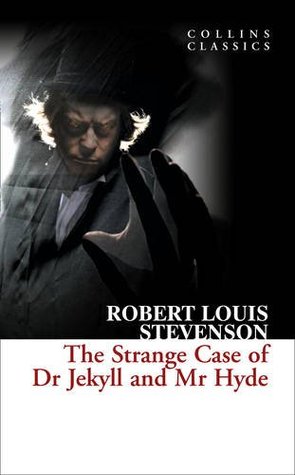
The Strange Case of Dr Jekyll and Mr Hyde by Robert Louis Stevenson

The problem with reading The Strange Case of Dr Jekyll and Mr Hyde in the 21st century is that most of us probably already know what the story involves. Even without having read it or seen any of the film versions, everyone knows what is meant by a ‘Jekyll and Hyde personality’. And this completely takes away the suspense and air of mystery that the story relies on so heavily. I’m sure the original Victorian readership would have found the connection between Dr Jekyll and Mr Hyde much more shocking! So is there still any point in reading it? Yes, I thought there was, because although I knew what the ultimate revelation would be, I didn’t know all the details of the plot or how the conclusion would be reached.

We first see Dr Henry Jekyll and Edward Hyde through the eyes of Jekyll’s friend and lawyer, Mr Utterson, who becomes concerned when he discovers that Jekyll has made a new will leaving everything to Mr Hyde. All Mr Utterson knows about Hyde is that he’s a sinister and brutal man responsible for some cruel and unprovoked acts of violence. The first half of the book follows the lawyer’s attempts to learn more about Hyde and his relationship with Jekyll. It’s only as we approach the end of the story that we hear from Dr Jekyll himself, in the form of a letter addressed to Mr Utterson, and the truth is finally revealed.

The story is cleverly structured so that if you had no idea what was coming, you would be kept wondering, knowing only as much as Mr Utterson knows, and it’s disappointing that for most modern readers the surprise has been spoiled. The part of the story I found the most interesting was the final chapter, after the secret has been uncovered and Jekyll gives his own explanation of what happened and his views on the good and the evil aspects of human nature. We can really feel his desperation as his own dark side grows stronger and things begin to spiral out of his control.

The edition I read contained just the novella The Strange Case of Dr Jekyll and Mr Hyde; other editions include a selection of other Stevenson short stories. Jekyll and Hyde on its own was only 88 pages long and if I’d realised how short it was I would have made time to read it earlier. This was one of my choices for RIP VII, and I would recommend it to other RIP participants who would like to read an important piece of classic Victorian fiction without committing to a full-length novel. I can’t say that I loved it and it’s not something I would want to read again, but I’m glad I’ve read it once and can see why it has become a part of popular culture.

The Scarlet Pimpernel by Baroness Emmuska Orczy

“The Scarlet Pimpernel, Mademoiselle,” he said at last, “is the name of a humble English wayside flower; but it is also the name chosen to hide the identity of the best and bravest man in all the world, so that he may better succeed in accomplishing the noble task he has set himself to do.”

The Scarlet Pimpernel is set in 1792 during the French Revolution, when every day more and more of the French nobility are being sent to their deaths. A secret society of Englishmen led by the mysterious Scarlet Pimpernel are rescuing the aristocrats from the guillotine and smuggling them to safety in England. Who is the Scarlet Pimpernel? The French agent Chauvelin is determined to find out, but with his variety of clever disguises and daring schemes the Pimpernel continues to elude him at every turn. Will Chauvelin ever discover his true identity?

Since I started blogging I’ve lost count of the number of times I’ve started a review by wondering why I’ve waited so long to read a book and regretting the fact that I never thought about reading it years ago. This is yet another one! I finally read it last week when I was choosing what to read next for the Classics Club – and for anyone else who has this on their Classics Club list or tbr pile, I recommend reading it sooner rather than later. Compared to many classics it’s a quick read and lots of fun too: a combination of swashbuckling adventure story, historical fiction and romance. It’s one of those novels where you sit down planning to just read one or two chapters and before you know it you’re halfway through the book!

Whenever I write about a book I always try to be very careful not to say too much and spoil the story for any future readers, so I won’t tell you any more about the plot and I won’t reveal who the Scarlet Pimpernel really is. You’ll probably be able to guess after a few chapters but if you don’t then part of the fun will be in finding out. This book was published in 1905 and it’s obvious that it’s been the inspiration for so many other books that have been written since then and that the character of the Scarlet Pimpernel has been a model for countless heroes with hidden identities. I also remember reading somewhere that Baroness Orczy was one of Dorothy Dunnett’s influences and I can definitely see how The Game of Kings in particular might have been inspired by The Scarlet Pimpernel. I was reminded of Georgette Heyer’s novels too, especially with the slang the characters used.

I found Baroness Orczy’s writing style very easy to read and the historical background was not too detailed or difficult to follow. The author’s sympathies are obviously with the aristocracy, whereas most novels I’ve read about the French Revolution are told from the opposite perspective so it was interesting to see the other side of the story. This is not really a book you would choose to read for the historical accuracy though, and it does require you to suspend your disbelief at times! I know I would have loved this book when I was a teenager but I’m still glad I got round to reading it at last and am definitely interested in reading more of the Scarlet Pimpernel series now.

Emma by Jane Austen (re-read)

Having read all of Jane Austen’s novels, I decided that for the Austen in August event hosted by Adam of Roof Beam Reader, I would re-read the only one I didn’t really like the first time – Emma. I didn’t hate it on my first reading, but I definitely enjoyed it less than the others, and the problem I had with the book, unfortunately, was the character of Emma Woodhouse herself. I was curious to see whether, on returning to this book after a gap of a few years, my opinion of her would have changed.

Emma is the youngest daughter of Mr Woodhouse of Hartfield and is “handsome, clever and rich, with a comfortable home and happy disposition”. The story begins just after the marriage of Emma’s governess, Miss Taylor, to a widowed neighbour, Mr Weston. Although Emma is sorry Miss Taylor is leaving Hartfield, she is pleased that they have married because she was responsible for introducing them to each other. She decides to continue matchmaking by finding a husband for her new friend, Harriet Smith, but it seems that the man she chooses, Mr Elton, has other ideas. As Emma continues to meddle in other people’s lives, she slowly becomes aware of who she herself is in love with.

Jane Austen herself once said that in Emma she had created a heroine nobody apart from herself would like. This is obviously not true, as I’ve seen so many people name Emma as their favourite Austen novel and talk about how much they love Emma despite her flaws. But the first time I read this book I found it difficult to see past her treatment of Harriet Smith near the beginning of the story and I remember having such a negative reaction to Emma’s character that it spoiled the rest of the book for me.

As several years have now passed since that first read I wanted to give Emma another chance. And guess what? This time I found myself really liking Emma! Her snobbish attitude and superiority still irritated me but I was able to be more tolerant of her faults and to admire the way she learned from her mistakes and grew as a person as the story progressed. Yes, she can be insensitive at times and yes, she causes a lot of trouble by interfering in her friends’ lives, but she does eventually accept that she was wrong.

Although it has been a while since I read this book, I was surprised to find how many little details of the plot I remembered: Harriet’s book of riddles, for example, and the mystery of Jane Fairfax’s piano. Yet this is a very character-driven story, even more so than Jane Austen’s other novels. Nothing very dramatic or exciting happens, but the story is never boring and this is due to the wonderful collection of characters. Mr Knightley is one of my favourite Austen heroes, and who could forget Emma’s hypochondriac father and his obsession with his own health and everyone else’s, the obnoxious Mrs Elton and Miss Bates, who never stops talking. The last three characters I mentioned make this one of Austen’s funniest novels, at least in my opinion! As well as the humour, Emma is filled with clever, sparkling dialogue and insightful observations. I posted some of my favourite quotes last week for the Classics Challenge I’m participating in so won’t repeat them here.

Finally, I liked the way Austen took the time to tie up all the loose ends in this novel. I was happy with the way Emma’s story ended and with Harriet’s – I think everyone probably ended up with the right partner!

Have you read Emma? What is your opinion of Emma Woodhouse?

Classics Challenge August Prompt: Quotes from Jane Austen’s Emma

This year I am taking part in a Classics Challenge hosted by Katherine of November’s Autumn. The goal is to read at least seven classics in 2012 and every month Katherine is posting a prompt to help us discuss the books we are reading. This month we are asked to share some quotes from our current read.

The classic I just finished reading yesterday was Emma by Jane Austen. This was a re-read for me and I’ll be posting my thoughts on the book next week. For now, here are some quotes from Emma. Katherine’s prompt recommended choosing some that were not so well-known. I’m not sure it’s possible to find any quotes from a Jane Austen novel that are not well-known, so I’ve just posted a selection of my favourites. Some might be more obscure than others.

“That is the case with us all, papa. One half of the world cannot understand the pleasures of the other.”

***

“I have none of the usual inducements of women to marry. Were I to fall in love, indeed, it would be a different thing! But I never have been in love; it is not my way, or my nature; and I do not think I ever shall. And, without love, I am sure I should be a fool to change such a situation as mine.”

***

“A sanguine temper, though for ever expecting more good than occurs, does not always pay for its hopes by any proportionate depression. It soon flies over the present failure, and begins to hope again.”

***

“To be sure – our discordancies must always arise from my being in the wrong.”

“Yes,” said he, smiling, “and reason good. I was sixteen years old when you were born.”

“A material difference, then,” she replied; “and no doubt you were much my superior in judgement at that period of our lives; but does not the lapse of one-and-twenty years bring our understandings a good deal nearer?”

“Yes, a good deal nearer.”

“But still, not near enough to give me a chance of being right, if we think differently.”

***

Was it new for any thing in this world to be unequal, inconsistent, incongruous — or for chance and circumstance (as second causes) to direct the human fate?

***

“I cannot make speeches, Emma,” he soon resumed; and in a tone of such sincere, decided, intelligible tenderness as was tolerably convincing. “If I loved you less, I might be able to talk about it more. But you know what I am. You hear nothing but truth from me.”

***

Seldom, very seldom, does complete truth belong to any human disclosure; seldom can it happen that something is not a little disguised or a little mistaken.

Sylvia’s Lovers by Elizabeth Gaskell

Sylvia’s Lovers is set in the final years of the eighteenth century in the small town of Monkshaven on the Yorkshire coast. During this period Britain and France were at war and the men of Monkshaven lived in fear of the press-gangs who regularly captured sailors from the town and forced them into action against France. Against this backdrop we meet Sylvia Robson, the beautiful young daughter of a farmer from nearby Haytersbank, and the two very different men who hope to marry her. One of these is Sylvia’s cousin, Philip Hepburn, a serious, reliable man who works in a draper’s shop; the other is the much more exciting and charismatic Charley Kinraid, a ‘specksioneer’ (chief harpooner) on a whaling ship. When Philip discovers that Kinraid is a rival for Sylvia’s love, he makes a decision that will eventually have tragic consequences for everyone involved.

Elizabeth Gaskell said this was the saddest book she ever wrote and I can definitely understand why she would have said that! Apart from the central storyline involving Sylvia, Philip and Kinraid, there are other characters with their own tragic stories to be told. Hester Rose, for example, who works with Philip in Foster’s shop and has been secretly in love with him for years without ever daring to say so. And Daniel Robson, Sylvia’s father, a former whaler who decides to take action to stop any more of the town’s young men being pressed into the navy.

Monkshaven is a fictional town but was based closely on the real North Yorkshire town of Whitby. A few weeks ago I posted a visual tour of Monkshaven – I hope the photos and quotes I included help to convey some of the atmosphere Gaskell created in her descriptions of the town. My own familiarity with Whitby (I’ve been there many times over the years) made it easy for me to picture the scenes. When we were told of a funeral procession slowly winding its way up the steps to the church on the cliff or the crowds gathering to watch a whaling ship coming in, I could see the images clearly in my mind.

Sylvia’s Lovers took a long time to read (it was 500 pages and felt even longer, partly because I had to concentrate on understanding the dialogue – I should probably warn you that this book does contain a lot of Yorkshire dialect) but the setting, the historical background and the characters kept me interested. Sylvia frustrated me at the beginning because she was so silly and immature, uneducated and unwilling to learn; by the end of the book though, she had changed a lot and I found myself starting to like her. I had sympathy for Philip, both before and after he made his terrible mistake, and I loved Hester Rose. Kinraid was the only character who never felt fully developed but I think that was maybe intentional.

This book reminded me of Tess of the d’Urbervilles by Thomas Hardy, with all the descriptions of scenery, the local dialect, the focus on rural working-class life and the overwhelming mood of sadness and misery. As one tragedy followed another through the second half of the book, it started to seem that there were going to be no happy endings for any of the characters. I can honestly say this was one of the most depressing books I’ve read and on a few occasions towards the end I wondered why I was still reading it. The answer to that is because I find Gaskell’s writing so beautiful and moving and because she had really made me care what happened to Sylvia, Philip, Hester and the others. This is only the second Gaskell novel I’ve read; the first was North and South which is a much more popular book, but I think I liked this one more despite it being so heartbreaking.