Alice by Elizabeth Eliot – #DeanStreetDecember25

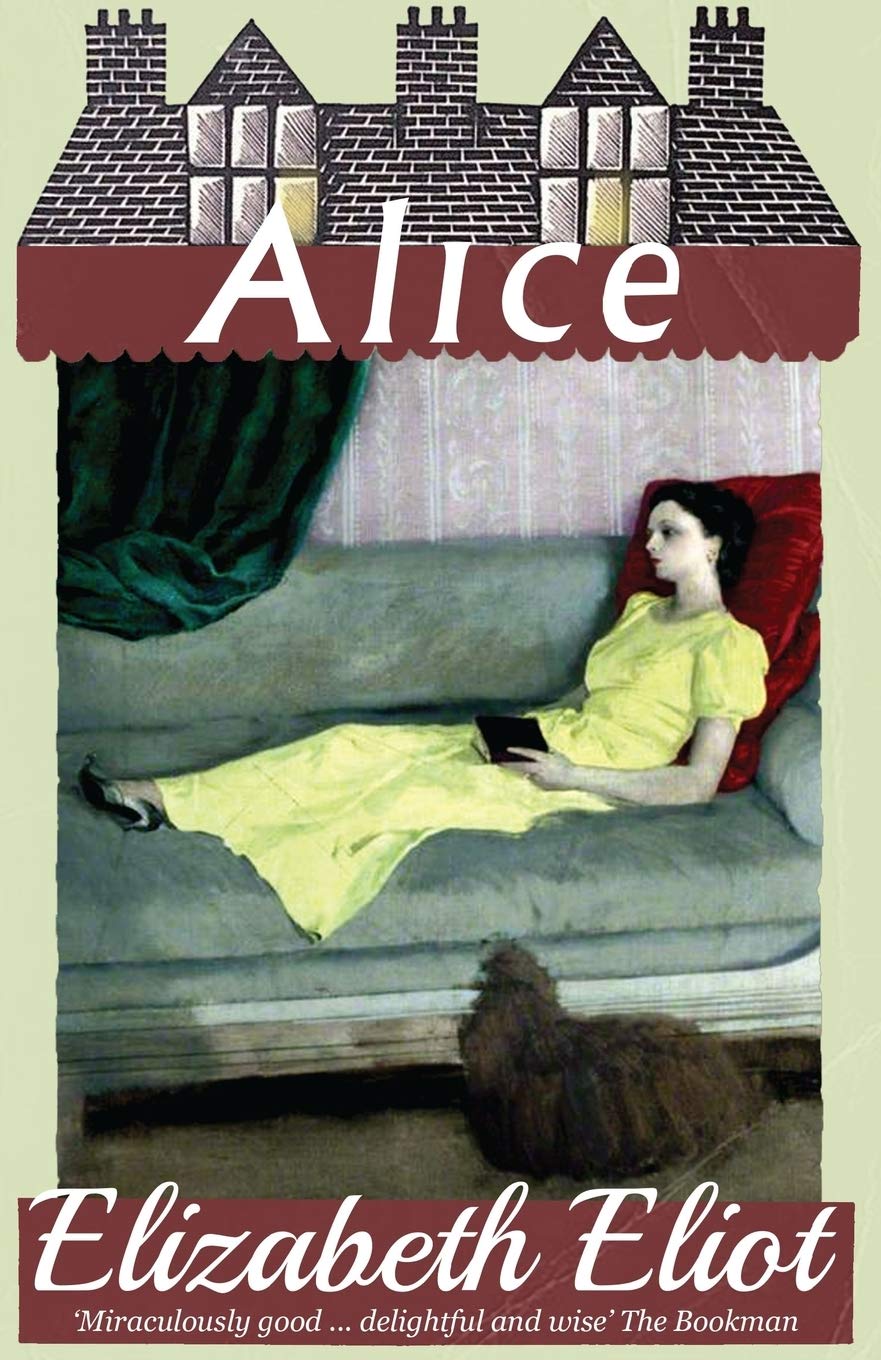
My second book for this year’s Dean Street Press December (hosted by Liz of Adventures in Reading, Running and Working from Home) is Alice, Elizabeth Eliot’s first novel, originally published in 1949. Eliot is a new author for me but I’ve heard good things about her books from other bloggers.

Although the title of the novel is Alice, the narrator is actually Margaret Boswell, Alice’s best friend. They meet at boarding school in the 1920s and their friendship continues as they begin their adult lives. Both girls come from wealthy, privileged backgrounds, but Margaret’s family life seems quite a lonely one – she’s an only child and her mother, who is divorced, has little time for her daughter. Margaret lives mainly with her grandmother and is envious of Alice, who has two siblings.

As the two girls emerge from their sheltered childhoods, Margaret begins to discover that Alice is actually very insecure and unhappy. Alice falls into several disastrous romantic relationships, including a marriage to a man she barely knows, is betrayed by her older sister and attempts suicide. All of this is seen from Margaret’s perspective, but it’s very much Alice’s story (Margaret’s own marriage, for example, is only mentioned very briefly, in passing).

Alice is an interesting portrayal of what life was like between the two world wars for women of Alice and Margaret’s class. Eliot shows how, despite their expensive boarding schools and finishing schools, they are still unprepared for the realities of adulthood and she explores the lack of opportunities, beyond marriage, that are open to them. Both women eventually find some level of independence, with Alice deciding to become an actress and Margaret going to college to learn typing, but Alice, at least, still doesn’t feel satisfied and other characters observe that she seems ‘afraid of life’.

I’ve probably made this book sound bleak, but although it is a bit dark in places, it’s also funny and entertaining. This is largely down to the writing style, I think – Margaret tells the story in a very matter-of-fact way, even when describing something dramatic, and she comes across as quite naive and artless, which makes the overall tone feel amusing and less emotional than it could have been. The blurb draws comparisons with Barbara Comyns and Rachel Ferguson so if you’ve read either of those authors, that may give you an idea of what to expect.

There are another three Elizabeth Eliot novels available from Dean Street Press: Henry, Mrs. Martell, and Cecil. Based on how much I enjoyed this book, I’ll definitely have to consider reading the others!

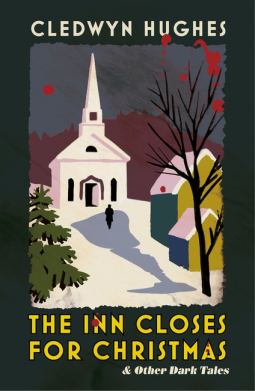
The Inn Closes for Christmas & Other Dark Tales by Cledwyn Hughes

Cledwyn Hughes is a completely new author for me – in fact, I had never heard of him until I spotted this new edition of his work on NetGalley recently. Hughes (not to be confused with the Labour politician of the same name) is a Welsh author of short stories – over 250 of them, apparently – novels, children’s books and nonfiction books about Wales. This new collection from John Murray Press includes his 1947 novella, The Inn Closes for Christmas, and several other, much shorter stories.

The Inn Closes for Christmas is a bizarre, macabre story. It begins at Christmas with a bank manager in the town of Welton sitting down to open a file containing a bundle of papers. The man who left it to him – the dentist, Mr Sterrill – has asked him to read through these papers every Christmas for as long as he should live. First, the bank manager examines some newspaper cuttings relating to the death, inquest and funeral of the dentist’s wife. Finally, he turns to the longest document in the file – a document written by Mr Sterrill himself.

The dentist starts by describing his marriage to his wife, Doreen, and giving an account of the car accident in which she lost one of her legs. Faced with spending the rest of her life with a missing limb, Doreen is delighted when she is provided with a prosthetic replacement. Her husband, however, is not pleased at all. He hates the way his wife looks at her artificial leg, the way she speaks so fondly of it and keeps it beside her in bed at night. In other words, he’s jealous of it. So when Doreen dies from what seems to be an infected abscess, Sterrill looks forward to getting rid of the leg at last. The only problem is, the leg doesn’t want to go…

This is such a strange story – I wonder what made Cledwyn Hughes think of it! I can’t say any more about the plot without spoiling it, but it really is one of the most unusual stories I’ve read. The way Hughes describes the mental deterioration of the narrator as he becomes more and more obsessed with the leg and consumed by guilt and fear reminded me of some of Edgar Allan Poe’s stories. It’s quite creepy in places, but also with an undercurrent of dark humour which made it both entertaining and unsettling.

Despite the title, this is definitely not a festive Christmas tale and could be read at any time of year. The US title was originally He Dared Not Look Behind which is probably more appropriate (you’ll understand why once you’ve read the story). This new edition includes six other stories by Hughes which I found too short to be very satisfying and I felt that they were only there to make the book feel a bit more substantial. The title novella alone makes it worth reading, though, and it’s not one I’ll forget in a hurry!

Thanks to John Murray Press/Baskerville for providing a copy of this book for review via NetGalley.

Rainforest by Michelle Paver

When Dr Simon Corbett, a British entomologist, arrives in the Mexican rainforest in 1973 he has two goals in mind: first, to study the rare mantids that live there – and also to try to make contact with Penelope, the woman he loved. However, both of these things prove very difficult. The mantids live in the sacred ceiba trees and Simon’s guide is reluctant to let him touch them. As for Penelope, she’s dead and Simon is hoping to obtain a special Mayan drug that will allow him to summon her spirit. No one seems prepared to cooperate with him on this either, but Simon is determined to get what he wants, one way or another.

Rainforest is written entirely from Simon’s perspective in the form of diary entries. He tells us that his doctor has advised him to keep a journal to help him cope with the ‘thoughts going round and round like angry wasps’ – although this doesn’t seem to work, as Simon’s thoughts simply become more and more unstable and obsessive as the book progresses. Simon is a man consumed by grief, remorse and guilt, yet he’s such an unlikeable narrator I found it impossible to feel any real sympathy for him. He’s also not being completely honest with the reader, even in his own journal, because the impression he initially gives of his relationship with Penelope is very different from the truth that emerges later in the novel.

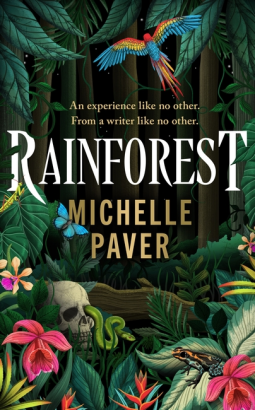
This is the second book I’ve read by Michelle Paver, the first being Wakenhyrst, a Gothic novel set in the Suffolk Fens. Although I enjoyed Wakenhyrst, I remember being surprised that it wasn’t scarier, having heard her previous novels Dark Matter and Thin Air described as very creepy horror novels. Rainforest is also not a particularly scary book, despite the cover claiming that it’s a ‘terrifying supernatural tale’. I think it’s best to know that going into it, as some people may be disappointed that it’s not more terrifying, while others will be pleased! Like Wakenhyrst, though, it is still very atmospheric; the rainforest is beautifully described – Paver mentions in her author’s note that she has visited rainforests herself – but, seen through Simon’s eyes, it becomes an oppressive, claustrophobic, menacing place.

Rainforest is a fascinating novel in many ways. As well as the setting which I’ve already mentioned, Paver also explores the arrogance of the white explorer and the lack of respect for the environment and the indigenous people – referred to specifically as the Yachikel, a term Paver says she made up and based on other Mayan peoples. I also learned more about Simon’s beloved mantids than I ever knew I needed to know! Simon being such an unpleasant character, though, meant that I struggled to care about what happened to him and this stopped me from engaging with his story as much as I would have liked. Despite this, I did enjoy the book overall and will catch up with her earlier ones at some point.

Thanks to Orion for providing a copy of this book for review via NetGalley.

Tales from the Underworld by Hans Fallada – #GermanLitMonth

Translated by Michael Hofmann

November is always a busy month with lots of events taking place in the book blogging world, so for German Literature Month (hosted by Caroline of Beauty is a Sleeping Cat and Tony of Tony’s Reading List) I decided to read a short story collection that I could dive into now and then throughout the month in between reading other things. Hans Fallada is probably my favourite German author so I thought Tales from the Underworld would be a good choice.

This collection was published by Penguin Modern Classics in 2014 and contains a large number of Fallada’s short stories which were originally published between 1925 and 1946. The stories have been translated from the original German by Michael Hofmann, who has also translated other Fallada books including Alone in Berlin and A Small Circus. Many of the stories are semi-autobiographical, which I would have guessed from the small amount I know about Fallada’s life, but this is covered in more detail in the foreword by Jenny Williams.

As the title of the book suggests, the focus is on the darker side of life – some of the stories are about thieves, prisoners or drug addicts, while others deal with subjects such as poverty and unemployment. You’re probably thinking that it all sounds very bleak and depressing, but Fallada’s lively, conversational style and sense of humour means it’s much less miserable and much more entertaining than it could have been in the hands of a different author. I think my favourite story was Fifty Marks and A Merry Christmas, a lovely, touching story about a young couple, Mumm and Itzenplitz, who are struggling to make ends meet but determined to have a happy Christmas despite their financial problems. This one reminded me very much of the novel Little Man, What Now? which was published in the same year.

The stories range from the very short, such as the sequence titled Calendar Stories, written in the style of fables with an obvious moral, to the more substantial, such as Short Treatise on the Joys of Morphinism, in which an addict desperately tries to acquire enough morphine to get through the day, looking for pharmacies that will accept fake prescriptions. The addict’s name is Hans, because this is one of the autobiographical stories – Fallada and his wife were both addicted to morphine, which also inspired his 1947 novel, Nightmare in Berlin.

The impact of the two world wars is felt in several of the stories, including The Returning Soldier, where a man comes home from the war with a wounded arm and finds that his father is less sympathetic than he had hoped. Some of the stories deal with urban life – for example War Monument or Urinal? is a satire on the politics and bureaucracy that holds back progress in a small town – while others, such as The Good Pasture on the Right have rural settings and explore the problems facing farmers and the importance of owning land. Fallada also looks at different aspects of marriage and parenthood, with stories like Happiness and Woe, where an unemployed father is tempted into spending the family’s rent money, and The Missing Greenfinches, in which a father tries to teach his young son to value the lives of even the smallest creatures.

I haven’t mentioned even half of the stories here, but I hope I’ve given an idea of how fascinating and varied this collection is. I think it would be a good introduction to Fallada’s work, but if, like me, you’ve already read some of his books, it’s interesting to see how many of these topics come up again in his longer fiction and how many are drawn from his own life. It was a good choice for German Literature Month, just as I hoped it would be!

Surfacing by Margaret Atwood – #MARM2025 #NovNov25

This isn’t the book I really wanted to read for this year’s Margaret Atwood Reading Month (hosted by Marcie of Buried in Print) – that would have been The Blind Assassin, but it’s such a long book I knew I wouldn’t be able to finish it in time. Surfacing is much shorter – in fact, at just under 200 pages in my edition, it also qualifies for Novellas in November – so I decided to read it instead. I suspect I would have enjoyed The Blind Assassin more, though; I found a lot to interest me in Surfacing, but I can’t say that I particularly loved it.

First published in 1972, the book is narrated by an unnamed woman who travels to her childhood home on a remote island in northern Quebec in search of her father, who has gone missing. She’s accompanied by her boyfriend, Joe, and another couple – her friend Anna and her husband, David. The narrator has never been back to the island since getting divorced years earlier as she felt too ashamed to talk to her parents about her marriage and why it ended. Now her mother is dead and her father’s old friend, Paul, has contacted her to tell her that her father has disappeared from his cabin by the lake.

Joe and David have brought a camera along with them, hoping to find some interesting scenes to film for a documentary they’re making called Random Samples. While they focus on that, the narrator tries to find out what has happened to her father, but it’s clear that even if she finds him she doesn’t particularly want to speak to him and that the whole experience is bringing back memories she has been trying to forget.

Suppressed memories coming back to the surface could be one explanation for the title of the novel; another is the psychological resurfacing of the narrator as she tries to move on from the past and go forward with her life. The lake which forms such a big part of the setting is also symbolic of hidden depths and things rising to the surface. As the book progresses we begin to see just how much the narrator has been hiding from us, from her friends and even from herself.

This is a sad, poignant story in many ways and the narrator is obviously deeply damaged by the traumatic events of her past. All she tells us about her marriage at first is that she had a husband once and there was a child, but it eventually emerges that there was more to the situation than she has revealed – and her failure to come to terms with what happened is impacting her new relationship with Joe. Meanwhile as we learn more about Anna and David, we see that their marriage is not a happy one either and is quite disturbing on several levels. There also seems to be a strong anti-American sentiment running through the book, with the narrator and her friends very hostile towards any Americans they meet; it’s not really explained why they feel like that, but I’m assuming the book is a product of its time. I did like the Quebec setting as I’ve read very little fiction set there and I was interested in the way Atwood writes about the barriers to communication between French and English speakers and how the narrator feels like an outsider in her father’s community because of her inability to speak fluent French.

I got quite a lot out of this book, then, but I also felt that there was a lot I didn’t really understand and didn’t know how to interpret. I found the insular, unreliable narrator difficult to connect with as much as I would have liked to and the other characters were either unpleasant or held at arm’s length by the narrator. It’s definitely not a favourite Atwood novel, but I’m still glad I read it and will look forward to reading The Blind Assassin when I have more time!

Seascraper by Benjamin Wood – #NovNov25

Several bloggers have been reading Benjamin Wood’s Booker Prize longlisted novella Seascraper for Novellas in November after our co-hosts Cathy and Rebecca named it their ‘buddy read’ for the month. I hadn’t decided whether to read it myself but when I discovered that it’s also going to be the starting point for Six Degrees of Separation in December, that helped me make up my mind!

Seascraper is set in an unspecified time period, which I managed to identify as the early 1960s (there are some references to Lawrence of Arabia, which was released in 1962). However, it feels much earlier than that due to the protagonist leading a life largely free of technology and doing a job that was done by his grandfather before him. His name is Thomas Flett and he’s a twenty-year-old man living with his mother in the fictional town of Longferry on the North West coast of England. Thomas has taught himself to play the guitar and dreams of becoming a folk singer, but that seems unlikely to happen because he and his mother rely on the money he makes through his work as a shanker, someone who catches shrimp by scraping the sand at low tide.

Thomas comes home one day to find his mother with a stranger, a man who introduces himself as the American director Edgar Acheson. Edgar is planning to make a new film with the Longferry beach as its setting and he offers to pay Thomas to guide him around the coastline, looking for suitable filming locations. Thomas accepts, as the money is too good to turn down, but when he and Edgar head out to the sea something happens which sets his life on a new course.

This is a quiet, simple story but also a powerful and atmospheric one. The author devotes a lot of time to describing the small, mundane details of Thomas’s daily routines, such as how he prepares his horse and cart for his early mornings shrimp fishing on the beach, so when Edgar Acheson arrives there’s a real sense of something momentous happening. The whole story takes place over a period of less than two days, but the events of those two days change everything for Thomas. Previously his whole world has revolved largely around his mother, who became pregnant with him at fifteen and has been shunned by the community as a result, but his new friendship with Edgar and an unexpected encounter with another person makes him reconsider what he really wants to do with his life.

Seascraper is a beautifully written novella and the coastal setting, with fog hanging over the sea and treacherous sinkpits in the sand, is vividly described. There’s a development later in the book that I would love to talk about, but I can’t really say any more about the plot without spoiling it. I wasn’t sure about this development at first, as it sent things in a direction I wasn’t anticipating, but now that I’ve finished I think it was the perfect way to move Thomas’s story forward. I’m so impressed by this book overall, particularly as it’s not one I was planning to read and I didn’t expect to enjoy it as much as I did.

Air by John Boyne – #NovNov25

This is the fourth book in John Boyne’s Elements quartet. Having enjoyed Water, Earth and Fire, I’ve been very much looking forward to Air and the short length made it an obvious choice to read during Novellas in November (hosted by Cathy of 746 Books and Rebecca of Bookish Beck). Although each book has a different narrator and can be read as a standalone, there are links between all four, sometimes obvious and sometimes more subtle. It’s not essential to read them in order, but I would save this one until last if possible as it ties together some of the loose ends and provides closure for the characters. I’ve avoided spoilers for the first three books in the rest of my review, so don’t worry if you haven’t started the series yet!

Air tells the story of Aaron Umber and his fourteen-year-old son, Emmett, and a large part of the book is set onboard a plane (hence the title). The Umbers also have a family member who is a pilot – Boyne always works the relevant element into the story in multiple ways. At the start of the novella, Aaron and Emmett are at Sydney Airport, preparing to board a flight that will take them from their home in Australia across the world to Ireland, where Aaron hopes to reconnect with his ex-wife – and Emmett’s mother. The only problem is, he hasn’t told her that they’re coming.

As it’s such a long flight from Australia to Ireland (with a change in Dubai), Aaron has plenty of time to think and reflect on the circumstances that have brought him to this point. He looks back on his first encounters with the woman who would become his wife, the problems they experienced during their marriage and the reasons it ultimately ended in divorce. He also confronts his memories of the abuse he suffered as a teenager and his knowledge of the similar ordeals his wife went through before they met. Emmett has grown up unaware of any of this, but he’s beginning to ask questions and Aaron wonders if now could be the right time to tell him the truth.

Like the other books in the quartet, Air is a dark and sometimes disturbing read – although not as much so as the previous books as this one is concerned with moving on from trauma rather than describing the traumatic events themselves. Also, while the previous three narrators were morally ambiguous at best, completely evil at worst, Aaron is much easier to like and have sympathy for. I loved his relationship with his son, Emmett; it felt so real and believable and also very moving, though not in an overly sentimental way.

I have deliberately not revealed the name of Aaron’s ex-wife because she appears in one of the other books and I don’t want to spoil the surprise for anyone wanting to read the series through from the beginning. Other characters also appear again or are referred to, mainly those from Water and Fire. Earth feels less well integrated into the series as a whole, which is slightly disappointing as the other three books tie together so perfectly.

All four novellas are now available in one volume, published under the title Elements, but can still be bought separately as well.