The Ice Palace by Tarjei Vesaas – #NovNov25

Translated by Elizabeth Rokkan

After reading my first Tarjei Vesaas book, The Birds, in September, I couldn’t wait to read more of his work. Like The Birds, The Ice Palace has recently been reissued by Pushkin Press and as it’s a very short book I decided it would be perfect for this year’s Novellas in November (hosted by Cathy of 746 Books and Rebecca of Bookish Beck).

First published in 1963, The Ice Palace is the story of two young Norwegian girls, Siss and Unn. Siss is popular, outgoing and the leader of her group of friends at school, yet when the shy, quiet Unn arrives in the village to live with her aunt, Siss is immediately drawn to this girl who seems to be her complete opposite. Soon, Unn invites her back to her house after school and Siss accepts – but when she arrives, the evening doesn’t go quite as she expected. The two girls look at each other in a mirror, then Unn persuades Siss, without explanation, that they should both undress. Unn then confesses that she has a secret, something she’s not able to tell her aunt, but she doesn’t say what it is. Uneasy and uncomfortable, Siss quickly leaves and goes home, feeling disturbed by the experience.

The next day, Unn feels embarrassed and decides not to go to school. Instead, she visits the huge frozen waterfall known as ‘the ice palace’. The last we see of her is when she enters the icy caverns behind the frozen water – she doesn’t return to school or to her aunt’s house and no one has any idea what has happened to her. As Unn’s only friend, Siss is put under pressure to tell the adults anything she knows, but Siss is still confused by her own emotions and struggling to come to terms with the whole situation.

This is a beautifully written novel and the cold, icy imagery is hauntingly atmospheric. The chapter in which Unn discovers the ice palace – ‘an enchanted world of small pinnacles, gables, frosted domes, soft curves and confused tracery’ – is particularly vivid and eerie. The book also has a lot to say about grief, loss and loneliness, exploring the impact of Unn’s disappearance on her aunt, on the community and particularly on Siss.

I did find the book very ambiguous, with a lot left open to interpretation. For example, we are never told what the secret was that Unn was trying to share with Siss and it’s not quite clear what exactly happened between the two girls the evening before Unn disappears. It’s strongly implied, of course, that their interactions have sexual connotations, although I found that a bit unsettling as the girls are only supposed to be eleven years old. I felt it would have worked better if they had been a few years older – but on the other hand, Vesaas obviously intended this to be an uncomfortable book to read, so he achieved his aim there.

Of the two Vesaas books I’ve read, I preferred The Birds as I felt a stronger connection with the main character and found his story more moving, but both are excellent. This one is also a novella, which means I’m counting it as my first read for this year’s Novellas in November!

Thanks to Pushkin Classics for providing a copy of this book for review via NetGalley.

The Birds by Tarjei Vesaas

Translated by Torbjørn Støverud and Michael Barnes

Tarjei Vesaas is a completely new author for me, but when I saw two new editions of his books available from Pushkin Press in English translations, I was intrigued by both of them. I decided to start with The Birds, which sounded fascinating. On the front cover, the author Karl Ove Knausgaard describes it as ‘the best Norwegian novel ever’.

The Birds is a short but powerful book. It’s the story of Mattis, a Norwegian man in his late thirties who sees the world differently. Today he would be described as having a mental disability, but Mattis lives in a time when people are not always so sensitive. He’s aware that his neighbours talk about him behind his back and that the village children call him Simple Simon. He has never been able to hold down a steady job and lives with his older sister, Hege, who supports them both through her knitting.

Mattis has low self-esteem and is afraid of what will happen to him if his sister ever leaves, but he is still able to find pleasure in the small things in life, such as the appearance of a woodcock which begins to fly over their house at night. Although nobody else seems to care, to Mattis this is an important, momentous event and the bird and its fate eventually become symbolic of himself. Another, equally significant event is the arrival of Jørgen, a lumberjack with whom Hege falls in love. Convinced that she’ll go away with Jørgen and abandon him, Mattis struggles to cope with this unwelcome change in his life.

This book was published in 1957 and I was impressed by how sensitively and convincingly Vesaas writes about Mattis and his disabilities. He knows he’s not like other people, which makes him feel inadequate and isolated, so any little victory means a lot to him. I found it very moving to see the joy he feels when two young women are kind to him and his sense of pride when he finally starts his own business as ferryman (despite there never being any passengers). I also had a lot of sympathy for Hege. Although we only really see her through Mattis’ eyes, it’s clear that the situation is equally difficult for her. She loves her brother and is protective of him, but at the same time she feels tired, trapped and frustrated. Life seems to be passing her by, so when she finally gets a chance of happiness, she doesn’t want to lose it.

The Birds is a sad, poignant novel but also has some moments of hope and inspiration and is beautifully written, in a simple, gentle way. I loved it and am now looking forward to reading The Ice Palace which sounds just as good.

Thanks to Pushkin Press for providing a copy of this book for review via NetGalley.

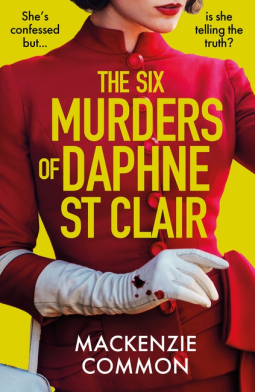
The Six Murders of Daphne St Clair by MacKenzie Common

Daphne St Clair is a ninety-year-old grandmother in poor health who lives at Coconut Grove Senior Home in Florida. Probably not anyone’s idea of a typical serial killer, but when another elderly resident is found dead in the home, Daphne calls the police and confesses to not only this murder but several more, spanning four states, two countries and seven decades. The police, Daphne’s family and the public are both shocked and intrigued – what could have made Daphne want to kill so many people? And why has she chosen to confess now, at this late stage of her life?

When the news of Daphne’s confession begins to spread, she is contacted by journalists and reporters wanting to be first to tell her story, but she turns them all down – except one. Ruth Robinson hopes to start a podcast about Daphne’s life and even has a title ready for it – The Murders of Daphne St Clair. Something draws Daphne to the younger woman and she agrees to be interviewed for the podcast, but as her story unfolds she begins to discover that there’s more to Ruth than meets the eye. Who is Ruth Robinson and what’s the real reason for the podcast?

I had never heard of MacKenzie Common (it seems she has previously written a YA mystery novel, although this is her first book for adults), but I was attracted by the elegant, eye-catching cover and the premise of a ninety-year-old serial killer who had spent her whole life literally getting away with murder! I did enjoy the book, with a few reservations which I’ll mention later in this review, but overall it was quite an entertaining read.

Daphne’s tale begins in Canada in the 1930s, where she grew up on a farm near a small town in Saskatchewan. After a difficult childhood, Daphne runs away from home at the age of sixteen and makes her way to Winnipeg, where she meets the man who will become her first victim. He’s an unpleasant, violent man and his death is more of an accident than a murder, so at this stage of the book, Daphne seems a sympathetic character. This quickly changes as Daphne’s actions become more senseless and inexcusable and she shows no repentance for what she has done. I disliked her more and more as the novel progressed, but at the same time, she’s a clever, witty narrator and her story is engaging.

The structure of the book was a problem for me. Daphne’s narrative is broken into short sections, some of which are written in her own first person perspective and some in the form of dialogue for the podcast. These are then interspersed with chapters from Ruth’s perspective as she carries out some investigations of her own into Daphne’s background and one particular murder that is of special interest to her. I felt that the switches from one character to the other happened too quickly and too often, which stopped the story from flowing as well as it could have done. On top of this, there are also frequent interruptions from true crime fans discussing the show on Reddit and speculating on who Daphne is going to kill next, and a fashion blogger on TikTok who imagines outfits Daphne may have worn at key moments in her life. I could have done without these as well, but they do illustrate the moral issues of treating criminals like celebrities.

The ending of the novel leaves an important question unanswered; we can decide for ourselves what happened (or what we would have liked to have happened) but I would have preferred to know for certain! This wasn’t a perfect book, then, but not many are and there were definitely more things I liked than disliked.

Thanks to Headline/Mountain Leopard Press for providing a copy of this book for review via NetGalley.

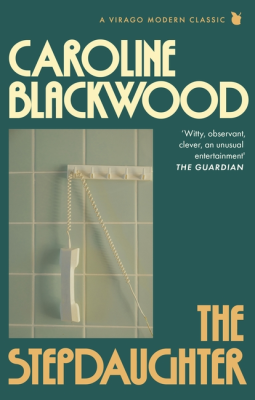
The Stepdaughter by Caroline Blackwood

I’ve never read anything by Caroline Blackwood, but decided to try this book as I was intrigued by the comparisons to authors like Shirley Jackson and Patricia Highsmith. Although she wrote several novels, short story collections and works of non-fiction, Blackwood, who was a Guinness heiress, seems to have been better known as a socialite and muse (she inspired the art of Lucian Freud and the poetry of Robert Lowell, two of her three husbands). She really deserves to be known for her own work as well as her influence on other people’s and I’m glad to see that some of her books, including this one, have been reissued recently.

The Stepdaughter was first published in 1976 and is novella length, which is a perfect way to try out a new author without having to commit to something longer. The book is narrated by a woman referred to only as J, and takes the form of letters she is ‘writing’ in her mind to an imaginary friend. J has been deserted by Arnold, her husband, who has gone to live in Paris with his French girlfriend, leaving her behind in an expensive Manhattan apartment with their four-year-old daughter and an au pair, whom she dislikes. There’s also a fourth member of the household – Renata, her husband’s teenage daughter from a previous marriage. It seems clear to J that Arnold will only allow her to go on living in the apartment if she continues to look after Renata. The only problem is, she hates the girl, resents her presence and can’t even bear to look at her.

The narrator’s attitude towards Renata is horrible. It’s obvious to the reader that Renata, who is still just a child, is desperately unhappy and in need of love and affection. However, this doesn’t seem to occur to J (or maybe it does, but she doesn’t care). She sees her stepdaughter as someone to be despised – an awkward, overweight, unattractive girl whose only interests are baking and eating cakes and sitting in her bedroom watching television. J uses her imaginary letters as an outlet to express her feelings about Renata and as the book progresses she becomes more and more fixated on her hatred of the girl, blaming her for everything that’s wrong in her life.

The situation in the apartment sounds unbearable, for J but particularly for poor Renata, so it’s not surprising that eventually things do inevitably reach a turning point. It’s not a happy ending and not what I would have preferred, but at least J manages to redeem herself a tiny bit, gaining a deeper understanding of both herself and Renata and regretting that things have happened the way they have. Although J’s sheer nastiness and cruelty make this book an uncomfortable and unsettling read, it’s also a very compelling one. It wouldn’t feel right to say that I ‘enjoyed’ it, but I was gripped by it and read it in one day. It would be a good choice for Novellas in November, if anyone is planning that far ahead!

Thanks to Virago for providing a copy of this book for review via NetGalley.

Book 2/20 for 20 Books of Summer 2025.

We’ll Prescribe You a Cat by Syou Ishida – #ReadingtheMeow2025

Translated by E. Madison Shimoda

Until now I seem to have avoided the current trend for Japanese novels with cute cat pictures on the cover. It wasn’t a deliberate decision to avoid them – that sort of book just doesn’t usually appeal to me. When I was looking for ideas for cat-related books to read for this year’s Reading the Meow, though, I thought this one sounded intriguing.

We’ll Prescribe You a Cat begins with Shuta Kagawa visiting the Nakagyō Kokoro Clinic for the Soul in Kyoto. Shuta’s unhappiness at work is causing him to suffer from stress and insomnia and he has decided to consult a psychiatrist. However, he quickly discovers that this is no ordinary clinic – first, it proves extremely difficult to find, hidden away down a narrow alleyway; then, instead of prescribing medication, Dr Nikké says something completely unexpected: “We’ll prescribe you a cat”. And with that, Shuta becomes the temporary owner of Bee, an eight-year-old female mixed breed – but will he manage to complete the course of ‘medication’ without any side effects and what will happen when it’s time to give the cat back?

Shuta’s story is the first of five that make up this novel, each one following a similar format with a character entering the Kokoro Clinic and, regardless of their symptoms, being prescribed a cat. The cat is a different one each time, each with his or her own personality and characteristics. Sometimes the cat is compatible with the client; sometimes it seems to cause more trouble and disruption, but in each case, when the prescription comes to an end, the person finds that their life will never be the same again.

Animal-assisted therapy is a legitimate form of therapy used by charities and mental health groups to treat a range of issues, allowing people to spend time with animals in a controlled environment. That’s what I had assumed this book would be about, so I was surprised to see Dr Nikké and his nurse, Chitose, simply handing the clients a cat in a carrier with some food and written instructions – no checks done to make sure the person had a suitable home for the cat, no questions asked about allergies or the needs of other family members. Then, at the end of the week or two week period, the cat is going to be handed back to the clinic and passed on to the next person. It seemed cruel and irresponsible. However, I quickly discovered that the book has a fantasy element – which grows stronger and more bizarre as it progresses – and I was probably taking things too seriously!

You may be wondering what the fantasy element is. Well, to begin with, the clinic itself is very unusual – sometimes it can be found and sometimes it can’t, depending on the person looking for it and how desperately they need to find it. There’s also something strange about Dr Nikké and Chitose, but I’m not going to say any more about that except that each of the five stories adds a little bit to our understanding of what is going on. Still, when I finished the book I felt that a lot of things were left unexplained or only partly answered. There’s a sequel, We’ll Prescribe You Another Cat, which will be available in English in September, but I’m not sure whether it will provide any more clarity or if it’s just another collection of similar stories. I don’t think I liked this one enough to want to read the sequel, but I did find it interesting and I enjoyed taking part in this year’s Reading the Meow with this book and Paul Gallico’s Jennie!

Secrets of the Bees by Jane Johnson

Ezra Curnow is almost eighty years old and has spent his whole life living in a little cottage on the Trengrose estate in Cornwall. It was home to his father and grandfather before him and Ezra can’t imagine living anywhere else. His cottage has no modern appliances or conveniences, not even a television, but Ezra doesn’t see the need; he spends most of his time outdoors with his cat and tame jackdaw, growing his own fruit and vegetables and tending to his bees in their hive.

Ezra’s peaceful life is shattered when Eliza Rosevear, mistress of Trengrose House, dies without leaving a will. The estate goes up for sale and is bought by Toby Hardman, a London businessman, who arrives with his wife Minty, an interior designer, and their teenage son, Dom. As soon as they move in, they begin converting part of the estate into a glamping site and looking for other ways to bring in tourists. Ezra is horrified, particularly when they remove the ancient Celtic cross that gives Trengrose its name. Worse still, it seems that the Hardmans also have their eye on Ezra’s cottage and with no official paperwork to prove that it’s his, he could be at risk of losing his home.

Secrets of the Bees is Jane Johnson’s latest novel and one of several, including The White Hare, that are set in her native Cornwall. Her love for the Cornish landscape, history, customs and people comes through strongly in her descriptive writing and in her creation of Ezra Curnow. Ezra represents tradition and a way of life that has almost disappeared; he has very little in terms of material possessions, but is happy and content. The Hardmans are the complete opposite – they represent change and progress, they have money, cars, technology, yet what they don’t have is happiness. Toby and Minty’s marriage is strained and lacking in trust, while Dom has been expelled from his expensive school for dealing drugs. Although Toby is the villain of the book and seems to be a lost cause, there’s still hope for Minty and Dom and we see them begin to improve and grow as people through their association with Ezra and the Cornish countryside. Dom even became one of my favourite characters, which I certainly hadn’t expected at first.

It’s very common, of course, for residents to object to new developments in their area, particularly ones that could damage the environment or cause noise and disruption, but Ezra takes his protests a step further. He comes up with some very inventive and amusing ways to throw the Hardmans’ plans into disarray, which adds some humour to a serious subject. Proving ownership of his cottage is much more difficult for him – there’s always been an understanding between the Rosevears and the Curnows but apparently nothing has been put in writing. It’s only when we are given some glimpses into the lives of Eliza Rosevear and her family – and into Ezra’s own past, including his National Service in Cyprus in the 1950s – that the truth about the Trengrose estate begins to emerge.

Although the book seemed slow at first and it took a while for things to really start moving, I gradually became completely immersed in the story. I could picture the setting so vividly and I loved everything Jane Johnson had to say about human beings and our relationship with the natural environment. I’ve enjoyed everything I’ve read by Johnson so far, whether set in Cornwall or in other parts of the world, historical or contemporary. I must find time to go back and read the remaining books of hers that I haven’t tried yet.

Thanks to Head of Zeus/Apollo for providing a copy of this book for review via NetGalley.

The Sirens by Emilia Hart

After enjoying Emilia Hart’s first novel, Weyward, in 2023, I’ve been looking forward to reading her new one, The Sirens. Weyward linked the stories of three women in different time periods through a family connection, a shared love of nature and a theme of witchcraft. The Sirens also has multiple timelines, but this time the characters are linked by water and the sea.

The novel begins in Australia in 2019 with student Lucy waking up from a sleepwalking episode with her hands around her ex-boyfriend’s neck. Ben is not entirely innocent – they broke up after he shared a nude photo of her with his friends – but she’s afraid he’ll report her for assault, so she packs her things and flees. Planning to take refuge with her sister Jess, an artist, Lucy heads for the town of Comber Bay, but on arrival she finds her sister’s house empty, as if it had been abandoned in a hurry. Lucy is concerned, but on learning that Jess did tell one of the neighbours that she would be going away for a while, she decides to wait in the house until she returns.

Comber Bay is a small town on the coast of New South Wales and has a sinister reputation; over a forty year period, eight men disappeared without trace, never to be seen again. Also, in 1982, a baby was found abandoned in a cave not far from Jess’s house. As she waits to hear from her sister, Lucy begins to uncover the truth behind these mysteries – but she becomes distracted by unsettling dreams of another pair of sisters who lived two centuries earlier.

Lucy’s present day story alternates with the story of those other two sisters, Mary and Eliza, who were found guilty of a crime in Ireland in 1800 and transported to Australia on a convict ship. Later in the book, Jess’s story also begins to unfold, mainly in the form of diary entries from the 1990s (the diary reads more like a novel, but I think we just have to suspend disbelief there). It takes a while for all of these threads to come together, but we eventually begin to see how cleverly they are connected. There are some surprising twists that I didn’t see coming, as well as some that I was able to guess before they were revealed. As ever, when a book has more than one timeline, I find that some are more compelling than others – and in this case, I particularly enjoyed Lucy’s story and the flashbacks to Jess’s teenage years. Mary and Eliza never fully came to life for me, so their adventures on board the Naiad didn’t interest me quite as much as I would have liked.

The title and cover of the book made me think there would be more siren/mermaid mythology incorporated into the story, but there’s only a little bit of that. There’s a lot of beautiful watery imagery, though, and water plays a big part in the novel in so many different ways. There’s Mary and Eliza’s sea voyage on the Naiad; the setting of Comber Bay, with its coastline, cliffs and caves; Jess’s paintings of ships; even the rare skin condition Lucy suffers from, aquagenic urticaria. It’s a book with lots of layers and things to think about. Having read two Emilia Hart books now, however, I do have a problem with her portrayal of men. Almost every male character in both books, with only a few exceptions, is either violent and abusive, a rapist or generally misogynistic or predatory. Obviously that’s true of some men, but I think it’s unrealistic that nearly every man who crosses paths with our female protagonists would be a terrible person. I think it should be possible to promote feminism and give women a voice without going too far in the other direction.

Apart from that, I did like the book and loved the eerie atmosphere Hart creates with Lucy alone in the abandoned Cliff House, uncovering the troubled history of Comber Bay’s past while being haunted by the cries of the women on the convict ship. It’s very similar to Weyward in some ways, but also different enough to be an interesting novel in its own right.

Thanks to The Borough Press for providing a copy of this book for review via NetGalley.