A Daughter’s a Daughter by Mary Westmacott

I haven’t taken part in the Read Christie challenge for the last two months and wanted to join in with the May read. The book of the month, Cards on the Table, is one that I’ve read quite recently, though, and I’ve also read all of the other alternative suggestions – so instead I decided to read a book I had been considering for 1952 Club in April but didn’t get to as I ran out of time. A Daughter’s a Daughter, published in 1952 (obviously), is one of six novels that appeared under the name Mary Westmacott, Christie’s pseudonym for her books that weren’t mysteries or thrillers. It’s the third Westmacott I’ve read (the others being Unfinished Portrait and Giant’s Bread) and it’s my favourite so far.

The novel opens with Ann Prentice saying goodbye to her nineteen-year-old daughter, Sarah, who is going on a skiing trip to Switzerland. Ann, a widow in her early forties, is very close to her daughter and isn’t looking forward to spending three whole weeks without her. However, while Sarah is away, Ann meets Richard Cauldfield at a party and falls in love. Richard has spent many years in Burma since the death of his wife and has only recently returned to England. On the surface he seems a pompous man, but as Ann gets to know him she sees that he is good and kind – and just days after meeting him, she agrees to marry him. The only problem is, Sarah is due back from Switzerland soon and Ann is worried about how she’ll take the news.

Sarah takes it very badly: she dislikes Richard on sight and decides that her mother can’t be allowed to marry him. Richard tries to befriend Sarah, but has no idea how to speak to a teenage girl and gets everything badly wrong. Meanwhile, Sarah deliberately tries to provoke him and cause arguments, until the atmosphere in the household becomes unbearable. Ann is caught in the middle – she loves Richard and is sure she will be happy with him, but Sarah is her only child and she loves her too. Eventually, she is forced to choose between them and makes a decision she’ll regret for the rest of her life.

I loved this book, but at the same time I found it uncomfortable to read. Sarah is infuriatingly selfish and spiteful, so much so that even later in the book when she ends up desperately unhappy, I couldn’t find much sympathy for her. My heart broke for Ann when she had to make her difficult choice, but after a while she also began to annoy me and I felt that she didn’t handle the situation as well as she could have done. Both Ann and Sarah feel very human, though, and it’s a testament to Christie’s writing that her characters were able to evoke strong emotions in me. Fortunately, there are also some characters I liked, such as Sarah’s boyfriend, Gerry Lloyd, and Ann’s loyal but outspoken housekeeper, Edith. My favourite, though, is Dame Laura Whitstable, Ann’s friend and Sarah’s godmother. A woman in her sixties, Laura has more experience of life than the two younger women and tries her best to pass on her wisdom and knowledge to them without actually giving ‘advice’ or telling them what to do.

I’ve seen the Westmacott books described as romances, but this one is much more of a psychological novel, exploring the relationship between mother and daughter and what it really means to sacrifice your own happiness for someone you love. I found it surprisingly gripping and finished it in two days. I’m now looking forward to reading the other three Westmacotts.

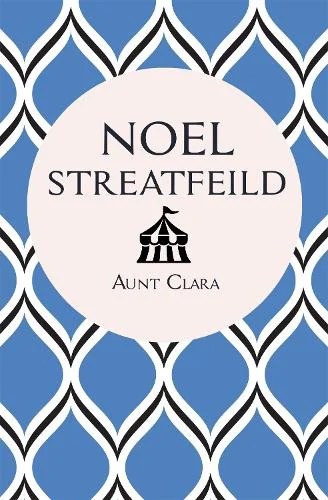
Aunt Clara by Noel Streatfeild – #1952Club

My final book for the 1952 Club being hosted this week by Simon and Karen is one of Noel Streatfeild’s adult novels. I loved Streatfeild as a child but came to her books for adults just a few years ago. So far I’ve enjoyed The Winter is Past and Caroline England and hoped that her 1952 novel, Aunt Clara, would be another good one.

Before we meet the title character, Streatfeild introduces us to Simon Hilton, a wealthy, curmudgeonly man approaching his eightieth birthday, who lives in London with his valet, Henry. Simon has never married, but has five nieces and nephews, most of whom now have children and grandchildren of their own. None of them care much for Simon – and the feeling is mutual – but they all have their eyes on his money and don’t want to risk being disinherited. The old man is looking forward to celebrating his birthday in August and when he receives a stream of letters from various family members suggesting that he switch his party to July instead as it would be more convenient for them, Simon is furious. Feeling disrespected and insulted, he decides to teach them all a lesson!

A few weeks after his birthday party (which was held in August, despite his family’s complaints), Simon dies and everyone gathers for the reading of the will. To their shock and disgust, they hear that everything has been left to Clara, Simon’s sixty-two-year-old niece. Clara is one of the only people in the family who is not greedy and selfish: she looked after her parents until their deaths, sacrificing her own chance of marriage in the process; she is always ready to help her siblings and their children whenever they call on her; she carries out work for charity and sees only the best in everyone else. It may seem that Simon has rewarded her for her goodness, but the bequests include some odd things to leave to a religious, teetotal spinster in her sixties – a small brothel, The Goat in Gaiters pub, Simon’s racehorses and racing greyhounds, a fairground game called Gamblers’ Luck, and two children from a circus. Is Simon playing one last cruel joke from beyond the grave?

I enjoyed Aunt Clara, although I felt that the plot jumped around too much in the second half of the book, making it a bit difficult to follow, particularly as there are so many characters to keep track of as well. It’s fascinating to see how Clara deals with her unusual inheritance, though; she’s endearingly naive and innocent, oblivious to Simon’s malicious humour, and considers each of his bequests to be a ‘sacred trust’. Her efforts to care for each of the people or things entrusted to her eventually begin to give her a different perspective on life and on things she’s always viewed as sins, such as drinking and gambling. She also has to contend with the rest of the Hilton family, who switch their attentions to her, hoping to get their hands on some of her newly gained wealth!

As I’ve mentioned, there are far too many characters – and only a few of the family members are drawn with any depth. One character who does jump out of the pages, though, is Henry, Simon’s manservant, a no-nonsense Cockney who sees the goodness in Clara and takes her under his wing. Henry is present throughout the book and speaks in dialect, including a lot of rhyming slang, which I found a bit tiring to read after a while. Aunt Clara isn’t my favourite of the Streatfeild novels I’ve read so far, then, but I think there’s a lot more to like than to dislike. I was interested to find that it was made into a film starring Margaret Rutherford in 1954. Has anyone seen it?

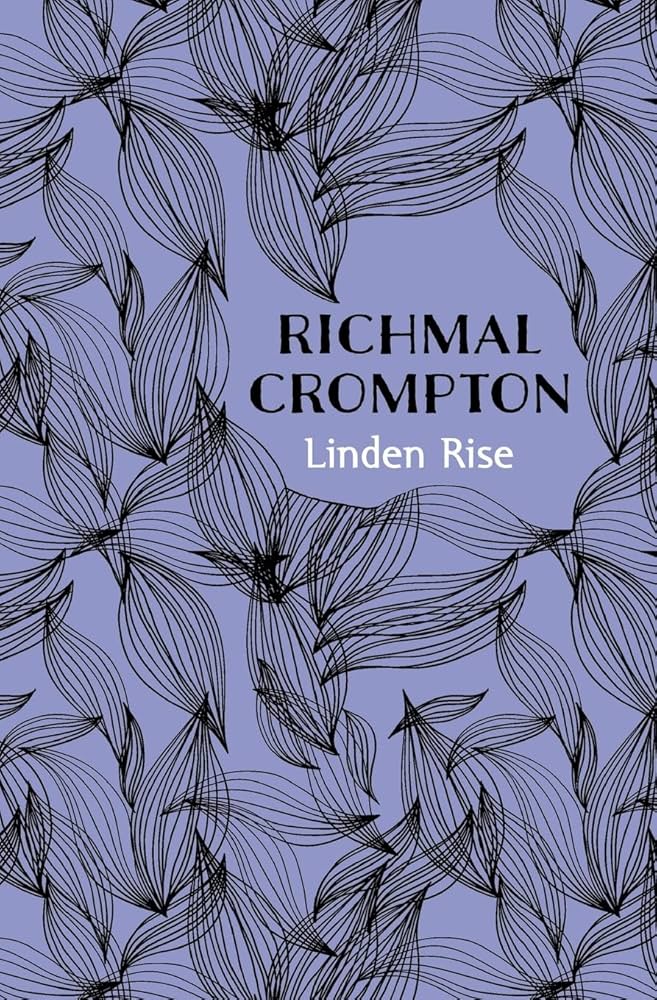
Linden Rise by Richmal Crompton – #1952Club

My first book for this week’s 1952 Club (hosted by Karen of Kaggsy’s Bookish Ramblings and Simon of Stuck in a Book) is Richmal Crompton’s Linden Rise. Crompton is much better known for her Just William series for children, but she also wrote a large number of adult novels of which this is one. I’ve previously read two others, Family Roundabout and The Old Man’s Birthday, both of which I enjoyed, so I hoped for a similar experience with this one.

The novel begins in 1892 with fifteen-year-old Tilly Pound arriving at Linden Rise, a cottage in the village of Priors Green. The Culverton family from London have taken the cottage for the summer and Tilly has been employed as housemaid – her first job. Despite their money and comfortable, privileged lives, the Culvertons are not a happy family: Mr Culverton is having an affair with another woman and his wife is fully aware of it, leading to a tense and unloving marriage. Edmund, the eldest child, is Tilly’s age, a serious, humourless boy, very unlike his carefree younger brother, Richard. There are also two girls – pretty, selfish Althea, and the youngest, Vere, who is considered sullen and miserable and is largely ignored by the rest of the family.

As Tilly settles into her new role, the Culvertons come to rely on her more than they know, and when they return to Linden Rise permanently several years later, she comes back to work for them again, this time as head housekeeper and cook. A lot has changed in the intervening years and Tilly isn’t impressed with the direction in which some of the family members’ lives have gone, so she decides to do what she can to put things right.

As you would expect from an author more famous for her children’s stories, Crompton’s child characters are very well drawn and I think that’s why I enjoyed the first part of this book more than the later sections. She knows the sort of conversations children have, the things that are important to them, the eyes through which they look at the world, and how unthinkingly cruel they can sometimes be. Once the children have all grown into young adults and the focus is mainly on their romantic relationships, I felt that the book seemed to lose its charm a little bit. I did love Tilly, though, who remains very much the same throughout the book – reliable, practical and never afraid to speak her mind.

Linden Rise has a lot to say about parenting, a theme that is also an important part of Family Roundabout. Mr Culverton, preoccupied with the other woman in his life, is largely an absent father who barely appears in the novel. Mrs Culverton also shows little interest in the raising of her children, engaging a governess, Miss Maple (another character I loved), for their first summer at Linden Rise. Mrs Culverton makes it clear that she only feels pride in two of her children – ironically, the two most unpleasant ones, Edmund and Althea – while the other two, Richard and Vere, frustrate her with their refusal to conform and behave as she expects them to. I felt so sorry for Vere in particular; Richard at least has a happy nature and doesn’t really care what people think of him, but Vere struggles with feelings of rejection and abandonment even as an adult.

Despite the serious topics the novel covers, there’s also some humour – and a happy ending, at least for some of the characters! I didn’t enjoy this book quite as much as the others I’ve read by Crompton, but I did like it and I’m glad I chose to read it for 1952 Club.

~

Some 1952 books previously read and reviewed on my blog:

East of Eden by John Steinbeck
They Do It with Mirrors by Agatha Christie
The Merry Mistress by Philip Lindsay
Excellent Women by Barbara Pym
The Birds & Other Stories by Daphne du Maurier

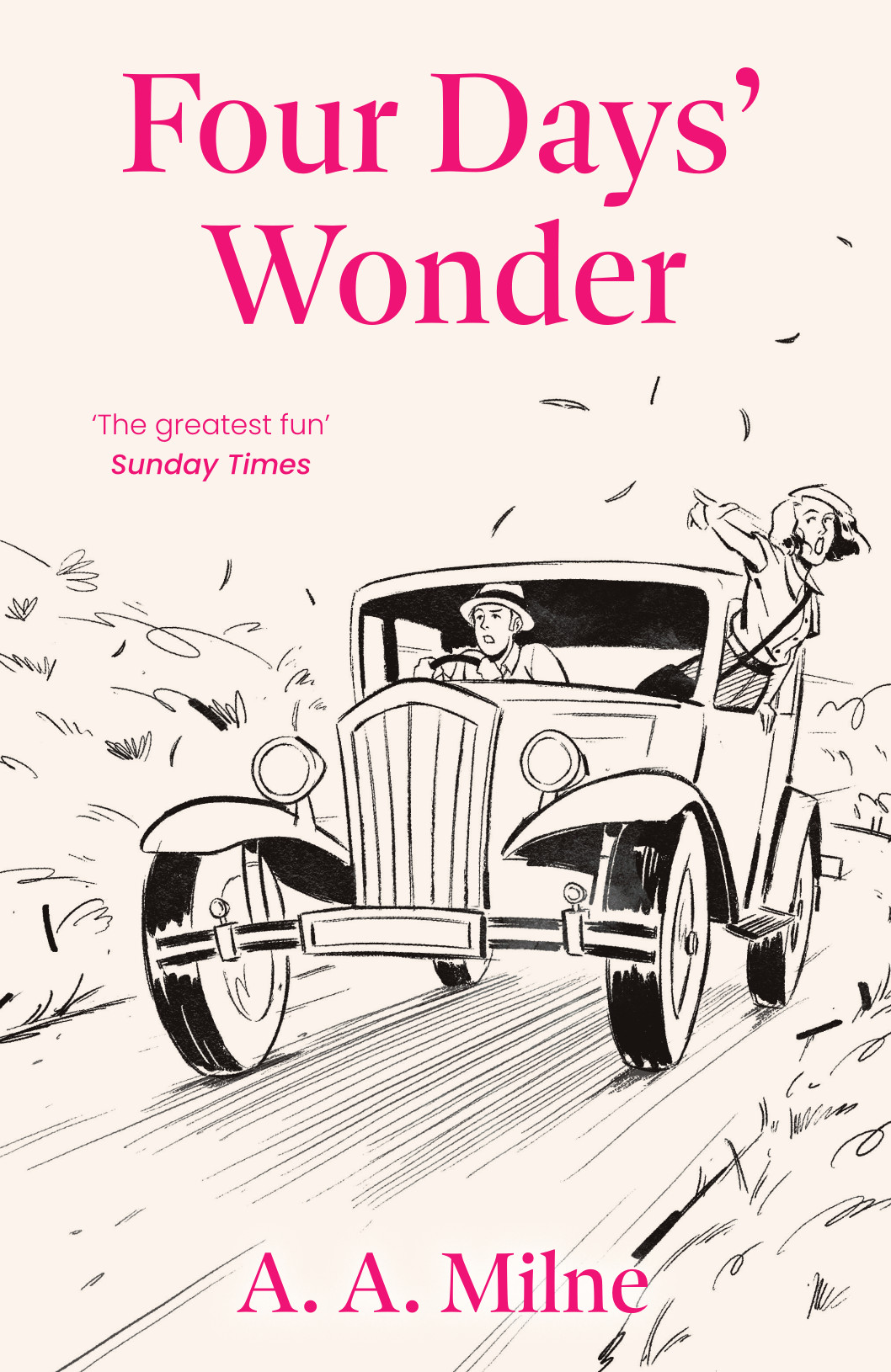
Four Days’ Wonder by A.A. Milne

A.A. Milne is, of course, best known for his Winnie the Pooh stories, but he also wrote a wide variety of works aimed at adults, ranging from novels and plays to essays and poetry. I read and loved his detective novel, The Red House Mystery, a few years ago and was disappointed that he hadn’t written more of them, so when I came across Four Days’ Wonder, described as a ‘spoof on the detective novel’, I thought it might be the next best thing.

Eighteen-year-old Jenny Windell has been raised by her Aunt Caroline at Auburn Lodge, having been orphaned as a child. Now Caroline has died as well and Jenny has moved in with another guardian, the family lawyer, so that Auburn Lodge can be rented out. However, she still has a key and absentmindedly lets herself into the house one day, forgetting that she no longer lives there. To her surprise, she is confronted by the body of her other aunt, Jane Latour, an actress whom she hasn’t seen for several years, lying dead on the drawing room floor.

It seems obvious that Aunt Jane has slipped on the polished floor and hit her head on a brass door stop, but when Jenny hears the new tenants returning to the house, she panics and escapes through a window. It immediately occurs to her that she has left her monogrammed handkerchief beside the body and that her footprints are now visible under the window. Worse still, she had wiped the blood off the door stop (with the handkerchief) and placed it on top of the piano, thereby concealing the evidence. Jenny, who has read a lot of murder mysteries and has an active imagination, is convinced that she has made herself the number one suspect. Her solution is to go on the run, disappearing into the countryside and sleeping on haystacks. What could go wrong?

Four Days’ Wonder is not a book you can take too seriously and Milne clearly didn’t intend it to be. It’s a comic novel, with a similar kind of humour to P.G. Wodehouse or Christie’s Tommy and Tuppence series, where the characters keep getting themselves into ridiculous, farcical situations. The book was published in 1933 and you can see that Milne is parodying various tropes of the Golden Age crime novels that were so popular at that time – dead bodies found in drawing rooms, mistaken identities, messages written in code, and so on. What you won’t find is any real detective work or, in fact, any real mystery. There are policeman (who, naturally, get everything wrong) but as we know from the beginning that Jenny didn’t kill Aunt Jane and that it was almost certainly an accident, there’s not much suspense in terms of wondering what the solution will be.

Jenny is a very likeable heroine, as is her friend Nancy Fairbrother, whom she enlists to help her with her escape. There’s also a love interest for Jenny in the form of Derek Fenton, a young man she meets while on the run, who just happens to be the brother of the crime writer Archibald Fenton, Nancy’s employer. This leads to yet more misunderstandings and comedy moments – such as when, unaware of who Archibald is, Jenny shoots him with her trusty Watson Combination Watch Dog and Water Pistol! Four Days’ Wonder is a lot of fun and I kept thinking that it would make an entertaining adaptation for TV or film – so I wasn’t entirely surprised to find that there is already one, from 1936, although it doesn’t seem to stick very closely to the book and I can’t find it available anywhere either to buy or stream.

My edition of this book is published by Farrago, an imprint of independent publisher Duckworth Books. It’s one of five Milne books for adults available to buy through Farrago’s website, the others being Mr Pim, Two People, Chloe Marr and The Rabbits. I must try more of them at some point!

A House on the Rhine by Frances Faviell – #DeanStreetDecember24

My previous experience with Frances Faviell has been limited to her Second World War memoir, A Chelsea Concerto, so I was curious to see what her novels were like. There are several currently available from Dean Street Press and as Liz is hosting her Dean Street December event this month, I decided it was a good time to give one of them a try.

A House on the Rhine, first published in 1955, tells the story of a family trying to adjust to life in postwar Germany. After their home was destroyed during the war, the family – Joseph and Moe and their twelve children – spent four and a half years living in an air raid shelter and have now been rehoused by the authorities in a village outside Cologne. Moe once received a medal from the Nazis for having more than ten children (large Aryan families being seen as the Nazi ideal), but now it seems that almost every member of that large family is embroiled in trouble of some sort and it’s anything but a happy, harmonious household.

Seventeen-year-old Katie is raising her young son alone after his father, a Belgian soldier, left her and went back to his own country. She sees the little boy as a burden preventing her from getting a job like her siblings and is envious of her older sister, Anna, whose own illegitimate child died. She can’t rely on her mother to help her with childcare because Moe is too distracted these days – she’s having an affair with their lodger, the much younger Rudi, and the whole family knows about it, including Joseph. And so, determined to have some fun and the chance to make some money, Katie has started sneaking out at night with several of her brothers to join a gang of other young people who engage in theft and violence under the cover of darkness.

Katie’s foster sister, Krista, has no memory of her own parents or her early life, having been found unconscious by Joseph during an air raid on Cologne. She has grown up with Joseph and Moe’s children, but is still seen as different and not quite like the others. Krista is in love with Paul, an American soldier, but is afraid to take their relationship any further because she knows her foster father doesn’t approve. Paul is confused. Is it his nationality that’s the problem – or is it because Joseph’s own feelings for Krista are not purely paternal?

I wasn’t prepared for this book being so dark! As well as the affairs, the unwanted pregnancies and the gang violence, some of the siblings also become implicated in a murder, while another, little Carola, is suffering from polio in hospital. It’s very bleak and the only characters I really liked, apart from the very young children, were Krista and Paul. Katie, her brother Hank, and the gang leader Leo were particularly horrible! The narrative moves around from one character to another so we have a chance to get to know all of the major players and I found Joseph, the patriarch of the family, the most complex and interesting. It’s clear that the war – and the time he spent in a prisoner of war camp in France – has affected him deeply, as has the loss of pride he has suffered in not being able to house his own family and the discovery that his children are now earning more than he is himself.

This is certainly not the usual gentle, comforting read I’ve come to associate with the Dean Street Press Furrowed Middlebrow imprint. I found it quite disturbing at times, though also very gripping. It’s a novel with a lot of depth and multiple layers and I know I’ve barely scratched the surface of it here. I can find very few other reviews of it, so if you’ve read it I would love to hear what you thought!

This edition of the book also contains a short story, The Russian for Sardines, originally published in the London Evening Standard in 1956 and also set in Germany after the war – a much more optimistic and uplifting story than A House on the Rhine! I’ll look forward to reading Frances Faviell’s other two novels published by DSP, Thalia and The Fledgeling, as well as her other memoir, The Dancing Bear.

The Hidden Girl by Lucinda Riley

When Lucinda Riley died in 2021, it seemed that there would be no new books from her, but since then her son Harry Whittaker has completed her final, unfinished Seven Sisters novel, Atlas, and now has reworked one of her earliest novels which was originally published as Hidden Beauty in 1993 under the name of Lucinda Edmonds. Retitled The Hidden Girl, it’s not clear exactly how much input Harry has had, but he states in the foreword that he has ‘refreshed and updated the text’.

After a brief prologue, we meet our heroine Leah Thompson as a shy teenage girl living with her parents in 1970s Yorkshire. Leah has no big plans for the future – her time is filled with schoolwork and assisting her mother with her job as housekeeper at the big farmhouse owned by Rose Delancey – and she doesn’t consider herself to be anything special. She does have natural beauty, but is overshadowed by more confident girls, like Mrs Delancey’s adopted daughter, Miranda. Yet it’s Leah, not Miranda, who is spotted by a London modelling agency and within a few years has become one of the world’s top models.

In a second timeline, we join the young Rose – or Rosa as she was previously known – and her brother David, who are children in Poland during the Second World War. Rose and David are from a Jewish family and like many Polish Jews they experience some terrible things and are very lucky to survive the war. Some of the tension is lost because we already know that Rose and David are still alive in the late 1970s – we meet Rose in the very first chapter, a semi-retired artist living in Yorkshire with Miranda and her older son, Miles, and we learn that David is a wealthy businessman and a widower with a teenage son, Brett. However, it’s still harrowing to read about the things they had to go through before reaching a more settled status in life.

Although the wartime narrative does have relevance to the lives of the younger generation – in ways that they themselves don’t understand until much later – most of the novel is devoted to the ‘present day’ storyline (the 70s and 80s). At first I thought it was going to be a bit of a shallow story about celebrities leading glamorous lifestyles, but I soon discovered there was more depth to it than that. Riley explores the dark side of stardom and the fashion industry, including the temptations of drugs and alcohol, the pressure to succeed, the internal rivalries and competitiveness, and the men who just want to take advantage of beautiful young women. Some of the things that happen to Leah’s friend, Jenny, in particular, are horrible and I think anyone who picks up this book expecting a light read may be surprised by the topics it covers.

This is actually the third Lucinda Edmonds book to be reissued under a new title, after The Italian Girl and The Love Letter, but those two were rewritten by Lucinda herself and published during her lifetime. I wonder whether any of her other Edmonds novels will be reworked by Harry now as well – or whether he’ll decide to write a book of his own.

Thanks to Pan Macmillan for providing a copy of this book for review via NetGalley.

Fire by John Boyne – #NovNov24

This is the third book in John Boyne’s Elements quartet and it’s the darkest and most powerful so far. Each book can be read as a standalone story, but if you’ve read the previous two – Water and Earth – you’ll see some links between the characters and plots. I would still recommend reading them in order if possible, although it’s not essential.

Fire, like the other books, is novella-length – in this case 163 pages – but as usual, Boyne manages to pack a huge amount into those pages, more than you would often find in a much longer novel. Our narrator this time is Freya Petrus, a renowned surgeon who works with burns and skin grafts. She’s only in her thirties but has already established herself as one of the best in her field. What Freya gets up to in her private life, however, is much less admirable…in fact, it’s horrible. To understand what has made her the person she is – both the good side and the bad – we have to go back to Freya’s childhood and witness the traumatic experiences that shaped her future.

It’s difficult to really discuss the issues a book like this raises without spoiling things, so I’ll just say that what Freya experiences as a child leaves her badly damaged and, in her mind, justifies the harm she does to other people as an adult. I did have some sympathy for the young Freya, but that was surpassed by the loathing I felt for the older Freya. John Boyne is never afraid to tackle unpleasant and controversial subjects in his books, but the things Freya does are particularly shocking and I found it a very uncomfortable book to read. It’s also fascinating and completely gripping, so I do recommend it as long as you’re prepared!

As with the themes of water and earth in the previous two books, the element of fire plays a part in this one in several different ways: not only does Freya work with victims of fire, it could be said that she’s also playing with fire in her personal life. Other important themes running through the story include the question of nature versus nurture and which has the biggest role in forming our character, the level of responsibility each of us has to do what we know is right, and the different expectations society has of men and women. It’s a book that leaves you with a lot to think about after reaching the final page.

Although each book in this quartet does work on its own, a minor character from each one becomes the main protagonist of the next. It seems that Aaron, who works with Freya at the hospital, is going to be the star of the final book, Air. It will be published in May 2025 and I’m looking forward to seeing how Boyne brings the series to an end.

Thanks to Doubleday for providing a copy of this book for review via NetGalley.

I’m counting this book towards Novellas in November, hosted by Cathy of 746 Books and Rebecca of Bookish Beck