Review: The Little Stranger by Sarah Waters

This is the third Sarah Waters book I’ve read this year, the other two being Affinity and Fingersmith, and I think this one is my favourite. I seem to be in the minority though, as I’ve seen some very mixed reviews of this book.

The Little Stranger is set in Warwickshire just after the end of World War II. When Dr Faraday is called to Hundreds Hall, home of the Ayres family, to treat their young maid, he can’t help noticing that the house has deteriorated since he was last there as a boy. Striking up a friendship with Mrs Ayres and her daughter Caroline, Dr Faraday begins to spend more and more time at Hundreds – and becomes involved in a series of increasingly strange and terrifying events.

This is a typical haunted house story, yet it was psychologically fascinating, very suspenseful – and genuinely spooky. I always find poltergeist-type phenomena very disturbing to read about and there’s plenty of that in this book, from moving furniture and inexplicable fires, to tapping noises, ringing telephones and mysterious handwriting that appears on the walls. I had to avoid reading this book late at night because I knew it would scare me if I did!

I have said before that I think one area where Sarah Waters really excels is in creating believable and vivid settings for her stories. She has done this to perfection in the two Victorian novels that I’ve read, and does it again here with her portrayal of life in post-war Britain – the class system, the economy, housing, medical care and the introduction of the NHS.

Another thing I loved about this book is that it’s not immediately obvious what’s going on, which allows the reader to be a detective. Is Hundreds Hall really haunted? Is there a rational explanation for the supernatural occurrences? Or is someone playing a cruel trick? And if it is a trick, who is responsible for it? I think I suspected every character at some point in the novel! Then there’s Hundreds itself, which is almost a character in its own right – perhaps the most important ‘character’ in the book. It seems to be symbolic that as the house falls further into neglect and disrepair, the Ayres family themselves begin to fall apart one by one.

I was hoping that by the end of the story everything would become clear. However, after finishing the book I am still no closer to knowing exactly what had happened at Hundreds than I was at the beginning. The final few chapters of the book are very ambiguous and leave the story open to interpretation. It was slightly frustrating not to be given all the answers, but in the end it didn’t really matter because the story was wonderful anyway – and even a few days later I’m still thinking about it and wondering whether I’ve interpreted things correctly.

Unless you really don’t like ghost stories, I would recommend The Little Stranger as a great, spooky read, perfect for the RIP challenge or for Halloween.

Review: Half of a Yellow Sun by Chimamanda Ngozi Adichie

“I do hereby solemnly proclaim that the territory and region known as and called Eastern Nigeria, together with her continental shelf and territorial waters, shall henceforth be an independent sovereign state of the name and title of The Republic of Biafra.”
~Chukwuemeka Odumegwu Ojukwu

Half of a Yellow Sun follows the lives of three central characters before and during the Nigerian-Biafran War of 1967-1970. The first character we meet is Ugwu, a thirteen-year-old boy from a small village, who comes to the town of Nsukka to take up a position as houseboy to Odenigbo. Odenigbo is a university professor who regularly plays host to a lively gathering of friends who are all very opinionated on the political issues facing Nigeria. His girlfriend, Olanna, is the daughter of a rich businessman and is an educated woman with a degree in sociology. Early in the book she travels to Nsukka to live with Odenigbo and Ugwu. The third main protagonist is Richard Churchill, an Englishman drawn to Nigeria by his interest in Igbo-Ukwu art. Richard falls in love with Kainene, Olanna’s intelligent and sarcastic twin sister.

This is the first book I’ve read by Chimamanda Ngozi Adichie and also the first time I’ve read anything on this subject. However, my unfamiliarity with the history, politics and geography of Nigeria wasn’t a problem, because the book explained things very well, on a personal, as well as a political level. The important thing to understand is that the nation of Biafra was formed when one of Nigeria’s ethnic groups, the Igbo, attempted to secede from Nigeria and establish their own country – but the newly-created Republic of Biafra received little support from the rest of the world and lasted less than three years. The Biafran flag (shown to the right) consisted of red, black and green horizontal stripes, with half of a yellow sun in the middle.

The book has an unusual structure: as well as being told from the alternating viewpoints of Ugwu, Olanna and Richard, the story also moves backwards and forwards in time. This structure didn’t really work for me, as I felt it disrupted the flow of the story. It also took me a while to start to feel anything for the characters, which was a problem for me at first. What I did like, though, was that the central protagonists were all from very different backgrounds which gave us the opportunity to see things from three entirely different perspectives.

Then suddenly, the Republic of Biafra was established, the war began, and from this point I became swept into the story and really began to love and care about the characters. We were given some vivid and harrowing descriptions of the suffering of the Biafran people – how children were dying of starvation, how people were murdered and abused, how homes were being destroyed. There’s one memorable scene where Olanna is sitting next to a woman on a train who is holding a calabash containing the severed head of her daughter. There was a lot of violence in the book, but I never felt that it was gratuitous.

The characters all develop over the course of the story, which is always a good thing. Ugwu was probably my favourite character. At the beginning of the book he arrives in Odenigbo’s home as an uneducated teenage boy, who feels bewildered by the new life he has suddenly been thrust into, but as he learns he grows in confidence and becomes a valued member of the family. However, there’s an incident near the end of the book that disappointed me and made me lose respect for him, although the fact that this occurs shows us how war and fear makes people behave in ways that they wouldn’t normally.

The other character I found particularly interesting was Richard. As an Englishman and initally an ‘outsider’, he comes to consider himself a Biafran and wants to write about his experiences, but eventually begins to question whether it’s right for him to tell this story or if it should be left for somebody else to tell. There were also several scenes which took place towards the end of the war when he was accompanying two American journalists who had come to report on the war. The ignorance and insensitivity of the journalists gives an idea of how the situation may have been viewed by some of those outside Nigeria.

There are a few surprises at the end of the book and it certainly didn’t conclude the way I was expecting it to. I can’t really say that I ‘enjoyed’ this book but I’m glad I read it because I now have a much better understanding of this period of Nigerian/Biafran history – and also because the story itself was so moving and one that really affected me.

I’ll leave you with a quote from the book in which Odenigbo explains why his mother, a woman from a small bush village, feels threatened by an educated woman like Olanna.

“The real tragedy of our postcolonial world is not that the majority of people had no say in whether or not they wanted this new world; rather, it is that the majority have not been given the tools to negotiate this new world.”

Highly recommended

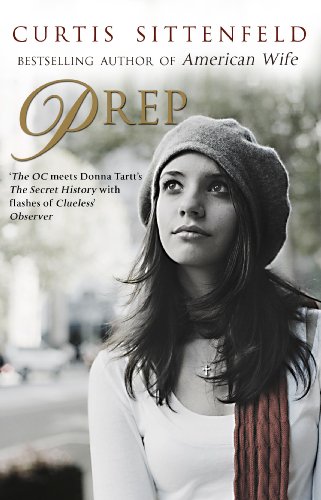
Summer Reading Challenge: Prep by Curtis Sittenfeld

Prep tells the story of four years in the life of Lee Fiora, who wins a scholarship to an exclusive boarding school in Massachusetts. Because most of the other students at Ault have rich parents, Lee feels inadequate and inferior. A lot of her unhappiness is caused by her own insecurities – people do try to be friends with her, but her shyness and paranoia makes her push them away. But Lee is more than just shy; she suffers from social anxiety. She agonises over every decision; she analyses every word anybody says to her. She misses out on parties, meals, trips to Boston and other social activities because she doesn’t know how to deal with them. She has trouble fitting in and feels out of place at Ault.

“Of course, now I wonder where I had gotten the idea that for you to participate in a gathering, the other people had to really, really want you to be there and that anything short of rabid enthusiasm on their part meant you’d be a nuisance…Sometimes now I think of all the opportunities I didn’t take – to get a manicure in town, to watch television in another dorm, to go outside for a snowball fight – and of how refusal became a habit for me, and then I felt it would be conspicuous if I ever did join in.”

Prep is a very well written book (though not quite “Sweet Valley High as written by George Eliot” as was quoted on the cover) and because Lee spends so much of her time observing people and situations, we get a lot of insights into every aspect of boarding school life. I grew up reading boarding school stories such as Enid Blyton’s Malory Towers and St Clare’s series and despite some obvious differences (the Enid Blyton books were set in Britain in the 1940s; Prep is set in America in what appears to be the 1980s or early 90s), there are actually some elements that are very similar. This is definitely not a children’s book, however, but one that will appeal to both adults and young adults.

As this is Lee’s story and we spend the entire book inside Lee’s head, whether or not you like the book will probably depend on what you think of her as a character. I immediately felt that she was somebody I could understand and identify with. She worried about a lot of the same things I worried about myself as a teenager (things that many of us probably worried about, actually, such as saying the wrong thing when answering questions in class, who to sit beside on the bus etc). I was never one of the most popular girls at school so I could relate to Lee and at first I was pleased to have discovered a character who felt so real, but after around 100 pages I started to feel differently about her. She began to come across as shallow, judgmental and difficult to like. I was torn between feeling sorry for Lee and feeling frustrated with her as she made one mistake after another. I also found some of her experiences painful to read about because they reminded me of all the things I didn’t like about going to school and being a teenager!

The other characters in the book (mostly Lee’s fellow students) are interesting because they represent all the different types of people we all knew when we were at school. I did feel that some of them were racial or class stereotypes, though as we only saw them through Lee’s eyes it’s difficult to know whether that was just the way Lee perceived them.

The story is narrated by an older Lee looking back on her school days and there are times when she recognises that she should have handled a situation differently and that she wasted a lot of opportunities, but there’s otherwise very little character development in this book. Although it would have been unrealistic to expect her to have a complete personality change, Lee is almost the same person at the end of her senior year as she was at the beginning of her freshman year, which is a bit disappointing. For this reason, I found Prep slightly dissatisfying, considering the book is almost 500 pages long, but I would recommend it as an accurate portrayal of the awkwardness of adolescence.

I received a copy of this book from Transworld Publishers as part of their Summer Reading Challenge – this is book 4/4 and completes the challenge

Review: The Tapestry of Love by Rosy Thornton

When Rosy Thornton offered me a review copy of her new novel, The Tapestry of Love, I thought it looked and sounded wonderful – but I wasn’t sure what I would think of it as it’s a bit different from the type of book I usually read. I needn’t have worried though, because I thoroughly enjoyed it! I admit that I had previously been unfamiliar with Rosy Thornton and her books, but now that I’ve been enlightened I would definitely like to read more of her work.

The Tapestry of Love is the story of Catherine Parkstone, a forty-eight year old divorced woman who decides to sell her home in England and buy a cottage in the mountainous Cévennes region of France. Catherine intends to start her own business providing home furnishings for her neighbours, but unfortunately things don’t go quite according to plan. And her life becomes even more complicated when her sister Bryony arrives on a three month sabbatical!

Although the book has a quiet, gentle tone, the plot was interesting enough to hold my attention from beginning to end. There were enough moments of drama to keep the story moving along and some humourous scenes too – for example, Catherine’s telephone conversations with her daughter Lexie, an aspiring journalist who is feeling increasingly disillusioned with her job at a cake-decorating magazine.

I particularly enjoyed reading about all the little details of Catherine’s new life: gardening, cooking, beekeeping, shopping at the market. The real highlight of this book though, is the sense of community: when Catherine first arrives in La Grelaudiere she is a stranger, an outsider, but over time she begins to gain the trust and respect of her neighbours and starts to forge some real friendships. We get to know Monsieur Bouschet and his wife; the reclusive Guillaume; the elderly widow Madame Volpiliere and the enigmatic Patrick Castagnol. The author skilfully brings the characters to life and makes them feel completely realistic.

I’ve never been to the Cévennes, but the mountains, remote hamlets and picturesque villages are described so vividly I could easily build a picture of the area in my mind. While I don’t think I’d be brave enough to do what Catherine did and leave my home and family to move there all on my own, it does seem like a beautiful and peaceful place to live, the kind of place you could easily fall in love with.

I very much enjoyed spending time in the mountains with Catherine and her neighbours. If you’re interested in France, needlework, nature or good food, or if you’re simply looking for an absorbing and well-written story with likeable, believable characters, you should find plenty here to keep you happy.

Recommended

I received a copy of this book from the author for review

Picture from Wikipedia

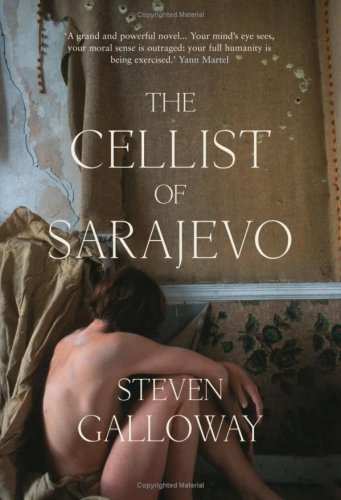
Review: The Cellist of Sarajevo by Steven Galloway

Sarajevo is a city under siege. On 27th May 1992, twenty two people are killed by a mortar shell as they wait outside to buy bread. In memory of those who died, a cellist sits in the street on twenty two consecutive afternoons and plays Albinoni’s Adagio in G Minor on his cello.

The cellist, however, is not the main character in this book – although he is there in the background throughout the story, playing his music as a message of hope and inspiration. Instead, Galloway has chosen to focus on three different characters, who are each coping in their different ways with the changes war has brought to their lives.

One of these is Arrow, a young woman who was once the star of the university target shooting team. Now she’s been recruited as an army counter-sniper and given the responsibility of protecting the cellist from attack. Then there’s Kenan, a man in his forties for whom the simple task of going to collect water for his family means putting his life in danger. And finally there’s Dragan, an older man who sent his wife and son out of Sarajevo before the siege began, and is now slowly making his way across the war-torn city to the bakery where he works.

I was only 11 years old when the Bosnian War started so probably wasn’t paying a lot of attention to news reports about it – I’m ashamed to admit that I know very little about what happened and before I read this book was only vaguely aware that Sarajevo had been under siege. However, if you’re looking for a book that will teach you the facts about the war, you’ll need to look elsewhere as this book does very little to educate the reader about the war itself. We are never even told the nationality of any of the characters. The snipers surrounding the city are referred to as simply ‘the men on the hill’; those defending Sarajevo are ‘the men in the city’.

This vagueness was very effective because in a way, Steven Galloway was saying that it doesn’t matter who’s fighting who, it doesn’t matter why a war began, because people everywhere are the same, have the same feelings and emotions, and are similarly affected by the pain and suffering of war. The author could have taken any war or any siege as the basis for this book and the overall mood he created would have been the same.

I can’t say that I enjoyed this book because ‘enjoyed’ isn’t the right word. Neither is ‘loved’. But it was an incredibly powerful book and I’m glad I finally found time to read it. I think some readers would probably dislike the structure of the book with its alternating chapters from the viewpoints of each of the three characters, but it worked for me. Arrow’s storyline was the most compelling and could have been a whole book on its own, but I also found it interesting to follow Dragan and Kenan as they dodged the snipers and negotiated hazardous bridges and ruined buildings on their dangerous journeys through the city.

The Cellist of Sarajevo doesn’t tell us how the war started, the reasons for the war or even who the war was between. What it does attempt to tell us is the effects the war had on individual people, how they felt and how they tried to survive.

Highly Recommended

Review: The Mysteries of Glass by Sue Gee

It’s the winter of 1860. Following the death of his father, the young Richard Allen takes his first position as curate in an isolated Herefordshire parish. At first Richard is eager to do well in his new post – but then he falls in love and finds that his faith is put to the test.

The Mysteries of Glass was nominated for an Orange Prize back in 2005 and I can see why, because Sue Gee’s writing is beautiful. I have rarely read a book with such a strong sense of time and place. The book is set in an isolated village in 19th century England and the rural Victorian setting felt entirely believable.

The opening chapters perfectly evoked a winter atmosphere. Although I was reading this book in July, I could still picture the cold, wintry landscape, the snowy fields, the frozen paths leading to Richard Allen’s lonely house, the skating party on the lake. Later in the book, as time passed, I could feel the temperatures rise and the seasons change.

Unfortunately, I had one or two problems with this book. I found it very, very slow – I had to force myself to read at a slower pace than I normally would because I felt I was starting to skim over the words without really absorbing them. After the first few chapters, in which very little actually seemed to happen, I had to make a decision whether or not to continue reading. I was glad that I persevered with it, though. I don’t like abandoning books and this one was so well written and had such a haunting, dreamlike atmosphere that I really wanted to love it.

The characters were realistic and well-drawn, from Alice Birley, the crossing-keeper’s solemn little girl to Edith Clare, the mysterious woman who lives in the woods. However, I thought some of the characters who were potentially the most interesting were very underused, such as Richard’s strong, hot-tempered sister Verity.

Another problem I had was that the religious aspects of the book were a bit too much for me. Knowing that the story was about a curate, I was prepared for this to some extent but I wasn’t really expecting the church scenes to be quite so dominant. If you don’t like that type of thing, you should be aware that it forms a very large part of the book and that the central theme of the story is the portrayal of a man’s inner turmoil as he tries to reconcile his feelings and emotions with his faith and his belief in God.

If this book sounds as if it might interest you at all, then please do give it a try as I definitely seem to be in the minority! The Mysteries of Glass wasn’t a bad book by any means – it didn’t appeal to me but maybe it will appeal to you.

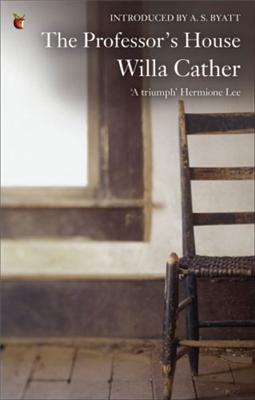
Review: The Professor’s House by Willa Cather

Willa Cather is an author I’ve heard a lot about but whose work I’ve never read until now.  I should probably have started with her most famous book, My Antonia, but something drew me to this one, The Professor’s House.

The Professor of the title is Godfrey St Peter, a man in his fifties, around the same age as Willa Cather was when she wrote this novel. At the beginning of the book, St Peter and his wife are preparing to move into their new home.  At the last minute the Professor decides that he doesn’t want to give up his old house just yet, so that he can continue to work in his old study and spend some time alone with his memories.

Most of the book revolves around St Peter reminiscing about his family and friends and coming to terms with the idea of leaving the past behind and embracing modern life.  At the forefront of the Professor’s thoughts is his former student Tom Outland, who had once been engaged to his daughter Rosamond. On his death in the First World War, Outland left everything he had to Rosamond – and this inheritance is causing trouble for the St Peter family.

If you prefer books with a gripping plot and lots of action you’ll want to avoid this one, as it was one of the slowest moving books I’ve ever read. I have to admit there were a few times during the first few chapters that I came close to abandoning it, but I kept reading because it was so well written. I would describe this as a calm, quiet, reflective book; one with such powerful, eloquent writing and beautiful imagery that it doesn’t really matter that not much actually happens.

The book is divided into three sections; the first and third are essentially character studies of the Professor and his family, particular his two daughters Rosamond and Kathleen and their husbands. The middle section is very different in both style and subject, as it tells in a flashback the story of Tom Outland’s life in New Mexico before he met the St Peter family. This story-within-a-story was fascinating but did feel slightly out of place, almost as if it had just been dropped at random into the middle of an entirely different book.

One of the things that stood out about Cather’s writing for me was the use of colour in her descriptions.

The grey sage-brush and the blue-grey rock around me were already in shadow, but high above me the canyon walls were dyed flame-coloured with the sunset, and the Cliff City lay in a gold haze against its dark cavern. In a few minutes, it too was grey and only the rim-rock at the top held the red light. When that was gone, I could still see the copper glow in the piñons along the edge of the top ledges. The arc of sky over the canyon was silvery blue, with its pale yellow moon, and presently stars shivered into it, like crystals dropped into perfectly clear water.

The Professor’s House is possibly a book I would appreciate more if I read it again when I’m older, as I found it difficult to identify with a fifty-two year old man looking back on his life. This was my first experience of Willa Cather and although I don’t think she’s going to be a favourite author, I will probably read more of her work at some point in the future.