Review: Watership Down by Richard Adams

I first read Watership Down when I was about 10 years old. It immediately became my favourite book and I re-read it many times. However, it’s been a long time since my last re-read and I wondered if I would still love it as much as I used to.

I know some people may consider a book about talking rabbits to be silly and childish, but Watership Down is not really a ‘children’s book’. It’s one of those books that can be enjoyed on different levels by people of all ages. In fact, the writing style and vocabulary used in this book is of a higher standard than many ‘adult’ books. It’s also not just ‘a book about rabbits’ – it’s a book about friendship, leadership, freedom, adventure, happiness, sadness and so much more.

Hazel and his brother Fiver are two young rabbits living in the peaceful Sandleford Warren. When Fiver has a premonition that the warren is going to be destroyed, he convinces Hazel and several of their friends to embark on an epic journey to find a new home. During their search for Fiver’s ‘safe, high place’, they encounter a number of problems and dangers including humans, predators and even other rabbits. The biggest obstacle of all, however, comes with the realization that as the group consists solely of male rabbits, they urgently need to find some females – this leads to a daring attempt to rescue some does from the overcrowded enemy warren of Efrafa…

Hazel and his friends are not cute little bunnies. They are intelligent, resourceful animals capable of solving almost any problem that is thrown at them. When faced with having to cross a river, for example, they observe that a plank of wood is floating on the surface of the water and they figure out how to use it as a raft. The rabbits are given such human thoughts and emotions that you can easily forget they’re actually not human! However, from a physical and behavioural point of view, they always behave like real wild rabbits. Richard Adams used R. M. Lockley’s The Private Life of the Rabbit as his reference.

Each rabbit has their own individual personality – Hazel is the leader, Fiver the sensitive prophet, Bigwig the fighter, Blackberry the brains, Dandelion the storyteller, Bluebell the clown, and so on. This allows every reader to identify with at least one rabbit and to choose a favourite (mine was always Bigwig, who at the beginning of the book was overbearing and aggressive but learned some important lessons during the journey to Watership Down and ended as one of the most highly respected rabbits in the warren).

One of the things I love about this book is the way Richard Adams has created an entire rabbit world. This includes:

  • A rabbit language, known as Lapine. Even before I began my re-read of the book, I could still remember that hrududu is the Lapine word for car, that a lendri is a badger, and Elil means enemies.
  • A rabbit religion. Rabbits are taught that Frith created the world and is represented by the sun. Inle is the word for moon, and the Black Rabbit of Inle is a grim reaper-type character who appears when a rabbit is about to die. The rabbits often talk about “ni-Frith” – noon – and “fu Inle” – after moonrise.
  • Rabbit folklore. The rabbits love to listen to stories about their hero, the legendary El-ahrairah, ‘the Prince with a Thousand Enemies’.

I think the author’s wonderfully detailed descriptions of the English countryside also deserve a special mention. As almost all of the places he writes about – the farms, hills, valleys and meadows – are places that really exist, it would be possible to follow the rabbits’ journey on a map or even to visit them yourself.

So, did I still enjoy this book as much as I did when I was 10? Yes, of course I did. No matter how many other books I read, Watership Down will always hold a special place in my heart.  I’ll leave you with a favourite quote from the book:

“‘Animals don’t behave like men,’ he said. ‘If they have to fight, they fight; and if they have to kill they kill. But they don’t sit down and set their wits to work to devise ways of spoiling other creatures’ lives and hurting them. They have dignity and animality.'”

Highly Recommended

Genre: General Fiction/Pages: 478/Publisher: Penguin/Year: 1972/Source: My own copy

This review is part of my Great Books series.

Review: Lean on Pete by Willy Vlautin

I received a review copy of this book from LibraryThing Early Reviewers. Willy Vlautin is the lead singer and songwriter with the band Richmond Fontaine and Lean on Pete is his third novel. I’ve seen a lot of other reviewers comparing him to John Steinbeck, though I haven’t read enough of Steinbeck’s work to know whether that’s an accurate comparison.

Charley Thompson is a lonely fifteen year-old boy who lives with his irresponsible single father. The book begins with their arrival in Portland, Oregon, where Charley’s father has been offered a new job in a warehouse. Charley is desperate to get a job of his own so that he can earn enough money to put food on the table but the only work he can find is at the Portland Meadows race track with a disreputable horse trainer called Del. Portland Meadows has seen better days and is now home to hundreds of old, tired horses and second-rate jockeys who can’t get work anywhere else. It is here that Charley meets Lean On Pete, the racehorse who becomes his only friend and companion.

Willy Vlautin uses very simple prose with no flowery descriptions and no big words. As the story is told in the first person from the point of view of fifteen year-old Charley, this writing style is very effective – he uses the kind of language that Charley would realistically use. Despite his miserable home life, Charley comes across as quite a sensible, likeable person, and I really wanted to see him survive and be happy. I did get a bit bored with constantly being told exactly what he had to eat for every meal (usually cheeseburgers, if you’re interested), though I suppose for a teenage boy fending for himself with no money, it was probably quite important!

Almost all of the other characters we meet are drug addicts, alcoholics, or living in poverty, painting a portrait of a side of society we don’t often read about. Most of these people show Charley some kindness, but aren’t really in a position to be able to help him – Charley and Pete are completely alone in the world and there’s a constant atmosphere of sadness and loneliness that hangs over the entire book.

Lean on Pete was a big step away from the type of book I usually read, but I didn’t regret the couple of days it took me to read it.

Genre: General Fiction/Pages: 288/Publisher: Faber & Faber/Year: 2010/Source: Received from LibraryThing Early Reviewers

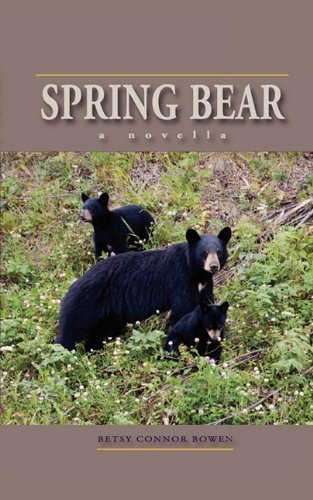
Review: Spring Bear by Betsy Connor Bowen

I received this novella from the First Reads program at Goodreads. Spring Bear is the story of a girl called Evvie Mallow who lives in the small town of Soper’s Mills, Maine. Evvie’s father suffered bad head injuries in an accident which left him unable to speak or take care of himself, and her mother has become involved with another man – Lester Darrow, a surly, aggressive man who traps bears in the woods.

Evvie dreams of going to California and escaping from the poverty and misery of her home, but when she discovers that she’s pregnant it seems that her chance of a better life has disappeared.

This self-published book is Betsy Connor Bowen’s debut novel. She has achieved what she set out to do, which is to successfully convey the atmosphere of a small town in Maine. I’ve never been to Maine, and the way of life described in the book was very different from my own – in some ways, a simpler way of life but not without its own set of problems and challenges.

Although I could sympathise with Evvie’s sad, lonely existence, I didn’t really feel any connection to any of the other characters – I would have liked to have been able to get to know them in more depth. Maybe if it had been a longer novel, there would have been more opportunity for character development, but for a quick, short read this book was quite enjoyable.

Genre: General Fiction/Pages: 96/Publisher: Lonefeather Productions/Year: 2009/Source: Won from Goodreads

Review: The End of the Alphabet by CS Richardson

When Ambrose Zephyr is diagnosed with an unidentified terminal illness and given only a month to live, he decides to make the most of his final days. Accompanied by his wife Zappora Ashkenazi (also known as Zipper) he sets off on a journey round the world, visiting each city on his list in alphabetical order. Will they make it to the end of the alphabet before time runs out for Ambrose?

At 128 pages, this is more of a novella than a novel and could easily be read in one sitting. I think the book might have lost its impact had it been any longer; I felt that the shortness of the book and the shortness of the individual chapters reflected the speed at which Ambrose’s remaining days were slipping away from him.

I loved the alphabetical theme which runs throughout the book from the characters’ initials (AZ and ZA) to the chapter titles (each stage of their journey is headed with the corresponding letter of the alphabet). Each place they visit brings back memories and evokes strong emotions for both Ambrose and Zipper. Richardson has given his characters a surprising amount of depth for such a short book; it was interesting to see how they each coped with the news of Ambrose’s illness in their own different ways.

Although there is quite a lot of dialogue in the book, the author has decided not to use quotation marks which made following the conversations unnecessarily confusing. I also sometimes found it hard to tell whether certain scenes were happening in the present or in a flashback. However, other readers will probably love his writing style.

Despite the tragic subject matter, I thought it was a warm, charming story and although I probably would never have chosen to read it if I hadn’t won a copy in a competition, it’s an impressive debut novel by CS Richardson.

Genre: General fiction/Pages: 128/Publisher: Portobello Books/Year: 2009/Source: won in a contest

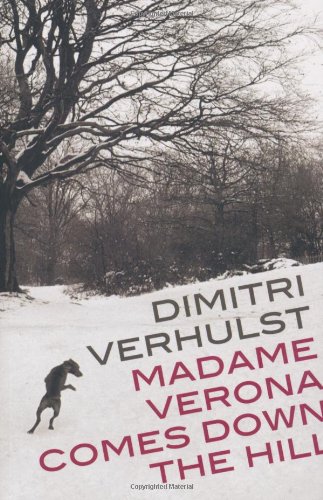
Review: Madame Verona Comes Down The Hill by Dimitri Verhulst

I’ve read good reviews of this book and really wanted to like it, but I just couldn’t. Although it’s very short (only 145 pages) it took me almost a week to finish it because I found it difficult to get interested in the story.

The book is set in the tiny and remote village of Oucwegne, a place that is slowly dying due to the lack of girls being born in recent generations. Madame Verona and her musician husband Monsieur Potter live in an isolated house at the top of a steep hill overlooking the village. As they get older, it becomes more and more difficult to walk up and down the hill. When Monsieur Potter hangs himself from a tree after being diagnosed with cancer, he leaves his wife enough firewood to last another twenty years. During those twenty years, Madame Verona lives alone with only an assortment of stray dogs for company, waiting for a luthier (cello-maker) to build her a cello using the wood of the tree from which her husband hanged himself. Eventually she places the last log on the fire and, as the title suggests, comes down the hill, knowing she won’t have the strength to go back up ever again.

The problem I had with the book is that there’s very little action, there’s no suspense as we know what’s going to happen right from the beginning, and there’s almost no dialogue. However, this is more to do with my own personal reading preferences rather than a criticism of the book itself – it’s not supposed to be a thriller after all. Most of the 145 pages are devoted to a string of humorous anecdotes describing life in an isolated village where only six people attend church, the men are obsessed with playing games of table football and a cow was once elected mayor. Most of the characters Verhulst describes are portrayed as eccentric and not particularly likeable. It’s easy to see why Madame Verona was in no hurry to rejoin the community, preferring to stay on the hill with her memories of her husband. The final few chapters, though, were poignant and moving and will be understood by anyone who has lost someone they love.

This book has been translated from the original Dutch, but even in translation Dimitri Verhulst’s writing is poetic and thought-provoking. If you can appreciate the beautiful writing for its own sake and are happy to read a book where nothing really happens, then you would probably enjoy Madame Verona. I would be prepared to try more of Verhulst’s books because he does have a very nice style, but this one just didn’t appeal to me.

Genre: General Fiction/Pages: 145/Publisher: Portobello Books (translated by David Colmer)/Year: 2009/Source: Won a copy in contest

Review: The Christmas Mystery by Jostein Gaarder

“They were going to Bethlehem, to Bethlehem- because that’s where the Christ-child was born.”

The Christmas Mystery begins in Norway on 30th November when a boy named Joachim discovers a hand-made Advent calendar in a book shop. The next day, when Joachim opens the first door, he finds a tiny piece of paper telling the story of a little girl called Elisabet who spots a lamb in a department store. The lamb begins to run away, but Elisabet is determined to stroke it and chases after it. The lamb leads her outside and into the woods where she meets the angel Ephiriel, who explains to her that she is now part of a very special pilgrimage to Bethlehem – not only will they be travelling across land, they will also be travelling back through time to the day when Jesus was born.

As Elisabet, Ephiriel and the lamb move closer to Bethlehem and further back in time, they are joined by an assortment of other Biblical characters including shepherds and Wise Men. A little more of their story is revealed every day through the pieces of paper hidden in Joachim’s advent calendar, but as the tale of Elisabet’s journey unfolds, Joachim and his parents become involved in another mystery: the mystery of John, the mysterious flower-seller who made the magic Advent calendar and the real-life Elisabet who disappeared on Christmas Eve in 1948.

The book is divided into 24 chapters, with each chapter representing one door on the Advent calendar. If you have children, the structure of the book would make it perfect for reading aloud, one chapter per day in the weeks leading up to Christmas. This is not really a ‘children’s book’ though – it’s one of those books that can be enjoyed on different levels by people of all ages. As with all of Jostein Gaarder’s books the story introduces us to a large number of philosophical ideas. We also learn some interesting historical and geographical facts about the countries Elisabet passes through on her way to Bethlehem.
Although this is not as good as some of Gaarder’s other books such as Sophie’s World or The Solitaire Mystery, it has to be one of the most unusual and imaginative Christmas stories I’ve ever read.

Genre: General Fiction/Pages: 247/Publisher: Phoenix – Translated by Elizabeth Rokkan & Illustrated by Rosemary Wells/Year: 1996/Source: Bought new

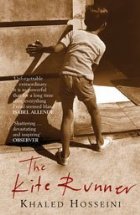
Review: The Kite Runner by Khaled Hosseini

The Kite Runner is the story of two boys growing up together in Afghanistan. Amir is the son of a rich businessman, whereas Hassan is the son of their Hazara servant (an ethnic minority and considered to be lower on the social scale). Amir has always felt that his father is disappointed in him and he desperately wants to please him by winning the local kite fighting tournament (a sport where competitors fly kites with strings coated in cut glass and attempt to cut down their rivals’ kites in order to have the last kite still flying). Hassan is the ‘kite runner’ of the book’s title. When Amir wins the tournament, Hassan chases the fallen kite so Amir can present it to his father. When Hassan is ambushed by a gang of bullies he refuses to give them the kite, knowing how much it means to his friend, and as a consequence is assaulted by the gang leader. Amir witnesses this but is too afraid to intervene.

Several years later during the Soviet invasion of Afghanistan, Amir and his father flee to America to start a new life – but Amir is unable to escape from the shame and guilt that have haunted him ever since the day of the kite fighting tournament when he stood by and watched Hassan being raped.

There were times when I almost forgot this was fiction, as the book had the feel of an autobiography, particularly in the early chapters which were quite vivid and realistic. Amir, as the narrator of the book, is not a very likeable character. As a child he is weak and cowardly and betrays a loyal friend who would do anything for him. As an adult I still found him difficult to like, though I could sympathise with him and wanted to see him redeem himself.

One of the things I liked about this book was learning more about Afghanistan from the point of view of a child growing up in a wealthy district of Kabul. Amir and his father had a comfortable, privileged lifestyle and the Kabul described in the early chapters of the book is certainly not the way we picture Kabul today. The Kite Runner shows how everything changed with the Soviet invasion and then the Taliban regime – and changed so much that Amir, returning to Afghanistan later in the book, remarked that he felt like a tourist in his own country. One horrifying scene describes the Taliban stoning two people to death in front of a crowded stadium during a soccer match.

The writing style used throughout this book is very simplistic with lots of short or incomplete sentences. Although it didn’t spoil the story for me, I did find it distracting. Another problem I had was that halfway through the book the plot became too predictable and I could guess how the story was going to end. Despite those few negative points, The Kite Runner is an emotional, thought-provoking story with some heartbreaking scenes and some horrific ones. Although I have read some very mixed reviews of this book (people seem to either love it or hate it) in my opinion it’s definitely well worth reading.

Recommended

Genre: General Fiction/Pages: 324/Publisher: Bloomsbury/Year: 2004/Source: Library book