Earth by John Boyne

Earth is the second in John Boyne’s new quartet of novellas named after the four elements. I enjoyed the first book, Water, so I was looking forward to this one and it didn’t disappoint. Although the two books (and presumably Fire and Air as well) are loosely linked, they are completely separate stories and you don’t need to read them in order. If you have already read Water, you may remember Evan Keogh, the teenage boy we last saw leaving his home on a small Irish island in search of a new life in England. Earth is Evan’s story.

Evan has had a talent for football from an early age, but his true passion is for painting and on his arrival in London he hopes to pursue a career as an artist. After a series of rejections he is forced to accept that he’s unlikely to achieve his dream and with his money running out he reluctantly decides that he will have to use his football skills after all. The book begins with Evan, now twenty-two and a famous footballer, preparing to stand trial for sexual assault. Robbie, his friend and teammate, is accused of rape and Evan has been charged as an accessory for filming the incident on his phone.

For such a short book (under 200 pages), Boyne manages to create a multi-layered story covering a range of important – and often uncomfortable – topics. Much of Evan’s story is told in flashbacks as he remembers his childhood, his strained relationship with his father and his growing awareness of his sexuality (Evan is gay, which can make life difficult both in his small Irish community and in the world of professional football). When he arrives in London he is taken advantage of by an older man who pushes him into work as a male escort, which has disastrous results for Evan. This is what leads to Evan’s decision to become a footballer, despite his dislike of the sport – and again I thought it was interesting to see how Boyne explores the idea of someone achieving huge success in a profession that they don’t enjoy and don’t respect, as well as the various ways in which young men cope with suddenly attaining a level of fame that they’re not really prepared for.

The trial is also a main focus of the book and I found it increasingly frustrating and infuriating to see how the victim was treated in court. I hoped Evan would do the right thing and not just try to protect his friend, but Boyne keeps us doubting him throughout the novel and I’m not going to tell you whether I got the outcome I wanted. Obviously there have been many real life cases of women making allegations of sexual assault against famous people and the courtroom scenes are all the more disturbing because you can easily imagine them happening.

Like ‘water’ in the previous book, Boyne works the element of earth into the story in several different ways, from the soil of Evan’s island home to the ground beneath his feet that is so important to his sport. Of the two, I think I preferred Water but both are powerful books and I’m now looking forward to Fire, coming in November of this year.

Thanks to Doubleday for providing a copy of this book for review via NetGalley.

Water Baby by Chioma Okereke

One of the things I love about reading is that it can take you to places you’ve never visited in real life and are never likely to. Chioma Okereke’s new novel, Water Baby, is set somewhere I knew absolutely nothing about: Makoko, a community built on and around a lagoon in the Nigerian city of Lagos. Although it may sound idyllic, that’s sadly not the case. Makoko, as Okereke describes it, is a place where most of the inhabitants are living in poverty, where the lagoon is dirty and polluted and drug use is a widespread problem. It has become known as Africa’s ‘biggest floating slum’.

The heroine of Okereke’s story is nineteen-year-old Yemoja, nicknamed Baby by her father. Since leaving school, Baby has been earning her living by rowing passengers across the water in her canoe, Charlie-Boy, named after her beloved younger brother, but she and her friends dream of one day experiencing a different way of life. However, with her father trying to push her into marriage with Samson, a neighbour who repairs boats, and with a large family of younger cousins to help care for, the possibility of leaving Makoko seems remote.

Things finally begin to change for Baby when she hears about a newly launched project using drones to create maps of Makoko, increasing the profile and visibility of their settlement. Young women from the community, known as ‘Dream Girls’, are being trained to pilot the drones and Baby is desperate to get involved, despite her father’s distrust of the project. When someone takes a photograph of her on the lagoon, mistaking her for a Dream Girl, the image soon goes viral on social media and Baby finds she has become a celebrity overnight. The opportunity arises for her to represent Makoko at a conference in Switzerland, but will this be the start of a new life for Baby or will she decide that her future lies at home after all?

I thought this book was fascinating, mainly because of the setting and the insights it gave me into a lifestyle so completely different from my own. Okereke describes Makoko so vividly I could already picture what it looked like even before searching for photos to see it for myself. The lives of the people of Makoko are already difficult – making your home on a lagoon means facing problems with sanitation, electricity supplies and running water, not to mention access to education and medical care – but they are also in an unusually vulnerable position regarding climate change:

There used to be more vessels on the horizon, but year on year that’s changing. From the shrinking lagoon size and lesser quantities of fish to water levels rising alongside the rubbish enveloping us. From manmade disasters to unthinkable diseases. Life is always throwing something at us, but we hold our ground.

I liked Baby, but some of the other characters were less well developed; in particular I felt that I never fully got to know her love interest, Prince. I did find Baby’s relationship with her little brother Charlie Boy very moving, though, for reasons that I can’t really explain here without spoiling the story! Although Baby and her friends are fictional characters, the Code for Africa mapping project and the Dream Girls are real and I found it interesting to read more about them after finishing the book.

Thanks to Quercus for providing a copy of this book for review via NetGalley.

Rosabelle Shaw by D.E. Stevenson – #1937Club

My third and final book for 1937 Club, hosted by Stuck in a Book and Kaggsy’s Bookish Ramblings, is Rosabelle Shaw (also published as The Story of Rosabelle Shaw) an early novel by D.E. Stevenson. Wikipedia describes Stevenson as an author of ‘light romantic novels’, but I have read several of her books and although some of them fit that description, others (such as her dystopian novel, The Empty World) do not. This is another that is not a typical Stevenson novel and I found it suprisingly dark.

The novel begins in 1890s Edinburgh with Fanny Dinwiddie, a pretty, lively young woman, who catches the eye of John Shaw, a farmer visiting the city on business. For John, it’s love at first sight and it’s not long before he is heading back to Shaws, his farm near the Scottish coast, with Fanny as his wife. It takes Fanny a while to adjust to her new home – she has left behind her father and beloved sister, Alison, and she misses the social life of Edinburgh – but eventually she begins to settle in and make friends and soon a daughter, Rosabelle, is born. At this point, I was expecting a gentle, domestic novel about the life of a farmer’s wife on a Scottish farm…but I was wrong.

When Rosabelle is three years old, a ship is lured onto the rocks near Shaws farm during a storm. John thinks he knows who is responsible for causing the wreck and is filled with guilt for not doing more to stop it, but is able to make amends by rescuing and informally adopting the only survivor of the disaster, a small child with whom Fanny immediately forms a bond. Nobody knows the little boy’s name or the identities of his real parents, so John and Fanny raise him with their own children and name him Jay. From the moment Jay enters their lives, tensions begin to form in the Shaw household. Unlike Rosabelle and her real brother and sister, Jay is a deceitful, jealous and manipulative child determined to get his own way. John struggles to like the boy, while for Fanny he can do no wrong, causing the first real disagreements of their married life.

Moving forward several years, we meet the Shaw children again as young adults. Rosabelle has begun to look at Jay in a different light, captivated by his good looks and charisma, and begins to fall in love, much to the dismay of her neighbour Tom, who was hoping to marry Rosabelle himself. But there could still be a chance for Tom after all, because Jay is about to bring shame on the Shaw family and betray their kindness and generosity, breaking the hearts of both Rosabelle and Fanny.

I found Rosabelle Shaw quite enjoyable, but it seems to have had mainly negative reviews, maybe because the melodramatic, almost Gothic feel isn’t what you would expect from Stevenson. A lot of people have also complained about the racism, which I noticed as well – it’s definitely implied that because Jay arrived on a foreign ship and is possibly Spanish, he is naturally sly and untrustworthy, unlike the good, honourable Scottish characters. The book reminded me very much of Wuthering Heights, with Jay being similar to Heathcliff, who is also of unknown parentage and nationality and causes nothing but trouble for the Earnshaw family (Rosabelle is obviously in the role of Catherine Earnshaw, who falls in love with her adopted brother).

The book takes on a slightly different tone towards the end when, in 1914, war breaks out and brings big changes to our characters’ lives. From this point, the focus of the book shifts away from Jay to concentrate on the war and how it affects the family at Shaws. I thought it was a fascinating novel, but it won’t appeal to everyone and there are probably better places to start if you’re new to Stevenson. For me, though, it was another good choice for 1937 Club!

Caroline England by Noel Streatfeild – #1937Club

My second book for this week’s 1937 Club (hosted by Stuck in a Book and Kaggsy’s Bookish Ramblings) is by an author who was a childhood favourite but whose adult fiction I’ve only recently begun to explore. I loved her 1940 novel, The Winter is Past, set during the early stages of World War II, so when I saw that Caroline England was published in 1937 it seemed a perfect choice for the club.

The novel begins in 1870 with the birth of Caroline Torrys, the first child born to James and Selina Torrys of Milston Manor in Kent. The Manor has belonged to the Torrys family since the 16th century and James, desperate for a male heir, is disappointed with the arrival of a baby daughter. As the years go by and Selina becomes weak and worn down with her efforts to please her husband and produce a son, Caroline is raised in the nursery by a strict and often cruel nurse. Growing up nervous and anxious, with her spirit broken, Caroline eventually finds a way of escape when she falls in love with a writer, John England, and elopes with him. Caroline’s upper class family disapprove of John, whose father owns a shop, and she is cut off from the Torrys and her beloved Milston Manor.

The next part of the book follows Caroline through her marriage to John and the birth of her own children, whom she vows to treat with the kindness and affection she herself was starved of as a child. However, as her children grow older she finds that they don’t necessarily want her ‘interfering in their lives’ – and that John is the one demanding her time and attention. We then get to know Caroline’s children as adults and see how the family copes during World War I and its aftermath until finally, in the last section of the book, we join Caroline as a grandmother, living in a world that has changed beyond recognition.

I’ve probably given the impression that this book is very depressing – and it’s true that despite her privileged start in life, things are difficult for Caroline at times – but it’s not as bleak and miserable as it sounds. Although Caroline’s experience of being a wife and mother is not quite as blissful as she had hoped, she makes the most of what she has and finds happiness where she can. She also grows and changes as a person, as the post-war world grows and changes around her and the social system she once took for granted begins to collapse. By the end of the book, Milston Manor no longer belongs to the Torrys family and is being converted into a hotel, while Caroline herself is forced to think differently when she gets to know her son’s working-class fiancée, a woman she would have once considered ‘not our sort’.

I found the first section of the book, describing Caroline’s childhood, the most compelling because Streatfeild writes about child characters so convincingly. It was so interesting to read her portrayal of Caroline’s life in the nursery and the different methods used by her first nurse, the warm and loving Naomi, and the cold, abusive woman who takes her place, and then to see how Caroline’s upbringing affects her own choices as an adult. The later chapters, which concentrate more on Caroline’s sons and daughters, interested me slightly less, but I often find that to be the case when a family saga moves on to the next generation.

Of the two adult Streatfeild novels I’ve read, I preferred The Winter is Past as it was more tightly plotted, whereas this one covers a much longer period of time and has less focus. I enjoyed both, though, and look forward to trying some of her others.

A Pink Front Door by Stella Gibbons

My second book for this year’s Dean Street December, hosted by Liz at Adventures in Reading, Running and Working from Home, is Stella Gibbons’ 1959 novel A Pink Front Door. I didn’t love the only other Gibbons book I’ve read, Cold Comfort Farm – I know I’m in the minority, but I just didn’t find it as funny as everyone says it is – so I wanted to give her another chance. I’m pleased to report that I enjoyed this one much more.

The house with the pink front door is home to Daisy and James Muir and their baby son (whom Daisy always refers to as James Too). Daisy is one of those people everyone turns to when they are in need of help and who enjoys trying to solve their problems for them. In post-war London these problems often involve housing and the novel opens with Daisy finding new lodgings for Tibbs, an Eastern European refugee who is struggling to settle into a new life, and Molly Raymond, a young woman who keeps embarrassing herself by chasing after unsuitable men. However, when Daisy’s old university friend, Don, tells her that he is also searching for somewhere to live with his wife and three young children, this proves to be much more of a challenge. Daisy knows that Mrs Cavendish has the whole top floor of her house available to rent, but will that snobbish woman agree to share her home with people who are ‘not her sort’?

The novel shifts between the perspectives of some of the characters mentioned above and also several others, including Daisy’s elderly aunts, Marcia and Ella, who have lived together for many years since neither of their lives went quite the way they had expected when they were younger. Through the stories of Marcia and Ella, Gibbons explores some of the issues facing older unmarried women, as well as the different but equally frustrating ones faced by younger, married women – Don’s wife Katy, for example, who has a degree in chemistry which she is unable to use because she’s now looking after three children and being treated like a servant by Mrs Cavendish in return for the use of her spare rooms.

For most of the book, the plot moves along at a slow, steady pace; I would describe this as much more of a character-driven novel and I did enjoy getting to know all of the characters, even the unpleasant ones. There’s some drama later on when Daisy’s long-suffering husband begins to lose patience with being neglected all the time and decides to take drastic action – and then another dramatic development right at the end of the book which was unexpected and, in my opinion, unnecessary. Still, I got on with A Pink Front Door better than I did with the much more popular Cold Comfort Farm. I’m glad I decided to try Stella Gibbons again and am looking forward to reading more of her work now.

A Footman for the Peacock by Rachel Ferguson

This month, Liz at Adventures in Reading, Running and Working from Home is hosting another Dean Street Press December. I hope I’ll manage to read more than one book for this, but I decided to start with one that was sent to me for review by Dean Street Press back in 2016. I do feel guilty about not reading it sooner, but had been put off by some mixed reviews, as well as that ongoing problem shared by all readers – too many books and too little time!

A Footman for the Peacock (first published in 1940) is a strange novel, nothing at all like the only other Rachel Ferguson book I’ve read, Alas, Poor Lady. It’s going to be a difficult book to describe, but I’ll do my best! On the surface, it’s the story of the Roundelay family who live at Delaye, a large country house in the fictional English county of Normanshire. In 1939, when the novel begins, the household consists of Sir Edmund, the head of the family, (who isn’t quite sure why he has been knighted – maybe it was a mistake), his wife Lady Evelyn and their two daughters, practical, down-to-earth Margaret and the more sensitive Angela. There are also three elderly aunts, two of whom haven’t spoken to each other for many years and go to great lengths to continue their silent feud, a cousin and an assortment of servants, including ninety-year-old Nursie, who is suffering from dementia.

Like many aristocratic families in the years between the wars, the Roundelays are finding that money is becoming a problem and the upkeep of such a large estate is much more difficult than it used to be. The house is falling into disrepair, they have no car and Lady Evelyn does the food shopping herself by bus. Despite this, the Roundelays still have the views and attitudes of their class and when it is eventually announced that Britain is at war with Germany, they display a shocking lack of interest in how it will affect anyone other than themselves.

The whole of the first half of the book is devoted to introducing the various members of the household, with some amusing anecdotes about their lives, and describing the history of the house and its surrounding towns and villages. Nothing much actually happens at all until the war breaks out – and even then, there’s not really any plot to speak of, just a series of episodes in which the family prepare their gas masks, cover their doors and windows for the blackout, and use any excuse they can think of to refuse to take in even a single evacuee. Their total selfishness and lack of compassion for those less privileged than themselves makes uncomfortable reading, but Ferguson doesn’t really make it clear whether she expects the reader to feel angry with them, to have sympathy for them or just to experience a feeling of recognition that, unfortunately, the way the Roundelays react to the evacuee situation is probably the way many people reacted and still would today.

Also in the second half of the book, the peacock of the title is brought to the forefront of the story – and yes, it’s a real peacock, who wanders the grounds of Delaye, bad-tempered, noisy and prone to attack anyone other than Sue Privett, the maid. There is an unusual connection between the peacock and the words inscribed on the window of a disused bedroom: “Heryn I dye. Thomas Picocke 1792”. Thomas Picocke, we soon discover, was a ‘running footman’ at Delaye in the 18th century – a servant who would literally run ahead of his employer’s carriage to smooth their journey and prepare for their arrival at their destination. Not a nice job and Picocke’s story, when it begins to unfold, is quite sad, as well as merging with the story of the Delaye peacock in a bizarre and unexpected way.

There are lots of great ideas in this book, then, but the lack of any overarching plot means the separate parts of the novel don’t work together as well as they should. It feels like a rambling, directionless mess, but that doesn’t mean I didn’t enjoy it at all. Ferguson’s portrayal of an upper-class family’s attitude to war is fascinating (and apparently caused some controversy when the book was first published), the eccentric characters are entertaining to read about, and I was intrigued by the little touches of the supernatural in the peacock storyline. I would be happy to try the other two Rachel Ferguson books currently available from Dean Street Press, Evenfield and A Harp in Lowndes Square, but maybe not immediately!

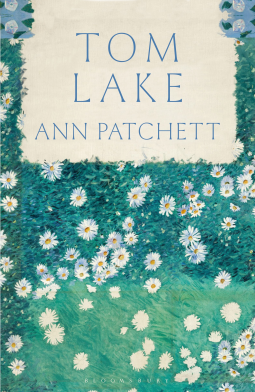
Tom Lake by Ann Patchett

The title of Ann Patchett’s latest novel, Tom Lake, doesn’t refer to a person, as I’d assumed before I started reading, but to a place – a town in Michigan with a theatre overlooking the lake. One summer in the 1980s, a theatrical group gather at Tom Lake to rehearse the Thornton Wilder play, Our Town. The role of Emily has gone to Lara, a young woman who previously played that same part in a high school production. Here at Tom Lake, Lara meets and falls in love with the charismatic Peter Duke, the actor who plays her father in Our Town and who goes on to become a famous Hollywood star.

Many years later, in 2020, Lara and her husband, Joe, are living on a Michigan farm with their three adult daughters, Emily, Maisie and Nell, who have all come home to be with their parents as the Covid pandemic sweeps across the world. While they help to harvest cherries from the family orchard, the girls ask Lara to tell them about her relationship with Duke. As they listen to her story unfold, they discover things about their mother’s past that makes them reassess everything they thought they knew about her and about themselves.

I loved Ann Patchett’s last novel, The Dutch House, so I was hoping for a similar experience with this book. Sadly, that didn’t happen, although I did still find a lot to like. It’s certainly a beautifully written novel, but I just found it a bit too quiet and gentle and I never felt fully engaged with the characters the way I did with the characters in The Dutch House. I know I’m in a tiny minority, though, and I expect to see Tom Lake on many people’s ‘books of the year’ lists in December.

Although the present day sections of the book are set during the pandemic, Covid is barely mentioned at all and it’s really just a plot device to explain why the family are all together on the farm with such little contact with the outside world. This provides the perfect environment for the three daughters to pass the time listening to their mother’s story without too many distractions – and a cherry orchard does sound like a lovely place to spend the pandemic. Something else which plays a much bigger part in the novel is Thornton Wilder’s Our Town; clearly the play and, in particular, the role of Emily are very important to Lara, but as I’ve neither read nor seen it I didn’t really understand the significance. It seems to be a play that is much better known and more widely studied in America than it is here in the UK and I wish I’d had at least some familiarity with it before I started this book. That’s possibly one of the things that prevented me from enjoying it as much as I’d hoped.

I do like Patchett’s writing, so even though this particular book wasn’t a huge success with me, I’m still looking forward to trying some of her earlier work.

Thanks to Bloomsbury Publishing Plc (UK & ANZ) for providing a copy of this book for review via NetGalley.