The Silent Companions by Laura Purcell

I decided to read this for the 20 Books of Summer challenge in preparation for the sequel, House of Splinters, coming out in October. I’m not sure how closely connected the two books will be, but it made sense to read The Silent Companions first and as I’ve enjoyed other books by Laura Purcell I was sure I would like this one anyway.

The novel begins in 1865 with Elsie Bainbridge arriving at The Bridge, her late husband’s family estate near the village of Fayford. Elsie only married Rupert a month earlier but already he is dead, leaving her a widow and pregnant with his child. She has come to The Bridge for the funeral and to spend the duration of her pregnancy, accompanied by Sarah, a cousin of Rupert’s.

From the moment she sets eyes on the house, Elsie has an uneasy feeling about it, which only increases when she learns that The Bridge has a bad reputation in the village and there’s been difficulty finding servants because no one wants to work there. Then, in a locked room upstairs she and Sarah discover a painted wooden figure that bears a striking resemblance to Elsie herself. What is this ‘silent companion’ and why does it seem to have a mind of its own? The answers can be found in a two-hundred-year-old diary written by Anne Bainbridge, who lived in the house with her husband and daughter, Hetta, during the reign of King Charles I.

The narrative switches back and forth between Anne’s story in 1635 and Elsie’s in 1865 and there are also some chapters set in St Joseph’s Hospital at an unspecified point in the future. The hospital is an asylum and we learn that Elsie has been sent there following a fire at The Bridge which has left her badly burned and unable to speak. It seems that Elsie has been accused of murder and her doctor suggests that if she writes down everything she can remember, beginning with her arrival at The Bridge, it might be enough to save her from execution.

Although I felt that the framing story in the hospital wasn’t really necessary (maybe because the ‘woman sent to an asylum by family members’ trope is one I come across such a lot in novels with Victorian settings), I did really enjoy the book as a whole. I loved the atmosphere Purcell creates, which grows increasingly tense and sinister as more and more strange occurrences take place at The Bridge and the silent companions multiply in number. Silent companions really existed; also known as dummy boards, they originated in the 17th century – the National Trust has some information about them here and some pictures which show how lifelike they were.

The story that unfolds through Anne’s diary is fascinating. After having several sons, she uses herbs to try to conceive a daughter and when that daughter, Hetta, is born with a damaged tongue and without the ability to speak, Anne believes it was her fault for using witchcraft. The child is shunned by her father and hidden away from society, where she becomes associated with the sense of evil that seems to be spreading throughout the house and the Bainbridge family. It’s Anne who first acquires the silent companions and brings them home, creating the link between her own life and Elsie’s two centuries later.

This is not a book where everything is neatly tied up at the end. There are questions left unanswered and several possible theories to consider. I usually prefer an explanation, but in this case I was happy to be left wondering. I’m looking forward to House of Splinters now!

Book 20/20 for 20 Books of Summer 2025.
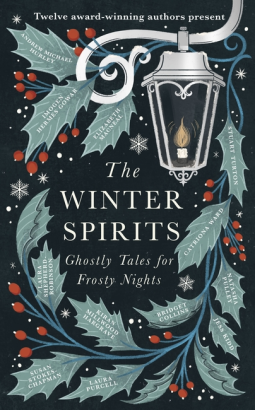
The Winter Spirits: Ghostly Tales for Frosty Nights

The Winter Spirits: Ghostly Tales for Frosty Nights is a collection of twelve new ghost stories written by popular authors of historical and Gothic fiction, all with a Christmas or Advent theme. It’s a follow-up to The Haunting Season, which I haven’t read but which includes eight of the same authors. This is the perfect time of year for ghost stories, so maybe I’ll look for the previous book next winter.

Back to The Winter Spirits and most of the stories are set in the 19th or early 20th centuries, giving them a traditional feel. More variety would have been nice – not just in the time periods, but also in the geographical settings, as the majority take place in Britain, with one or two in America or elsewhere in Europe – but otherwise I really enjoyed this collection. I’ve previously read full-length novels by most of the featured authors, but three of them were new to me: Andrew Michael Hurley, Catriona Ward and Susan Stokes-Chapman. I felt that Hurley’s The Old Play and Stokes-Chapman’s Widow’s Walk were two of the weaker stories, but looking at other reviews, some readers have singled them out as favourites, so I think it’s just a case of different stories appealing to different people! Ward’s contribution, Jenkin, was completely bizarre but added some diversity as it felt quite unlike any of the others.

The biggest surprise, for me, was Natasha Pulley’s The Salt Miracles; I really didn’t get on with her writing style in her novel The Bedlam Stacks, so I wasn’t expecting too much from this tale of disappearing pilgrims on a remote Scottish island (based on St Kilda). However, I ended up loving it – it’s such an unusual and chilling story! Inferno by Laura Shepherd-Robinson, one of my current favourite historical fiction authors, is another I particularly enjoyed – a wonderfully eerie story set in 18th century Italy, where a man is forced to confront his sins. Even better than both of these is Stuart Turton’s creepy and imaginative The Master of the House, in which a young boy who is being neglected by his father makes a deal with the devil. This one feels almost like a very dark fairytale and is one of the highlights of the book.

Of the twelve authors, Laura Purcell is probably the most well established as a writer of horror fiction and she doesn’t disappoint here with Carol of the Bells and Chains, in which a governess trying to deal with two unruly children tells them the story of the Krampus, with unintended consequences. Imogen Hermes Gowar’s A Double Thread, where a woman gets her comeuppance after badly treating her hardworking seamstress, is another I really enjoyed – it made me long for another novel by Gowar, as it’s been a few years since The Mermaid and Mrs Hancock!

The remaining stories are by Elizabeth Macneal, Bridget Collins, Jess Kidd and Kiran Millwood Hargrave. With a range of different styles and subjects, unless you just don’t like ghost stories I think this collection should contain something to please almost every reader.

Thanks to Sphere for providing a copy of this book for review via NetGalley.

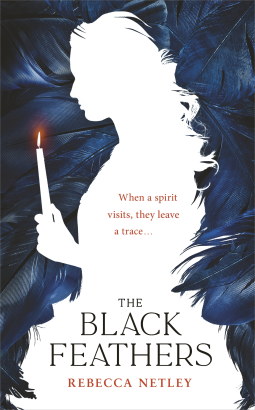
The Black Feathers by Rebecca Netley

The Black Feathers is an eerie Gothic novel, a perfect book to curl up with indoors on a cold, dark night.

It’s 1852 and Edward Stonehouse is returning to Guardbridge, his family estate on the Yorkshire Moors, bringing with him his second wife, Annie, and their baby boy, John. The couple have been married for a year, but this is Annie’s first visit to the house and she is full of apprehension, having been warned by a friend that Guardbridge has a reputation as ‘a place where bad things happen’.

As Annie begins to explore the narrow hallways and dimly-lit staircases of her new home, she finds traces everywhere of Edward’s first wife, Evie, and their young son, Jacob. She longs to know what happened to them, but Edward has made it clear that the subject is not to be discussed, so she turns instead to the other inhabitants of the house – Edward’s sister, Iris, and her old nurse, Mrs North. But here Annie only finds yet more mysteries. Can Iris really communicate with the dead, as she claims, and why does she refuse to venture outside the walls of Guardbridge? And what are the black feathers appearing around the house? Is it true that they mark the spot where a ghostly presence has visited?

The Black Feathers has some obvious similarities with Daphne du Maurier’s Rebecca, as well as a setting reminiscent of Wuthering Heights, but there are enough original elements to make it an enjoyable read in its own right and not too derivative of older classics. I found Annie a likeable character, but Iris intrigued me more, with her passion for spiritualism, interest in taxidermy and the agoraphobia that has kept her indoors for so many years. I wanted to know what had happened to make into the person she became, and although we do eventually find out, Netley keeps us wondering before beginning to reveal the truth. Edward is equally mysterious – seen through Annie’s eyes, he is distant and aloof, a man she has married through necessity and hasn’t yet learned to trust. When we see things from his sister’s perspective, there are hints that he could be quite a different man to the one Annie thinks she has married, but again, we have to wait to find out what sort of person Edward really is and what happened to his first wife and child.

The novel is atmospheric and creepy in places, particularly when Annie begins to see some ghostly apparitions, but I didn’t find it too frightening, which is good as I don’t want to be terrified when I’m reading at bedtime! I felt that the final few chapters let the book down slightly – the unravelling of the house’s secrets involves too much exposition and long stretches of dialogue – but the final twist is clever and unexpected. Rebecca Netley has written another ghost story, The Whistling, which I haven’t read but would like to, having enjoyed this one.

Thanks to Michael Joseph for providing a copy of this book for review via NetGalley.

This is book 47/50 for the 2023 Historical Fiction Reading Challenge.

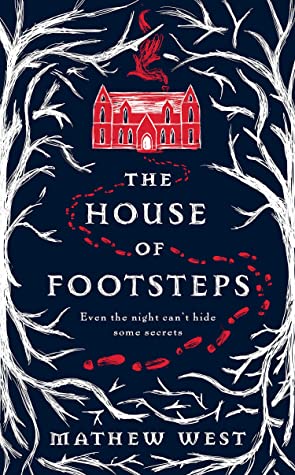
The House of Footsteps by Mathew West

“You make it sound like I’m on my way to Castle Dracula,” says Simon Christie, the narrator of Mathew West’s debut novel The House of Foosteps, after arriving in the remote village of Cobsfoot during a funeral procession and taking refuge in the nearest tavern where he asks for directions to Thistlecrook House – “a strange place, where the master takes dark, wild moods”. It’s 1923 and Simon has been sent by his auction house to evaluate a collection of rare artworks owned by the Mordrake family – and as he enters Thistlecrook House for the first time and makes the acquaintance of the reclusive, secretive Victor Mordrake, it was Dracula that continued to come to mind.

As I read on, I was reminded of other classic Gothic novels and ghost stories and each chapter seemed to raise more questions than it answered. Who is Amy, the beautiful young woman who sits curled up in a chair in the library every evening, begging Simon not to mention her presence to anyone else in the house? What really happened to Victor’s wife, said to have drowned in a frozen lake on the estate? What causes the dark shadows Simon can see under his bedroom door every night? And why does Victor, a vegetarian who can’t even bear having dead flowers in the house, have a whole collection of paintings depicting violent and macabre biblical scenes?

The answers to some of the novel’s many mysteries are revealed gradually as the story unfolds. Others are still unanswered at the end, leaving the reader to make up their own mind about what exactly was going on at Thistlecrook House. I do sometimes enjoy an ambiguous ending, but in this case I was disappointed that we weren’t given more clarity; I had been so intrigued by some of the strange happenings and really wanted to be given a proper explanation for them! However, I still thoroughly enjoyed reading this book – and until I reached that unsatisfactory ending, I had been going to say that it was one of my favourite reads of the year so far.

The novel has a wonderfully dark and sinister atmosphere and despite being set in the 1920s, the remote location – a rural village in the far north of England, close to the Scottish border – creates the feeling that the story could be taking place in a much earlier period. Although I was sometimes frustrated by Simon’s actions and choices, I was always completely absorbed in his story, wondering who could and could not be trusted and watching the boundaries blur between reality and fantasy. If you’ve enjoyed books like The Woman in Black or The Haunting of Hill House I would recommend giving The House of Footsteps a go.

This is book 8/50 read for the Historical Fiction Reading Challenge 2022.

Castle Barebane by Joan Aiken – #1976Club

Since reading some of Jane Aiken Hodge’s books, I’ve been interested in trying something by her sister and fellow author, Joan Aiken. Maybe it would have been more sensible to start with the classic children’s novel The Wolves of Willoughby Chase, for which she’s most famous, but her adult novels appealed to me more and when I saw that Castle Barebane was published in 1976, I decided to read it for this week’s 1976 Club hosted by Karen and Simon. I loved it, so it turned out to be a perfect choice!

The novel is set towards the end of the 19th century and opens with Val Montgomery, a New York journalist, at a party to celebrate her engagement to Benet Allerton. The party is not an enjoyable experience for Val – she feels awkward and out of place around Benet’s wealthy, fashionable relatives and can sense their disapproval of her clothes, her family and the fact that she works for a living. When she discovers that she will be expected to give up her career once she becomes Benet’s wife, she begins to have second thoughts about the marriage.

As luck would have it, Val returns home from the party later that night to find that her half-brother Nils has just arrived from England and when she tells him that she is having doubts about Benet, he persuades her to come and stay with him in London for a while to give herself time to think. However, the next day Nils disappears, leaving a note saying he has been called back to England urgently. Val follows on another ship a few days later, but by the time she reaches London, she discovers that her brother’s house has been abandoned, there’s no sign of Nils or his Scottish wife Kirstie, and their two young children are staying with a cruel and negligent servant. Desperate to know what has happened – and wanting to find someone more suitable to care for little Pieter and Jannie before she goes home to America – Val takes the children and boards a train for Scotland and Kirstie’s old family estate.

The rest of the novel is set at Ardnacarrig, nicknamed Castle Barebane because of its derelict, neglected state. This is where the gothic elements of the story emerge, with descriptions of underground passages, dangerous rocks and treacherous quicksand and tales of at least two resident ghosts who haunt the upper floors of the house at night. Val, who is too practical to believe in ghosts, suspects that if the house is haunted at all, it is haunted by the misery and unhappiness of the people who have lived there. As we – and Val – wait for the truth behind Nils’ and Kirstie’s disappearances to be revealed, the poignant stories of other characters unfold: the elderly housekeeper Elspie and her lost lover Mungo; local doctor David Ramsay and his dying mother; and six-year-old Pieter and his little sister Jannie, who is not like other children.

It took me a while to get into this book; it was very slow at the beginning and I felt that more time was spent on Benet and his family than was necessary, considering that they don’t really feature in the story after the first few chapters. Once Val arrived in London to find her brother missing, though, it became much more compelling. Val is a great character; although I didn’t find her particularly likeable at first – and I don’t think she was intended to be – I admired her dedication to her work and desire for independence when it would have been easier to just marry Benet and conform to society’s expectations. After she breaks free from Benet it’s fascinating to watch her grow and flourish as a character while doing all she can to help the people around her, even when it seems that they don’t really want to be helped. There’s also a new romance for Val, which I liked, but we didn’t see enough of her love interest for me to feel fully invested in their relationship.

Most of the action in the book is packed into the final few chapters; there’s definitely a problem with the pacing and also a bit of needless violence which I wasn’t expecting and felt that the story would have worked just as well without. But despite the novel’s many flaws, I thoroughly enjoyed reading it – both the domestic parts and the gothic adventure parts. The atmosphere is wonderful, there’s a suitably sinister villain and I loved the remote setting (and was impressed by the Scottish dialect which seemed quite accurate, although I’m not an expert). I’m certainly planning to read more of Joan Aiken’s books and am hoping they’re all as good as this one!

~

I’m also counting this book towards the 2021 Historical Fiction Reading Challenge and the R.I.P. XVI event!

~

1976 books previously read and reviewed on my blog:

Sleeping Murder by Agatha Christie
Touch Not the Cat by Mary Stewart
Dark Quartet by Lynne Reid Banks
Some Touch of Pity by Rhoda Edwards
The Children of Dynmouth by William Trevor

Carmilla by Sheridan Le Fanu

My first book for this year’s RIP challenge is Irish author Joseph Sheridan Le Fanu’s classic vampire novella, Carmilla. First published in 1872, it is thought to have influenced Bram Stoker’s Dracula, which came more than twenty years later, and is one of the earliest examples of vampire fiction (although John Polidori’s The Vampyre and Byron’s Fragment of a Novel were written earlier still).

My previous experience with Le Fanu has been limited to his Victorian Gothic novel, Uncle Silas, and one of his short stories, Laura Silver Bell, both of which I read ten years ago. I’ve always intended to read more of his work, so when I saw Carmilla available through NetGalley (a new Deluxe Edition is being published by Pushkin Press this week) it seemed the perfect opportunity.

The story is narrated by nineteen-year-old Laura, who lives in a lonely castle in Styria, Austria, with only her father and governesses for company. Laura longs for a friend her own age and it seems she may get her wish when a young woman is injured in a carriage accident near the castle. Her name is Carmilla and her mother, who is desperate to continue on her journey, asks Laura’s father to take care of her daughter until she returns. Laura is delighted to have Carmilla staying with them, but also feels uneasy, because she has seen Carmilla before – in a dream that has haunted her since her childhood.

As this is a very short book, if I say much more I will be giving away the entire plot – and anyway, as I’ve already said that this is a vampire novel, you can probably guess what Carmilla really is and how the rest of the story will unfold. For the modern day reader there are no big surprises here, although I’m sure that at the time when it was published, as one of the first of its kind, it would have felt much more original and shocking. However, there are still plenty of things that make this book an entertaining and worthwhile read.

First of all, it’s interesting to read Carmilla while keeping in mind its place in history and its influence on later vampire fiction – there are some very obvious similarities with Dracula and Anne Rice has cited it as an inspiration for her Vampire Chronicles. It can also be read as an early example of a lesbian romance; although the constraints of 19th century fiction prevent Le Fanu from being too explicit, the relationship between Laura and Carmilla is clearly based upon physical attraction and we learn that Carmilla always chooses young women as her prey. Finally, with its sinister atmosphere, remote castle setting and other elements of classic Gothic literature, it’s the perfect choice if you’re taking part in the RIP event or just looking for something dark and spooky to read as we head towards Halloween!

Thanks to Pushkin Press for providing a copy of this book for review via NetGalley.

Book 1 read for R.I.P XVI

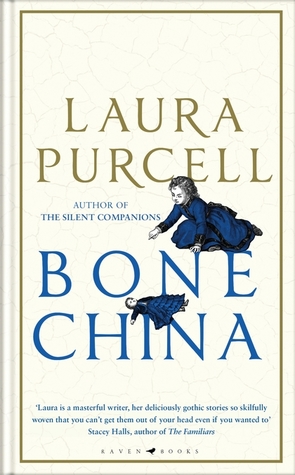
Bone China by Laura Purcell

Hester Why, the narrator of Laura Purcell’s latest gothic novel Bone China, is a woman with secrets. We know that Hester Why is not her real name, but what is the reason for her new identity? Why is she fleeing to Cornwall from London, who is she hiding from and how did she come to be addicted to gin and laudanum? These are questions we ask ourselves in the very first chapter and they are answered eventually, but first we must follow Hester to Morvoren House, perched high on the Cornish cliffs, where she is taking up a new position as nurse to Miss Louise Pinecroft.

Hester quickly discovers that her job is not going to be easy and soon she is asking questions of her own. What is wrong with Miss Pinecroft, who barely moves, never speaks and spends her days sitting in a cold room surrounded by china cups and plates? Who is Rosewyn, the strange, child-like young woman described as Miss Pinecroft’s ward? Is there any truth behind the claims of the superstitious servant Creeda that Rosewyn needs to be protected from fairies who are trying to steal her away and replace her with a changeling?

Bone China moves between three different timelines; as well as following Hester at Morvoren House, we also go back to an earlier time in her life, when she was known as Esther Stevens, and learn what went wrong in her previous employment, leading to her decision to run away and start again. Finally, in a third narrative we meet Louise Pinecroft as she was forty years earlier, when she and her father first arrived at Morvoren House after losing the rest of their family to consumption.

Laura Purcell has become known for writing dark, creepy Victorian novels and Bone China does have a lot of classic Gothic elements, including a gloomy, imposing clifftop house, family secrets and hints of madness. Despite this, I didn’t think this was a particularly scary or chilling story and although the exploration of Cornish folklore added atmosphere, I never doubted that the fairies and changelings existed only in legends and in Creeda’s stories. How much more spine-tingling it would have been if I had found myself feeling convinced that they could be real after all!

What I did find very disturbing and unsettling was the storyline set in Louise Pinecroft’s younger days, describing the work of her father, a doctor, who is looking for a cure for consumption (tuberculosis), the disease which took the lives of his wife and his other children. With Louise’s help, Dr Pinecroft carries out a revolutionary experiment, taking a group of prisoners who are suffering from the illness and lodging them in a cave beneath the cliffs where he claims the salty sea air will be good for their health. This part of the book was based on historical fact – cave air really was suggested as a possible cure for consumption at one time – and it was horrifying to read about the barbaric treatment of sick people due not to cruelty but to ignorance of modern medical procedures and a lack of understanding.

There are lots of interesting ideas incorporated into Bone China, then, but in the end I felt that the three threads of the story didn’t come together as neatly as they should have done. I also found the pacing uneven; in the second half of the book, the sense of mystery and carefully building tension of the earlier chapters was replaced by a sudden race to reach the conclusion. I didn’t enjoy this book as much as I’d hoped to, but I’m planning to read Laura Purcell’s first novel, The Silent Companions, soon and will see if I get on better with that one.