Florence and Giles by John Harding

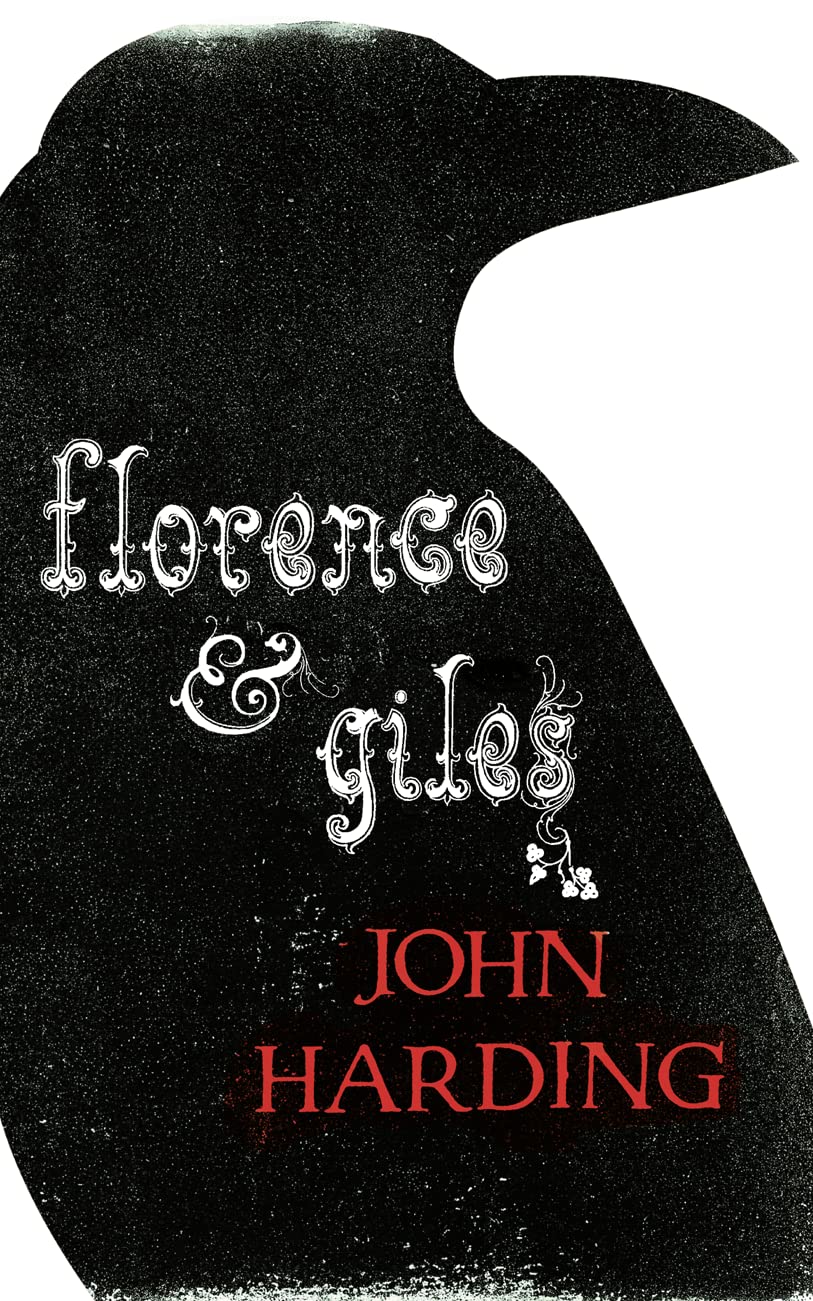
I hadn’t even heard of Florence and Giles until recently but as soon as I saw that it had been described as a gothic thriller and compared to Henry James and Edgar Allan Poe I knew I wanted to read it – and it went straight onto my list for the RIP challenge!

Florence and Giles could be considered a loose retelling of The Turn of the Screw by Henry James (the first clue is in the title as the children in The Turn of the Screw are called Flora and Miles) but if you haven’t read the Henry James book yet it doesn’t matter at all because this is a great story in its own right.

The book is set in 1891 and the Florence and Giles of the title are two orphans who live at Blithe House, a mansion in New England. The house belongs to their uncle, but Florence and Giles never see him – he never comes to visit and prefers to leave the children under the care of the servants. Soon Giles is sent away to school and twelve-year-old Florence is left behind because her uncle disapproves of education for girls. After secretly teaching herself to read and write, Florence spends her days hiding in a forgotten tower room with books she’s smuggled out of the library.

This seems a good place to mention Florence’s narrative style, which is one of the most unusual I’ve ever come across. Although she’s been denied a formal education, she’s an intelligent and imaginative girl who has created her own private language with a very strange way of using nouns, verbs and adjectives! Here, for example, she describes Blithe House:

A house uncomfortabled and shabbied by prudence, a neglect of a place, tightly pursed (my absent uncle having lost interest in it), leaked and rotted and mothed and rusted, dim lit and crawled with dark corners, so that, even though I have lived here all of my life that I can remember, sometimes, especially on a winter’s eve in the fadery of twilight, it shivers me quite.

The whole story is written in this way. The ‘unbroomed’ library is a ‘dustery of disregard’, her bedroom becomes a ‘smugglery of books’ and she ‘lonelies’ her way around the big house. It did take me a few chapters to get used to Florence’s voice but I loved it because it was so creative and different.

Anyway, back to the story: when Giles is removed from his school after being bullied, a governess is appointed so he can continue his education at home. But as soon as Miss Taylor arrives at Blithe House some strange things begin to happen and Florence starts to believe that she and her brother could be in serious danger. Is Florence right? Can we trust her? We don’t know, but as she’s the book’s only narrator we have no choice but to read on.

Florence and Giles has a wonderfully dark and gothic feel and has everything this type of book should have: the spooky mansion, the mysterious guardian, the sinister governess…Even the quirkiness of Florence’s narrative voice adds to the unsettling feel. Not everything is explained or tied up at the end of the book, but I felt there’d been enough clues throughout the story for me to draw my own conclusions.

I can’t remember who it was that first brought this book to my attention, but as Florence might say, ‘I grateful them!’
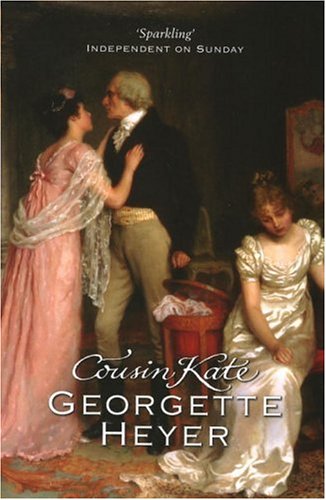
Cousin Kate by Georgette Heyer

I enjoyed my first forays into Georgette Heyer’s historical fiction novels last year and decided it was time to try some more. Cousin Kate, published in 1968, is one of her later novels and one that appears to really divide opinion – possibly because it’s not what people tend to expect from Heyer. Although there’s still some humour and some romance, it’s a lot darker than the other Heyer novels I’ve read. It also has a gothic feel and I couldn’t help being reminded of Jane Austen’s Northanger Abbey.

Our heroine, Kate Malvern, is a young woman who has been left orphaned and penniless following the deaths of both her parents and who has been working as a governess to support herself. At the beginning of Cousin Kate, she has lost her position and has returned to the London home of her former nurse, Sarah Nidd. Worried about Kate’s future, Sarah writes to Kate’s Aunt Minerva, who invites her to stay at the family mansion, Staplewood.

On her arrival at Staplewood, Kate remarks that the big house is not very homelike. Aunt Minerva, Lady Broome, is a manipulative woman, obsessed with the family lineage; her husband, the elderly Sir Timothy Broome, lives in a separate part of the house; and then there’s Kate’s handsome young cousin Torquil, who can be charming one minute, violent and aggressive the next. As Kate begins to learn exactly why Minerva was so keen to welcome her into the family, the only person she can turn to for help is Sir Timothy’s nephew, Philip.

The gothic elements of the book come in the form of the descriptions of the house and its grounds, locked doors and strange sounds in the night, the ruthless scheming of Aunt Minerva, family secrets – and Torquil, who is considered ‘mad’ and spends much of his time isolated in a distant wing of the mansion where he is attended by his doctor and faithful servant. It’s always sad to read how people with mental illness were treated in the past, in a time when it wasn’t properly understood, and I could sympathise with Torquil’s situation.

I also really liked both Kate and Philip and enjoyed watching their relationship develop. Kate has a kind heart and an ability to always see the best in people, but she is also a strong, courageous woman who values her independence. Philip is a pleasant, sensible person and felt to me like a realistic character, if not a particularly interesting or memorable one. I thought he and Kate made a believable couple.

I love Heyer’s use of language in the dialogue between her characters and I thought there was just the right amount of slang in this book to set the story in its period without becoming too difficult to understand. In fact, the only character who used an excessive amount of Regency-period slang was Sarah’s father-in-law, Mr Nidd, and this really suited his personality, making him an amusing, vibrant character who seemed to leap out of the pages!

Although, as I’ve said, this was quite a dark Heyer novel which deals with some serious themes, I still thought it was an entertaining read. I can see that it might not be to everyone’s taste but I loved it.

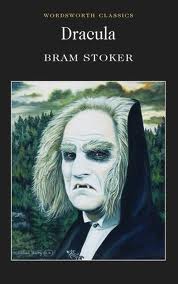
Review: Dracula by Bram Stoker

“My friend. – Welcome to the Carpathians. I am anxiously expecting you.”

When Jonathan Harker travels to Count Dracula’s castle in Transylvania to advise the Count on the subject of buying property in England, he quickly becomes aware that there’s something not quite normal about his host – and after making some terrifying discoveries, he finds himself imprisoned in the castle. Back in England, Harker’s fiancée Mina Murray is anxiously waiting in Whitby for news of Jonathan. But as if she didn’t already have enough to worry about, her friend Lucy Westenra becomes mysteriously ill, with inexplicable puncture wounds on her throat. Could Lucy’s illness have anything to do with the ship that was recently swept into the harbour during a storm?

Interspersed with the main storyline are Dr Seward’s medical notes on one of his patients, a man called Renfield who likes to eat flies and spiders – but what is the connection between Renfield, Lucy and Dracula? Dr Seward brings in his friend Van Helsing, an expert in unusual diseases, and with the help of Mina, Jonathan, Lucy’s fiance Arthur Holmwood and a friend, Quincey Morris, they attempt to solve the mystery and defeat Dracula.

Dracula was an obvious choice for me for the RIP challenge, particularly as it’s one of those books I feel as if I should have read years ago, yet never have (apart from a children’s version which doesn’t really count as it was so heavily abridged). Yet even though I had never read it, a lot of the story was familiar as it has become so firmly entrenched in popular culture. Dracula is not the first vampire story (a few weeks ago I wrote about John Polidori’s The Vampyre and Byron’s Fragment of a Novel) but it’s definitely the most famous.

The book is written in an epistolary style with the entire story being told through letters, journal entries, telegrams and newspaper reports. This structure kept the story moving forward and it was interesting to see so many different perspectives, but I did feel that some of the entries were too short and the story kept switching too abruptly from one person’s journal to another. I would have liked to have spent longer with one character before switching to the next. Some of the ‘voices’ were very similar, but I really liked the character of Mina, who was a strong, sensible, intelligent woman and although she was subjected to the usual Victorian attitudes of the time, she played an important role in the story. In comparison, Lucy is more of a typical Victorian heroine.

The opening section in Transylvania was my favourite part of the book. I loved the atmosphere Stoker created, with the snow falling and the wolves howling.

Though we were in shelter, we could hear the rising wind, for it moaned and whistled through the rocks, and the branches of the trees crashed together as we swept along. It grew colder and colder still, and fine, powdery snow began to fall, so that soon we and all around us were covered with a white blanket. The keen wind still carried the howling of the dogs, though this grew fainter as we went on our way. The baying of the wolves sounded nearer and nearer, as though they were closing round on us from every side. I grew dreadfully afraid, and the horses shared my fear.

When the story moved from Transylvania to Whitby, the pace slowed down and I started to get bored. I did enjoy all the descriptions of Whitby though, with its harbour and ruined abbey. Whitby is only a couple of hours’ drive from where I live, so we go there a lot, and it’s always nice to read about a place you know well.

I actually didn’t find the book very frightening, though maybe that’s just because I was already so familiar with the story. There were some very creepy scenes though, such as when Harker sees Dracula emerging through a window and crawling headfirst down the castle walls:

I was at first interested and somewhat amused, for it is wonderful how small a matter will interest and amuse a man when he is a prisoner. But my very feelings changed to repulsion and terror when I saw the whole man slowly emerge from the window and begin to crawl down the castle wall over the dreadful abyss, face down with his cloak spreading out around him like great wings…I saw the fingers and toes grasp the corners of the stones, worn clear of the mortar by the stress of years, and by thus using every projection and inequality move downwards with considerable speed, just as a lizard moves along a wall.

I’m glad I finally read Dracula, but it’s not going to become a favourite classic of mine. Although I didn’t love it, I thought it was surprisingly easy to read and the first few chapters were great, so if you have any interest at all in vampire stories or gothic horror novels, I think it’s worth reading at least once.

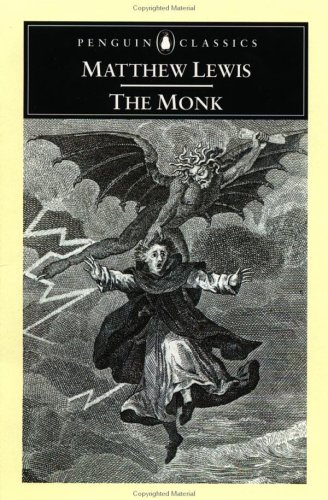
Review: The Monk by Matthew Lewis

The Monk, published in 1796, is an early gothic novel by Matthew Gregory Lewis, which completely dispels the notion that classics are dull and boring! While I wouldn’t say this was an easy read (due to the 18th century writing style and language you do need to concentrate) it was a real pageturner. I actually started to write this review when I was only halfway through the book and I was going to say that although I was enjoying it, I didn’t think it was a great book. Then, as I continued to read, I changed my mind. It is a great book and the best gothic novel I’ve read so far!

The book cover shown above is the Penguin Classics edition of the book. However, my copy of this novel is actually part of a four books-in-one anthology called Four Gothic Novels, which also includes The Castle of Otranto by Horace Walpole, Vathek by William Beckford and Frankenstein by Mary Shelley. I’ve been reading the novels in the order that they appear in the book, but The Monk was the one that I had really been looking forward to reading.

The novel is set in a monastery in Spain, during the time of the Spanish Inquisition. The plot is very complex, but basically there are three main storylines.

The first storyline revolves around Ambrosio, the Monk of the title, who is highly respected within the monastery and attracts large crowds to his sermons. Ambrosio is regarded almost as a saint yet when a beautiful young woman called Matilda tries to seduce him, he is tempted into breaking his vows. After succumbing to this first temptation, Ambrosio goes on to commit one crime after another, each worse than the one before.

We are also given a long account of the adventures of the young Marquis de las Cisternas. When the Marquis rescues a baroness from a gang of bandits, he is invited to accompany her to the Castle Lindenberg in Germany where he meets and falls in love with her niece, Agnes – and learns the legend of the Bleeding Nun. Finally we follow a friend of the Marquis, Lorenzo de Medina, who also happens to be the brother of Agnes. When a young girl from Murcia named Antonia arrives in Madrid, she and Lorenzo fall in love – but things don’t go smoothly for the pair and Antonia soon finds herself in serious danger.

At first it seemed that Agnes and Antonia’s storylines were unrelated to the Ambrosio and Matilda plot, but I soon began to see how cleverly Lewis was weaving the threads of the story together. Ambrosio is a complex character and his downfall was fascinating to read about. Some of my favourite passages were those which gave us an insight into the different facets of his personality.

He pronounced the most severe sentences upon Offenders, which, the moment after, Compassion induced him to mitigate: He undertook the most daring enterprizes, which the fear of their consequences soon obliged him to abandon: His inborn genius darted a brilliant light upon subjects the most obscure; and almost instantaneously his Superstition replunged them in darkness more profound than that from which they had just been rescued…The fact was, that the different sentiments with which Education and Nature had inspired him were combating in his bosom: It remained for his passions, which as yet no opportunity had called into play, to decide the victory.

Some parts of the book are quite gruesome and disturbing, and the passages which describe the sufferings of Agnes and Antonia are horrifying. I thought the final chapter of the book was stunning. There were several different ways the story could have ended, but the ending Lewis chose was absolutely perfect.

This book has almost every element of the gothic novel that you can think of: ghostly apparitions, haunted castles, ancient monasteries, bad weather, fortune telling gypsies, an evil prioress, dark dungeons and shadowy crypts, witchcraft, magic and pacts with the devil. It’s also very daring for the 18th century; with themes of murder, rape, incest, violence and torture, I can see exactly why it was so controversial in its day.

So don’t let the fact that the book was written in the 1700s prevent you from picking it up!

Recommended

If you enjoy this book you might also like The Italian by Ann Radcliffe which I read a few years ago. It’s very similar to this one in both the setting and the atmosphere (and anyone who was put off Radcliffe by the long scenic descriptions in The Mysteries of Udolpho will be pleased to know there are a lot less of those in The Italian).

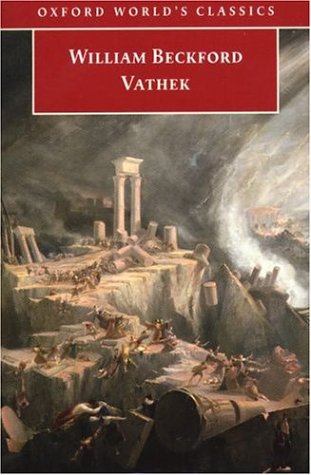
Review: Vathek by William Beckford

This is my first book for the RIP V challenge and one of the strangest novels I have ever read! It’s the story of Vathek, ninth Caliph of the race of the Abassides, and his temptation by a supernatural being (known as ‘the Giaour’), who promises to bestow on him the treasures and talismans of the ‘palace of subterranean fire’. Encouraged by his ambitious mother, the sorceress Carathis, Vathek embarks on a journey through exotic landscapes and begins a descent into hell.

Although William Beckford was English, Vathek was originally written in French and translated into English by Reverend Samuel Henley in 1786. The best way I can describe Vathek is that it’s a sort of dark, twisted fairy tale reminiscent of The Arabian Nights. Beckford mixes eastern mythology and Islamic culture with elements of the gothic novel (ghouls, spirits, graveyards, an atmosphere of evil) and throws in some magic, fantasy and romance for good measure. There are some long and poetic descriptive passages which become quite surreal and dreamlike in places.

Bababalouk had pitched the tents, and closed up the extremities of the valley with magnificent screens of India cloth, which were guarded by Ethiopian slaves with their drawn sabres; to preserve the verdure of this beautiful enclosure in its natural freshness, the white eunuchs went continually round it with their red water-vessels. The waving of fans was heard near the imperial pavilion, where, by the voluptuous light that glowed through the muslins, the Caliph enjoyed at full view all the attractions of Nouronihar.

The book is short in length but it’s not a quick, easy read. The entire story is told in one big chunk, rather than being broken into chapters, which made it seem quite daunting. If it had been any longer I probably wouldn’t have finished it because although the beginning and the ending were great, I started to lose interest during the middle section.

The characters are two-dimensional and impossible to like. At the beginning of the book, Vathek is popular with his subjects as he is fond of the pleasures of life and rarely becomes angry (although when he does lose his temper, one of his eyes becomes ‘so terrible that no person could bear to behold it, and the wretch upon whom it was fixed instantly fell backward, and sometimes expired’). After the Giaour arrives in his kingdom and begins to tempt him with stories of the palace of subterranean fire, however, Vathek becomes a cruel and greedy ruler. One of the conditions the Giaour imposes on him in return for admitting him into the subterranean palace is that he must renounce Islam and perform a series of atrocious crimes. Vathek never shows any remorse for his actions and I found him completely undeserving of any sympathy from the first page of this book to the last. His mother, Carathis, is even worse…

“…by my formidable art the clouds shall sleet hailstones in the faces of the assailants, and shafts of red-hot iron on their heads; I will spring mines of serpents and torpedos from beneath them, and we shall soon see the stand they will make against such an explosion!”

Vathek is completely bizarre and probably a book that you’ll either love or hate. It’s worth reading if you’re interested in the origins of gothic literature, fantasy or horror – and it apparently influenced both Byron and H.P. Lovecraft, among others. If you don’t take this book too seriously, it’s quite entertaining.

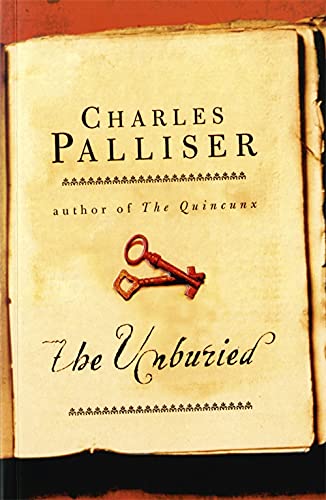
Review: The Unburied by Charles Palliser

The title of this book may suggest a horror story complete with zombies and vampires, but The Unburied is actually a scholarly murder mystery which reminded me of The Name of the Rose by Umberto Eco or An Instance of the Fingerpost by Iain Pears.  I wanted to read it because a few years ago I read another Charles Palliser book, The Quincunx, which I really enjoyed.  Like The Quincunx, this one is set (mostly) in Victorian England.  It begins with a mock ‘Editor’s Foreword’ in which we are told that we are about to read an account which will throw new light on the controversial Thurchester Mystery.  This account, known as The Courtine Account, forms the bulk of the book.

Dr Edward Courtine, a historian from Cambridge University, has been invited to spend the week before Christmas with Austin Fickling, an old friend from his student days who is now teaching at a school in the cathedral city of Thurchester.  He and Austin haven’t seen each other since they parted on bad terms twenty years ago, and Courtine is eager to renew their friendship.  He also has another reason for wanting to visit Thurchester – he has been studying King Alfred the Great and has learned that an ancient manuscript detailing the events of Alfred’s reign may be available in Thurchester Library.

On the night of Courtine’s arrival he hears the story of a murder that took place in the cathedral two centuries earlier.  Courtine is fascinated, but as he begins to investigate he becomes involved in another murder mystery – and discovers Austin’s true motive for inviting him to Thurchester.

As the main narrator of the book, I found Courtine very irritating, but at the same time I felt slightly sorry for him.  For such an obviously intelligent person he was completely lacking in perception, constantly saying the wrong things, missing important clues and failing to notice people behaving suspiciously.  Sometimes he would tell us that he was beginning to form a theory or that an idea had occurred to him, but he didn’t let us know what it was.  This was good in one way, as it encouraged me to work things out for myself, but it also annoyed me because I was already finding it difficult enough to keep all the threads of the story straight.

Although the town of Thurchester and its community are vividly depicted, I didn’t find any of the characters particularly memorable.  The fact that some of them had similar names (Slattery, Sheldrick, Sisterton for example) didn’t help.  There is actually a character list at the back of the book but I was trying not to look at it in case I came across any spoilers.  As for the plot, it’s so intricate you really need to read this book in as few sittings as possible so you don’t forget any important details.  There seemed to be a constant stream of unexplained deaths and forged documents, with at least three separate mysteries from different eras all running parallel to each other – and different characters giving different versions of what may or may not have happened.   I wished I had been taking notes from the beginning.

This is a very atmospheric book with lots of gothic elements, from the freezing fog that accompanies Courtine’s arrival in Thurchester to the obligatory ‘ghost’ supposedly haunting the cathedral.  It would have been a good book to read in front of the fire on a cold winter’s night.  In spite of the slow pace the book was relatively quick to read and although it was certainly confusing, I did enjoy it, especially when the various mysteries began to unravel towards the end.  Not as good as The Quincunx, though – if you’ve never read a Charles Palliser book before, try that one first.

Genre: Historical Fiction/Mystery/Publisher: Phoenix/Pages: 389/Year: 1999/Source: My own copy purchased used

Review: The Castle of Otranto by Horace Walpole

When I first opened this book I was confronted by page after page of almost continuous text with virtually no paragraph breaks and no quotation marks or any way of marking when one person stops speaking and the next begins. This made it difficult to follow the dialogue but otherwise the story is easy enough to understand considering it was published in 1764.

Manfred, the Prince of Otranto, has arranged a marriage between his fifteen year old son Conrad and the princess Isabella. However, on the day of the wedding Conrad is found crushed to death in the courtyard beneath an enormous black feathered helmet which appears to have fallen from the sky. As his son is obviously now in no position to go ahead with the wedding, Manfred decides to marry Isabella himself, but Isabella has other ideas…cue a never-ending chain of misunderstandings, coincidences and mayhem.

The Castle of Otranto is historically important because it was the first gothic novel – complete with haunted castles, underground tunnels, damsels in distress, knights, ghosts and paintings that move – but don’t expect a piece of great literature. In places the plot is so ridiculous and the writing so melodramatic that it’s actually hilarious.

The Castle of Otranto is funny and entertaining – and very short – but I can’t imagine ever wanting to read it again. For a better introduction to gothic fiction I would recommend The Mysteries of Udolpho by Ann Radcliffe, which is a longer book but much better written.

Genre: Gothic Fiction/Pages: 176/Publisher: Oxford World’s Classics/Year: 1998 – originally published 1764/Source: My own copy bought new