The Quick by Lauren Owen

The Quick - Lauren Owen Well, this is going to be a difficult book to write about! At first it seemed it was going to be one of those atmospheric Victorian-style novels I love (similar to Fingersmith by Sarah Waters, The Quincunx by Charles Palliser or The Meaning of Night by Michael Cox). It begins with two children, Charlotte and James Norbury, growing up in Yorkshire in a large country house complete with fountains, statues and secret chambers. When their father dies, Charlotte continues to live on the estate with an aunt while James goes away to school and then to university.

Trying to build a career for himself in London as a poet and playwright, James is befriended by the handsome Christopher Paige who will soon come to play an important part in his life. But when tragedy strikes, James becomes embroiled with the mysterious Aegolius Club…and this is where I’ll have to stop. From this point onwards the story goes in an unexpected direction and becomes something very different from what it had originally appeared to be. I can’t even tell you what the title of the novel, The Quick, means because that in itself is a spoiler.

I’m not sure whether keeping the true nature of this book hidden is a good idea or a bad idea. On the one hand, it means it will be read by people like myself who might not have picked it up otherwise, but on the other hand they may decide not to continue reading once the truth is revealed – while people who do like this type of book could be missing out on reading it. However, the publishers have obviously tried to create an air of mystery around it, so I respect their decision and will not give anything away!

I enjoyed this book up to the big plot twist but not so much afterwards. This was not necessarily because of the twist itself, but more due to the fact that at this stage we leave James and Charlotte behind for a while and are introduced to a new set of characters. Who was this Augustus Mould whose diary I found myself reading? What about Adeline Swift who suddenly begins narrating eleven chapters into the book? These things are explained, of course, and we do learn who these people are, but it meant that when the narrative eventually switched back to Charlotte or James I had lost the connection I’d felt with those two characters at the beginning.

The way the book ended took me by surprise and now I’m wondering if there’s going to be a sequel. If so, I’ll have to decide whether I want to read it, but if not then I’ll be interested to see what Lauren Owen writes next. I did like her writing and if this book had just been the straightforward neo-Victorian novel it seemed to be at first, I think I would have loved it.

I received a review copy of this book from the publisher via NetGalley.
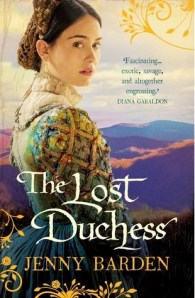
The Lost Duchess by Jenny Barden

The Lost Duchess With a title like The Lost Duchess and an opening chapter set at the court of Elizabeth I, describing an encounter between one of the Queen’s ladies and Lord Hertford, you may think this sounds like just another Elizabethan court romance – but you would be mistaken. With the arrival of Sir Francis Drake bringing stories of his adventures in the New World comes the first hint of what this book is actually about. And when Emme Fifield, the lady who had that confrontation with Hertford, decides to join Governor John White’s expedition to establish a new colony at Chesapeake, it becomes clear that The Lost Duchess is going to be something fresh and different.

Emme is desperate to leave England and sail to the New World so that she can avoid the disgrace she knows she will face when her involvement with Lord Hertford is made public. In order to convince the Queen to let her go, she promises to return with reports on the colonies for Elizabeth and her spymaster, Sir Francis Walsingham, but Emme’s real intention is to stay in Chesapeake and build a new life there…especially when she begins to fall in love with one of her fellow travellers, the mariner Kit Doonan. But while Emme is trying to keep the truth about her past hidden from Kit, we learn that Kit also has some secrets of his own.

Emme and Kit are great characters and I enjoyed getting to know both of them, but the aspect of this book that I found the most interesting was the fate of the lost colony of Roanoke – the English settlement established by Sir Walter Raleigh in the 1580s before being abandoned with no trace of the colonists. The explanation for the colony’s disappearance is still a mystery today, but Jenny Barden suggests one possible theory which I thought was very convincing. And if you’re wondering why all of this is significant to the story told in The Lost Duchess, although the ship on which Kit and Emme set out from England is originally heading for Chesapeake, Roanoke is where they end up.

The voyage itself provides lots of exciting action as Emme and the other colonists face dangerous seas and the loss of their supplies, while finding themselves at the mercy of their Portuguese navigator, Simon Ferdinando, who may or may not be trying to betray them. Life becomes no easier when they land at Roanoke – poisonous fruit being one hazard and conflicts with the native people another. Having befriended Chief Manteo of the Croatoans, the settlers are hopeful that they can negotiate with the Native Americans but it seems that things have happened in the past which will make it difficult for them to live peacefully alongside each other.

Roanoke and its mysteries is a fascinating, unusual setting and I’m sure you’ll agree that it makes a change from the majority of Tudor/Elizabethan novels which tend to focus on royalty and life at court. Jenny Barden’s previous novel, Mistress of the Sea, sounds wonderful too and is linked with this one through the character of Kit Doonan’s brother, Will. I’m looking forward to reading it.

The Lost Duchess_Tour Banner_FINAL

I read The Lost Duchess as part of a blog tour. For more reviews, interviews and giveaways please see the tour schedule at Historical Fiction Virtual Book Tours.

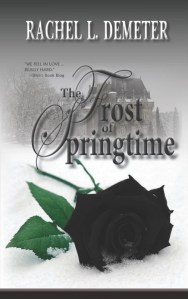
The Frost of Springtime by Rachel L. Demeter

The Frost of Springtime When I was offered the opportunity to take part in a blog tour for Rachel L. Demeter’s The Frost of Springtime, I wasn’t sure whether or not to accept. I read a lot of historical fiction novels and many of them have an element of romance, but I tend not to be drawn to books that are specifically classed as ‘historical romance’ as this one is. The setting sounded intriguing, though, so I decided to give it a try.

The Frost of Springtime is set during the Paris Commune of 1871, a brief period during which a revolutionary government ruled Paris. The novel begins with Vicomte Aleksender de Lefèvre rescuing a young girl, Sofia Rose, who has been sold into a Parisian brothel by her own mother. Sofia becomes Aleksender’s ward but she is later separated from her guardian while he goes away to fight in the Franco-Prussian War.

When Aleksender returns to Paris accompanied by his friend, Christophe Cleef, he finds that the city has been torn apart by revolution, protest and destruction. At home, too, things are changing. His father’s death has left him with new responsibilities and an altered relationship with his brother…and the little girl he saved from a life of misery and abuse has matured into a beautiful young woman of nineteen. Left scarred by his traumatic wartime experiences, Aleksender is in need of love and comfort and it seems that Sofia can provide them. But what about his wife, Elizabeth, the woman he married years earlier as part of an arranged marriage and has never loved the way he loves Sofia?

The Frost of Springtime is a dark and atmospheric story with some great descriptions of a Paris in political turmoil. Although there is certainly a strong romantic thread running through the centre of this novel, there is also quite a lot of history. In fact, there could be too much history for those who are looking purely for a love story, but for me personally the balance was about right. I had no previous knowledge of the Paris Commune and now that I’ve learned a bit about it from reading this book I would like to know more. I may have to do some further reading on the subject!

Aleksender and Sofia were both strong characters – characters I was interested in and cared about. Unless you just don’t like the idea of the age difference or a man falling in love with a girl who had been his ward, I’m sure you’ll feel the same and will be hoping for a happy ending for the two of them. However, I did also like Elizabeth and had a lot of sympathy for her as she really hadn’t done anything wrong and didn’t deserve to be treated badly. Aleksender’s behaviour sometimes disappointed me because it wasn’t always what you would expect from the hero of a romantic novel but this could be partly explained by the fact that he is suffering from what appears to be post-traumatic stress disorder caused by his experiences at war.

frostofspringtimebanner I’m glad I didn’t let my doubts about historical romance put me off reading this book as I did enjoy meeting Aleksender and Sofia and learning about such an interesting period of French history.

If you’d like to read more reviews, interviews and guest posts please see the tour schedule at Enchanted Book Promotions – and don’t forget to enter the tourwide giveaway for an Amazon gift card at this link: a Rafflecopter giveaway

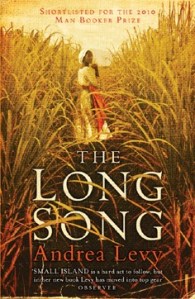
The Long Song by Andrea Levy

When Thomas Kinsman asks his mother, July, to write her memoirs, she agrees on the condition that she is allowed to tell her story the way she wants to tell it:

“Please pardon me, but your storyteller is a woman possessed of a forthright tongue and little ink. Waxing upon the nature of trees when all know they are green and lush upon this island, or birds which are plainly plentiful and raucous, or taking good words to whine upon the cruelly hot sun, is neither prudent nor my fancy. Let me confess this without delay so you might consider whether my tale is one in which you can find an interest.”

The Long Song The island with the lush green trees, raucous birds and hot sun is Jamaica, where July is born into slavery on the sugar plantation of Amity. As a young girl, July catches the eye of her master’s spoiled and selfish sister, Caroline Mortimer, and becomes her maid and companion. Kept apart from her mother, a field slave, and renamed ‘Marguerite’ because Caroline likes the name, life is not always easy for July but the Christmas Rebellion of 1831 brings hope that slavery in Jamaica will soon come to an end. And with the arrival of a new overseer, Robert Goodwin, life at Amity could be about to change forever…

I have read other books about slavery but never one that focused specifically on slavery in Jamaica, so The Long Song was something new for me. With July moving from the slave quarters to live with her mistress, we see how slavery and its abolition affected not just the slaves themselves but also the British slave owners and overseers. I liked the fact that July’s story does not just finish with the end of slavery in Jamaica but goes on to describe what happened after that. It’s easy to imagine that things improved instantly as soon as slavery was abolished but that was not necessarily true and July does a good job of showing us how she and the other newly emancipated slaves continued to face hardships and obstacles.

As you’ll be able to tell from the excerpt I quoted at the start of this post, July has a very strong and distinctive narrative style, which suits her lively, mischievous personality. She frequently breaks off in the middle of a chapter to argue with her son, Thomas, over what should or should not be included and at other times she addresses the reader directly. Sometimes she gives us one version of events, then admits that she is not being honest and begins again with a more truthful account. Most of her story is told in the third person, as if July was just somebody she had once known and not actually herself – maybe we’re supposed to assume this made it easier for the older July to discuss the painful things that had happened to her? She also adds a lot of humour to her story which makes it feel much lighter and less harrowing than it could have been.

At first I was intrigued by July’s unique narration; it felt different and unusual. After a few chapters, though, the novelty wore off and I started to find it irritating. I wished she would stop interrupting herself and get on with telling the story! I like this sort of writing in Victorian novels but in this case I thought it felt like a gimmick that, for me, just didn’t quite work. I did still enjoy the book but maybe I would have enjoyed it even more if it had been written in a more conventional style. I have a copy of one of Andrea Levy’s other books to read – Small Island, which is being reissued in a new 10th anniversary edition – and I’ve heard it’s very different, so I’m looking forward to reading that one.

Love and Treasure by Ayelet Waldman

Love and Treasure In Love and Treasure, Ayelet Waldman traces the fate of a single item – a necklace with a peacock pendant – and uses it to tell the story of Hungary’s Jewish communities before and after the Holocaust. Spanning a period of one hundred years, the novel is divided into three separate stories, but there are links between all three and the peacock pendant plays an important role in each one.

The novel begins in 2013 with a conversation between Jack Wiseman and his granddaughter, Natalie, when he admits to her that the necklace she wore on her wedding day thinking it was her grandmother’s did not actually belong to her grandmother at all. The real owner, he says, is unknown, but he would like Natalie to find her and give the pendant back.

We then move back in time to Salzburg in 1945 where Jack is serving in the US army. He is given the responsibility for guarding the Hungarian Gold Train, a train containing the confiscated personal belongings of thousands of Hungarian Jews (paintings, watches, furs, cameras and other objects) but while he does his best to protect its contents he is forced to watch as his fellow army officers ‘borrow’ one item after another. When Jack’s days in charge of the train come to an end, he himself steals one of its treasures – the peacock pendant – because it reminds him of Ilona, a Jewish girl from the Hungarian town of Nagyvárad whom he has grown close to during his time in Salzburg.

Returning to 2013, Natalie is beginning her search for the original owner of the pendant – a search which will take her to Budapest where she joins forces with Amitai Shasho, an Israeli art dealer on a special mission of his own. This takes us into the final section of the book, set in 1913 Budapest and telling the story of a psychoanalyst and one of his patients, a young Hungarian suffragette whose strong views lead to her father wanting her treated for insanity.

Of the three main sections of the novel I think my favourite was the first one, the story of Jack and Ilona. Ilona is a survivor of the concentration camps and through her character, Waldman explores the lives of the Displaced Persons who lost their homes and their families during the war. I thought she did an excellent job of showing what it may have felt like to be a Jew displaced in Europe after the war had ended. I cared about Jack and Ilona in a way that I never really came to care about Natalie and Amitai, so I was sorry to leave them behind when I reached the end of the first section and moved on to the second.

I also enjoyed the final part of the book: narrated by the psychoanalyst, Dr Zobel, this is the only section to be written in the first person rather than the third, and I thought his narrative voice was very strong and distinctive – just what I would expect from a man of his profession in 1913.

I found Love and Treasure a very interesting read because it introduced me to subjects I knew little or nothing about. The Hungarian Gold Train, for example, really existed, yet it’s something I had never read about before and I thought it was fascinating. While the book didn’t really affect me emotionally as much as I would have expected from a novel about the Holocaust, the fact that it was so intriguing from an historical perspective made up for it.

Love and Treasure tour banner

I read this book as part of the Love and Treasure Historical Fiction Virtual Book Tour. For more reviews, interviews and guest posts please see the tour schedule.

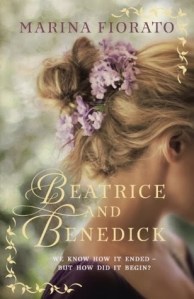
Beatrice and Benedick by Marina Fiorato

Beatrice and Benedick “I had rather hear my dog bark at a crow than a man swear he loves me.” These words are spoken by Beatrice near the beginning of Shakespeare’s Much Ado About Nothing, when she is reunited with Benedick, a man whom it is hinted she had been romantically involved with in the past. Shakespeare never gives us any details of Beatrice and Benedick’s history together and in this new novel, Marina Fiorato imagines how they may have met, what could have led to their separation and what brought them together again.

As the novel begins in the summer of 1588, Beatrice, the daughter of Prince Escalus of Verona, is visiting Messina in Sicily, staying at the home of her uncle Leonato, the Governor of Messina. Sicily is under Spanish rule and Leonato is preparing to welcome a party of Spaniards to the island, including the Prince of Aragon, Don Pedro, who is accompanied by his two young Italian friends, Claudio and Benedick. Claudio instantly falls in love with Leonato’s beautiful daughter, Hero, while Beatrice and Benedick are also attracted to each other – but are unable to admit it, preferring to trade insults instead. Just as they begin to acknowledge their love for each other, the two are torn apart with Beatrice heading home to Verona and Benedick joining Don Pedro and Claudio at sea as the Spanish Armada sets out to invade England. Eventually they will all meet again in Messina, setting the scene for the events of Much Ado About Nothing

Well, this book was a surprise! I had expected a light, gentle romantic comedy, but what I got was an entertaining and often quite dark historical adventure novel filled with duels, pageants and puppet shows, sea voyages, mutinies and treasure troves. Like a play, the novel is divided into Acts and Scenes, each Scene narrated by either Beatrice or Benedick. The voices of the two narrators were very similar and I thought more effort could have been made to make them more distinctive, but otherwise I liked the way the novel was structured. I wondered whether Fiorato would be able to pull off the wars of words between Beatrice and Benedick, but I think she did this very well – although Benedick doesn’t seem as quick-witted as Beatrice and usually comes off worst in their encounters.

I know there are some readers who are not interested in prequels, sequels or rewritings of any kind (and actually, I usually am one of those readers) but I enjoyed this one and thought it was very cleverly done, with Shakespeare’s characters and storylines woven perfectly into the history of the period. There are also some elements and characters from other plays, most notably Othello and Romeo and Juliet. Fiorato even manages to incorporate Shakespeare himself into the novel – if you’re not already aware of the theories connecting Shakespeare with Sicily I’ll leave you to find out for yourself!

You don’t really need to be familiar with Much Ado About Nothing as this book does work as a straightforward historical fiction novel, but you will get more out of it if you do read (or watch) the play either before you start or after you finish. As for the historical aspects of the novel, it was interesting to learn about Spanish-ruled Sicily and the fate of the Moors who lived there. I also loved all the beautiful descriptions of both Messina and Verona.

Having enjoyed Beatrice and Benedick so much more than I’d expected to, are there any other Shakespeare-inspired novels you would recommend?

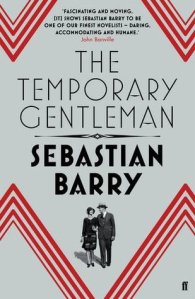
The Temporary Gentleman by Sebastian Barry

The Temporary Gentleman

“It seemed there was more cruelty than joy stored up in the human story, and kindness and comfort only rationed, and the ration book for both indeed not issued to everyone.”

The Temporary Gentleman is the third Sebastian Barry book I’ve read and I was looking forward to it, having loved both The Secret Scripture and On Canaan’s Side. Based on those two novels I knew I could expect a tragic, heartbreaking story and some beautiful, haunting writing – and that’s exactly what I got. Whenever I read a book by Sebastian Barry I am impressed by how much care he gives to each and every sentence, always searching for the perfect word or phrase to use. He can make the most ordinary, mundane things sound poetic and magical.

This is the third, I think, of Barry’s novels to focus on members of the McNulty family. The first, which I haven’t read yet, is The Whereabouts of Eneas McNulty and the second is The Secret Scripture, which tells the story of Roseanne, Tom McNulty’s wife. This new book, The Temporary Gentleman, is narrated by Jack McNulty, the brother of Tom and Eneas. They are all standalone novels and I don’t think they need to be read in any particular order, but I do like the fact that they are all loosely connected.

As an Irishman whose commission in the British Army during the Second World War is not permanent, Jack McNulty is the ‘temporary gentleman’ of the title. In 1957, sitting in his lodgings in Accra, Ghana where he lives alone with only his houseboy, Tom Quaye, for company, Jack begins to write his memoirs. He remembers his early days in Ireland and his first meetings with his future wife, Mai Kirwan. He reflects on the reasons why their relationship became strained and their marriage began to disintegrate. And he thinks of the mistakes he has made and the terrible impact of alcohol on both his own life and the lives of his family. Occasionally we return to the present where we learn a little bit about the political situation in 1950s Ghana, but the majority of the novel is devoted to Jack and Mai’s troubled marriage.

This is such a sad story, made even sadder by the fact that Jack does truly love Mai and although he can see that he is ruining his life and hers, he can’t stop himself from doing it. He knows he has made bad decisions and that he is to blame for the tragic outcome of those decisions – and yet he seems incapable of trying to put things right. Jack is not the most pleasant of people but even while I felt frustrated and angry with him, it was still possible to feel a bit of sympathy for him at times. I was also intrigued by Mai’s character, particularly because we only see her through Jack’s eyes and never have a chance to hear her point of view. It would have been interesting to have been able to read the same story from Mai’s perspective – I would love to know how she really felt about Jack and his actions.

As usual with a Sebastian Barry novel, I found that I was constantly marking lines and passages that I loved and as usual, if I started to quote them here I would have to quote almost the whole book. But despite the gorgeous writing I didn’t like this book quite as much as The Secret Scripture or On Canaan’s Side, maybe because Jack causes so many of his problems through his own behaviour and I didn’t feel as desperately sorry for him as I did for Roseanne McNulty or Lilly Dunne. I also felt that the Ghana sections of the novel added very little to the story. Still, this book was worth reading for the beauty of the writing alone. While I’m waiting for Sebastian Barry’s next novel I would like to go back and read his other books on the McNulty and Dunne families that I haven’t read yet.

I received a copy of this book from NetGalley for review.