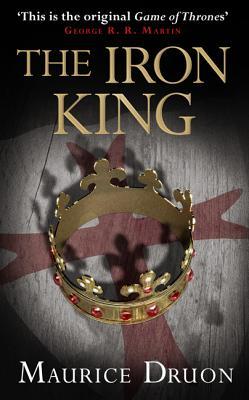
The Iron King by Maurice Druon

The Iron King “This is the original Game of Thrones” it says on the front cover, but anyone picking this book up hoping for an epic fantasy novel is going to be disappointed. The French novelist Maurice Druon may have been George R.R. Martin’s inspiration (I haven’t read Martin’s books so wouldn’t know how strong the influence actually is), but this is definitely not fantasy – it’s an historical fiction novel and an excellent one too. While I think it’s good that Martin’s recommendation is encouraging people to read The Iron King, I do think it was maybe a mistake for the publisher to market the book in this way, as looking through the various reviews on Amazon it seems a lot of people have not got the novel they were expecting and as a consequence The Iron King has ended up with a lower rating than it deserves.

Anyway, now that we’ve established what type of book this is, let me tell you what it’s about! Originally published in the 1950s, this is the first in the seven-volume “Accursed Kings” series and tells the story of a fascinating period of French history. The Iron King of the title is Philip IV of France, who was also known as Philip the Fair. For seven years Philip has been persecuting the Knights Templar who he wishes to destroy because of their power and riches, and he finally succeeds in having their Grand Master, Jacques de Molay, burned at the stake. But before the Grand Master goes to his death, he puts a curse on the King and his descendants – “accursed to the thirteenth generation!”

Things soon start to go badly for Philip and his family when it emerges that his sons’ wives are cheating on them with two young courtiers. Philip’s daughter Isabella, who is in a loveless marriage to King Edward II of England, sees an opportunity to bring their adultery to light, with the assistance of her ambitious and vengeful cousin, Robert of Artois, who is forming a plot of his own to reclaim his lands from his hated Aunt Mahaut. It seems that the Grand Master’s curse has been successful…

As this is a novel first published in 1955 and translated from French, it does have a very different feel in comparison to most of the historical fiction novels that are being written today and this was something I really liked about the book. Unfortunately I don’t have the language skills to be able to read it in its original French, but as far as I could tell, the translator (Humphrey Hare) has done a good job and The Iron King was one of the most entertaining historical fiction novels I’ve read for a while. There were so many interesting things to learn about – the origins of the famous ‘Tour de Nesle affair’; the demise of the Knights Templar; the community of Lombard bankers in Paris – and with a plot involving murder, torture, poisonings, court intrigue, and family feuds, there was always something happening.

Don’t worry if you know nothing about this period of French history – I had absolutely no previous knowledge of Philip the Fair and his family before reading this book but that was not a problem at all because this edition of the book makes the story easy to understand and follow. Everything you need to know regarding the historical background, the politics or the causes of feuds and disputes is clearly explained in the notes at the back of the book and the character list at the front helped me remember who everyone was and how they were related to each other. I am now looking forward to the second Accursed Kings book, The Strangled Queen. I hope the publisher will continue to reissue the rest of the series!

Historical Fiction Virtual Book Tour: The Chalice by Nancy Bilyeau

The Chalice Today I’m taking part in a blog tour for Nancy Bilyeau’s new novel, The Chalice. This is the second in a series of historical thrillers set in the Tudor period and featuring Joanna Stafford, a former novice nun. Last year I read the first book, The Crown, and since then have been eagerly awaiting more of Joanna’s adventures.

In the previous book, the dissolution of the monasteries by Henry VIII meant that Joanna was forced to leave Dartford Priory before she had the opportunity to finish her period as a novice and become a full nun. It’s now 1538 and Joanna has had to rejoin the secular world where she is hoping to lead a peaceful life raising her cousin’s little boy, Arthur, and establishing her own tapestry business. But when she learns of a prophecy in which she plays an important role, she becomes caught up in a plot to overthrow the King and restore the Catholic religion in England.

Although this is the second Joanna Stafford book I don’t think it’s completely necessary to have read the previous novel before this one, but readers of The Crown will enjoy learning more about Joanna’s background and her past as both the daughter of one of Katherine of Aragon’s ladies and as a novice Dominican nun. Joanna is a great narrator, so easy to like and to sympathise with as she struggles to reconcile all the different sides of her character: her faith and her religious beliefs, her loyalty to her friends and her powerful connections as a member of the Stafford family. As she learns more about the prophecy and the international plot surrounding it, she has some difficult choices to make. How should she interpret what she has heard? And once she has listened to the prophecy is it her responsibility to ensure it is fulfilled whatever the cost?

Because Joanna is a Stafford and the niece of the late Duke of Buckingham, it’s believable that despite the life she has tried to choose for herself, she will inevitably come into contact with rich and powerful people, both close to the King and in opposition to him. In these dangerous times, filled with political intrigue and rebellion, Joanna (and the reader) is never quite sure who can and cannot be trusted, and this adds a lot of drama and suspense to Joanna’s story. Among the real historical people she encounters are her cousins Henry and Gertrude Courtenay (the Marquess and Marchioness of Exeter), the young Catherine Howard, and her old adversary Stephen Gardiner. She also meets the nun and prophet Sister Elizabeth Barton and a few other fascinating historical figures who I won’t name here so as not to spoil the surprise.

Joanna’s two love interests from The Crown are back again too – the former friar, Brother Edmund Somerville, and the constable, Geoffrey Scovill – and her relationships with both of these men are developed further in this book. I do enjoy Joanna’s interactions with Edmund and Geoffrey, who are both great characters, but the romantic aspect of the book never becomes too dominant and is well balanced by the mystery/thriller aspects.

Another area in which I think Nancy Bilyeau really excels is in the way she captures the atmosphere of Tudor England, with all its sights, sounds and smells. She also does a good job of portraying the political and religious tensions of the period, especially what it was like for the nuns and monks whose religious houses had been destroyed or closed down and who were now facing the difficulties of either building a new life for themselves or secretly trying to continue to lead their religious lives in any way they can.

I did find this book a bit confusing at first because unlike the previous book, in which Joanna’s mission was clear – to search for the legendary crown of Athelstan – this time I found it harder to follow what was happening and exactly what Joanna was expected to do. Once I got into the story, though, and the plot began to take shape, it had all the excitement and the page turning qualities I remembered from The Crown. I hope there will be more Joanna Stafford books, but if not I will still be looking forward to any future novels from Nancy Bilyeau.

The Chalice Tour Banner FINAL

I am the first stop on this blog tour – for more reviews, interviews, guest posts and giveaways see the tour schedule.

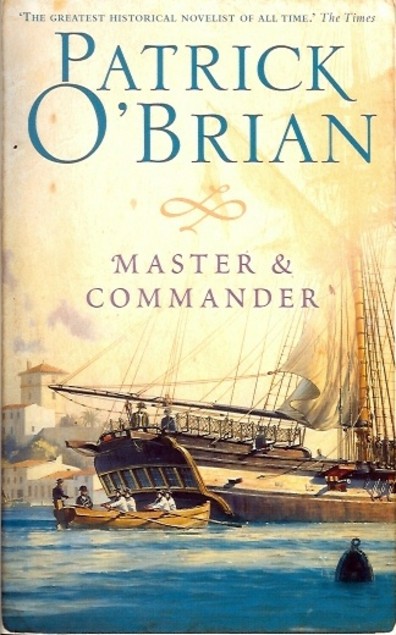
Master and Commander by Patrick O’Brian

Master and Commander I do not usually like books set at sea. However hard I try, I just can’t seem to keep track of the nautical terms and as soon as I see words like ‘mainsail’, ‘fo’c’sle’ or ‘bosun’ my brain just seems to switch off. As a fan of historical fiction, I have been unable to avoid this entirely – after all, until the 20th century the only way to cross the sea was by ship and many historical fiction novels do involve a sea voyage or two – but the thought of reading a book where seafaring forms a major part of the plot is always quite daunting for me. For this reason I’ve resisted reading the Aubrey/Maturin series for a long time, despite it being described as one of the best historical series ever written, but a couple of weeks ago I decided it was time I gave Master and Commander a try.

The story begins in Port Mahon, Minorca, with Jack Aubrey and Stephen Maturin meeting for the first time at a concert in the Governor’s House. After an initial disagreement that almost results in a duel, Aubrey and Maturin discover a shared passion for music and a friendship begins to develop. Jack Aubrey has just been given his first command of the sloop, HMS Sophie, and after discovering that Stephen is a physician, he invites his new friend to join him as ship’s surgeon. With Britain at war with France (it’s the year 1800), life at sea is both dangerous and exciting and as the Sophie cruises the Mediterranean she becomes engaged in a series of sea battles and encounters with enemy ships.

I loved Patrick O’Brian’s writing style from the beginning, but as soon as the Sophie set sail all my fears about naval novels were realised. I did try – there’s a useful diagram at the front of the book and of course there’s always the option of looking up unfamiliar words and finding pictures of ships online (if, like me, you don’t know the difference between a brig and a frigate and have always thought a settee was something you sat on) – but in the end I decided not to worry about it and luckily, there were still plenty of things for a landlubber like me to enjoy, not least the wonderful characters. Too often characters in historical fiction are depicted as having modern sensibilities and come across as twentieth century people dropped into a historical background – that was thankfully not the case with this book; they felt realistic and believable. O’Brian’s prose and dialogue is completely appropriate for the time period and the same is true of the behaviour and thought processes of the characters.

I liked both of the main characters and the contrast between their very different personalities and am looking forward to getting to know them better over the course of the series. At the moment Stephen Maturin is my favourite; I also appreciated the fact that he doesn’t have much more knowledge of seafaring matters than I do and has to have even the most basic naval facts explained to him by other members of the crew. It was good to know that someone else shared my bewilderment of the nautical world and I loved the way even at moments of high drama at sea, he was more excited about spotting a rare bird or fish.

Master and Commander doesn’t have a lot of plot, being of a more episodic nature, but I finished the book with a better understanding of what conditions were like onboard a ship in the Napoleonic era and what daily life involved for a sailor in the Royal Navy. It seems that not being able to follow all of the terminology or the more intricate points of the various naval manoeuvres was not the problem I was afraid it would be. I didn’t instantly fall in love with this series, but I still enjoyed my first introduction to Aubrey and Maturin and I’m sure I’ll be reading the next one very soon!

The Specimen by Martha Lea

The Specimen The Specimen sounded like the type of book I usually love. A Victorian setting, a murder mystery, exotic locations, interesting and unusual female protagonists – these are all things I love in a novel, so I had high hopes for this one.

The story begins in 1866 with Gwen Carrick on trial for the murder of the naturalist Edward Scales who has been found dead at his home in London. The narrative then takes us back in time to show us how Gwen first meets Scales and the events that lead up to his death and the murder trial.

Seven years earlier, in 1859, Gwen is living with her sister Euphemia in their remote home in Cornwall. Both women are unmarried and are leading unconventional lives for the time period – Gwen is an artist who is fascinated by natural sciences and loves to draw butterflies, beetles and other insects, while Euphemia is a spiritualist with a talent for mimicking voices. The sisters have little in common and their relationship is a difficult one. When Gwen meets and falls in love with Edward Scales she leaves her sister behind and accompanies him to Brazil to study and illustrate specimens of the flora and fauna there, but on their arrival in South America she starts to discover that Scales is not quite the person she thought he was. Why did Scales really invite Gwen on the trip to Brazil? What is he hiding from her? And is Gwen guilty of his murder?

Sadly, despite sounding so promising, this book didn’t live up to my expectations. I struggled to engage with the characters (Edward Scales is particularly unlikeable) and the Brazilian setting never really came to life. But my biggest problem was that I found the plot so difficult to follow and even after reaching the final page I wasn’t sure I’d understood what had happened. I do like books that encourage the reader to think, but this one was just too confusing for me. This is probably a book that would benefit from a re-read as it’s the type of story that has lots of clues buried in each chapter, which don’t necessarily have a lot of meaning until you get to the end and can see the whole picture. I didn’t like the book enough to want to read it more than once but I do think that might be the only way I would be able to fully appreciate it!

I do like to read about women who were involved in the sciences during the Victorian period and it was interesting to read about Gwen’s interest in studying and drawing insects. Gwen does not always behave the way a Victorian woman is expected to behave; she values her independence and is struggling to find a place for herself and her work in a nineteenth century society dominated by men. Euphemia was an interesting character too, though again, I found her storyline confusing (and often bizarre) and I don’t think I completely understood what was going on with her.

The Specimen is full of fascinating ideas and themes, so I’m sorry I can’t be more positive about it. I think as long as you’re aware that you need some patience and concentration and don’t go into this book expecting the gripping melodrama promised by the blurb, you might enjoy it more than I did.

I received a review copy of this book from the publisher via Netgalley

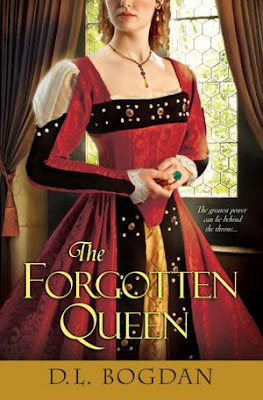
The Forgotten Queen by D.L. Bogdan

The Forgotten Queen Of all the royal women of the Tudor period, one we tend not to hear much about is Margaret, the elder sister of King Henry VIII and grandmother of Mary, Queen of Scots. And yet Margaret was not only a princess of England, but she also became a queen at the age of thirteen when she married King James IV of Scotland. In this historical fiction novel aptly titled The Forgotten Queen, D.L. Bogdan tells Margaret Tudor’s story.

James IV is much older than Margaret and given that this was a marriage made for political reasons, she is fortunate that James proves to be a kind and gentle husband – although not a very faithful one. In time Margaret comes to love him and is devastated when he is killed at the Battle of Flodden in 1513. Their young son succeeds to the throne and is crowned James V, but as he is not yet old enough to reign on his own, Scotland is ruled by a series of regents. Margaret marries again, this time to a man of her own choice, but as she learns more about her second husband – Archibald Douglas, the Earl of Angus – she begins to wonder if she has made a terrible mistake.

With her ties to both England and Scotland, it’s inevitable that eventually Margaret will have to choose between the country of her birth and her adopted country and must decide where her allegiances lie. It’s often unclear to the reader and even to Margaret herself what her true loyalties are, but the one thing that is obvious is that she wants whatever is best for the young James V, who is in a vulnerable position at the mercy of the various advisors, regents and noblemen who surround him. And while she fights to secure her son’s throne, Margaret never forgets her father Henry VII’s dream that through her Scotland and England could one day be united.

I knew absolutely nothing about Margaret Tudor before reading this book so, for me, she really is ‘the forgotten Queen’. It made a nice change to read a book set during the Tudor period that chooses to focus on somebody other than Henry VIII and his six wives and I did learn a lot about Margaret’s life. Unfortunately though, Margaret herself comes across as a very unsympathetic character: immature, selfish and stubborn. She makes some very bad decisions, often failing to take advice from other people, and she expects more from her friends than she is prepared to give in return. However, there were still times when I could feel some compassion for her, as she did seem to have a very difficult and tragic life. Only two of her children survived past infancy – James and her daughter with Angus, Margaret Douglas – and her second and third marriages were both very unhappy (although having said that, I felt that Margaret did nothing to make them any happier).

In addition to learning about Margaret’s life I enjoyed learning more about this period of Scottish history in general, for example the aftermath of Flodden, but I found the author’s attempt at handling Scottish dialect very irritating. To indicate that a character is Scottish she substitutes the words ‘dinna’ and ‘canna’ for don’t and can’t but doesn’t make any real effort to use any other Scottish words. This made the dialogue feel very unconvincing and artificial. Also, as the book covers such a long period of time, it would have been helpful if dates had been provided in the chapter headings or whenever the story jumps forward by a few years. It was hard to tell how much time had passed between one chapter and the next, or sometimes even between one paragraph and the next. Just a small thing but it would have made the story so much easier to follow!

This was a fairly light read, as you can probably tell from the title and cover. I think if I had been looking for a more in-depth book about Margaret Tudor I would have been disappointed, but as an introduction to her story it was enjoyable enough and has left me wanting to know more about this forgotten queen.

The King’s General by Daphne du Maurier

The Kings General If you asked me to name my favourite author I wouldn’t be able to give a definitive answer; there are so many that I love and I would find it hard to single one out. But one name that would always be high on my list is Daphne du Maurier. I’ve read twelve of her books now, including this one, and I can honestly say I’ve enjoyed all of them.

The King’s General is set in seventeenth century Cornwall, during the English Civil War. Our narrator is Honor Harris, whose family are Royalists fighting for the King against the Parliamentarians. Honor is eighteen years old when she meets and falls in love with Richard Grenvile but on the day before their wedding tragedy strikes and the marriage never takes place. As the years go by, Richard rises through the ranks of the army, marries another woman and has children, while Honor stays in the Harris family home and remains single.

As the war intensifies and the fighting spreads throughout Cornwall, Honor joins her sister and brother-in-law in the safety of their home, Menabilly, and here she meets Richard again for the first time in fifteen years. He has left his wife, bringing their fourteen-year-old son, Dick, with him, and is now commanding the Royalist forces as the King’s General in the West. Richard and Honor discover they still love each other as much as before and although she refuses to marry him, they begin an unusual relationship that withstands the war, betrayal and rebellion going on around them.

I wasn’t sure at first that I was going to like this book. The first chapter was very confusing – it’s narrated by an older Honor looking back on her life and reflecting on people and events that we know nothing about yet, before going back in time in the next chapter to tell her story from the beginning. But as soon as Honor and Richard had their first meeting on the battlements of Plymouth Castle I knew I needn’t have worried! After I finished the book I went back to re-read the first chapter and it did make a lot more sense.

The King’s General is historical fiction rather than the gothic suspense Daphne du Maurier is probably better known for, but there are still elements of the gothic here, mainly in the atmospheric descriptions of Menabilly with its secret tunnels, hidden chambers and mysterious noises in the night. Menabilly (the inspiration for Manderley in Rebecca) was du Maurier’s home in Cornwall and previously belonged to the Rashleighs, one of the families featured in The King’s General. It was apparently the story of a discovery at Menabilly by William Rashleigh in the 19th century that inspired the writing of this novel.

But while this book could be described as historical romance, as you might expect from du Maurier the romance between Richard and Honor is not a conventional one and neither of the two main characters is a typical romantic hero or heroine. Even people who like flawed characters (and I usually do) might have trouble with Richard as he is not a very pleasant person at all. He’s ruthless, arrogant and cruel and the way he treats his shy, nervous son Dick is particularly horrible. I couldn’t help thinking that his relationship, or lack of it, with Dick reminded me of Heathcliff’s with his son, Linton, in Wuthering Heights and of course, many of du Maurier’s books do have a strong Brontë influence. The only point in Richard’s favour is that he does seem to truly love Honor and in the scenes where they are alone we sometimes see a more human side to him. Honor herself is another strong and complex person. I didn’t always agree with the decisions she made but I admired her courage in helping to protect her family and friends throughout the war and her strength in dealing with the disaster that befell her early in the story. I deliberately haven’t told you exactly what this disaster was because if you can manage to avoid knowing before you start to read the book, it will probably have more impact!

Du Maurier had obviously put a lot of effort into her research for the novel. Although this is a fictional story, the various battles and other historical events in the book did take place as described and most of the characters were real people recorded in history, including both Richard Grenvile and Honor Harris. The Civil War (actually three separate wars between 1642 and 1651) is not a period of English history I have read much about. I know the basics that we were taught at school – that the Royalists (Cavaliers) were defeated by the Parliamentarians (Roundheads), and King Charles I was beheaded and replaced by the Lord Protector, Oliver Cromwell – but beyond that, I don’t know very much at all. That wasn’t necessarily a bad thing, because my total lack of knowledge of the Battle of Lostwithiel, for example, or the Siege of Plymouth Castle, meant that I never knew what was going to happen next.

While The King’s General doesn’t rank as one of my top three or four Daphne du Maurier novels I still loved it and am looking forward to the remaining du Maurier books I still haven’t read.

Gemini by Dorothy Dunnett

Gemini In June last year, having finished the final book of the Lymond Chronicles in April, I picked up Niccolò Rising and embarked on Dorothy Dunnett’s second historical series, the House of Niccolò. And now here I am, seven months and eight books later, at the end of Gemini and finding it hard to believe that there are no more adventures of either Lymond or Nicholas left for me to discover. There will be re-reads, of course, but it does make me sad that I can’t read any of these books for the first time again.

*Spoilers follow for both the House of Niccolo and the Lymond Chronicles*

Geographically, unlike the last few Niccolò books where the action switched between a variety of different settings, Gemini is focused mainly on one location: Scotland. After causing damage to the Scottish economy in the course of his long-running contest with his wife, Gelis, Nicholas has returned to try to make amends. Soon after his arrival in Scotland, Nicholas finds himself having to contend with a possible inherited illness (porphyria?) afflicting the royal family, trying to handle the King’s wild and unpredictable younger brother, John of Mar, and attempting to thwart a rebellion by the King’s other brother, the Duke of Albany. With Nicholas’s two biggest enemies, his grandfather, Jordan de St Pol of Kilmirren, and his former trading rival, Davie Simpson, also in Scotland, Gelis stays behind for a while in the relative safety of Bruges with their son, Jordan. But it’s not long before she and Jordan are in Edinburgh too and the eighth and final volume of the House of Niccolò starts to head towards its conclusion.

I did love Gemini overall, but I confess to getting a little bit bored with the political aspects of the novel. It’s not that I don’t find this period of history interesting and important, because I do – it’s just that at this late stage in the series, and especially as I began to reach the end of the book, I was too impatient to slow down and concentrate on all the details. I’m sure on a future re-read I’ll be able to appreciate this side of the novel more, but on this first read I was desperate to see how Nicholas’s personal story would be resolved and to have some of my questions answered.

I found Simon’s and Henry’s deaths particularly moving, though not so much for their sakes as for Nicholas’s, though I did feel slightly cheated when I realised that Simon was never going to acknowledge Nicholas as his son, and that neither Simon nor Henry were ever going to find out the truth about Henry’s parentage – I think I had expected there to be a big confrontation at the end of the book where everything would be revealed. I suppose it’s not the first time in a Dunnett novel that things haven’t turned out the way I had been anticipating! I was also a bit disappointed that a true reconciliation between Henry and Nicholas never happened, despite there seeming to be some steps in that direction earlier in the book.

I get the impression that opinion is divided over the Epilogue with some readers finding it unnecessary, but personally I liked it and was pleased to see that some of the links with the Lymond Chronicles were explained at last. Although I’ve been doing my best to avoid spoilers while reading this series I must have picked up somewhere that Rankin was Lymond’s father because I had that at the back of my mind, but I was completely confused as to how Rankin of Berecrofts could possibly be the same person as Francis Crawford, 1st Baron Culter. As for Sybilla’s parents, I had guessed that Jordan was probably her father, though I had no idea about the identity of her mother. I had been coming up with various theories about the significance of Bel of Cuthilgurdy, but not the right one.

Now for one of the most shocking revelations of the novel: Julius. I didn’t like him and had started to suspect there might be more to him than met the eye, but even though his mother’s name was there in the family tree at the front of the book, it had never occurred to me that there was any connection and when it was revealed it took me completely by surprise. When I get around to reading this series again I will certainly be looking for clues about Julius and paying more attention to everything he says and does in the earlier novels!

*End of spoilers*

I’ve really enjoyed working my way through this series, but the House of Niccolò hasn’t had quite the same effect on me as the Lymond Chronicles, mainly because Nicholas himself, to me, is a less appealing character than Lymond – though I know others will disagree. While I was reading the Lymond Chronicles (and sometimes even now, a year later) I was thinking and worrying about Lymond all the time, even when I was away from the books, but I never really connected with Nicholas on the same level. Still, I did love the series as a whole and am looking forward to reading all the books again and looking out for some of the things I know I missed during the first read. I’ve also bought a copy of King Hereafter and will be reading that at some point, but first I’m spending some time catching up on all the non-Dunnett books I’ve been neglecting over the last year!