The Sandalwood Tree by Elle Newmark

This is my first book for the Transworld Book Group. I was immediately drawn to The Sandalwood Tree as I love historical fiction set in India – and I’m pleased to say that it didn’t disappoint me at all.

This novel consists of two storylines, both of which take place during an important period of India’s history. In 1947 we meet an American woman, Evie Mitchell, who has moved to India with her husband, Martin, and five-year-old son Billy. Martin, a historian, is planning to study the end of British rule and the process of Partition (the separation of Hindus and Muslims which led to the creation of Pakistan). As the Mitchells try to settle into their new life it becomes obvious that there are big problems in their marriage. Martin, who served in the US army during World War II, is still haunted by some of the things he experienced in Germany and is suffering from what we might now call post-traumatic stress disorder.

Soon after moving into their new house in the village of Masoorla, Evie discovers some old letters hidden behind a loose brick in the wall. The letters were written by two British women, Felicity Chadwick and Adela Winfield, who lived in the same house during the 1850s – a time of rising tension between the British and Indian people, leading to the Sepoy Rebellion of 1857. Evie is intrigued and begins to search for more information about the two Victorian women. As she slowly uncovers Felicity and Adela’s story through a series of letters, diaries and historical documents, she starts to see some similarities between her own life and theirs.

Elle Newmark’s descriptions of India are filled with colour and detail. Whether she’s writing about the food prepared by Habib, the Mitchells’ cook, a monkey swinging from the branches of a tree, or a perfume stall at the bazaar, her images really help to bring the book’s setting to life. Because most of the story is told from Evie’s perspective and she is new to India, seeing everything for the first time, we can experience all the sights, sounds and smells along with her. We also share Evie’s fascination with Adela and Felicity and we feel her frustration every time she attempts to address the problems with her marriage.

Reading The Sandalwood Tree is an excellent way to learn about India’s history and culture and Elle Newmark makes everything easy to understand. But it’s also a great story with a beautiful setting, fascinating plot and complex characters who grow and change over the course of the novel. The transitions between the two periods are handled perfectly, moving smoothly from Evie’s story to Felicity and Adela’s, and it was interesting to see the parallels and connections between them. I found I enjoyed both storylines equally – each one would have been strong enough to form a complete novel on its own, but it’s the way the two are interwoven that makes this book special.

The Taste of Sorrow by Jude Morgan

The Taste of Sorrow is a fictional retelling of the lives of Charlotte, Emily and Anne Brontë, beginning with their childhoods and ending just after Charlotte’s wedding. Before I started reading this book if you’d asked me how much I already knew about the Brontës, I would have said I knew very little. And yet a lot of the story felt familiar to me – their early attempts at writing stories set in the fantasy worlds of Angria and Gondal, their experiences of working as governesses, their brother Branwell’s alcoholism – so I must have known more than I thought.

Although The Taste of Sorrow does seem to stick to the historical facts as far as I could tell, it’s important to remember that this is a novel and not a biography. Jude Morgan brings the Brontë sisters to life by giving us insights into their feelings and emotions, their hopes and dreams. His fictional Brontës are realistic, complex and three-dimensional, and would have been interesting characters to read about even if they had not been based on real people. We can obviously never know exactly what thoughts would have gone through the minds of the real Charlotte, Emily and Anne, but I had no problem believing that they may really have said and done the things that Morgan has imagined them to have said and done. And that’s the highest praise I can give to an author writing this type of historical fiction.

The Taste of Sorrow, as the title suggests, is not the happiest of books. The Brontës had a lot of sorrow in their lives, beginning with the death of their mother and two elder sisters, Maria and Elizabeth. They also had to deal with the usual challenges and obstacles that came with being a woman in the 19th century. When Charlotte suggested that she would like to be an author she was discouraged by her father simply because she was female. Instead, Mr Brontë pinned all his hopes on his son, Branwell.

I had read very little about Branwell before I started this book, though I knew he had caused his family a lot of pain because of his drinking. I thought Morgan portrayed him quite sympathetically, attempting to show the pressures and disappointments that contributed to his downfall, and how his sisters struggled to reconcile their love for him with their despair in him. Although I couldn’t like Branwell, his character felt as real to me as the characters of Charlotte, Emily and Anne.

The book itself is very well written, although the style is unusual and takes a while to get used to, but the strong point of the book is the characterisation and each sister is shown as having her own distinct personality. Morgan does focus more on Charlotte than the other two, though I can see that as the sister who outlived the others it probably made sense to tell most of the story from her perspective. But my favourite Brontë book is Wuthering Heights (I love it even more than Jane Eyre, which I know puts me in a minority within the book blogging world) and for that reason, the sister I was most interesting in reading about was Emily. Although we don’t get to spend as much time with Emily as we do with Charlotte, I thought Morgan’s portrayal of her was excellent and I could easily believe that his Emily was the person who wrote Wuthering Heights.

I was also pleased to see that Morgan does give Anne a lot of attention and she is not shown as being in any way inferior or less important than her sisters. Personally I loved both of Anne’s books, The Tenant of Wildfell Hall and Agnes Grey, and I think it’s sad to see how often she is overlooked or dismissed.

The Taste of Sorrow will obviously be of particular interest to Brontë fans, but I think it would also be enjoyed by a wider audience as an interesting and compelling historical fiction novel in its own right. Now I just need to read the remaining two Brontë novels I still haven’t read: The Professor and Shirley.

The Invisible Bridge by Julie Orringer

The Invisible Bridge begins in 1937 and follows the fortunes of three Hungarian Jewish brothers – Andras, Tibor and Matyas Levi – as they try to survive in a Europe torn apart by World War II. At the beginning of the book, Andras is preparing to leave Budapest and go to Paris to study architecture. Soon after his arrival in France, Andras meets Klara Morgenstern, a woman nine years older than himself, a ballet teacher with a teenage daughter. Andras and Klara fall in love, but Klara has secrets in her past – secrets that she would prefer not to share with Andras.

Andras and Klara’s story is played out against a backdrop of wartime Paris, Budapest, Ukraine and parts of the Hungarian countryside. The complex relationship between Andras and Klara is always at the heart of the novel but to dismiss this book as just another romance is unfair because it’s so much more than that.

Despite reading a lot of novels set during World War II, this is the first one I’ve read that is told from a Hungarian perspective. Hungary was allied with Germany which meant this story approached things from a slightly different angle than most other books I’ve read about the war and as I knew almost nothing about the role Hungary played, I was able to learn a lot from this book. And of course, because Andras and his family are Jews the novel is very much from a Jewish viewpoint. We see how it grew increasingly dangerous to be a Jew living in wartime Europe and how the Levi family became desperate to escape to safety. And when eventually Hungary finds itself under German occupation, we see that the Hungarian Jews fared no better than Jews elsewhere in Europe.

I enjoyed this book but it wasn’t perfect. There were times when I thought the balance between the romance storyline and the war aspect wasn’t quite right. And some of the characters needed more depth. I really liked Andras at first as he was a character who was easy to like and sympathise with, but as the story went on I started to find him a little bit too perfect and after spending more than 600 pages with him I wished he’d had a few flaws just to make him more interesting. I also think it would have been a nice touch if part of the book had been written from another character’s point of view. Not really a criticism of the book – I just think it would have added another dimension to the story and with the book being so epic in scope, the opportunity was there to do this.

The biggest problem I had with the book was the length! I’m usually quite happy to immerse myself in a long book but unlike some stories which do take a long time to tell, I thought this one could easily have been a lot shorter. My attention started to wander somewhere in the middle of the book when a lot of time was spent describing Andras’s life in the forced labour service (Jews were no longer allowed to serve in the actual Hungarian army but instead were expected to do jobs such as felling trees and clearing minefields) but things did pick up again over the last hundred pages.

In fact, the final section of the book, with its descriptions of life in Budapest towards the end of the war is so compelling and filled with so much tension, it made it worth sticking with the book through the less interesting chapters in the middle. And of course, I was genuinely worried for some of the characters so I had to keep reading to make sure they survived to the end of the book! I thought Orringer did a good job of keeping us in suspense wondering who would live or die and despite the few minor negative points I’ve mentioned above, I loved The Invisible Bridge.

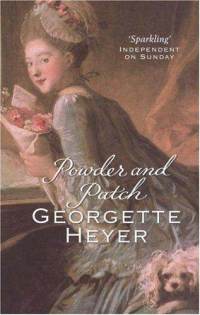
Powder and Patch by Georgette Heyer

Philip Jettan has grown up in the country on his family estate and has never shown any interest in fashionable society. As he grows older he falls in love with his childhood friend and neighbour, Cleone Charteris, but Cleone is unimpressed by Philip’s simple country ways and makes it clear she’s looking for a man with better manners and nicer clothes. And so, with the help of his Uncle Tom, Philip goes to Paris to learn how to be a gentleman…but when ‘le petite Philippe’ returns wearing powder and patches, writing French poetry and fighting duels, Cleone starts to wish she could have the old Philip back.

Powder and Patch is a very early Georgette Heyer novel and in my opinion not an example of her best work. If this had been my first experience of Heyer I think I would have been disappointed, but because I’ve read and enjoyed some of her other novels I’m prepared to accept that I’ll come across the occasional book that’s not as good. And having read some of her later books, it was interesting to see an early indication of her storytelling ability and talent for witty dialogue. There’s a lot of humour in the story but I didn’t find it as amusing as it was obviously intended to be – although I have to say, the final few chapters were quite funny and redeemed the book for me.

None of the characters in this book seemed to have much depth, with Cleone being particularly silly, especially in comparison to some of the stronger, more complex heroines in the other Heyer books I’ve read. I found it difficult to warm to her from the start because I thought Philip was fine the way he was: sincere, honest and reliable, and Cleone’s inability to accept him made me feel annoyed with her. The moral of the story is obvious: that outward appearances can be deceiving and it’s what’s inside that counts.

This book is set in the Georgian era, rather than the Regency period which Heyer is more famous for, and this gives the story a slightly different feel, although I don’t personally have any preference for one period over the other. I should point out that if you’re like me and have only a very basic knowledge of the French language (or none at all) be warned that there are a lot of French phrases scattered throughout the book, including an entire poem written in French. I don’t think it actually affected my understanding of the plot at all but I did keep wondering if I might be missing something.

Powder and Patch is a short novel but just the right length really because I don’t think the plot would have been strong enough to sustain a longer book. I found it a very quick and easy read which kept me entertained for a while, but definitely the weakest of the Heyer novels I’ve read so far.

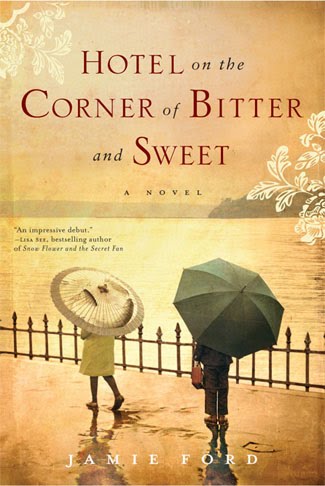
Hotel on the Corner of Bitter and Sweet by Jamie Ford

One day in 1986 Henry Lee stands outside Seattle’s Panama Hotel. The building is being renovated and has been opened up for the first time in over forty years. As Henry watches, a number of items are carried up to the street. These things belonged to the Japanese American families who were ‘evacuated’ from their homes during the second world war. They had stored their possessions in the hotel basement but never came back to reclaim them. This is an important historical discovery, but for Henry it also has personal significance as it brings back memories of one particular Japanese family and a girl called Keiko…

Henry and Keiko are both just twelve years old when they become friends in 1942. He is the only Chinese boy and she the only Japanese girl in an all-white school. Unfortunately Henry’s father disapproves of their relationship – China and Japan have been involved in conflict for years and he considers all Japanese people to be the enemy. And with Pearl Harbor still fresh in people’s minds, Japan is America’s enemy too. Henry’s parents make him wear an “I am Chinese” button when he goes out in case anyone mistakes him for a Japanese boy. When the US government decide to round up thousands of Japanese people and send them to internment camps (allegedly to stop them from spying) Henry and Keiko find themselves separated.

The story of Henry and Keiko’s love and the fate of America’s Japanese population is just one part of Hotel on the Corner of Bitter and Sweet; the book also looks at the difficult relationship between Henry and his father, racial tensions in the 1940s, the Seattle jazz scene and the importance of music in our lives. The novel is heartbreaking in places and heartwarming in others (the ‘bitter and sweet’ of the title), yet it never became too sentimental for me. It’s a lovely, tender, moving story from beginning to end, but at the same time it’s a story that helps to educate the reader about an aspect of World War II that rarely seems to be given any attention today. I feel ashamed that I knew nothing about the way Japanese American people were treated during the war and I’m pleased that this gap in my knowledge has now been rectified somewhat.

So many of the books I’ve read recently have dual timeframes. In this book the narrative is split between 1942 and 1986, but for once I found both periods equally compelling to read about. As for the characters, the good ones are very good and the bad ones are very bad, yet they still feel like real, believable people rather than two-dimensional stereotypes. I really loved both Henry and Keiko. They were characters I genuinely cared about and I felt emotionally invested in their story, rather than just being a passive observer. And someone else who deserves a mention is Sheldon, a black saxophone player who becomes a friend of Henry’s, the type of friend I think we would all like to have!

As you might have guessed by now, I really loved this book – and I think it might even be one of my favourite books of the year so far. I had added it to my wish list as soon as it started appearing on so many American book blogs a couple of years ago and now that I’ve finally had a chance to read it for myself I’m so glad it was as good as I’d hoped it would be!

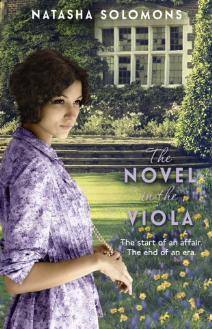
The Novel in the Viola by Natasha Solomons

I love reading fiction set during World War II and The Novel in the Viola is one of the best I’ve read for a while. The story begins in 1938 when we meet nineteen-year-old Elise Landau, a girl from a rich Austrian family (her mother, Anna, is a successful opera singer and her father, Julian, a famous author). Until now, Elise has lead a secure and comfortable life but that’s all about to change because the Landaus are Jews, and with Europe on the brink of war Austria is no longer a safe place to live. And so Elise is sent away from her home in Vienna and travels alone to Tyneford House, a mansion on the south coast of England, where she will work as a maid for Mr Rivers and his son, Kit. Her parents have remained in Austria while they await American visas and they promise to send for Elise as soon as possible – but as the war continues, she begins to wonder if they’ll ever be reunited.

The portrayal of life in an English country house forms a big part of the story, with insights into the class system, social conventions of the time, and the relationships between servant and master. Elise has to get used to working as a parlour maid after spending most of her life having servants of her own. Her background makes it difficult for her to fit in with the other servants at Tyneford but her status as a maid and a Jewish refugee prevents her from being accepted by some of the Rivers’ upper class friends. Elise is a wonderful character and I enjoyed following her as she settled into her new life – I thought Natasha Solomons displayed a real understanding of what it was like to be newly arrived in an unfamiliar country, feeling homesick and struggling with the language and the culture.

There are lots of beautiful, atmospheric descriptions of the Dorset countryside and coast which gave me a true feel of what it was like to live there during the Second World War. The story also looks at the effects the war had on the village of Tyneford and the house itself. The author’s note at the end of the book was very interesting and explained how Tyneford was based on a real place that became a ghost town because of the war.

There are so many other things I could say about this book – there’s the secret of the ‘novel in the viola’ itself, and I haven’t even mentioned yet the romantic storyline which develops as Elise begins to fall in love with someone she meets at Tyneford. But I don’t want to spoil this book for you, so I’ll just say that The Novel in the Viola was a real pleasure to read, a great story with just the right balance of sadness and humour. And I thought the way the book ended was perfect – the only problem was that I had grown to care for Elise and the others so much I didn’t want to leave them behind.

The Somnambulist by Essie Fox

With my love of all things Victorian I had high hopes for this book, the debut novel by Essie Fox, and I wasn’t disappointed. The Somnambulist is a beautifully written story with memorable characters, an intricate plot and a distinctly gothic feel.

Phoebe Turner is a seventeen-year-old girl who lives in the East End of London. Her mother, Maud, a member of the Hallelujah Army, has done her best to keep Phoebe from sin and to protect her from what she considers to be the bad influence of her sister, Cissy. Phoebe, though, adores her glamorous Aunt Cissy and she is left devastated by her sudden death early in the novel.

Maud is struggling with the loss of Cissy’s income and when the wealthy Nathaniel Samuels offers Phoebe a position as companion to his wife, it seems this could be the solution to their financial problems. And so Phoebe leaves London behind and travels to Dinwood Court, the Samuels’ mansion in Herefordshire, where she begins to uncover some dark family secrets…

Essie Fox is the author of the Virtual Victorian blog and one thing that is very apparent in The Somnambulist is her knowledge and love of the Victorian period. It was interesting to read the author’s note at the back of the book in which she gives us some of the historical fact behind the fiction and lets us know which of the people and places mentioned in the novel are ones that really existed. I was impressed by the amount of period detail and the vivid descriptions which really brought the settings to life, particularly Wilton’s Music Hall and the magnificent Dinwood Court, two contrasting but equally well-drawn locations. The characters, too, are colourful and vibrant and Phoebe herself is a complex character who grows and develops as a person over the course of the novel.

I guessed one of the book’s big secrets almost from the beginning (a sign that I’ve read too many books of this type, maybe!) but that didn’t matter at all because I enjoyed watching Phoebe as she slowly pieced the parts of her history together. There were other surprises and twists that I didn’t see coming and overall I thought the story was very cleverly plotted. I also loved the sleepwalking theme which is indicated in the title and gently woven throughout the book with references to the Millais painting, The Somnambulist, which is widely believed to have been inspired by either the Wilkie Collins novel The Woman in White or the Bellini opera La Sonnambula. The story itself is often ghostly and dream-like and Phoebe’s world is a place where nothing is exactly as it seems.

The Somnambulist is an impressive debut novel and I’ll certainly look out for any future books from Essie Fox.