Review: The Saffron Gate by Linda Holeman

Linda Holeman’s books are perfect comfort reading for me. She writes the kind of historical fiction I love, with just the right combination of romance, history and adventure. One of the things I like about her books is the way she chooses such interesting settings (19th century Afghanistan in The Moonlit Cage, for example, or British-ruled India in In a Far Country). The Saffron Gate is set in 1930s Morocco, a time and place I know very little about, but Holeman really makes the setting come alive, from the noise and bustle of the souks in Marrakesh, the taste of hot couscous and mint tea, the vibrant colours of the trees and flowers.

But Morocco in the 1930s can be a dangerous place for a woman on her own, as our narrator soon discovers. Her name is Sidonie O’Shea and she’s travelling to North Africa from her home in Albany, New York in search of her fiancé Etienne Duverger, who disappeared without word, leaving behind a mysterious letter from his sister in Marrakesh. When Sidonie arrives in Morocco she realises the enormity of her task – she has no idea where to start looking for Etienne and it seems that certain people are determined to stop her from finding him at all costs. As Sidonie continues to search, she begins to fall in love with Morocco and at the same time uncovers some important truths about both Etienne and herself.

There were times when I wanted to throw this book across the room in disgust, not because it was badly written, but because one of the characters was just so horrible and so cruel to Sidonie I didn’t think I could bear to read any more. Not only that, but Sidonie is far too innocent and trusting, which started to frustrate me after a while. Somewhere in the middle of the book though, the story began to go in a different direction to what I was expecting and I started to feel more hopeful of a happy ending. Whether I got one or not I’ll leave you to find out for yourself.

I learned a lot from this book about the role of women in 1930s Morocco, how they lived, and how they were scorned and looked down upon if they didn’t have a husband. There was also a lot of information about their fashions, customs, superstitions – and some fascinating details, such as the rituals of the hammam (public baths).

I’ve enjoyed all of the Linda Holeman books that I’ve read, but I think this one has been my favourite so far. I would highly recommend The Saffron Gate to anyone who likes to read long historical fiction novels that allow you to immerse yourself in another culture for a while.
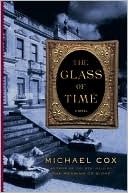
Review: The Glass of Time by Michael Cox

This is the sequel to Michael Cox’s The Meaning of Night, which I read earlier in the year. Although I don’t think it’s absolutely necessary to read the books in the correct order, it would make sense to do so. You’ll definitely get the most out of this book if you’ve read the previous novel first and are already familiar with the plot and the characters.

The way The Meaning of Night ended had left me feeling dissatisfied, but The Glass of Time provides the perfect continuation to the story. Our narrator is Esperanza Gorst, an orphan who has been raised in France by her father’s friend Madame L’Orme and her tutor Mr Thornhaugh. When she is nineteen years old, she is sent by her guardians to the beautiful estate of Evenwood in England, where she will work as lady’s maid to Emily Carteret, the 26th Baroness Tansor. At first Esperanza doesn’t know why she has been sent to Evenwood and is told only that it is part of Madame L’Orme’s ‘Great Task’. As she learns more about her mission, however, Esperanza begins to unravel the mysteries of both her own past and Lady Tansor’s.

I enjoyed The Meaning of Night but I loved The Glass of Time even more. I thought Esperanza was a more likeable character than Edward Glyver (the narrator of The Meaning of Night), and the story also seemed to move at a faster pace. I literally didn’t want to put this book down and finished it in two days (considering it’s over 500 pages long that should indicate how much I was enjoying it).

While I was reading this book there were times when I could almost have believed it really had been written in the 19th century, as the setting, atmosphere and language are all flawlessly ‘Victorian’. Charles Dickens was clearly one of Cox’s biggest influences. In my review of The Meaning of Night I mentioned the Dickensian names Cox gave his characters, and there are more of them in The Glass of Time, from Armitage Vyse and Billy Yapp to Perseus Duport and Sukie Prout. But this time I also noticed lots of similarities to Dickens’ Bleak House: the young orphan searching for the truth of her parentage; the noblewoman with a dark secret; the way the story moves between an idyllic country house and the dark, dangerous streets of Victorian London; the intricate plot and the cleverly interlocking storylines.

I could also recognise elements of various Wilkie Collins novels including Armadale and No Name (Esperanza Gorst is even seen reading No Name at one point). In both writing style and structure this book does feel very like one of Collins’ sensation novels, filled with cliffhangers and plot twists – and with parts of the mystery being revealed through letters, diary entries and newspaper clippings. I did find some of the twists very predictable but that didn’t matter to me, because it was actually fun to be one step ahead of Esperanza, waiting for her to discover what I had already guessed.

It’s so sad that there won’t be any more books from Michael Cox, as he died of cancer in 2009, but together these two novels are the best examples of neo-Victorian fiction I’ve read: complex, atmospheric and beautifully written.

Highly Recommended

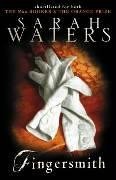
Review: Fingersmith by Sarah Waters

I’ve had a copy of this book on my shelf for a few months now but I kept putting off reading it because, after seeing so many glowing reviews, I was afraid I wouldn’t like it. Eventually I decided I would have to just get on with it, before I really was the only person left on earth who still hadn’t read it!

Somehow I had managed to avoid coming across any spoilers (and hadn’t seen the TV adaptation either) so was able to go into Fingersmith knowing almost nothing about the plot. As I don’t want to spoil the book for any of you who haven’t read it yet, all I will tell you is that Fingersmith is the story of Sue Trinder, an orphan raised by Mrs Sucksby in a den of thieves in Victorian London, and Maud Lilly, a young heiress who lives with her uncle at their country house, Briar. When an acquaintance of Mrs Sucksby’s, known as ‘Gentleman’, comes up with a plan to cheat Maud of her inheritance, Sue agrees to pose as a lady’s maid and help him with his scheme. And that’s all I’m going to say about it!

I was expecting a complex plot with lots of twists, and that was what I got. Unfortunately, I guessed what the first big plot twist was going to be! I was disappointed because I would have loved to have been shocked by it. (Actually, I think if only I’d read this a few years ago before I started reading so many Victorian sensation novels, it probably would have come as a shock.) I’m envious of those of you who didn’t see the twist coming because I can imagine it must have been stunning. Although this did have a slight impact on my enjoyment of the book, luckily there were plenty of other things that I did enjoy!

As I’ve probably mentioned before, the 19th century is one of my favourite periods to read about. I love the original Victorian classics and I love Victorian historical fiction too. Having read both this book and Affinity now, I can say that Sarah Waters has a real talent for portraying the atmosphere of Victorian London: the dark alleys, the narrow streets, the fog, the Thames. The locksmith’s shop at Lant Street, where Sue lives, is described particularly vividly.

Although I thought many of the characters in the book were very unlikeable, I could still find every one of them interesting, which must be a testament to Sarah Waters’ skills as a writer. I thought Gentleman was fascinating (funny how the word gentleman can be made to sound so sinister!). I liked the relationship between Sue and Maud too and the way the book switches perspective between the two girls, giving us an insight into each of their emotions, thoughts and motives, and allowing us to sympathise with them both.

I was really hoping I’d be able to gush about how much I loved this book, like the majority of people have. However, although I did enjoy it and couldn’t put it down at times (it didn’t feel like a 550 page book at all – I got through it in half the time it would normally take me to read a book this length), I don’t think it’s going to be one of my top reads of the year. Maybe it’s just that my expectations were a bit too high, which is not the fault of the book. Having enjoyed this one and Affinity, I’m looking forward to reading the rest of Sarah Waters’ books, starting with The Little Stranger for the RIP challenge.

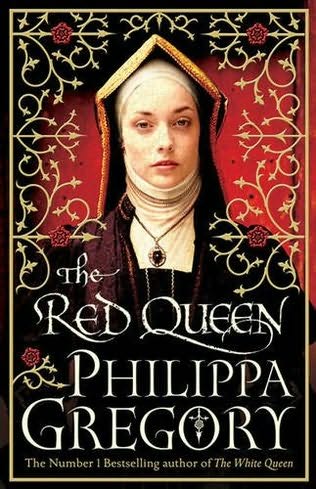
Review: The Red Queen by Philippa Gregory

This is the second book in Philippa Gregory’s new series set during the Wars of the Roses, a tumultuous period of English history in which the rival houses of York and Lancaster struggled for power. In The White Queen we met Elizabeth Woodville, wife of Edward IV of York, sister-in-law of Richard III and mother of the two young princes who mysteriously disappeared in the Tower of London in 1483. The Red Queen is the story of another woman who also played an important part in the Wars of the Roses: Margaret Beaufort of Lancaster, the mother of King Henry VII.

Although this is the second book in the series, I wouldn’t really describe it as a sequel – that is, The Red Queen doesn’t just pick up where The White Queen left off. The two books overlap somewhat and cover some of the same events, but from opposing sides of the conflict. You don’t really need to have read the first book to understand this one, although it would probably make sense to read them in the correct order. I really like the concept of two books each telling the story from a different perspective; throughout much of The White Queen, Margaret Beaufort and the Tudors were shadowy characters in the background, plotting and scheming from afar, so it was good to have them take centre stage in The Red Queen.

One of the themes running throughout the book is Margaret’s belief that God has chosen her to be another Joan of Arc, who will lead the House of Lancaster to victory, and that God’s will is for her son Henry Tudor to be crowned King. Margaret was not very likeable – in fact she came across as a very cold, ambitious and unpleasant person – but as far as I can tell, this is probably true of the historical Margaret. I was surprised that I could still enjoy this book despite the narrator being so unsympathetic; sometimes obnoxious characters can be fun to read about, and I found Margaret’s uncharitable thoughts about the House of York and the Woodville family quite funny at times.

I can’t really comment on the historical accuracy of this book because I have never studied the period in any depth – however, my lack of knowledge meant that I could just concentrate on enjoying the story! The Wars of the Roses were a complex and long-running series of conflicts, during which many of the key players changed their allegiances several times (and just to confuse things further, many of them also had the same names – lots of Henrys and Edwards, for example) but Philippa Gregory has made it easy to understand and follow what’s going on. I do think a more detailed family tree would have been helpful though – the one provided in the book was incomplete and I didn’t find it very useful.

The book is written in the same format as The White Queen, with most of the story being told in the first person present tense, occasionally switching to the third person to relate important events at which Margaret was not present, such as the Battle of Bosworth Field. I really like the way Philippa Gregory writes battle scenes using language that I can understand, as I often find reading about battles very confusing! The whole book is written in quite simplistic prose and can be repetitive at times, but it always held my attention and drew me into the story.

If you are new to the Wars of the Roses – a fascinating period of history – then I would recommend either The Red Queen or The White Queen as an excellent starting point. I also think that if you’ve tried Philippa Gregory in the past and didn’t find her books to your taste, it could be worth giving her another chance as these newest books are quite different from the Tudor ones that I’ve read.

Recommended

I received a copy of this book from Simon & Schuster UK for their Red Queen Blog Tour

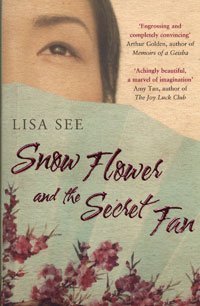
Review: Snow Flower and the Secret Fan by Lisa See

This book was recommended to me after I read Wild Swans by Jung Chang earlier this year and as I had heard a lot of good things about it, I decided to give it a try.

Lily is a Chinese girl born in Hunan Province in 1823, the daughter of a poor farmer. When she is six years old, the local matchmaker has an exciting announcement to make: if Lily’s feet are bound properly they will be the perfect size and shape, allowing her to marry well and improve the fortunes of herself and her family.

As well as arranging marriages for young girls, another job of the professional matchmaker is to find them a laotong or ‘old same’ – a special friend whose personal circumstances match in a number of different ways (e.g. same birthday, same number of siblings). Snow Flower and the Secret Fan tells the story of the lifelong friendship between Lily and her ‘old same’ Snow Flower.

If you haven’t read this book yet, I should warn you that the chapter on footbinding goes into a lot of detail, describing exactly what it involves and how much suffering the girl is forced to endure – all because small feet were considered the ideal and a girl with large feet would be virtually unmarriageable. One of the worst things about the whole process in my opinion was that it was usually carried out by the child’s mother – I just can’t imagine a mother inflicting so much pain and suffering on her daughter and even risking the girl dying from infection. If you can manage to get through this chapter though, there are plenty of other Chinese customs and traditions to learn about.

For example, did you know that Chinese women had a secret language of their own known as nu shu? This came about because women were discouraged from learning standard Chinese writing, so invented their own writing system which they then tried to keep hidden from the men. Throughout the book, Lily and Snow Flower communicate by writing messages to each other on a silk fan, using nu shu.

I also found the custom of the laotong fascinating. Most young Chinese girls had a group of ‘sworn sisters’, who would be her closest friends only until the day she married. Lily, however, was chosen to have a laotong – a girl who would remain her best friend throughout her entire life.

I thought it was sad that women were considered to be worthless and their only value to society was as a potential mother of sons. If a woman only gave birth to girls she was no use to her family. Here Lily and Snow Flower are discussing the possibility that they will both give birth to daughters.

Snow Flower smoothed her hands over her belly and in a small voice reminded me that girls are but worthless branches unable to carry on their fathers’ lines.
“They will not be useless to us,” I said. “Could we not make a laotong match for them now – before they are born?”
“Lily, we are worthless,” Snow Flower sat up. I could see her face in the moonlight. “You know that, don’t you?”

While I wouldn’t say I loved this book, I did enjoy learning about a culture so completely different to my own and I would welcome any suggestions for more historical fiction novels set in China.

Review: The Time of Terror by Seth Hunter

In The Time of Terror, Seth Hunter introduces us to a new naval hero in the style of C.S. Forester’s Horatio Hornblower.  Nathan Peake is a commander in the British Navy who spends his days chasing smugglers along the English coastline.  This is not really Nathan’s idea of fun and he longs to have some real adventures.  He gets his chance in the year 1793 when, with England and France at war, he is asked to run the blockade in the English Channel and deliver some important documents to the American minister in Paris.  Unknown to Nathan, however, his ship is carrying a cargo of counterfeit banknotes – putting his life in serious danger!

Although it’s not necessary to be an expert on French history to understand this story, you will get more out of it if you have some prior knowledge of the French Revolution and the Reign of Terror.  So if names such as Georges Danton and Robespierre mean nothing to you, it might be a good idea to do some research before beginning the book.

Readers who enjoy historical fiction novels that focus on real historical figures will be pleased to know that throughout the pages of The Time of Terror you’ll meet the author and feminist Mary Wollstonecraft, the American agent (and Mary’s lover) Gilbert Imlay, the revolutionary writer Thomas Paine and many more – so many, in fact, that I began to feel Hunter was just trying to drop as many famous names as possible into the story, regardless of whether they were necessary.  The sheer amount of historical detail in this novel was slightly overwhelming, though usually interesting.  There were dinner parties with Camille Desmoulins and Lucile Duplessis, visits to the waxworks (including a brief appearance by the young Madame Tussaud) and vivid descriptions of the guillotine.  However, other parts of the story that interested me were barely touched on.  The romantic storyline, for example, is very weak, and I would also have liked to have seen more of Nathan’s American feminist mother who had the potential to be a fascinating character.

If you’re concerned that there’ll be a lot of unfamiliar nautical terms and difficult-to-understand naval battles you’ll be right to some extent, but the story can still be followed even if you find yourself confused or bored by the seafaring aspects.  The sea battle scenes, although very well written, actually contribute very little to the plot and the book would have worked better as a more conventional historical fiction novel in my opinion.  However, there was probably too much land-based action to satisfy fans of nautical fiction so I think the book suffered from not really knowing what it wanted to be or what kind of reader it was aimed at.

This book is the first in a trilogy.  In the second Nathan Peake book, The Tide of War, the action moves to the Caribbean and in the third, The Price of Glory, Nathan will meet Napoleon Bonaparte.  Although I did find this book entertaining and interesting, I’m undecided as to whether I want to invest the time in following Nathan’s story to its conclusion.

Genre: Historical Fiction/Year: 2010/Publisher: McBooks Press/Pages: 391/Source: Won copy from LibraryThing

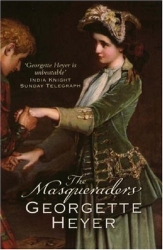
Review: The Masqueraders by Georgette Heyer

This is only the second Georgette Heyer book I’ve read and it was very different to my first, The Talisman Ring, in setting, language and plot. The Masqueraders is set just after the Jacobite Rising of 1745 and follows the adventures of Prudence and her brother Robin. Along with their father (referred to by his children as ‘the old gentleman’) Robin had been involved in the failed Jacobite rebellion and is now in danger of being hanged. To prevent him being captured, the brother and sister have created new roles for themselves – Robin has disguised himself as the beautiful ‘Miss Merriot’ and Prudence has become the handsome young ‘Peter’. All very Shakespearean! Not surprisingly, this leads to a number of misunderstandings and narrow escapes.

Things get even more interesting when Prudence, still posing as Peter Merriot, begins to fall in love with Sir Anthony Fanshawe – and then ‘the old gentleman’ arrives on the scene, claiming to be the lost heir to the Barham fortune.

I found the story confusing and difficult to follow at first. I spent several chapters trying to work out exactly why Prudence and Robin had found it necessary to masquerade as people of the opposite sex and what they were hoping to achieve. It also took me a while to get used to the Georgian-style dialogue, with all the egads, alacks and other slang terms of the period.

Robin made a face at his sister.  “The creature must needs play the mother to me, madam.”
“Madam, behold my little mentor!” Prudence retorted.  “Give you my word I have my scoldings from him, and not the old gentleman.  ‘Tis a waspish tongue, egad.”

After a few chapters, however, various parts of the story started to fall into place and then I had no problem understanding what was happening. I ended up enjoying this book more than The Talisman Ring, which surprised me as a lot of people have said that The Talisman Ring is their favourite Heyer, so I wasn’t expecting this one to be as good. There were many things that made this book such a success for me. I thought the Georgian setting, with its powdered wigs, card games, sword fights and duels, was perfectly portrayed. The plot was full of twists and turns that kept my interest right to the end. And I loved the characters. The calm and cool-headed Prudence was the perfect balance for the more impetuous Robin – and both were fun and likeable. Watching Prudence’s relationship with Sir Anthony develop was one of my highlights of the book. Robin’s romance with Letty Grayson, who knew him only as a masked man known as the Black Domino, was equally well written.

Most of all, I loved the ‘old gentleman’. He was conceited, arrogant and a scheming rogue – but he was also hilarious and capable of coming up with such ingenious schemes that maybe his arrogance was justified.

“Have you limitations, my lord?” asked Sir Anthony.
My lord looked at him seriously. “I do not know,” he said, with a revealing simplicity. “I have never yet discovered them.”

Having enjoyed both of the Georgette Heyer books I’ve read so far, I think I’m starting to become a fan and will definitely look out for more of her books!

Highly Recommended

Genre: Historical Fiction/Pages: 320/Publisher: Arrow/Year: 2005 (originally published 1928)/Source: Library book