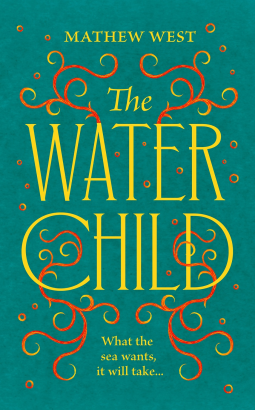
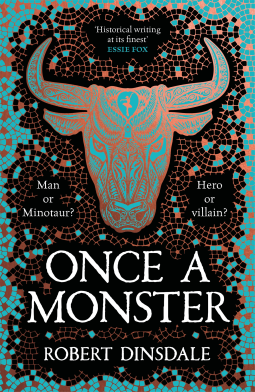
Once a Monster by Robert Dinsdale

Novels inspired by Greek mythology seem to have become very popular in recent years, but Robert Dinsdale’s new book, Once a Monster, is something slightly different. More reimagining than retelling, it’s set in Victorian London and owes as much to Charles Dickens’ Oliver Twist as it does to Greek myth.

Ten-year-old Nell Hart is a mudlark, one of a small group of children, orphaned or otherwise neglected and vulnerable, who spend their days searching through the mud of the River Thames for ‘treasures’ – pieces of coal or iron – to give to their master, Benjamin Murdstone. It’s a difficult life for a child, but Nell has a pair of satin ballet slippers hidden inside her straw mattress, a gift left to her by her seamstress mother, and she is sustained by dreams of one day becoming a ballerina.

One morning, Nell is the first down to the river to begin another day of mudlarking and so she is the first to discover a body washed up on the shore. At first she’s unmoved by the sight – it’s not the first dead body she’s seen – but on closer inspection she discovers that this is the body of no ordinary man. Unusually tall, with enormous hands and feet, there are strange growths on each side of the head, almost like the beginnings of horns. The other mudlarks have arrived and are urging Nell to steal the man’s boots, when she makes another shocking discovery – he is still alive.

His name is Minos and as he returns to consciousness, memories slowly begin to surface of a time long ago and another life as a Minotaur in a labyrinth. But is Minos really the Minotaur of Greek myth or is he just a man after all? What will Murdstone do when he sees what Nell has found for him – and will Nell ever break free of her mudlark existence and learn to dance?

This is the first book I’ve read by Robert Dinsdale so I didn’t know what to expect, but I found it beautifully written and atmospheric. As I’ve mentioned, there’s a strong Dickens influence, from the descriptions of the poorer parts of Victorian London to the portrayal of Mr Murdstone, who is obviously inspired by Fagin, the leader of the gang of pickpockets in Oliver Twist. As the villain of the novel, he’s a very human monster and it quickly becomes clear that a central theme of the story is that every one of us can have a monster inside us as well as a hero. Dinsdale uses the myth of the Minotaur to explore and develop this theory:

“The mythographers were a cowardly lot. Just storytellers, trying to make sense of a world too complex to be distilled in mere words…But when it came to chronicling these stories for the ages, the Minotaur presented them with the thorniest of problems. To look him in the eye and see him for anything other than a base beast must have been like peering into a looking glass. They would have had to acknowledge the monstrosity in all of us.”

I found the relationship between Nell and Minos slightly disturbing; it wasn’t really a romantic relationship but it felt like more than just a platonic friendship or a father/daughter relationship and I kept forgetting that while Minos was an adult (possibly many hundreds of years old), Nell was only a ten-year-old child. The interactions and conversations between the two of them felt more what I would have expected if Nell had been a teenager or young woman rather than a little girl. Apart from that, I did think both characters were interesting; I enjoyed following Nell as she took her first steps towards becoming a ballerina and although I found Minos harder to connect with, I was intrigued by his story and by his memories of his time as the Minotaur.

My main problem with this book was the length; there were too many long and repetitive sections where the pace slowed and nothing really happened to advance the plot. I read the ebook but the print version has over 500 pages and I think that could easily have been cut down to 400 without losing anything important. Still, I did find this an interesting novel overall and would consider trying one of Robert Dinsdale’s earlier books.

Thanks to Pan Macmillan for providing a copy of this book for review via NetGalley.
This is book 43/50 for the 2023 Historical Fiction Reading Challenge.
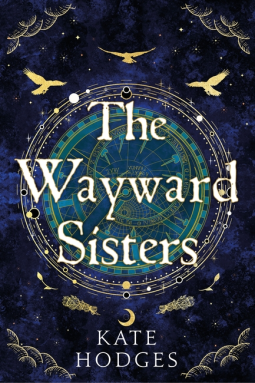
The Nonesuch by Georgette Heyer – #1962Club

When looking for books to read for this week’s 1962 Club (hosted by Karen and Simon), I hoped there would be a Georgette Heyer I hadn’t read yet – and there was! Like Agatha Christie and Georges Simenon, you can nearly always rely on Heyer to have had at least one book published in whatever the current club year is. The Nonesuch was published in 1962 and I’ve managed to read it just in time to squeeze in my review on the final day!

A nonesuch can be defined as ‘a person or thing without equal’ and Sir Waldo Hawkridge, hero of Heyer’s novel, certainly fits that description – at least in the eyes of fashionable Regency society. Being rich, handsome, athletic and an eligible bachelor, his sudden arrival in the quiet Yorkshire village of Oversett causes quite a stir. He has recently inherited the estate of Broom Hall and has come to inspect it, accompanied by his younger cousin, Lord Lindeth. Ancilla Trent, governess to the beautiful Tiffany Wield, has already formed an opinion of the Nonesuch before she even meets him, but is surprised to find that he’s not really what she expected at all. Ancilla is quickly won over by Sir Waldo’s kindness and calm, sensible nature and he in turn is drawn to the quiet, unassuming governess. However, they are both alarmed when Lindeth seems to be falling for the charms of the lovely but spoiled Tiffany!

The Nonesuch doesn’t really have a lot of plot – unlike many of Heyer’s other novels, there are no encounters with highwaymen, no duels, no masked balls, no abductions or elopements – and the focus instead is on country life and the relationships between the two or three Yorkshire families at the heart of the story. Heyer is often compared to Jane Austen, of course, but I found this book particularly reminiscent of Pride and Prejudice. I tend to prefer her livelier, funnier stories, like The Corinthian or Sprig Muslin, but I did still enjoy following Ancilla and Sir Waldo and watching their relationship develop. Heyer does throw in a misunderstanding to stir things up, but otherwise their romance is completely believable and it’s easy to see why each would be attracted to the other.

In contrast to Ancilla Trent, whom I liked very much, Tiffany Wield is an awful character – selfish, vain, and prone to throwing tantrums when things don’t go her way. It was such a relief when it became clear that she wasn’t going to be the novel’s ‘heroine’, so I didn’t need to try to like her. And I did find myself enjoying her storyline later in the book, after Sir Waldo’s other young cousin, Laurence Calver, arrives from London and Tiffany finds she has met her match!

The Nonesuch doesn’t rank as a favourite by Heyer, but I’m still pleased I managed to fit it in for 1962 Club. I did love the rural Yorkshire setting, which made a change from the more common Regency novel settings of London or Bath.

This is book 42/50 for the 2023 Historical Fiction Reading Challenge.
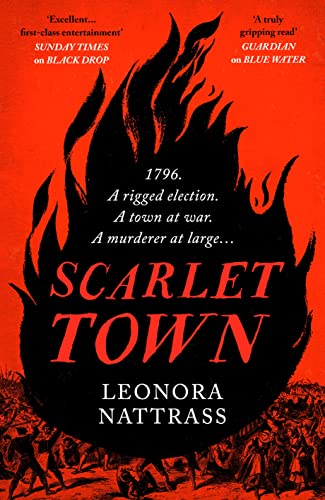
Night Train to Marrakech by Dinah Jefferies

Night Train to Marrakech is the third and final book in Dinah Jefferies’ Daughters of War trilogy, but if you haven’t read the previous two books that shouldn’t be a problem as I think this one would also work well as a standalone. While Daughters of War and The Hidden Palace followed the stories of the three Baudin sisters, Hélène, Élise and Florence, during World War II, this third novel moves forward to the 1960s to focus on Élise’s daughter, Vicky.

In July 1966, Vicky Baudin arrives in Morocco to visit her grandmother for the first time. Having lost her father during the war, Vicky has only recently discovered that his mother, Clemence, is still alive and living in the mountains outside Marrakech. Vicky has just received a diploma in fashion design from a London art college, so this seems like a good time to travel abroad before beginning a postgraduate course in Paris. As her train arrives at Marrakech station, Vicky is looking forward to getting to know Clemence – and is determined to find a way to meet her hero, the French designer Yves Saint Laurent, who also lives in Marrakech.

In her mountain home, the Kasbah du Paradis, Clemence is awaiting her long-lost granddaughter’s arrival with mixed emotions. Vicky will want to know why she played no part in her son’s life and Clemence doesn’t feel ready to explain. However, she’s forced to confront the memories she’s tried so hard to forget when a man from her past reappears, threatening to reveal her secrets. Meanwhile, Vicky and her cousin Bea also stumble into trouble when they become witnesses to a crime.

Night Train to Marrakech has a much stronger thriller element than the previous two books, which I found quite surprising. The novel is set against a backdrop of rising political tensions – a few months before the novel begins, the Moroccan revolutionary Mehdi Ben Barka is abducted in Paris (a real life incident) – and although this doesn’t form a large part of the plot, it does give a sense of the danger for two young women who unintentionally become mixed up in a situation they don’t fully understand. The descriptions of Morocco itself – the scenery, the buildings, the food, the sounds and smells – are also beautifully done.

The three sisters from the first two books (Vicky’s mother, Élise, and her two aunts, Hélène and Florence) do eventually make an appearance in this one, but I was disappointed that we don’t see very much of them. This is very much Vicky’s story and Clemence’s, and although having two completely new characters to get to know so late in the trilogy unsettled me slightly, I did warm to them later in the book. I found Clemence in particular an intriguing character as she seems so cold and secretive at first but as more and more of her story unfolds, the reason for this becomes clear and by the end of the book I had gained a lot of respect and sympathy for her.

I didn’t enjoy this book as much as Daughters of War and The Hidden Palace – as the third in a trilogy I would have preferred it to be more closely linked with the first two books rather than moving on to the next generation – but the gripping plot and evocative setting still made it worthwhile. As for whether or not Vicky achieves her dream of meeting Yves Saint Laurent, you’ll have to read the book to find out!

Thanks to HarperCollins for providing a copy of this book for review via NetGalley.

This is book 40/50 for the 2023 Historical Fiction Reading Challenge.
Henry VIII: The Heart and the Crown by Alison Weir

Henry VIII: The Heart and the Crown is the second book in Alison Weir’s new Tudor Rose trilogy: three novels exploring the lives of Elizabeth of York, Henry VIII and Mary I, three generations of the Tudor family. It also works as a companion to her earlier Six Tudor Queens series, which told the stories of Henry’s six wives.

This novel is quite unusual because it’s the first I’ve read by Weir to be written from a male perspective. So many of today’s historical fiction authors are choosing to focus on historical women, particularly those who have been forgotten or neglected, I feel that famous male figures like Henry VIII are currently less ‘fashionable’ subjects. As there’s also been so much written about him in the past, I wondered whether this book would have anything new to offer.

The novel takes us through Henry’s life in chronological order, beginning with his childhood and his unexpected change in status after the death of his older brother and then moving on to look at his six marriages, the religious changes that took place during his reign and all the political intrigue of the Tudor court. His relationships with advisers such as Cardinal Wolsey, Thomas More and Thomas Cromwell – and his court jester, Will Somers – are covered, as well as his rivalry with King Francis I of France and finally his declining health and his death in 1547.

I remember mentioning in some of my Six Tudor Queens reviews that Weir’s depiction of Henry was surprisingly positive throughout that series. All six of his wives are shown to have some genuine love and affection for him and his cruel actions are usually excused as being the fault of somebody else. She portrays him in a similar way in this book, showing how easily he is manipulated by people around him and trying to make him a more sympathetic character than you would usually expect, while not ignoring his obvious flaws – his jealousy, insecurity and hot temper. Weir does a particularly good job of showing how important it was to Henry to have a legitimate heir to carry on the Tudor dynasty founded by his father and the panic that he felt every time he suffered an illness or accident, knowing that if he died he would be leaving the future of his kingdom at risk.

Another unusual thing about this book is that I somehow found it both too long and too short at the same time! I read it on my Kindle, but the paper version has over 600 pages, so it’s a big book and not one that can be read very quickly. On the other hand, the six novels in the Six Tudor Queens series were all nearly as long and this single book on Henry has to cover a lot of the same information, so I felt that it didn’t really have the same level of depth, particularly where Henry’s later wives were concerned. About half of the book is devoted to Henry’s marriage to Katherine of Aragon and the ‘Great Matter’ that arises when he attempts to have the marriage annulled so he can marry Anne Boleyn. This means his relationships with his other four wives are squeezed into the remainder of the book, along with major events like the sinking of the Mary Rose, which is covered in just a few paragraphs.

Overall, I found this an interesting read, if a bit dry at times, but I don’t really feel that I learned anything new from it – and, as I’ve said, a lot of the material is repeated from the earlier six novels. If you don’t have much knowledge of Henry VIII and the Tudors, though, I think this would be a good alternative to non-fiction to start you on your journey and introduce you to this period of history. Be aware that the US title of this book is The King’s Pleasure: A Novel of Henry VIII – I don’t want anyone to buy the same book twice!

Thanks to Headline Review for providing a copy of this book for review via NetGalley.

This is book 39/50 for the 2023 Historical Fiction Reading Challenge.

The Ionian Mission by Patrick O’Brian

I’m continuing my very slow journey through Patrick O’Brian’s Aubrey-Maturin series and have now reached book eight, The Ionian Mission. As usual, I seem to have let a gap of about three years go by since reading the previous book, completely unintentionally! Fortunately, I always find it easy enough to get back into the story even after a long break – O’Brian often recaps some of the most important plot points in the first chapter and if not I can refer to the very detailed summaries of each book on Wikipedia to help refresh my memory.

The series is set during the Napoleonic Wars and follows the adventures of Captain Jack Aubrey of the Royal Navy and his close friend, the ship’s surgeon and spy Dr Stephen Maturin. If you haven’t yet read the first seven novels, be aware that the rest of this post could contain spoilers you would prefer to avoid!

The Ionian Mission picks up the story from The Surgeon’s Mate, which ended with Stephen marrying Diana Villiers at sea. They are now at home in London, but although they seem happy with their relationship, it’s certainly not a conventional marriage and the two are already living separately. Anyway, they don’t have long to experience married life before Stephen is off again, accompanying Jack on a mission in the Mediterranean, blockading the French fleet at the port of Toulon. It’s a boring, tedious job and Jack is unimpressed with the ship he has been given, HMS Worcester.

Because of the nature of the blockade duty, there’s a sense that, for a large portion of the book, we and the crew of the Worcester are just passing time, waiting for something to happen. The lack of any real naval action gives O’Brian a chance to explore the various ways the members of the crew attempt to amuse themselves while at sea, such as rehearsing an oratorio, holding a poetry contest and trying to stage a performance of Hamlet. However, none of this made for particularly gripping reading and I was pleased when the tedium was relieved for a while by Stephen going ashore to carry out his spying duties.

Later in the novel, Jack is transferred to command of his old ship, his beloved HMS Surprise, and is sent on a new mission to the Ionian Islands where he must decide which of three Turkish rulers would prove the strongest ally for Britain in that region of the Mediterranean. I found this part of the book, where political intrigue comes to the forefront, much more interesting and I enjoyed the descriptions of Kutali, the place Britain hopes to use as a naval base. Unfortunately, this all came too late in the book to change my overall impression of it as one of the weaker entries in the series so far. I was also sorry that we saw so little of Diana, after she had played such a big part in the previous few books, and nothing of Jack’s wife and children either.

Although this one hasn’t become a favourite, I’m still looking forward to moving on to book nine, Treason’s Harbour!

This is book 38/50 for the 2023 Historical Fiction Reading Challenge.

A Lady’s Guide to Scandal by Sophie Irwin

I loved Sophie Irwin’s first novel, A Lady’s Guide to Fortune-Hunting, which I read last year and was looking forward to reading her new one. Despite the similar title, A Lady’s Guide to Scandal is not really a sequel as it features completely different characters, but both books are set in Regency England and I think if you enjoy one of them you’ll probably enjoy the other.

Eliza, Countess of Somerset, has just been widowed at the age of twenty-seven and has inherited her late husband’s fortune – on the condition that she avoids becoming the subject of any scandal. Eliza didn’t love her husband – the man she had really wanted to marry was his nephew, Oliver Courtenay, whom her parents dismissed as unsuitable ten years earlier – but she obediently dresses in black and prepares to observe the traditional period of mourning, living quietly in Bath with her cousin, Margaret. Of course, now that’s she financially independent for the first time in her life, the temptation to go out and enjoy herself is very strong…and grows even stronger with the arrival of the roguish poet Lord Melville and his equally unconventional sister.

As soon as the charismatic Melville appeared on the scene (a character who must surely be inspired by Lord Byron) I thought I knew how the rest of the novel would play out. However, it’s not long before Oliver Courtenay, who has now inherited his uncle’s title of Lord Somerset, also turns up in Bath. It’s clear that Eliza still has feelings for Oliver – maybe even still has hopes of the marriage that was denied them all those years earlier – so the story is not as predictable as it seemed to be at first. I knew which man I wanted Eliza to choose but there are enough twists and turns in the plot that I couldn’t be completely sure she would make the right choice.

Although I found Kitty Talbot in Fortune-Hunting more fun to read about, I did enjoy watching Eliza’s character develop throughout this book. When we first meet her at the reading of her husband’s will, she has spent her whole adult life trying to be a good wife and daughter and conforming to society’s expectations, but through her friendships with Melville and his sister Caroline, she begins to find the courage to make her own decisions and live her life the way she wants to live it. At the same time, her actions are still quite believable within the context of the Regency setting and she doesn’t feel too anachronistically modern. As well as the lively Melvilles, there are lots of strong and memorable secondary characters including Somerset’s awful relatives, who have their eye on Eliza’s fortune, and her cousin Margaret, who becomes involved in a secret romance of her own.

Like the first book, this is very reminiscent of Georgette Heyer’s novels and also has some similarities with the plot of Austen’s Persuasion. However, Irwin does have her own style and is not just imitating other authors. I’ll be looking out for her next book, whether it’s another Lady’s Guide or something else!

Thanks to HarperCollins for providing a copy of this book for review via NetGalley.

This is book 37/50 for the 2023 Historical Fiction Reading Challenge.

A Song for Summer by Eva Ibbotson

Before summer draws to an end (not that it’s been much of a summer here anyway – I started writing this during a thunderstorm), I decided to read the appropriately titled A Song for Summer, Eva Ibbotson’s last adult novel, first published in 1997. It has more recently been reissued and remarketed for a YA audience but, like Ibbotson’s The Secret Countess and The Morning Gift, I think it’s a book that could be equally enjoyed by both adults and young adults.

Ellen Carr is the daughter of a suffragette and a solicitor who was killed during World War I. Raised by her mother and two aunts, also former suffragettes, Ellen is expected to go to university and then pursue a suitably impressive career – a politician, perhaps, or the first female President of the Royal Academy. However, it quickly becomes obvious that Ellen’s talents and ambitions lie in another direction. What she really wants to do is cook and clean, so she heads for Austria to take up a position as housekeeper at the experimental Schloss Hallendorf School.

As Ellen tries to settle into her new job and home in the beautiful Austrian countryside, she discovers that the school is not the idyllic place she had hoped it would be. There are lots of eccentric misfits among the staff, as well as several troubled children with difficult family lives whose parents have either sent them to boarding school because they don’t have time for them or because they’re not able to care for them. With her warm, maternal nature, Ellen sets out to solve everyone’s problems and bring some happiness to Schloss Hallendorf.

Although this book was published in 1997, Ellen is not really what you could describe as a ‘modern’ heroine. She rejects a university education and the chance to be a pioneer for women’s rights like her mother and aunts because she prefers to bake and sew and clean. There’s nothing wrong with that, of course, as long as it’s a woman’s own choice rather than something she feels is her duty, but not many of today’s historical fiction authors would choose to write about a woman like Ellen and this book does at times feel more like one written in the 1930s, when it is set, than in the 1990s.

There’s a love interest for Ellen, in the form of the Czech gardener and fencing teacher, Marek Tarnowsky. As we discover early in the novel, there’s a lot more to Marek than meets the eye; not only is he a talented composer and conductor, he is also working undercover to help Jews flee the Nazi regime. The story of Ellen’s domestic life at Hallendorf is interspersed with accounts of some of Marek’s missions, including a daring attempt to rescue his best friend, a Jewish violinist, and eventually Ellen also becomes involved in helping him. However, although I’m sure we are all supposed to love Marek as much as Ellen does, I never really warmed to him and this took away some of the emotional impact of the story.

Although I liked this book, mainly for its portrayal of Austria on the brink of war, I found it the weakest of the four Ibbotson novels I’ve read so far (my favourite is probably Madensky Square). I’ll continue to read her books and hope that I’ll enjoy the next one I read more than this one.

This is book 15/20 of my 20 Books of Summer 2023

This is book 36/50 for the 2023 Historical Fiction Reading Challenge.