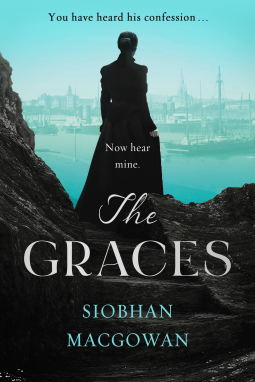
The Graces by Siobhan MacGowan

I found Siobhan MacGowan’s first novel, The Trial of Lotta Rae, a very powerful, emotional read and I was hoping for something similar from her new book, The Graces. I’m pleased to say that I thought this one was even better.

The novel opens on an August evening in 1918, as a group of pilgrims make their way to the bell tower of Mount St Kilian Abbey in Dublin. As Brother Thomas and Father Sheridan watch the candlelit procession weaving through the trees below the abbey, they remember the woman to whom the pilgrims are paying homage – Rosaleen Moore, known as The Rose, who died just three years earlier. On her deathbed, Rosaleen revealed a terrible secret to Father Sheridan, something which has left him so disturbed he decides to discuss it with Brother Thomas tonight.

In a series of long flashbacks, Rosaleen’s story unfolds, beginning with her childhood in rural County Clare, where she first discovers that, like her grandmother, she has been ‘touched by the Graces’ and is blessed – or cursed – with the sight. When her gift gets her into trouble in the village, she is sent away to live with an aunt in Dublin. Here she finds herself befriended by a group of spiritualists and healers who encourage her to use her special talents to help others. However, Rosaleen will learn that meddling in things she doesn’t fully understand is not a good idea and could have disastrous results.

The Graces is a fascinating, moving story, exploring the clashes between superstition and science and the consequences of thinking we know best. It reminded me of Hannah Kent’s The Good People and Emma Donoghue’s The Wonder, which have similar themes and are also set in Ireland, but although it’s bleak at times, the book is also very gripping and leaves you with a lot to think about after reaching the final page. Rosaleen herself is not always an easy character to like – her arrogance leads her to make poor decisions and I was disappointed in the role she plays in a love triangle with two different men, Lorcan and Rian – but I could still have sympathy with her situation because the whole thing is so desperately sad.

Away from the central plot, the political developments in early 20th century Ireland also form an important part of the story. Rosaleen is in Dublin during the time of the Easter Rising, the formation of the Cumann na mBan (an Irish republican women’s paramilitary group) and the move towards independence. Through her relationship with Lorcan, who is involved in all of these things, Rosaleen is exposed to new ideas and new ways of thinking, but she doesn’t fully embrace them herself and feels caught in the middle between two extreme views.

Having enjoyed both of Siobhan MacGowan’s novels (although I always feel that ‘enjoyed’ isn’t quite the right word to use with this sort of book), I’m already hoping for a third!

Thanks to Welbeck Fiction for providing a copy of this book for review via NetGalley.

This is book 5/20 of my 20 Books of Summer 2023
This is book 27/50 for the 2023 Historical Fiction Reading Challenge.
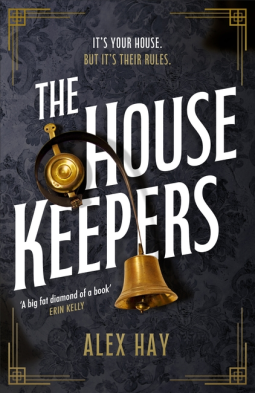
The Housekeepers by Alex Hay

It’s June 1905 and plans are underway for a ball at the grandest house on London’s Park Lane. Miss de Vries, who has recently inherited the house from her millionaire father, has decided to throw the party of the season to launch herself into society and find a suitable husband. However, someone else also sees the night of the ball as a great opportunity – an opportunity for revenge. She is Mrs King, the former housekeeper, who was dismissed from her job just a few weeks earlier and is now planning a daring heist. On the night of the Park Lane ball, she and a group of other carefully recruited servants will strip the house of its treasures – its artworks, books, furniture, silverware, even the carpets – and Miss de Vries and her guests won’t notice a thing until it’s too late. But will this plan work or will the housekeepers be caught in the act?

The Housekeepers is Alex Hay’s debut novel and I found it an entertaining read. It was fascinating to see how carefully Mrs King and her accomplices plan the heist – preparing inventories of each room, taking measurements, identifying escape routes and making sure nothing is left to chance! Despite their detailed planning, there are still some factors outside their control and a lot of things that could go wrong, so there’s plenty of suspense as we wait to see whether or not they will succeed. As the novel progresses and we learn more about what has been going on behind the doors of the Park Lane house, I found I didn’t have much sympathy for Miss de Vries and was definitely rooting for the servants!

The heist is Mrs King’s idea, but I thought some of the other women she enlists were more interesting characters. These include Mrs Bone, who runs a criminal network but seems to have a moral code of her own, the actress Hephzibah and the two trapeze artist sisters referred to as Jane-one and Jane-two. There’s also Winnie, who held the position of housekeeper before Mrs King, and Alice the sewing maid who is befriended by Miss de Vries and faces a battle with her conscience. I felt that too many characters were introduced too quickly at the beginning of the book, which made things confusing for a while, but I eventually managed to keep them all straight in my mind.

The novel is also an interesting exploration of the class system and the injustice of some people being born into a life of privilege while others are not. In his author’s note, Alex Hay describes the satisfaction of imagining the servants trying to claim some of that privilege for themselves! However, Miss de Vries herself is looked down upon by the people she most wants to impress because she had a father who made his fortune through diamond mining rather than inheriting wealth passed down through the generations.

I thought The Housekeepers was fun to read and with its period setting, portrayal of life above and below stairs, and vividly described heist sequences, I could easily imagine a BBC adaptation. As a first novel it’s quite impressive and I’ll certainly be looking out for more from Alex Hay!

Thanks to Headline Review for providing a copy of this book for review via NetGalley.

This is book 26/50 read for the 2023 Historical Fiction Reading Challenge.
The Other Side of Mrs Wood by Lucy Barker

Mrs Wood is the most successful medium in Victorian London. Together with her assistant, Miss Newman, she hosts spectacular séances that have made her the talk of the town and brought the rich and famous to her door requesting private consultations. Of course, Mrs Wood can’t really communicate with spirits, but she doesn’t feel too guilty about what she’s doing – after all, a widow has to make a living somehow and this is the work she’s been raised to do. Recently, however, things have started going wrong. There are reports from America of mediums promising to materialise full spirits and although Mrs Wood disapproves of such things, she worries that her own more traditional shows are losing their spark. When she hears the unmistakable sound of a yawn during one of her séances, she knows she has to take action.

The answer to Mrs Wood’s problems arrives in the form of sixteen-year-old Emmie Finch, who wants nothing more than to become a medium. Impressed by the girl’s talent and enthusiasm, Mrs Wood agrees to take her on as an apprentice. Miss Finch is an instant hit with Mrs Wood’s friends and clients, but is she really the sweet, innocent young woman she appears to be or has Mrs Wood made a big mistake?

The Other Side of Mrs Wood is Lucy Barker’s debut novel and a very enjoyable one! It took me a few chapters to get into the story as the beginning was quite slow, but by the middle of the book I had been completely drawn in. At first I wasn’t sure whether I liked Mrs Wood, but I quickly warmed to her. It was nice to have an older, more mature heroine, who is starting to worry about greying hair and aching bones, has already been married and divorced before the story begins and is devoting herself to her career rather than looking for romance. The beautiful young Emmie Finch, on the other hand, is portrayed as the novel’s villain, but whether she really is trying to cause trouble or whether it’s all in Mrs Wood’s mind is something you’ll have to read the book to find out!

Apart from a subplot featuring Mrs Wood’s assistant Miss Newman, who is involved in the early women’s rights movement, this is not really a book that tackles a lot of deep issues and I enjoyed it primarily for its entertainment value. However, that doesn’t mean it’s a silly, frothy book in any way – it’s well written, evocative of the Victorian era, and I learned a huge amount about the 19th century fascination with spiritualism. It was interesting to read about the techniques used by mediums to produce dramatic effects, the etiquette of hosting a meeting of the Circle, and the preparations that go into holding a Grand Séance. What I found particularly intriguing was that although Mrs Wood, like her rival mediums, lives in fear of being caught out and exposed, she doesn’t actually view herself as a fraud or a con artist. She believes she is using her skills to bring comfort to other people and although she has no qualms over using trickery to ‘apport’ (transport using spiritual means) small objects and even herself, she feels that materialising full spirits is a step too far!

The Other Side of Mrs Wood was fun to read (except when I became infuriated by the actions of certain characters!) but I can’t agree with the publisher’s description of the book as an ‘irresistible historical comedy’. It was amusing in places but not particularly funny and definitely not what I would call a comedy. Misleading description aside, it’s an impressive first novel with a great twist at the end and I’m already looking forward to Lucy Barker’s next book.

Thanks to Fourth Estate for providing a copy of this book for review via NetGalley.

This is book 25/50 read for the 2023 Historical Fiction Reading Challenge.
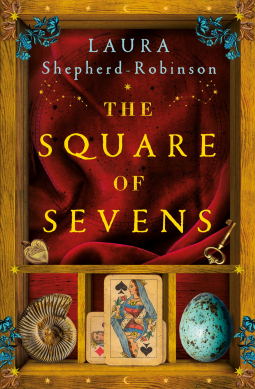
The Square of Sevens by Laura Shepherd-Robinson

Laura Shepherd-Robinson’s books are getting better and better! This one will be on my books of the year list in December, without a doubt.

A standalone novel set in the first half of the 18th century, The Square of Sevens is the story of Red, the daughter of a Cornish fortune teller or ‘cunning-man’. Red can’t remember her mother and has spent the first seven years of her life moving from village to village with her father, telling fortunes using an ancient method of cartomancy known as the Square of Sevens. They need to keep on the move, her father says, to avoid being caught by enemies who wish them harm.

Life changes abruptly for Red when her father dies of a sudden illness and she becomes the ward of a respectable gentleman, Mr Antrobus. Going to live with him in his elegant home in Bath, Red finds herself thrust into society for the first time. Raised by Mr Antrobus and his kindly housekeeper, she settles into her new life while entertaining the people of Bath by reading their cards for them. It’s through her gift for card-reading that Red crosses paths with the wealthy De Lacy family, whom she believes hold the key to the secrets of her own past. And so a sequence of events are set in motion that take Red from Bath to London’s Bartholomew Fair and a grand house in Devon in search of answers.

It’s not really possible for me to say much more about the story without spoiling it, but if I tell you it includes family secrets, disputed inheritances, stolen documents, and lots of surprising twists and turns you’ll get the idea! It’s very entertaining, with the feel of a Charles Dickens novel at times, and I was often reminded of Charles Palliser’s The Quincunx (another great Dickensian novel with an inheritance at the heart of the plot).

I found Red a very engaging narrator; I initially had a lot of sympathy for her, as she struggles to uncover the secrets of her family background and find her place in the world, while others around her try to prevent her from learning the truth at all costs. However, I soon discovered that Red can be just as ruthless herself and is not above doing some plotting and scheming of her own in order to get what she wants. As she tells us at one point in the novel, If you’d wanted a saint, then you should have read a different book. There are plenty of other interesting and memorable characters to get to know – I was particularly intrigued by Lazarus Darke – and what makes the book so fascinating to read is that we can never be quite sure who can be trusted and who can’t.

The ‘Square of Sevens’ method of card reading was described in an 1897 book by Edward Irenaeus Stevenson and Shepherd-Robinson incorporates it throughout the novel. Red tells the fortunes of many of the characters she meets and the fortune-telling theme is carried further with each chapter heading including a picture of a playing card and an interpretation of that card’s meaning. Reading the author’s note at the end of the book, a lot of thought went into choosing the correct card for each chapter and I feel a bit guilty that I didn’t always pick up on the significance of that choice.

If you’ve read and enjoyed Laura Shepherd-Robinson’s two previous novels, the Georgian mysteries Blood and Sugar and Daughters of Night, I’m sure you’ll enjoy this book too – I think it’s even better. If you’re yet to try any of her books then this would be a great place to start!

Thanks to Mantle for providing a copy of this book for review via NetGalley.

This is book 24/50 read for the 2023 Historical Fiction Reading Challenge.
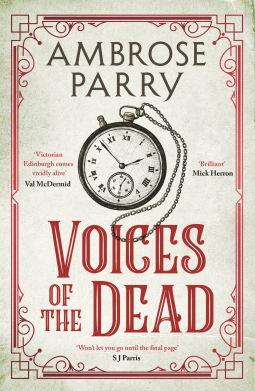
Voices of the Dead by Ambrose Parry

This is the fourth book in Ambrose Parry’s series of crime novels set in the medical world of 19th century Edinburgh – and it’s my favourite so far. Ambrose Parry is a pseudonym of Dr Marisa Haetzman, a consultant anaesthetist, and her husband, the crime author Chris Brookmyre, and they each bring their own set of skills and knowledge to the writing of these books. The series follows Dr Will Raven, assistant to the great Scottish obstetrician James Simpson (a real historical figure), and Sarah Fisher, who dreams of one day becoming a doctor herself, so each book includes a wealth of medical detail as well as a murder mystery to be solved.

In Voices of the Dead, set in 1854, Will is now married with a child and another on the way, but he doesn’t have much time to enjoy being a husband and father – not only is he struggling to move out from under the wing of Dr Simpson and establish his own reputation, he has also become mixed up in yet another murder case. Parts of a dismembered body have been turning up in random places around Edinburgh and Will’s friend, Dr Henry Littlejohn, has asked for his help in identifying the victim.

Meanwhile, Sarah Fisher’s plans to study medicine and follow in the footsteps of Dr Elizabeth Blackwell have had to be put on hold. Disappointed and frustrated, she turns instead to the emerging science of mesmerism, which is beginning to grow in popularity. An American mesmerist has just arrived in Edinburgh and Sarah is keen to learn more about the possible uses of mesmerism in healing patients. Will Raven, however, has a low opinion of such things and, not for the first time, he and Sarah find themselves in conflict. Eventually, however, Sarah is also drawn into the murder investigation and she and Will must work together again to find the culprit.

If you’re new to this series you may be wondering whether you could start here without having read the previous three books. Well, this one does work as a standalone mystery, but I would recommend reading all four in order if you can, starting with The Way of All Flesh. Will and Sarah have a complex relationship – made even more complex by the addition of Will’s wife, Eugenie – and it would be best to get to know them both from the beginning. There are also lots of recurring characters who develop throughout the series; in this book, I particularly enjoyed being reacquainted with Gregor the giant. Like the real life Irishman Charles Byrne (whom I read about recently in Hilary Mantel’s The Giant, O’Brien), Gregor’s size has made him the target of unscrupulous men who hope to acquire his body for exhibition after his death.

As well as the usual details of Will’s work as an obstetrician, I found it fascinating to read about the public displays of mesmerism, hypnotism and spiritualism being staged across Edinburgh and the differing views people held towards them. Were the mesmerists and spiritualists really just frauds preying on gullible victims, as Will believed, or were they acting with the best intentions, trying to provide comfort to people who needed it? This storyline introduces some colourful new characters, including a magician of whom I became quite fond and am hoping we’ll meet again.

Every book in this series has been very enjoyable, but I think this one is the best yet. I’m looking forward to the next one and hope we won’t have to wait too long for it!

Thanks to Canongate for providing a copy of this book for review via NetGalley.

This is book 23/50 read for the 2023 Historical Fiction Reading Challenge.
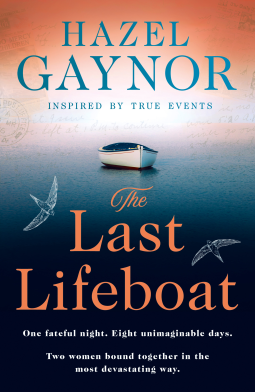
The Last Lifeboat by Hazel Gaynor

We hear a lot about children being evacuated from the cities to the British countryside during World War II, but not so much about those who were sent away to safety overseas. Hazel Gaynor’s new novel, The Last Lifeboat, explores this often overlooked aspect of the war, taking as its inspiration the real life tragedy of the SS City of Benares, a British evacuee ship which was torpedoed by a German U-boat in September 1940 with almost 100 children on board.

The novel follows the stories of two women: Alice King and Lily Nicholls. Lily, who lives in London, is a widow and the mother of two young children, Georgie and Arthur. All she wants is to keep her children safe, but as bombs begin to rain down on the city, Lily starts to fear for their lives and when she hears about a new government scheme to evacuate children to other countries, she has a difficult decision to make. Meanwhile, schoolteacher Alice King is looking for a way to ‘do her bit’ for the war effort and has signed up with CORB (the Children’s Overseas Reception Board) as a volunteer escort who will accompany a group of children on a ship sailing for Canada.

These two separate storylines connect when Lily entrusts Arthur and Georgie to Alice’s care as parents are not allowed to accompany their children overseas. The ship on which they set sail – the SS Carlisle – is part of a large convoy so everyone assumes they will be protected from the German U-boats, but once out in the Atlantic things go badly wrong. The ship is hit by a torpedo and begins to sink, leaving the passengers and crew to pile into the lifeboats. Some are rescued, others are thrown into the waves, but one lifeboat drifts out of range with Alice King on board. The days that follow will be a traumatic period for Alice, as she and the others in the boat find themselves lost at sea with little hope of rescue and limited supplies of food and water, but it will be equally traumatic for Lily as news of the disaster reaches London and she discovers that one of her children is missing.

I think this is the best of the three Hazel Gaynor books I’ve read so far (the others are The Lighthouse Keeper’s Daughter, about Grace Darling, and The Cottingley Secret, the story of the Cottingley fairies). I liked both Lily and Alice and found each of their stories very moving. Alice’s is more dramatic as the days go by and she and the other lifeboat passengers struggle to survive while adrift in the Atlantic, but I could also feel Lily’s heartbreak and anger as she waits for news of her lost child and makes the shocking discovery that the evacuee ships were not being escorted to Canada as promised but left to fend for themselves after passing a certain point. Knowing that the book is based on a true story and that real people did have to go through the things that Alice and Lily went through just makes it even more powerful.

Thanks to HarperCollins for providing a copy of this book for review via NetGalley.

This is book 22/50 read for the 2023 Historical Fiction Reading Challenge.

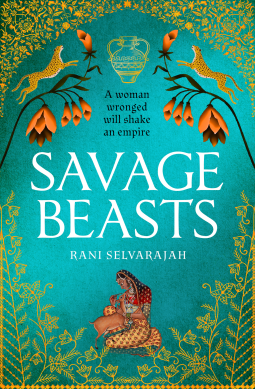
Savage Beasts by Rani Selvarajah

The Greek myth of Medea is transposed to 18th century India in Rani Selvarajah’s debut novel, Savage Beasts. Although I haven’t read very much about Medea – except where she has appeared as a secondary character in other novels I’ve read, such as Madeline Miller’s Circe – it was actually the Indian setting that attracted me to this book rather than the Greek myth aspect and I expect it will have equal appeal to readers of historical fiction and those who enjoy mythology retellings.

The novel opens in 1757 in Calcutta (now known as Kolkata). The East India Company, under the leadership of Sir Peter Chilcott, are advancing on Bengal and war seems inevitable, but James Chilcott, Sir Peter’s nephew, has arrived in Calcutta ready to make a bargain. He is prepared to betray the company and reveal their plans, he says, but he wants something from the Nawab of Bengal in return. Although the Nawab isn’t convinced, his daughter, Meena, is captivated by the handsome young Englishman and agrees to help him. When things go wrong, James and Meena are forced to flee Bengal, leaving a scene of death and devastation in their wake.

So far, I could see the parallels with mythology – Meena in the role of Medea, daughter of King Aeëtes of Colchis, and James as Jason, who comes to Colchis on the Argo in search of the Golden Fleece. When Meena and James leave Bengal, they encounter Meena’s aunt, Kiran, whom I quickly identified with Circe. The later parts of the myth are less familiar to me, but as far as I could tell the novel continued to follow the basic outline, with one or two nice twists towards the end.

What let this novel down for me was the writing. I hate to be too critical of an author’s first novel, but I did find some of the word choices odd or inappropriate. Characters ‘smirk’ all the time, on almost every page – that’s when they’re not ‘sneering’ or ‘scoffing’. I lost count of how many times these words were repeated. I also struggled to believe in Meena as a convincing woman of her time. It seemed unlikely that the daughter of a Nawab (a Mughal ruler of similar status to a prince) would have the freedom to hang around the docks of Bengal on her own, as Meena does in the opening chapter, and her subsequent actions feel more and more anachronistic.

I did like the basic concept of moving the Medea story to 18th century India and the idea of James/Jason as part of a colonial power coming to take what they can from Bengal/Colchis is an intriguing one. For this to work, though, there really needed to be a stronger sense of time and place, but sadly, I couldn’t think of the characters as anything other than modern people in historical costume. Despite my negativity, I stuck with the book to the end and did occasionally become drawn into the story; it’s been receiving a mixture of reviews, including plenty of four and five star ones, so evidently other readers have enjoyed it more than I did. Give it a try if it appeals – and please let me know if there are any other retellings of the Medea myth you can recommend!

Thanks to HarperCollins UK, One More Chapter for providing a copy of this book for review via NetGalley.

This is book 21/50 read for the 2023 Historical Fiction Reading Challenge.