Weyward by Emilia Hart

Witchcraft is a subject I always find interesting to read about, so I was curious to see how Emilia Hart would approach it in Weyward, her debut novel published in the UK earlier this month. It’s a book set in three different time periods, something which doesn’t always work for me, but in this case the three storylines are so closely linked I found the structure very effective.

In Shakespeare’s First Folio, the three witches in Macbeth are referred to as the ‘weyward sisters’, a term which evolved into ‘weird sisters’ in later versions – and just like Macbeth, Emilia Hart’s novel features three ‘weyward’ women.

In 2019, we meet Kate, a young woman trapped in an abusive relationship. Finally making the decision to leave, she flees London for Crows Beck, a village in Cumbria where she has inherited a cottage from her great-aunt, Violet. Settling into the house, known as Weyward Cottage, Kate begins to uncover some family secrets that help her to understand the great-aunt she barely knew. A second thread of the novel is set in 1942 and introduces us to Violet as a girl of sixteen living at Orton Hall with her father. She longs to know more about her mother, who died when she was a small child, but her father refuses to talk about her, except to say that Violet resembles her – and not in a good way. As Violet’s story unfolds, we find out how she came to leave Orton Hall and build a new life at Weyward Cottage.

The third of the weyward women in the novel is Altha Weyward who lives in Crows Beck in the early 17th century. Altha, who has a knowledge of healing and herbs passed down to her by her mother, is on trial for witchcraft, having been accused of killing a local man. As Altha waits to hear whether she will be found guilty, we learn more about her life in the village and the truth behind the man’s death.

The three women are linked not just by a family connection, but also through a shared love of nature. In fact, it’s more than just a love – it’s an affinity so strong that they are able to draw power from the natural environment and find comfort in surrounding themselves with plants and animals even at the most difficult of times. I could have done without so many detailed descriptions of insects and spiders, but on the other hand the affection these women have for even the least pleasant of creatures is what makes them unusual and different. None of them conform to society’s expectations and for Violet and Altha at least, this can lead to suspicion and distrust.

The male characters don’t come out of this book very well; from Kate’s violent, manipulative ex-partner and Violet’s cold, strict father to the men who hold Altha’s fate in their hands, they are very much the villains of the book. However, I did like Violet’s brother Graham and the little we learn of Kate’s father, so not all of the men are shown in a bad light. As for the three female protagonists, I liked all of them, although Violet was the one I felt the closest connection with. The three narratives are written in different styles using different combinations of first and third person and past and present tense, so I never felt confused as to whose story I was reading. Parts of Kate’s story towards the end were quite predictable, but otherwise all three storylines were gripping, staying with one character for just the right length of time before switching to the next, and with plenty of cliffhanger chapter endings to keep things moving forward.

I enjoyed Weyward, although there wasn’t as much focus on witchcraft as I expected – it’s more a book about the magic of nature and the obstacles faced by women over the centuries. It wasn’t always comfortable to read as all three of the main characters go through some very traumatic experiences, but I found it an interesting and unusual novel and will look out for more from Emilia Hart.

Thanks to HarperCollins UK/The Borough Press for providing a copy of this book for review via NetGalley.
This is book 6/50 read for the 2023 Historical Fiction Reading Challenge.
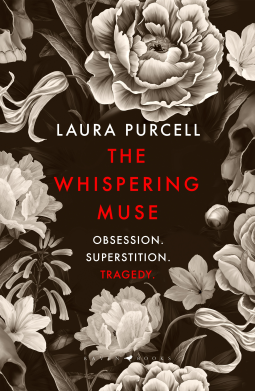
The Whispering Muse by Laura Purcell

This is the second book I’ve read by Laura Purcell; I liked, but didn’t love, the first one I read, Bone China, so was hoping for better things from this one. It certainly sounded good – a Gothic novel set in the theatres of Victorian London – and I wasn’t disappointed at all. I was gripped from start to finish!

Our narrator is Jenny Wilcox, a young woman who has been left to support herself and her younger siblings after her brother Gregory ran off to America with an actress, taking the family savings with him. Jenny is deeply grateful when Gregory’s former employer, Mrs Dyer of the Mercury Theatre, offers her a job as dresser to the new leading lady, Lilith Erikson. Before she even begins work, however, Jenny discovers that Mrs Dyer has not just offered her the position out of kindness – she believes that her husband is having an affair with Lilith and she wants Jenny to spy on them.

At first, Jenny shares Mrs Dyer’s dislike of Lilith, but gradually she becomes concerned about the behaviour of the beautiful young actress. Why is she so obsessed with a watch engraved with the face of Melpomene, Muse of Tragedy – a watch that once belonged to the actor Eugene Grieves, who died on stage while performing Dr Faustus? Could Lilith have formed some sort of pact with Melpomene, to help her achieve her dream of becoming London’s greatest tragic actress? And if so, what will Melpomene demand in return?

The Whispering Muse is divided into five acts, mirroring the five tragedies performed by the Mercury Theatre Company over the course of the novel, beginning with Macbeth. Theatrical settings are usually atmospheric and this one is no exception! I loved the insights we are given into what goes on behind the scenes and the descriptions of Lilith’s powerful stage performances are so vivid I could almost imagine I was watching them from a seat in the front row. The book is wonderfully creepy in places – and a bit gory in others, although not excessively so. What makes it so compelling is that we’re never quite sure whether Lilith really has made a pact with her muse and supernatural forces are at work within the Mercury Theatre or whether the strange events that begin to take place have a more human explanation.

As well as enjoying the fascinating plot, I also found it interesting to see how Jenny’s relationships with the other characters change over the course of the novel. Although I didn’t always agree with Jenny’s decisions, I had some sympathy for her situation – she needs to keep Mrs Dyer happy in order to stay in her job and earn money to support her younger brothers and sister, but the closer she becomes to Lilith the more she starts to feel that Mrs Dyer’s hatred of the actress is unreasonable and the more her conscience begins to bother her. The dynamics between these three characters add extra depth to the story and make it something special. I loved it and look forward to reading Laura Purcell’s other books!

Thanks to Raven Books for providing a copy of this book for review via NetGalley.

This is book 5/50 read for the 2023 Historical Fiction Reading Challenge.
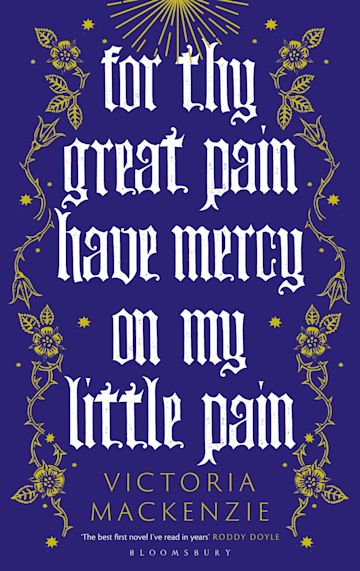
For Thy Great Pain Have Mercy on My Little Pain by Victoria MacKenzie

I had thought I was ready for the life of an anchoress. I had wanted to prolong each moment of my life, to get closer to experiencing time as God experiences it: not the instantly dissolving moment, but something larger and more encompassing. A stillness that doesn’t pass as soon as you think yourself into it.

Victoria MacKenzie’s new novella, For Thy Great Pain Have Mercy on My Little Pain, is set in Norfolk in 1413 and imagines a meeting between two real-life women: Julian of Norwich and Margery Kempe. If these names are familiar to you, you’ll know that they were both English mystics of the medieval period and were also both authors. Julian’s Revelations of Divine Love is thought to be the first English work we can be sure was written by a woman, while Margery’s The Book of Margery Kempe is considered to be the first autobiography in the English language.

The stories of the two women only converge towards the end of the book in a meeting which did take place according to Margery herself in The Book of Margery Kempe, but maybe not exactly as it is described here. Victoria MacKenzie recreates the events leading up to their encounter and the sort of conversation they may have had, but before reaching that point she explores the backgrounds of both women, with the perspective alternating between Margery and Julian as they follow very different paths through life.

Little is known of the real Julian’s early life, but MacKenzie suggests here that she may have lost her family to an outbreak of plague and that this, along with an illness during which she experienced visions or ‘shewings’ of Christ, influenced her decision to become an anchoress, secluded in a cell for twenty-three years. Margery, in contrast, doesn’t lock herself away, but remains in the secular world, a wife and mother of fourteen. Like Julian, she begins to have religious visions, but while Julian’s faith is personal and private, Margery prays, weeps and preaches in public, drawing attention to herself and leading to accusations of heresy.

This is Victoria MacKenzie’s debut novel and I admire her for writing something so unusual and original, but although I did like it, I couldn’t quite manage to love it. I found the structure and pacing very unbalanced, with the first section, telling the two separate tales in parallel, being by far the longest and the actual meeting at Julian’s cell being dealt with in just a few pages near the end. Maybe if I was a more religious person myself I would have appreciated this book more, but I could still find a lot to interest me in this story of two medieval women whose different personalities and different journeys through life shape the nature of their relationships with God and each other.

Thanks to Bloomsbury Publishing for providing a copy of this book for review via NetGalley.

This is book 4/50 read for the 2023 Historical Fiction Reading Challenge.
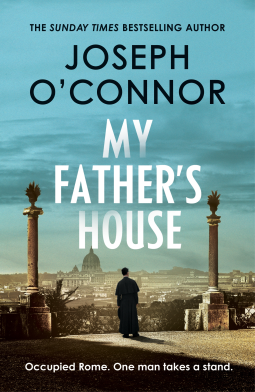
My Father’s House by Joseph O’Connor

Joseph O’Connor’s new novel My Father’s House, published in the UK today, is based on the true story of Hugh O’Flaherty, a Catholic priest who helped thousands of Jews and Allied prisoners of war to escape from Italy during World War II. This is the third book I’ve read by O’Connor (the others are Shadowplay, about the author Bram Stoker and the actors Henry Irving and Ellen Terry, and Ghost Light, which explores the relationship between the playwright John Millington Synge and the actress Molly Allgood) and I think it’s the best of the three.

The main part of the novel is set in 1943. Born and raised in Ireland, Monsignor Hugh O’Flaherty is serving in Vatican City during the war – a neutral territory within Nazi-occupied Rome. As an official Vatican visitor to Italy’s prisoner of war camps, Hugh has been trying to improve conditions for the prisoners, but his actions mark him out as an Allied sympathiser and his superiors prevent him from carrying out any more visits in case he makes the Vatican a Nazi target. However, Hugh won’t be stopped that easily and soon he has set up an Escape Line, successfully smuggling Jews and escaped prisoners out of Rome right under the eyes of the Nazis.

The biggest escape mission yet – the ‘Rendimento’ – has been arranged for Christmas Eve, 1943. In the hope that the Gestapo will be less vigilant on this particular night, Hugh and his group of courageous volunteers have put elaborate plans in place to move a large number of people out of the city under the cover of darkness. As we count down the days and hours leading up to the mission, we also get to know each member of Hugh’s team and how they came to be involved in the Escape Line.

The group use the cover of meeting for ‘choir practice’ and this is where they discuss their plans and receive their instructions – carefully coded, of course, as the Nazis have eyes and ears everywhere. One Nazi in particular is getting too close for comfort; he is Obersturmbannführer Paul Hauptmann, who already has his eye on Hugh due to the camp visits and is starting to close in on the Choir and the Rendimento. But although Hauptmann is our villain, O’Connor gives him a surprising amount of depth, describing his home life and his relationship with his wife and children. This reminder that Nazi officers were often also family men leading normal domestic lives just makes Hauptmann’s behaviour feel even more chilling and shocking.

As the clock ticks down on Christmas Eve, the suspense increases as we are kept wondering whether the mission will succeed. However, the chapters describing the build-up to the Rendimento are interspersed with other chapters in which each member of the Choir introduces themselves and their background and tells us how they met Hugh and joined his group. I wasn’t very keen on this structure as I felt that it broke the flow of the story and took away some of the tension, but it was still interesting to hear their different voices (some of which I found more convincingly written than others). They included Sir D’Arcy Osborne, the British envoy to the Holy See, and his butler John May, diplomat’s wife Delia Kiernan, and escaped soldier Sam Derry – all of whom were real people.

I had never read anything about Hugh O’Flaherty and his work until now, so I’m pleased to have had the chance to learn something new. I see he was the subject of a 1983 film, The Scarlet and the Black, starring Gregory Peck, which I’ve never come across either. Although My Father’s House is a complete novel in itself, it’s apparently the first in an Escape Line trilogy – I’ll be looking out for the next one and will be interested to see if it’s going to focus on a different member of the group this time.

Thanks to Harvill Secker for providing a copy of this book for review via NetGalley.

This is book 3/50 read for the 2023 Historical Fiction Reading Challenge.
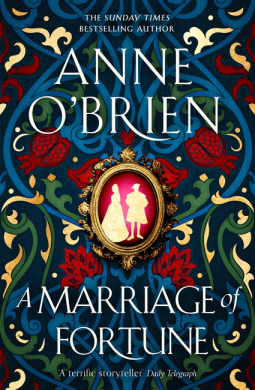
A Marriage of Fortune by Anne O’Brien

This sequel to The Royal Game continues the story of the Paston family. The Pastons were an influential Norfolk family during the 15th century and left behind a collection of private correspondence, known as the Paston Letters, which are a valuable source of information on life in England at this time. In this novel and her previous one, Anne O’Brien brings the story of the Pastons to life, using their letters to provide the outline of the plot. You could read this book as a standalone if you wanted to, but I would recommend reading both in order if you can.

A Marriage of Fortune is again narrated by several of the Paston women. First there’s Margaret Mautby Paston, now a widow with seven children. Her eldest son, Sir John, is now head of the family following the death of his father, but Margaret still takes an active part in managing the household, arranging the marriages of her younger children and continuing the ongoing feud against the Duke of Norfolk over the ownership of Caister Castle. Margaret’s priority is seeing that the Pastons continue to rise through the ranks of society, so she is furious when her eldest daughter Margery announces that she is in love with the family bailiff, Richard Calle. She refuses to allow a marriage between the two, but is unprepared for the lengths to which Margery is prepared to go.

The relationship between Margaret and Margery is very sad to read about. Margery is another of our narrators, which means we get to know exactly how she feels about her mother’s refusal to accept her love for Richard and the family estrangement that occurs as a result. Margaret believes that a daughter’s first duty should be to her parents and that Margery has no right to consider her own happiness, but there’s always a sense that she might come to regret taking this stance and we are kept wondering whether mother and daughter will be reconciled in the end.

We also hear from Margaret’s sister-in-law, Elizabeth Paston Poynings, whose husband has been killed fighting on the Yorkist side at the Second Battle of St Alban’s, leaving her a widow with a young son. Like Margaret, Elizabeth has found herself facing a struggle to hold on to her late husband’s estates, which are being claimed by the powerful Percy family. A fourth narrator is Anne Haute, cousin of Elizabeth Woodville, Edward IV’s queen. Anne is betrothed to Margaret’s son, Sir John Paston, but with the rapidly changing political situation in England – Edward IV on the throne one minute, Henry VI the next – it seems that Sir John is reluctant to either make the marriage official or release her from it. I had a lot of sympathy for poor Anne when she begins to discover that she’s wasted years of her life on a man who clearly doesn’t really love her.

I enjoyed A Marriage of Fortune; this is one of my favourite periods to read about, but I still haven’t read the original Paston Letters or Helen Castor’s non-fiction account of them, Blood and Roses, despite having had the latter on my TBR pile for several years now. This was maybe a good thing as far as this novel was concerned, as it meant that although I was familiar with the historical background – the kings and queens, the battles and rebellions – I didn’t know the personal stories of the individual Paston family members, so I never knew what was going to happen to them next. However, I do think this novel, like the first one, was slightly too long, with a lot of information packed into it. It may have been better to have focused on fewer characters; Elizabeth Poynings’ story, in particular, felt very separate from the others and could possibly have been left out.

I’m not sure whether there will be a third book on the Pastons or whether Anne O’Brien will be moving on to something else now. Either way, she always chooses interesting historical women to write about so I know it will be worth looking forward to.

Thanks to Orion for providing a copy of this book for review via NetGalley.

This is book 2/50 read for the 2023 Historical Fiction Reading Challenge.
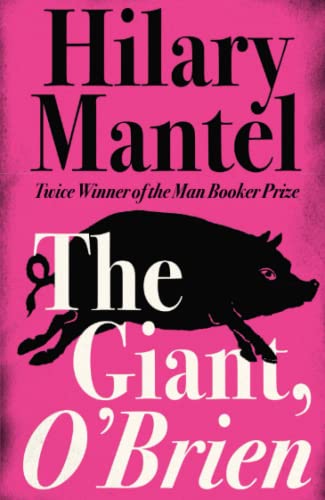
The Giant, O’Brien by Hilary Mantel

Having finished Hilary Mantel’s Thomas Cromwell trilogy last year, I knew I wanted to read more of her books. A Place of Greater Safety, her novel about the French Revolution, has always sounded appealing to me but the length is off-putting, so I decided to try a shorter one first.

The Giant, O’Brien, published in 1998, is based on the true story of the 18th century Irish giant, Charles Byrne. Also known as Charles O’Brien and claiming descent from the High Kings, but usually referred to by Mantel as simply ‘the Giant’, Byrne and his friends leave Ireland in 1782, fleeing ‘cyclical deprivation, linguistic oppression and cultural decline.’ The Giant has previously been able to make a living by entertaining his neighbours with stories and songs but, sensing that things are changing, he knows he needs to find a new way to earn money. The solution seems obvious, so after arriving in London with his entourage, the Giant appoints the unscrupulous Joe Vance as his agent and agrees to exhibit himself as a freak, to be stared at, pointed at, poked and prodded, in return for money.

The story of another man unfolds in parallel with the Giant’s. His name is John Hunter, a Scottish surgeon and anatomist – like Charles Byrne, a real historical figure. Mantel describes Hunter’s early years in Long Calderwood and how he came to be in London, first as an assistant to his brother William, another famous anatomist, and then on his own, conducting autopsies in the name of scientific research. Before the Anatomy Act of 1832, it was very difficult to obtain bodies for medical study in the UK, a problem which led to body snatching and the illegal digging up of graves. In one fascinating, if slightly gruesome scene, Hunter lectures a group of newly recruited body snatchers on the best ways to get hold of fresh corpses without being detected. Naturally, the bodies of most interest to Hunter are those that are unusual in some way – so when he hears news of the Giant currently being exhibited in London, he decides to make him an offer, despite the fact that the Giant is not yet dead.

Mantel portrays the Giant as a gentle, intelligent man with a natural gift for telling stories and a seemingly endless knowledge of myth, folklore and fairy tales. This, as much as his height, makes him stand out from his friends. While the others succumb to London’s temptations – alcohol, women and gambling – the Giant saves his money in the hope of one day rebuilding Mulroney’s tavern, now a ruin but once the place where ‘Courts of Poetry’ were held and he was taught the art of storytelling. John Hunter, in contrast, is much less likeable; if the Giant represents tradition and a way of life that is about to be lost forever, Hunter represents progress and advancement and is portrayed as clever, ambitious and lacking in empathy.

In her author’s note at the end of the book, Mantel explains which parts of the story are based on fact and which are purely fictional. There’s more factual information available on John Hunter than there is on the life of Charles Byrne, but what we do know about Byrne is that he suffered from gigantism caused by pituitary tumours, his height was 7ft 7 (2.31m) and his skeleton has been on display in the Hunterian Museum at the Royal College of Surgeons for over two centuries, despite his own wishes to be buried at sea. The museum has been closed since 2017 for renovations and the future of Charles Byrne’s remains is the subject of an ethical debate.

I found both the Giant and John Hunter interesting to read about, particularly as I previously knew nothing at all about either of them, but I thought the book seemed slightly disjointed because of the way it kept switching between the two narratives. Until they began to converge very near the end, the two storylines felt completely separate and unconnected; I suppose Mantel’s aim was to show the contrast between the main characters and the different paths they followed through life, but I felt it didn’t flow very well as a novel. I also didn’t find the eighteenth century London setting as immersive as the Tudor world she creates in the Wolf Hall books. Still, there are some fascinating ideas in this novel and the Giant O’Brien himself is a character I won’t forget in a hurry!

This is book 1/50 read for the 2023 Historical Fiction Reading Challenge.

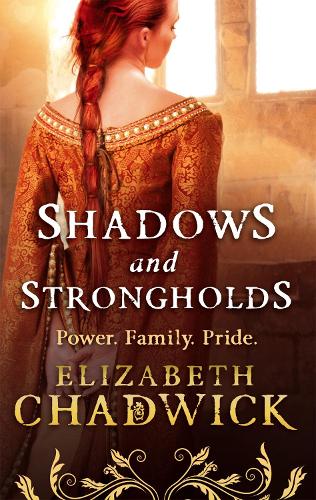
Shadows and Strongholds by Elizabeth Chadwick

I had intended to read this book for last year’s 20 Books of Summer but when it became clear I wouldn’t be able to finish it before the deadline I decided to save it to read later. With nearly 600 pages in my paperback edition it wasn’t a book that could be rushed!

Shadows and Strongholds, published in 2004, is a prequel to Lords of the White Castle, which I haven’t read yet, and tells the story of Fulke FitzWarin, known as Brunin due to his brown eyes, and Hawise de Dinan, youngest daughter of Joscelin de Dinan of Ludlow Castle. As the events of this book come first chronologically, I hoped it wouldn’t matter that I was reading the books out of order and that it might actually make things easier.

The novel opens in 1148 with ten-year-old Brunin attending a fair in Shrewsbury with his father, also Fulke FitzWarin, the lord of Whittington. That day, two things happen that will change the course of Brunin’s life. First, he is attacked by Ernalt de Lysle, a young squire who takes pleasure in bullying younger children, and this marks the beginning of a lifelong rivalry between Brunin and Ernalt. Then, Brunin discovers that his father has arranged for him to join the household of his friend Joscelin de Dinan to begin his own training as a squire.

Arriving at Ludlow Castle, the sensitive, awkward Brunin finds his new duties challenging but learns quickly and is soon accepted as part of the family, befriending de Dinan’s daughters Hawise and Sibbi and his young ward, Marion de la Bruere. As the years go by and the children grow into adults, de Dinan and FitzWarin begin to arrange a marriage between Brunin and Hawise – but this is not the time to lead a peaceful married life, as both Whittington and Ludlow are about to come under attack.

As always, Elizabeth Chadwick brings the medieval world vividly to life, from her descriptions of the duties of a squire and the running of a 12th century castle to the risks of childbirth and how to buy a horse at a fair. This novel is set during the Anarchy, the period of civil war that followed the death of Henry I, with his daughter, the Empress Matilda, and nephew, Stephen of Blois, battling for the English throne. Our protagonists and their enemies are forced to choose one side or the other – and some switch sides at least once – but their loyalties seem to count for very little after the war ends and Matilda’s son takes the throne as Henry II. While the changes in the monarchy and the wider issues affecting England as a whole play out in the background, the FitzWarins and de Dinans are understandably more concerned with the threat to their own castles – particularly as there seems to be a traitor within the de Dinan household.

The main characters are all loosely based on people who really existed, although not much is known about some of them and in her author’s note Elizabeth Chadwick explains that a major source for her novel was a rhyming romance written by a 13th century chronicler. There’s obviously a lot of focus on the relationship between Brunin and Hawise, but I have to admit I didn’t find them particularly appealing as the hero and heroine and some of the secondary characters interested me more. I loved Joscelin de Dinan, who remains a good and honourable man during this time of brutal war and shifting loyalties and to whom Fulke FitzWarin entrusts the care of his son, and I was intrigued by the story of Marion de la Bruere, whose ghost is said to haunt the ruins of Ludlow Castle to this day.

Because I wasn’t fully invested in the central romance, this hasn’t become a favourite Elizabeth Chadwick novel but I did enjoy it. I will read Lords of the White Castle soon, but I also have two more of her books on my shelf, The Love Knot and The Marsh King’s Daughter.