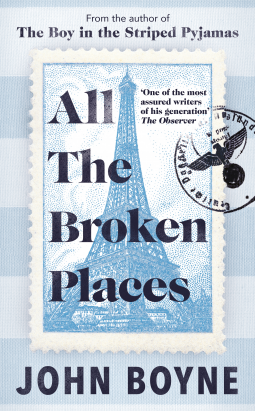
All the Broken Places by John Boyne

I love John Boyne’s books and couldn’t wait to read his new one, All the Broken Places. It’s a sequel to his 2006 children’s novel The Boy in the Striped Pyjamas, but this time it’s aimed at adults. Although I haven’t read the first book, I have seen the film and that helped me understand the background of the characters and the references to things that had happened in the past. If you’re not familiar with The Boy in the Striped Pyjamas, though, I don’t think it would matter too much as this book does work on its own.

All the Broken Places begins in the present day, 2022, and is narrated by ninety-one-year-old Gretel Fernsby. Gretel has lived in the same luxury apartment building in London since the 1960s; most of the other residents have also been there for a long time, so when a new family move into the flat below, Gretel is curious to meet her new neighbours. However, she is alarmed to discover that the family includes a nine-year-old boy, Henry, who brings back memories of her own brother at the same age – memories Gretel has spent her whole life trying to suppress.

As she gets to know Henry and his parents, Gretel quickly becomes aware that something is not right. She wants to help, but is afraid of making the situation worse. At the same time, she is forced to confront her own past when, as the young daughter of a Nazi commandant of a Polish concentration camp, she and her mother fled to France at the end of the war and tried to build new lives for themselves under new identities. Gretel has lived with the shame and guilt ever since, but now it seems she might have an opportunity to redeem herself.

As the story of Gretel’s life unfolds, we are taken on a journey from Poland to France, Australia and then England. Chapters set in the past alternate with chapters set in the present as Gretel battles with her conscience again to try to do the right thing for Henry. There are not many books with protagonists in their nineties and I admired her for the courage, resilience and wisdom she displays in old age, despite what she may have done or not done when she was younger.

I really enjoyed this book, although at times it’s an uncomfortable read and often a moving one. John Boyne has shown previously that he’s not afraid to tackle controversial subjects in his novels and I’m sure this is another one that will divide opinion. Some readers will take the view that anyone with any connection to the atrocities of the Holocaust deserves no pity; others will have sympathy for a twelve-year-old girl who, although she was at least partly aware of what was happening, lacked the strength, will and opportunity to do anything about it and has regretted it ever since. This is a theme Boyne has explored several times before, particularly in A History of Loneliness (a novel about the child abuse scandal within the Catholic church and probably my favourite of his books) – whether by turning a blind eye to the actions of others we are as much to blame as they are and whether it’s our responsibility to speak out if we know something is wrong.

This is a fascinating novel; it’s published today and I look forward to hearing what other people think of it.

Thanks to Doubleday for providing a copy of this book for review via NetGalley.

This is book 49/50 read for the Historical Fiction Reading Challenge 2022.
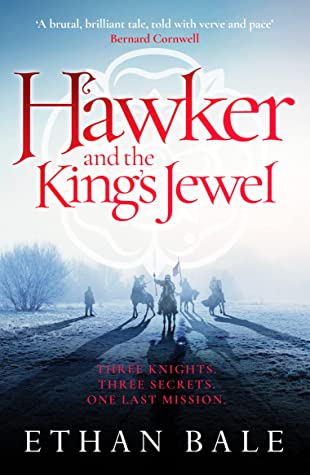
Hawker and the King’s Jewel by Ethan Bale

The Wars of the Roses is one of my favourite periods of history to read about and I’m always looking out for new books, both fiction and non-fiction, that explore the key events, colourful figures and controversial mysteries of this fascinating era.

Ethan Bale’s new novel, Hawker and the King’s Jewel, begins just before the Battle of Bosworth in August 1485 with King Richard III summoning his loyal knight, Sir John Hawker, to send him on one last mission. Richard possesses a valuable jewel, one of the legendary Tears of Byzantium, and he wants Hawker to return it to its previous owner, the Doge of Venice. He also has another request to make of Hawker – to take care of his illegitimate son, Sir Giles Ellingham, who is unaware of his true parentage. Hawker promises to carry out both tasks, but when Richard falls in battle and Henry Tudor takes the crown, the situation becomes much more dangerous. Not only are those who supported Richard now seen as traitors, but Sir Giles could become a focus for both Tudor and Yorkist conspiracies.

The action moves from Bosworth to Flanders and then on to Venice, where most of the story unfolds. Hawker is accompanied by his young squire and a small band of mercenary soldiers, so you can expect some battle scenes, as well as smaller-scale fights and skirmishes (including the mock battles known as battagliola, staged on the bridges of medieval Venice). I was concerned at first that there would be too much of this in the book for my taste, but that wasn’t the case and there were plenty of other things to hold my interest – some political intrigue, a fascinating theory to explain the disappearance of the Princes in the Tower, and even a touch of romance as we discover that Hawker has been in Venice before and left a lover behind there.

Although Sir John Hawker is the main character, the other men who make up his little band become more fully developed as the book progresses. I found one of them particularly intriguing as his motives for remaining with Hawker’s company seem to change continuously as he reassesses the political situation and tries to decide whether loyalty or betrayal will be more to his advantage. There’s also an interesting female character – a Hungarian noblewoman with her eye on the jewel Hawker is carrying – and her storyline helps to carry the novel through to its conclusion.

It seems that this is the first book in a planned series, Swords of the White Rose. I’ll be looking out for the next one.

Thanks to Canelo Adventure for providing a copy of this book for review.

This is book 48/50 read for the Historical Fiction Reading Challenge 2022.
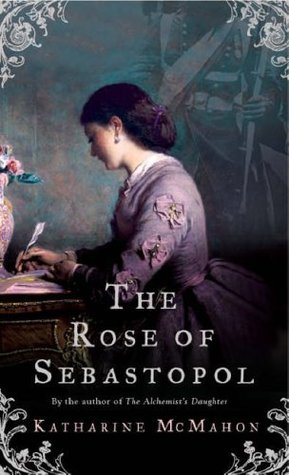
Act of Oblivion by Robert Harris

Robert Harris is one of my favourite authors, so a new book by him is always something to look forward to. This one sounded particularly interesting, dealing with a manhunt that takes place in 17th century New England, a setting Harris has never written about before.

The men being hunted are Edward Whalley and his son-in-law William Goffe, both of whom had been colonels in Oliver Cromwell’s New Model Army, fighting for the Parliamentarians against Charles I’s Royalists. When that war ended in a Parliamentarian victory, Whalley and Goffe, along with fifty-seven other men, signed the death warrant that led to the king’s execution. Oliver Cromwell then ruled as Lord Protector of England, Scotland and Ireland until his death in 1658.

Harris’ Act of Oblivion begins in the year 1660, just after Parliament invites the former king’s son to return from exile and take the throne as Charles II. With the monarchy now restored, attention turns to punishing the regicides who were responsible for Charles I’s beheading. Most of these are either already dead or are quickly caught and brought to justice, but several – including Whalley and Goffe – have disappeared, seemingly without trace. Richard Nayler, secretary of the Regicide Committee, is the man tasked with tracking them down.

Part of the novel is written from the perspective of Nayler and part from the points of view of Ned Whalley and Will Goffe. This means that the reader knows from the beginning exactly where Ned and Will have gone – they have crossed the Atlantic to America, to build new lives for themselves in the like-minded Puritan colonies of Massachusetts and Connecticut. When Nayler arrives in pursuit, however, the two regicides are forced to move from one hiding place to another, never able to relax, knowing that they could be betrayed by anyone at any time.

If, like me, you come to Act of Oblivion with no knowledge of what happened to Whalley and Goffe (both real people), then I would strongly advise against looking up the details until you’ve finished reading. It’s better not to know and be kept in suspense wondering whether or not they’ll be caught. However, the book wasn’t quite as exciting as I’d expected based on others I’ve read by Robert Harris; although some of the ‘chase’ sections are very gripping, a lot of time is also spent on a memoir Whalley has been writing about the events of the Civil War and his relationship with Oliver Cromwell, and I felt that this slowed the pace down a lot.

Whalley and Goffe are real historical figures, as I’ve said, and so are most of the others we meet in the novel, including not only Charles II, the future James II and the Lord Chancellor, Edward Hyde, but also many of the governors, magistrates and ministers of the colonies in which they seek refuge. Richard Nayler is fictional, although Harris states that he’s sure someone like Nayler must have existed in order to carry out the hunting down of the regicides. I found Whalley and Goffe quite difficult to identify with (particularly Goffe, a religious zealot and Fifth Monarchist who believes that Jesus will return to form a new kingdom on earth in the year 1666), so I actually found myself on Nayler’s side a lot of the time, which probably wasn’t the author’s intention!

The pages of this novel are packed with history, but what I found particularly interesting was the portrayal of life in the recently founded colonies of Connecticut, Massachusetts Bay and New Haven. New Haven’s role in sheltering the two regicides was apparently one of the reasons why that colony was never given a royal charter allowing it to become a state like the other two. The people of New Haven also follow a stricter set of Puritan laws than Whalley and Goffe had been used to in England and it’s interesting to see how differently the two men react to this, with Goffe feeling that he has found his spiritual home while Whalley begins to have doubts.

Act of Oblivion is not my favourite Harris novel, then – I think, for me, An Officer and a Spy and the Cicero trilogy will be hard to beat – but it’s still a very good one. I must find time to catch up on the earlier novels of his that I haven’t read yet!

Thanks to Hutchinson Heinemann for providing a copy of this book for review via NetGalley.

This is book 47/50 read for the Historical Fiction Reading Challenge 2022.

The Rose of Sebastopol by Katharine McMahon

When I put my list together for this year’s 20 Books of Summer, I tried to include a mixture of new releases I was excited about reading and older books that had been on my TBR for a long time. The Rose of Sebastopol is one that I bought back in 2010 from my favourite bookshop, Barter Books, and has been waiting on my shelf for twelve years! If I’d known I was going to enjoy it so much I would certainly have made time for it before now.

The novel opens in 1855 with our narrator, Mariella Lingwood, arriving in Italy to visit her fiancé, Henry Thewell, a surgeon who has recently been stationed in Crimea where war is continuing to rage between Russia and the allied forces of France, Britain, Turkey and Sardinia. Having become seriously ill, Henry has left the battlefields and is recuperating in the Italian town of Narni. Their reunion doesn’t go as planned, however, when the feverish Henry mistakes Mariella for her cousin, Rosa – and she discovers that throughout his illness he has been calling Rosa’s name.

Rosa had left England for the Crimean peninsula several months earlier hoping to join Florence Nightingale’s team of nurses. At first she had kept her family informed as to her whereabouts, but then her letters stopped coming. Unable to learn any more from Henry other than that he and Rosa had met in the Crimea and that Rosa is now missing, Mariella sets off for the war zone herself, determined to find her lost cousin and to hear the truth about her relationship with Henry.

Mariella is an unlikely heroine to be undertaking such an epic journey. Coming from a comfortable middle class background, she has led a very sheltered life and so far her only involvement in the war has been sticking maps and newspaper cuttings into a scrapbook. She represents the Victorian ideal – quiet, obedient, devoted to her parents and conforming to society’s expectations in every way – but for most of the book, I found her very unlikeable. Not only does she lack personality, she’s also quite selfish – probably a product of her upbringing as she has never been encouraged to show any real empathy for people less fortunate than herself.

In contrast, Rosa is a much more engaging character – strong, courageous, determined to achieve her ambition of becoming a nurse and making a difference to people’s lives. I think most authors would have chosen to tell Rosa’s story rather than Mariella’s, so I was intrigued by Katharine McMahon’s decision to write from the perspective of the boring, uninteresting Mariella who, until Rosa disappears, seems content to sit at home with her needlework. Of course, there’s some character development eventually and the journey across Europe does begin to gradually change Mariella’s outlook on life, but it’s always Rosa who drives the plot forward despite being physically absent for most of the novel. Similarly, it seemed at first that Henry would be the main male love interest in the book, but the real hero turns out to be someone unexpected. I was impressed by the way McMahon has us thinking we know which characters we’re supposed to like or dislike, then turns everything around and makes us think again.

This is possibly the first novel I’ve read with the Crimean War as the setting. I’ve read other books set in that time period where the war has been referred to, but I can’t think of any that have actually taken us to the heart of the action – Florence Nightingale’s base at the hospital in Scutari, the sites of the Battle of Balaclava and the Battle of Inkerman, and the besieged city of Sebastopol (or Sevastopol as we would normally call it now). McMahon doesn’t try to portray the war in any kind of romantic way, concentrating instead on the mistakes made by the British and French commanders and the terrible human cost, with large numbers of deaths and casualties. The idea of allowing women to nurse wounded soldiers was very new at that time and we see how some of the women volunteering to join Florence Nightingale were turned down because they were too young or too attractive; they had to meet a strict set of criteria because everything they did would be reported in the British media and Nightingale wanted nothing to damage the reputation of the nursing team she had put together.

I really enjoyed this book and if any of you have read any others set during the Crimean War I would love to hear about them.

This is book 18/20 from my 20 Books of Summer list.

This is book 46/50 read for the Historical Fiction Reading Challenge 2022.
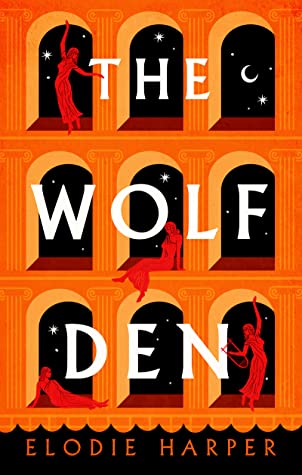
The Wolf Den by Elodie Harper

I wasn’t expecting to enjoy The Wolf Den as much as I did. A book about prostitutes in a Pompeii brothel didn’t sound very appealing to me, particularly as Ancient Rome has never been one of my favourite settings for historical fiction, yet it has turned out to be one of the best books I’ve read from my 20 Books of Summer list this year. Once I got into the story I found it difficult to put down and am looking forward to reading the second book (this is the first in a planned trilogy).

Set in 74 AD, just a few years before Pompeii will be destroyed by the eruption of Mount Vesuvius, this is the story of Amara, the daughter of a doctor from the Greek town of Aphidnai, who is sold into slavery after her father’s death. Following a series of misfortunes she has ended up at the notorious Wolf Den brothel owned by the moneylender Felix. Amara and her fellow She-Wolves are treated as commodities, existing only to give pleasure to their clients and to make money for Felix. The women have lost not only their freedom but also their identities and even their original names. It’s a miserable life, but Amara finds some comfort in the friendships she has formed with the other prostitutes.

The women working at the Wolf Den come from a diverse range of backgrounds – from Greece, from Carthage or from Egypt, abandoned at birth, taken captive by slave traders or, like Amara, sold off by their own families. There are just five of them at the beginning of the book – Amara, Victoria, Dido, Cressa and Beronice – although more will arrive later as Felix continues to make ‘investments’ in his business. Each of the five, despite some clients seeing them as interchangeable, has her own distinctive personality and her own way of coping with the situation she has found herself in. Not all of the women can remember life before the brothel, but Amara can and she’s determined to regain her freedom.

This is the first book I’ve read set in Pompeii (I do have a copy of Robert Harris’ Pompeii somewhere, which I’ll get round to eventually) and I loved following Amara around the bustling, vibrant city, going into the shops, taverns and bathhouses, taking part in the Vinalia festivities and watching the gladiators in the amphitheatre. We also see inside the beautiful villas owned by Pompeii’s rich and powerful when Amara and Dido are booked to entertain at private parties and get a glimpse of the lives that could have been theirs under different circumstances. Although most of the characters in the book are fictional, the Roman author, naturalist and military leader Pliny the Elder makes an appearance and has an important role to play in the plot. Finally, real pieces of graffiti found in the ruins of Pompeii are used in the chapter headings, adding some further historical authenticity to the story.

The Wolf Den is not always an easy book to read; the nature of the story means there are some quite graphic descriptions of both the women’s work within the brothel and the violence they are often subjected to by the men who pay for their services. Elodie Harper doesn’t shy away from having bad things happen to her characters, but there’s some warmth and humour in the novel too, as well as the beginnings of a romance between Amara and another slave. I can’t wait to read The House with the Golden Door to see how the story continues.

This is book 17/20 from my 20 Books of Summer list.

This is book 45/50 read for the Historical Fiction Reading Challenge 2022.
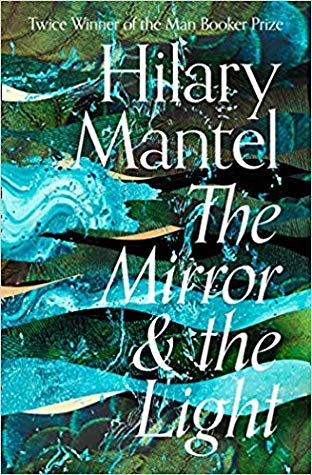
The Mirror and the Light by Hilary Mantel

At last! I bought this book shortly after its release in March 2020 with every intention of reading it then, but with the start of the pandemic and our first lockdown, I got distracted and had to put it aside until I was able to give it the attention it deserved. After that, there always seemed to be other books that needed to be read first or that seemed more immediately appealing, so The Mirror and the Light has been languishing on the shelf until I decided to put it on this year’s 20 Books of Summer list.

The Mirror and the Light is, of course, the final part of Hilary Mantel’s Thomas Cromwell trilogy, completing the story begun in Wolf Hall and Bring Up the Bodies. At almost 900 pages in my edition, it’s also the longest of the three books. It covers a relatively short period of time, from May 1536 to July 1540, which shows how much detail the book goes into. If you’re looking for a completely immersive reading experience, this is it – and for that reason, I would strongly recommend starting with the first book and reading the trilogy in order.

The novel opens in the aftermath of Anne Boleyn’s beheading. Thomas Cromwell, chief minister to Henry VIII, has achieved what he set out to achieve – Anne, who has failed to give the king a male heir, is gone; the four men he believes to have insulted his old master and mentor, Thomas Wolsey, have also been executed; and Jane Seymour, formerly of Wolf Hall, has taken Anne’s place as Henry’s new queen. Cromwell, now Lord Privy Seal, has risen high in the king’s favour, but there is still more work to be done: there are foreign ambassadors to deal with, tensions between various court factions to navigate, conspiracies to stamp out, more marriages to arrange, and the moods of an increasingly temperamental and unpredictable Henry VIII to handle.

We servants of the king must get used to games we cannot win but fight to an exhausted draw, their rules unexplained. Our instructions are full of snares and traps, which mean as we gain we lose. We do not know how to proceed from minute to minute, yet somehow we do, and another night falls on us in Greenwich, at Hampton Court, at Whitehall.

Then, disaster strikes again. Jane Seymour dies, just days after giving birth to Henry’s long-awaited legitimate male heir. Cromwell will have to find yet another new wife for the king, but one mistake could give his rivals all the ammunition they need to bring about his downfall. History tells us what will happen next and Mantel follows the history very closely as she has done from the beginning; we know how the story will end and so there is no real suspense – but there is still plenty of tension and a sense of foreboding as things begin to go wrong for Cromwell and the book heads towards its inevitable conclusion.

This book is as exquisitely written as the previous two books in the trilogy, but of the three I think I enjoyed this one the least. I seem to have said this about a lot of books recently, but I don’t think it really needed to be quite so long. The middle book, Bring Up the Bodies, was the one that worked best for me, precisely because it was shorter and more tightly focused (on the demise of Anne Boleyn). The Mirror and the Light kept me gripped at the beginning and the end, but there were times in the middle when the pace felt so slow I found myself struggling to concentrate. Maybe Hilary Mantel couldn’t bear to say goodbye to Cromwell and wanted to delay the moment for as long as possible! If so, I don’t blame her because that moment when it comes is as moving and poignant as you would expect.

Although I was expecting Cromwell’s fall from grace, I was still surprised by how quickly and suddenly it happened. One minute we hear that he has been made Earl of Essex by the king, then literally just a few pages later he is being arrested and taken to the Tower of London. What makes it so sad is that Cromwell himself is not really surprised at all. He has known all along how precarious his position is at court in a world where life and death can depend on the whim of one man – Henry VIII, “the mirror and the light of all other kings and princes in Christendom”.

Now that I’ve finished this book, I’m looking forward to reading A Place of Greater Safety, Hilary Mantel’s French Revolution novel.

This is book 15/20 from my 20 Books of Summer list.

This is book 44/50 read for the Historical Fiction Reading Challenge 2022.
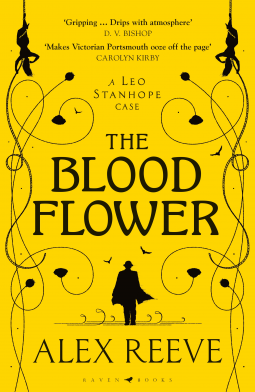
The Blood Flower by Alex Reeve

The Blood Flower is the fourth book – and sadly, the last – in Alex Reeve’s Leo Stanhope mystery series. I’ve been following this series since the first book was published and am sorry there won’t be any more to look forward to, but the author has stated that he has achieved what he set out to achieve with these novels and is ready to move on to other things.

The four novels in this series all work as standalone mysteries, but if you want to get to know Leo properly and understand his history and relationships with the other characters, I would recommend starting with The House on Half-Moon Street and reading the books in order if you can.

In The Blood Flower, set in the late Victorian period, Leo and his wife, Rosie, are heading for the south coast of England, where Leo, in his position of journalist with a London newspaper, has been asked to cover a murder case in Portsmouth. Rosie’s sister, Viola, happens to live in Portsmouth with her husband and Leo is looking forward to seeing them for the first time – but Rosie seems strangely reluctant for him to meet his in-laws. He doesn’t have too much time to wonder about this, however, because work must come first and soon Leo is being updated by the local police on the deaths of two young people, both found by the Portsmouth docks with their throats slit.

When Sergeant Dorling dismisses the two victims as misfits and outcasts and seems more concerned with how Leo is planning to portray the police in his newspaper article, Leo knows that if the murderer is going to be brought to justice he will have to solve the mystery himself. His investigations lead him to the notorious Papaver nightclub and a circus at the New Hippodrome theatre in search of the mysterious Blood Flower which seems to have played a part in both murders. But Leo has a secret of his own: he was born and raised as Charlotte Pritchard, before leaving his old life behind to live as the man he knows he really is. Only his closest friends know he is transgender, but if this information falls into the wrong hands he could find himself in serious danger.

I think this is the best book in the series; I enjoyed it even more than the last one, The Butcher of Berner Street. The Portsmouth setting makes a nice change from the Victorian London of the previous three books and Alex Reeve brings it vividly to life, with a contrast between the tourist areas with their colourful beach huts, bathing machines and shops selling postcards, and the darker side of the city which is where most of the story is played out. It was good to meet some of Leo’s old friends again – the actor Peregrine Black; Alfie the pharmacist and his young daughter, Constance; the elderly Jacob and his wife, Lilya – but moving the action away from London also allows Leo to meet lots of new people. Of the new characters, one I found particularly interesting was Olga Brown, or Miss La La, a black acrobat from Prussia and a real historical figure (her portrait was painted by Edgar Degas).

Leo himself continues to be a very likeable and engaging narrator, liable to make mistakes or say and do the wrong thing, but that only makes him feel more human. His transgender status is just one part of who he is and never really dominates the story; this, like the other books in the series, is a mystery novel first and foremost and the mystery is always at the centre of the plot. It’s quite a complex one and there are some interesting twists and turns towards the end as we discover what the Blood Flower is and who was responsible for the murders. Once the mystery was solved, I was sorry to have to say goodbye to Leo and his friends but I respect the author’s decision to move on and will be interested to see what he writes next!

Thanks to Raven Books for providing a copy of this book for review via NetGalley.

This is book 43/50 read for the Historical Fiction Reading Challenge 2022.