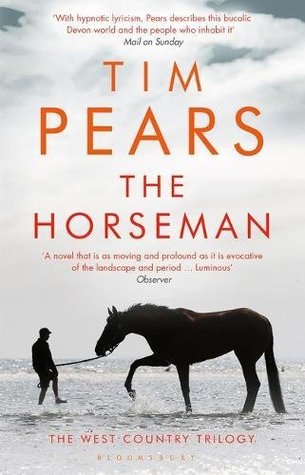
The Horseman by Tim Pears

Tim Pears’ The Horseman is the first in a trilogy of novels set in England’s West Country in the early 20th century. The final book, The Redeemed, was shortlisted for the Walter Scott Prize for Historical Fiction in 2020 and as some of you will know, working through the shortlists for that particular prize is one of my personal reading projects. As I don’t like to start a trilogy or series at the end, I decided to begin with The Horseman in the hope that I would like it enough to want to continue.

Starting in January 1911 and finishing in June 1912, the novel follows the daily life of young Leo Sercombe, the son of a carter who works on the estate of Lord Prideaux on the Devon-Somerset border. Leo has little interest in attending school, preferring to help his family with their work on the farm – and here he has gained a different kind of education: a knowledge of horses and an affinity with nature. Then one day, Leo meets Charlotte, Lord Prideaux’s daughter, and a friendship begins to form based on their shared love of horses.

There’s no doubt that The Horseman is a beautifully written novel, but I’m sorry to have to say that I didn’t enjoy it very much. I’m not necessarily the sort of reader who needs a very strong plot with lots of action on every page, but I do need at least a little bit of plot and this book didn’t seem to have any at all – just one description after another of various farming tasks. As the months go by and the seasons change we are given detailed accounts of grooming horses, gathering hay, ploughing fields, collecting eggs and anything else you can think of that takes place on a large country estate. I suppose it’s not quite true to say that absolutely nothing happens in the novel, because Leo is learning and growing all the time, but because there’s almost no conflict or drama in his life – until right at the very end of the book – I found it difficult to connect with him in any way.

Other reviews of this book are overwhelmingly positive and I can see why, as it’s a lovely, gentle portrayal of a rural community in a time gone forever; unfortunately, it just wasn’t the right book for me. This now leaves me with a dilemma as I had been expecting to go on to read the rest of the trilogy for my Walter Scott Prize project. Am I likely to enjoy the other two books any more than this one? I suspect not, so I might have to leave the 2020 shortlist incomplete.
Book 23/50 read for the 2021 Historical Fiction Reading Challenge.
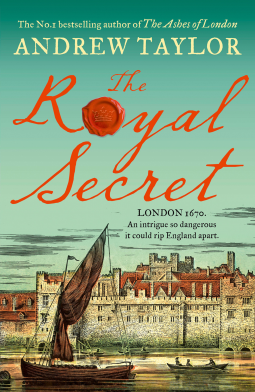
The Royal Secret by Andrew Taylor

This is the fifth book in Andrew Taylor’s Marwood and Lovett series and one of my favourites so far. Set in England during the reign of Charles II, each book in the series works as a separate mystery novel, but if it’s possible for you to read them in order (starting with The Ashes of London) you will have the pleasure of getting to know James Marwood and Cat Lovett from the beginning and watching their relationship develop.

The Royal Secret opens in 1670 with two young women plotting a murder by witchcraft. Soon afterwards, their target, Mr Abbott, meets his death under unusual circumstances. The dead man had been a clerk working in the office of Lord Arlington, Secretary of State, and James Marwood, also a government clerk, is asked to investigate. Beginning with a visit to Abbott’s lodgings to look for some confidential files the man had taken home from Arlington’s office, Marwood is soon on the trail of the mysterious Dutch merchant Henryk Van Riebeeck – a trail which will lead him first to the notorious Blue Bush Tavern and then to the home of Mr Fanshawe, owner of a captive Barbary lion called Caliban.

Meanwhile, Cat Hakesby, formerly Lovett, has taken over her late husband’s architect firm and has been given a commission by the king himself to design a poultry house for his sister Minette. Another of Cat’s clients is Mr Fanshawe and through him she meets Van Riebeeck, a man to whom she finds herself drawn romantically. Although she is unaware of it at first, Cat quickly becomes entangled in the same mystery that Marwood is trying to investigate, but with a very different perspective on what is happening.

Those of you who have read the previous books in the series will be familiar with Cat and Marwood’s uneasy relationship and their obvious attraction to each other which they seem unable to acknowledge even to themselves. That continues in this one and is becoming frustrating, but I’m grateful that Andrew Taylor didn’t just give us an instant romance that was resolved by the end of the first book. It’s another reason to keep reading the series!

As usual with Taylor’s books, the story unfolds against a backdrop of real historical events. In fact, they are often more than just a backdrop and become a significant part of the plot. In this particular novel, there is a focus on the political intrigue between England, France and the Dutch Republic, as well as on the tensions in the marriage between Charles II’s sister Minette (Henrietta Anne) and the Duke of Orléans, the king of France’s brother. These storylines take our characters to Paris where Minette has summoned Cat to discuss the designs for the poultry house and to Dover where secret negotiations are underway. With so much going on, as well as the mystery to be solved, this was a difficult book to put down and I was sorry to come to the end. I hope there’s going to be a sixth adventure for Marwood and Lovett!

Thanks to HarperCollins UK for providing a copy of this book for review via NetGalley.

Book 22/50 read for the 2021 Historical Fiction Reading Challenge.
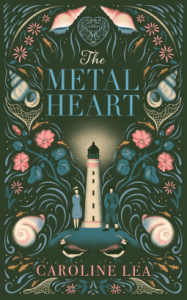
The Metal Heart by Caroline Lea

I enjoyed Caroline Lea’s previous book, The Glass Woman, but even if I hadn’t already known that I liked her writing I would have been drawn to The Metal Heart anyway by that beautiful cover! Books don’t always live up to their covers, of course, but I think this one almost does.

Set during World War II, the novel takes as its inspiration the building of a chapel in the Orkney Islands by Italian prisoners of war. Around this, Caroline Lea has created a fictional story involving two identical twin sisters, Dorothy and Constance – known as Dot and Con. The sisters have very different personalities but are devoted to each other, so when Con suffers a traumatic experience which leaves her afraid to be around other people, the two of them leave their home in Kirkwall on mainland Orkney and take refuge on the small, uninhabited island of Selkie Holm. Needless to say, Con is not at all happy when hundreds of Italian prisoners arrive on the island, along with their guards, and when a romance begins to blossom between Dot and Cesare, one of the Italians, the sisters’ bond becomes strained.

The novel is written from several different perspectives, giving Con, Dot and Cesare each a chance to tell their own side of the story. Despite their identical appearance, the twins have opposite outlooks on life – Dot is warm, friendly and trusting, while Con, understandably, is withdrawn, cautious and slow to trust. There is a romantic element to the novel, of course, but although the love story between Dot and Cesare is important, its real significance is in the impact it has on the relationship between the sisters. When we first meet Dot, she has sacrificed her own freedom and happiness for Con’s sake, but over the course of the novel, through her romance with Cesare – and also her work in the prisoners’ hospital on the island – she must find a way to lead her own life while helping Con to lead hers.

Although the author has changed some of the historical and geographical details, such as names and dates, we know that there really was a prisoner of war camp in Orkney and that the Italian prisoners really did create a chapel from metal and concrete, which can still be seen on the island of Lamb Holm today. Through the story of Cesare and the other prisoners, we see what conditions were like in the camp and the treatment they received from the guards, as well as their reaction to being ordered to build barriers to prevent further attacks on the harbour at Scapa Flow (these would become known as the Churchill Barriers). At the end of the book, Caroline Lea explains which parts of the novel are based on fact and which are fictional, but while I could understand why she adjusted the timeline to give the story more urgency, I couldn’t see why it was necessary to create a fictional island, Selkie Holm, when we know that the name of the island where the camp was located was Lamb Holm.

Anyway, this is a beautifully written novel (apart from the fact that it is written in the present tense, which is never going to be my favourite style). The descriptions of the Orkney Islands – the landscape, the sea, the people and the Orcadian folklore – are atmospheric and vivid; I have never been, but I’m sure it must be a fascinating place to visit. Of the two Caroline Lea books I’ve read, I preferred this one, although I did love the Icelandic setting of The Glass Woman too and will look forward to seeing where her next book will be set!

Thanks to Penguin Michael Joseph UK for providing a copy of this book for review via NetGalley. The book will be published on 29th April 2021.

Book 21/50 read for the 2021 Historical Fiction Reading Challenge.
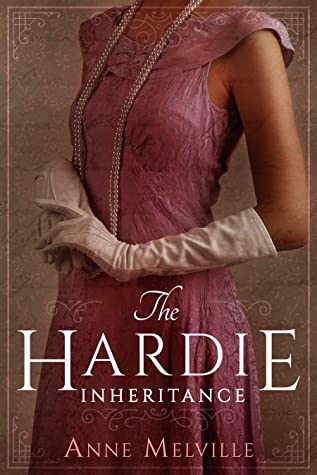
The Hardie Inheritance by Anne Melville

The Hardie Inheritance, first published in 1990 and recently reissued, is the last in a trilogy of novels following a family of English wine merchants from the late nineteenth to mid-twentieth century. The first two books are The House of Hardie and The Daughter of Hardie, but if you haven’t read them it shouldn’t be a problem as the author provides enough of the backstory for new readers to be able to pick up the threads, without completely spoiling the plots of the other two books.

While the previous novel covered the period of World War I and its aftermath, The Hardie Inheritance takes us forward to 1932. There are now only three Hardies – Grace, Philip and their mother, Lucy – still living at Greystones, the family estate in Oxfordshire, and they have settled into a quiet, uneventful life together. Grace, now in her late thirties and expecting to remain a spinster, keeps herself busy with her sculpting, while her brother Philip, who returned from the war suffering from shell shock and weak lungs, fills his days looking after the gardens. Then, one sunny day in July, four unexpected visitors arrive at Greystones and set Grace’s life on a different course.

First, there’s Ellis Faraday and his six-year-old daughter, Trish. Ellis, a photographer, is the son of the architect who designed Greystones and he is keen to take pictures of the interior. At first, Grace is reluctant, aware that due to lack of money she has not been able to maintain the building properly, but she agrees to let him see the house and soon he and Trish have become part of her life – although not quite in the way you might expect. Also that same day, they are visited by Rupert, a cousin who has just discovered his connection with the Hardie branch of the family. And finally, Andy Frith, the gardener’s son who had once been Grace’s beloved childhood friend, returns from France to see his dying father.

The novel follows the stories of all of these people and more, but with a particular focus on Grace as she comes to terms with the changes in her household and faces some important decisions to secure the future of Greystones, and on Trish as she grows into a woman and begins her own search for happiness. Meanwhile, the outbreak of World War II poses new challenges for the Hardies and their friends. The whole novel takes place within a domestic setting and we don’t actually see any of the fighting, but we do see the impact it has on the lives of those left at home. One of my favourite storylines involves Trish being sent to Oxford to collect a family of evacuees from London who, it seems, would rather not be evacuated at all. And although there would obviously have been many people who suffered much more greatly, I still had sympathy for Rupert whose beautiful home, Castlemere, is requisitioned for use as a boarding school!

I think The Hardie Inheritance is my favourite of the three books in the trilogy. There were a lot of new characters introduced early in the book, but I had no problem keeping track of them all and I became very fond of some of them, particularly Trish. Some parts of the book were quite predictable, but others took me by surprise, particularly the ending which I hadn’t expected but which, when I thought about it, was the perfect way to bring the saga of Greystones to a close.

Anne Melville (a pseudonym of Margaret Potter) was a very prolific author who wrote in several different genres using different names – I have read her mystery novel, Murder to Music, which was published under the name Margaret Newman, but most of her other books are out of print so I hope more of them will eventually be made available again.

Book 20/50 read for the 2021 Historical Fiction Reading Challenge.
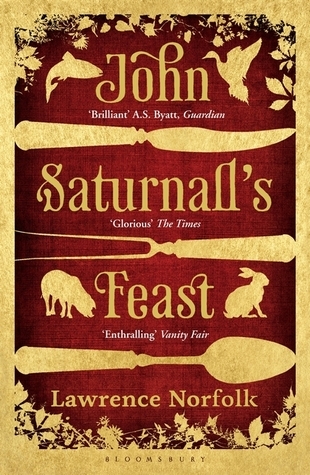
John Saturnall’s Feast by Lawrence Norfolk

This book has been on my TBR since it was published in 2012; I couldn’t get into it at the time, so put it aside to try again later, not really intending ‘later’ to be nearly ten years later! Anyway, although I had one or two problems with it I’m pleased to have read it at last and am now interested in reading more of Lawrence Norfolk’s novels, all of which sound intriguing.

John Saturnall’s Feast begins in a place called Buckland, a small village where John Sandall lives with his mother, a herbalist and midwife. It’s the early 17th century, a time when women with skills like these risk being accused of witchcraft – and this is what happens to John’s mother. Finding themselves the target of their Puritan neighbours and the fanatical preacher Marpot, they flee to the safety of nearby Buccla’s Wood. Here, John continues to receive an education from his mother, who teaches him to read from a book of ancient recipes and reveals to him the secrets of a traditional Feast which have been passed down through the generations.

When John’s mother dies, leaving him an orphan, he is taken into the kitchens of Buckland Manor, where he impresses the other cooks with his knowledge of food. At the Manor, we meet Lady Lucretia, the young daughter of Sir William Fremantle. A marriage has been arranged for Lucretia, in order for her to inherit the estate, but she has chosen to defy her father by refusing to eat. Can John Sandall – now known as John Saturnall, Master Cook – create a dish that will tempt her from her fast?

This is an unusual and complex novel; I have simplified the plot in the paragraphs above, but there is a lot more to it than that and I would probably need to read the book again to fully appreciate all the different layers of the story. I don’t think I quite understood the significance of the ritual of the Feast, for example – was it intended as a myth, an allegory or something real? I felt that important plot points and details were sometimes getting lost beneath the overwhelming descriptions of ingredients, smells, tastes and colours that filled almost every page. I also struggled to keep track of the characters; there are so many of them, particularly working in the kitchens, and none of them are very strongly drawn, so I found it difficult to distinguish one from another.

I did really enjoy the first half of the book, which describes John’s childhood in Buckland and the events that lead to his arrival at the Manor. The portrayal of his life in the kitchens – the huge, subterranean network of rooms, the heat, the smells, the sounds, and the complex social hierarchy that exists between the cooks and the humble kitchen hands – is vivid and fascinating. I was reminded very strongly of Abiatha Swelter’s kitchens in Mervyn Peake’s Gormenghast books! In the second half of the novel, though, there’s a change of scene and pace as civil war breaks out in England and John and his friends exchange the kitchen for the battlefield. There seemed to be very little build up to this and I felt that the war chapters didn’t really add much to the overall story.

Although not every aspect of this book was a success with me, the wonderful atmosphere and the imaginative plot still kept me turning the pages. I would like to try one of Lawrence Norfolk’s other three books, so if you have read any of them please let me know what you thought!

Book 19/50 read for the 2021 Historical Fiction Reading Challenge.
The Damask Rose by Carol McGrath

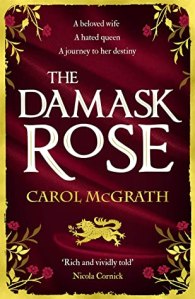
This is the second book in Carol McGrath’s She-Wolves trilogy, telling the story of three medieval queens of England who have all been given the label ‘she-wolf’ at various times. I enjoyed the first novel, The Silken Rose, about Henry III’s wife, Eleanor of Provence, so I was looking forward to this one, which moves on to Eleanor of Castile, the first wife of Edward I.

I’ve read other books set during Edward I’s reign, so presumably I’ve come across Eleanor of Castile before, but I mustn’t have been paying attention as I couldn’t have told you much about her before reading The Damask Rose (except that she was commemorated by the Eleanor Crosses which were erected in several English towns in her memory). It’s always good when you can learn something new from historical fiction and in this case, almost the entire story was new to me.

The novel begins in 1264 when Henry III is still alive and on the throne of England, but only just – he and his son, Prince Edward, have been captured by the forces of Simon de Montfort at the Battle of Lewes. Edward’s wife, Lady Eleanor, is at Windsor Castle awaiting news of her husband when Gilbert de Clare, one of de Montfort’s supporters, arrives and forces her to relinquish the castle. This traumatic incident instils in Eleanor a lifelong hatred of de Clare as well as a determination that she will never put herself in such a vulnerable position again. Once the threat of Simon de Montfort has been removed at the Battle of Evesham, Edward and Eleanor travel to the Holy Land on crusade. It is during this journey that they learn of the death of Henry III and return to England to take their place as king and queen.

I enjoyed learning more about Eleanor, but although I don’t think she deserved to be described as a ‘she-wolf’ (the term seems to have mainly referred to her unpopular methods of acquiring land and properties, which were seen as greedy and ruthless), she’s not a character I liked or managed to warm to either. It seems that the real Eleanor was also accused of being ‘unmaternal’, which McGrath suggests could be due to the fact that she lost so many children she was afraid to get too close to the ones who survived, but it still irritated me that Eleanor complained constantly about her children’s relationships with other adults while at the same time saying she was far too busy to spend time with them herself.

Part of the novel is written from the perspective of Olwen, a herbalist whom Eleanor introduces into the royal household to provide advice on plants and healing. Olwen is a fictional character but her story complements Eleanor’s very well; in fact, I think I preferred her sections of the book as I found her much easier to like and I enjoyed the different point of view she brings to the novel. I cared about Olwen and wanted her to be happy, whereas I felt that some parts of Eleanor’s story, particularly towards the end, became too factual, too concerned with just describing things that had happened rather than providing any real emotional depth.

The third book in the series is going to be about Isabella of France; I am much more familiar with Isabella than with the previous two queens and I think she will be a fascinating subject to bring the trilogy to an end!

Thanks to Headline for providing a copy of this book for review via NetGalley.

Book 18/50 read for the 2021 Historical Fiction Reading Challenge.
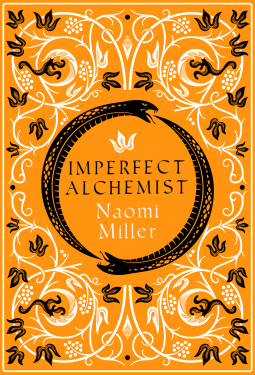
Imperfect Alchemist by Naomi Miller

Mary Sidney may not be as well known as her brother Sir Philip Sidney, the Elizabethan poet who wrote Astrophel and Stella, but she was a successful and accomplished author in her own right – and one of the first Englishwomen to publish under her own name. In Imperfect Alchemist, Naomi Miller brings Mary’s story to life in fictional form, beginning in 1575 when Mary is summoned to court to attend the Queen. Marriage follows a few years later to Henry Herbert, Earl of Pembroke, and although it is an arranged marriage rather than one based on love, Henry at least seems to accept his new wife’s intelligence and learning and allows her the freedom to pursue her literary interests, leading to her eventually establishing a literary circle at their home, Wilton House.

Mary’s story, which is written in the third person, alternates with a first person narrative from the perspective of another young woman, Rose Commin. Rose, a fictional character, comes from a very different background, having grown up in the countryside, the daughter of a cloth merchant and a herbalist. After her mother is put on trial for witchcraft, Rose is sent away to the safety of Wilton House, where she becomes maid to Lady Catherine Herbert, Countess of Pembroke, who encourages her to develop her talent for drawing, as well as teaching her to read and write. Sadly, Lady Catherine dies shortly after Rose’s arrival, but when Henry Herbert marries again and brings his young wife, Mary Sidney, to Wilton House, a friendship begins to form between Rose and her new mistress.

Before reading Imperfect Alchemist, I knew almost nothing about Mary Sidney. Her brother Philip has appeared in one or two books I’ve read (such as Towers in the Mist by Elizabeth Goudge and Watch the Lady by Elizabeth Fremantle) but I can’t remember ever reading anything about Mary. As well as shedding some light on her personal life, the novel explores her involvement with alchemy and medicine, her relationships with other historical figures such as Sir Walter Raleigh, Ben Jonson and Aemilia Lanyer, and her major literary achievements. Not only does Mary prepare and publish an edition of her brother’s The Countess of Pembroke’s Arcadia, she produces new translations of the Psalms and her version of the Antony and Cleopatra story is thought to inspire Shakespeare’s famous play.

Although Mary is, on the surface, the more interesting character, I think I preferred Rose’s sections of the book – possibly because Rose narrates her chapters herself, making her easier to identify with and to warm to. However, I’ve read a few other historical novels recently that have alternated a real woman’s story with an invented one (usually a lady’s maid), and along with the ‘healer being accused of witchcraft’ theme, which also seems to be an increasingly common trend in historical fiction, I didn’t feel that this book had anything very new or different to offer. As an introduction to the life and work of Mary Sidney Herbert, though, it’s excellent and I was certainly able to learn a lot from it. This is Naomi Miller’s first novel and apparently the first in a projected series of novels about early women authors, so I’ll be interested to see who she writes about next.

Book 17/50 read for the 2021 Historical Fiction Reading Challenge.