Perdita by Hilary Scharper

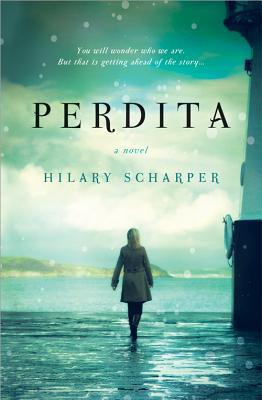
I have never been to the Bruce Peninsula in Ontario, but reading Hilary Scharper’s Perdita has made me want to add it to my list of places to visit. The author has described her novel as ‘eco-gothic’, which I think refers to elements of nature almost taking the role of characters in the story (think of the fog in Charles Dickens’ Bleak House or the moors in Emily Brontë’s Wuthering Heights) and she certainly does bring the beauty and atmosphere of her Canadian setting to life in Perdita.

The novel opens with Garth Hellyer of the Longevity Project collecting information on some of Canada’s oldest people. Having heard about some remarkable claims made by a woman called Marged Brice, Garth is visiting her in her nursing home in the hope of discovering the truth. Marged insists that she is 134 years old, but surely that can’t be right? Garth is cynical, but when Marged tells him that she is ready to die but can’t because of a mysterious presence known as ‘Perdita’ holding her back, he is intrigued enough to agree to hear her story.

Marged gives Garth some of her old journals, which he takes home to read, and through these the story of Marged’s life unfolds. In 1897, when her diaries begin, she is a young woman of nineteen living at Cape Prius on the Bruce Peninsula where her father is working as the lighthouse keeper. It can be a lonely place in the winter but comes alive in the summer when visitors begin to arrive. Among the summer visitors are the Stewarts, a wealthy family with two sons, one of whom – George – is a talented painter. With her own interest in art, Marged finds herself drawn to George, but will he ever return her feelings? And anyway, would Marged ever be able to leave the landscape she loves so much – the landscape which has become such an integral part of her life?

Well, circumstances dictate that Marged does have to leave her beloved bay behind, at least for a short period, while she spends some time in Toronto with her mother. By the time she returns she has changed and grown as a person; her world has widened, she has met different people – including Andrew Reid, a young doctor – and she has experienced things she would never have been exposed to on the peninsula. The rest of the novel follows the ups and downs of Marged’s relationships with George, with Andrew and with her environment, as well as exploring the presence of Perdita and who or what she really is. We also follow Garth in the modern day as he is reunited with an old friend, Clare, who helps him to make sense of Marged’s claims.

You won’t be surprised to hear that I preferred the historical storyline to the present day one. It’s not very often that I would say the opposite! Marged’s story was much more compelling, full of life and passion and emotion; Garth’s story, in comparison, felt as though it had been created just because a framing narrative was needed. He and Clare didn’t feel like real, fully-developed people to me and every time we returned to their storyline, I just wanted to get back to Marged and her diaries.

I liked the Perdita and longevity aspects of the story, which bring in some elements of mythology and some literary allusions, but I was less convinced by the blending of the real and the supernatural. For me, Perdita was a collection of intriguing ideas that, as a whole, I couldn’t quite manage to love. It seems to be Hilary Scharper’s only novel (although she has written a book of short stories on a very different subject) but if she writes another in the ‘eco-gothic’ genre, I would probably be interested in reading it.
Young Bess by Margaret Irwin – #1944Club

Since reading Margaret Irwin’s 1925 fantasy novel, These Mortals, a few years ago, I have wanted to read one of the historical novels for which she was better known – and when I discovered that Young Bess was published in 1944, I thought it would be a good choice for the 1944 Club Simon and Karen are hosting this week.

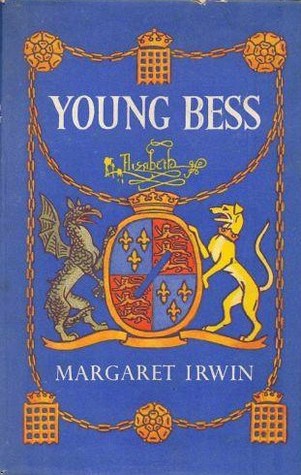
The ‘Bess’ of the title refers to the young Elizabeth I and this book (the first in a trilogy) covers her life between the years 1545 and 1553. Having read about Elizabeth several times before, I hadn’t expected Young Bess to offer anything new – and it didn’t, really; however, it was a pleasure to read a good old-fashioned historical fiction novel with elegant prose and strong characterisation, no present tense, no experimental writing and no multiple time periods! It’s a book which completely immerses the reader in the Tudor period and the lives of Elizabeth and the historical figures who surround her, so that you reach the end feeling that you’ve read something fresh and worthwhile after all. I loved it and will definitely be going on to read the other two books in the trilogy.

The novel opens in the final years of Henry VIII’s reign; the King, now obese and in poor health, is as dangerous and unpredictable as ever, and his twelve-year-old daughter, Elizabeth – or Bess as I will call her for the remainder of this post – is already learning to navigate her way through the layers of political intrigue, betrayal and treachery that are part of everyday life for a Tudor. With the fate of her mother, Anne Boleyn, always at the back of her mind, Bess knows that nobody is safe at court and that fortunes can be made or lost in an instant.

One of the few people Bess does love and trust is her stepmother, Catherine Parr, and she goes to live with her following Henry’s death in 1547. But then Catherine marries Tom Seymour, and tensions in the household start to rise when what seem at first to be innocent games between Bess and Tom begin to develop into something more. As the brother of Henry’s third wife, Jane Seymour, and therefore the uncle of the newly crowned Edward VI, Tom’s behaviour puts him in a precarious position at court. He lacks the power of his elder brother, Ned Seymour, who has been named Protector until the young king comes of age, but at the same time he is too powerful for his actions to be ignored. If he and Bess continue to pursue their relationship there could be tragic consequences.

All of this will be very familiar to anyone who has read Elizabeth’s story before; as I’ve said, Margaret Irwin doesn’t really offer anything different or controversial (at least nothing that hasn’t been suggested by other authors as well). Where this novel really shines is in the characterisation – although Bess is the main focus of the story, all of the other characters feel fully developed too and because the book is relatively long for the short period of history that it covers, there’s enough time for the author to go into the necessary amount of depth. I particularly enjoyed the insights we are given into the thoughts of Henry VIII in the days before his death, the transformation of Edward VI from lonely, vulnerable boy to ruthless, calculating Tudor, and the appearance at court of the Seymours’ other brother, Henry, who is far more shrewd and observant than his unsophisticated exterior suggests.

Finally, reading this with the 1944 Club in mind, I was interested to see what Tom Seymour had to say to his brother Ned about the German mercenaries he had brought in to fight in Scotland:

“Their Emperor is not the Emperor of Germany, he’s the German Emperor – of the World…And it’s this Master Race of mechanic monsters that you’re bringing into this island to fight your battles for you, against fellows who speak the same language as yourselves – and to do the dirty work you can’t get Englishmen to do.”

I suppose the war was never far from anyone’s thoughts in the 1940s, even when writing about the 16th century!

I am now looking forward to reading the other two books, Elizabeth, Captive Princess and Elizabeth and the Prince of Spain. Has anyone seen the 1953 film version of Young Bess, starring Jean Simmons?

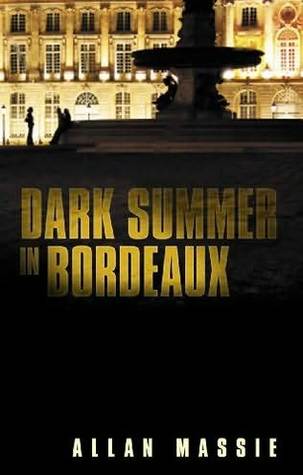
Dark Summer in Bordeaux by Allan Massie

This is the second in Allan Massie’s four-book crime series set in occupied France during the Second World War. My review is as spoiler-free as I could make it, so it should be safe to read on even if you’re new to the series, but I would definitely recommend beginning with the first book, Death in Bordeaux, as there are lots of recurring characters and some storylines which continue from book to book.

In Dark Summer in Bordeaux, we re-join Superintendent Jean Lannes of the Bordeaux Police as he is called out to deal with another crime – this time involving the murder of an elderly man, whose body has been found in a city park. As Lannes learns more about the man and how he died, some political implications begin to emerge, as well as some surprising links to the murders committed in the previous novel. Lannes comes under pressure from his superiors who want the investigations brought to a close as quickly as possible, but he is not ready to drop the case just yet – not until he finds out what is really going on here.

Investigating a murder is never going to be easy or pleasant at the best of times, but it is particularly challenging for Lannes because of the political situation in France, where the demands and concerns of the Vichy secret services, the German occupiers and the French Resistance all have to be taken into consideration. As a decent, principled person Lannes often finds himself torn between his conscience telling him to do what he knows is right and see justice done, and his common sense telling him to do as he is told and keep his family safe.

As if the stress of his job was not enough, Lannes is also worried about all three of his children, for different reasons. His eldest son, Dominique, is making plans to go and work for the Vichy regime, while Alain, whose views are rather different, wants to join Charles de Gaulle and the Free French. Meanwhile, his daughter, Clothilde, announces that she is in love with the young German officer who is stationed in their apartment block. Lannes is not very happy about any of this, but only because he is looking ahead to a time when (he hopes) the war will be over and a wrong decision taken now could have disastrous consequences. His wife, Marguerite, has her own opinions and this is causing tension in her marriage to Lannes.

As well as Lannes and his family, we also catch up with other characters from the previous book, including one of my favourite characters – Leon, the nephew of Lannes’ friend Miriam. Leon is in a particularly interesting – and dangerous – position in Vichy France, being both Jewish and gay, and this makes him a target of blackmailers and others who want to take advantage of him for their own ends. It seems that, in Bordeaux, the war is bringing out the best in some people and the worst in others. It’s a fascinating setting, even more so because I have read so little about life in France during the Occupation.

I haven’t said much about the mystery aspect of this novel, but that’s because I found it almost secondary to the setting and the characters. The murder of the man in the park is important and ties all the other threads of the story together, but I was much less interested in finding out who killed him than I was in reading about Leon’s ordeals or Alain’s support for the Resistance. I found this a more enjoyable book than the first one, probably because I already knew the characters and was invested in what happened to them. I’m looking forward to continuing with the third book, Cold Winter in Bordeaux.

I am counting this book towards the R.I.P. XIII challenge (category: mystery).

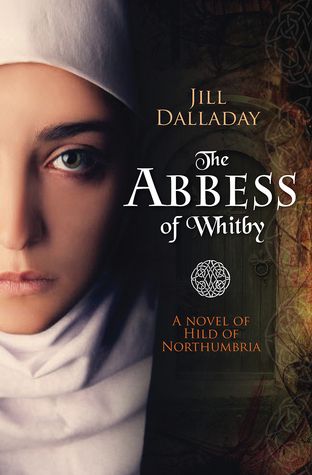
The Abbess of Whitby by Jill Dalladay

Four years ago I read Hild by Nicola Griffith, a beautifully written novel which told the story of Hild (or St Hilda, as she is also known). It was – and still is, I hope – intended to be the first in a trilogy, but as the other books haven’t appeared yet, I was intrigued when I came across The Abbess of Whitby, another novel about Hild. It’s always good to read different interpretations of the same historical figures and events.

Set in 7th century Britain, The Abbess of Whitby begins with the young Hild at the Northumbrian court of King Edwin, her great-uncle. Hild has just been chosen to be a handmaiden of Eostre, the pagan goddess of fertility, but when she, along with Edwin and his other courtiers, is baptised into the Christian faith, this marks the beginning of a transition from the old religion and way of life to the new.

Most of the factual information we have regarding Hild comes from the Venerable Bede’s writings in 731, the Ecclesiastical History of the English People. He tells us nothing about Hild’s life between the ages of thirteen and thirty-three, so Jill Dalladay has imagined a story for her based on what we do know about the kingdom of Northumbria at that time and how a woman of her status and background may have lived. She creates a marriage for Hild with the fictional Cerdic of Din Edin (Edinburgh) – a marriage arranged for political reasons, as was common in that period.

There is no love between Hild and her husband (at least not at first) and she is unhappy about leaving her home and her friends behind, but she doesn’t have time to feel sorry for herself because this is an eventful time and there is always something happening: a war, a raid, or an outbreak of plague. As the years go by, Hild also grows more curious about the Christian religion, especially when she meets and gets to know the monk Aidan. Eventually, as we know from Bede, she becomes the abbess of Whitby Abbey, where the Synod of Whitby is held in 664 at which the method for calculating the date of Easter is established.

This was an interesting read and a good portrayal of 7th century life with all of its hardships and dangers. However, I didn’t find it a particularly gripping novel and although it’s not badly written, it lacks both the beautiful lyrical prose of Nicola Griffith’s Hild and the epic high fantasy feel of Edoardo Albert’s Northumbrian Thrones books. Still, there are not a lot of novels about women from such early periods of history and it was good to learn more about Hild and her world (even if not all of it is based on fact) to add to my existing knowledge.

Have you read any other books about St Hilda of Whitby – or can you recommend anything else set in the 7th century?

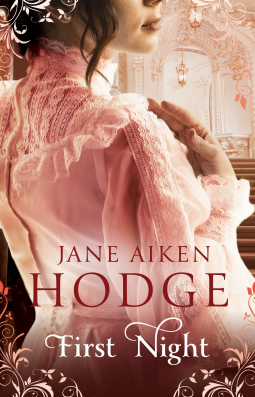
First Night by Jane Aiken Hodge

I enjoyed the three Jane Aiken Hodge books I’ve read previously – Marry in Haste, Strangers in Company and Watch the Wall, My Darling – so I thought I would try another one. First Night was originally published in 1989, but has been recently reissued by Agora Books.

The story begins in 1802 in the fictional Central European principality of Lissenberg. Lady Cristabel Sallis, the teenage daughter of a British duke and politician, and Prince Maximilian, heir to the principality, are performing in a children’s performance of Orpheus and Eurydice to mark the opening of the new Lissenberg Royal Opera House. Cristabel persuades Max to switch parts with her so that she can sing the male lead, revealing her identity at the end to rapturous applause from the audience. Not everyone is so impressed, though – her father is outraged and sends Cristabel home in disgrace.

Twenty-one-year-old American heiress Martha Ann Peabody hears about Cristabel’s escapades and is intrigued. She has been longing for adventure and the chance to make an independent life for herself, so she seeks out Cristabel in England and offers to help her launch a career in opera despite her father’s opposition. With Martha’s money and Cristabel’s talent they are the perfect team and, chaperoned by Cristabel’s Aunt Helen, they make their way to Paris, then Venice, before eventually ending up back in Lissenberg again.

Opera continues to play a big part in the plot of First Night as Cristabel pursues her passion for singing and the three women meet an assortment of composers, musicians and performers, but as the novel progresses the political situation in Lissenberg becomes more and more important. I wish the author had included an author’s note at the end of the book because I would have liked to have known more about her portrayal of Lissenberg and whether she had a real place in mind. It certainly sounds like an oppressive and dangerous place to live: an absolute monarchy under the control of the tyrant Prince Gustav who stops at nothing, including murder, to get what he wants. On the outside, there’s Napoleon Bonaparte, rapidly increasing in power – and Prince Gustav must decide whether to yield to him or try to defy him.

The setting was fascinating, but I can’t really say the same for the characters. I did love Martha Peabody, who is both courageous and kind-hearted and tries to help the people of Lissenberg in any small way she can, but Cristabel was a complete enigma to me. I felt that I never understood how she was really thinking or feeling and this made her come across as a strangely shallow character considering that at the beginning of the book it seemed as though she was going to be the heroine. Based on the first chapter I had also expected a romance between Cristabel and Prince Maximilian, especially when they meet again on Cristabel’s return to Lissenberg, but because Cristabel’s emotions are kept at such a distance from the reader, I wasn’t sure how she truly felt about him or what the nature of their relationship really was.

Unlike the other three books I’ve read by Jane Aiken Hodge, which could be neatly labelled as historical romance, romantic suspense and gothic novel respectively, this one is much more difficult to classify. I certainly wouldn’t describe it as a romance, although the cover might suggest otherwise. I found it difficult to get into and confusing at times, but I enjoyed the last few chapters which were packed with surprises, political intrigue and the revelation of secrets.

This book appears to be the first in a trilogy, followed by Leading Lady and Last Act; I don’t have any plans to look for the other two books at the moment, but I would still like to read Red Sky at Night, one of her earlier novels which I already have on my shelf.

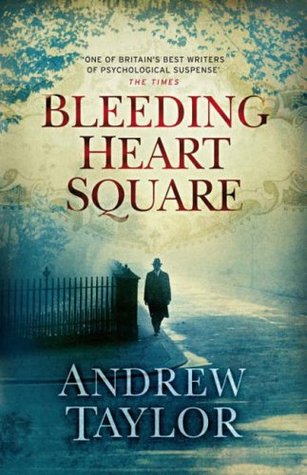
Bleeding Heart Square by Andrew Taylor

Andrew Taylor is one of my favourite authors of historical mysteries and after reading his latest one, The Fire Court, earlier this year, I remembered that I still had Bleeding Heart Square to read.

The novel opens in London in 1934 with Lydia Langstone, stepdaughter of the wealthy Lord Cassington, walking out on her violent and brutal husband. Armed with her copy of Virginia Woolf’s A Room of One’s Own, Lydia heads straight for Bleeding Heart Square, home to her father, Captain Ingleby-Lewis. The Captain isn’t entirely respectable and neither is the address, but Lydia doesn’t care – she just needs somewhere to stay until she can build a new, independent life for herself.

Another new resident of Bleeding Heart Square is Rory Wentwood, a young man who has recently returned from India to find that his girlfriend, Fenella, is no longer interested in marrying him. Rory still cares about Fenella, though, and when he hears about the disappearance of her aunt, Philippa Penhow, several years earlier, he decides to uncover the truth. The house at Bleeding Heart Square had belonged to Miss Penhow until she signed it over to the current owner, Joseph Serridge, before supposedly going to live in America. Rory has his doubts and has taken a room in the house so that he can investigate further.

When a number of foul-smelling parcels addressed to Mr Serridge begin to arrive at Bleeding Heart Square, the residents are both disgusted and intrigued. The packages contain rotten hearts neatly wrapped in brown paper and are obviously intended as a message to Mr Serridge – but who is sending them and why? What really happened to Philippa Penhow? And why is a policeman watching the house? Lydia teams up with Rory to try to find the answers, while doing her best to avoid her abusive husband.

Bleeding Heart Square is a mystery novel, but it is also a fascinating portrayal of life in 1930s London, with a particular focus on the rise of the fascism movement in Britain. One of the most memorable scenes in the book involves a meeting of the British Union of Fascists which descends into chaos when a few brave voices dare to question the party’s policies and are forcibly removed by Oswald Mosley’s black-shirted supporters. I found this aspect of the book interesting because of course with World War II on the horizon, fascism would soon become forever associated with Hitler and Mussolini and not something decent people would want to be part of – but here we see respectable people taking Mosley’s views seriously and considering giving him their support. It’s frightening to think of how different things could have been, and also still frighteningly relevant today.

Despite the 1930s setting, however, I thought the plot and the characters seemed much more suited to the Victorian period – there was a definite Dickens influence and in fact Bleeding Heart Yard appears in Little Dorrit. If you removed the fascism storyline, the rest of the novel could easily have been set in the 19th century; I was taken by surprise every time somebody got into a car as I felt it should have been a horse and carriage!

I liked both Lydia and Rory and found their personal stories so interesting that the central mystery felt almost secondary – although I was intrigued from the start by the brief diary entries and the comments by an unknown narrator that open every chapter. What will we learn from the diary and who is the narrator talking to? The ending of the book, in which the truth is revealed, was unexpected, but maybe there were clues from the beginning if I had been paying more attention!

Bleeding Heart Square isn’t my favourite of Andrew Taylor’s books – that would be The American Boy – but I did enjoy it and now that I’ve read all of his historical mysteries I’m wondering which of his other books I might like. Any recommendations are welcome!

This book counts towards the R.I.P. XIII challenge (category: mystery).
I am also counting it towards the What’s In a Name? challenge – a book with a shape in the title.

The Ghost Tree by Barbara Erskine

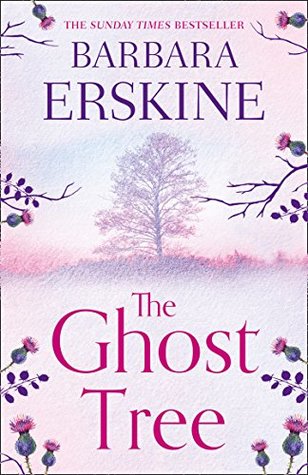
I’m finding that I usually like the sound of Barbara Erskine’s books much more than I like the books themselves! I thought Sleeper’s Castle was an enjoyable read, but I’ve had very mixed feelings about the others that I’ve tried, even Lady of Hay, which I’d heard so much about. Still, when I saw her latest novel, The Ghost Tree, in the library, I couldn’t resist picking it up.

Like most of Erskine’s other books, this one is set in two time periods and includes elements of the supernatural which link them together. In the present day we meet Ruth Dunbar whose father has just died, leaving her his house in Edinburgh. On arriving at the house, she is surprised to find that it is already occupied by a stranger who tells her his name is Timothy and that he has been caring for her father during his final months. According to Timothy, it is actually he and not Ruth who will inherit the house – and although Ruth’s lawyer assures her this is not the case, it seems that Timothy is not prepared to give up his claim.

As she begins to sort through her parents’ possessions, Ruth finds a collection of old diaries and letters written in the 18th century by Thomas Erskine, an illustrious ancestor of her mother’s. Thomas led an eventful, dramatic life and Ruth quickly becomes captivated by his story, but when she starts to think she can see Thomas standing beside her as she reads, the boundary between past and present seems to have been broken.

The Ghost Tree, as the title would suggest and as I have hinted above, is a ghost story, so I am counting it towards the R.I.P. XIII challenge. Thomas himself, as Ruth’s many times-great-grandfather, is no threat to Ruth, but he is not the only ghost who finds his way into the 21st century – there is another, who is a much more menacing and evil presence. Ruth (as seems to be a standard requirement of a Barbara Erskine heroine) just happens to have several friends and acquaintances who are experts in the paranormal and she enlists their help in dealing with her ghostly visitors. As far as ghost stories go, I didn’t find it either particularly scary or very atmospheric, but if you enjoy reading about séances, exorcisms and other aspects of the supernatural, you will probably find a lot to interest you here.

The narrative switches between past and present throughout the novel and as usual it was the historical one that I found most compelling. Thomas Erskine is a real life ancestor of Barbara Erskine’s and she has based his story on what we already know about him and on her own research into his life. Born in Edinburgh in 1750, he served in the Navy in the Caribbean and later joined the army, before returning to Britain to concentrate on a career in politics and the law. You can easily find a wealth of information about him online if you’re interested in knowing more, but if you’re thinking about reading The Ghost Tree you might prefer to read the novel first before looking up all the facts. Personally, I think there would have been enough material for a whole book just about Thomas and his adventures, without needing to involve ghosts or anything else!

I had other problems with the modern day sections of the book. For a start, the villains (one of whom is Timothy, the man contesting Ruth’s inheritance) are stereotypical and lack the sort of nuance and depth I prefer – and I quickly lost patience with the way Ruth and her friends repeatedly put themselves at risk, despite knowing how dangerous the villains were. There’s also an unpleasant storyline involving some cases of ghostly rape, which added very little apart from shock value.

This book was a bit of a disappointment, especially after enjoying Sleeper’s Castle so much, but at least I found Thomas Erskine’s story interesting, so I didn’t feel that it had been a waste of time. I just wish we could have spent more time with Thomas and less with Ruth and the ghost hunters! Can any Barbara Erskine fans tell me whether there are any of her earlier books that I might enjoy more, particularly any that spend a more substantial amount of time in the past or that use the supernatural elements more convincingly?

This is my fourth book read for the R.I.P. XIII challenge (category: supernatural).