Red Sky at Noon by Simon Sebag Montefiore

This is the third in Simon Sebag Montefiore’s Moscow trilogy. I have read the second one, One Night in Winter, but not the first, Sashenka; the books are only loosely connected and it’s not essential to read all three in order. Montefiore is better known as a historian and writer of non-fiction, but these three books are fictional – although based on real events from Russian history.

Red Sky at Noon tells the story of Benya Golden, a Jewish writer and former teacher who, in 1940, is given the death sentence for “terrorism, conspiracy to murder Comrades Stalin, Molotov, Kaganovich and Satinov, and membership of a counter-revolutionary Trotskyite group”. At the last minute Benya is given a reprieve and instead of being executed he is exiled to the Gulag of Kolyma and sentenced to ten years’ hard labour in the gold mines. Life in the camp is harsh and miserable, so when a chance comes two years later to join a penal battalion (a shtrafbat) formed to fight the Germans, Benya is quick to volunteer. The reward will be the opportunity to win redemption by the shedding of blood – either his own or the enemy’s.

The rest of the novel follows the adventures of Benya, his beloved horse Silver Socks and the assorted group of murderers, Cossack gangsters and fellow political prisoners who fight alongside him in the Soviet cavalry. Together they undertake dangerous missions behind enemy lines, facing death, capture or betrayal – or all three – and for Benya, there is also a romance when he meets a widowed Italian nurse, Fabiana. Of course, with Russia and Italy on opposite sides of the war, it’s clear from the beginning that their love affair is unlikely to run smoothly.

With so much happening and with such an action-packed plot and interesting historical setting, this could have been a wonderful novel, filled with drama, romance and excitement. However, I think Montefiore is probably a better historian than he is a novelist; although I have no doubts that he knows his Russian history, he never quite managed to bring the characters and events in this novel to life. The dialogue didn’t feel entirely convincing and there were only a few moments in the whole book when I felt any real emotional connection to Benya or the other characters, despite the horrors of war that were being described. I remember having similar thoughts about One Night in Winter, which was a more enjoyable novel in my opinion, but another one which made little emotional impact.

I haven’t mentioned yet that there is another thread to the novel, involving Svetlana Stalina. As Stalin’s daughter, sixteen-year-old Svetlana is a lonely and isolated figure, who has experienced little in the way of love and friendship as people are afraid to get too close because of who her father is. Svetlana’s story doesn’t really have anything to do with Benya’s, but it offers insights into life in the Stalin household and does add another layer to the novel.

I’m not sure if I would want to read more of Montefiore’s fiction – although Sashenka does still sound tempting – but I’m curious to know what his non-fiction is like. Has anyone read any of it?
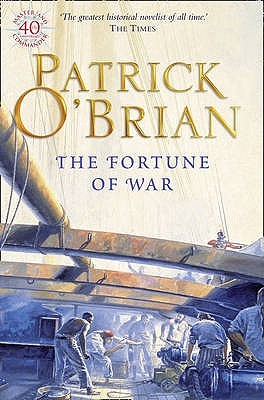
The Fortune of War by Patrick O’Brian

This is book number six in Patrick O’Brian’s Aubrey/Maturin series. I enjoyed the previous one so much I thought it would be a difficult act to follow, but I actually found this one just as good – and maybe even better. If you haven’t yet had the pleasure of meeting Captain Jack Aubrey and Dr Stephen Maturin, I would recommend beginning with the first of the series, Master and Commander, and saving this review until you’ve caught up; otherwise, although I have tried to avoid too many spoilers in this post, you may come across something you would prefer not to know just yet.

The Fortune of War picks up the story shortly after Desolation Island ended. With his ship HMS Leopard declared unfit, Jack receives orders to return to England to take command of a forty-gun frigate, the Acasta. He and Stephen Maturin, accompanied by several other members of the crew, begin the long journey home as passengers on the courier ship La Flèche. Early in the voyage, however, they learn that war has broken out between Britain and America – the War of 1812 – and following a series of disasters, they are taken prisoner and find themselves brought to Boston, which is now enemy territory. At first, despite being wounded in the arm, Jack is not too worried; he’s sure there will be an exchange of prisoners soon and then they can be on their way again. The Americans, though, are convinced that there had been a spy on board the Leopard and are not about to let their suspects escape so easily!

I really enjoyed this book, after an initial panic where I found I couldn’t remember what happened at the end of Desolation Island. I think I need to stop leaving such long gaps between books! Luckily, though, Jack gives a recap to the Admiral in the first chapter and this serves as a reminder for the reader too. Once I settled back into the flow of the story, I loved it, particularly the parts of the novel set in Boston where Stephen’s spying activities come to the forefront. This leads to exciting scenes which are different from anything we’ve read in the series so far.

Stephen also has his long-awaited reunion with Diana Villiers, the woman he loves and who broke his heart at the end of HMS Surprise – but Diana has changed and it seems that his own feelings for her have changed too. Despite his disillusionment I found Diana much easier to like in this book than I did in the earlier ones, although with so much still unresolved by the end, I was left wondering whether they will find any happiness in the next book or whether their relationship will continue down its tempestuous path.

I have stopped worrying about the nautical terminology in these novels. I appreciate the authenticity O’Brian brings to the naval scenes, the level of his research and of course, his writing ability, but I know I’m never going to be able to follow everything that is happening; as long as I can understand the outcome of each battle or manoeuvre I’m happy! I think this must be the first book in the series where Jack has not actually had a ship of his own to command, but he and Stephen still manage to get caught up in two naval actions, both of which are closely based on real events from the War of 1812.

The next book in the series is The Surgeon’s Mate and based on the quality of the last two books I’m really looking forward to it.

Leopard at the Door by Jennifer McVeigh

This is the first book I’ve read by Jennifer McVeigh, although I do remember hearing good things about her first novel, The Fever Tree. This latest one, Leopard at the Door, sounded appealing too – and I did like it, although it was a much darker novel than I’d been expecting!

The novel opens in 1952 with our narrator, Rachel Fullsmith, arriving in Kenya after an absence of six years. Rachel was born to British parents but spent her childhood in Kenya until, after losing her mother at the age of twelve, she was sent to England to live with her grandparents. Now, as an eighteen-year-old, she is returning to the place she still considers to be home, only to find that everything has changed…and not in a good way.

Trouble is brewing in Kenya, with unrest threatening to spill over into violence as the group known as Mau Mau begin to rebel against British rule. Rachel has fond memories of her friendships with the Kikuyu people and at first she isn’t too worried, but with increasing reports of oaths being sworn to the Mau Mau and attacks on both Europeans and on Kikuyu who try to resist the movement, she realises how serious the situation is. The Fullsmith farmhouse is not a safe haven either, though; Rachel’s father has a new partner, Sara, who makes no secret of her contempt for the ‘natives’ and who can barely hide her hostility towards Rachel. Turning to her childhood tutor, Michael, for support, Rachel is glad that she still has one true friend left – but, as a Kenyan, Michael is torn between helping the cause of his own people and loyalty to the white people he has lived and worked with for so many years.

The Mau Mau Uprising of 1952 played a significant part in Kenya’s history, but although I had heard of it, I really knew nothing about it – the events leading up to it or what the rebellion itself involved – until reading this book. As you can probably imagine, it’s not pleasant to read about; although the cover may look light and romantic, the story is anything but. This was a harsh and violent time, with people killed for refusing to swear an oath and men, women and children murdered in their own homes or hacked to death with pangas (and I should warn you that there are also some graphic descriptions of the slaughter of animals). The characters in the novel provide us with a range of views and attitudes, from Sara’s racism and prejudice to Rachel’s horror at the brutality but desire to understand. As someone with no prior knowledge of the rebellion, I thought the author did an excellent job of explaining what happened and why, and of trying to show both sides of the story.

Rachel’s personal story is interesting too and again it’s quite dark. When she first returns to Kenya she is full of excitement and nostalgia, but she quickly has to reconcile her happy memories with the reality of the present day – with the violence surrounding her, the distance between herself and her father, and her struggle to find any common ground with Sara. Some horrible things happen to Rachel over the course of the novel, particularly near the end, but she does still have some moments of happiness; she also has a love interest, although I didn’t find their romance very convincing and I felt that this was the one element that let the book down.

Jennifer McVeigh writes beautifully about Kenya, bringing to life the vast landscape, the heat of the sun, the animals and birds. There is a lot to enjoy in this novel even if, due to the subject, it’s not always the easiest of reads. It reminded me at times of Dinah Jefferies’ The Separation, which is about a similar uprising in Malaya, so if you have read that novel I would recommend trying this one too.

Thanks to the publisher for providing a copy of this book for review via NetGalley.

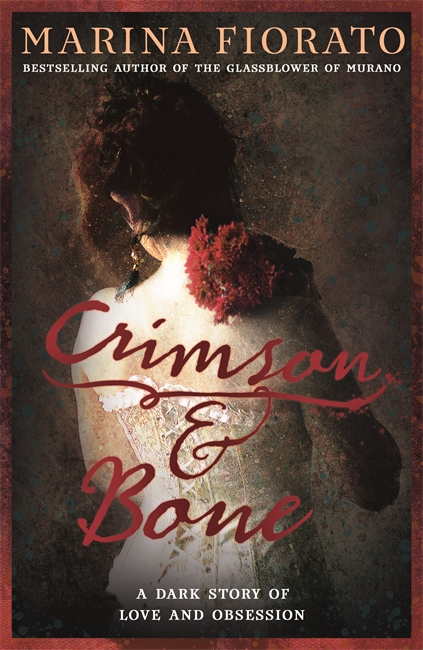
Crimson and Bone by Marina Fiorato

It’s January 1853 and seventeen-year-old Annie Stride is standing on Waterloo Bridge looking down at the River Thames, contemplating suicide. Having grown up in the East End of London as part of a large and impoverished family, Annie has drifted into a life of prostitution. Her only friend, Mary Jane, drowned in the Thames the previous year and now, pregnant and homeless, Annie has decided she has no choice but to do the same. Just as she gets ready to jump from the bridge, she is rescued at the last minute by a handsome young man who introduces himself as Francis Maybrick Gill.

Francis is a talented Pre-Raphaelite artist who is planning a new series of paintings on the subject of the ‘Fallen Woman’ – and he wants Annie to be his model. And so Annie, who had been only moments away from death, finds herself living with Francis in his large and luxurious Gower Street home, posing for portraits of Eve, Rahab and Jezebel. As well as using Annie as his muse, Francis also takes steps to improve her mind, to correct her East End speech and to help her with her reading and writing. She has no idea why he is taking so much interest in her, but she is so grateful she doesn’t care – until late one night two visitors come to call and Annie begins to wonder whether Francis Maybrick Gill is really the man she thought he was.

Crimson and Bone, Marina Fiorato’s latest novel, is divided into three parts and everything I have described above happens in the first part alone. The action also moves away from London for a while to Florence and Venice; Fiorato, who is half-Venetian herself, always writes beautifully about Italy and we are given some lovely, vivid descriptions of the country. The author’s love of art also shines through, with lots of information on the Pre-Raphaelite approach to art, exhibitions at the Royal Academy, the symbolism in the paintings for which Annie models, and, through the character of a mysterious ‘rainbow man’, the origins of the paints and pigments Francis uses.

From the beginning, the reader is kept in the dark as to Francis’s motives. What are his true plans for Annie? Does he really just want to paint her or does he have some other reason for his sudden interest in her? And what is the significance of his obsession with white camellias? A series of diary entries written by Annie’s friend Mary Jane appear at the start of each chapter which eventually shed some light on things, while also raising more questions along the way. It’s obvious that something is not quite right with the whole situation, but we don’t know what or why and the tension builds slowly throughout the novel.

However, there are a few inaccuracies and anachronisms which do spoil the book somewhat – for example, Annie tries to improve her speech by listening to gramophone records (several decades before they would have been available) and is taken to the theatre to see performances of Pygmalion (not staged until 1913) and Adelaide Neilson in Measure for Measure (more than twenty years too early). Admittedly, not knowing anything about Adelaide Neilson, I wasn’t aware of the third one until someone else pointed it out in their review, but it makes me wonder what else I might have been too caught up in the story to notice.

And the fact that I became so caught up in the story and the atmosphere – and that I cared about what happened to Annie – meant that I did enjoy this novel overall, despite its flaws.

This is book 15/20 of my 20 Books of Summer challenge.

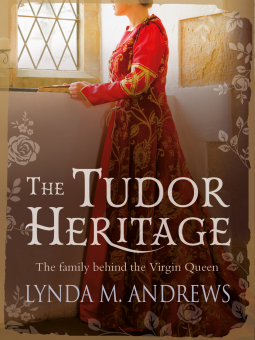
Lynda M. Andrews: The Tudor Heritage and Elizabeth the Witch’s Daughter

A few years ago I read The Queen’s Promise, a book about Anne Boleyn and Henry Percy by an author called Lyn Andrews. I stated in my review that it appeared to be Andrews’ first novel in the historical fiction genre, her others being mainly family sagas set in 20th century Liverpool. It seems that I was wrong, though, because in the 1970s she had several Tudor novels published under the name of Lynda M. Andrews; they have been reissued by Canelo and I have had the opportunity through NetGalley to read two of them.

The Tudor Heritage (1977) opens in 1560, shortly after Elizabeth I’s accession to the throne of England. The novel follows Elizabeth throughout her entire reign, covering such topics as her love for Robert Dudley, her determination not to marry, the problems she faced in dealing with Mary, Queen of Scots, and her relationship with the Earl of Essex. For such a short book – around 250 pages long – there’s a lot of history to include, so it’s inevitable that a lot has had to be left out. However, for a reader new to the period this would be a chance to gain a good overview of the key events and figures of Elizabeth’s reign.

While we do spend a lot of time with Elizabeth, seeing things from her point of view, we also meet the family of Sir Richard Allgrave, a friend of the Queen’s secretary William Cecil. The Allgraves, who appear to be fictional, provide us with another perspective on Elizabethan life, being close to the court but also outside it. Occasionally there are parallels – such as when Sir Richard’s daughter Isabelle vows, like the Queen, to marry a man of her own choosing or not at all – but otherwise I felt that the main purpose of the Allgrave family in the novel was to allow us to see things which Elizabeth herself didn’t experience. For example, one of the Allgraves accompanies Sir Francis Drake on one of his voyages, while several others battle against the Spanish Armada.

The novel is written in a style which is generally clear and easy to read, but now and then the author puts words into Elizabeth’s mouth which sound as though they were drawn directly from 16th century historical documents. This makes a strange contrast with the rest of the dialogue and just didn’t feel right. On the whole, though, I found The Tudor Heritage quite an enjoyable read – but too short and slight to be completely satisfying.

Elizabeth, the Witch’s Daughter (also published in 1977) is the first part of Elizabeth’s story so should really be read before The Tudor Heritage. I did things backwards, but it didn’t matter as I’m already familiar with the period of history – if you’re not, I would recommend reading them in order! This one begins with Elizabeth as a little girl, then takes us through her teenage years and the reigns of her half-brother Edward VI and half-sister Mary I, to end with Elizabeth herself being crowned Queen of England.

Again, this is a short book, but it covers a shorter period of history and this time there is no fictional family to share the pages with Elizabeth. Even so, the novel still doesn’t go into a great amount of depth and there is very little in the way of character development – although I did like the portrayal of Elizabeth’s relationship with her governess and friend Kat Ashley. Elizabeth’s feelings for her mother, Anne Boleyn, are explored, but I thought more could have been made of this – the title of the book had led me to assume that Anne and her legacy would have formed a bigger part of the story.

I think both of these novels would be worth reading if you knew very little about Elizabeth I and wanted to add to your knowledge without committing to anything longer and more challenging. If you’ve read about Elizabeth many times before, as I have, there’s nothing very new or different here. The other two reissues by Canelo are The White Lion of Norfolk, about Thomas Howard (uncle of Anne Boleyn and Catherine Howard) and The Danish Queen, about Anne of Denmark – as I know much less about both of those people, maybe I would have enjoyed those books more than the two I read. I do remember being a lot more impressed with The Queen’s Promise, particularly the Henry Percy sections; it’s interesting to see how Lyn Andrews’ writing has changed and improved over the years.

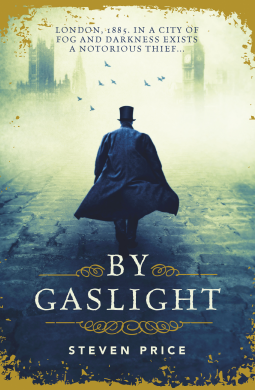
By Gaslight by Steven Price

Well, this was a long book! Not only does it have over 700 pages, it’s also the sort of book that requires a lot of concentration, which makes it a very slow read. I’ve been reading it for the whole of August, which is one of the reasons why I’m not going to complete my 20 Books of Summer challenge by the deadline now. Was it worth so much time and effort? I’m actually not sure; it wasn’t a complete success with me – there were times when I found myself really enjoying it and others when I couldn’t wait to be finished – but on the whole I think I’m glad I read it.

This is the second novel by Canadian author and poet Steven Price. Set in the 19th century, it follows the stories of two men – William Pinkerton and Adam Foole – who are bound together by tales of a shadowy figure known, appropriately, as Edward Shade. Pinkerton is a famous American detective who is in London assisting Scotland Yard with an investigation into the death of a woman, possibly Charlotte Reckitt, whose severed head has been found in the Thames. He believes Charlotte has links with Edward Shade, an elusive criminal whom his father had devoted twenty years of his life to hunting down, without success. But who is Shade? A real person…a ghost…or just an obsession?

Adam Foole, a thief and swindler, has also recently returned to England with his two accomplices – the giant Japheth Fludd, and Molly, a young pickpocket. Foole has received a letter from a woman he once knew asking for help, but on his arrival in London he is unable to find her. Soon his path will cross with William Pinkerton’s; it seems that both of their fates are linked with Charlotte Reckitt and the mysterious Edward Shade.

By Gaslight takes us on a tour of the darker side of London as Foole and Pinkerton (separately or together) visit Millbank Prison, an opium den, a séance and the underground sewer system. However, there are long interludes set in South Africa and in America during the Civil War and these are essential to understanding the backgrounds to our characters and therefore to understanding the mysteries at the heart of the novel. These sections have quite a different tone from the London parts and, to me, they didn’t really feel as though they belonged in the same book; had the whole novel been devoted to the Civil War or had it been purely a Victorian murder mystery I think I would probably have been happier. This is just my opinion, though, and I’m sure other readers will love the variety of settings and changes in atmosphere.

By Gaslight is the perfect title for this book – not only are gaslights mentioned frequently, the whole novel (or the London chapters, at least) feels misty and murky and everything seems to happen either at night or in the fog and rain. Although most of the action takes place in 1885 and any long flashbacks are usually given their own chapters, eventually the borders between past, present and future start to blur, all adding to the sense of mystery and of facts being hidden or obscured.

The author has also made the decision not to use correct punctuation – commas are used sporadically and quotation marks not at all. Again, whether or not you will feel comfortable with this is a matter of personal taste; you could see it as a clever way of trying to immerse the reader more fully in the fogs and mists of the story or, like me, you could just find it annoying and distracting. I should add, though, that at no point did I actually struggle with it; I could always tell how a sentence was intended to be read and who was speaking to whom.

On the whole, though, this is an atmospheric and unusual novel and, despite the length and my reservations about the writing style, I never thought about abandoning it. It’s unlike any other Victorian novel I’ve read and if anyone else has read it, I would be interested to hear what you thought of it.

Thanks to the publisher, Oneworld Publications, for providing a copy of this book for review via NetGalley.

This is book 14/20 of my 20 Books of Summer challenge.

A Desperate Fortune by Susanna Kearsley

It’s been a few years since I last read a Susanna Kearsley book and as I still have two or three left to read I decided to include her most recent, A Desperate Fortune, on my 20 Books of Summer list. There are some connections between this book and her previous one, The Firebird, but they both stand alone and it’s not necessary to read them in order.

Like many of Kearsley’s novels, A Desperate Fortune is set in two different time periods. First, in the modern day, we meet Sara Thomas, a young woman with a special talent for solving mathematical puzzles and breaking codes. Sara also has Asperger’s and relies on the friendship and support of her cousin Jacqui. Jacqui works in the publishing business and when one of her authors, the historian Alistair Scott, asks for help in deciphering a journal written in code, it is Sara who gets the job.

The other thread of the novel takes place in 1732 and follows the story of the diary-writer, twenty-one-year-old Mary Dundas, who is half French and half Scottish. Mary’s family are Jacobites – supporters of the exiled James Stuart, who they believe is the rightful King James VIII of Scotland and III of England. Setting off on a journey across France with her brother Nicolas one day, Mary has no idea what he has planned for her, and is shocked to find herself caught up in a plot to protect a fellow Jacobite who is on the run from the law. Her diary tells of the lengths she goes to, the disguises she adopts and the dangers she faces in trying to conceal her companion’s true identity.

These two storylines alternate throughout the book, so that we read several entries from Mary’s journal, followed by Sara’s experiences in decoding it. Both women are interesting characters – and there are a few parallels between the two – but I found Mary’s story much more gripping and couldn’t help thinking that it would have worked just as well on its own without Sara’s framing it. There’s a romance for each woman too, but again, it was Mary’s that I found most convincing; although I did like Sara’s love interest, it all seemed to happen too quickly and too conveniently.

It was interesting to revisit the subject of the Jacobites, who also feature in The Firebird – although the two books explore the topic from very different perspectives, with this one being set in France and the other in Russia. The author’s note at the end of the book is long and comprehensive, discussing some of the choices made in writing this novel and explaining which parts of the story are based on fact and which are fictional. I was surprised to see how many of the characters I’d assumed were purely imaginary were actually inspired by real people!

I did enjoy A Desperate Fortune, though not as much as most of the other Susanna Kearsley novels I’ve read. My favourites seem to be the ones with supernatural elements, such as The Firebird, The Rose Garden and Mariana. I always like Kearsley’s writing style, though – there’s something so comforting about it, so easy and effortless to read. It’s the same feeling that I get when I pick up a book by Mary Stewart. I’m looking forward now to reading my remaining two Kearsley novels, The Shadowy Horses and Sophia’s Secret (the UK title for The Winter Sea).

This is book 12/20 for my 20 Books of Summer challenge. (I’m aiming for 15 now, I think – anything over that will be a bonus!)