The Essex Serpent by Sarah Perry

What is the Essex Serpent? A magical beast? A wonder of science? A judgement from God? William Ransome, vicar of the parish of Aldwinter, where the legendary serpent is said to have been sighted, is reluctant to give any credence at all to the rumours, viewing them as a distraction from the religious faith he is trying to instil in his parishioners. Cora Seaborne, however, is fascinated by tales of the fearsome sea monster lurking in the marshes of Essex, stealing away livestock and claiming human lives. Unusually for a woman in 1893, Cora is an amateur naturalist, with a particular interest in the work of the fossil collector Mary Anning. When she hears of the Essex Serpent, she wonders whether it could be an undiscovered species – or some sort of dinosaur?

Cora will have plenty of opportunities to test her theories and investigate further; having been recently widowed, she and her son Francis have moved from London to Colchester in Essex. It is on a visit to nearby Aldwinter that she meets William Ransome. Although their views are very different – not just on the serpent, but also on science, religion, and just about everything else – the two find themselves drawn together and a friendship begins to develop; a friendship which could become something more, if it wasn’t for the fact that Will is already married and that his wife, Stella, is dying of tuberculosis.

Although it is the relationship between Cora and William which drives the novel forward, there are many other subplots involving a large number of other characters. There’s Cora’s companion Martha, for example, a socialist who is campaigning to improve the living conditions of London’s poorest people, and Luke Garrett, a surgeon who closely follows all the latest advances in medicine and is itching for an opportunity to try them out for himself. A lot of time is also devoted to Francis, a serious, solitary boy who would probably be diagnosed today with a form of autism, and to Stella who, as her health declines, develops an obsession with collecting anything blue. I couldn’t help feeling, at times, that Sarah Perry was trying to do too much – trying to include every possible social issue of the 19th century – but on the whole I thought this was a fascinating, intelligent novel, with ideas spilling out of every page.

The Essex Serpent is one of those novels which is not only set in the Victorian era, but also attempts to capture the tone and style of a Victorian novel – while at the same time, being written in the modern day, bringing a new perspective to topics and themes which Victorian authors had less freedom to explore. The French Lieutenant’s Woman by John Fowles is a good comparison – although I have to say I enjoyed this book a lot more than Fowles’. I thought Sarah Perry’s writing was excellent, especially her descriptions of the landscape and the natural world, but occasionally her choice of language (particularly the use of contractions such as I’d’ve and shouldn’t’ve) pulled me out of the 19th century world she had otherwise so carefully created.

The criticisms I have of this book, though, are just minor ones; overall I was very impressed and can certainly understand why it has been so popular and so successful. It’s also nice to find a book that lives up to the promise of its beautiful cover!
House of Shadows by Nicola Cornick

After reading Nicola Cornick’s time-slip novel The Phantom Tree earlier this year, I was hoping for an opportunity to read her previous book, House of Shadows – and my chance came when I spotted it on the shelf on a recent visit to the library. Although House of Shadows doesn’t include physical time travel in the same way that The Phantom Tree does, it still features storylines set in different time periods with several close links between them. It’s not my favourite of the two books, but I did enjoy it.

It’s difficult to know where to begin writing a summary of a book like this, so I’ll start in the modern day where we meet artist and glass-engraver Holly Ansell who has just received a desperate call from her niece, telling her that her father (Holly’s brother Ben) has disappeared. Heading straight for the old Mill House in Ashdown, Oxfordshire, where Ben was last seen alive, all Holly is able to learn is that prior to his disappearance he had been researching his family tree and had discovered the diary of Lavinia Flyte, a 19th century courtesan.

Hoping for clues that will lead her to Ben, Holly begins to read Lavinia’s journal and quickly finds herself caught up in the memoirs of a brave, resourceful young woman who once lived at nearby Ashdown House. But before we can understand the links between Lavinia and the Ansell family, we have to go further back in time, to the 17th century, to follow the story of Elizabeth Stuart, known as the Winter Queen. The daughter of James I of England and VI of Scotland, Elizabeth was briefly Queen of Bohemia, through her marriage to Frederick V. However, it is her relationship with the soldier William Craven which provides the connection to the other two threads of the novel.

All three storylines are interesting and I’m sorry I can’t say too much about any of them without straying into spoiler territory. What I can say is that there are two objects which play an important role in each of the time periods – a mysterious crystal mirror and a priceless jewel known as the Sistrin Pearl, both believed to possess magical powers and said to have been used in the divination and prophecies of the Knights of the Rosy Cross. It seems that Frederick and Elizabeth really are thought to have possibly had some involvement with the Knights, so this aspect of the novel is not as far-fetched as it may sound – although I’m assuming the mirror and jewel themselves, or at least their powers, are fictional.

The Elizabeth sections of the novel were my favourites, partly because I know so little about her and partly because I enjoy reading about 17th century Europe. As far as I can tell, there is no real evidence to prove whether William Craven was romantically involved with Elizabeth, but they certainly knew each other and the story Nicola Cornick weaves around them is maybe not beyond the realms of possibility. Lavinia’s diary entries set in Regency England also held my attention – although they are quite brief, compared with the longer chapters devoted to Holly and Elizabeth, she is a vividly written character with a strong voice. I did also like Holly, but I found the contemporary storyline the least interesting – possibly because most of the action takes place in the historical sections, while Holly has more of a passive role, trying to piece together the stories of the other two women.

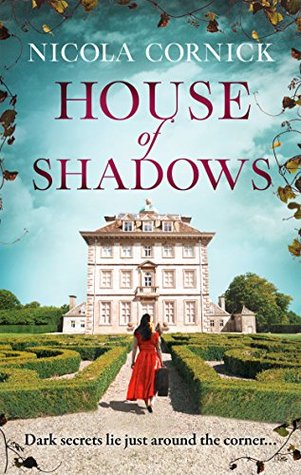
Ashdown House in Oxfordshire, the house at the heart of the novel and the one pictured on the front cover, really exists; it is now owned by the National Trust and Nicola Cornick volunteers there. It’s always nice to discover that the setting for a novel you’ve been reading is based on a real place – I’ve made a note to try to visit it if I’m in that part of the country.

Nicola Cornick has written several other books, but they seem to be more conventional historical romances, so I think I’ll wait and hope that she writes more that are similar to this one and The Phantom Tree!

The Winter Isles by Antonia Senior

One of the many things I love about reading historical fiction is that it gives me an opportunity to learn about lesser-known historical figures – the ones who were never mentioned in my school history lessons and of whom I could otherwise have gone through the rest of my life in complete ignorance. One of these is Somerled, whose story is told in Antonia Senior’s beautifully written The Winter Isles. Set in 12th century Scotland, we follow Somerled as he sets out to prove himself as a warrior and claim the right to call himself Lord of the Isles.

We first meet Somerled as a boy in 1122. The son of a minor chieftain from the Western Isles, he is already becoming aware of his father’s weaknesses as a leader – and in this unpredictable, dangerous world, strong leadership is vital. After his father’s hall is burned during a raid, Somerled gets his chance to step forward and take control and, despite his youth, he finds that is able to command the loyalty and respect of his men. But Somerled is an ambitious young man and if he is to achieve his dreams he must build alliances with lords and rulers of neighbouring islands while conquering others – as well as keeping an eye on the movements of Scotland’s king, David, in nearby Alba.

As you can probably tell from what I’ve said so far, The Winter Isles does include quite a lot of battle scenes and descriptions of raids by land and by sea, but there are other layers to the novel too. It isn’t a book packed with non-stop action; there are quiet, reflective sections in which Antonia Senior’s choice of words paint beautiful pictures of the sea and the Scottish islands, their landscapes and their wildlife. She also explores what Somerled is like as a person and how he grows and changes as his power increases.

Not all of the story is told from Somerled’s perspective. There are also chapters narrated by two women, his childhood friend Eimhear (known as ‘the otter’) and the beautiful Ragnhild, both of whom play important but very different roles in Somerled’s life. Eimhear and Ragnhild have strong and distinctive voices and I thought the decision to let them tell their own stories in their own words was a good one, showing what life was like for women during that period and also offering different views of Somerled’s character.

The Winter Isles is a lovely, poignant, intelligent novel which made me think, at times, of King Hereafter by Dorothy Dunnett. However, the comparison is mainly in the setting; the writing style in The Winter Isles is lighter and dreamier and there’s something about it that prevented me from becoming as absorbed in Somerled’s story as I would have liked. This is an impressive book but not one that I particularly loved. Still, I’m now curious about Antonia Senior’s other novels, Treason’s Daughter and The Tyrant’s Shadow, set during the English Civil War and rule of Oliver Cromwell respectively.

As for Somerled, it seems that his portrayal in The Winter Isles is based on a mixture of history, myth and legend; many of the facts regarding the real man have been lost in the mists of time, but the story Antonia Senior has created for Somerled and his children to fill in the gaps feels convincing and realistic. Now that I’ve been introduced to him, I would like to read more. Has anyone read Nigel Tranter’s Lord of the Isles? Are there any other books you can recommend?

Soot by Andrew Martin

You know when you can tell as soon as you start reading that you’re going to enjoy a book? That’s how I felt about Soot, Andrew Martin’s new historical mystery set in 18th century York. The plot, the characters, the atmosphere, the writing style…I loved them all!

Let’s start with the plot, then. In August 1798, Matthew Harvey, a painter of silhouettes, is found dead – stabbed with his own scissors – in his house in Coney Street, York. Assuming that suicide can be ruled out, the only suspects are the six sitters who visited him during the previous week. The problem is, the page on which Harvey recorded their names has been torn out of his ledger, so that the only remaining clues are Harvey’s private duplicates of the silhouettes – or ‘shades’, as they are known.

Fletcher Rigge, a young gentleman who has found himself in financial difficulties, has spent three months in debtors’ prison in York Castle when he is approached by Captain Harvey, the silhouette-maker’s son. The Captain makes him an offer he can’t refuse: he will arrange Rigge’s release from prison, on the condition that Rigge can identify the people in the shades and help to track down the murderer. Rigge has previously used his detection skills to locate a missing book while working at Skelton’s Bookshop – this is what brought him to the Captain’s attention – but finding a killer could prove to be somewhat more difficult than finding a book…

As Rigge attempts to trace the people in the silhouettes, his search brings him into contact with a variety of colourful characters, including the clever and resourceful Maria Sampson, the temperamental young actor Jeremiah Smith – and my favourite, the London-based author Samuel Gowers, a proud, pompous man with an unfortunately large nose which lends itself to some comic scenes à la Cyrano de Bergerac. Rigge himself is another intriguing character, described at the beginning as having ‘a lowness of spirits, offset by a mordant wit and a prideful obstinacy’. Due to the structure of the book (more on that shortly) I was never quite sure exactly how reliable his narration was, but I did end up liking him and enjoyed accompanying him on his travels around York and beyond.

Georgian York provides a wonderfully atmospheric setting for the novel, particularly when covered in a blanket of snow (Rigge’s investigations take place in winter). From the slums of First Water Lane, home to Captain Harvey, to the Theatre Royal, the Black Swan coaching inn and the elegant townhouse belonging to one of the suspects, everything is vividly described. The language used in the book is appropriate for the 18th century too; I could tell the author had taken a lot of care to try to choose the right words and turns of phrase. This is particularly important because the book is presented as a collection of authentic documents gathered together by attorney-at-law Mr Erskine and sent to the Chief Magistrate of York.

Most of the novel is in the form of extracts taken from Fletcher Rigge’s own diary, but there are also diary entries written by Captain Harvey’s mistress Esther, newpaper reports, interviews with witnesses conducted by Erskine’s clerk, Mr Bright, and commentary from Erskine himself. Andrew Martin uses this structure very effectively to keep the reader guessing and wondering which accounts are reliable and which are not. The solution to the mystery is certainly not as black and white as Matthew Harvey’s shades!

Soot is a great book. At first Fletcher Rigge’s story reminded me of Thomas Hawkins’ in The Devil in the Marshalsea, but it quickly developed into something different and I thoroughly enjoyed every moment of it. Now I’m hoping for a sequel!

Thanks to the publisher for providing a review copy via NetGalley.

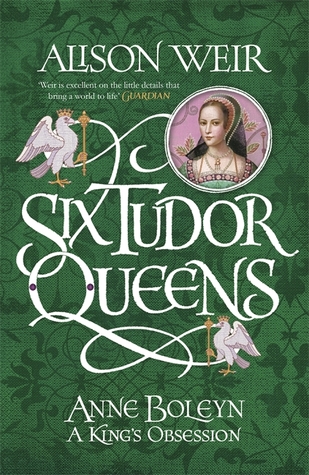
Six Tudor Queens: Anne Boleyn, A King’s Obsession by Alison Weir

This is the second novel in Alison Weir’s new series telling the stories of the six wives of Henry VIII. I read the first book last year – on Katherine of Aragon – and enjoyed it; now, as you would expect, it’s the turn of the second wife, Anne Boleyn.

Like the first novel, this is a straightforward account of Anne’s life, beginning with her early years and taking us right through to her beheading in 1536. Whether you only have a basic knowledge of Anne’s story or whether you’ve read about her many times before, you can expect to learn at least something new from this book as it’s very long, very detailed and very thorough, leaving little out. As with the Katherine of Aragon book, I question whether it was really necessary to include such a lot of detail, but I did enjoy the book overall so won’t complain about that too much!

I found the opening chapters of the book particularly interesting because this section covered the part of Anne’s life with which I was least familiar – her time spent in the Netherlands at the court of Margaret of Austria, and in France serving first Henry VIII’s sister Mary Tudor, then Queen Claude, wife of the French king Francis I. Her experiences at these courts had an important influence on Anne’s life and character; she was able to observe the rule of these three very different women, she was exposed to new ideas and literature – including the works of women writers such as Christine de Pizan – and she began to develop her interest in religious reform.

Once Anne returns to England and catches the eye of Henry VIII, I felt I was on much more familiar ground. Perhaps for this reason I found the middle section of the novel tediously repetitive as Henry attempts to have his marriage to Katherine annulled, leaving him free to marry Anne. Of course, Alison Weir is only following historical fact here: the King’s Great Matter, as it became known, did go on for years and must have been very frustrating, to say the least, for Anne and for Henry – but it doesn’t make for exciting reading.

While this is very much Anne Boleyn’s own story, all of the other historical figures of the period are here, from statesmen such as Cardinal Wolsey and Thomas Cromwell to Anne’s brother and sister, George and Mary. You may or not may be happy with the way these characters and others are depicted, depending on your own interpretation of events and on where your sympathies lie. When it comes to Anne, though, I think Weir has done a good job of making her feel convincingly human – not a heroine and not a villain, just a flawed and complex woman who loves the idea of being queen more than she loves the king himself.

As I’ve said, Alison Weir does stick closely to historical fact for most of the novel and I had no problems with the accuracy, although I accept that I am not an expert on Tudor history by any means – I read a lot of it, but not as much as some readers! She does take some liberties in imagining Anne’s feelings for Henry Norris – one of the men implicated in her trial – but with a lack of primary sources allowing us to access Anne’s own thoughts, how can we know how she really felt? There is also a scene in which Anne meets Leonardo da Vinci which I didn’t believe would be true, but in her notes at the end of the book Weir explains why she thinks it could have happened, while confirming that there is no real evidence for it.

The final chapters of the book describe Anne’s downfall and even though I knew what would happen to Anne, it was still sad to watch her story move towards its inevitable end. I found the closing scene slightly bizarre, but Alison Weir does talk about that in her author’s note! We also see the increasing prominence of Jane Seymour in the king’s life – Jane will be the subject of the third Tudor Queens book and I’m already looking forward to seeing how she will be portrayed.

Thanks to the publisher for providing a copy of this book for review via NetGalley.

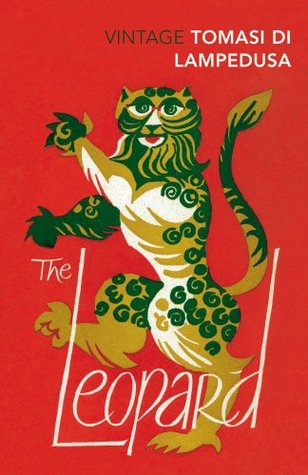
The Leopard by Giuseppe Tomasi di Lampedusa

This novel by Italian author Giuseppe Tomasi di Lampedusa, published posthumously in 1958, is one I had been interested in reading for a few years, having seen lots of very positive reviews, but it was including it on my 20 Books of Summer list that pushed me into picking it up towards the end of June. I have to confess, when I first started reading it I wasn’t at all sure whether I was going to like it, but I think that was mainly because I had no understanding of the historical context. Google came to the rescue and after I’d familiarised myself with the background to the novel I found it much easier to follow what was happening.

The Leopard is set in 19th century Sicily during the Risorgimento (the movement for the unification of Italy). We explore this period of Italian history through the eyes of a Sicilian nobleman, Don Fabrizio Corbera, Prince of Salina, who is forced to watch as the world around him changes beyond his control. Beginning in 1860, the year Garibaldi lands on the coast of Sicily, we see the gradual decline of the Prince’s family and the nobility as a whole.

While Don Fabrizio regrets the loss of values he once held dear and hopes that somehow, once Italy has been united, the class system will be able to survive, his nephew Tancredi has a very different outlook, explaining that “everything needs to change, so that everything can stay the same”. The relationship which develops between Tancredi and the beautiful Angelica, daughter of a wealthy businessman, is only possible because of the breakdown in the class structure; characters like Angelica represent the future, whereas those like Don Fabrizio are becoming part of history.

Although the novel is set in the past – and does immerse the reader in another time and place, with some elegant and vivid descriptive writing – the author occasionally reminds us that he is viewing events from a point many years in the future. For example, he lets us know that the palace he is describing with painted gods on the ceiling will be destroyed by a bomb in 1943. It all adds to the poignancy and to the atmosphere of decay and decline.

If you’re wondering about the title, it refers to the symbol of the Salina dynasty and, I think, the power and grace of the aristocracy. As the Prince himself muses, “We were the Leopards, the Lions; those who’ll take our place will be little jackals, hyenas…” The whole novel is rich in symbolism: a stone leopard above the door has the legs broken off in a sign of things to come, while the initals engraved on Don Fabrizio’s wine glass are fading away and even the fate of his dog Bendico is another reminder that everything must come to an end.

The Leopard is a beautifully written book and although it’s surprisingly short, there’s so much packed into its pages I think a re-read would be necessary to be able to fully appreciate it. After an uncertain start, I was very impressed with this book and can see why it is considered a classic Italian novel.

This is Book 4/20 for my 20 Books of Summer challenge.

Mata Hari by Michelle Moran

So far my feelings about Michelle Moran’s novels have been very mixed. Cleopatra’s Daughter was interesting, but felt too light and insubstantial, The Second Empress was much better, but I had one or two problems again with Rebel Queen. I had hoped Mata Hari (also published as Mata Hari’s Last Dance) would be another good one, but unfortunately it turned out to be my least favourite of the four that I’ve read.

Before I read this book, all I knew about Mata Hari was that she was an exotic dancer who was accused of spying during the First World War. I felt sure that she must have been a fascinating woman and I was looking forward to learning more about her. And I did learn a lot from this novel. Mata Hari narrates her story (fictional, but based on fact) in her own words and tells us all about her dancing career, her experiences of life in European cities such as Paris and Berlin, and her many romantic relationships, including several with military personnel which led to her being accused of passing secrets to Germany.

However, I wanted to get to know the woman behind the newspaper headlines and the seductive costumes – Margaretha Zelle, or M’greet as she is called in the novel – and although she does confide in us now and then about her childhood in the Netherlands (she did not come from an Indian background, as she tried to claim), her time in Java during her unhappy marriage to Rudolf MacLeod and her heartbreak at the loss of her children, I never felt very close to Mata Hari and didn’t gain a very good understanding of the person she really was.

The one aspect of Mata Hari’s life that Moran does successfully capture is her loneliness; I didn’t like her and had very little sympathy for her as she seemed so immature and selfish, but I could see that she was not a happy person and that her character had been shaped by her earlier experiences. The descriptions of Mata Hari’s various dances are also well done, particularly one that she performs with a live snake while dressed as Cleopatra. The novel is strangely lacking in period detail, though, and apart from the obvious references to the war and to other famous people of the time – her rival dancer, Isadora Duncan, for example – I didn’t feel that there was much sense of time or place at all.

The book is also disappointingly short, with under 300 pages in the edition I read. If you just want a basic overview of Mata Hari’s life and career, it’s perfectly adequate, but for something deeper you will need to look elsewhere. The section of the novel covering her spying activities is very brief and feels almost like an afterthought, which is a shame as this is the part of the story which should have been the most interesting. Even on finishing the book, I’m not completely clear on what we are supposed to assume; was Mata Hari really a spy or was she just someone who had made some poor decisions and been carried along by events outside her control? To be honest, long before we reached this point I had lost interest anyway and had already decided that I would need to look for another book on Mata Hari one day. Has anyone read The Spy by Paulo Coelho?