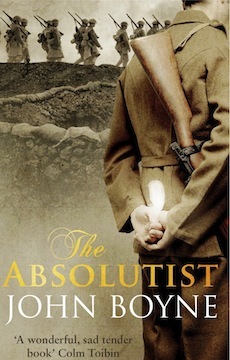
The Absolutist by John Boyne

the-absolutist It’s 1919 and twenty-one-year-old Tristan Sadler is home from the war. He knows he is lucky to have survived when so many like him didn’t – people like his friend and fellow soldier, Will Bancroft. John Boyne’s The Absolutist follows the stories of Tristan and Will, two very different men with very different attitudes towards life, death, love and war.

As the novel opens, Tristan is taking a train from London to Norwich where he plans to visit Will’s sister, Marian, and return the letters she sent to Will during the war. This is not the only reason for his visit, however – he has been carrying a terrible secret and is hoping to unburden himself to Marian so that they can both move on and face the future.

Through a series of long flashbacks, we witness Tristan’s first meeting with Will during their training at Aldershot in 1916 and then watch their relationship develop as they are sent to France and endure the horrors of life in the trenches. This story unfolds alongside the ‘present day’ storyline set in 1919, with Tristan’s big secret kept concealed until near the end of the book, allowing suspense and tension to build throughout the novel. There’s already plenty of tension anyway, of course, because this is a novel which doesn’t shy away from describing the horror and the uncertainty of war and although we know from the start that Tristan survives and Will doesn’t, we don’t know exactly how Will’s life ended or what the fate of the other characters in the story might be.

I’ve read several of John Boyne’s other novels (and particularly loved This House is Haunted, Crippen and A History of Loneliness) so I started this one with high hopes. I thought it was a fascinating and moving read which I enjoyed almost – but not quite – as much as the three I’ve just mentioned. The period leading up to, during and just after the First World War is one that I always like to read about and this novel covers many different aspects of the war and its aftermath. What I found particularly interesting was the exploration of what it meant to be a ‘conscientious objector’ or an ‘absolutist’ during the war, how they were treated by the other soldiers and how they were viewed by the public. The difference between the two is that conscientious objectors, despite refusing to fight, would often agree to fill other roles, such as stretcher bearers, but absolutists were unwilling to have any involvement at all.

The one thing that spoils The Absolutist, in my opinion, is some of the language Boyne uses, especially in the dialogue, which doesn’t feel appropriate to the time period. Other reviews of this book have mentioned inaccuracies regarding the military terminology too, although I would never notice things like that myself. It’s a shame, considering the care and attention to detail Boyne has obviously put into his recreations of life in the trenches and his treatment of other important issues of the period such as women’s suffrage and attitudes towards homosexuality. Still, I had no major problems with this novel and found it a powerful and thought-provoking read. I still have plenty of John Boyne’s earlier books left to explore and am looking forward to his new one, The Heart’s Invisible Furies, coming in 2017.

Redgauntlet by Sir Walter Scott

redgauntlet Redgauntlet, one of Scott’s Waverley novels, is set in Scotland and the north of England in 1765, twenty years after the failed Jacobite Rising of 1745. Although the rising was unsuccessful and ended in disaster for Charles Edward Stuart and his supporters, there were still those who dreamed of restoring the exiled Stuarts to the throne. Redgauntlet centres around a fictional third Jacobite Rebellion and the lives of two innocent young men who accidentally become caught up in the plot.

The novel is made up of a mixture of letters, journal entries and first person narrative written from the perspectives of Darsie Latimer and his friend, Alan Fairford. Darsie, an orphan, has grown up in Scotland knowing very little about his family background, aware only that he has been forbidden to cross the border into England until he turns twenty-five, which is also when he will come into his inheritance. The reason for this unusual condition is unknown to Darsie but eventually becomes clear as the story unfolds and the truth about his past is revealed.

Kidnapped on a fishing expedition to the Solway Firth, Darsie discovers that he has fallen into the clutches of the mysterious Hugh Redgauntlet, a former Jacobite who seems to know more about Darsie than Darsie does himself. Help is on its way, however – when Alan Fairford, who is completing his legal studies in Edinburgh, receives a message from a beautiful young lady known only as Green Mantle, warning him that Darsie is in danger, he sets off at once in search of his friend.

Redgauntlet is the third Scott novel I’ve read (the others were Ivanhoe and The Heart of Midlothian) and my favourite so far. In fact, I was ready to name it one of my books of the year until the plot began to fizzle out towards the end, which meant it lost its place on my list. Up to that point, though, I was completely engrossed in the adventures of Darsie and Alan. No, it’s not a particularly easy book to read, and yes, there are some long, dry passages where Scott discusses the politics of the period or describes obscure points of Scottish law, but otherwise I loved it. I loved the setting, the characters, the air of mystery and foreboding, the exciting plot and the way the novel was structured to incorporate different forms of writing and different viewpoints. I particularly enjoyed reading the letters sent between Darsie and Alan in which the personality of each man – the practical, unimaginative Alan and the romantic, adventurous Darsie – come through strongly.

The problem I had with this novel was with the storyline surrounding the third Jacobite Rising. Knowing that it never happened historically took away some of the suspense and Scott didn’t manage to convince me that Redgauntlet’s schemes would ever come to anything. I enjoyed the build-up, but when the rebellion started to come to the forefront of the novel near the end of the book, this was when I lost interest. It all seemed such an anti-climax after sticking with the story through so many pages. Still, the good bits of Redgauntlet are very, very good – my favourite part was Wandering Willie’s Tale, a wonderful ghost story which appears in the middle of the book. It’s worth reading Redgauntlet for this story alone.

I’m looking forward to reading more of Scott’s novels. Having only read three so far, I certainly have plenty left to choose from. If you’ve read any of them, please let me know which you think I should read next. And I would love to hear other readers’ thoughts on Redgauntlet. Brilliant but flawed is my verdict!

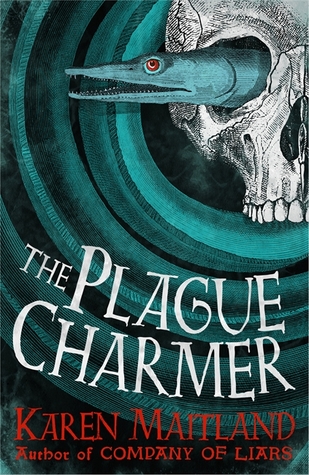
The Plague Charmer by Karen Maitland

the-plague-charmer The village of Porlock Weir appears to be under a curse. Janiveer, a woman rescued from the sea following an eclipse of the sun, has warned the villagers that plague is approaching and that only she can save them – for a price. It’s a price that nobody is willing to pay, but it’s not long before the disease reaches their small coastal community and there are some in the village who begin to wonder whether they have made the right choice. The year is 1361 and the horrors of the Great Pestilence of thirteen years before are still fresh in people’s minds.

In The Plague Charmer, Karen Maitland tells the story of Porlock Weir through the eyes of several different characters: Will, a dwarf; Matilda, devoted to her religion; Christina, who has given birth in secret at nearby Porlock Manor; and Sara, a mother trying to protect her two young sons. It’s a complex plot; each of these characters, and others, have storylines of their own, but they all come together to form a dark and magical mixture of myth, folklore and legend, love, murder, religious relics and secret cults.

There were so many things to like about The Plague Charmer. I particularly loved the setting – a little fishing village on the Exmoor coast – and learning about the lives of the people who lived there, steeped in tradition and superstition. It was interesting to watch the people of Porlock Weir deal with the arrival of the plague at a time when so little was understood about the causes of illness and death, a time when even a natural phenomenon such as an eclipse caused panic and terror. Whether or not Janiveer really possessed magical powers, it was easy to see how she was able to take advantage of the fears of the villagers to manipulate the situation to serve her own ends.

Although I can’t really say that I liked any of the characters, I did enjoy getting to know them all, especially Will, the ‘fake dwarf’. Not a natural dwarf, but one created by his master in a most horrific way, to be sold for the entertainment of rich noblemen. Due to his size and the treatment he has been forced to endure, Will looks at the world differently from the other villagers and is in the unusual position of being not quite ‘one of them’ but not quite an outsider either. He’s a great character and one of only a few in the novel who behaved with decency and humanity. I couldn’t help thinking, though, that there were too many characters and too many subplots (one in particular, involving Sara’s sons, Luke and Hob, added very little to the overall story, in my opinion). I found the constant switching between viewpoints distracting and would have preferred to have spent longer following one character before moving on to the next.

Getting back to the positives, I enjoyed reading the author’s Historical Notes at the end of the book. These provided an opportunity to learn more about the background to the story and some of the people and places that are mentioned (most of the characters are fictional, but a few, such as Sir Nigel Loring of Porlock Manor, are based on real historical figures). I was also pleased to discover that we are given the answers to the intriguing riddles found in the headings of Will’s chapters. Some of them were easy to guess, but others had left me baffled!

Finally, I should probably leave you with a word of warning. Like the other Karen Maitland books I’ve read (The Vanishing Witch and The Raven’s Head), this is a very dark story and can be quite gruesome at times; you need to be prepared for bad things happening to the people of Porlock Weir, and that includes the children. It’s not a book for the faint-hearted, but it’s certainly a fascinating and atmospheric one.

Thanks to Headline for providing a copy of this book for review.

Days Without End by Sebastian Barry

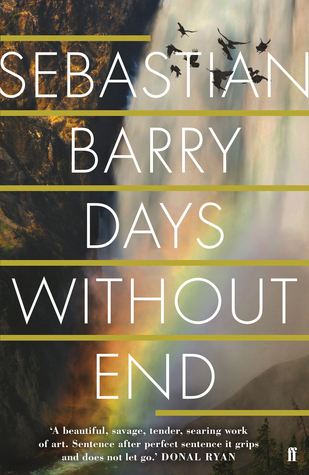
days-without-end Sebastian Barry is one of my favourite Irish authors; having enjoyed his last three novels, The Temporary Gentleman, On Canaan’s Side and The Secret Scripture, I began to read his latest one, Days Without End, not really knowing or caring what it was about. I knew I could count on Barry to have produced another beautifully written novel and I was sure that would be enough. Unfortunately, it wasn’t – I still found things to like and to admire, but this just wasn’t my sort of book.

Thomas McNulty and John Cole are “two wood-shavings of humanity in a rough world” who meet in Missouri as teenagers while sheltering from the rain together under a hedge. It’s the 1850s and Thomas, having lost his family to the famine in Ireland, has fled to America in search of a better life. John, who was born in New England, is the first friend Thomas has made in his new country and the two quickly become inseparable. The first thing they need to do is find employment and here their youthful good looks prove useful when a saloon owner offers them a job as dancers, on the condition that they dress up in women’s clothes to entertain the local miners.

At seventeen, considering themselves too old to continue their dancing act, Thomas and John leave the saloon and join the US Army. Fighting first in the Indian Wars and later in the Civil War (on the Union side), it’s a difficult life and the two young soldiers face dangers and obstacles ranging from hunger and illness to extreme weather and encounters with Native Americans. Throughout all of this there are two things that sustain them: their love for each other and their relationship with Winona, a young Sioux girl separated from her family during a raid.

Days Without End is narrated by Thomas McNulty and this provides a link with several of Barry’s previous novels which tell the stories of other members of the McNulty family (he has also written several which focus on another Irish family, the Dunnes). Thomas, though, is obviously from an earlier generation of McNultys; the other novels are set in the 20th century, which makes this one feel a bit different. Another difference is that this book is set in the American West rather than Ireland – and I think this is probably why I had a problem. Westerns are not a genre I would usually choose to read (although I did love Patrick DeWitt’s The Sisters Brothers) and too much of this novel just didn’t interest me at all.

If the setting does sound of interest to you, then I would have no hesitation in recommending this book even though I didn’t particularly enjoy it myself. Sebastian Barry is a very talented writer and there are some beautiful passages in this novel; the poetic narrative voice didn’t always sound very convincing coming from the down-to-earth soldier, Thomas McNulty, but that didn’t really matter – the beautiful, poetic writing was the reason I chose to read this book, after all.

What I did struggle with was reading page after page of descriptions of army life, buffalo shooting expeditions and battles against the Sioux. I don’t think the balance between these aspects of the story and the more personal aspects was quite right and I very nearly gave up on the book halfway through. I kept reading mainly because I wanted to know what would happen to Winona – and I was rewarded with an interesting and dramatic ending to her storyline.

Days Without End has its good points and its bad points, then, and I think my disappointment with it is entirely due to my personal reading tastes. I shouldn’t have assumed that just because I’ve loved everything else I’ve read by Sebastian Barry I would love this one too, despite a setting and subject which didn’t appeal to me. I’m still looking forward to going back and exploring his earlier novels; I have a copy of Annie Dunne, which sounds much more like the kind of book I would enjoy, so that’s probably the one I’ll be reading next.

Thanks to Faber & Faber for providing a copy of this book via NetGalley for review.

The Strangler Vine by MJ Carter

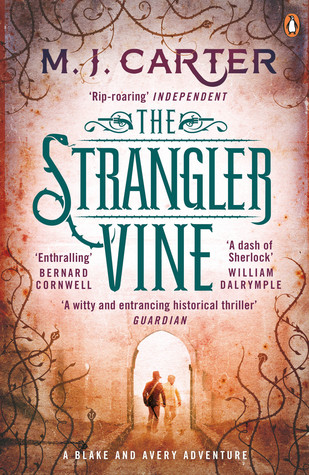
the-strangler-vine I love a good historical mystery and when this one was recommended to me recently (thank you, Pam!) I remembered that I already had a copy on my Kindle and couldn’t leave it to languish there any longer. Having read it, I wish I’d found time for it earlier – it’s an excellent book – but on the positive side, there are now two more in the series which I can read sooner rather than later.

The Strangler Vine is set in India in 1837, when large areas of the country were ruled by the British East India Company. Our narrator is William Avery, a young officer with the Company’s army. Originally from Devon, he has grown up reading the work of Xavier Mountstuart, a fictional author and poet whose writings sound similar to Rudyard Kipling’s and which have given him a romanticised view of India. Having spent nine months in Calcutta, however, he is starting to feel disillusioned with “the monstrous climate, the casual barbarities of the native population and the stiff unfriendliness of the European society”.

Disappointed that he still hasn’t been summoned to join his cavalry regiment in North Bengal, Avery is growing frustrated and bored – until the day he is asked to accompany an older officer, Jeremiah Blake, on a special mission. It seems that his literary hero, Mountstuart, has gone missing while carrying out research for a new poem and Avery and Blake have been given the task of finding him.

The Strangler Vine is a wonderful, fascinating novel; there are so many things I enjoyed about it that I’m not sure where to start! First of all, there’s the relationship between the two main characters, Avery and Blake, who, like all good mystery-solving duos, are two very different people who complement each other perfectly. Young, naïve and loyal to the Company, Avery is more instantly likeable and although he can be slow to pick up on clues, the fact that he never seems to know any more than the reader does makes him the perfect character to guide us through the novel. There’s a sense that where Indian culture, politics and history are concerned, Avery is learning as he goes along, which means background information tends to be given in large chunks rather than being lightly woven into the story. This style won’t appeal to every reader, but I found it all so interesting that it didn’t bother me.

Jeremiah Blake is a more unusual and intriguing character; although he still has connections to the East India Company, he no longer actively works for them – his knowledge of Indian languages and marriage to an Indian woman have aroused the distrust of the other officers who consider him to have ‘gone native’. His attitude towards Avery is abrupt, rude and dismissive and because we only see him through Avery’s eyes, he is a complete enigma at first. Eventually his true character starts to be revealed, but I was still left with the feeling that we have more to discover about Blake.

The mystery element of the novel is quite complex and what seems to Avery at first to be a straightforward search for a missing man soon develops into something with much deeper implications. It all revolves around the cult of Thuggee – organised gangs of thieves and murderers who worship the Goddess Kali and who are causing widespread fear and panic amongst the British in India. Mountstuart is thought to have been researching the Thugs at the time of his disappearance and so Avery and Blake, following his trail, also become drawn into the mystery and controversy surrounding the cult.

I loved The Strangler Vine; apart from the aspects of the novel I’ve already mentioned, I also really liked MJ Carter’s writing; it’s intelligent and detailed, she brings the setting vividly to life and, while I can hardly claim to be an expert on the India of the 1830s, if there were any inaccuracies or anachronisms I didn’t notice them. I can’t wait to join Avery and Blake for another adventure in The Printer’s Coffin.

Watch the Lady by Elizabeth Fremantle

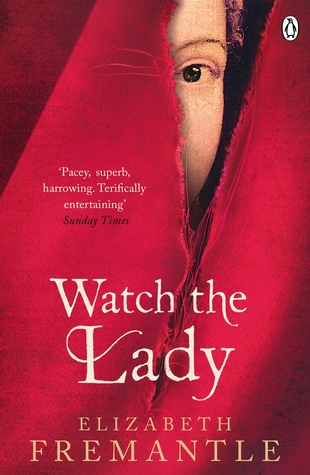
watch-the-lady I’ve fallen behind with Elizabeth Fremantle’s books; having read Queen’s Gambit and Sisters of Treason shortly after they came out, the publication of her next book – Watch the Lady – seemed to escape my notice and now there’s also a fourth novel, The Girl in the Glass Tower. I discovered that my library had both and decided that Watch the Lady, her novel about the 16th century noblewoman Penelope Devereux, would be the next one I read.

Penelope’s story is one that is not often told; she has appeared as a minor character in other books I’ve read set during the Elizabethan period, such as Elizabeth I by Margaret George, but this is the first novel I’ve come across in which she is the main character.

Penelope is related to Elizabeth I through her mother, Lettice Knollys, a granddaughter of Mary Boleyn, Elizabeth’s aunt. Lettice has incurred the Queen’s displeasure by secretly marrying Robert Dudley, the man said to be Elizabeth’s own love interest, and has been exiled from court. Lettice’s children, however, are still welcome and Penelope’s handsome, dashing brother, Robert Devereux, Earl of Essex, has become a particular favourite of Elizabeth’s. As Essex rises higher and higher in the Queen’s favour, his enemies plot to pull him down and Penelope must do everything in her power to protect her brother and keep the family’s ambitions alive.

While Essex’s turbulent career, which is marked by military defeats, trials and banishments and ends in the Essex Rebellion of 1601, is followed in detail, Penelope herself is the real focus of the novel. Penelope is considered to be one of the beauties of the Elizabethan court and the inspiration for the poet Philip Sidney’s Astrophil and Stella sonnet sequence. The real nature of her relationship with Sidney is uncertain, but Fremantle gives one interpretation here. Penelope’s unhappy marriage to Lord Rich and her later love for Charles Blount are also described, but I was less interested in these parts of the story and I don’t think the balance between the romance and the politics in this book was quite right for me.

I did like the way Penelope is portrayed – a strong, intelligent and ambitious woman, but one who is still convincing as an Elizabethan woman, rather than feeling like a modern day character dropped into a historical setting – and Essex, if not very likeable, is always interesting to read about. Elizabeth’s adviser, Robert Cecil, however, is very much the villain of the novel; there are several chapters written from his perspective and from the beginning he is shown to be working against Essex and his family, acting on his father’s advice that people need someone to hate and that if he can learn to be that hated person he will be indispensable. I think Cecil does a good job of making himself hated, and it wasn’t until near the end of the book that I began to have some sympathy for him.

I enjoyed reading Watch the Lady and getting to know Penelope Devereux, but this is not my favourite of the three Elizabeth Fremantle novels I’ve read so far, partly because, as I’ve mentioned, Penelope’s love life didn’t interest me all that much, and also because I prefer the periods of Tudor history covered in Queen’s Gambit and Sisters of Treason. I’ve now moved on to The Girl in the Glass Tower and am finding it a much stronger novel; my full thoughts on that one should be coming soon.

Charity Girl by Georgette Heyer

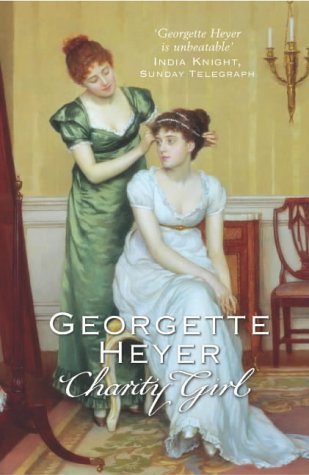
charity-girl Continuing to work through my library’s selection of Heyer novels, I came home last Saturday with both her earliest book and one of her last. The first one I decided to read was Charity Girl, which was published in 1970, towards the end of Heyer’s career. It doesn’t seem to be one of her more popular Regency romances; I’ve seen other readers describe it as a recycling of Sprig Muslin and The Foundling, but that wasn’t a problem for me as I haven’t read either of those yet. While I did find a lot to enjoy, though, I would agree that this isn’t one of her best.

The hero of Charity Girl is Viscount Desford who, as the novel opens, is being berated by his father for not marrying his childhood friend, Henrietta Silverdale, and providing him with grandchildren. Desford and Hetta have been insisting for years that, although they are the best of friends, they are not in love – and nothing has changed now that they are both in their late twenties. Following this uncomfortable interview with his father, Desford goes to visit family and ends up attending a party at which he meets a vulnerable young girl called Charity – or Cherry – Steane.

Cherry’s mother is dead and her father has abandoned her, leaving her at the mercy of an aunt and cousins who treat her like a servant. The next day, Desford encounters Cherry walking along the road to London with a suitcase, determined that she is running away from her aunt. Unable to persuade her to go back, Desford accompanies her to London to find her grandfather, Lord Nettlecombe. However, the old man is away from home, so Desford turns to Hetta Silverdale for help. Cherry goes to stay with the Silverdales while he continues to look for her grandfather and absent father, but people soon begin to talk – why is Desford so concerned for Cherry’s welfare? Has he fallen in love at last?

I found Charity Girl an entertaining read, as have been all of the Heyer novels I’ve read, with plenty of the witty dialogue, peppered with Regency slang, which I love in her work. There are some funny scenes too, especially whenever one of Cherry’s disreputable family members makes an appearance. Despite this, though, Charity Girl has not become a favourite Heyer. I liked Desford, but he isn’t a particularly strong or memorable hero, and instead of having so much focus on his search for Cherry’s family, I would have preferred more time spent on his interactions with Cherry and Hetta. I couldn’t tell, at first, which of them was going to be his love interest and, when it eventually became clear, I didn’t feel that I’d seen enough of them on the page together.

Still, I didn’t think this was a bad book at all, so I don’t want to sound too negative about it. I have just started to read the other Heyer novel on my library pile – The Black Moth – and am so far finding it very different from this one!