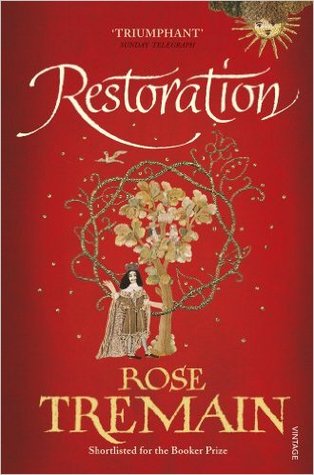
Restoration by Rose Tremain

Restoration Rose Tremain is a new author for me, but I’ve been meaning to try one of her books for a long time. Her 1989 novel Restoration seemed like my sort of book and knowing that I need to read the sequel, Merivel: A Man of His Time, for my Walter Scott Prize project gave me the motivation to pick it up and start reading. It also counts towards my Ten from the TBR project, which has been sadly neglected this year!

Restoration is set in 17th century England in the years following the restoration of the monarchy; the title refers not just to the time period but also to the personal restoration of a man’s self-respect and his place in the world. That man is Robert Merivel, a glovemaker’s son and trained physician who, near the beginning of the novel, obtains a position at the court of Charles II as surgeon to the king’s spaniels. Merivel is quickly swept away by the fun and frivolity of the court, making himself popular by playing the fool and entertaining the king.

It’s not long, however, before the king comes to Merivel with a request for help. Charles requires a husband for one of his mistresses, Celia Clemence – someone who will be a husband in name only, giving Celia a form of respectability while the king continues his affair with her. Merivel agrees to marry her and at first is delighted with the country estate in Norfolk which he is given as part of the deal. Everything is going well until Celia comes to join him there and Merivel discovers that he is falling in love with his wife…something he has been strictly forbidden to do.

Restoration is narrated by Robert Merivel himself and I found him both a fascinating and a frustrating character, more anti-hero than hero. Irresponsible and immature, you get the impression he is stumbling through life from one disaster to another, with no clear purpose in sight – and yet, despite his flaws and his failures, you can’t help feeling for him as he falls out of favour with the king. While I can’t say that I actually liked Merivel, he is an engaging narrator and his story is told with such an appealing mixture of humour and sensitivity that I was captivated by him and hoped that he would find a way to restore his fortunes.

Rose Tremain’s lively writing style perfectly suits the time period in which the novel is set. I always enjoy reading about the 1660s and I liked the contrast here between the descriptions of Merivel’s life as a country gentleman, his adventures at court and his time practising medicine in London. Merivel is in London during the Plague and the Great Fire, which are both vividly recreated. However, there is a long section in the middle of the book set in an asylum run by Merivel’s Quaker friend, Pearce, and I found my attention starting to wander during these chapters. I could see the importance of this section to the plot and to Merivel’s personal development, but I struggled to feel any interest in the new characters we meet at the asylum and I thought the whole episode went on for far too long.

Overall, though, I was impressed with this book and with my first experience of Rose Tremain’s writing. I’ll be interested to see how Robert’s story continues in Merivel, which I’m hoping to start soon.
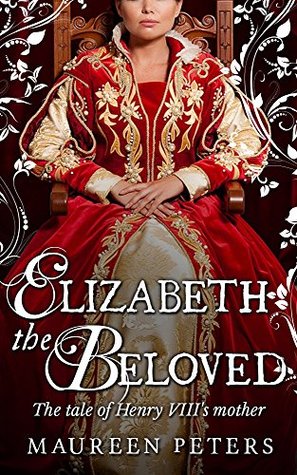
Elizabeth the Beloved by Maureen Peters

elizabeth-the-beloved “Sometimes it is an exceedingly sad thing to be a queen.” These words are spoken by Anne Neville, wife of Richard III, halfway through Maureen Peters’ Elizabeth the Beloved, but they are words which could just as easily be attributed to any number of England’s other queens, including the title character of this novel – Elizabeth of York. Born in 1466, Elizabeth was the daughter of Edward IV and Elizabeth Woodville; she later married Henry VII and became mother to another king – the future Henry VIII.

Beginning with her childhood, this novel follows Elizabeth through the years, covering some of the key moments and events of her life and her time as queen. Growing up during the final years of the Wars of the Roses, things were not always easy for Elizabeth. As the elder sister of the Princes in the Tower who disappeared and were believed to have been murdered, she then had to endure the appearance of several ‘pretenders’ claiming to be her younger brothers. One of these pretenders, Perkin Warbeck, is given a lot of attention in the second half of the book as his story becomes entwined with Elizabeth’s.

Maureen Peters was a Welsh historical novelist who, like Jean Plaidy, wrote a large number of novels covering the lives of famous historical figures. Elizabeth the Beloved was published in 1972 and is the third of her books that I’ve read – the first two were The Queenmaker and The Virgin Queen, about Bess of Hardwick and Elizabeth I respectively. I had some criticisms of those other two books and was hesitant about trying another one, but I’m glad I gave this one a chance as I thought it was better written, more interesting and much more enjoyable.

This novel is written in the third person from the viewpoints of several different characters and at first there was so much jumping around from one perspective to another that it made my head spin. After a while, though, things settled down and the narrative began to concentrate on Elizabeth herself. I liked the way Elizabeth was portrayed as a warm, caring, sensitive woman but also an intelligent one who would have liked to have played a bigger role in politics and the running of the country if she had only been given the opportunity.

I had no major problems with inaccuracy, although Peters does stick faithfully to the traditional legends surrounding the Wars of the Roses, such as the Duke of Clarence being drowned in a butt of malmsey, for which there’s no real evidence one way or the other. She also suggests that Elizabeth and her uncle, Richard III, were in love and may have been considering marrying when it became obvious that Richard’s wife, Anne, was dying. I’ve come across this theory before in other books, but as far as I know there’s not much evidence for this idea either; it seems to be based around a letter allegedly sent by Elizabeth to the Duke of Norfolk in which marriage is referred to. If you want to know more about this, I found an excellent, thorough article on the subject.

Of course, one of the reasons I love reading about this period so much is that there are so many mysteries and controversies: things like the fate of the Princes in the Tower and the nature of the relationship between Richard and Elizabeth are open to interpretation by each individual author or historian. Like the other Maureen Peters novels I’ve read, however, this is a fairly short novel and I think the author’s aim was probably to give an overview of the period suitable as an introduction for readers who have never read about Elizabeth of York before. She doesn’t go into a great amount of detail and some of the people and events which usually appear in books on the Wars of the Roses are entirely omitted here.

Although I can’t really say that I learned anything new, I found Elizabeth the Beloved a quick and entertaining read and enjoyed immersing myself in my favourite time period once again!

I received a copy of this book from the publisher via NetGalley for review.

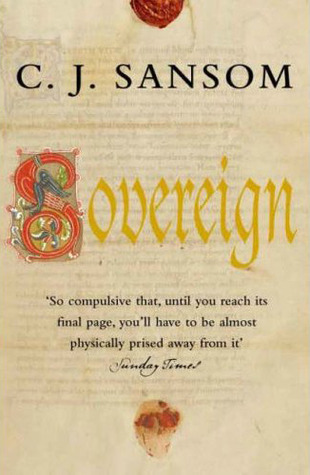
Sovereign by CJ Sansom

sovereign-cj-sansom Sovereign is the third in CJ Sansom’s Shardlake mystery series set in Tudor England and I found it every bit as good as the first two. The front cover states that it is “So compulsive that, until you reach its final page, you’ll have to be almost physically prised away from it”. Well, I wouldn’t go quite that far, but it was certainly a gripping story and while I’m not sure that it really needed to be over 600 pages long, I never found myself getting bored.

The novel opens in 1541, as Henry VIII embarks on his Progress to the North, a state visit with the aim of allowing those who rebelled during the recent Pilgrimage of Grace to make their formal apologies to the king. The royal progress is heading for York – and so are lawyer Matthew Shardlake and his assistant, Jack Barak. Officially, Shardlake will be dealing with petitions to the king made by the people of York, but he has also been given another task to carry out. An important prisoner, Sir Edward Broderick, is due to be brought from York to London, and Thomas Cranmer, Archbishop of Canterbury, has asked Shardlake to take responsibility for Broderick’s welfare as he doesn’t want the prisoner to die before he can be questioned in the Tower.

Shortly after arriving in York, the murder of a glazier leaves Shardlake in possession of a chest of documents which, if they fall into the wrong hands, could be used to destroy the king. Shardlake barely has time to look at the documents before they are stolen again, but the little bit of knowledge he has gained puts his own life at risk. To make matters worse, he and Barak stumble upon a liaison between the king’s wife, Catherine Howard, and one of her courtiers, Thomas Culpeper; it seems that danger is closing in on them from all sides.

The first Shardlake novel, Dissolution, was set in a monastery, and the next, Dark Fire, took us into the heart of Tudor London; Sansom did a wonderful job of bringing those settings to life and he does the same here with York, capturing the mood of the people in the aftermath of a failed rebellion – people whose political and religious beliefs are not necessarily in alignment with the king’s. I enjoyed reading about the preparations for the arrival of the Progress and what was involved in providing food, accommodation and other amenities for not just the king and queen, but also their entourage of hundreds of courtiers, attendants and servants.

If you haven’t read the previous two books, I don’t think it’s completely necessary as this one does work as a standalone mystery with a beginning, middle and end, but I think I would still recommend reading them in order. There are some recurring characters in the series and it would be best to get to know them from their first appearance.

Barak came into the series in the second book, Dark Fire, and his relationship with Shardlake continues to develop in this book, but it also becomes strained after he falls in love with Tamasin Reedbourne, a servant in Queen Catherine’s household. There is no woman in Shardlake’s life and it does seem that he is jealous of Barak’s relationship with Tamasin – not because he’s attracted to Tamasin himself but because he resents his friend having another attachment. Shardlake comes across as quite a lonely person, I think, which is understandable as he has spent a lifetime being shunned for having a hunched back. He suffers a lot of cruel jibes and ridicule during his time in York, including a humiliation at the hands of the king, which completes the disillusionment with Henry which has been growing in him since Dissolution.

I have barely mentioned the actual mystery yet, but I can assure you that Shardlake does have a mystery to solve in this novel. It centres around a conspiracy dating back to the days of Edward IV and Richard III and I found this element of the story interesting as it showed the extent to which information relating to the Plantagenets was suppressed and covered up by the Tudors. For me, though, the mystery was secondary to the characters and the vivid Tudor setting.

I think this was probably my favourite of the Shardlake novels so far, but I still have another three to read and am planning to continue soon with the fourth one, Revelation.

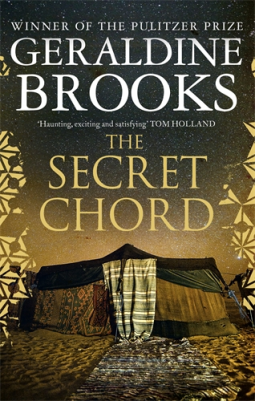
The Secret Chord by Geraldine Brooks

the-secret-chord I hadn’t read anything by Geraldine Brooks until now, but I had heard so much praise for her books that I knew I would have to try one of them eventually. I was pleased to have an opportunity to read her latest novel, The Secret Chord, even though the subject didn’t initially sound very appealing to me. It tells the story of King David from the Old Testament, and as my knowledge of Biblical kings is almost non-existent, I wasn’t at all sure what to expect from this book!

As the novel opens, David has decided that he wants the story of his life written down so that people will know what he was like, not just as a king but as a man. His friend and prophet, Natan, is given the task of writing the account, but as there’s a limit to how much Natan really knows about David, it’s necessary for him to seek the help of other people who can offer insights into David’s life and character. And so Natan sets out to speak to David’s family, including several of his wives, recording their thoughts and their memories, before taking up the story himself and remembering the dramatic circumstances of his own first encounter with the king.

Natan slowly pieces together the information he is given and a portrait of David begins to emerge: a portrait of a complex, flawed and fascinating human being. A former shepherd boy who has risen from his humble origins to become King of Israel, David’s personality is a mass of contradictions. He’s a beloved king, an accomplished musician and writer of Psalms, and loves his sons so much that he’s blind to their faults; on the other hand, he can be heartless and cruel, particularly where his first wife Mikhal is concerned, or when he sends his soldier Uriah to be killed in battle because he is lusting after Uriah’s wife, Batsheva.

As I’ve already said, before starting to read this novel I knew almost nothing about David (apart from the story of David and Goliath, which is only one small episode in David’s life) so I was able to learn a lot from The Secret Chord. Although the novel is narrated by Natan, who is himself an interesting character with his prophecies and uncontrollable visions of the future, we also hear from a wide range of other characters. Through the eyes of David’s mother, Nizevet, his brother, Shammah, and his wives Mikhal, Avigail and Batsheva, we gain a better understanding of who David really is, as well as getting to know the men and women who played significant roles in his life. Not all of this is told in strictly chronological order, but I can understand why the author chose to structure the story the way she does.

Another choice Geraldine Brooks makes is to use the Hebrew names for characters and places. I was completely unfamiliar with these and sometimes it took me a while to realise exactly who or what I was reading about. Instead of Samuel, for example, we have Shmuel; Solomon becomes Shlomo and Joab becomes Yoav, while the Philistines are the Plishtim and Bethlehem is Beit Lethem. In a way, I liked this because it helped me to think of this as an original work of historical fiction rather than a re-write of the Bible stories, but it also made the book more challenging to read than it might otherwise have been. Once I settled into the style of writing and got used to the unusual names, however, I started to really enjoy The Secret Chord. I’m sure I’ll be reading more by Geraldine Brooks.

I received a copy of this book from the publisher via NetGalley for review.

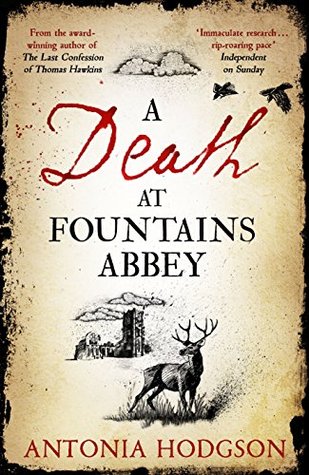
A Death at Fountains Abbey by Antonia Hodgson

a-death-at-fountains-abbey I first met Thomas Hawkins two years ago when I read The Devil in the Marshalsea, a murder mystery set within the confines of a debtors’ prison in eighteenth century London. Last year Antonia Hodgson brought him back again for another adventure in The Last Confession of Thomas Hawkins. And now we’re off to Yorkshire for the third book in the series – A Death at Fountains Abbey. Like the first two, this one could be read as a standalone, but I would still recommend reading all three in the correct order so that you can watch the characters develop throughout the series and avoid spoiling any aspects of the previous mysteries for yourself.

The plot of this third novel is inspired by real historical events and real historical figures, including John Aislabie, the Chancellor of the Exchequer who was held responsible for the South Sea Bubble of 1720, a financial disaster in which thousands of people were ruined. It’s to Studley Royal, Aislabie’s estate in Yorkshire, that Tom Hawkins is sent on a mission for Queen Caroline (wife of George II). The Queen wants Tom to investigate some death threats received by the disgraced former Chancellor, while secretly searching for a hidden ledger which lists the names of several prominent public figures who were involved in the South Sea scandal.

On arriving at the estate, Tom immediately discovers a whole host of suspects, all of whom could have reasons for wanting Aislabie dead. To complicate things further, a young woman has recently arrived at Studley claiming that she is Aislabie’s long-lost daughter, believed to have been killed in a fire at his London home many years earlier. With the help of his lover Kitty (posing as his wife for the sake of appearances) and his young ward, Sam Fleet, Tom begins to investigate both the death threats and the whereabouts of the ledger, a search that will take him all over Studley Royal and neighbouring Fountains Abbey.

Tom Hawkins is a wonderful character; while he’s a bit of a scoundrel – and admits to being a bit of a scoundrel – he’s a decent person at heart and I can’t help liking him. His relationship with Kitty moves forward in this book and we also see a lot of Sam Fleet, the London gang leader’s son whom Tom is trying to educate and turn into a gentleman. I enjoyed the brief insights we are given into Sam’s own thoughts and feelings, showing how desperately he wants to feel valued and loved – and thankfully both Tom and Kitty are beginning to see the good in him. There are some great secondary characters in this novel too, many based on real people.

As for the mystery itself, it’s quite a good one. There were plenty of clues from the start, but it would have been difficult to put them together correctly without knowing certain facts which are withheld until much later in the novel. I certainly wasn’t able to work out what was going on before the truth was revealed.

I enjoyed this book, but it does feel slightly different from the first two Thomas Hawkins novels. The London prisons, slums and taverns which provided the setting for The Devil in the Marshalsea and The Last Confession have been replaced here by the fresh air and open spaces of the Yorkshire countryside. I have visited Studley Royal and Fountains Abbey twice (they are now National Trust properties) and this really added to the experience of reading the book as I could clearly picture the ruined abbey, the water gardens, the follies and the statues. I’m now hoping there will be a fourth book in the series and wondering where Tom’s adventures will take him next.

By the way, if you were expecting to see my monthly Historical Musings post today, I promise it will be coming soon!

The Jewelled Snuff Box by Alice Chetwynd Ley

Alice Chetwynd Ley is an author whose name was completely new to me when I came across this book on NetGalley a while ago, but seeing it described as “an intriguing Regency romance, perfect for fans of Georgette Heyer and Jane Aiken Hodge” made me both curious and wary. I love Georgette Heyer and enjoyed the one Jane Aiken Hodge book I’ve read (Watch the Wall, My Darling), so I hoped the comparison would be accurate. My verdict, having now read The Jewelled Snuff Box, is that there are definitely some similarities and although Ley’s writing is not as good as Heyer’s, this is an entertaining novel in its own right.

the-jewelled-snuff-box Our heroine, Jane Spencer, is a young woman who has fallen on hard times since her beloved father’s death and, determined not to be a burden on her relatives, she has decided to find work and support herself. She is on her way to London to take up a new position as a lady’s companion when her coach is forced to stop during a snowstorm. Getting out to walk, Jane discovers a man unconscious in the snow and believing him to be the victim of an attack, she and her fellow passengers take him to the nearest inn to recover.

When he regains consciousness, the stranger claims to be suffering from amnesia and can’t remember who he is, the only clue to his identity being an ornate snuff box covered in jewels which had been found next to his body. After the weather improves and they can resume their journey, Jane, who is beginning to form a bond with the mysterious stranger, offers to see her lawyer in London on his behalf in the hope that he will be able to help. Once they reach London, however, Jane is disappointed to find that her new friend has disappeared, leaving her in possession of the snuff box – which contains a compromising letter from a lady hidden in a secret compartment.

Sorry that her relationship with the unknown gentleman has come to an end, Jane leaves the box with her lawyer and continues to the home of her new employer, the Earl of Bordesley, where another shock awaits her: the Earl’s young wife, for whom she will be working as a companion, is none other than Celia Walbrook, a girl Jane knew at school. Jane remembers Celia as a snob and a bully and it seems that nothing has changed. It’s through Celia, though, that the stranger comes back into Jane’s life – but not in the way that she would have hoped!

With a plot based heavily on misunderstandings, the reader is always one step ahead of the characters. I never doubted how the book was going to end – the question was not so much whether our hero and heroine would get together, as when they would get together and how. And as with most older romantic novels (The Jewelled Snuff Box was published in 1959) there’s an air of innocence surrounding Jane’s relationship with her mystery man – nothing graphic or explicit!

The pages of The Jewelled Snuff Box are filled with men with quizzing glasses and (obviously) snuff boxes, people riding in carriages, mentions of the Bow Street Runners and Beau Brummell, but on the whole I didn’t find the recreation of the time period quite as convincing as I do when I read a Heyer novel. The dialogue lacks the sparkling wit and humour of Heyer’s too, but the plot and characters feel similar – Francis, the Earl of Bordesley, made me think of some of some of Heyer’s ‘older husbands with younger wives’ such as Rule from The Convenient Marriage and Cardross from April Lady. Jane, however, is more like a Mary Stewart heroine: sensible, intelligent, brave and resourceful – and used to making her own way in the world.

The Jewelled Snuff Box was a short, quick read, written in a style I found very comforting and easy to read. It’s the sort of novel which sweeps you away into its world without requiring too much concentration or effort from the reader. It’s not a particularly deep or insightful novel and not a particularly original one, but not all books need to be, do they? I enjoyed it anyway and would definitely consider reading more of Alice Chetwynd Ley’s books.

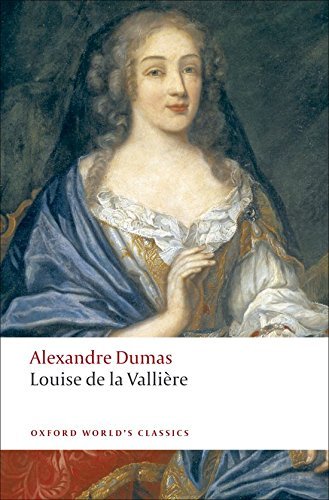
Louise de la Vallière by Alexandre Dumas

Louise de la Valliere Louise de la Vallière is the fourth book (or in some cases, the fifth – more on that later) in the series of d’Artagnan novels which began with The Three Musketeers. Looking at other readers’ reviews, this seems to be one of the least popular books in the series and I can understand why, even though I did enjoy it.

In Louise de la Vallière, the story is picked up directly where the previous book, The Vicomte de Bragelonne, ended and follows all the romance and intrigue of the court of Louis XIV. As the novel opens, the king’s brother, Philippe (known as Monsieur), has just married Charles II’s sister, Henrietta of England (Madame). An instant attraction has formed between the king and his new sister-in-law, so to avert suspicion they decide that Louis will pretend to turn his attentions to Louise de la Vallière, Madame’s young lady-in-waiting. Things don’t go exactly according to plan, however, and the king and Louise end up really falling in love with each other, breaking the heart of poor Raoul, the Vicomte of Bragelonne, who was hoping to marry Louise.

Apart from a few brief scenes here and there, there’s an almost total absence in Louise de la Vallière of the swashbuckling action and adventure which formed such a large part of the earlier volumes of the series. This could be disappointing if you’re expecting more of the same, but I do think the antics of Louis’ court are fun to read too. It’s amusing to watch the king’s desperate attempts to steal some time alone with Louise – passing letters hidden in handkerchiefs, climbing ladders to reach her window and installing secret staircases in her room!

What does all of this have to do with d’Artagnan, you may be asking? Well, the answer is – very little. He does appear from time to time, but this is not really his story. We don’t see much of Athos or Porthos either, although what we do see assures us that they are still the same characters we know and love: Athos is still noble and honourable, while Porthos is still the gentle giant, as good-natured and trusting as ever. I didn’t care for Aramis in this book, though – he’s preoccupied with a mysterious prisoner in the Bastille and when we do see him, he’s plotting and scheming, reluctant to confide in his fellow musketeers. His storyline ends on a cliffhanger which has left me wanting to start The Man in the Iron Mask as soon as possible!

Now, a note on the structure of this series. The first two books are The Three Musketeers and Twenty Years After, which I have written about in previous posts. The third book was originally intended to be one very long novel, but most publishers now split it into three: The Vicomte de Bragelonne, then Louise de la Vallière and finally The Man in the Iron Mask. Some versions (such as the free Project Gutenberg ebooks – see the notes here), split the chapters differently, including an extra volume, Ten Years Later, between The Vicomte and Louise. Be sure to check the editions you’re reading or you could miss part of the story.

This may not have been my favourite Musketeer novel, then, but I did still find a lot to like about it and can’t wait to finish the series with The Man in the Iron Mask.