A Place Called Winter by Patrick Gale

A Place Called Winter There really is a place called Winter; it’s in Saskatchewan, Canada, and at the time when Patrick Gale’s novel is set, it’s a small, newly-established settlement just off the Grand Trunk Pacific Railway. Winter is home to the fictional Harry Cane, a character based on the author’s own great-grandfather, but how did such a quiet, gentle and seemingly conventional Englishman end up in so harsh and remote a place? A Place Called Winter is Harry’s story, explaining exactly what the circumstances were which brought him to Canada, and what happened to him after he arrived there.

At the beginning of the novel, Harry is a shy, stammering young man living in Edwardian London. Doing what is expected of him, he gets married, and although he has no real love or passion for his wife, it’s not an unhappy marriage and they have a child together. Things start to go wrong for Harry when he falls in love with a man and is forced to leave the country to escape the resulting scandal. Given the opportunity to farm some land in Canada, Harry begins to build a new life for himself alone in a place called Winter.

Harry’s experiences in Canada are a mixture of good and bad. The challenging environment in which he finds himself requires skills he doesn’t possess and must learn quickly if he is to survive in the wilderness. With the help of some new friends, Harry starts to grow in strength and knowledge, but not everyone he meets is quite so pleasant and the behaviour of the villainous Troels Munck poses an obstacle which must be overcome before he has a chance of finding true happiness.

I found this a very moving and poignant novel, as well as a beautifully written one. I couldn’t help comparing it to Damon Galgut’s Arctic Summer which I had read just a few weeks earlier. The two books have some similar themes, most notably a man trying to come to terms with his sexuality within the confines of early 20th century society, but I thought this novel had a warmth which the other lacked; Gale really engaged my emotions and made me care about his characters in a way that Galgut didn’t.

A Place Called Winter is my first book read from this year’s Walter Scott Prize shortlist and I hope the others on the list will be as good as this one. I haven’t read any of Patrick Gale’s other novels and I understand that he doesn’t usually write historical fiction, but I was very impressed with his writing and would be interested in trying more of his work.
Shadow on the Highway by Deborah Swift

Shadow on the Highway Since reading Katherine Clements’ The Silvered Heart last year, I have been interested in reading more about Lady Katherine Fanshawe (or Ferrers), the seventeenth century highwaywoman known in legend as ‘the Wicked Lady’. On discovering that Deborah Swift had written a trilogy of novels about Lady Katherine, I had made a note to look out for the first one, Shadow on the Highway, so I was delighted to be offered a copy by Endeavour Press after signing up for their Virtual Historical Festival (taking place next week, 18-22 April).

Shadow on the Highway is aimed at young adults but can be enjoyed by readers of all ages; I certainly enjoyed it and thought it had a lot to offer an adult reader, as well as being a good choice for teenagers who are just starting to get into historical fiction. The story is set during the English Civil War and Deborah Swift does a good job of describing the history and politics of the period in a way that is easy to understand.

The novel is narrated by Abigail Chaplin, a young deaf girl who lost her hearing as a result of childhood measles. The Chaplin family has fallen on hard times and Abigail finds herself sent to work as a maid at Markyate Manor, home to Lady Katherine Fanshawe, a young woman not much older than Abigail herself. Katherine sees little of her husband, Thomas, and lives in fear of her hated stepfather, Sir Simon, who can be brutal, violent and controlling, so she quickly comes to value Abigail as a friend as well as a maid.

Desperate to escape from the manor for a while, Katherine persuades Abigail to help her dress as a servant and walk into the village with her so she can see how other people live. By chance she meets Ralph Chaplin, Abigail’s brother, while still in disguise and the two are instantly drawn to one another. This puts Abigail in a difficult position: should she tell Ralph that ‘Kate’ the servant is not what she appears to be? To make things worse, the Fanshawes are a Royalist household whereas the Chaplins are Parliamentarians. And then there’s the matter of the pistols Abigail has found inside Katherine’s writing desk and the worrying tales of a ‘Silent Highwayman’ holding up coaches on the London Road.

I found Shadow on the Highway a quick and entertaining read, although I was slightly disappointed that there wasn’t more actual action on the highway. Instead, the focus is on the family at Markyate Manor, the romance between Ralph and Katherine, and Abigail’s own personal story. It took me a while to warm to Katherine, but I liked Abigail from the beginning. Her deafness adds another intriguing angle to the story; as Deborah Swift explains in her Historical Note, the seventeenth century was a time of great advances in methods of communication for deaf people, including the beginnings of sign language.

As this is the second novel I’ve read featuring Lady Katherine, it was noticeable that Shadow on the Highway differs from The Silvered Heart in many ways. Although both books are based on the same legend, there are several different versions of that legend, leaving plenty of scope for an author to use her imagination. In particular, almost nothing is known of Katherine’s lover, except that the name Ralph or Rafe Chaplin is usually associated with the legends. In this novel, Deborah Swift creates an interesting story surrounding Ralph, making him a Digger – a member of a Protestant movement who believed in equality for all and who took their name from the fact that they attempted to settle and farm on common land:

“They’ll not stop us,” Ralph said. “Right is on our side. How far down do they own this land?” He grabbed up a handful of wet earth, showed it round in front of us. “To here? Or further down to where our spades reach? Does a mole recognise these boundaries? No, he can go where he wishes on God’s land. Are we less than a mole? We who are made in God’s likeness? No. We will persevere.”

The second book in the trilogy, Spirit of the Highway, is written from the perspective of Ralph rather than Abigail, which should be interesting. I’m looking forward to reading it – as well as the third book, when it becomes available.

God and the Wedding Dress by Marjorie Bowen

the-1938-club After the success of last year’s 1924 Club, Karen (of Kaggsy’s Bookish Ramblings) and Simon (of Stuck in a Book) are back with The 1938 Club, the idea being that bloggers read and review books published in 1938, building up a picture of the literary scene in that year. I found lots of possibilities – 1938 seems to have been a particularly great year for literature – but I knew I was only going to have time to read one of them. Luckily the book that I decided on turned out to be a good choice for me.

The intriguingly titled God and the Wedding Dress is set in the seventeenth century in the village of Eyam in England’s Peak District. William Mompesson, the new Rector of Eyam, has recently arrived in the village with his wife, Kate, their two young children and Kate’s sister, Bessie, but the family are finding it difficult to adjust to their new life. They have all been used to luxury and comfort, but Mompesson’s new position requires them to live within their means, avoiding unnecessary extravagance. With Bessie’s marriage to the wealthy John Corbyn quickly approaching, however, the women are determined to make it a day to remember and so they send to London for a beautiful – and very expensive – dress.

God and the Wedding Dress Unfortunately, both women are unaware that with plague sweeping across London, Mompesson has been advised not to have any contact with people or items coming from the capital. By the time the Rector hears about the wedding dress, it’s too late: it has already been delivered to the tailor, the box has been opened, and the tailor’s apprentice is about to die a rapid and unpleasant death. It seems that the plague has arrived in Eyam.

What follows is a story which is both depressing and inspiring; the story of a small community working together in the face of unimaginable horrors, making sacrifices for the good of others which will have deadly consequences for themselves. It’s also a true story, based on the real events of 1665/66 (it’s not the only novel to have tackled this subject – Geraldine Brooks’ Year of Wonders is also set in Eyam, although I haven’t read that one yet). Eyam itself really exists and is known today as ‘the Plague Village’, while many of the characters, including William Mompesson, were real people too.

Although we do change perspective from time to time, most of the story is told from Mompesson’s point of view, which I thought was the right decision. Mompesson, like his wife and sister-in-law, likes the finer things in life, but also has a desire to live the way his parishioners expect the Rector of Eyam to live. He is in conflict with himself, but also with the people around him. At first he views the villagers as little more than pagans, trusting to spells and charms to protect them from the plague. He finds it difficult to gain their respect and it is only when he joins forces with Thomas Stanley, the former Puritan minister of Eyam who was appointed during the time of Oliver Cromwell and who lost his position following the restoration of the monarchy, that Mompesson really begins to feel part of the community.

In her foreword, Marjorie Bowen states that there are many different types of historical novel and ‘this author has tried most of them’ which may sound conceited until you look at the very long and impressive list of books she wrote! I have read three of them in recent months (the other two being Dickon, a fictional biography of Richard III, and The Viper of Milan, a wonderful story set in Renaissance Italy) and I can say that the three I’ve read are all quite different in subject, style and tone. This is a quieter, more reflective novel, as much about a man’s inner struggles as it is about the history surrounding him.

I enjoyed God and the Wedding Dress, although it is obviously not the most cheerful of novels and not one to read if you need all of your characters to have a happy ending. It’s a fascinating story, though, and an important one because I think the sacrifice made by the people of Eyam deserves to be remembered.

~

Other 1938 books previously reviewed on this blog:

Princes in the Land by Joanna Cannan
Miss Pettigrew Lives for a Day by Winifred Watson

Arctic Summer by Damon Galgut

Arctic Summer As someone who has only read one novel by E.M. Forster – A Room with a View – I wasn’t sure whether reading Arctic Summer would be a good idea. It’s a fictional biography of Forster, concentrating on the period during which he was working on his novel A Passage to India, so I thought it might be more sensible to wait until I had read that book first. Arctic Summer is on the list of books I need to read for my Walter Scott Prize Project, though, so when I saw it in the library I couldn’t resist picking it up and taking it home.

I should start by saying that as well as not having read much of Forster’s work, I also – before reading this novel – knew almost nothing about the man himself. The first thing I discovered was that Galgut refers to his main character not as Forster or Edward but as Morgan, which was his middle name. Forster went by this name to distinguish himself from his father, another Edward (and apparently he was originally supposed to be called Henry anyway – there was some confusion over names at the baptism).

We first meet Forster in 1912 as he sets sail on his first trip to India at the age of thirty-three. He is planning to visit his friend Syed Ross Masood, whom he had tutored in Latin several years earlier while Masood was a student in England. Forster is becoming increasingly aware that what he feels for Masood is not just friendship but also love. However, he is not entirely comfortable with his feelings yet and is plagued by doubts and frustrations; this was a time when homosexuality was neither legal nor seen as socially acceptable and we are reminded that fewer than twenty years have passed since Oscar Wilde’s imprisonment for ‘gross indecency’.

Later, during World War I, Forster travels to Egypt to work for the Red Cross, and here he falls in love again, this time with Mohammed el-Adl. His love for Masood and Mohammed forms the main focus of Arctic Summer – and this, to me, was slightly disappointing. Obviously his relationships with these two men (and others) were very important to Forster and had an influence on his writing, but I would have preferred to read a more balanced novel that also explored other aspects of his life, rather than just page after page describing his sexual experiences and desires.

I did enjoy reading about Egypt and India (the visit to the Barabar Caves was particularly memorable) and I was also pleased to see brief appearances from other writers of the period such as D.H. Lawrence and Virginia and Leonard Woolf. The writing was of a high quality too and Galgut tells Forster’s story with sensitivity and understanding. Too much of the book bored me, though, and it failed to move me as much as I would have liked and expected. I had difficulty relating the story of Morgan’s love affairs to what little I know of Forster’s writing and I think I should definitely have waited to read this until I’d at least read A Passage to India and possibly Maurice as well.

This was one of the few disappointments I’ve had during my reading from the Walter Scott Prize shortlists, but don’t let me put you off. Looking at other reviews it seems that a lot of people have read it and loved it. As I’ve mentioned, my own lack of familiarity with Forster’s life and work could have been part of my problem. If nothing else, reading Arctic Summer has made me want to read more of E.M. Forster’s novels sooner rather than later.

The Ashes of London by Andrew Taylor

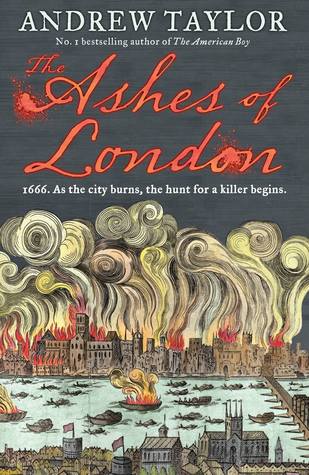
The Ashes of London I always look forward to new books by Andrew Taylor, having enjoyed several of his others in the past. His last two novels, The Scent of Death and The Silent Boy, both featured the same characters (Edward Savill, an 18th century London clerk, and his family) and I had expected there to be more books in that series. However, The Ashes of London is something different: it’s set more than a century earlier – during the Great Fire of London of 1666 – and introduces us to a completely new set of characters.

Our narrator, James Marwood, is the son of a Fifth Monarchist who has recently been released from the Tower of London. All Marwood wants is a quiet life and the opportunity to escape the taint of his father’s disgrace – but as the flames begin to rage across London, it seems that fate has something else in store for him. While he watches St Paul’s Cathedral burn, a young woman runs past towards the fire, taking Marwood’s cloak with her. Later, a dead body is found in the ashes: a man with his thumbs tied behind his back. Marwood, who works for the government, is given the job of investigating the death.

Running parallel with his story is that of Catherine (Cat) Lovett, daughter of a regicide who was involved in the execution of King Charles I and who has been on the run since the restoration of the monarchy. As more dead bodies are discovered in the aftermath of the fire, it seems that Cat must be connected to the deaths in some way…and it’s up to Marwood to find out how.

I don’t think The Ashes of London is one of Andrew Taylor’s best books (my favourite is still The American Boy), but I did enjoy reading it. While I didn’t find it quite as atmospheric as some of his other novels, the setting was certainly a fascinating one. Not only do we witness the destruction of a city by fire and share the sense of loss felt by those who lived there, we are also given the chance to learn something about the political situation in London at that time. I previously knew almost nothing about the Fifth Monarchists, a religious sect who even during the Restoration were plotting to overthrow the monarchy and prepare for the coming of King Jesus, so I found that aspect of the story very interesting.

I enjoyed getting to know both of our main characters, James Marwood and Cat Lovett. Marwood is not a particularly memorable character in himself, but he interested me due to his background and ties with the Fifth Monarchists and regicides. Cat is a strong, independent person who knows how to look after herself, and while I couldn’t quite believe in her as a realistic 17th century woman, her actions do help to drive the plot forward. Apparently this book is the first in a new series, so I expect – and hope – that we will meet both James and Cat again.

Overall, I found The Ashes of London a good Andrew Taylor novel, if not a great one. I’m looking forward to reading the next book in this series, but while I’m waiting for it I would like to go back and read Bleeding Heart Square, the only one of his historical novels I still haven’t read yet.

Kingdom by Robyn Young

Kingdom After reading Renegade earlier this year (the second of Robyn Young’s three novels on Robert the Bruce), I decided to move quickly on to the third and final volume, Kingdom. Having had my interest piqued in this period of Scottish history, I wanted to read The Scottish Chiefs by Jane Porter and possibly Nigel Tranter’s Bruce trilogy – but it made sense to finish with this trilogy first to avoid confusion!

Kingdom continues Robert’s story, picking up where Renegade left off. It’s 1306 and Robert Bruce has been crowned King of Scots at last, the other claimants to the throne now either dead or in exile. His dream has finally been achieved – and yet he is still unable to rule in peace. King Edward I of England, who feels he has been betrayed by Robert once too often, is unwilling to give up control of Scotland and sends Aymer de Valence, Earl of Pembroke, north at the head of an army. Just a few months after his coronation, Robert is defeated by Valence at Methven Wood and is forced to flee. Eight years of conflict will follow, ending in 1314 at the Battle of Bannockburn – and if you don’t know what happens at Bannockburn, then I’ll leave you to find out for yourself.

I enjoyed Kingdom more than Renegade, but not as much as the first book, Insurrection. This one is a bit too heavy on the battle scenes for my taste, although that’s understandable as the period covered – 1306 to 1314 – was, as I’ve mentioned above, a time of constant conflict, with Robert and his men caught up in a long series of sieges, raids, battles and skirmishes. It’s also quite a sad book, as Robert’s friends and family pay a heavy price to enable Robert to fulfil his destiny. Some face execution, some are imprisoned and others suffer the indignity of being caged like animals. There’s cruelty on both sides, but also compassion and that’s one of the things I’ve noted throughout this trilogy: that the situation is not just portrayed as a case of Scotland good and England bad or vice versa. In fact, Robert faces not just opposition from Edward and the English but also from Scottish rivals and rebels, all of whom ensure that his path to the throne will not be an easy one.

Robert himself is a more sympathetic character in this novel than in the previous two. I found him difficult to warm to before – although that was partly a result of all the treachery and betrayal he was involved in, as well as the lack of time he had to spend with his wife and daughter – but it seems that with his coronation has come a new maturity and sense of responsibility. He is still a slightly bland character, though; I prefer my heroes to be more charismatic! I actually thought some of the other characters were far more interesting than Robert – Alexander Seton, for example, a nobleman from East Lothian who finds his loyalties torn between his country and his family.

I was sorry to see the last of Edward I, who had been the driving force behind much of what happened in the first two and a half books. He is succeeded by his son, Edward II, who lacks his father’s military and leadership skills and is a less worthy opponent for Robert. But while I can’t say that I liked either of the Edwards, the real villain in Kingdom is Aymer de Valence. Apparently, though, the historical Valence was not exactly as he is portrayed in this trilogy; Robyn Young admits in her author’s note that she hasn’t been very fair to him and that he probably doesn’t deserve to be seen as villainous at all. I would like to give a word of praise to Robyn Young for her author’s notes, by the way – they are much more comprehensive than most.

I have enjoyed reading this trilogy, especially as I previously had only a very basic idea of the history involved, which meant that most of Robert Bruce’s story was new and unfamiliar to me. Now I’m looking forward to exploring the period further!

The Summer Before the War by Helen Simonson

The Summer Before the War Six years after her debut, Major Pettigrew’s Last Stand, Helen Simonson is back with a second novel – and, in my opinion, it has definitely been worth the wait! The Summer Before the War is a beautiful, moving story about a small town in East Sussex and how it is transformed forever by the effects of the First World War.

It’s the summer of 1914 and spinster Beatrice Nash is arriving in the town of Rye to take up a position as Latin teacher at the local grammar school. Despite the support of Agatha Kent, one of the school governors, Beatrice quickly discovers that not everyone is happy with the decision to offer the teaching job to a woman and that she could be about to lose her position before she’s even begun.

Also in Rye for the summer are Agatha’s nephews, Hugh and Daniel, two young men who think they know what the future holds: Hugh expects to complete his medical studies and then marry Lucy Ramsey, daughter of the surgeon he has been working for, while Daniel, an aspiring poet, hopes to go to Paris and start a literary journal with his friend, Craigmore. With the onset of war, however, all of these plans will be thrown into disarray and life in Rye will never be the same again.

Towards the end of the novel, the action switches to France where we join the men in the trenches, but most of the book, as the title suggests, is devoted to those lazy, idyllic summer days and the changes that are brought by the approach of war. The rigid social structure in place at the beginning of the summer – a time in which independence in women such as Beatrice is seen as something to be discouraged, the atrocities experienced by a young refugee girl make her a social outcast, and Daniel’s relationship with Craigmore risks causing scandal – begins to break down as the war progresses and priorities change.

The Summer Before the War is a long book (with a lovely, cheerful and sunny front cover) but I enjoyed every minute I spent with this set of characters. The story is told with humour, intelligence and sensitivity – and some witty, Jane Austen-style dialogue. Occasionally a word or phrase feels out of place, but otherwise the atmosphere of that summer of 1914 is perfectly evoked. Although the pace is quite gentle I was completely absorbed, discovering as I reached the final chapters how much I had come to care for the men on the front line and the women left behind.

This is a warm, emotional and poignant story and I was close to tears at the end. I loved it and look forward to more from Helen Simonson.

Thanks to Lovereading for providing a review copy.