Monstrous Tales: Haunting Encounters with Britain’s Mythical Beasts

This is a great new collection of short stories inspired by British folklore. I was drawn to it because it included several authors whose work I’ve previously enjoyed, but I was pleased to find that the stories by authors who were new to me were just as strong. The book has also given me the opportunity to learn about lots of creatures from British myth that I’d never come across before; only one or two of them were familiar to me.

I’ll start with the three stories by authors I hadn’t tried before. I particularly enjoyed Jenn Ashworth’s Old Trash, set in the Pendle area of Lancashire where a mother has taken her troubled teenage daughter camping for the weekend, hoping to keep her away from the bad influence of an older boyfriend. Ashworth does a wonderful job of creating a creepy atmosphere as darkness falls over the hills and Rachael and Mae listen to tales of the gytrash, a huge black dog thought to be an omen of death. Abir Mukherjee’s The Doctor’s Wife is another highlight, following a doctor and his wife who move to a small village in the Highlands of Scotland. Once there, the doctor becomes obsessed with the fate of his predecessor and a mysterious woman dressed in red. This story combines a British setting with elements of Hindu mythology, which is fascinating and adds some diversity to the book.

Sunyi Dean’s Eynhallow Free didn’t work for me quite as well as the others, which I think is due to the story being written in second person (addressing the reader directly as ‘you’, putting us in the position of the protagonist, a style I never really get on with). I did love the Orkney setting, though; it’s a very eerie story, incorporating figures from Orkney folklore such as the Goodman of Thorodale and the Finfolk. There’s one more story also set in Scotland: These Things Happen by Dan Jones. I’ve read some of Jones’ history books, but this is my first experience of his fiction. I disliked the main character which put me off the story a little bit, but I was fascinated by the descriptions of the Cat Sith, the large black cat of Scottish mythology that walks around on its hind legs.

Welsh folklore is represented by the Fad Felen, or yellow plague, which appears in Rosie Andrews’ story, The Yellow Death. The story is set at the end of the First World War and the Fad Felen can be seen as a metaphor for the yellow of mustard gas. This is one of only two stories in the book with historical settings. The other is Rebecca Netley’s Mr Mischief, in which ten-year-old Bessie moves to a big house on the Yorkshire moors with her Uncle Kit who has a job as gamekeeper. Here she learns about a mysterious being known only as Mr Mischief and the lengths the superstitious locals go to in order to keep him happy.

I think my favourite story in the book was probably Boneless by Janice Hallett, about a writer investigating reports of a giant slug in Derbyshire. Written in Hallett’s usual style incorporating emails, articles, texts etc, it explores issues such as climate and habitat change and how animals are forced to adapt and evolve. The ending is great – I hadn’t expected the story to go in that direction at all. I also liked The Beast of Bodmin by Jane Johnson, which is set, like a lot of Johnson’s work, in Cornwall. Gina moves into a cottage on the edge of Bodmin Moor, hoping to make a new start in life, and almost immediately her black cat, Roxy, goes missing.

The collection is completed by Stuart Turton’s Deaths in the Family. It follows the story of Ben and his family, who gather together for Christmas every year, barricading themselves indoors while an army of grotesque and murderous Redcaps amasses outside. I wasn’t sure what to make of this story as it was so strange and felt different in tone from the others in the book, but it was certainly entertaining!

Nine stories in this collection, then, and although I inevitably enjoyed some more than others, there wasn’t a single bad one here. I’m looking forward to exploring more of Ashworth, Mukherjee and Dean’s work now, so if you can recommend anything please let me know.

Thanks to Raven Books for providing a copy of this book for review via NetGalley.

The Silent Companions by Laura Purcell

I decided to read this for the 20 Books of Summer challenge in preparation for the sequel, House of Splinters, coming out in October. I’m not sure how closely connected the two books will be, but it made sense to read The Silent Companions first and as I’ve enjoyed other books by Laura Purcell I was sure I would like this one anyway.

The novel begins in 1865 with Elsie Bainbridge arriving at The Bridge, her late husband’s family estate near the village of Fayford. Elsie only married Rupert a month earlier but already he is dead, leaving her a widow and pregnant with his child. She has come to The Bridge for the funeral and to spend the duration of her pregnancy, accompanied by Sarah, a cousin of Rupert’s.

From the moment she sets eyes on the house, Elsie has an uneasy feeling about it, which only increases when she learns that The Bridge has a bad reputation in the village and there’s been difficulty finding servants because no one wants to work there. Then, in a locked room upstairs she and Sarah discover a painted wooden figure that bears a striking resemblance to Elsie herself. What is this ‘silent companion’ and why does it seem to have a mind of its own? The answers can be found in a two-hundred-year-old diary written by Anne Bainbridge, who lived in the house with her husband and daughter, Hetta, during the reign of King Charles I.

The narrative switches back and forth between Anne’s story in 1635 and Elsie’s in 1865 and there are also some chapters set in St Joseph’s Hospital at an unspecified point in the future. The hospital is an asylum and we learn that Elsie has been sent there following a fire at The Bridge which has left her badly burned and unable to speak. It seems that Elsie has been accused of murder and her doctor suggests that if she writes down everything she can remember, beginning with her arrival at The Bridge, it might be enough to save her from execution.

Although I felt that the framing story in the hospital wasn’t really necessary (maybe because the ‘woman sent to an asylum by family members’ trope is one I come across such a lot in novels with Victorian settings), I did really enjoy the book as a whole. I loved the atmosphere Purcell creates, which grows increasingly tense and sinister as more and more strange occurrences take place at The Bridge and the silent companions multiply in number. Silent companions really existed; also known as dummy boards, they originated in the 17th century – the National Trust has some information about them here and some pictures which show how lifelike they were.

The story that unfolds through Anne’s diary is fascinating. After having several sons, she uses herbs to try to conceive a daughter and when that daughter, Hetta, is born with a damaged tongue and without the ability to speak, Anne believes it was her fault for using witchcraft. The child is shunned by her father and hidden away from society, where she becomes associated with the sense of evil that seems to be spreading throughout the house and the Bainbridge family. It’s Anne who first acquires the silent companions and brings them home, creating the link between her own life and Elsie’s two centuries later.

This is not a book where everything is neatly tied up at the end. There are questions left unanswered and several possible theories to consider. I usually prefer an explanation, but in this case I was happy to be left wondering. I’m looking forward to House of Splinters now!

Book 20/20 for 20 Books of Summer 2025.

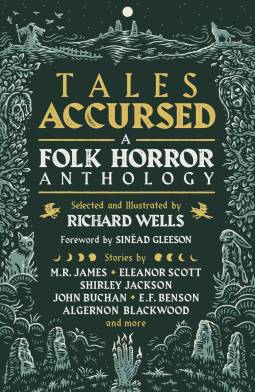
Tales Accursed: A Folk Horror Anthology selected and illustrated by Richard Wells

Folk horror is not a subgenre I’ve ever really taken the time to explore, so I wasn’t sure what to expect from this new anthology selected and illustrated by the artist Richard Wells. What I found was a collection of sixteen stories, most of them from the 19th and early 20th centuries, all blending folklore with elements of the supernatural and lonely rural settings. Each story is accompanied by a beautiful lino print illustration by Wells which I’m sure will look even more impressive in the physical edition of the book than in the ebook version I read.

The stories are arranged chronologically, beginning with Sheridan Le Fanu’s The White Cat of Drumgunniol from 1870 and ending with Shirley Jackson’s The Man in the Woods, published posthumously in 2014. I had read both of these authors before (although not these particular stories) and there were two other authors I’d also read previously – John Buchan and E.F. Benson – but the others were all new to me. In fact, there were several I’d never even heard of until now, so it was good to be made aware of them and to be able to try their work for the first time.

As with most anthologies, the stories vary in quality. However, I found that there wasn’t much variety in terms of plot or setting. Many of them, particularly the older ones, are based on Celtic folklore and have similar structures, with our narrator travelling in an unfamiliar part of the countryside and meeting someone who tells them a story about strange sightings or occurrences, which the narrator then experiences for themselves. Although this did make the collection as a whole feel slightly formulaic and repetitive, there were still some stories that were different and stood out. One of these is Woe Water by H.R. Wakefield, which unfolds in the form of diary entries written by a man with a troubled past who moves into a remote lakeside cabin and begins to struggle with his conscience. I also enjoyed Elinor Mordaunt’s The Country-Side, told from the perspective of a parson’s wife whose relationship with her unfaithful husband takes a sinister turn when she meets an old woman in the village who is said to be a witch.

Ancient Lights by Algernon Blackwood is another highlight – it has a wonderfully eerie atmosphere as the narrator describes his journey through enchanted ancient woodland. The Shirley Jackson story, The Man in the Woods, in which a man accompanied by a stray cat stumbles upon an old house inhabited by three strange people, is also very good. It’s packed with references to mythology and witchcraft and there are lots of layers to unravel, but the open ending left me frustrated and wanting to know more!

Despite the ‘folk horror’ label in the title, I found the stories in this collection creepy or unsettling rather than frightening. I deliberately haven’t said much about any of the individual stories because some of them are very short and it would be easy to spoil them, but overall I did enjoy the book and am interested in reading more by some of these authors.

Thanks to Unbound for providing a copy of this book for review via NetGalley.

I’m counting this as my second book towards this year’s RIP challenge.

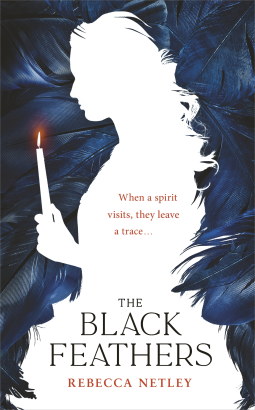
The Black Feathers by Rebecca Netley

The Black Feathers is an eerie Gothic novel, a perfect book to curl up with indoors on a cold, dark night.

It’s 1852 and Edward Stonehouse is returning to Guardbridge, his family estate on the Yorkshire Moors, bringing with him his second wife, Annie, and their baby boy, John. The couple have been married for a year, but this is Annie’s first visit to the house and she is full of apprehension, having been warned by a friend that Guardbridge has a reputation as ‘a place where bad things happen’.

As Annie begins to explore the narrow hallways and dimly-lit staircases of her new home, she finds traces everywhere of Edward’s first wife, Evie, and their young son, Jacob. She longs to know what happened to them, but Edward has made it clear that the subject is not to be discussed, so she turns instead to the other inhabitants of the house – Edward’s sister, Iris, and her old nurse, Mrs North. But here Annie only finds yet more mysteries. Can Iris really communicate with the dead, as she claims, and why does she refuse to venture outside the walls of Guardbridge? And what are the black feathers appearing around the house? Is it true that they mark the spot where a ghostly presence has visited?

The Black Feathers has some obvious similarities with Daphne du Maurier’s Rebecca, as well as a setting reminiscent of Wuthering Heights, but there are enough original elements to make it an enjoyable read in its own right and not too derivative of older classics. I found Annie a likeable character, but Iris intrigued me more, with her passion for spiritualism, interest in taxidermy and the agoraphobia that has kept her indoors for so many years. I wanted to know what had happened to make into the person she became, and although we do eventually find out, Netley keeps us wondering before beginning to reveal the truth. Edward is equally mysterious – seen through Annie’s eyes, he is distant and aloof, a man she has married through necessity and hasn’t yet learned to trust. When we see things from his sister’s perspective, there are hints that he could be quite a different man to the one Annie thinks she has married, but again, we have to wait to find out what sort of person Edward really is and what happened to his first wife and child.

The novel is atmospheric and creepy in places, particularly when Annie begins to see some ghostly apparitions, but I didn’t find it too frightening, which is good as I don’t want to be terrified when I’m reading at bedtime! I felt that the final few chapters let the book down slightly – the unravelling of the house’s secrets involves too much exposition and long stretches of dialogue – but the final twist is clever and unexpected. Rebecca Netley has written another ghost story, The Whistling, which I haven’t read but would like to, having enjoyed this one.

Thanks to Michael Joseph for providing a copy of this book for review via NetGalley.
This is book 47/50 for the 2023 Historical Fiction Reading Challenge.

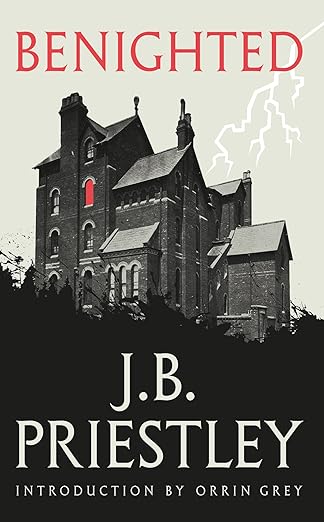
Benighted by J.B. Priestley

This is the first book I’ve read by J.B. Priestley and a great choice for this time of year. Published in 1927, it was filmed as The Old Dark House in 1935, although I don’t think I’ve seen it so can’t comment on how similar or different it is from the book.

The novel begins as married couple Philip and Margaret Waverton, accompanied by their friend Roger Penderel, get caught in a storm as they try to drive home through the Welsh countryside one night. The rain is torrential and with the roads starting to become impassable, they decide to seek shelter in an old, crumbling mansion, the only house they can see for miles around. It doesn’t look very inviting…

It was the house itself that was so quiet. Driving up like this, you expected a bustle, shadows hurrying across the blinds, curtains lifted, doors flung open. But so far this house hadn’t given the slightest sign in spite of its lighted windows. It seemed strangely turned in upon itself, showing nothing but a blank face in the night. You could hardly imagine that great front door ever being opened at all.

The door is eventually opened by a huge, silent butler and as the trio step inside their sense of unease continues to grow. The house is home to the Femms – the strange and nervous Horace and his fanatically religious sister, Rebecca. The Femms reluctantly allow them to stay for the night, but it quickly becomes obvious to the visitors that they’re unlikely to get much sleep in such an eerie, unwelcoming house. After a while, they are joined by two more people looking for shelter – Sir William Porterhouse, a wealthy businessman, and Gladys du Cane, a chorus girl. The rest of the novel describes the unpleasant, frightening experiences the five guests undergo during their night in the Femm household. It seems that there are other members of the Femm family who haven’t made an appearance yet – and when they do, the guests begin to wish they had stayed outside in the storm after all!

Benighted is a short, quick read and one that I enjoyed, with a few reservations. By the standards of modern horror novels it’s quite tame – I would describe it as creepy and unsettling rather than terrifying – but as a book from the 1920s, it has clearly had a huge influence on what Orrin Grey in the introduction describes as the ‘old dark house’ subgenre. There’s nothing supernatural going on in the novel; the creepiness comes entirely from the portrayal of the odd, sinister characters, the descriptions of the dark, desolate house and the mystery surrounding a locked door upstairs and what lies behind it. I was intrigued to learn that the Addams Family creator, Charles Addams, drew the illustrations for the opening sequence of a 1963 remake of The Old Dark House, because there are some unmistakable similarities between the Addams and Femm families!

Perhaps the real horrors being described in Benighted are the effects of the First World War, which ended less than ten years before the book was published. Priestley himself is quoted as saying that the novel’s characters are “forms of postwar pessimism pretending to be people”. This leads to some long passages in which Priestley explores the mental states of the characters and how they are affected by their night in the Femm house, most notably Roger Penderel who has experienced various traumas during the war, including the loss of his brother at the Battle of Passchendaele, and has been left disillusioned and cynical. These passages added depth to the novel, but at the same time I felt that they slowed down the pace of the plot and pulled me out of the story. In the end, this book didn’t quite work for me either as a horror novel or a psychological study, but it was still an interesting read and has definitely piqued my interest in reading more books by Priestley.

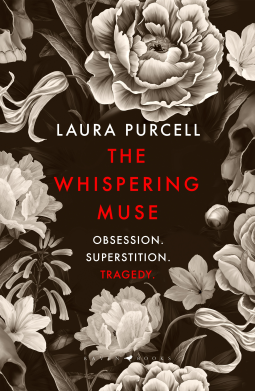
The Whispering Muse by Laura Purcell

This is the second book I’ve read by Laura Purcell; I liked, but didn’t love, the first one I read, Bone China, so was hoping for better things from this one. It certainly sounded good – a Gothic novel set in the theatres of Victorian London – and I wasn’t disappointed at all. I was gripped from start to finish!

Our narrator is Jenny Wilcox, a young woman who has been left to support herself and her younger siblings after her brother Gregory ran off to America with an actress, taking the family savings with him. Jenny is deeply grateful when Gregory’s former employer, Mrs Dyer of the Mercury Theatre, offers her a job as dresser to the new leading lady, Lilith Erikson. Before she even begins work, however, Jenny discovers that Mrs Dyer has not just offered her the position out of kindness – she believes that her husband is having an affair with Lilith and she wants Jenny to spy on them.

At first, Jenny shares Mrs Dyer’s dislike of Lilith, but gradually she becomes concerned about the behaviour of the beautiful young actress. Why is she so obsessed with a watch engraved with the face of Melpomene, Muse of Tragedy – a watch that once belonged to the actor Eugene Grieves, who died on stage while performing Dr Faustus? Could Lilith have formed some sort of pact with Melpomene, to help her achieve her dream of becoming London’s greatest tragic actress? And if so, what will Melpomene demand in return?

The Whispering Muse is divided into five acts, mirroring the five tragedies performed by the Mercury Theatre Company over the course of the novel, beginning with Macbeth. Theatrical settings are usually atmospheric and this one is no exception! I loved the insights we are given into what goes on behind the scenes and the descriptions of Lilith’s powerful stage performances are so vivid I could almost imagine I was watching them from a seat in the front row. The book is wonderfully creepy in places – and a bit gory in others, although not excessively so. What makes it so compelling is that we’re never quite sure whether Lilith really has made a pact with her muse and supernatural forces are at work within the Mercury Theatre or whether the strange events that begin to take place have a more human explanation.

As well as enjoying the fascinating plot, I also found it interesting to see how Jenny’s relationships with the other characters change over the course of the novel. Although I didn’t always agree with Jenny’s decisions, I had some sympathy for her situation – she needs to keep Mrs Dyer happy in order to stay in her job and earn money to support her younger brothers and sister, but the closer she becomes to Lilith the more she starts to feel that Mrs Dyer’s hatred of the actress is unreasonable and the more her conscience begins to bother her. The dynamics between these three characters add extra depth to the story and make it something special. I loved it and look forward to reading Laura Purcell’s other books!

Thanks to Raven Books for providing a copy of this book for review via NetGalley.
This is book 5/50 read for the 2023 Historical Fiction Reading Challenge.

The Legend of Sleepy Hollow by Washington Irving

I’ve never read anything by Washington Irving but The Legend of Sleepy Hollow appears in an anthology of classic ghost stories I bought for my Kindle a few years ago and Halloween seemed like the perfect time of year to read it. I thought I already knew the story from the 1999 Tim Burton film but of course it turns out that it’s only very loosely based on Irving’s original work, which is often the case with adaptations. It’s also not very scary, so if horror stories make you nervous, don’t worry – this one isn’t likely to give you nightmares!

Irving begins by describing the valley of Sleepy Hollow, an old Dutch settlement in New York State steeped in legend and superstition.

A drowsy, dreamy influence seems to hang over the land, and to pervade the very atmosphere…Certain it is, the place still continues under the sway of some witching power, that holds a spell over the minds of the good people, causing them to walk in a continual reverie. They are given to all kinds of marvellous beliefs, are subject to trances and visions, and frequently see strange sights, and hear music and voices in the air.

The most famous of Sleepy Hollow’s legends involves a ghost known as the Headless Horseman, said to be a Hessian soldier who lost his head in battle and goes on a nightly ride through the Hollow in search of his missing head. When Ichabod Crane, an outsider from Connecticut arrives in the valley to take up the position of schoolmaster, he is fascinated by this story. A believer in witchcraft, Ichabod is naturally superstitious and enjoys listening to the tales of local ghosts and goblins.

Soon Ichabod sets his sights on the beautiful Katrina Van Tassel, daughter and only heir of a wealthy farmer. However, he faces stiff competition for Katrina’s hand in marriage in the form of Brom Bones, a ‘burly, roaring, roystering blade…the hero of the country round’. After being rejected by Katrina during a party at the Van Tassels’ home one night, the disappointed Ichabod rides off alone into the night – only to find that he is being pursued by a mysterious figure on horseback…

There’s not much more I can say about this story without spoiling it. It’s a short one, so if you want to read it for yourself it shouldn’t take up too much of your time. Published in 1820, it’s easy to read and to follow and although Irving’s descriptive writing provides a lot of Gothic atmosphere, it’s a fun and entertaining ghost story rather than a terrifying one. It also has a wonderfully ambiguous ending!

I’ll have to read more of Washington Irving’s stories at some point. The only other one I’m familiar with is Rip Van Winkle, but obviously he has written a lot more than that!

This is my seventh and final read for R.I.P. XVII