The Sirens by Emilia Hart

After enjoying Emilia Hart’s first novel, Weyward, in 2023, I’ve been looking forward to reading her new one, The Sirens. Weyward linked the stories of three women in different time periods through a family connection, a shared love of nature and a theme of witchcraft. The Sirens also has multiple timelines, but this time the characters are linked by water and the sea.

The novel begins in Australia in 2019 with student Lucy waking up from a sleepwalking episode with her hands around her ex-boyfriend’s neck. Ben is not entirely innocent – they broke up after he shared a nude photo of her with his friends – but she’s afraid he’ll report her for assault, so she packs her things and flees. Planning to take refuge with her sister Jess, an artist, Lucy heads for the town of Comber Bay, but on arrival she finds her sister’s house empty, as if it had been abandoned in a hurry. Lucy is concerned, but on learning that Jess did tell one of the neighbours that she would be going away for a while, she decides to wait in the house until she returns.

Comber Bay is a small town on the coast of New South Wales and has a sinister reputation; over a forty year period, eight men disappeared without trace, never to be seen again. Also, in 1982, a baby was found abandoned in a cave not far from Jess’s house. As she waits to hear from her sister, Lucy begins to uncover the truth behind these mysteries – but she becomes distracted by unsettling dreams of another pair of sisters who lived two centuries earlier.

Lucy’s present day story alternates with the story of those other two sisters, Mary and Eliza, who were found guilty of a crime in Ireland in 1800 and transported to Australia on a convict ship. Later in the book, Jess’s story also begins to unfold, mainly in the form of diary entries from the 1990s (the diary reads more like a novel, but I think we just have to suspend disbelief there). It takes a while for all of these threads to come together, but we eventually begin to see how cleverly they are connected. There are some surprising twists that I didn’t see coming, as well as some that I was able to guess before they were revealed. As ever, when a book has more than one timeline, I find that some are more compelling than others – and in this case, I particularly enjoyed Lucy’s story and the flashbacks to Jess’s teenage years. Mary and Eliza never fully came to life for me, so their adventures on board the Naiad didn’t interest me quite as much as I would have liked.

The title and cover of the book made me think there would be more siren/mermaid mythology incorporated into the story, but there’s only a little bit of that. There’s a lot of beautiful watery imagery, though, and water plays a big part in the novel in so many different ways. There’s Mary and Eliza’s sea voyage on the Naiad; the setting of Comber Bay, with its coastline, cliffs and caves; Jess’s paintings of ships; even the rare skin condition Lucy suffers from, aquagenic urticaria. It’s a book with lots of layers and things to think about. Having read two Emilia Hart books now, however, I do have a problem with her portrayal of men. Almost every male character in both books, with only a few exceptions, is either violent and abusive, a rapist or generally misogynistic or predatory. Obviously that’s true of some men, but I think it’s unrealistic that nearly every man who crosses paths with our female protagonists would be a terrible person. I think it should be possible to promote feminism and give women a voice without going too far in the other direction.

Apart from that, I did like the book and loved the eerie atmosphere Hart creates with Lucy alone in the abandoned Cliff House, uncovering the troubled history of Comber Bay’s past while being haunted by the cries of the women on the convict ship. It’s very similar to Weyward in some ways, but also different enough to be an interesting novel in its own right.

Thanks to The Borough Press for providing a copy of this book for review via NetGalley.
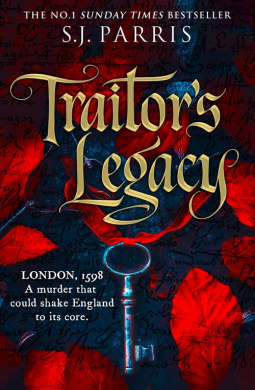
Traitor’s Legacy by S.J. Parris

I know S.J. Parris’s Giordano Bruno historical thrillers, set in Elizabethan England, are very popular, but I’ve only read one of them – Sacrilege – and wasn’t particularly impressed. When I saw that she’d started to write a new series, of which Traitor’s Legacy is the first, I thought it would be a good opportunity to give her another try. As it turned out, this is actually a spin-off featuring some of the same characters (but not Bruno himself, although he is mentioned once or twice).

Traitor’s Legacy is set in the winter of 1598 and follows Sophia de Wolfe, formerly an agent of the Queen’s spymaster, Sir Francis Walsingham. Now Walsingham is dead and Secretary of State Robert Cecil has stepped into his role. It’s Cecil who summons Sophia when a girl’s body is found in the foundations of a building site with a scrap of paper tucked inside her clothing. The paper contains a message written in a cipher used by Sophia during her time as a spy, suggesting that someone is trying to link her to the murder. But who would want to do that and how could the secret cipher have fallen into anyone else’s hands?

The girl is quickly identified as Agnes Lovell, a wealthy heiress and a ward of the powerful nobleman Sir Thomas North, who had been planning to marry her to his son, Edmund. It’s possible that the murder could have been committed for political reasons – North had gained a reputation for corruption during a recent military campaign in Ireland – but there also seems to be a connection with the ambitious Earl of Essex, the Queen’s favourite courtier. However, things take a more personal turn for Sophia when suspicion falls on her own illegitimate son, Tobie. Sophia will do whatever it takes to clear his name, but this is made more difficult by the fact that Tobie himself has no idea that she is his mother!

Having only read one of the Giordano Bruno novels, I’m not sure how much we actually learn about Sophia in that series. I vaguely remember her from Sacrilege and presumably she’s in some of the other books as well. It’s definitely possible to follow what’s happening in this book without any prior knowledge, but I did feel there was a lot of backstory I wasn’t familiar with and had to pick up as I went along. I didn’t find Sophia entirely believable as a 16th century woman, but not wildly anachronistic either and she’s aware of the limitations placed on her by society. I liked her as a character and enjoyed following her investigations. She’s assisted by Anthony Munday, a playwright and another former spy, sometimes working together and sometimes separately which helps the story to move along.

Many of the characters in the book are people who really existed; I’ve already mentioned some of them, but we also meet others including Thomas Phelippes, Cecil’s cryptographer, and Frances Devereux, wife of the Earl of Essex. Through the character of Anthony Munday, the novel also touches on Elizabethan London’s theatrical world and the rival groups of actors, the Lord Chamberlain’s Men and the Admiral’s Men. There’s a lot going on, then, but the plot, although complex, is easy enough to follow and I gradually became gripped by it. I enjoyed this book and am looking forward to meeting Sophia and her friends again as the series progresses.

Thanks to Hemlock Press for providing a copy of this book for review via NetGalley.
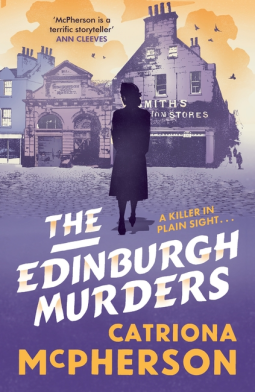
The Edinburgh Murders by Catriona McPherson

This is the second book in Catriona McPherson’s new mystery series set in 1940s Edinburgh, but if you haven’t read the first one (In Place of Fear) it shouldn’t be a problem as both books also work as standalone novels. Those of you who have read In Place of Fear will remember that it introduced us to Helen Crowther, a welfare officer (formally a ‘medical almoner’) in the newly formed National Health Service. This second novel again follows Helen as she carries out her duties for the NHS and becomes embroiled in another mystery.

The novel opens with Helen taking a patient to the public bath house on Caledonian Crescent. As she helps the woman to wash herself, they become aware of a disturbance in one of the men’s cubicles. A man has been found boiled to death in a bath of scalding hot water – but how? Why would he continue to lie there as the water got hotter and hotter? And how could it have reached such a high temperature anyway? Even more worrying for Helen is the fact that she has spotted her father, Mack, at the baths, but when she speaks to him at home later, he tries to deny that he was there. As the bodies of more men are found around Edinburgh, all killed in equally unusual, gruesome ways, Helen becomes convinced that her father knows more about the deaths than he’s admitting to.

When I reviewed In Place of Fear, I mentioned that the mystery only formed a small part of the book, with more focus being on the historical element and the work of an almoner in the NHS. This book is the opposite – the mystery is much stronger, with the first murder discovered in the opening chapter and several more following soon after. The murders are carried out using imaginative methods and are obviously linked in some way, so Helen needs to decide exactly what the link is in order to identify the killer. It’s quite a dark book, but although the descriptions of the murders are unpleasant, they’re not too gory or graphic.

As with the first novel, there’s a great sense of time and place, bringing the atmosphere of Edinburgh’s Fountainbridge area to life. McPherson uses a lot of dialect and there’s a glossary at the front for those readers who need help with the Scottish words and phrases. I found that there was less time spent describing Helen’s welfare work, though, which was one of the things I thought was particularly interesting in the first novel. Still, I enjoyed meeting her again, as well as the other recurring characters such as the two doctors she works for and her younger sister, known as Teenie. There’s also the beginnings of a possible romance for Helen with her friend Billy, who works at the morgue and helps her investigate the mystery and I’ll look forward to seeing how this develops in the next book.

I still haven’t read any of Catriona McPherson’s other novels, although she seems to have written a lot of them! I should probably investigate while I’m waiting for a third Helen Crowther book.

Thanks to Hodder & Stoughton for providing a copy of this book for review via NetGalley.

Cleopatra by Natasha Solomons

This is a novel about Cleopatra, as you’ll have already guessed from the title and cover! Beginning with a visit to Rome with her father – the first time Cleopatra, then thirteen, has ever left Egypt – and ending just after the death of Julius Caesar in 44 BC, it’s a retelling of the life of one of history’s most famous women.

Although I love history and historical fiction, Cleopatra is not one of the historical figures I have a particular interest in and I haven’t read a lot of factual information about her. This means I can’t really comment on the accuracy of the book or how the choices Solomons makes on what to cover or not cover compare with choices made by other authors. Purely as a work of fiction, I found it quite enjoyable, especially the parts of the book dealing with Cleopatra’s personal life – her friendship with her beloved servant, Charmian; the development of her relationship with Caesar; and the birth of her son, Caesarion (depicted here as Caesar’s child). Solomons also delves into the politics of the period, the shifting allegiances and power struggles and the changing dynamics between Egypt and Rome. I found some of this a bit difficult to follow and I think including dates at the start of the chapters may have helped me keep track of the passing of time.

The novel is narrated mainly by Cleopatra herself, which allows us a lot of insight into what she is like as a mother, lover, sister and friend. However, there are also some chapters narrated by another woman: Servilia, sister of Cato the Younger and a mistress of Caesar’s (as well as the mother of his eventual assassin, Brutus). There weren’t enough of these chapters for me to fully connect with Servilia on an emotional level, but seeing things from her point of view did provide a very different (and more negative) impression of Cleopatra. I can understand why Solomons chose Servilia, but it would have been interesting if she had also written from other perspectives such as Charmian’s or maybe one of Cleopatra’s brothers and sisters.

The novel ends soon after Caesar’s death, leaving a lot of Cleopatra’s story still untold – her relationship with Mark Antony and the events leading to her suicide, for example. I haven’t seen any indication that there’s going to be a sequel, but there would definitely be enough material for one. Maybe Natasha Solomons will move on to something else for her next book, though; her previous work has included a novel narrated by the Mona Lisa, a reimagining of Romeo and Juliet, and a saga about a wealthy banking family, so clearly she likes to write about a wide range of topics and characters!

Thanks to Manilla Press for providing a copy of this book for review via NetGalley.
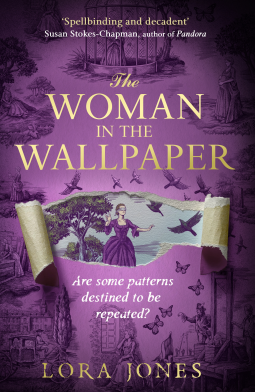
The Woman in the Wallpaper by Lora Jones

The French Revolution is a fascinating subject and I’ve read several novels set during that period. The Woman in the Wallpaper, Lora Jones’ debut novel, is another and is written from the unusual perspective of two sisters working at a wallpaper factory in northern France.

Sofi and Lara Thibault are the daughters of a stonemason who dies suddenly under tragic circumstances early in the book. In need of work to support themselves, the sisters and their mother move to Jouy-en-Jouvant, a town near Paris, where all three have been offered employment at the Oberst factory. The factory produces wallpaper with a unique design featuring a woman thought to be the late Mrs Oberst, who died several years ago and may or may not have been murdered. As they settle into their new jobs, both girls are drawn to Josef Oberst, the heir to the factory, but Josef is soon to be a married man, with an aristocratic young wife due to arrive from Versailles.

With political turmoil brewing in France, Sofi finds herself caught up with the revolutionaries and longs to play a part in shaping her country’s future. Lara, however, has other things to worry about – like the resemblance between herself and Mrs Oberst and the way incidents from her own life seem to be replicated in the pictures on the factory wallpaper. Meanwhile, Josef’s new wife, Hortense, discovers that as a member of the aristocracy she could be in the most danger of them all as the revolution picks up pace.

I enjoyed The Woman in the Wallpaper, although I wish authors would stop writing in present tense! I’ve never read a book set in a wallpaper factory before and it was fascinating to read about the process of making the paper and preparing the coloured pigments, as well as the work carried out in the printhouse, where the designs are carved onto the wooden blocks which are then coated with ink and pressed onto the paper. The parts of the novel dealing with the French Revolution are also interesting. Some of the key events, such as the storming of the Bastille and the arrival of the guillotine, are included, but the main focus is on the role of women and how the Revolution seemed unlikely to bring about the level of change they were hoping for.

The novel is narrated by both of the Thibault sisters and at first, even though the name of the narrator is given at the start of each chapter, I found myself forgetting which one I was reading about as their voices felt very similar. Later in the book, as their stories began to diverge, the two became easier to distinguish and this wasn’t a problem anymore. Lara is the gentler, quieter, more mature sister but Sofi, the impetuous younger sister, was my favourite. However, there’s also a third narrator – Hortense, Josef’s selfish, entitled wife from Versailles. Hortense makes no attempt to adapt to the changes in society or to endear herself to the people of Jouy; in one memorable scene, she deliberately hosts an elaborate birthday party for her pet dog, knowing that peasants are starving and workers are protesting. I thought perhaps I would warm to her as the book went on, but that didn’t happen – I found her cruel and heartless right to the end.

As for the central mystery surrounding the images in the wallpaper and their connection with Lara’s life, I found it easy to guess what was really going on, but it was still quite unsettling! This is an impressive first novel and I hope Lora Jones will be writing more.

Thanks to Sphere for providing a copy of this book for review via NetGalley.
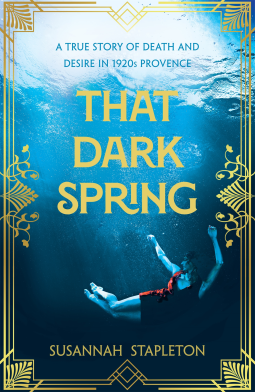
That Dark Spring by Susannah Stapleton

One of my resolutions for 2025 was to read more non-fiction books, so I’m ashamed to say this is only my second one this year. Oh, well – I still have more than seven months to add a few more to that total. I would also like to widen the range of topics I normally choose to read about and try something different, but for now, with That Dark Spring, I have stayed within one of my usual areas for non-fiction – true crime.

The crime in question is the murder – or could it be suicide? – of Olive Branson, an Englishwoman in her forties found dead at her farmhouse in a village in Provence. This happens in April 1929, when she is discovered submerged in a water tank outside the house, a bullet wound between her eyes and a revolver nearby. The local policeman and doctor conclude that Olive shot herself, but not everyone is happy with this verdict. Back in England, Olive’s wealthy, influential cousin demands that the case be reopened, so one of France’s top detectives, Alexandre Guibbal, is summoned from Marseille to investigate.

It’s an intriguing mystery! Could Olive really have lifted the heavy cistern lid, lowered herself in and shot herself – with her left hand, despite evidence suggesting that she was right-handed? Guibbal doesn’t think so and quickly turns his attentions to François Pinet, believed to be a lover of Olive’s for whom she had changed her will to leave him the Monte Carlo Hotel, which she had recently purchased. As evidence mounts up against Pinet, he insists that he is innocent and is defended by many of the villagers who are keen to support ‘one of their own’. There’s eventually a trial, but even then a lot of questions are left unanswered. Susannah Stapleton can’t – and doesn’t – give us those answers, leaving us to draw our own conclusions and try to decide what really happened.

I enjoyed That Dark Spring overall, although it took me a while to get into it due to the amount of background information provided in the first half of the book: a history of the village of Les Baux and the Baussenc people; an account of Olive’s early life and her career as an artist; detailed descriptions of the two rival hotels in Les Baux; and a long and (as far as I could tell) irrelevant biography of the poet Frédéric Mistral. Some padding is to be expected in books of this type, of course, but I found that I only became fully engaged with the story when it returned to the central crime. There are some points that wouldn’t be out of place in a detective novel, such as where Guibbal consults an astronomer in an attempt to decide exactly when darkness fell on the night of the crime or where Pinet tries to use the sighting of a car as an alibi and becomes entangled in his own lies.

It’s frustrating that we still don’t know the truth behind Olive’s death and probably never will. If Pinet was innocent and we assume that suicide was unlikely, that must mean someone else got away with murder – but who was it? Stapleton doesn’t really steer us into one way of thinking or another; she just provides the facts and some possible theories for us to consider. She suggests that the police may have been so determined just to pin the blame on somebody that they ignored or failed to collect important evidence, leaving Pinet’s fate up to the lawyers and the jury.

Stapleton has drawn on a number of primary sources and includes excerpts from Olive Branson’s diaries and letters throughout the text, giving it a more personal touch. There are also notes at the end, a bibliography and a list of Olive’s exhibited artworks. I had never heard of Olive until now, so it’s good to have learned a little bit about her. I’ll have to go back and read Susannah Stapleton’s other book – The Adventures of Maud West, Lady Detective.

Thanks to Picador for providing a copy of this book for review via NetGalley.

A Daughter’s a Daughter by Mary Westmacott

I haven’t taken part in the Read Christie challenge for the last two months and wanted to join in with the May read. The book of the month, Cards on the Table, is one that I’ve read quite recently, though, and I’ve also read all of the other alternative suggestions – so instead I decided to read a book I had been considering for 1952 Club in April but didn’t get to as I ran out of time. A Daughter’s a Daughter, published in 1952 (obviously), is one of six novels that appeared under the name Mary Westmacott, Christie’s pseudonym for her books that weren’t mysteries or thrillers. It’s the third Westmacott I’ve read (the others being Unfinished Portrait and Giant’s Bread) and it’s my favourite so far.

The novel opens with Ann Prentice saying goodbye to her nineteen-year-old daughter, Sarah, who is going on a skiing trip to Switzerland. Ann, a widow in her early forties, is very close to her daughter and isn’t looking forward to spending three whole weeks without her. However, while Sarah is away, Ann meets Richard Cauldfield at a party and falls in love. Richard has spent many years in Burma since the death of his wife and has only recently returned to England. On the surface he seems a pompous man, but as Ann gets to know him she sees that he is good and kind – and just days after meeting him, she agrees to marry him. The only problem is, Sarah is due back from Switzerland soon and Ann is worried about how she’ll take the news.

Sarah takes it very badly: she dislikes Richard on sight and decides that her mother can’t be allowed to marry him. Richard tries to befriend Sarah, but has no idea how to speak to a teenage girl and gets everything badly wrong. Meanwhile, Sarah deliberately tries to provoke him and cause arguments, until the atmosphere in the household becomes unbearable. Ann is caught in the middle – she loves Richard and is sure she will be happy with him, but Sarah is her only child and she loves her too. Eventually, she is forced to choose between them and makes a decision she’ll regret for the rest of her life.

I loved this book, but at the same time I found it uncomfortable to read. Sarah is infuriatingly selfish and spiteful, so much so that even later in the book when she ends up desperately unhappy, I couldn’t find much sympathy for her. My heart broke for Ann when she had to make her difficult choice, but after a while she also began to annoy me and I felt that she didn’t handle the situation as well as she could have done. Both Ann and Sarah feel very human, though, and it’s a testament to Christie’s writing that her characters were able to evoke strong emotions in me. Fortunately, there are also some characters I liked, such as Sarah’s boyfriend, Gerry Lloyd, and Ann’s loyal but outspoken housekeeper, Edith. My favourite, though, is Dame Laura Whitstable, Ann’s friend and Sarah’s godmother. A woman in her sixties, Laura has more experience of life than the two younger women and tries her best to pass on her wisdom and knowledge to them without actually giving ‘advice’ or telling them what to do.

I’ve seen the Westmacott books described as romances, but this one is much more of a psychological novel, exploring the relationship between mother and daughter and what it really means to sacrifice your own happiness for someone you love. I found it surprisingly gripping and finished it in two days. I’m now looking forward to reading the other three Westmacotts.