The Other People by C.B. Everett

Imagine you wake up in an unfamiliar room with no idea where you are or how you got there. Venturing through the door you discover that you’re locked inside an old country house with nine strangers, none of whom know what’s going on either. Once you’re all gathered in one room, a woman enters and introduces herself as Amanda. She explains that a girl has been abducted and is imprisoned somewhere within the house. Twelve hours from now her oxygen will run out and she’ll die; if you can find her, you’ll save her life and will also find the way out of the house. Amanda has barely finished speaking when she is shot dead. Unless you want to be next, it seems you have no choice but to find the missing girl as soon as possible.

This is what happens to student Kyle Tanner, executive Diana Landor, retired policeman Len Melville, mother and baby Cerys and Monica Herbert, military man Captain Saint, warehouse clerk Sylvia Moult, thief Iain Wardle-Roberts, stripper Ramona O’Rourke and child molester Desmond Blaine. As these ten people begin to search the house for the hidden prisoner, they start to get killed off one by one. Is the murderer one of the ten – or are there other people in the house as well?

This book is being compared to Agatha Christie’s And Then There Were None – and there are some obvious similarities – but it reminded me more of The Seven Deaths of Evelyn Hardcastle by Stuart Turton. Like the Turton novel, this one requires the reader to accept an unlikely scenario that feels contrived and implausible, which is something some readers will be happy to do and some won’t. In this case, it does all make perfect sense by the end of the book, but in the meantime you have to be prepared to be patient and just go along with the plot.

The novel is narrated by all ten characters (well, nine – baby Monica only gets a few sentences), with the perspective switching rapidly between them throughout the book. We hardly get to know some of them before they are killed, but the ones who survive further into the book become more developed as characters. None of them are very pleasant people, though, and I can’t say that I really enjoyed being inside any of their minds – particularly not Desmond’s! There’s also another narrator, one who’s known only as The Beast in the Cellar, who interrupts the story now and then to speak directly to the reader, make observations and, I suppose, provide some humour. I found these chapters fun at first, but they quickly started to irritate me.

I was expecting a stronger murder mystery element to the book, so I was surprised to find that the characters don’t actually seem to have much interest in looking for the abducted girl and just wander around the house arguing with each other and wasting time. It’s not really the sort of book that has clues and red herrings and where you can try to work out who the murderer is. The real mystery is the one surrounding the house itself, why the characters have been brought there and why those ten in particular have been chosen. I came up with lots of theories while I was reading, but didn’t come close to the correct answer.

This is definitely a book that needs to be read right to the end to be fully appreciated, then. It was only when the truth was revealed that I understood some of the things that had confused or annoyed me earlier on. It would be interesting to read it again from the beginning, with the knowledge of how it ends, but I’m not going to do that as I have far too many other books waiting to be read! It’s a fascinating book, though, even if it didn’t entirely work for me.

Thanks to Simon & Schuster UK for providing a copy of this book for review via NetGalley.
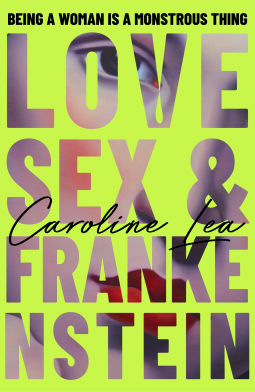
The Midnight Carousel by Fiza Saeed McLynn

Whenever you decide to read a book by an author who’s new to you, you never really know what to expect and there’s always a risk you won’t like it, particularly when it’s a debut novel like this one. Fortunately, I loved The Midnight Carousel from the beginning; it’s such an original, unusual story that I was completely captivated by it.

The carousel of the title is built in 1900 by Gilbert Cloutier for the Grand Exhibition in Paris. Gilbert is struggling to come to terms with his grief over the recent loss of his young son, so he decides to add some special features to the carousel in memory of the boy. This is the last thing he does before disappearing without trace. Over the years that follow, the carousel gains a sinister reputation when it becomes linked with further disappearances and Detective Laurent Bisset is asked to investigate. He thinks he has caught the culprit, but several years later history begins to repeat itself, leaving Laurent questioning whether he has made a terrible mistake.

Meanwhile, in England, Maisie Marlowe is being raised by abusive foster parents in Canvey Island, Essex. Maisie has no idea who her real parents are and the only things that sustain her through this miserable period of her life are her friendship with her foster brother and a picture of a beautiful carousel that she found on the beach. Eventually, an aunt comes to rescue her and takes her to live in the home of Sir Malcolm Randolph where she has just taken a job as housekeeper. Due to an unexpected sequence of events, Maisie ends up emigrating to America with Sir Malcolm where they open an amusement park in Chicago with a magnificent carousel as the star attraction – the exact same carousel as the one in Maisie’s picture and the same one that was built at Gilbert Cloutier’s factory in Paris.

When the disappearances begin again, Laurent Bisset is sure there must be a connection with the earlier incidents in France, so he travels to Chicago determined to uncover the truth this time. Here he crosses paths with Maisie, bringing the two threads of the novel together. I loved both characters and was interested in their personal stories – Maisie’s Dickensian childhood and her incredible change of fortune and Laurent’s dedication to making amends for his past mistakes – but I also enjoyed watching their relationship develop as they come together over the mystery of the carousel.

The mystery element of the book is not so much a whodunit as a howdunit. How can people be disappearing into thin air while riding the wooden jumping horses? Is the carousel itself haunted? Did Gilbert Cloutier place a curse on it? Is someone somehow snatching people from the horses without being seen? Although there were a few clues that I thought could and should have been noticed by Laurent and the police, I can also understand how they could have been missed. When we eventually get some answers, they are both clever and creepy and what I found particularly unsettling is that all through the book I never really knew whether I was reading magical realism or something with a more human explanation. The eerie atmosphere, along with the fairground setting, kept reminding me of Erin Morgenstern’s The Night Circus, but I think this is a better book.

I thoroughly enjoyed The Midnight Carousel and loved getting to know Laurent, Maisie and the secondary characters – I particularly liked Mrs Papadopoulos the dairy seller and Madame Rose the fortune-teller. I’ll certainly be putting Fiza Saeed McLynn on my list of authors to look out for in the future.

Thanks to Michael Joseph for providing a copy of this book for review via NetGalley.
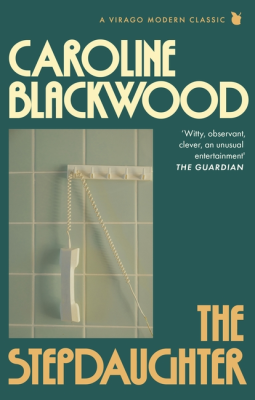
The Darkening Globe by Naomi Kelsey

Naomi Kelsey is a new author for me – I haven’t read her debut novel, The Burnings – but I was drawn to this book by the cover and title, which hinted at an atmospheric Gothic story.

The Darkening Globe is set in 1597, towards the end of the Elizabethan period. It’s a time of travel and adventure, of great explorers like Sir Francis Drake and Sir Walter Raleigh – and the fictional Sir Hugh Radclyffe. As the novel opens, Sir Hugh is returning to England from a voyage to the New World and his wife, Beatrice, is both happy and apprehensive. She’s pleased to have him back, but afraid he’ll find out she’s been having an affair with one of the male servants. However, Hugh doesn’t come home alone – he is accompanied by Catalina, a beautiful woman with dark hair and skin. Because Hugh refuses to explain who she is, Beatrice comes to the conclusion that he has also been unfaithful and her resentment grows as Catalina settles into their home and shows no sign of leaving.

There’s also another new addition to the Radclyffe household: an enormous painted globe, decorated with mermaids, serpents, lions and a multitude of other illustrations. Other courtiers have been commissioning them for their houses and Hugh is very proud of his. Beatrice, though, is less impressed – in fact, she finds the globe threatening and creepy. Her fear of it appears justified when she sees it start to spin one night and then a sinister new drawing appears on its face. Not long afterwards, a death takes place in a way that seems to resemble the picture. Beatrice is sure she’s not imagining things and is determined to uncover the truth. Has someone been tampering with the globe – and could it start to rotate again? What really happened on Hugh’s expedition? And why has he brought Catalina home with him?

I enjoyed The Darkening Globe, particularly the parts of the story involving the globe itself – it’s quite eerie every time it starts to spin and a new picture appears, hinting that another death will happen soon. It’s not immediately obvious what is going on with the globe, as it really does seem to have a mind of its own. The other mystery, involving Catalina, is also interesting. I jumped to a conclusion about her very early in the book, but I was wrong and her connection with Hugh Radclyffe was not what I’d expected. I was pleased to be wrong as the real explanation for her presence was much more intriguing than I had assumed.

Although I felt that Beatrice, as our heroine, could have been a stronger character and the villains could perhaps have been given more depth, this was an entertaining novel with an imaginative plot. I’ll have to find time to read The Burnings and will also look out for future books by Naomi Kelsey.

Thanks to HarperNorth for providing a copy of this book for review via NetGalley.

Aunt Clara by Noel Streatfeild – #1952Club

My final book for the 1952 Club being hosted this week by Simon and Karen is one of Noel Streatfeild’s adult novels. I loved Streatfeild as a child but came to her books for adults just a few years ago. So far I’ve enjoyed The Winter is Past and Caroline England and hoped that her 1952 novel, Aunt Clara, would be another good one.

Before we meet the title character, Streatfeild introduces us to Simon Hilton, a wealthy, curmudgeonly man approaching his eightieth birthday, who lives in London with his valet, Henry. Simon has never married, but has five nieces and nephews, most of whom now have children and grandchildren of their own. None of them care much for Simon – and the feeling is mutual – but they all have their eyes on his money and don’t want to risk being disinherited. The old man is looking forward to celebrating his birthday in August and when he receives a stream of letters from various family members suggesting that he switch his party to July instead as it would be more convenient for them, Simon is furious. Feeling disrespected and insulted, he decides to teach them all a lesson!

A few weeks after his birthday party (which was held in August, despite his family’s complaints), Simon dies and everyone gathers for the reading of the will. To their shock and disgust, they hear that everything has been left to Clara, Simon’s sixty-two-year-old niece. Clara is one of the only people in the family who is not greedy and selfish: she looked after her parents until their deaths, sacrificing her own chance of marriage in the process; she is always ready to help her siblings and their children whenever they call on her; she carries out work for charity and sees only the best in everyone else. It may seem that Simon has rewarded her for her goodness, but the bequests include some odd things to leave to a religious, teetotal spinster in her sixties – a small brothel, The Goat in Gaiters pub, Simon’s racehorses and racing greyhounds, a fairground game called Gamblers’ Luck, and two children from a circus. Is Simon playing one last cruel joke from beyond the grave?

I enjoyed Aunt Clara, although I felt that the plot jumped around too much in the second half of the book, making it a bit difficult to follow, particularly as there are so many characters to keep track of as well. It’s fascinating to see how Clara deals with her unusual inheritance, though; she’s endearingly naive and innocent, oblivious to Simon’s malicious humour, and considers each of his bequests to be a ‘sacred trust’. Her efforts to care for each of the people or things entrusted to her eventually begin to give her a different perspective on life and on things she’s always viewed as sins, such as drinking and gambling. She also has to contend with the rest of the Hilton family, who switch their attentions to her, hoping to get their hands on some of her newly gained wealth!

As I’ve mentioned, there are far too many characters – and only a few of the family members are drawn with any depth. One character who does jump out of the pages, though, is Henry, Simon’s manservant, a no-nonsense Cockney who sees the goodness in Clara and takes her under his wing. Henry is present throughout the book and speaks in dialect, including a lot of rhyming slang, which I found a bit tiring to read after a while. Aunt Clara isn’t my favourite of the Streatfeild novels I’ve read so far, then, but I think there’s a lot more to like than to dislike. I was interested to find that it was made into a film starring Margaret Rutherford in 1954. Has anyone seen it?

The Tiger in the Smoke by Margery Allingham – #1952Club

I’ve read a lot of Margery Allingham’s books but, maybe surprisingly, not many of the Albert Campion ones and not the book that is often described as her best, The Tiger in the Smoke. When I saw that it was published in 1952, it seemed an ideal choice for this week’s 1952 Club, hosted by Karen and Simon.

The Tiger in the Smoke is the fourteenth novel in the Albert Campion series – although Campion himself barely appears in it. Despite the exotic title, the Tiger refers to an escaped prisoner, Jack Havoc, and the Smoke is a nickname for London. At the beginning of the book, we meet Meg, who has believed herself to be a war widow since her husband, Major Martin Elginbrodde, was reported dead in Normandy during the D-Day landings. Meg has recently become engaged to another man, Geoffrey Levett, but has started receiving mysterious photographs which seem to show that Martin is still alive. As a thick fog descends on London, Meg asks her cousin Albert Campion and Chief Inspector Charlie Luke to help her find out who is sending the photos and what they mean.

The connection between all of this and the escape of Jack Havoc – whom Campion’s friend Superintendent Oates describes as ‘a truly wicked man’ – is not immediately obvious, but gradually becomes clear as the story progresses. First, though, we meet a gang of ex-Army men trying to make a living as a band of street musicians, all with some kind of disability or war injury. They are also criminals and associates of Havoc, so portraying them all with disabilities is something I’m sure a modern author would avoid, even if Allingham got away with it in the 1950s. Havoc himself is a great villain, surrounded by a real aura of danger due to his unpredictability and ruthlessness.

This book is much more of a thriller than a mystery. In fact, there’s very little mystery at all, beyond the question of who is responsible for the photographs and how Martin Elginbrodde is linked to Havoc and his gang. There’s nothing for the reader to really try to solve, so you just have to sit and watch as the story unfolds. This probably explains why we see so little of Campion, as there’s not much for him to do from an investigative point of view. I have to admit that I was quite happy with his absence as I’ve found so far that I tend to prefer Allingham’s books without Campion to the ones with him – although having said that, this is one of the later books in the series and he seems to have matured a lot since the earliest book I’ve read (Mystery Mile).

I loved the atmospheric descriptions of London in the fog in the first half of the book, with the limited visibility making it easier for the criminals to avoid capture. Allingham finds so many evocative ways to describe the fog and it really adds to the sense of tension and confusion. I’m pleased I decided to read this one for 1952 Club – and I have another Campion novel, The China Governess, on the TBR which I hope to get to soon as well.

Linden Rise by Richmal Crompton – #1952Club

My first book for this week’s 1952 Club (hosted by Karen of Kaggsy’s Bookish Ramblings and Simon of Stuck in a Book) is Richmal Crompton’s Linden Rise. Crompton is much better known for her Just William series for children, but she also wrote a large number of adult novels of which this is one. I’ve previously read two others, Family Roundabout and The Old Man’s Birthday, both of which I enjoyed, so I hoped for a similar experience with this one.

The novel begins in 1892 with fifteen-year-old Tilly Pound arriving at Linden Rise, a cottage in the village of Priors Green. The Culverton family from London have taken the cottage for the summer and Tilly has been employed as housemaid – her first job. Despite their money and comfortable, privileged lives, the Culvertons are not a happy family: Mr Culverton is having an affair with another woman and his wife is fully aware of it, leading to a tense and unloving marriage. Edmund, the eldest child, is Tilly’s age, a serious, humourless boy, very unlike his carefree younger brother, Richard. There are also two girls – pretty, selfish Althea, and the youngest, Vere, who is considered sullen and miserable and is largely ignored by the rest of the family.

As Tilly settles into her new role, the Culvertons come to rely on her more than they know, and when they return to Linden Rise permanently several years later, she comes back to work for them again, this time as head housekeeper and cook. A lot has changed in the intervening years and Tilly isn’t impressed with the direction in which some of the family members’ lives have gone, so she decides to do what she can to put things right.

As you would expect from an author more famous for her children’s stories, Crompton’s child characters are very well drawn and I think that’s why I enjoyed the first part of this book more than the later sections. She knows the sort of conversations children have, the things that are important to them, the eyes through which they look at the world, and how unthinkingly cruel they can sometimes be. Once the children have all grown into young adults and the focus is mainly on their romantic relationships, I felt that the book seemed to lose its charm a little bit. I did love Tilly, though, who remains very much the same throughout the book – reliable, practical and never afraid to speak her mind.

Linden Rise has a lot to say about parenting, a theme that is also an important part of Family Roundabout. Mr Culverton, preoccupied with the other woman in his life, is largely an absent father who barely appears in the novel. Mrs Culverton also shows little interest in the raising of her children, engaging a governess, Miss Maple (another character I loved), for their first summer at Linden Rise. Mrs Culverton makes it clear that she only feels pride in two of her children – ironically, the two most unpleasant ones, Edmund and Althea – while the other two, Richard and Vere, frustrate her with their refusal to conform and behave as she expects them to. I felt so sorry for Vere in particular; Richard at least has a happy nature and doesn’t really care what people think of him, but Vere struggles with feelings of rejection and abandonment even as an adult.

Despite the serious topics the novel covers, there’s also some humour – and a happy ending, at least for some of the characters! I didn’t enjoy this book quite as much as the others I’ve read by Crompton, but I did like it and I’m glad I chose to read it for 1952 Club.

~

Some 1952 books previously read and reviewed on my blog:

East of Eden by John Steinbeck
They Do It with Mirrors by Agatha Christie
The Merry Mistress by Philip Lindsay
Excellent Women by Barbara Pym
The Birds & Other Stories by Daphne du Maurier

Carrion Crow by Heather Parry

Freedom always comes at a price, that much she had learned, and a confinement was a small sacrifice for the reward of being able to set the rest of her life exactly as she wanted it.

I’ve never read anything quite like this book and am not sure I’ll be able to describe it adequately, but I’ll do my best! It’s not Heather Parry’s first novel – she has written a previous one, Orpheus Builds a Girl – but it’s the first I’ve read and I didn’t really know what to expect.

Marguerite Périgord, who lives in London with her mother, Cécile, has just become engaged to George Lewis, a man thirty-five years her senior. Although he’s a respectable solicitor and Marguerite is sure he’ll make her happy, Cécile disapproves of the engagement because Mr Lewis comes from a humble background and doesn’t have a lot of money. Telling her that if she really must go ahead with the marriage, she first needs an education on how to be a good wife, Cécile locks Marguerite in a tiny attic room with a sewing machine and a copy of Mrs Beeton’s Book of Household Management. Although it seems obvious to the reader that Cécile’s true intentions are simply to keep her daughter hidden away to prevent the marriage, Marguerite is sure she’ll be released as soon as she has made enough progress.

The rest of the novel follows Marguerite through the period of her confinement in the attic, while also giving us some glimpses into Cécile’s own history and her relationship with the man who was Marguerite’s father. The Cécile sections of the book do help to explain how she became the woman she is and why she so desperately wants to stop her daughter from making the same mistakes she did – but at the same time, her treatment of Marguerite is inhumane and cruel. Even more chilling is the way Marguerite just seems to accept that she has been sent into the attic for her own good and makes no attempt to escape. She tells herself that it will all be worth it in the end when she completes her ‘training’ and can become the perfect wife to Mr Lewis.

If Marguerite already seems mentally unstable when she enters the attic, she becomes even more so as her confinement continues. With little to occupy her mind and only a crow nesting in the roof above for company, she becomes obsessed with her own body and the changes she sees in it as she remains shut away from the fresh air outside and the meals delivered to the attic become smaller and more sporadic. The book gradually becomes stiflingly claustrophobic, as well as increasingly disturbing and uncomfortable to read. It reminded me at times of Charlotte Perkins Gilman’s The Yellow Wallpaper or Virginia Andrews’ Flowers in the Attic, although more gruesome than either. As Marguerite is an unreliable narrator and it’s sometimes difficult to know what’s real and what’s imaginary, the ending of the book both confused and surprised me, and I was left with the overall impression that I’d read something very powerful.

This is not a book that I could really say I ‘enjoyed’, but I do recommend it as long as you’re prepared for something very, very dark and unsettling!

Thanks to Doubleday for providing a copy of this book for review via NetGalley.