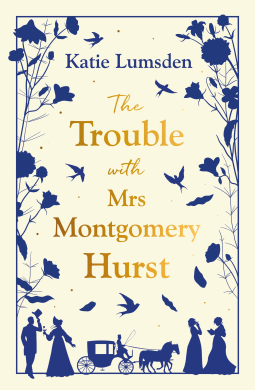
The Trouble with Mrs Montgomery Hurst by Katie Lumsden

In a small, close-knit community in 1841, the arrival of a newcomer can really cause a stir – and that’s what happens when Mr Montgomery Hurst brings his new wife home to Wickenshire. Mr Hurst was one of the county’s most eligible bachelors, so everyone is curious to see what sort of woman has tempted him to marry at last. The new Mrs Hurst, however – a widow in her thirties with three small children – is not what they are expecting. It seems to the people of Wickenshire that she is not quite respectable and gossip quickly begins to spread as they speculate about her past and her previous marriage.

One person who doesn’t care too much about the gossip is Amelia Ashpoint. Amelia’s father owns a brewery, making the Ashpoints one of the richest families in Wickenshire, yet they are still not regarded as equals by the older families whose wealth and titles have been passed down through the generations. At twenty-three, Amelia is expected to marry soon, but what she really wants is a career as a writer and the freedom to be with the person she truly loves. Meanwhile, Felicia Elton, ‘the great beauty of Wickenshire’, is also under pressure to find a rich husband. With her looks and accomplishments, it shouldn’t be a difficult task, but for some reason nobody seems interested in marrying Felicia and she’s beginning to think she’ll have to settle for the first man who asks.

In The Trouble with Mrs Montgomery Hurst, Katie Lumsden tells the stories of Amelia Ashpoint, Felicia Elton and the Hursts, as well as several of their other friends and neighbours, all of whom occupy different positions on the social ladder. At the top there’s the Earl and Countess of Wickford and their dissolute son, Lord Salbridge; lower down, the town families who have made their money through trade and industry; and lower still, people such as Mr Lonsdale, the foreman at the Ashpoint brewery, and Monsieur Brisset, Felicia’s piano teacher. With so many unwritten rules of society and boundaries that can’t be crossed, it seems that nobody in Wickenshire is free to live and love as they choose and it’s easy to see why someone who doesn’t conform, like Mrs Hurst, can become the subject of rumour and slander.

Although the book is set in the early 1840s, at the start of the Victorian era, it has the feel of a Regency novel and there’s an obvious Jane Austen influence in both the writing style and the plot. The worldbuilding is strengthened by the inclusion of a map at the beginning and a list of characters giving their age, address and occupation. It was all so immersive that I really didn’t want to have to leave Wickenshire behind when I reached the end of the book! Because it’s a modern novel, though, Lumsden is able to explore topics that an author like Austen couldn’t (or at least not so explicitly). For example, one of the main characters is a lesbian and her story really helped me to appreciate how difficult it must have been to have no romantic interest in men in a world where it seemed that a young woman’s whole purpose in life was to find a husband. However, her story didn’t go quite the way I had predicted – and neither did the stories of several of the other characters. Some got happy endings, some didn’t and others just had to make the best of things, which I found very realistic.

In case you can’t tell, I loved this book and I think I preferred it to Katie Lumsden’s previous one, The Secrets of Hartwood Hall, which borrows from the Brontës rather than Austen. I would like a sequel so we can catch up with the residents of Wickenshire again and see how they are getting on, but I suspect this is probably intended as a standalone. Either way, I’ll be looking out for whatever Katie Lumsden writes next.

Thanks to Michael Joseph for providing a copy of this book for review via NetGalley.

This is book 12/20 of my 20 Books of Summer 2024.

Book 29/50 for the Historical Fiction Reading Challenge 2024
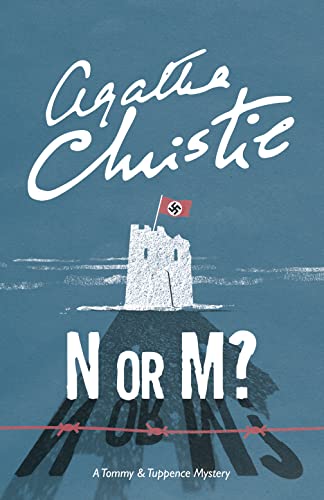
N or M? by Agatha Christie

This month – and in August and September – the Read Christie challenge is moving on to books published in the 1940s and 1950s. I have several unread Christies from those decades to choose from, but I decided to start with N or M?, a Tommy and Tuppence novel from 1941. I enjoyed the first two T&T books, The Secret Adversary and Partners in Crime, and this is the third in the series.

I think this is a series best read in order as, unlike Poirot and Miss Marple, Tommy and Tuppence age almost in real time; they were in their early twenties in 1922’s The Secret Adversary and when we join them at the beginning of N or M? they are over forty. Their advancing age has become a source of frustration to them now that the world is at war and it seems that they are too old to make any meaningful contribution. Then, Mr Grant, a secret agent, arrives with an intriguing proposition for Tommy. He must travel undercover on behalf of the Secret Service to a boarding house on the south coast of England in search of two German spies, one male and one female, known only by the initials N and M. The mission must be kept secret from everyone, including Tuppence, who is told that Tommy is being sent to Scotland to take up a boring office job. However, Tuppence is already one step ahead and determined not to miss out on the excitement!

N or M? is more of a thriller/espionage novel rather than a traditional detective novel, which made a nice change from my last two Read Christie selections, which have both been Poirot mysteries. One of the good things about diving into Christie’s books more or less at random as I have been doing over the last few years is that there’s enough variety within her body of work that you never really get bored. However, there’s still a mystery to be solved here – the mystery of the true identities of N and M – and plenty of clues to look out for. I found it very easy to identify one of the spies (and was frustrated that Tommy and Tuppence didn’t work it out as quickly as I did), but I didn’t guess the other one so there were still some surprises in store for me.

With most of the novel being set in and around the Sans Souci boarding house, this means all of the suspects are together in one place, giving Tommy and Tuppence plenty of opportunities to observe them. The most obvious is Carl von Deinim, a German refugee and research chemist, but is he too obvious? The other guests include a larger than life Irishwoman, a retired Major, an invalid and his wife, and a young mother with her two-year-old daughter. Literally anybody could be a spy and Christie does a great job of capturing the sense of danger, mistrust and paranoia. I was quite worried for Tommy and Tuppence at times, even though I knew they must survive as there are more books in the series!

I’ve found that the other Christie novels I’ve read that were published during this same time period barely mention the war, if at all, so it was unusual to find one in which the war is such a central part of the plot and affects the lives of the characters in so many ways. I really enjoyed it and am looking forward to reading the next Tommy and Tuppence book, By the Pricking of My Thumbs – although not just yet, as it’s published in 1968 and we’ll be staying in the 40s and 50s for the next two months.

This is book 11/20 of my 20 Books of Summer 2024.

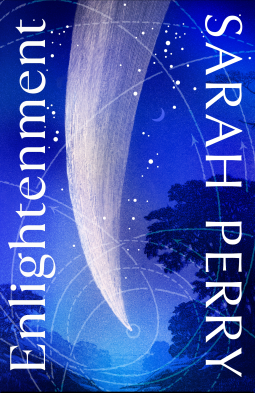
Enlightenment by Sarah Perry

Having enjoyed Sarah Perry’s previous two novels, The Essex Serpent and Melmoth, I had high hopes for her new one, Enlightenment. However, although I did find a lot to like about it, my feelings were more mixed than with the other two.

Enlightenment begins in 1997 in the small fictional town of Aldleigh in Essex, home to Thomas Hart and Grace Macaulay. Thomas and Grace are decades apart in age but share a special bond, formed when Thomas first sets eyes on Grace as a motherless baby and experiences a wave of love and protectiveness he would never have expected. Now in his fifties, Thomas still feels an affinity for seventeen-year-old Grace who, like himself, is a worshipper at the Strict Baptist chapel in Aldleigh. The first cracks in their relationship appear when each of them falls in love – Thomas with museum worker James Bower, who unfortunately doesn’t seem to return his feelings, and Grace with Nathan, a boy from school.

Meanwhile, Thomas, who works for a local newspaper, has begun writing a column on astronomy and develops an interest – almost an obsession – with a vanished 19th century female astronomer, Maria Vǎduva, whose ghost is said to haunt a local manor. Thomas is so fascinated he devotes his life to trying to uncover Maria’s story, tracking down documents and correspondence in an attempt to find out who Maria was and why she disappeared.

The novel is divided into three parts, with the first part being set in 1997 before jumping forward in time to 2008 and finally 2017. Each time we rejoin Grace and Thomas, we see how their lives have changed in the intervening years and the effects of these changes on their relationship, while the constant threads running through the entire novel are the story of Maria Vǎduva and the mysteries of the night sky.

Sarah Perry writes beautifully but I think this particular novel might have worked better for me if it had been set in a much earlier time period. If the section heading hadn’t told us that the first part of the book took place in 1997, there was very little that would have made me guess I was reading about the 90s. The characters spoke and behaved more like Victorians, which I’m sure was intentional, to reflect the rather old-fashioned Strict Baptist community to which Thomas and Grace belong, but it still gave the novel a bit of an odd feel. It took me a while to connect with either main character, but I did eventually warm to them, finding a lot of sympathy for Thomas, who is gay and in love with a man who is not and isn’t interested, and for Grace, whose relationship with Nathan doesn’t go quite as planned either.

I did love the descriptions of the small Essex town, Bethesda Chapel where the congregation meets, and Lowlands House where Maria’s ghost is thought to roam. Not really knowing much about Sarah Perry, I was interested to learn that she drew on her own personal experience for both the geographical setting (she based the fictional Aldleigh on Chelmsford, where she was born) and Grace’s Strict Baptist upbringing (Perry herself also followed the same religion and grew up without television, pop music or fashionable clothes). And for readers who have read The Essex Serpent, this book overlaps with that one in a clever way which I’m sure you’ll enjoy as much as I did.

Thanks to Jonathan Cape for providing a copy of this book for review via NetGalley.

The King’s Mother by Annie Garthwaite

Since reading Annie Garthwaite’s first novel, Cecily, about the life of Cecily Neville, Duchess of York, I have been looking out for a sequel. As the first book ended in 1461 and Cecily lived until 1495, I knew there was more than enough material for a second novel – and here it is, after a three year wait!

Cecily was set during the reign of Henry VI and the early stages of the Wars of the Roses, describing how Cecily’s husband, the Duke of York, led an army against the king and was killed at the Battle of Wakefield. A few months later, Cecily and York’s son, Edward, was more successful, defeating the king’s forces at the Battle of Towton and being crowned Edward IV. The King’s Mother picks up the story as Edward begins his reign and Cecily enters a new phase of her life as mother to the king and therefore one of the most powerful women in England.

This is a complex period of history and I would find it difficult to give a summary of the plot. You may already be familiar with the key points anyway – Edward IV’s unpopular marriage to Elizabeth Woodville; the various threats to his reign and the battles of Barnet and Tewkesbury; his death, leading to the accession of his younger brother, Richard III; and finally, Richard’s defeat by the future Henry VII at the Battle of Bosworth, marking the start of the Tudor dynasty. This entire turbulent period is seen only from the perspective of Cecily, which is slightly limiting as Cecily is rarely at the heart of the action herself and often has to learn about major developments from letters or messengers. However, the story is never boring and moves along at a steady pace, holding my interest until the end even though I’ve read about this period many times before.

Cecily is shown as a controlling force behind Edward’s throne in the early days of his reign, advising him on what to say and do, but her influence over him gradually fades. She concentrates instead on building alliances, arranging marriages and doing whatever else she can to keep the kingdom and her family secure, taking her title of King’s Mother very seriously. The cover of the novel states ‘There can only be one’ and it’s true that Cecily is not the only candidate for this position. She forms an uneasy friendship with Margaret Beaufort, mother of the young Henry Tudor, deciding to trust her even while knowing that Margaret will do whatever it takes to further her own son’s claim to the throne. Then there’s Elizabeth Woodville, Edward’s wife, who also expects her eldest son to inherit the throne. Cecily makes it clear that she disapproves of the marriage and dislikes Elizabeth, but she accepts that Elizabeth is queen whether she likes it or not and does what is necessary to protect the Woodvilles – at least while Edward is still alive!

Elizabeth herself is not shown in a sympathetic light at all and comes across as immature, whiny and spiteful, which is disappointing as other characters are given more nuance. I thought Cecily’s relationship with her middle son, George, Duke of Clarence, was particularly well done, capturing Cecily’s mixed feelings about him – the love of a mother for her son mingled with anger and frustration as George, along with his cousin Warwick, betrays Edward over and over again.

One of the interesting things about reading a lot of books about the same period of history is wondering how the author will tackle some of the controversies and mysteries of the period. One of these is Edward’s alleged pre-contract of marriage to Eleanor Talbot, signed before he married Elizabeth. Some historians believe this was fabricated by Richard III in order to invalidate Edward and Elizabeth’s marriage and declare their children illegitimate; in this book, Annie Garthwaite assumes that the pre-contract did exist and was known to Cecily, who tried to cover it up. Another controversy, of course, is the disappearance of the Princes in the Tower. I won’t tell you how Garthwaite approaches this, but authors do usually have to choose one side or the other and this is definitely more of a pro-Ricardian novel.

Richard’s entire reign is covered in the final 20% of the book, which does feel a bit rushed considering how eventful that period was. I think there would have been enough material for a third novel, which would have allowed for more depth. I felt that we never really got to know Richard’s wife, Anne Neville, for example, which took away some of the emotional impact from the later stages of the book. Still, I really enjoyed The King’s Mother. Start with Cecily if you can, but they are both excellent novels and reminded me yet again of what a fascinating period of history this is!

Thanks to Viking for providing a copy of this book for review via NetGalley.

This is book 10/20 of my 20 Books of Summer 2024.

Book 28/50 for the Historical Fiction Reading Challenge 2024

A Woman of Opinion by Sean Lusk

In his new novel, A Woman of Opinion, Sean Lusk tells the story of Lady Mary Wortley Montagu, based closely on her own published letters. Montagu, whom I previously knew almost nothing about, lived from 1689 to 1762, and was an English writer, poet and medical pioneer. She led a fascinating life and I enjoyed seeing it unfold through the pages of this novel.

A Woman of Opinion begins in 1712 with Mary eloping with Edward Wortley Montagu in order to avoid being pushed into marriage to her father’s choice of husband, the Irish nobleman Clotworthy Skeffington. Edward is a Whig politician and the two settle in London for a few years until, growing impatient with her husband’s lack of ambition and desperate to see more of the world, Mary manages to engineer a job offer for him as ambassador to Constantinople.

While Edward is busy trying to negotiate an end to the Austro-Turkish War, Mary gets to know some of the local Turkish women and is intrigued when she observes them inoculating their children against smallpox, through the method of ‘engrafting’ – taking pus from an infected person and introducing it into the arm or leg of an uninfected child. Mary, who has suffered from smallpox herself and been left with scarring to the face, is so impressed by the results of this procedure that when she returns to England she becomes determined to inoculate as many children as possible.

Most of the novel is narrated by Mary herself – in a formal, eloquent style that fits the 18th century setting, with no glaringly anachronistic language – but some chapters are narrated by her sister, Frances. Unlike Mary, who is the strong, independent ‘woman of opinion’ of the title, Frances has a gentler, more trusting nature. She is easier to like than Mary but her story is much less interesting and I didn’t feel that her perspective really added anything to the book.

Although the Constantinople episode is the most engaging part of the novel, Mary’s life continued to be eventful after her return. She formed a friendship and then a rivalry with the poet Alexander Pope, travelled to Italy where she began an affair with Count Francesco Algarotti, and produced a number of poems and essays. She also left behind her collection of letters, which were published in three volumes after her death as Turkish Embassy Letters (and are still in print today). Her other lasting legacy – her role in the development of the smallpox vaccine – has been overshadowed by Edward Jenner and I’m pleased that this novel has been able to raise some awareness of her contributions.

I enjoyed A Woman of Opinion much more than Sean Lusk’s debut, The Second Sight of Zacahary Cloudesley, which I felt had an unnecessary magical realism element and lost its way halfway through. However, I discovered from Lusk’s author’s note at the end of this book that one of the characters in Zachary Cloudesley was also based on Mary Wortley Montagu. If you’ve read both books, I’ll leave you to guess which one!

Thanks to Doubleday for providing a copy of this book for review via NetGalley.

This is book 9/20 of my 20 Books of Summer 2024.

Book 27/50 for the Historical Fiction Reading Challenge 2024

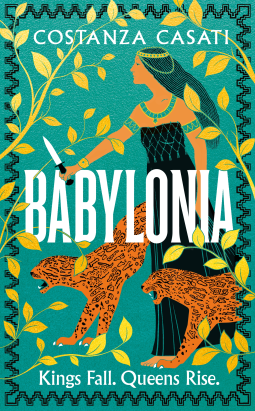
Babylonia by Costanza Casati

‘Not all of us are made for the dust. Those who are destined to rise will rise one way or another.’

Babylonia was something slightly different for me. Although I read a lot of historical fiction, I’m not often drawn to ancient history and I think this could possibly be the first novel I’ve read set at the time of the Assyrian Empire. I enjoyed Costanza Casati’s previous book, Clytemnestra, though, so I decided to give this one a try.

Babylonia is set in the 9th Century BC and tells the story of the legendary Semiramis, thought to be based on the historical Assyrian queen, Sammuramat. I had heard of Semiramis before beginning the book, but knew almost nothing about her or the legends surrounding her.

Semiramis, at least in this version of the story, is the daughter of Derceto, who kills her lover after he denies being the father of her child and then drowns herself. The orphaned Semiramis is taken in by a shepherd, Simmas, who raises her along with his own son. However, Simmas is not a loving father and treats Semiramis so badly that as she grows into a woman she begins to plan her escape from the village. She finally gets her chance to move on and start a new life when she marries Onnes, the new governor of Eber-Nari. Onnes is the illegitimate half-brother of King Ninus and through marriage to him, Semiramis becomes close to the royal household. Still not content with how far she has come, Semiramis sets her sights on the throne, but when it comes to politics she may have met her match in the King’s mother, Nisat.

Much of the focus of the novel is on the relationships between Ninus, Onnes and Semiramis and the different kinds of love and hate each one of them has for the other two. It’s a fascinating triangle to read about with the dynamics shifting and changing throughout the book and the use of multiple perspectives helps us to see that there’s more than one side to the story. These three are not the only interesting characters in the novel – I’ve already mentioned Nisat, but two others who stood out for me were Sasi, the King’s spymaster, and Ribat, a young slave who serves as Semiramis’ eyes and ears in the palace, while dreaming of becoming a scribe.

Because of my lack of knowledge of Semiramis and this period of history in general, I can’t really comment on how this novel compares to other retellings of the same legends. I suppose one of the advantages of writing about a mythical figure is that it does allow the author a lot of freedom in how they choose to approach the story. As for the Assyrian world Casati builds around Semiramis, it feels real, believable and rooted in historical research, from the descriptions of food and clothing to the accounts of battles and political intrigue. Casati writes so beautifully this novel really was a pleasure to read.

If any of you have read any other books about Semiramis/Sammuramat or the Assyrian Empire, I would love to hear your recommendations.

Thanks to Michael Joseph, Penguin Random House for providing a copy of this book for review via NetGalley.

This is book 8/20 of my 20 Books of Summer 2024.

Book 26/50 for the Historical Fiction Reading Challenge 2024
The Puzzle Wood by Rosie Andrews

Rosie Andrews’ debut novel, The Leviathan, left me with mixed, but generally positive, feelings – I loved the setting and atmosphere, but was less interested in the fantasy/horror elements that began to dominate in the second half. I was curious to see whether her new novel, The Puzzle Wood, would be more to my taste.

The novel begins in 1852 with the recently widowed Catherine Symonds applying for the position of governess at Locksley Abbey in Herefordshire. Catherine doesn’t really need the work – her husband was a wealthy man – but she has another reason for her application: her sister, Emily, was the previous governess at Locksley Abbey and has been found dead in the woods nearby, believed to have taken her own life. Catherine is not satisfied with this explanation and in order to investigate her sister’s death, she needs to find a way to insert herself into the household without anyone guessing her connection with Emily.

Once at Locksley Abbey, Catherine meets her new employer, Sir Rowland, and her young charge, his daughter Georgie. The more she learns about the family and their history, the more she becomes convinced that there’s more to her sister’s death than has so far been revealed. Meanwhile, there’s another newcomer – Arthur Sidstone, a doctor who has recently returned to the area after working abroad. Arthur’s grandfather, who is interested in the history of the forests surrounding Locksley, has grown concerned by reports that Sir Rowland is planning to sell off the land for development. Arthur has come to ask him to reconsider, but ends up becoming much more closely involved in the affairs of Locksley Abbey than he had bargained for.

Set in the Black Mountains of Herefordshire close to the England-Wales border, on a remote estate surrounded by ancient woods steeped in folklore, with a plot incorporating family secrets and mysterious deaths, The Puzzle Wood promised to be a great, atmospheric Gothic novel. However, it didn’t have as much atmosphere as I expected and the Puzzle Wood itself played a surprisingly small part in the story. Instead, a lot of time is spent on another storyline revolving around the productivity of the mine on Sir Rowland’s land and the working conditions of the miners employed there, as well as Arthur Sidstone’s backstory and his involvement with the Chartist movement. I found these two threads quite interesting but they didn’t really blend together very well with Catherine’s story. The spooky/supernatural elements grow stronger towards the end, although certainly not as strong as in The Leviathan and I think readers who pick up this book hoping for something similar could be disappointed.

I seem to have read a few other novels recently with similar plots involving young women working as governesses or servants in lonely Victorian mansions – Elizabeth Macneal’s The Burial Plot and Katie Lumsden’s The Secrets of Hartwood Hall are two that come to mind and both were more enjoyable than this one. Maybe if I hadn’t read so many of this kind of book I would have found The Puzzle Wood more captivating as I do like Rosie Andrews’ writing. I’m not sure if I’ll try more of her books, but depending on the setting and subject I could be tempted.

Thanks to Raven Books for providing a copy of this book for review via NetGalley.

Book 25/50 for the Historical Fiction Reading Challenge 2024