Cards on the Table by Agatha Christie

A new year means the start of a new Agatha Christie challenge! Read Christie 2023 is hosted by the official Agatha Christie site and this year the focus is on methods and motives. The theme for January is jealousy and the chosen book is Sad Cypress. However, I read that one quite recently so I’ve gone with one of the alternative suggestions for this month, Cards on the Table.

Published in 1936, this is a Poirot novel, but it also features three of Christie’s other recurring characters, all of whom work together to solve the mystery. They are Superintendent Battle, the Scotland Yard detective; former Army officer and intelligence agent, Colonel Race; and Ariadne Oliver, the famous crime author. All three, along with Poirot, are invited to a dinner party hosted by Mr Shaitana, a wealthy man known as a collector of rare objects. He tells Poirot that he will also be inviting a collection of criminals – four people he believes have committed murder but never been caught.

During the party, the eight guests divide into two groups and sit down to play bridge. Several hours later, Mr Shaitana, who wasn’t participating, is found dead in his chair by the fire – stabbed with a small dagger by one of his guests while the others were engrossed in their game. The four sleuths can obviously be ruled out, but any one of the other four could be the murderer. To get to the truth, Poirot and his friends must investigate the background of each suspect to see whether Shaitana was correct and each of them had already killed before.

Cards on the Table begins with a foreword in which Christie explains that unlike most crime novels where the least likely suspect is usually the culprit, this book has four suspects who are all equally likely. They have all (allegedly) committed murder in the past, so all have a motive – fear that Shaitana will expose their previous crimes to the other guests. There’s Dr Roberts, who may or may not have been responsible for the death of at least one of his patients; Major Despard, whose expedition to the Amazon is shrouded in mystery; young Anne Meredith, who tries to cover up her reasons for leaving a previous job; and Mrs Lorrimer, an expert bridge player whose secrets prove particularly difficult to unearth. I suspected all of them at various points, but every time I thought I’d worked it out, Christie threw another twist into the story and I had to think again!

I loved the idea of having four different detectives working together in the same novel (it’s a shame Miss Marple and Tommy and Tuppence hadn’t been invited to the party too!) and each of them has a chance to contribute to the solving of the mystery. Colonel Race has a disappointingly small part, but we see a lot of Battle and Mrs Oliver – who is often described as a self-parody of Christie herself and provides an opportunity to comment on the writing of detective novels. Of course, it’s Poirot who correctly identifies the murderer in the end!

I enjoyed this book, but I think I would have enjoyed it even more if I’d had more knowledge of bridge, which is a game I don’t play and don’t really understand. Part of Poirot’s investigation revolves around the score cards and an analysis of each suspect’s playing style, so this meant very little to me. Luckily, though, it’s not completely essential to be able to follow all of this and there are other clues to piece together as well.

February’s Read Christie theme is ‘a blunt object’ and the group read will be Partners in Crime, which again is a book I’ve already read. I’ll wait until they reveal the alternative choices for the month and see if any appeal to me.

The Orange Girl by Jostein Gaarder (tr. James Anderson) – #NordicFINDS23

What is this great fairytale we live in and which each of us is only permitted to experience for such a short time? Maybe the space telescope will help us to understand more of the nature of this fairytale one day. Perhaps out there, behind the galaxies, lies the answer to what a human being is.

It’s been years since I last read anything by Jostein Gaarder! I loved Sophie’s World and The Solitaire Mystery, which I read around the time they were published in English in the mid-1990s, but although I read a few more of his books after that I found them disappointing in comparison and didn’t explore any of his later work. This month, Annabel is hosting her second Nordic FINDS event, celebrating literature from Finland, Iceland, Norway, Denmark and Sweden, and I thought it would be a good opportunity to try one of the Gaarder novels I never got round to reading.

First published in Norwegian in 2003 and translated into English by James Anderson the following year, The Orange Girl is narrated by Georg Røed, a fifteen-year-old boy whose father, Jan Olav, died eleven years earlier. Georg’s mother has married again and had another child and Georg gets on well enough with both, but he has never stopped wondering about the father he can barely remember. One day, Georg’s grandmother finds a letter written by Jan Olav before his death and addressed to Georg, intended for his son to read when he was old enough to understand it. The Orange Girl includes Jan Olav’s letter in full, interspersed with Georg’s reaction to it and the lessons he learns from it.

In the letter, Jan Olav tells the story of a young woman he meets in Oslo in the 1970s. He comes to think of her as ‘the Orange Girl’ because when he sees her for the first time on a tram, she is wearing an orange dress and carrying a large bag of oranges. When the tram stops, she disappears, leaving Jan Olav desperate to find her again. As the weeks and months go by, he becomes obsessed with tracking down the mysterious Orange Girl and discovering her true identity. Who is she? Why did she need so many oranges? And why is it important for Georg to hear her story so many years later?

On the surface, The Orange Girl is a quick, easy read. Being narrated by a teenage boy, it’s written in simple language (Georg actually feels more like a ten or eleven-year-old than a fifteen-year-old), and like many of Gaarder’s novels, it would be perfect for younger readers. The story of the Orange Girl is entertaining and amusing – particularly when Jan Olav creates a series of imaginary scenarios to explain the huge bag of oranges! I would have liked to have been given a stronger sense of place as Jan Olav follows the girl from Oslo to Seville and back again, but it wasn’t that sort of book; it’s concerned mainly with plot and ideas rather than setting.

However, anyone who has read any of Gaarder’s other books will know that they always contain a philosophical element, and this one is no different. Georg and his father share an interest in the Hubble Space Telescope, which leads to a lot of discussion of the expanding universe and the place of human beings within it. The book also raises the question of whether, if you knew before you were born that you would die early and have all your happiness taken away, would you still choose to be born at all? These are clearly the things Gaarder really wanted to write about here, and the Orange Girl story is just a way of illustrating these philosophical points.

I haven’t been left wanting to immediately search out the rest of Gaarder’s novels, but I did find this one quite enjoyable and am glad I picked it up for Nordic FINDS.

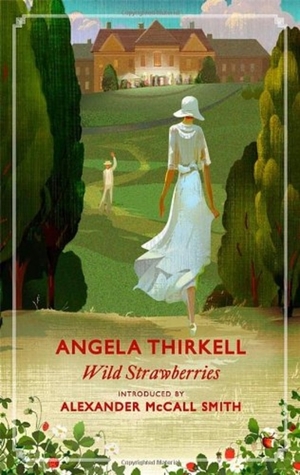
Wild Strawberries by Angela Thirkell

Wild Strawberries is the second book in Angela Thirkell’s Barsetshire series and the book chosen for me in the last Classics Club Spin. I had mixed feelings about the first book, High Rising, which I read nearly two years ago, but still wanted to try this one as I knew it was about a different set of characters and I thought I might get on better with it.

Published in 1934, this book introduces us to the Leslie family who live at Rushwater, their estate in West Barsetshire. The family consists of Henry Leslie and his absentminded wife, Lady Emily, their two sons John and David, and their daughter Agnes, who is married to Robert Graham and has three young children. There was also another son, the eldest, who died in the Great War, and his sixteen-year-old son Martin is now the heir to Rushwater and lives with his grandparents. As the novel opens, Robert Graham has gone to South America on business so Agnes and the children are spending the summer with the Leslies and so is a niece of Robert’s, Mary Preston.

This probably all sounds straightforward enough to you, but for some reason it took me ages to remember who was who and I wished I had drawn a family tree at the beginning! Anyway, once I started to settle into the story and get to know the characters, I found it quite enjoyable. The plot mainly revolves around Mary Preston and the question of which of the Leslie men she’ll marry – David or John. David, the younger brother, is charming but selfish and thoughtless (he promises to bring Mary the ‘wild strawberries’ of the title, then forgets them), while John is quiet, kind and considerate. I knew which of them I wanted her to choose but Thirkell keeps us in suspense until the end of the book!

There’s also a subplot involving a French family, the Boulles, who move into the vicarage for the summer. Keen for Martin to improve his French, the Leslies arrange for him to study with the Boulles’ children, but instead he becomes involved in a plot to restore the French monarchy. Meanwhile, the lovely but irritating Agnes spends the entire book fussing over her children, and Mr Holt, an acquaintance of Lady Emily’s who talks about nothing but gardens and his titled friends, keeps imposing himself on the family, oblivious to the fact that nobody wants him there.

I enjoyed this book once I got into it; although it doesn’t have much more substance than High Rising, I found it funnier and can see now why people praise Thirkell for her humour and wit. There are also touches of poignancy when the Leslies remember their lost son, killed in the war, and when John, who is a widower, grieves for Gay, his late wife. Some of the characters, such as Mr Holt and the Boulles, are clearly there for comedy purposes, but the family themselves, annoying as some of them were, felt realistic to me. I liked John and Martin, while I found Mary’s infatuation with David, who treats her carelessly, frustrating but all too believable. I should mention, though, that there are a few instances of racism, mainly in the first half of the book, that even though I’m used to it in books of this era, I found more jarring than I normally would.

I still haven’t been completely won over by Angela Thirkell but I liked this better than the first book and will probably continue with the series at some point. However, the third book is about Tony, the teenage boy from High Rising whom I found almost unbearable, so I don’t know what I’ll think of that one!

This is book 35/50 read from my second Classics Club list.

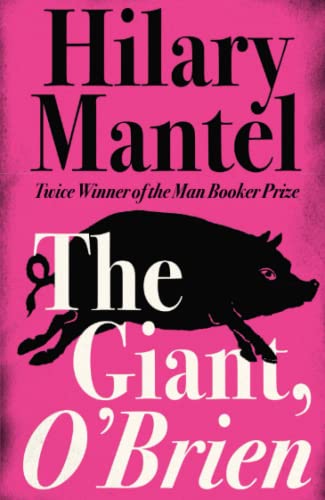
The Giant, O’Brien by Hilary Mantel

Having finished Hilary Mantel’s Thomas Cromwell trilogy last year, I knew I wanted to read more of her books. A Place of Greater Safety, her novel about the French Revolution, has always sounded appealing to me but the length is off-putting, so I decided to try a shorter one first.

The Giant, O’Brien, published in 1998, is based on the true story of the 18th century Irish giant, Charles Byrne. Also known as Charles O’Brien and claiming descent from the High Kings, but usually referred to by Mantel as simply ‘the Giant’, Byrne and his friends leave Ireland in 1782, fleeing ‘cyclical deprivation, linguistic oppression and cultural decline.’ The Giant has previously been able to make a living by entertaining his neighbours with stories and songs but, sensing that things are changing, he knows he needs to find a new way to earn money. The solution seems obvious, so after arriving in London with his entourage, the Giant appoints the unscrupulous Joe Vance as his agent and agrees to exhibit himself as a freak, to be stared at, pointed at, poked and prodded, in return for money.

The story of another man unfolds in parallel with the Giant’s. His name is John Hunter, a Scottish surgeon and anatomist – like Charles Byrne, a real historical figure. Mantel describes Hunter’s early years in Long Calderwood and how he came to be in London, first as an assistant to his brother William, another famous anatomist, and then on his own, conducting autopsies in the name of scientific research. Before the Anatomy Act of 1832, it was very difficult to obtain bodies for medical study in the UK, a problem which led to body snatching and the illegal digging up of graves. In one fascinating, if slightly gruesome scene, Hunter lectures a group of newly recruited body snatchers on the best ways to get hold of fresh corpses without being detected. Naturally, the bodies of most interest to Hunter are those that are unusual in some way – so when he hears news of the Giant currently being exhibited in London, he decides to make him an offer, despite the fact that the Giant is not yet dead.

Mantel portrays the Giant as a gentle, intelligent man with a natural gift for telling stories and a seemingly endless knowledge of myth, folklore and fairy tales. This, as much as his height, makes him stand out from his friends. While the others succumb to London’s temptations – alcohol, women and gambling – the Giant saves his money in the hope of one day rebuilding Mulroney’s tavern, now a ruin but once the place where ‘Courts of Poetry’ were held and he was taught the art of storytelling. John Hunter, in contrast, is much less likeable; if the Giant represents tradition and a way of life that is about to be lost forever, Hunter represents progress and advancement and is portrayed as clever, ambitious and lacking in empathy.

In her author’s note at the end of the book, Mantel explains which parts of the story are based on fact and which are purely fictional. There’s more factual information available on John Hunter than there is on the life of Charles Byrne, but what we do know about Byrne is that he suffered from gigantism caused by pituitary tumours, his height was 7ft 7 (2.31m) and his skeleton has been on display in the Hunterian Museum at the Royal College of Surgeons for over two centuries, despite his own wishes to be buried at sea. The museum has been closed since 2017 for renovations and the future of Charles Byrne’s remains is the subject of an ethical debate.

I found both the Giant and John Hunter interesting to read about, particularly as I previously knew nothing at all about either of them, but I thought the book seemed slightly disjointed because of the way it kept switching between the two narratives. Until they began to converge very near the end, the two storylines felt completely separate and unconnected; I suppose Mantel’s aim was to show the contrast between the main characters and the different paths they followed through life, but I felt it didn’t flow very well as a novel. I also didn’t find the eighteenth century London setting as immersive as the Tudor world she creates in the Wolf Hall books. Still, there are some fascinating ideas in this novel and the Giant O’Brien himself is a character I won’t forget in a hurry!

This is book 1/50 read for the 2023 Historical Fiction Reading Challenge.

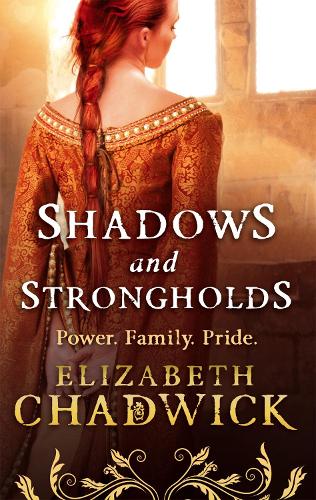
Shadows and Strongholds by Elizabeth Chadwick

I had intended to read this book for last year’s 20 Books of Summer but when it became clear I wouldn’t be able to finish it before the deadline I decided to save it to read later. With nearly 600 pages in my paperback edition it wasn’t a book that could be rushed!

Shadows and Strongholds, published in 2004, is a prequel to Lords of the White Castle, which I haven’t read yet, and tells the story of Fulke FitzWarin, known as Brunin due to his brown eyes, and Hawise de Dinan, youngest daughter of Joscelin de Dinan of Ludlow Castle. As the events of this book come first chronologically, I hoped it wouldn’t matter that I was reading the books out of order and that it might actually make things easier.

The novel opens in 1148 with ten-year-old Brunin attending a fair in Shrewsbury with his father, also Fulke FitzWarin, the lord of Whittington. That day, two things happen that will change the course of Brunin’s life. First, he is attacked by Ernalt de Lysle, a young squire who takes pleasure in bullying younger children, and this marks the beginning of a lifelong rivalry between Brunin and Ernalt. Then, Brunin discovers that his father has arranged for him to join the household of his friend Joscelin de Dinan to begin his own training as a squire.

Arriving at Ludlow Castle, the sensitive, awkward Brunin finds his new duties challenging but learns quickly and is soon accepted as part of the family, befriending de Dinan’s daughters Hawise and Sibbi and his young ward, Marion de la Bruere. As the years go by and the children grow into adults, de Dinan and FitzWarin begin to arrange a marriage between Brunin and Hawise – but this is not the time to lead a peaceful married life, as both Whittington and Ludlow are about to come under attack.

As always, Elizabeth Chadwick brings the medieval world vividly to life, from her descriptions of the duties of a squire and the running of a 12th century castle to the risks of childbirth and how to buy a horse at a fair. This novel is set during the Anarchy, the period of civil war that followed the death of Henry I, with his daughter, the Empress Matilda, and nephew, Stephen of Blois, battling for the English throne. Our protagonists and their enemies are forced to choose one side or the other – and some switch sides at least once – but their loyalties seem to count for very little after the war ends and Matilda’s son takes the throne as Henry II. While the changes in the monarchy and the wider issues affecting England as a whole play out in the background, the FitzWarins and de Dinans are understandably more concerned with the threat to their own castles – particularly as there seems to be a traitor within the de Dinan household.

The main characters are all loosely based on people who really existed, although not much is known about some of them and in her author’s note Elizabeth Chadwick explains that a major source for her novel was a rhyming romance written by a 13th century chronicler. There’s obviously a lot of focus on the relationship between Brunin and Hawise, but I have to admit I didn’t find them particularly appealing as the hero and heroine and some of the secondary characters interested me more. I loved Joscelin de Dinan, who remains a good and honourable man during this time of brutal war and shifting loyalties and to whom Fulke FitzWarin entrusts the care of his son, and I was intrigued by the story of Marion de la Bruere, whose ghost is said to haunt the ruins of Ludlow Castle to this day.

Because I wasn’t fully invested in the central romance, this hasn’t become a favourite Elizabeth Chadwick novel but I did enjoy it. I will read Lords of the White Castle soon, but I also have two more of her books on my shelf, The Love Knot and The Marsh King’s Daughter.

The Reckoning by Edith Wharton

The last book I read in 2022 was this slim collection of Edith Wharton short stories from Penguin’s Little Black Classics series. There are only two stories in the book and at just under 50 pages in total, they can be read very quickly. Despite being so short they are still substantial and satisfying and I enjoyed reading both of them.

The first story, Mrs Manstey’s View, was my favourite. It was actually Wharton’s first published story, appearing in the July 1891 edition of Scribner’s Magazine. It’s a simple but very moving story about a widow, Mrs Manstey, who lives alone on the third floor of a New York boarding house. As her health begins to fail and visits from friends and family become less frequent, Mrs Manstey’s sole pleasure in life is observing the view from her window:

Mrs. Manstey’s real friends were the denizens of the yards, the hyacinths, the magnolia, the green parrot, the maid who fed the cats, the doctor who studied late behind his mustard-colored curtains; and the confidant of her tenderer musings was the church-spire floating in the sunset.

When Mrs Black, the owner of the house next door, announces that she’s planning to build a large extension, Mrs Manstey is devastated. Her view is the only thing that keeps her going from one day to the next; if the view is lost, she feels there will be no point in living at all. The construction work must be stopped, but will Mrs Black be prepared to listen?

The title story, The Reckoning, is much longer, but I found it less powerful. First published in 1911, it deals with an unconventional marriage between Julia and Clement Westall, who have both agreed that marriage should be a voluntary arrangement between two people which either can break off at any time if they become unhappy. Julia has already put this theory into practice when divorcing her previous husband, but when she begins to suspect that Clement has his eye on another woman she starts to wonder whether it’s such a good idea after all.

The Reckoning is an interesting story and when you consider the stigma still attached to divorce in the early 20th century, the depiction of the Westalls’ marriage is very progressive for its time. However, I didn’t find it as appealing as Mrs Manstey’s View, with its theme of seeing the beauty in the small everyday things that others take for granted.

Apart from these two stories, I have only read Ethan Frome by Edith Wharton so far. I’m sure I’ll be reading more of her books now that I’ve been reminded of how good her writing is.

The Adventure of the Christmas Pudding by Agatha Christie

The December prompt for Read Christie 2022 is ‘a story containing precious jewels’ and the book chosen for the group read is Hercule Poirot’s Christmas. I read that one a few years ago, so decided to try The Adventure of the Christmas Pudding instead. This is a collection of six short stories and although only the first one contains precious jewels and has a festive theme, I thoroughly enjoyed reading all six of them!

Agatha Christie herself selected the stories for this collection and the first five in the book are Poirot mysteries. In the title story, The Adventure of the Christmas Pudding, Poirot joins the Lacey family at their country house, supposedly to experience a ‘typical English Christmas’. However, unknown to the family, he has another motive for attending their Christmas celebrations – he is hoping to track down a precious ruby stolen from a foreign prince. Although I felt that the title gave away part of the mystery – it’s obvious that the pudding is going to have some significance – there are still some twists before the full solution becomes clear. And I loved the Lacey children who decide to present Poirot with a murder as a special Christmas treat!

The Adventure of the Christmas Pudding was apparently inspired by Christie’s own memories of spending Christmas at Abney Hall, her sister’s home in Cheshire (presumably without the stolen jewels and murders). The other four Poirot stories in this collection are not set at Christmas, but are equally enjoyable to read. The Mystery of the Spanish Chest, in which a dead body is found in a chest after a party, is excellent. I had no idea who the culprit was or how the crime was carried out and I loved watching the plot unfold. The Under Dog, where Poirot investigates the death of a man who has been hit on the head with a club, is another good one. It’s quite complex and involved and I think it could easily have been developed into a full length novel.

The next two stories are quite unusual. In Four and Twenty Blackbirds, a man who usually dines in the same restaurant every Tuesday and Thursday without fail suddenly turns up on a Monday and asks for food he has never ordered before. Poirot is intrigued, particularly when he hears three weeks later that the man has died after an accidental fall downstairs. I found part of the solution easy to guess, but again there’s more to this story than it would seem at first! Then, in The Dream, Poirot is summoned by an elderly millionaire who is having a recurring dream in which he shoots himself with a revolver. When the old man does actually die a few days later in exactly the manner he has described, Poirot is called back to investigate. I loved this one – it’s very cleverly done!

After all of these Poirot mysteries, it was nice to see Miss Marple make an appearance in the final one, Greenshaw’s Folly. In this story, the elderly Miss Greenshaw, the current owner of the house known as Greenshaw’s Folly, is murdered in the garden just after making a new will. Miss Marple is brought into the mystery by her nephew Raymond West, whose niece has been working at the house, and through her usual methods – a knowledge of human nature and trying to decide who the various suspects remind her of – she proceeds to solve the mystery.

Overall, this is a great collection and I hope I’ve managed to give you a taste of each story without spoiling them too much. I’m looking forward to taking part in Read Christie 2023 next year!