The Winter Spirits: Ghostly Tales for Frosty Nights

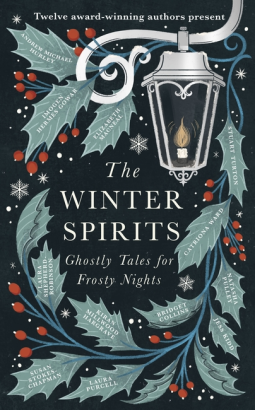
The Winter Spirits: Ghostly Tales for Frosty Nights is a collection of twelve new ghost stories written by popular authors of historical and Gothic fiction, all with a Christmas or Advent theme. It’s a follow-up to The Haunting Season, which I haven’t read but which includes eight of the same authors. This is the perfect time of year for ghost stories, so maybe I’ll look for the previous book next winter.

Back to The Winter Spirits and most of the stories are set in the 19th or early 20th centuries, giving them a traditional feel. More variety would have been nice – not just in the time periods, but also in the geographical settings, as the majority take place in Britain, with one or two in America or elsewhere in Europe – but otherwise I really enjoyed this collection. I’ve previously read full-length novels by most of the featured authors, but three of them were new to me: Andrew Michael Hurley, Catriona Ward and Susan Stokes-Chapman. I felt that Hurley’s The Old Play and Stokes-Chapman’s Widow’s Walk were two of the weaker stories, but looking at other reviews, some readers have singled them out as favourites, so I think it’s just a case of different stories appealing to different people! Ward’s contribution, Jenkin, was completely bizarre but added some diversity as it felt quite unlike any of the others.

The biggest surprise, for me, was Natasha Pulley’s The Salt Miracles; I really didn’t get on with her writing style in her novel The Bedlam Stacks, so I wasn’t expecting too much from this tale of disappearing pilgrims on a remote Scottish island (based on St Kilda). However, I ended up loving it – it’s such an unusual and chilling story! Inferno by Laura Shepherd-Robinson, one of my current favourite historical fiction authors, is another I particularly enjoyed – a wonderfully eerie story set in 18th century Italy, where a man is forced to confront his sins. Even better than both of these is Stuart Turton’s creepy and imaginative The Master of the House, in which a young boy who is being neglected by his father makes a deal with the devil. This one feels almost like a very dark fairytale and is one of the highlights of the book.

Of the twelve authors, Laura Purcell is probably the most well established as a writer of horror fiction and she doesn’t disappoint here with Carol of the Bells and Chains, in which a governess trying to deal with two unruly children tells them the story of the Krampus, with unintended consequences. Imogen Hermes Gowar’s A Double Thread, where a woman gets her comeuppance after badly treating her hardworking seamstress, is another I really enjoyed – it made me long for another novel by Gowar, as it’s been a few years since The Mermaid and Mrs Hancock!

The remaining stories are by Elizabeth Macneal, Bridget Collins, Jess Kidd and Kiran Millwood Hargrave. With a range of different styles and subjects, unless you just don’t like ghost stories I think this collection should contain something to please almost every reader.

Thanks to Sphere for providing a copy of this book for review via NetGalley.

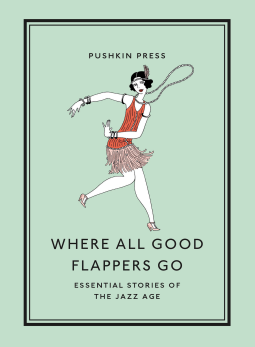
Where All Good Flappers Go: Essential Stories of the Jazz Age – edited by David M. Earle

I’ve never considered myself to be a fan of Jazz Age fiction – but, to be fair, I’ve read very little of it, other than a few F. Scott Fitzgerald novels. When I saw that Pushkin Press had put together this collection of Jazz Age short stories, I thought it would be a good opportunity to branch out and try some new authors from that era.

This edition begins with an introduction discussing the changes following WWI that led to the birth of the ‘flapper’ as women pursued social and sexual equality, then a short 1925 essay by Zelda Fitzgerald, What Became of the Flappers?. In this essay, Fitzgerald attempts to give her own definition of what a flapper is, before revealing what she believes will happen to them in the end:

The best flapper is reticent emotionally and courageous morally. You always know what she thinks, but she does all her feeling alone. These are two characteristics which will bring social intercourse to a more charming and sophisticated level. I believe in the flapper as an artist in her particular field, the art of being – being young, being lovely, being an object.

The essay is followed by twelve short stories, most of which were originally published in various periodicals between 1920 and 1932. Apart from F. Scott Fitzgerald, all of the other authors were new to me; I had at least heard of a few of them, such as Zora Neale Hurston, Anita Loos and Dorothy Parker, but was unfamiliar with the rest. The Fitzgerald story is Bernice Bobs Her Hair, which stands out as one of the best in the book, but I expect a lot of people will have read that one so I’m going to focus on some of the less well known stories instead.

My favourite story is probably Night Club by Katharine Brush, which describes a typical night at a New York club through the eyes of Mrs Brady, who works there as a maid. Mrs Brady’s job involves looking after a dressing room, where young women come to reapply their make-up throughout the evening, therefore she gets to hear a lot of scandalous gossip involving affairs and proposals. In the world of the flapper, however, these dramas have become so commonplace that Mrs Brady is more interested in the ‘real life’ stories in her magazine!

Another I particularly enjoyed is Dawn Powell’s Not the Marrying Kind, about Aileen, who is not the kind of girl men want to marry – unlike Joan who has always known she will marry and has a ‘hope chest’ of linen ready and waiting for her special day. Then there’s Gertrude Schalk’s The Chicago Kid, in which a chorus girl at the Yellow Parrot cabaret elopes with a millionaire, which inspires Flora, a black girl from Chicago to set out to do the same. I liked the twist at the end of this one!

Despite all dealing with the common theme of the flapper lifestyle, the stories in this collection are quite diverse and include contributions by male authors and black authors, so we see things from a range of different perspectives. Rudolph Fisher’s Common Meter describes a battle-of-the-bands contest between two jazz band leaders trying to win the affections of a beautiful woman, while Viña Delmar’s Thou Shalt Not Killjoy is written in the style of a Biblical parody. I can’t claim to have enjoyed all of the stories – Dorothy Parker’s The Mantle of Whistler, a story written mostly in dialogue as a satire on the flirtatious language used by the flappers, was particularly disappointing, considering she is one of the more famous authors in the collection.

Stories by Dana Ames, John Watts and Guy Gilpatric make up the rest of the book and although, as I’ve said, I found this collection a real mixed bag, it’s always good to try something different and it was an entertaining read overall.

Thanks to Pushkin Press for providing a copy of this book for review via NetGalley.

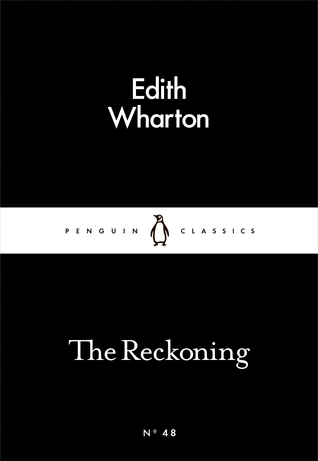
The Reckoning by Edith Wharton

The last book I read in 2022 was this slim collection of Edith Wharton short stories from Penguin’s Little Black Classics series. There are only two stories in the book and at just under 50 pages in total, they can be read very quickly. Despite being so short they are still substantial and satisfying and I enjoyed reading both of them.

The first story, Mrs Manstey’s View, was my favourite. It was actually Wharton’s first published story, appearing in the July 1891 edition of Scribner’s Magazine. It’s a simple but very moving story about a widow, Mrs Manstey, who lives alone on the third floor of a New York boarding house. As her health begins to fail and visits from friends and family become less frequent, Mrs Manstey’s sole pleasure in life is observing the view from her window:

Mrs. Manstey’s real friends were the denizens of the yards, the hyacinths, the magnolia, the green parrot, the maid who fed the cats, the doctor who studied late behind his mustard-colored curtains; and the confidant of her tenderer musings was the church-spire floating in the sunset.

When Mrs Black, the owner of the house next door, announces that she’s planning to build a large extension, Mrs Manstey is devastated. Her view is the only thing that keeps her going from one day to the next; if the view is lost, she feels there will be no point in living at all. The construction work must be stopped, but will Mrs Black be prepared to listen?

The title story, The Reckoning, is much longer, but I found it less powerful. First published in 1911, it deals with an unconventional marriage between Julia and Clement Westall, who have both agreed that marriage should be a voluntary arrangement between two people which either can break off at any time if they become unhappy. Julia has already put this theory into practice when divorcing her previous husband, but when she begins to suspect that Clement has his eye on another woman she starts to wonder whether it’s such a good idea after all.

The Reckoning is an interesting story and when you consider the stigma still attached to divorce in the early 20th century, the depiction of the Westalls’ marriage is very progressive for its time. However, I didn’t find it as appealing as Mrs Manstey’s View, with its theme of seeing the beauty in the small everyday things that others take for granted.

Apart from these two stories, I have only read Ethan Frome by Edith Wharton so far. I’m sure I’ll be reading more of her books now that I’ve been reminded of how good her writing is.

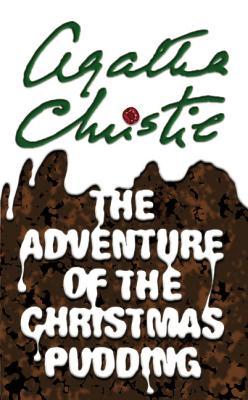
The Adventure of the Christmas Pudding by Agatha Christie

The December prompt for Read Christie 2022 is ‘a story containing precious jewels’ and the book chosen for the group read is Hercule Poirot’s Christmas. I read that one a few years ago, so decided to try The Adventure of the Christmas Pudding instead. This is a collection of six short stories and although only the first one contains precious jewels and has a festive theme, I thoroughly enjoyed reading all six of them!

Agatha Christie herself selected the stories for this collection and the first five in the book are Poirot mysteries. In the title story, The Adventure of the Christmas Pudding, Poirot joins the Lacey family at their country house, supposedly to experience a ‘typical English Christmas’. However, unknown to the family, he has another motive for attending their Christmas celebrations – he is hoping to track down a precious ruby stolen from a foreign prince. Although I felt that the title gave away part of the mystery – it’s obvious that the pudding is going to have some significance – there are still some twists before the full solution becomes clear. And I loved the Lacey children who decide to present Poirot with a murder as a special Christmas treat!

The Adventure of the Christmas Pudding was apparently inspired by Christie’s own memories of spending Christmas at Abney Hall, her sister’s home in Cheshire (presumably without the stolen jewels and murders). The other four Poirot stories in this collection are not set at Christmas, but are equally enjoyable to read. The Mystery of the Spanish Chest, in which a dead body is found in a chest after a party, is excellent. I had no idea who the culprit was or how the crime was carried out and I loved watching the plot unfold. The Under Dog, where Poirot investigates the death of a man who has been hit on the head with a club, is another good one. It’s quite complex and involved and I think it could easily have been developed into a full length novel.

The next two stories are quite unusual. In Four and Twenty Blackbirds, a man who usually dines in the same restaurant every Tuesday and Thursday without fail suddenly turns up on a Monday and asks for food he has never ordered before. Poirot is intrigued, particularly when he hears three weeks later that the man has died after an accidental fall downstairs. I found part of the solution easy to guess, but again there’s more to this story than it would seem at first! Then, in The Dream, Poirot is summoned by an elderly millionaire who is having a recurring dream in which he shoots himself with a revolver. When the old man does actually die a few days later in exactly the manner he has described, Poirot is called back to investigate. I loved this one – it’s very cleverly done!

After all of these Poirot mysteries, it was nice to see Miss Marple make an appearance in the final one, Greenshaw’s Folly. In this story, the elderly Miss Greenshaw, the current owner of the house known as Greenshaw’s Folly, is murdered in the garden just after making a new will. Miss Marple is brought into the mystery by her nephew Raymond West, whose niece has been working at the house, and through her usual methods – a knowledge of human nature and trying to decide who the various suspects remind her of – she proceeds to solve the mystery.

Overall, this is a great collection and I hope I’ve managed to give you a taste of each story without spoiling them too much. I’m looking forward to taking part in Read Christie 2023 next year!

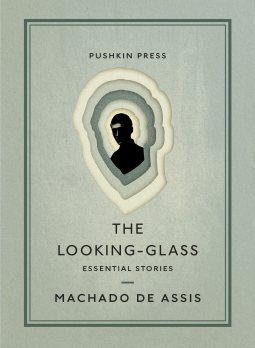
The Looking-Glass by Machado de Assis (tr. Daniel Hahn)

Thanks to the Pushkin Press Essential Stories series I’ve had the opportunity to explore the short stories of Herman Melville (a new author for me) and Fyodor Dostoevsky (an author I’d read before but only in full-length novel form). This latest collection has introduced me to another new author, the Brazilian writer Machado de Assis, who lived from 1839-1908. This book contains ten of his stories, translated from Portuguese into English by Daniel Hahn.

When trying a new author for the first time, you never really know what to expect, but since Joaquim Maria Machado de Assis (usually just referred to by his surnames) is described as one of Brazil’s greatest authors I thought he would surely be worth reading, even if the stories turned out not to be to my taste. Fortunately, I did find most of them quite enjoyable, providing lots of insights into the various sides of human nature. Although the stories were written more than a hundred years ago and on the other side of the world from me, they were still relatable because, of course, human beings aren’t really all that different, no matter where or when they lived.

The longest story in the book, which could probably be considered a novella, is The Alienist, in which Simão Bacamarte, a physician, opens an asylum in the town of Itaguaí. Bacamarte has a genuine interest in the new science of psychology and begins committing patients to the asylum so that he can study their symptoms. However, the numbers being admitted rapidly start to increase as it becomes clear that sane people are being sent there as well. Once most of the population of the town has been locked up and the others begin to rebel, Bacamarte is forced to reconsider his criteria for deciding who is sane and who is not, with surprising results!

Another story, The Stick, follows the story of Damião, a young man who escapes from a seminary and is afraid to return home because he’s convinced his father will send him back. Instead, he seeks the help of Rita, his godfather’s lover, who lets him stay in her house until the situation is resolved. Rita is a teacher of lacework and embroidery and has several young girls working for her. Damião discovers that one of them, a black slave called Lucrécia, is being badly treated and he must decide whether to intervene. I found this story interesting because Machado himself was the mixed-race grandson of freed slaves – and slavery was not abolished in Brazil until 1888.

Apart from The Canon, which describes a noun and an adjective searching for each other inside a man’s brain (too bizarre for me), I found most of the other stories intriguing in different ways. The Fortune-Teller, The Tale of the Cabriolet and Midnight Mass were some I particularly enjoyed. However, although I don’t usually include ‘trigger warnings’ in my reviews, I should mention that in The Secret Cause there are some graphic descriptions of animal cruelty which aren’t very pleasant to read!

At the end of the book, I was interested to read Daniel Hahn’s note on the translation where he explains why he deliberately tried to retain the 19th century feel of the original writing, even though this wasn’t necessarily the easiest option for a translator. I think this was the right decision – it worked for me and I found this collection a good introduction to the work of Machado de Assis.

Thanks to Pushkin Press for providing a copy of this book for review via NetGalley.

The Legend of Sleepy Hollow by Washington Irving

I’ve never read anything by Washington Irving but The Legend of Sleepy Hollow appears in an anthology of classic ghost stories I bought for my Kindle a few years ago and Halloween seemed like the perfect time of year to read it. I thought I already knew the story from the 1999 Tim Burton film but of course it turns out that it’s only very loosely based on Irving’s original work, which is often the case with adaptations. It’s also not very scary, so if horror stories make you nervous, don’t worry – this one isn’t likely to give you nightmares!

Irving begins by describing the valley of Sleepy Hollow, an old Dutch settlement in New York State steeped in legend and superstition.

A drowsy, dreamy influence seems to hang over the land, and to pervade the very atmosphere…Certain it is, the place still continues under the sway of some witching power, that holds a spell over the minds of the good people, causing them to walk in a continual reverie. They are given to all kinds of marvellous beliefs, are subject to trances and visions, and frequently see strange sights, and hear music and voices in the air.

The most famous of Sleepy Hollow’s legends involves a ghost known as the Headless Horseman, said to be a Hessian soldier who lost his head in battle and goes on a nightly ride through the Hollow in search of his missing head. When Ichabod Crane, an outsider from Connecticut arrives in the valley to take up the position of schoolmaster, he is fascinated by this story. A believer in witchcraft, Ichabod is naturally superstitious and enjoys listening to the tales of local ghosts and goblins.

Soon Ichabod sets his sights on the beautiful Katrina Van Tassel, daughter and only heir of a wealthy farmer. However, he faces stiff competition for Katrina’s hand in marriage in the form of Brom Bones, a ‘burly, roaring, roystering blade…the hero of the country round’. After being rejected by Katrina during a party at the Van Tassels’ home one night, the disappointed Ichabod rides off alone into the night – only to find that he is being pursued by a mysterious figure on horseback…

There’s not much more I can say about this story without spoiling it. It’s a short one, so if you want to read it for yourself it shouldn’t take up too much of your time. Published in 1820, it’s easy to read and to follow and although Irving’s descriptive writing provides a lot of Gothic atmosphere, it’s a fun and entertaining ghost story rather than a terrifying one. It also has a wonderfully ambiguous ending!

I’ll have to read more of Washington Irving’s stories at some point. The only other one I’m familiar with is Rip Van Winkle, but obviously he has written a lot more than that!

This is my seventh and final read for R.I.P. XVII

Kwaidan: Stories and Studies of Strange Things by Lafcadio Hearn

The next book I’ve read for this year’s R.I.P. XVII event is a fascinating and unusual collection of Japanese short stories, first published in 1904. The writer and translator Lafcadio Hearn was born in Greece and raised in Ireland, before later settling in Japan where he began to collect Japanese legends and folktales which he translated into English. Kwaidan: Stories and Studies of Strange Things contains seventeen of these tales, as well as three essays on insects – one on butterflies, one on mosquitoes and one on ants. These mainly focus on the role of the insects in Japanese and Chinese mythology, art, drama and poetry and are full of intriguing little snippets of information.

The other seventeen pieces are a mixture of ghost stories, fairy tales and strange anecdotes, some of which Hearn translated from old Japanese texts and others which he heard on his travels through Japan and attempted to put into words himself. For example, in his introduction, Hearn states that the story of Yuki-onna, in which a beautiful young woman in white appears to two woodcutters during a snowstorm, was told to him by a farmer in Musashi Province. Although the Yuki-onna character dates back centuries, Hearn’s account is based on this verbal version and not translated from any other source.

The creepier stories in the book are the ones that explore the different kinds of ghosts and monsters that appear in Japanese myth, such as the ‘faceless ghosts’ or noppera-bō, the human-like goblins called rokurokubi with detachable floating heads and the corpse-eating spirits known as the jikininki or ‘hungry ghosts’. These are interspersed with more traditional ghost stories, involving spirits returning after death to look for a loved one or to search for a lost possession. There’s also a great story recounting the legend of Hoichi the Earless, a blind musician who is tricked into playing his biwa (lute) for an audience of ghosts in a cemetery every night. If you want to know what happens to his ears, you’ll have to read the story!

Not all of the stories are particularly spooky, though – some are just, as the title suggests, ‘studies of strange things’. Of a Mirror and a Bell is an account of the legend of the Mugen-Kane bell which was made by melting down old bronze mirrors. Hearn then goes on to explore the Japanese concept of nazoraeru, where one item can be used as a substitute for another, to bring about magical results. There’s also a very short but beautiful story about a pair of oshidori, or Mandarin ducks, and another I enjoyed is The Dream of Akinosuke, about a man who falls asleep and dreams that he is the ruler of his own island province. This story incorporates both butterflies and ants, which makes the insect essays at the end of the book feel more relevant!

Some of the stories are too short or incomplete to be very satisfying, but the collection as a whole is fascinating and I would recommend it to anyone with an interest in Japanese culture and folklore. There’s also a Japanese film version from 1965, also titled Kwaidan, which I haven’t seen, but it seems to be very highly acclaimed and received an Oscar nomination for Best Foreign Language Film.

Have you read this or any other book of Japanese ghost stories?

Book #4 read for R.I.P. XVII