A Short Story for Wednesday: The Signal-Man by Charles Dickens

The Signal-Man by Charles Dickens (1866)

After recently reading Drood by Dan Simmons which described Charles Dickens’ involvement in the Staplehurst Rail Disaster, I decided to read Dickens’ short story, The Signal-Man. Although it doesn’t directly reference the Staplehurst incident, The Signal-Man was written the following year so was almost certainly influenced by his experience.

Whilst taking a walk one evening, the unnamed narrator discovers an isolated railway station and makes the acquaintance of the lonely signalman. The signalman tells him of a ghostly figure that he has previously witnessed on two occasions standing below the danger light in the entrance to the tunnel. On both occasions, the ghost’s appearance has been followed by tragedy. Now the spectre has appeared again and the signalman is convinced that another disaster is imminent…

This is the first of Charles Dickens’ short stories that I’ve ever read and having read some of his full-length novels, I was surprised by how quick and easy The Signal-Man was to read. Although the outcome of the story was very predictable, Dickens creates a wonderfully eerie and foreboding atmosphere. Highly recommended if you’re in the mood for a classic ghost story.

“His post was in as solitary and dismal a place as ever I saw…So little sunlight ever found its way to this spot, that it had an earthy, deadly smell; and so much cold wind rushed through it, that it struck chill to me, as if I had left the natural world.”

Read The Signal-Man online

* Clayton Tunnel picture – in the public domain

A Short Story for Saturday: The Artist of the Beautiful by Nathaniel Hawthorne

The Artist of the Beautiful by Nathaniel Hawthorne (1844)

Owen Warland is a young watchmaker who devotes his life to the creation of a beautiful mechanical butterfly which he presents to his friend Annie as a wedding gift. Annie and her family are not artists and they are unable to appreciate the beauty of Owen’s butterfly or to understand why he wasted so much time making it when he could have been doing something more useful. Each character in the story represents a different side of human nature and it’s interesting to see how Owen’s butterfly reacts differently to each of them.

This is a beautifully written story with the message that not everything in life needs to have a purpose – some things are worth doing just for the sake of doing them. Despite being ridiculed by the other townspeople, Owen doesn’t let other people’s opinions stop him in his pursuit of spiritual happiness.

“Yes, Annie; it may well be said to possess life, for it has absorbed my own being into itself; and in the secret of that butterfly, and in its beauty – which is not merely outward, but deep as its whole system – is represented the intellect, the imagination, the sensibility, the soul of an Artist of the Beautiful!”

Read The Artist of the Beautiful online here

* Butterfly picture by Galawebdesign used under a Creative Commons Attribution 3.0 Unported license.

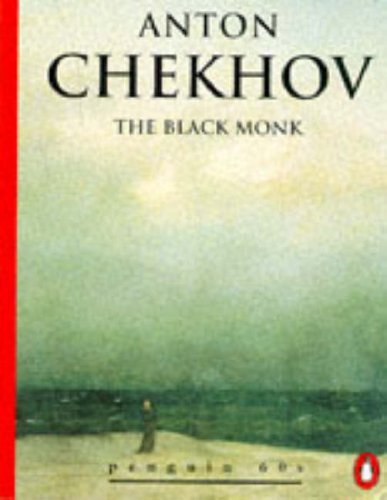
A Short Story for Saturday: The Black Monk by Anton Chekhov

The Black Monk by Anton Chekhov (1894)

Where do we draw the line between genius and madness? Anton Chekhov explores this question in The Black Monk – the story of a young man called Andrei Kovrin who suffers from an undisclosed mental illness which causes him to believe he is being visited by a monk dressed in black. Even when he becomes aware that the monk is only a hallucination, he is not concerned because his visions make him feel happy and full of energy and creativity. Eventually though, his family begin to worry about his sanity…

This is a fascinating, unusual story which I found easy to read but difficult to fully understand. Chekhov’s poetic writing creates an eerie, disturbing atmosphere appropriate to Kovrin’s descent into mental illness.

“Once or twice a week, in the park or in the house, he met the black monk and had long conversations with him, but this did not alarm him, but, on the contrary, delighted him, as he was now firmly persuaded that such apparitions only visited the elect few who rise up above their fellows and devote themselves to the service of the idea.”

Read The Black Monk online here

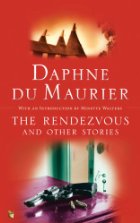
Review: The Rendezvous and Other Stories by Daphne du Maurier

The Rendezvous and Other Stories is a collection of short stories written by Daphne du Maurier. Some of them are among the earliest examples of her writing and most of them, as you would expect if you’ve ever read any of du Maurier’s work before, are slightly disturbing and unsettling. She takes some quite ordinary situations and ordinary, flawed people, and adds undertones of suspense and drama.

Many of the stories are just 10-20 pages long – perfect if you don’t have a lot of time, although in most cases I would have preferred them to be longer and more developed. My favourite story from the collection was No Motive, in which a private detective investigates an apparently motiveless suicide. I felt it could easily have been expanded into a full length detective novel, though it worked well as a short story too. The other one that really stood out for me was Split Second, in which a woman goes out for a walk one afternoon and returns home to find strangers living in her house. This story had a touch of the supernatural about it, as did Escort, which describes a ship leaving port during World War II and being rescued from a submarine attack by a mysterious sailing ship.

I liked the three stories I’ve just mentioned, as well as The Closing Door and La Sainte-Vierge, but there were too many of the others that I just didn’t enjoy very much. However, it was still interesting to read them and see how good Daphne du Maurier’s writing was even in the early stages of her career.

Genre: Fiction – Short Stories/Pages: 288/Publisher: Virago/Year: 2005/Source: Library book