A Long Fatal Love Chase by Louisa May Alcott

Until recently I hadn’t realised what a diverse writer Louisa May Alcott was. Like many people I read Little Women and its sequels as a child – and Little Women is still one of my favourite books – but I never thought about exploring her other fiction until now. A Long Fatal Love Chase is a suspense novel, written in 1866 but never published in Alcott’s lifetime (it was eventually published in 1995). I didn’t even know Alcott had written books like this, so I’m glad I have now been enlightened!

Rosamond Vivian, eighteen years old at the beginning of the novel, lives with her cold-hearted grandfather in a mansion on a remote island. Bored and lonely, feeling unloved by her grandfather, Rosamond longs for some adventure in her life. When she loses her temper with the old man one day and tells him she would gladly sell her soul to Satan for a year of freedom, it seems that her wishes are about to come true.

That same day, Phillip Tempest arrives (during a storm, of course) to do some business with Rosamond’s grandfather. Tempest, who we are told resembles a painting of the demon Mephistopheles, is handsome, charming and surrounded by an aura of mystery. Rosamond is instantly attracted to him and soon Tempest sweeps her away with him on his yacht. But Rosamond’s happiness doesn’t last for long. When she makes some shocking discoveries about Tempest she decides to leave him…but it seems Tempest is not prepared to let her go.

The rest of the story is, as the title suggests, a long and fatal love chase in which Rosamond flees across France, Germany and Italy from chateau to convent to asylum with Tempest never far behind. The tension builds and builds; almost every chapter ends on a cliffhanger as Rosamond finds herself in danger yet again. With Tempest growing more and more obsessed and increasingly devious in the methods he uses to track down her hiding places, will Rosamond ever be able to escape?

As you’ll be able to tell by now, A Long Fatal Love Chase is not like Little Women at all, but that shouldn’t be a problem as long as you’re not expecting it to be (which I wasn’t). Just be aware of its sensational nature and be prepared for something over-the-top and melodramatic. There’s a lot of symbolism too and as well as the Mephistopheles reference I mentioned earlier there are many other allusions to mythology, art and literature, particularly Shakespeare – with a character whose name is Tempest, I suppose that’s not surprising!

If you have read Little Women and remember Jo writing her novels, it’s easy to imagine Jo sitting in her garret writing a story like this and persuading Meg, Beth and Amy to act out some of the scenes with her! It wasn’t the best book of this type that I’ve read, especially in comparison to the more complex sensation novels written during the same period by Wilkie Collins, Mary Elizabeth Braddon or Ellen Wood, but it was still exciting, entertaining and also quite daring for its time, with its themes of obsession and stalking. It has a lot in common with early gothic novels by authors such as Ann Radcliffe too, though with the advantages that this one is easier to read and Rosamond is a stronger character than the heroines of Radcliffe’s books.

Apart from Rosamond, the other characters in the novel are less well-developed and tend to represent either the good side of human nature (the priest who becomes Rosamond’s friend and confidant) or the bad (Tempest). From the moment he first appears in the novel, Tempest is such an obvious villain and there are so many hints and so much foreshadowing, that it’s easy for us, as the reader, to know that he is not to be trusted. Rosamond is a young, naïve girl (though not without a lot of courage and spirit) being taken advantage of by a ruthless and manipulative older man, and it takes her a lot longer than it takes the reader to discover that something is not right. But despite so much of the plot being predictable, some of the twists did still take me by surprise and the ending was not quite what I had expected either!

If you’ve enjoyed this book, I would also recommend Nine Coaches Waiting by Mary Stewart – although they were written almost 100 years apart I thought they had a very similar feel.
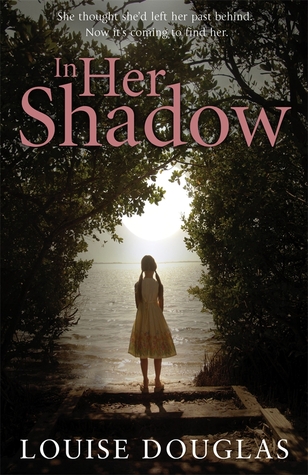
In Her Shadow by Louise Douglas

After reading The Secrets Between Us last year as part of the Transworld Book Group, I’ve been looking forward to reading another book by Louise Douglas and I was pleased to find that her new novel, In Her Shadow, has the same combination of suspense, mystery and psychological drama that I loved in The Secrets Between Us.

The story is narrated by Hannah Brown who works at the Brunel Memorial Museum in Bristol. When Hannah glimpses her best friend Ellen Brecht in the museum one day, she is left feeling shocked and frightened…because Ellen died almost twenty years ago. Is Hannah imagining things or has her friend really come back from the dead?

In alternating chapters, Hannah tells her present day story and also shares with us her memories of growing up in the 1980s with both Ellen and another friend, a boy called Jago who was adopted by Hannah’s family. She remembers the day Ellen moved to their quiet Cornish village with her glamorous parents – her handsome, charismatic German father Pieter and her mother Anne, a former pianist. At first Hannah is captivated by the Brecht family but as time goes by she learns that things might not be quite as they seem. And so Hannah’s happy, nostalgic childhood memories are mixed with other, more disturbing ones that she would rather forget.

I really like the way Louise Douglas writes and the way she creates atmosphere. There are some lovely pieces of descriptive writing in this book, especially when she is writing about the area of Cornwall where Hannah, Jago and Ellen lived, but despite the beautiful, idyllic setting, there’s also a mood of darkness and foreboding that hangs over the story. We know from very early in the novel that something had happened between Hannah and Ellen that damaged their friendship and left Hannah with feelings of guilt, but we aren’t told what it was. We don’t know the circumstances surrounding Ellen’s death, what Jago’s involvement was, or why Hannah is still affected by it all so many years later. And we are kept wondering whether or not Ellen is really dead or whether her appearances are just a figment of Hannah’s imagination. As the novel progresses, the truth is gradually revealed and we can eventually start to piece the story together.

I didn’t find any of the three main characters – Hannah, Ellen and Jago – very easy to like, yet I could still have sympathy for all three of them and could care about what happened to them. They make mistakes, do the wrong things, make poor decisions and act on impulses, but their flawed, unpredictable behaviour only makes them feel more believable and human.

The construction of the novel, with the chapters alternating between Hannah’s current story and her childhood story, means that we learn a little bit more in every chapter, but some of the biggest surprises remain hidden until the very end of the book. Sometimes this type of structure can feel disjointed and confusing, but in this case I thought it worked perfectly and it helped maintain the right levels of tension and suspense throughout the book. I enjoyed In Her Shadow as much as I enjoyed The Secrets Between Us and I’ll be looking out for any future books by Louise Douglas!

I received a review copy of In Her Shadow from Transworld

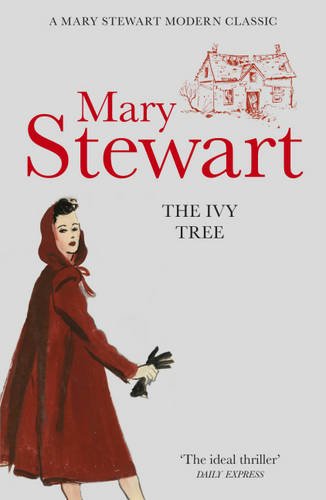
The Ivy Tree by Mary Stewart

Mary Stewart was a new discovery for me last year and since then I’ve been enjoying slowly working my way through her novels. I was looking forward to reading this one, The Ivy Tree, as I’ve seen it described as one of her best.

The Ivy Tree begins on a warm, sunny day when Mary Grey, who has recently moved from Canada to the north east of England, is walking in the countryside near Hadrian’s Wall. Suddenly she is approached by an Irishman who has mistaken her for his cousin Annabel who had disappeared eight years earlier. The man’s name is Connor Winslow (known as Con), the great-nephew of Matthew Winslow, owner of the estate of Whitescar. With Annabel believed to be dead, Matthew Winslow is intending to leave his fortune to his other granddaughter Julie – but Con thinks that he should be the rightful heir and he wants Mary Grey to help him claim the inheritance.

Although Mary explains to Con that he has made a mistake and she is not his cousin, he persuades her to impersonate Annabel as part of a scheme to enable him to inherit his great-uncle’s estate. And so Mary comes to Whitescar and, with the help of Con and his half-sister Lisa, easily manages to convince everyone that she is Annabel. But who exactly is Mary Grey and does she have reasons of her own for agreeing to go along with Con’s plans?

The Ivy Tree was published in 1961 and was written as a contemporary novel, although it now has a lovely, old-fashioned feel. I loved Mary Stewart’s descriptions of the setting, especially as I only live a few miles away from Hadrian’s Wall (the wall built by the Romans almost two thousand years ago) and I know exactly what the scenery she’s describing looks like. Her descriptive passages aren’t too long or too detailed, but include just enough information about the landscape, flowers, animals and birds to build up a vivid and realistic picture of the part of the country she’s writing about.

Mary Stewart’s novels (apart from her historical Arthurian novels) are usually described as romantic suspense. The romantic thread in this book was very weak in my opinion, but there was certainly lots of suspense. There are also one or two interesting subplots including one revolving around Julie’s boyfriend Donald, an archaeologist who is spending the summer working at a Roman fort in the area. And I should also mention the animals: there are some horses that have an important role to play in the story, especially Rowan the colt, as well as some funny scenes involving Tommy, a black and white cat.

Mary Stewart’s heroines are usually such nice, pleasant, likeable people, but the narrator of this book, Mary Grey, is an exception because she’s not so instantly likeable and her willingness to take part in Con’s schemes made me doubt and distrust her from the beginning. I didn’t really like any of the other characters either but I enjoyed being kept wondering who was ‘good’ and who was ‘bad’. As for the mystery aspect of the novel, I guessed the truth long before it was revealed but it was still interesting looking out for clues that might confirm whether I was right or not. This is one of those cleverly plotted books that would benefit from being read twice, so you can appreciate all the subtle little hints that the author has dropped into the story. I didn’t love the book enough to want to read it all again immediately but I did take the time to re-read the first chapter and noticed a few clues that had meant nothing to me the first time.

Of the four Mary Stewart novels I’ve now read, I liked this one a lot more than Rose Cottage but not as much as Touch Not the Cat or my favourite, Nine Coaches Waiting. For a better novel about mistaken identities and impersonations I would recommend Daphne du Maurier’s The Scapegoat. You could also try Brat Farrar by Josephine Tey, which I haven’t read yet, but which is referred to more than once by characters in The Ivy Tree when they’re discussing other famous cases of impersonations – yet another book to add to my list!

If you like Mary Stewart too, can you help me decide which of her books I should read next?