 With only a few weeks of 2021 left to go, it’s time for my annual post looking at some of the new historical fiction being published in the year ahead. As usual, I have included a mixture of books I’ve received for review, books by authors I’ve previously enjoyed and books that just sound appealing for one reason or another.
All blurbs and dates are taken from Goodreads or Amazon. The publication dates given are for the UK and could change. I think there should be something here for most historical fiction fans!
~
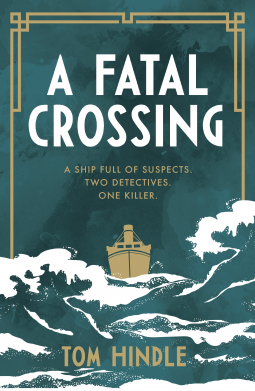
A Fatal Crossing by Tom Hindle (20 January 2022)
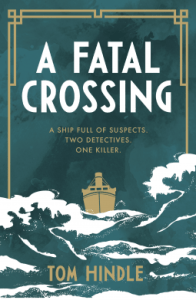 November 1924. The Endeavour sets sail to New York with 2,000 passengers – and a killer – on board…
When an elderly gentleman is found dead at the foot of a staircase, ship’s officer Timothy Birch is ready to declare it a tragic accident. But James Temple, a strong-minded Scotland Yard inspector, is certain there is more to this misfortune than meets the eye.
Birch agrees to investigate, and the trail quickly leads to the theft of a priceless painting. Its very existence is known only to its owner…and the dead man. With just days remaining until they reach New York, and even Temple’s purpose on board the Endeavour proving increasingly suspicious, Birch’s search for the culprit is fraught with danger.
And all the while, the passengers continue to roam the ship with a killer in their midst…
~
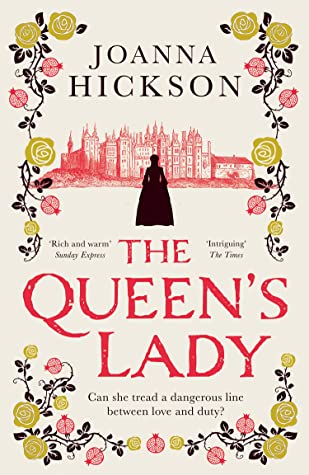
 The Queen’s Lady by Joanna Hickson (20 January 2022)
Raven-haired and fiercely independent, Joan Guildford has always remained true to herself.
As lady-in-waiting and confidante to Queen Elizabeth, wife of Henry VII, Joan understands royal patronage is vital if she and her husband, Sir Richard, are to thrive in the volatile atmosphere of court life.
But Tudor England is in mourning following the death of the Prince of Wales, and within a year, the queen herself. With Prince Henry now heir to the throne, the court murmurs with the sound of conspiracy. Is the entire Tudor project now at stake or can young Henry secure the dynasty?
Drawn into the heart of the crisis, Joan’s own life is in turmoil, and her future far from secure. She faces a stark choice – be true to her heart and risk everything, or play the dutiful servant and watch her dreams wither and die. For Joan, and for Henry’s Kingdom, everything is at stake…
~
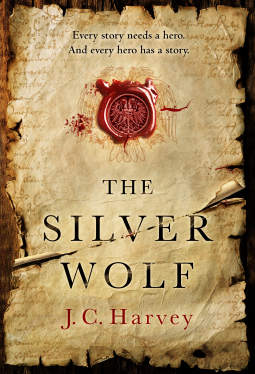
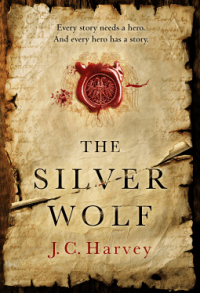 The Silver Wolf by JC Harvey (3 February 2022)
The extraordinarily rich, dark, panoramic tale of an orphaned boy’s quest for truth and then for vengeance as war rages across 17th-century Europe.
Amidst the chaos of the Thirty Years’ War, Jack Fiskardo embarks upon a quest that will carry him inexorably from France to Amsterdam and then onto the battlefields of Germany. As he grows to manhood will he be able to unravel the mystery of his father’s death? Or will his father’s killers find him first?
The Silver Wolf is a tale of secrets and treachery and the relentlessness of fate – but it is also a story of courage and compassion, of love and loyalty and ultimately of salvation too.
~
 The Leviathan by Rosie Andrews (3 February 2022)
Norfolk, 1643. With civil war tearing England apart, reluctant soldier Thomas Treadwater is summoned home by his sister, who accuses a new servant of improper conduct with their widowed father. By the time Thomas returns home, his father is insensible, felled by a stroke, and their new servant is in prison, facing charges of witchcraft.
Thomas prides himself on being a rational, modern man, but as he unravels the mystery of what has happened, he uncovers not a tale of superstition but something dark and ancient, linked to a shipwreck years before.
Something has awoken, and now it will not rest.
Richly researched, incredibly atmospheric, and deliciously unsettling, The Leviathan is set in England during a time of political turbulence and religious zealotry. It is a tale of family and loyalty, superstition and sacrifice, but most of all it is a spellbinding story of impossible things.
~
 I, Mona Lisa by Natasha Solomons (10 February 2022)
In Leonardo da Vinci’s studio, bursting with genius imagination, towering commissions and needling patrons, as well as discontented muses, friends and rivals, sits the painting of the Mona Lisa. For five hundred tumultuous years, amid a whirlwind of power, money, intrigue, the portrait of Lisa del Giocondo is sought after and stolen.
Over the centuries, few could hear her voice, but now she is ready to tell her own story, in her own words – a tale of rivalry, murder and heartbreak. Weaving through the years, she takes us from the dazzling world of Florentine studios to the French courts at Fontainebleau and Versailles, and into the Twentieth Century.
I, Mona Lisa is a deliciously vivid, compulsive and illuminating story about the lost and forgotten women throughout history.
~
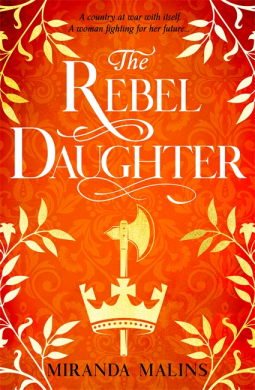
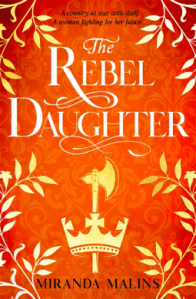 The Rebel Daughter by Miranda Malins (17 February 2022)
A country torn apart by war. A woman fighting for her future…
Ely, 1643. England is convulsed by Civil War, setting King against Parliament and neighbour against neighbour. As the turmoil reaches her family home in Ely, 19-year-old Bridget Cromwell finds herself at the heart of the conflict.
With her father’s star on the rise as a cavalry commander for the rebellious Parliament, Bridget has her own ambitions for a life beyond marriage and motherhood. And as fractures appear in her own family with the wilful, beautiful younger sister Betty, Bridget faces a choice: to follow her heart, or to marry for power and influence, and fight for a revolution that will change history…
~
 The Clockwork Girl by Anna Mazzola (3 March 2022)
Paris, 1750. In the midst of an icy winter, as birds fall frozen from the sky, chambermaid Madeleine Chastel arrives at the home of the city’s celebrated clockmaker and his clever, unworldly daughter.
Madeleine is hiding a dark past, and a dangerous purpose: to discover the truth of the clockmaker’s experiments and record his every move, in exchange for her own chance of freedom.
For as children quietly vanish from the Parisian streets, rumours are swirling that the clockmaker’s intricate mechanical creations, bejewelled birds and silver spiders, are more than they seem.
And soon Madeleine fears that she has stumbled upon an even greater conspiracy. One which might reach to the very heart of Versailles…
~
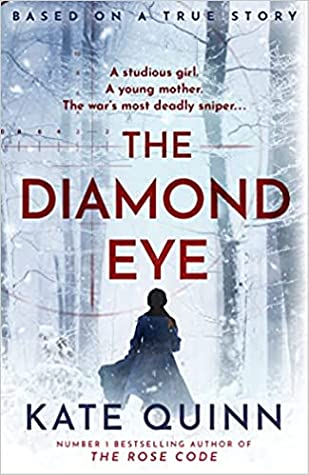
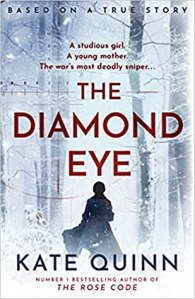 The Diamond Eye by Kate Quinn (31 March 2022)
In the snowbound city of Kiev, aspiring historian Mila Pavlichenko’s life revolves around her young son – until Hitler’s invasion of Russia changes everything. Suddenly, she and her friends must take up arms to save their country from the Fuhrer’s destruction.
Handed a rifle, Mila discovers a gift – and months of blood, sweat and tears turn the young woman into a deadly sniper: the most lethal hunter of Nazis. Yet success is bittersweet. Mila is torn from the battlefields of the eastern front and sent to America while the war still rages. There, she finds an unexpected ally in First Lady Eleanor Roosevelt, and an unexpected promise of a different future.
But when an old enemy from Mila’s past joins forces with a terrifying new foe, she finds herself in the deadliest duel of her life.
The Diamond Eye is a haunting novel of heroism born of desperation, of a mother who became a soldier, of a woman who found her place in the world and changed the course of history forever.
~
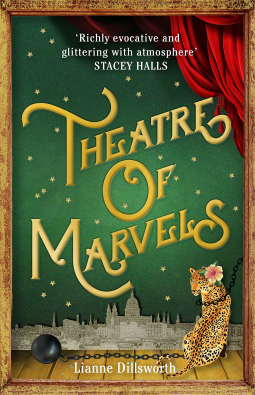
 Theatre of Marvels by Lianne Dillsworth (28 April 2022)
Unruly crowds descend on Crillick’s Variety Theatre. Young actress, Zillah, is headlining tonight. An orphan from the slums of St Giles, her rise to stardom is her ticket out – to be gawped and gazed at is a price she’s willing to pay.
Rising up the echelons of society is everything Zillah has ever dreamed of. But when a new stage act disappears, Zillah is haunted by a feeling that something is amiss. Is the woman in danger?
Her pursuit of the truth takes her into the underbelly of the city – from gas-lit streets to the sumptuous parlours of Mayfair – as she seeks the help of notorious criminals from her past and finds herself torn between two powerful admirers.
Caught in a labyrinth of dangerous truths, will Zillah face ruin – or will she be the maker of her fate?
~
 Elizabeth of York, the Last White Rose by Alison Weir (12 May 2022)
AN ENGLISH PRINCESS, BORN INTO A WAR BETWEEN TWO FAMILIES.
Eldest daughter of the royal House of York, Elizabeth dreams of a crown to call her own. But when her beloved father, King Edward, dies suddenly, her destiny is rewritten.
Her family’s enemies close in. Two young princes are murdered in the Tower. Then her uncle seizes power – and vows to make Elizabeth his queen.
But another claimant seeks the throne, the upstart son of the rival royal House of Lancaster. Marriage to this Henry Tudor would unite the white rose of York and the red of Lancaster – and change everything.
A great new age awaits. Now Elizabeth must choose her allies – and husband – wisely, and fight for her right to rule.
~
 The Fugitive Colours by Nancy Bilyeau (12 May 2022)
As Genevieve Sturbridge struggles to keep her silk design business afloat, she must face the fact that London in 1764 is very much a man’s world. Men control the arts and sciences, men control politics and law. And men definitely control women.
A Huguenot living in Spitalfields, Genevieve one day receives a surprise invitation from an important artist. Grasping at the promise of a better life, she dares to hope her luck is about to change and readies herself for an entry into the world of serious art.
She soon learns that for the portrait painters ruling over the wealthy in London society, fame and fortune are there for the taking. But such high stakes spur rivalries that darken to sabotage and blackmail—and even murder. And watching from the shadows are ruthless spies who wish harm to all of England.
Genevieve begins to suspect that her own secret past, when she was caught up in conspiracy and betrayal, has more to do with her entrée into London society than her talent. One wrong move could cost her not just her artistic dreams but the love of those she holds dear…and even her life.
~
 Privilege by Guinevere Glasfurd (12 May 2022)
After her father is disgraced, Delphine Vimond is cast out of her home in Rouen and flees to Paris. Into her life tumbles Chancery Smith, apprentice printer sent from London to discover the mysterious author of potentially incendiary papers marked only D. In a battle of wits with the French censor, Henri Gilbert, Delphine and Chancery set off in a frantic search for D’s author. But who is D and does D even exist?
Privilege is a story of adventure and mishap set against the turmoil of mid-18th century France at odds with the absolute power of the King who is determined to suppress opposition on pain of death. At a time when books required royal privilege before they could be published – a system enforced by the Chief Censor and a network of spies – many were censored or banned, and their authors harshly punished. Books that fell foul of the system were published outside France and smuggled back in at great risk.
~
The Dance Tree by Kiran Millwood Hargrave (12 May 2022)
[No cover image available yet]
In Strasbourg, in the boiling hot summer of 1518, a plague strikes the women of the city. First it is just one – a lone figure, dancing in the main square – but she is joined by more and more and the city authorities declare an emergency. Musicians will be brought in. The devil will be danced out of these women.
Just beyond the city’s limits, pregnant Lisbet lives with her mother-in-law and husband, tending the bees that are their livelihood. Her best friend Ida visits regularly and Lisbet is so looking forward to sharing life and motherhood with her. And then, just as the first woman begins to dance in the city, Lisbet’s sister-in-law Nethe returns from six years’ penance in the mountains for an unknown crime. No one – not even Ida – will tell Lisbet what Nethe did all those years ago, and Nethe herself will not speak a word about it.
It is the beginning of a few weeks that will change everything for Lisbet – her understanding of what it is to love and be loved, and her determination to survive at all costs for the baby she is carrying. Lisbet and Nethe and Ida soon find themselves pushing at the boundaries of their existence – but they’re dancing to a dangerous tune . . .
~
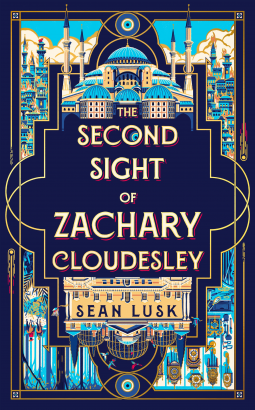
 The Second Sight of Zachary Cloudesley by Sean Lusk (2 June 2022)
In 1754, renowned maker of clocks and automata Abel Cloudesley must raise his new-born son Zachary when his wife dies in childbirth.
Growing up amongst the cogs and springs of his father’s workshop, Zachary is intensely curious, ferociously intelligent, unwittingly funny and always honest – perhaps too honest. But when a fateful accident leaves six-year-old Zachary nearly blinded, Abel is convinced that the safest place for his son is in the care of his eccentric Aunt Frances and her menagerie of weird and wonderful animals.
So when a precarious job in Constantinople is offered to him, Abel has no reason to say no. A job presented to him by a politician with dubious intentions, Abel leaves his son, his workshop and London behind. The decision will change the course of his life forever.
Since his accident, Zachary is plagued by visions that reveal the hearts and minds of those around him. A gift at times and a curse at others, it is nonetheless these visions that will help him complete a journey that he was always destined to make – to travel across Europe to Constantinople and find out what happened to his father all those years ago.
~
The Colour Storm by Damian Dibben (23 June 2022)
[No cover image available yet]
Renaissance Venice is a furnace of ideas and ambition. Artists flock here, not just for wealth and fame, but for revolutionary colour. Yet artist Giorgione ‘Zorzo’ Barbarelli’s career hangs in the balance. Competition is fierce, and his debts are piling up. When Zorzo hears a rumour of a mysterious, other-worldly new pigment, brought to Venice by the richest man in Europe, he sets out to acquire the colour and secure his name in history.
Winning a commission to paint a portrait of the man’s wife, Sybille, Zorzo thinks he has found a way into the merchant’s favour. Instead he finds himself caught up in a conspiracy that stretches across Europe and a marriage coming apart inside one of the floating city’s most illustrious palazzos.
As the water levels rise and the plague creeps ever closer, an increasingly desperate Zorzo isn’t sure whom he can trust. Will Sybille prove to be the key to Zorzo’s success, or the reason for his downfall?
~
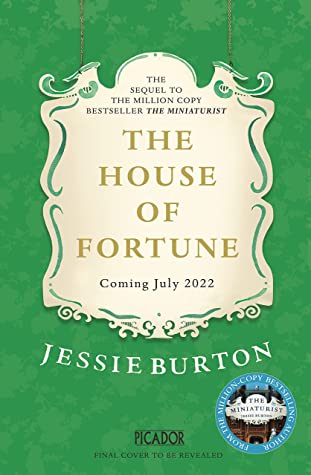
 The House of Fortune by Jessie Burton (7 July 2022)
In the golden city of Amsterdam, in 1705, Thea Brandt is turning eighteen, and she is ready to welcome adulthood with open arms. At the city’s theatre, Walter, the love of her life, awaits her, but at home in the house on the Herengracht, all is not well – her father Otto and Aunt Nella argue endlessly, and the Brandt family are selling their furniture in order to eat. On Thea’s birthday, also the day that her mother Marin died, the secrets from the past begin to overwhelm the present.
Nella is desperate to save the family and maintain appearances, to find Thea a husband who will guarantee her future, and when they receive an invitation to Amsterdam’s most exclusive ball, she is overjoyed – perhaps this will set their fortunes straight.
And indeed, the ball does set things spinning: new figures enter their life, promising new futures. But their fates are still unclear, and when Nella feels a strange prickling sensation on the back of her neck, she remembers the miniaturist who entered her life and toyed with her fortunes eighteen years ago. Perhaps, now, she has returned for her . . .
~
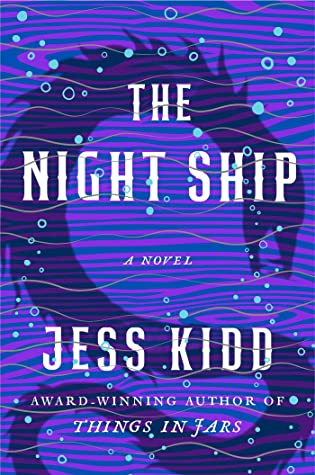
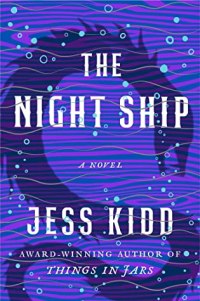 The Night Ship by Jess Kidd (12 July 2022)
Based on a real-life event, an epic historical novel from the award-winning author of Things in Jars that illuminates the lives of two characters: a girl shipwrecked on an island off Western Australia and, three hundred years later, a boy finding a home with his grandfather on the very same island.
1629: A newly orphaned young girl named Mayken is bound for the Dutch East Indies on the Batavia, one of the greatest ships of the Dutch Golden Age. Curious and mischievous, Mayken spends the long journey going on misadventures above and below the deck, searching for a mythical monster. But the true monsters might be closer than she thinks.
1989: A lonely boy named Gil is sent to live off the coast of Western Australia among the seasonal fishing community where his late mother once resided. There, on the tiny reef-shrouded island, he discovers the story of an infamous shipwreck…
~
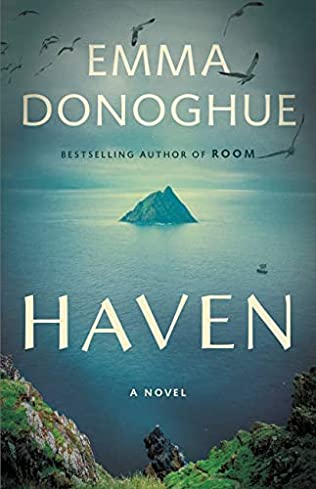
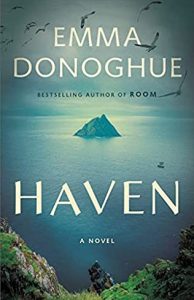 Haven by Emma Donoghue (23 August 2022)
Three men vow to leave the world behind them. They set out in a small boat for an island their leader has seen in a dream, with only faith to guide them. What they find is the extraordinary island now known as Skellig Michael. Haven, Emma Donoghue’s deeply researched new novel, has her trademark psychological intensity–but this story is like nothing she has ever written before.
In seventh-century Ireland, a scholar and priest called Artt has a dream telling him to leave the sinful world behind. Taking two monks – young Trian and old Cormac – he rows down the river Shannon in search of an isolated spot on which to found a monastery. Drifting out into the Atlantic, the three men find an impossibly steep, bare island inhabited by tens of thousands of birds, and claim it for God. In such a place, what will survival mean?
~
 Act of Oblivion by Robert Harris (1 September 2022)
1660, General Edward Whalley and Colonel William Goffe, father- and son-in-law, cross the Atlantic. They are on the run and wanted for the murder of Charles I. Under the provisions of the Act of Oblivion, they have been found guilty in absentia of high treason.
In London, Richard Nayler, secretary of the regicide committee of the Privy Council, is tasked with tracking down the fugitives. He’ll stop at nothing until the two men are brought to justice. A reward of £100 hangs over their heads – for their capture, dead or alive.
ACT OF OBLIVION is an epic journey across continents, and a chase like no other. It is the thrilling new novel by Robert Harris.
~
Then there’s Elektra by Jennifer Saint (Greek mythology – 28th April) and All the Seas of the World by Guy Gavriel Kay (historical fantasy – 17th May) which I haven’t listed above as it’s debatable whether they would strictly be classed as historical fiction. Also The Vanished Days by Susanna Kearsley (28th April), which I know is already available in some countries but not in the UK yet, and Shadow Girls by Carol Birch (14th April), if you consider the 1960s to be historical!
Are you tempted by any of these? What else have I missed? Are there any other new historical fiction novels being published in 2022 that you’re looking forward to reading?











 She Reads Novels