The Light Years by Elizabeth Jane Howard

This is the first of the five volumes which form The Cazalet Chronicles, Elizabeth Jane Howard’s series about an upper-middle class English family and how their lives are affected by World War II. Everyone seemed to be reading these books a year or two ago (if they hadn’t already read them at the time of publication), so I’m coming to them late as usual!

First published in 1990, The Light Years opens in the summer of 1937 with three generations of the Cazalet family gathering at Home Place, the Sussex home of ‘the Brig’, now an elderly man but still in charge of the family business, and his wife, affectionately known as ‘the Duchy’. The Brig and the Duchy have three sons; two of these, Hugh and Edward, work in the business and are able to provide comfortable lifestyles for their wives and children, but the third brother, Rupert, has chosen a different path in life – as an artist who is yet to find any success, he is struggling financially, much to the disappointment of his second wife, the beautiful and much younger Zoe. There is also a sister, Rachel, who is unmarried but, unknown to the rest of the family, in love with her friend, a woman called Sid.

After being introduced to each of the Cazalets, their spouses, children, servants and friends, we then jump forward a year to 1938 when the same people – and several more – are beginning to gather together again. On the surface it looks like being another idyllic summer of relaxing in the garden, playing tennis and board games and visiting the beach, but in reality, few if any of the characters are truly happy. There are cracks appearing in Rupert and Zoe’s marriage, and in Edward and Villy’s, Rachel dreads being separated from Sid, and the children face a series of dramas ranging from chickenpox and the loss of beloved pets to the fear of being sent away to school. Meanwhile, the approaching war casts a shadow over everything, as the possibility of conflict with Germany, which at first seemed so remote, begins to look more and more likely.

I didn’t get off to a very good start with this book; it took me a while to get into it, but I think part of the problem was that with so many characters, and the perspective switching from one to the other every few pages, it made it difficult to find someone to identify with and focus on. Somewhere around the middle of the book, though, things changed. I felt that I was starting to get to know some of the characters at last, and to feel sympathy for the situations they were in. I went from wondering whether to continue reading to knowing that I would not only be finishing this book, but almost certainly reading the second one, Marking Time, as well!

I particularly enjoyed spending time with the younger generation of the family. The relationships, friendships and rivalries between three of the girls – Louise, Polly and Clary – and three of the boys – Teddy, Simon and Christopher – were very well written and I’m looking forward to seeing them continue to develop as they grow up. Sometimes when you read a novel with child characters, it feels as though the author has forgotten what it was like to be a child; that was not the case in this book – I felt that Elizabeth Jane Howard had remembered exactly how a child’s mind works and the things that are important to them.

I did end up feeling very positive about this book overall and can understand now why so many people love this series so much. The last thing I need at the moment is to be adding four more long novels to my TBR, but I think I’ll have to as I can’t imagine not finding out what happens next to the Cazalets!

20 Books of Summer – the end

This is the last day of the 20 Books of Summer challenge hosted by Cathy at 746 Books. This has been the first year I’ve participated and although I haven’t been entirely successful with it, I’ve still enjoyed taking part. It’s a simple idea – to make a list of twenty books at the start of the summer and then read them between 1st June and 3rd September – but not that easy when you keep getting distracted by other books! I’ve read more than twenty books this summer, but only sixteen that were on my original list.

Here are the sixteen, with links to my reviews:

1. The Leopard by Giuseppe Tomasi di Lampedusa
2. To the Bright Edge of the World by Eowyn Ivey
3. Long Summer Day by RF Delderfield
4. The Mad Ship by Robin Hobb
5. Beneath a Burning Sky by Jenny Ashcroft
6. The Last Son’s Secret by Rafel Nadal Farreras
7. The Silk Merchant’s Daughter by Dinah Jefferies
8. Rebecca by Daphne du Maurier (re-read)
9. A Desperate Fortune by Susanna Kearsley
10. Dead Woman Walking by Sharon Bolton
11. For the Winner by Emily Hauser
12. Shadow of the Moon by M.M. Kaye
13. Crimson and Bone by Marina Fiorato
14. The Wonder by Emma Donoghue
15. By Gaslight by Steven Price
16. The Light Years by Elizabeth Jane Howard (review coming soon)

And these are the four I didn’t manage to read in time:

17. The Fortune of War by Patrick O’Brian
18. The Reckoning by Sharon Penman
19. The Wicked Day by Mary Stewart
20. Heartstone by CJ Sansom

I’m still planning to read the remaining books (in fact I’m halfway through one of them now) but September seemed to arrive very quickly!

Did you take part in 20 Books of Summer too? How did you do?

My Commonplace Book: August 2017

A selection of words and pictures to represent August’s reading

My Commonplace Book

commonplace book
Definition:
noun
a notebook in which quotations, poems, remarks, etc, that catch the owner’s attention are entered

Collins English Dictionary

~

“You see?” Luc’s voice was close, and quiet. “Beautiful. I’m sure it was a good house in its time as well, but sometimes what is left behind when something is lost is even better than the thing that came before, you know?”

A Desperate Fortune by Susanna Kearsley (2015)

~

Why does the menagerie at the Tower of London not include a King and Queen – in a cage like the lions and bears? “Here, ladies and gentlemen, we have a genuine King and Queen, to amaze you with their antics. The wonder of the world is, they’re very like you ordinary folk!” We’d get as big an audience as a two-headed calf.

Some Touch of Pity by Rhoda Edwards (1976)

~

Each time I turn these brittle pages, and imagine the Colonel camped right outside my window, writing by campfire, meeting the first people of this land, it feels like time has collapsed and the past is happening now. This is what made me fall in love with history.

To the Bright Edge of the World by Eowyn Ivey (2016)

~

“Yes, sir. Going away, sir?”

“I’m going to the devil,” said Tommy, regardless of the menial’s feelings.

That functionary, however, merely replied respectfully:

“Yes, sir. Shall I call a taxi?”

Tommy nodded.

The Secret Adversary by Agatha Christie (1922)

~

“We cherish a theory that to listen to warnings, or act upon them, is a sign of panic and shows loss of confidence, and we would rather lose our lives any day then be accused of either. It is an exasperating trait. The kind that curls in on itself and ends by eating its own tail, because precautions that are not taken in time of peace cannot be taken when a crisis is imminent,for the simple reason that to take them then creates panic and loss of confidence at a time when one can afford to do neither.”

Shadow of the Moon by M.M. Kaye (1957)

~

Mary laid aside the letter she had received from her cousin Charles.

“Tolerance,” she muttered to herself as she sat in the gathering dusk. It was still very warm and the windows of her chamber were open but the air was oppressive and sultry and her head ached. She repeated the word. How could she be tolerant when she had been persecuted for her beliefs, had been on the point of desperate flight? It was all very well for Charles to talk blithely of being tolerant, she thought; he had not suffered.

Elizabeth, the Witch’s Daughter by Lynda M Andrews (1977)

~

Francis had saved her from that world, the world where indigo and violet meant bruises, and brought her to a place where they meant summer storm clouds over Florence.

Crimson and Bone by Marina Fiorato (2017)

~

“Innocent?” He was incensed at her suggestion he was somehow responsible for this mess. “I’ve done nothing wrong, I intend nothing wrong. I am innocent!”

“Half the evil in this world occurs while decent people stand by and do nothing wrong. It’s not enough to refrain from evil, Trell. People have to attempt to do right, even if they believe they cannot succeed.”

The Mad Ship by Robin Hobb (1999)

~

She gave him a long appraising look. It don’t do to dwell too much on what’s gone, Mr. Foole, she sighed. It ain’t easy, I know it. I tell Hettie the past is writ. But tomorrow ain’t never existed before. Not in the whole history of the world.

By Gaslight by Steven Price (2016)

~

Some of the children were getting restless. It was time to move on. “I like writing fiction,” I said. “That’s what I do.”

“Aren’t you worried that your books might be considered irrelevant?”

“I don’t think they have to be real to be relevant.”

The Word is Murder by Anthony Horowitz (2017)

~

Margaret became a little calmer. “Your Majesty has been most kind. I am sorry to have burdened you with my problems.”

“Because I am a Queen ’tis often forgotten that I am also a woman,” Elizabeth answered sadly.

The Tudor Heritage by Lynda M Andrews (1977)

~

“Don’t think of the obstacles that lie between now and the moment when we confront him.” The ship spoke in a low, soft voice. “Long or short, if you worry about every step of a journey, you will divide it endlessly to pieces, any one of which may defeat you. Look only to the end.”

Ship of Destiny by Robin Hobb (2000)

~

Favourite books read in August: Shadow of the Moon, The Mad Ship and Ship of Destiny

R.I.P. XII is here!

It’s that time of year again when one of my favourite reading challenges – R.I.P. (Readers Imbibing Peril) – is announced. The event is now in its twelfth year and has moved to a new home at Estella’s Revenge and My Capricious Life, where our hosts will be Andi and Heather. Everything else is staying the same, but if you need a reminder, the idea of R.I.P. is to read books from the following genres during September and October:

Mystery.

Suspense.

Thriller.

Dark Fantasy.

Gothic.

Horror.

Supernatural.

There are multiple levels of participation, including a one-book option for those who don’t want a big commitment, but as usual I am signing up for Peril the First, which involves reading at least four books from the above categories. I have put together a list of possibilities, taken from books which are already on my TBR.

Verdict of Twelve by Raymond Postgate
The Crow Garden by Alison Littlewood
The Printer’s Coffin by MJ Carter
White Corridor by Christopher Fowler
Hamlet, Revenge! by Michael Innes
The Mummy Case by Elizabeth Peters
Heartstone by CJ Sansom
As Chimney Sweepers Come to Dust by Alan Bradley
Death in Bordeaux by Allan Massie
Savage Magic by Lloyd Shepherd
Bleeding Heart Square by Andrew Taylor
Blood Harvest by Sharon Bolton

I don’t expect to read all of these, but I like to have plenty to choose from. I’m sure I’ll also find myself picking up other books that aren’t on my list!

Are you taking part in R.I.P. this year? What will you be reading?

Crimson and Bone by Marina Fiorato

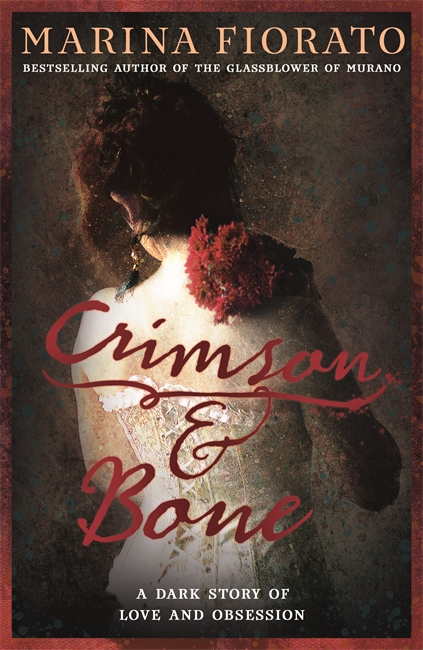
It’s January 1853 and seventeen-year-old Annie Stride is standing on Waterloo Bridge looking down at the River Thames, contemplating suicide. Having grown up in the East End of London as part of a large and impoverished family, Annie has drifted into a life of prostitution. Her only friend, Mary Jane, drowned in the Thames the previous year and now, pregnant and homeless, Annie has decided she has no choice but to do the same. Just as she gets ready to jump from the bridge, she is rescued at the last minute by a handsome young man who introduces himself as Francis Maybrick Gill.

Francis is a talented Pre-Raphaelite artist who is planning a new series of paintings on the subject of the ‘Fallen Woman’ – and he wants Annie to be his model. And so Annie, who had been only moments away from death, finds herself living with Francis in his large and luxurious Gower Street home, posing for portraits of Eve, Rahab and Jezebel. As well as using Annie as his muse, Francis also takes steps to improve her mind, to correct her East End speech and to help her with her reading and writing. She has no idea why he is taking so much interest in her, but she is so grateful she doesn’t care – until late one night two visitors come to call and Annie begins to wonder whether Francis Maybrick Gill is really the man she thought he was.

Crimson and Bone, Marina Fiorato’s latest novel, is divided into three parts and everything I have described above happens in the first part alone. The action also moves away from London for a while to Florence and Venice; Fiorato, who is half-Venetian herself, always writes beautifully about Italy and we are given some lovely, vivid descriptions of the country. The author’s love of art also shines through, with lots of information on the Pre-Raphaelite approach to art, exhibitions at the Royal Academy, the symbolism in the paintings for which Annie models, and, through the character of a mysterious ‘rainbow man’, the origins of the paints and pigments Francis uses.

From the beginning, the reader is kept in the dark as to Francis’s motives. What are his true plans for Annie? Does he really just want to paint her or does he have some other reason for his sudden interest in her? And what is the significance of his obsession with white camellias? A series of diary entries written by Annie’s friend Mary Jane appear at the start of each chapter which eventually shed some light on things, while also raising more questions along the way. It’s obvious that something is not quite right with the whole situation, but we don’t know what or why and the tension builds slowly throughout the novel.

However, there are a few inaccuracies and anachronisms which do spoil the book somewhat – for example, Annie tries to improve her speech by listening to gramophone records (several decades before they would have been available) and is taken to the theatre to see performances of Pygmalion (not staged until 1913) and Adelaide Neilson in Measure for Measure (more than twenty years too early). Admittedly, not knowing anything about Adelaide Neilson, I wasn’t aware of the third one until someone else pointed it out in their review, but it makes me wonder what else I might have been too caught up in the story to notice.

And the fact that I became so caught up in the story and the atmosphere – and that I cared about what happened to Annie – meant that I did enjoy this novel overall, despite its flaws.

This is book 15/20 of my 20 Books of Summer challenge.

Lynda M. Andrews: The Tudor Heritage and Elizabeth the Witch’s Daughter

A few years ago I read The Queen’s Promise, a book about Anne Boleyn and Henry Percy by an author called Lyn Andrews. I stated in my review that it appeared to be Andrews’ first novel in the historical fiction genre, her others being mainly family sagas set in 20th century Liverpool. It seems that I was wrong, though, because in the 1970s she had several Tudor novels published under the name of Lynda M. Andrews; they have been reissued by Canelo and I have had the opportunity through NetGalley to read two of them.

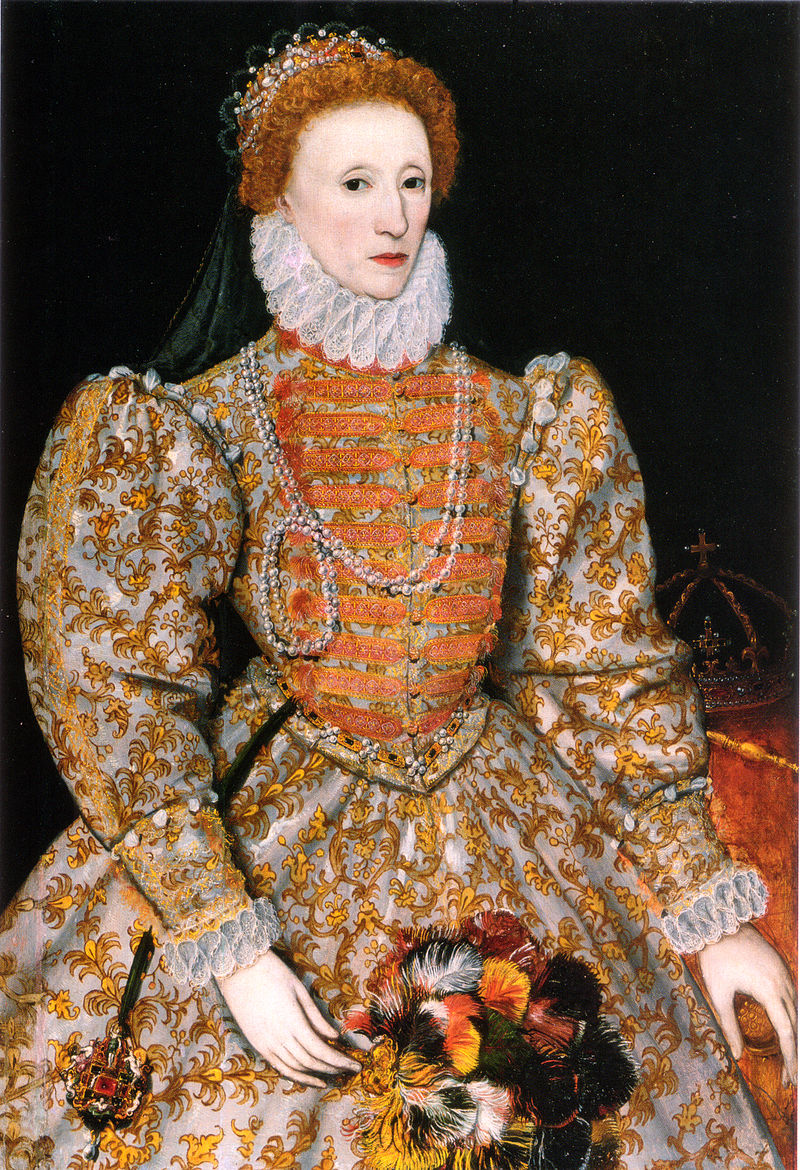
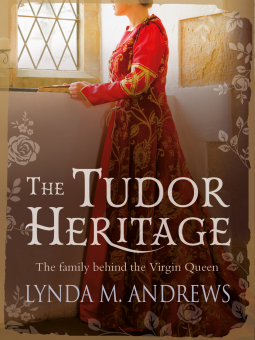
The Tudor Heritage (1977) opens in 1560, shortly after Elizabeth I’s accession to the throne of England. The novel follows Elizabeth throughout her entire reign, covering such topics as her love for Robert Dudley, her determination not to marry, the problems she faced in dealing with Mary, Queen of Scots, and her relationship with the Earl of Essex. For such a short book – around 250 pages long – there’s a lot of history to include, so it’s inevitable that a lot has had to be left out. However, for a reader new to the period this would be a chance to gain a good overview of the key events and figures of Elizabeth’s reign.

While we do spend a lot of time with Elizabeth, seeing things from her point of view, we also meet the family of Sir Richard Allgrave, a friend of the Queen’s secretary William Cecil. The Allgraves, who appear to be fictional, provide us with another perspective on Elizabethan life, being close to the court but also outside it. Occasionally there are parallels – such as when Sir Richard’s daughter Isabelle vows, like the Queen, to marry a man of her own choosing or not at all – but otherwise I felt that the main purpose of the Allgrave family in the novel was to allow us to see things which Elizabeth herself didn’t experience. For example, one of the Allgraves accompanies Sir Francis Drake on one of his voyages, while several others battle against the Spanish Armada.

The novel is written in a style which is generally clear and easy to read, but now and then the author puts words into Elizabeth’s mouth which sound as though they were drawn directly from 16th century historical documents. This makes a strange contrast with the rest of the dialogue and just didn’t feel right. On the whole, though, I found The Tudor Heritage quite an enjoyable read – but too short and slight to be completely satisfying.

Elizabeth, the Witch’s Daughter (also published in 1977) is the first part of Elizabeth’s story so should really be read before The Tudor Heritage. I did things backwards, but it didn’t matter as I’m already familiar with the period of history – if you’re not, I would recommend reading them in order! This one begins with Elizabeth as a little girl, then takes us through her teenage years and the reigns of her half-brother Edward VI and half-sister Mary I, to end with Elizabeth herself being crowned Queen of England.

Again, this is a short book, but it covers a shorter period of history and this time there is no fictional family to share the pages with Elizabeth. Even so, the novel still doesn’t go into a great amount of depth and there is very little in the way of character development – although I did like the portrayal of Elizabeth’s relationship with her governess and friend Kat Ashley. Elizabeth’s feelings for her mother, Anne Boleyn, are explored, but I thought more could have been made of this – the title of the book had led me to assume that Anne and her legacy would have formed a bigger part of the story.

I think both of these novels would be worth reading if you knew very little about Elizabeth I and wanted to add to your knowledge without committing to anything longer and more challenging. If you’ve read about Elizabeth many times before, as I have, there’s nothing very new or different here. The other two reissues by Canelo are The White Lion of Norfolk, about Thomas Howard (uncle of Anne Boleyn and Catherine Howard) and The Danish Queen, about Anne of Denmark – as I know much less about both of those people, maybe I would have enjoyed those books more than the two I read. I do remember being a lot more impressed with The Queen’s Promise, particularly the Henry Percy sections; it’s interesting to see how Lyn Andrews’ writing has changed and improved over the years.

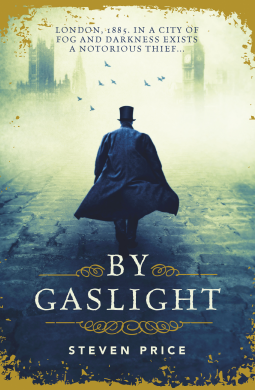
By Gaslight by Steven Price

Well, this was a long book! Not only does it have over 700 pages, it’s also the sort of book that requires a lot of concentration, which makes it a very slow read. I’ve been reading it for the whole of August, which is one of the reasons why I’m not going to complete my 20 Books of Summer challenge by the deadline now. Was it worth so much time and effort? I’m actually not sure; it wasn’t a complete success with me – there were times when I found myself really enjoying it and others when I couldn’t wait to be finished – but on the whole I think I’m glad I read it.

This is the second novel by Canadian author and poet Steven Price. Set in the 19th century, it follows the stories of two men – William Pinkerton and Adam Foole – who are bound together by tales of a shadowy figure known, appropriately, as Edward Shade. Pinkerton is a famous American detective who is in London assisting Scotland Yard with an investigation into the death of a woman, possibly Charlotte Reckitt, whose severed head has been found in the Thames. He believes Charlotte has links with Edward Shade, an elusive criminal whom his father had devoted twenty years of his life to hunting down, without success. But who is Shade? A real person…a ghost…or just an obsession?

Adam Foole, a thief and swindler, has also recently returned to England with his two accomplices – the giant Japheth Fludd, and Molly, a young pickpocket. Foole has received a letter from a woman he once knew asking for help, but on his arrival in London he is unable to find her. Soon his path will cross with William Pinkerton’s; it seems that both of their fates are linked with Charlotte Reckitt and the mysterious Edward Shade.

By Gaslight takes us on a tour of the darker side of London as Foole and Pinkerton (separately or together) visit Millbank Prison, an opium den, a séance and the underground sewer system. However, there are long interludes set in South Africa and in America during the Civil War and these are essential to understanding the backgrounds to our characters and therefore to understanding the mysteries at the heart of the novel. These sections have quite a different tone from the London parts and, to me, they didn’t really feel as though they belonged in the same book; had the whole novel been devoted to the Civil War or had it been purely a Victorian murder mystery I think I would probably have been happier. This is just my opinion, though, and I’m sure other readers will love the variety of settings and changes in atmosphere.

By Gaslight is the perfect title for this book – not only are gaslights mentioned frequently, the whole novel (or the London chapters, at least) feels misty and murky and everything seems to happen either at night or in the fog and rain. Although most of the action takes place in 1885 and any long flashbacks are usually given their own chapters, eventually the borders between past, present and future start to blur, all adding to the sense of mystery and of facts being hidden or obscured.

The author has also made the decision not to use correct punctuation – commas are used sporadically and quotation marks not at all. Again, whether or not you will feel comfortable with this is a matter of personal taste; you could see it as a clever way of trying to immerse the reader more fully in the fogs and mists of the story or, like me, you could just find it annoying and distracting. I should add, though, that at no point did I actually struggle with it; I could always tell how a sentence was intended to be read and who was speaking to whom.

On the whole, though, this is an atmospheric and unusual novel and, despite the length and my reservations about the writing style, I never thought about abandoning it. It’s unlike any other Victorian novel I’ve read and if anyone else has read it, I would be interested to hear what you thought of it.

Thanks to the publisher, Oneworld Publications, for providing a copy of this book for review via NetGalley.

This is book 14/20 of my 20 Books of Summer challenge.