Lynda M. Andrews: The Tudor Heritage and Elizabeth the Witch’s Daughter

A few years ago I read The Queen’s Promise, a book about Anne Boleyn and Henry Percy by an author called Lyn Andrews. I stated in my review that it appeared to be Andrews’ first novel in the historical fiction genre, her others being mainly family sagas set in 20th century Liverpool. It seems that I was wrong, though, because in the 1970s she had several Tudor novels published under the name of Lynda M. Andrews; they have been reissued by Canelo and I have had the opportunity through NetGalley to read two of them.
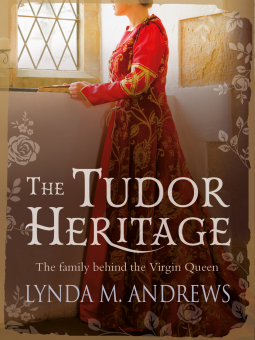
The Tudor Heritage (1977) opens in 1560, shortly after Elizabeth I’s accession to the throne of England. The novel follows Elizabeth throughout her entire reign, covering such topics as her love for Robert Dudley, her determination not to marry, the problems she faced in dealing with Mary, Queen of Scots, and her relationship with the Earl of Essex. For such a short book – around 250 pages long – there’s a lot of history to include, so it’s inevitable that a lot has had to be left out. However, for a reader new to the period this would be a chance to gain a good overview of the key events and figures of Elizabeth’s reign.

While we do spend a lot of time with Elizabeth, seeing things from her point of view, we also meet the family of Sir Richard Allgrave, a friend of the Queen’s secretary William Cecil. The Allgraves, who appear to be fictional, provide us with another perspective on Elizabethan life, being close to the court but also outside it. Occasionally there are parallels – such as when Sir Richard’s daughter Isabelle vows, like the Queen, to marry a man of her own choosing or not at all – but otherwise I felt that the main purpose of the Allgrave family in the novel was to allow us to see things which Elizabeth herself didn’t experience. For example, one of the Allgraves accompanies Sir Francis Drake on one of his voyages, while several others battle against the Spanish Armada.

The novel is written in a style which is generally clear and easy to read, but now and then the author puts words into Elizabeth’s mouth which sound as though they were drawn directly from 16th century historical documents. This makes a strange contrast with the rest of the dialogue and just didn’t feel right. On the whole, though, I found The Tudor Heritage quite an enjoyable read – but too short and slight to be completely satisfying.

Elizabeth, the Witch’s Daughter (also published in 1977) is the first part of Elizabeth’s story so should really be read before The Tudor Heritage. I did things backwards, but it didn’t matter as I’m already familiar with the period of history – if you’re not, I would recommend reading them in order! This one begins with Elizabeth as a little girl, then takes us through her teenage years and the reigns of her half-brother Edward VI and half-sister Mary I, to end with Elizabeth herself being crowned Queen of England.

Again, this is a short book, but it covers a shorter period of history and this time there is no fictional family to share the pages with Elizabeth. Even so, the novel still doesn’t go into a great amount of depth and there is very little in the way of character development – although I did like the portrayal of Elizabeth’s relationship with her governess and friend Kat Ashley. Elizabeth’s feelings for her mother, Anne Boleyn, are explored, but I thought more could have been made of this – the title of the book had led me to assume that Anne and her legacy would have formed a bigger part of the story.

I think both of these novels would be worth reading if you knew very little about Elizabeth I and wanted to add to your knowledge without committing to anything longer and more challenging. If you’ve read about Elizabeth many times before, as I have, there’s nothing very new or different here. The other two reissues by Canelo are The White Lion of Norfolk, about Thomas Howard (uncle of Anne Boleyn and Catherine Howard) and The Danish Queen, about Anne of Denmark – as I know much less about both of those people, maybe I would have enjoyed those books more than the two I read. I do remember being a lot more impressed with The Queen’s Promise, particularly the Henry Percy sections; it’s interesting to see how Lyn Andrews’ writing has changed and improved over the years.
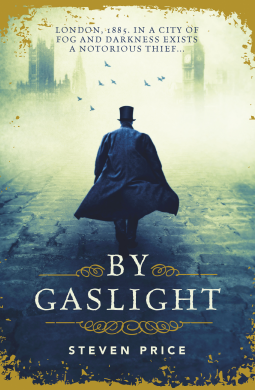
By Gaslight by Steven Price

Well, this was a long book! Not only does it have over 700 pages, it’s also the sort of book that requires a lot of concentration, which makes it a very slow read. I’ve been reading it for the whole of August, which is one of the reasons why I’m not going to complete my 20 Books of Summer challenge by the deadline now. Was it worth so much time and effort? I’m actually not sure; it wasn’t a complete success with me – there were times when I found myself really enjoying it and others when I couldn’t wait to be finished – but on the whole I think I’m glad I read it.

This is the second novel by Canadian author and poet Steven Price. Set in the 19th century, it follows the stories of two men – William Pinkerton and Adam Foole – who are bound together by tales of a shadowy figure known, appropriately, as Edward Shade. Pinkerton is a famous American detective who is in London assisting Scotland Yard with an investigation into the death of a woman, possibly Charlotte Reckitt, whose severed head has been found in the Thames. He believes Charlotte has links with Edward Shade, an elusive criminal whom his father had devoted twenty years of his life to hunting down, without success. But who is Shade? A real person…a ghost…or just an obsession?

Adam Foole, a thief and swindler, has also recently returned to England with his two accomplices – the giant Japheth Fludd, and Molly, a young pickpocket. Foole has received a letter from a woman he once knew asking for help, but on his arrival in London he is unable to find her. Soon his path will cross with William Pinkerton’s; it seems that both of their fates are linked with Charlotte Reckitt and the mysterious Edward Shade.

By Gaslight takes us on a tour of the darker side of London as Foole and Pinkerton (separately or together) visit Millbank Prison, an opium den, a séance and the underground sewer system. However, there are long interludes set in South Africa and in America during the Civil War and these are essential to understanding the backgrounds to our characters and therefore to understanding the mysteries at the heart of the novel. These sections have quite a different tone from the London parts and, to me, they didn’t really feel as though they belonged in the same book; had the whole novel been devoted to the Civil War or had it been purely a Victorian murder mystery I think I would probably have been happier. This is just my opinion, though, and I’m sure other readers will love the variety of settings and changes in atmosphere.

By Gaslight is the perfect title for this book – not only are gaslights mentioned frequently, the whole novel (or the London chapters, at least) feels misty and murky and everything seems to happen either at night or in the fog and rain. Although most of the action takes place in 1885 and any long flashbacks are usually given their own chapters, eventually the borders between past, present and future start to blur, all adding to the sense of mystery and of facts being hidden or obscured.

The author has also made the decision not to use correct punctuation – commas are used sporadically and quotation marks not at all. Again, whether or not you will feel comfortable with this is a matter of personal taste; you could see it as a clever way of trying to immerse the reader more fully in the fogs and mists of the story or, like me, you could just find it annoying and distracting. I should add, though, that at no point did I actually struggle with it; I could always tell how a sentence was intended to be read and who was speaking to whom.

On the whole, though, this is an atmospheric and unusual novel and, despite the length and my reservations about the writing style, I never thought about abandoning it. It’s unlike any other Victorian novel I’ve read and if anyone else has read it, I would be interested to hear what you thought of it.

Thanks to the publisher, Oneworld Publications, for providing a copy of this book for review via NetGalley.

This is book 14/20 of my 20 Books of Summer challenge.

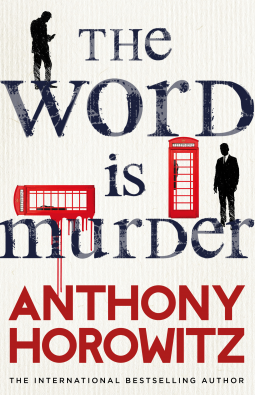
The Word is Murder by Anthony Horowitz

One bright spring morning Diana Cowper walks into a funeral parlour to arrange her own funeral. Six hours later she is dead, strangled in her own home. It can’t be a coincidence…can it? Detective Inspector Daniel Hawthorne – who is technically no longer with the police but still assists with particularly challenging cases – is called in to investigate. This is to be an investigation with a difference, however, because Hawthorne has enlisted the services of author Anthony Horowitz to write a book about the case.

Horowitz has never written a true-crime book before and admits to being much more comfortable when writing fiction such as his Sherlock Holmes sequel The House of Silk or the Alex Rider young adult series. It is with some reservations, then, that he agrees to write Hawthorne’s story, but as he accompanies the detective while he interviews suspects and searches for clues, Horowitz is drawn into the investigation despite himself.

The two have very different visions for their book; Horowitz believes in using artistic licence to tell a story that people will want to read, but Hawthorne is adamant that he should report only the facts, leaving nothing out that could be of significance. The author also tries in vain to get to know the detective, to shape him into a character who will stand alongside Holmes and Poirot, but the other man remains frustratingly enigmatic:

“Well, if I was going to write about you, you’d have to tell me. I’d have to know where you live, whether you’re married or not, what you have for breakfast, what you do on your day off. That’s why people read murder stories.”

“Is that what you think?”

“Yes!”

He shook his head. “I don’t agree. The word is murder. That’s what matters.”

I started to read The Word is Murder with very high hopes, having loved Horowitz’s previous novel, Magpie Murders (one of my favourite books of last year). I wasn’t disappointed; this is another great book! In fact, like Magpie Murders – but in a different way – it is almost two books in one. We have the story of Horowitz and his relationship with Hawthorne and then we have the murder investigation itself. I’m aware that I’ve said very little so far about the latter – and I’m not going to say much more, other than that it is a very clever, tightly plotted mystery with plenty of clues, suspects and red herrings. Thanks to Hawthorne’s insistence on everything being written down, most of the clues are there from the beginning and the rest are at least revealed early enough for us to guess the solution before Horowitz does. I have to admit, though, that I was slow to put them together and didn’t come close to solving the mystery!

I should probably make it clear that Diana Cowper is a fictional character – she wasn’t really murdered six hours after arranging her own funeral and Hawthorne, who is also fictional, wasn’t really brought in to investigate. Anthony Horowitz, however, is obviously a real person and so The Word is Murder is a curious blend of fiction and non-fiction. He is not the first author to use themselves as a character in their own novel, but I’m not sure if anyone else has done it in quite the same way!

Although the passages in which Horowitz describes his various writing projects, his appearances at book festivals and his views on literary agents are a bit of a distraction from the central plot at times, his main role in the story is as a sort of Watson-style sidekick, and this aspect of the novel works very well. As for Hawthorne, he has quite an unpleasant personality, being humourless, secretive, pedantic, and – to Horowitz’s disgust – homophobic, but I found him a fascinating character, precisely because he is so unattractive. They are an unlikely pairing but there is plenty of potential here for more Hawthorne/Horowitz mysteries, I think – I would certainly be happy to read them, anyway!

Thanks to the publisher, Random House, for providing a copy of this book for review via NetGalley.

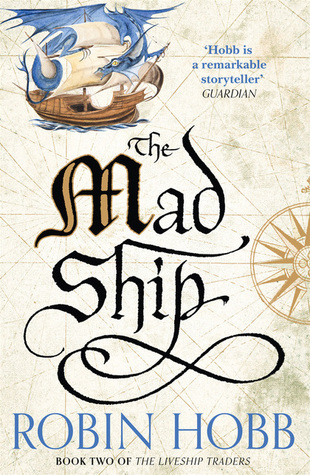
The Mad Ship by Robin Hobb

This is the second volume of Robin Hobb’s The Liveship Traders trilogy. I read the first one, Ship of Magic, earlier this summer and enjoyed it so much I couldn’t wait to move on to this one. As it’s a trilogy that really needs to be read in order, I have found it impossible to write about this book without spoiling the previous one, so be warned!

The Mad Ship continues to develop storylines begun in the first novel. When we last saw the Vestrit family’s liveship, the Vivacia, she had been captured by pirates far from her home port of Bingtown and her captain, Kyle Haven, had been defeated and injured. Captain Kennit, the pirate leader, is delighted to have taken possession of such a valuable ship, particularly as he is already beginning to bond with Vivacia, the liveship’s sentient figurehead. Also on board is Kyle’s son, Wintrow, who has Vestrit blood and finds himself competing with Kennit for the ship’s affections.

When news of Vivacia’s capture reaches the rest of the family, they must find a way to work together to rescue her and to bring home Kyle and Wintrow. This is easier said than done given the divisions and tensions within the Vestrit household! Althea Vestrit still believes that the Vivacia should rightfully belong to her rather than to her sister (and Kyle’s wife) Keffria, while spoiled, selfish Malta continues to cause trouble for her mother and grandmother. However, Malta is forced to grow up very quickly and through her relationship with Reyn Khuprus of the Rain Wilds, she has a chance to redeem herself in the eyes of her family.

Meanwhile, Brashen Trell and Amber the bead merchant have come up with a plan of their own to help Vivacia – one which involves relaunching Paragon, the old, abandoned liveship who is believed to be mad, having killed his crew many years earlier. Will their plan succeed or is the Vivacia lost to them forever?

Despite loving the first book, it took me a while to really get into this one, but I think it was simply suffering from being the second in a trilogy – there wasn’t the novelty of discovering a new world or the excitement of following the story to its conclusion. Halfway through, though, several of the storylines took a more dramatic turn and I found that I was absolutely riveted! So much happens in this book that I can’t possibly mention everything here; instead, I have just picked out a few of the things I found most notable.

* Dragons and serpents – What I loved most about this book was that we learn much, much more about the dragons and sea serpents and how they are connected with the wizardwood used in the construction of the liveships. In Ship of Magic, all the talk of ‘tangles’, ‘silver providers’ and ‘She Who Remembers’ had me completely mystified, but now the pieces of the puzzle are falling into place. Some links with the dragons from Robin Hobb’s Farseer Trilogy are also emerging and bearing in mind how much I loved those books it’s great to come across anything that ties the two together.

* Amber – There continues to be an aura of mystery surrounding Amber; so far we know almost nothing about her origins or how she came to be in Bingtown. Remembering a certain character in The Farseer Trilogy, I’m starting to have my suspicions about her, but I will wait and see if anything else is revealed in the next book.

* Magic – The magical elements in this book are particularly strong. Not only do we have dragons, sea serpents and talking figureheads, but with the dream sequences and the abilities of certain beings to enter the thoughts of others, I was reminded of the Skill and the Wit from The Farseer books. I also loved the descriptions of Trehaug, the Trader city on the Rain Wild River where the Khuprus family live.

* Malta – I didn’t like her at all in the previous novel and in the first half of this one she continued to annoy me, but later in the book there are signs that she is growing and developing as a person. She is just one of several strong female characters in the trilogy; I have already mentioned Amber, but Althea, Keffria, Ronica and Etta all interest me too.

There is so much more I could say about this book but, to be honest, I just wanted to get this post written quickly so that I could move straight on to the final volume, Ship of Destiny, in which I hope some more of my questions will be answered!

This is book 13/20 for my 20 Books of Summer challenge.

A Desperate Fortune by Susanna Kearsley

It’s been a few years since I last read a Susanna Kearsley book and as I still have two or three left to read I decided to include her most recent, A Desperate Fortune, on my 20 Books of Summer list. There are some connections between this book and her previous one, The Firebird, but they both stand alone and it’s not necessary to read them in order.

Like many of Kearsley’s novels, A Desperate Fortune is set in two different time periods. First, in the modern day, we meet Sara Thomas, a young woman with a special talent for solving mathematical puzzles and breaking codes. Sara also has Asperger’s and relies on the friendship and support of her cousin Jacqui. Jacqui works in the publishing business and when one of her authors, the historian Alistair Scott, asks for help in deciphering a journal written in code, it is Sara who gets the job.

The other thread of the novel takes place in 1732 and follows the story of the diary-writer, twenty-one-year-old Mary Dundas, who is half French and half Scottish. Mary’s family are Jacobites – supporters of the exiled James Stuart, who they believe is the rightful King James VIII of Scotland and III of England. Setting off on a journey across France with her brother Nicolas one day, Mary has no idea what he has planned for her, and is shocked to find herself caught up in a plot to protect a fellow Jacobite who is on the run from the law. Her diary tells of the lengths she goes to, the disguises she adopts and the dangers she faces in trying to conceal her companion’s true identity.

These two storylines alternate throughout the book, so that we read several entries from Mary’s journal, followed by Sara’s experiences in decoding it. Both women are interesting characters – and there are a few parallels between the two – but I found Mary’s story much more gripping and couldn’t help thinking that it would have worked just as well on its own without Sara’s framing it. There’s a romance for each woman too, but again, it was Mary’s that I found most convincing; although I did like Sara’s love interest, it all seemed to happen too quickly and too conveniently.

It was interesting to revisit the subject of the Jacobites, who also feature in The Firebird – although the two books explore the topic from very different perspectives, with this one being set in France and the other in Russia. The author’s note at the end of the book is long and comprehensive, discussing some of the choices made in writing this novel and explaining which parts of the story are based on fact and which are fictional. I was surprised to see how many of the characters I’d assumed were purely imaginary were actually inspired by real people!

I did enjoy A Desperate Fortune, though not as much as most of the other Susanna Kearsley novels I’ve read. My favourites seem to be the ones with supernatural elements, such as The Firebird, The Rose Garden and Mariana. I always like Kearsley’s writing style, though – there’s something so comforting about it, so easy and effortless to read. It’s the same feeling that I get when I pick up a book by Mary Stewart. I’m looking forward now to reading my remaining two Kearsley novels, The Shadowy Horses and Sophia’s Secret (the UK title for The Winter Sea).

This is book 12/20 for my 20 Books of Summer challenge. (I’m aiming for 15 now, I think – anything over that will be a bonus!)

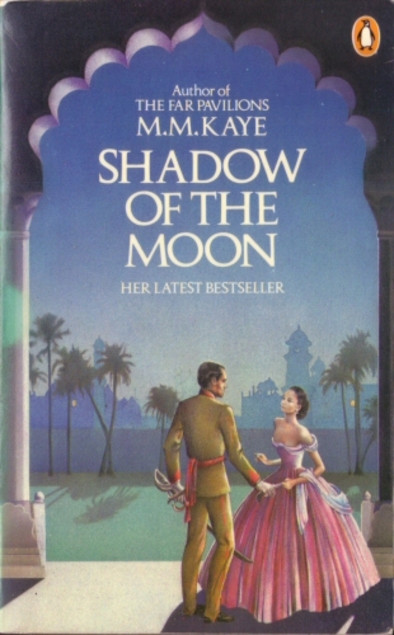
Shadow of the Moon by M.M. Kaye

I really have no idea why I haven’t read this book before now. The Far Pavilions has been one of my favourite books since I was a teenager, but for some reason it just never occurred to me to look into what else M.M. Kaye wrote until recently, when I read two of her Death In… mystery novels. When I saw that Cirtnecce was hosting a readalong of Shadow of the Moon this summer, it seemed the perfect opportunity to try another of Kaye’s historical novels in the hope that I would love it as much as The Far Pavilions!

Shadow of the Moon was originally published in 1957 and revised in 1979. Like The Far Pavilions, it is set in India, but at a slightly earlier time – before and during the Sepoy Mutiny of 1857. Our heroine, Winter de Ballesteros, is born in Lucknow to an English mother and Spanish father. Orphaned by the age of six, Winter is sent to England to be raised by her great-grandfather, the Earl of Ware, but the country of her birth still holds a special place in her heart and she dreams of returning one day to the Gulab Mahal, the place she considers home.

Winter is eleven when she meets Conway Barton, who is visiting from India, and she is captivated by his good looks and his connection with the country she misses so much. Conway, with his eye on Winter’s fortune, suggests a betrothal, but it is not until six years later that Winter is old enough to go and join him in India for the wedding. Now Commissioner of Lunjore, Conway says that he is far too busy to escort his fiancée across the sea himself, so he sends his assistant, Captain Alex Randall, in his place. Unknown to Winter, however, her betrothed is no longer the man she thinks he is and has another reason for wanting to delay their meeting. Will the marriage take place or will Alex be able to change her mind during the long voyage to Lunjore?

There’s a romantic aspect to Shadow of the Moon, then, but the historical element is just as important. Cirtnecce has put together two excellent posts (here and here) describing the political landscape in India in 1857, how the country came to be ruled by the British East India Company and the factors leading to the rebellion. All of this is explored in a lot of depth throughout the novel, showing the same impressive level of research and the same understanding and sympathy for India and its people that I remember from The Far Pavilions.

The descriptions of India itself are wonderful and vivid. Whether she’s writing about the streets and bazaars of Lunjore or the relentless heat of summer and the relief of the monsoon, Kaye always chooses just the right words to bring the scene to life. The horrors and atrocities of the Mutiny are also described in vivid detail, although a relatively short portion of the novel is devoted to the actual rebellion and much more to the gradual building of tension, ending in the controversy over the new Enfield rifles which sparked the revolt (the British required the sepoys to use cartridges which were smeared with pork and beef fat, offensive to both Muslims and Hindus).

Lunjore, where much of the action is set, is a fictional district on the borders of Oudh (although it is portrayed so convincingly I had to check to see whether it was a real place or not) but the situation which unfolds there is similar to that being played out elsewhere in India. The British commanding officers are seemingly blind to what is going on around them, refusing to listen to stories of unrest amongst the Indian people and unwilling to doubt the loyalty of their armies. Alex Randall is one of the few exceptions – a man who thinks for himself and who tries to see things from the point of view of others. It’s so frustrating to watch his advice and warnings repeatedly falling on deaf ears as his superiors tell themselves he is worrying about nothing and stubbornly refuse to heed his words.

I found Alex an interesting, complex character, torn between his feelings for Winter and what he sees as his duties and responsibilities towards both the Company and the people of Lunjore. I was particularly intrigued by his relationship with Kishan Prasad – two men who are on ‘opposite sides’ but who each understand what the other is trying to do and under different circumstances might have been friends. With the bridging role he plays between the British and Indian perspectives, Alex often reminded me of Ashton Pelham-Martyn from The Far Pavilions. It took me a bit longer to warm to Winter – I was irritated by her infatuation with Conway and had to keep reminding myself that she was only seventeen!

Whether or not the romance captures your imagination, though, I think there should be something in this novel to interest most readers…the fascinating historical background, the colourful portrait of another time and place or maybe the adventure (plenty of daring escapes, disguises, ambushes and secret meetings by moonlight). I loved it and now I can’t wait to read M.M. Kaye’s other historical novel, Trade Wind, and the rest of the Death In series.

This is book 11/20 for my 20 Books of Summer challenge.

Historical Musings #29: All at sea

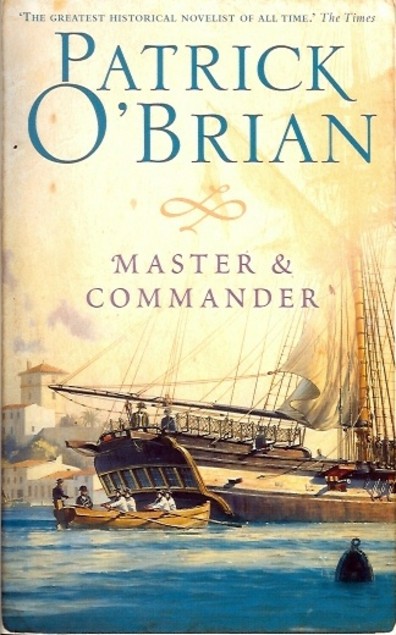
After last month’s post in which I discussed my feelings about battle scenes in historical fiction, this month’s is on a similar topic: scenes set at sea – which may or may not include sea battles! With air travel being a relatively recent invention, it’s obvious that travel by ship or boat is going to play a significant role in many historical fiction novels. This is something I have often struggled with, but that is starting to change, thanks largely to my decision to read Patrick O’Brian’s Aubrey-Maturin series. This is the beginning of my review from February 2013 of the first book in the series, Master and Commander:

I do not usually like books set at sea. However hard I try, I just can’t seem to keep track of the nautical terms and as soon as I see words like ‘mainsail’, ‘fo’c’sle’ or ‘bosun’ my brain just seems to switch off. As a fan of historical fiction, I have been unable to avoid this entirely – after all, until the 20th century the only way to cross the sea was by ship and many historical fiction novels do involve a sea voyage or two – but the thought of reading a book where seafaring forms a major part of the plot is always quite daunting for me.

Four years later, and I am now in the middle of the sixth book, The Fortune of War. Although I still can’t claim to understand all of the naval terms or to follow everything that is happening in the sea battles, I feel that I can understand and follow as much as I need to!

Some other historical novels I’ve read with strong nautical elements:

Captain Blood by Rafael Sabatini

She Rises by Kate Worsley

The Time of Terror by Seth Hunter

Jamrach’s Menagerie by Carol Birch

Sea of Poppies by Amitav Ghosh

Some of Dorothy Dunnett’s novels also feature passages set at sea, as do Diana Gabaldon’s – as well as The Song of the Sea Maid by Rebecca Mascull, which I read a few months ago and loved, and the book I have just finished reading, Shadow of the Moon by MM Kaye. In books like these though, the sea travel arises naturally from the story, as a way of getting the characters from one point to another, rather than the author sitting down to specifically write a nautical novel. As I said in last month’s post on battles, if I have already formed a connection with the characters and care about what happens to them, I will be interested in reading about any situation they find themselves in, even if it’s something I might otherwise find boring or challenging.

How do you feel about historical fiction set at sea? Do you have any good ship-based books to recommend?

*

New to my historical fiction shelves since last month’s post:

* Circe by Madeline Miller – I’ve been waiting for another book from Madeline Miller since reading The Song of Achilles in 2012. This won’t be published until 2018 (I got a copy from NetGalley) but it’s the story of the witch from the Odyssey and sounds intriguing!
* The Tudor Heritage by Lynda M Andrews – This is a reissue of a book about the early years of Elizabeth I’s reign, originally published in 1977.
* The King’s Bed by Margaret Campbell Barnes – I’ve read a few other books by Margaret Campbell Barnes so couldn’t resist this one about an illegitimate son of Richard III.
* The Coffin Path by Katherine Clements – Having enjoyed Katherine Clements’ previous two novels I was delighted to receive this 17th century gothic ghost story from NetGalley too.

* And one non-fiction book: Queens of the Conquest by Alison Weir – I know very little about most of the medieval queens featured in this book, so I’m expecting to learn a lot!

Have you added any new historical fiction (or non-fiction) to your shelves recently?