 After last month’s post in which I discussed my feelings about battle scenes in historical fiction, this month’s is on a similar topic: scenes set at sea – which may or may not include sea battles! With air travel being a relatively recent invention, it’s obvious that travel by ship or boat is going to play a significant role in many historical fiction novels. This is something I have often struggled with, but that is starting to change, thanks largely to my decision to read Patrick O’Brian’s Aubrey-Maturin series. This is the beginning of my review from February 2013 of the first book in the series, Master and Commander:
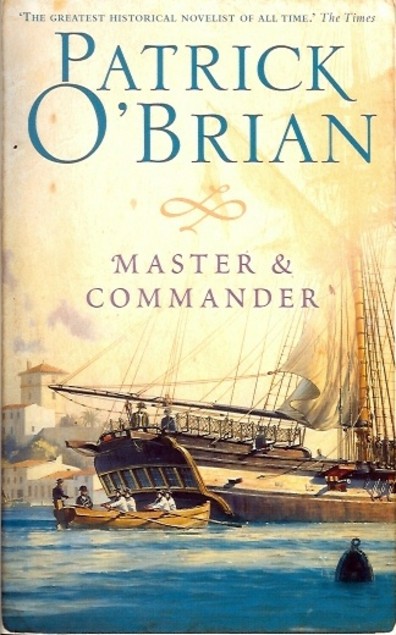
I do not usually like books set at sea. However hard I try, I just can’t seem to keep track of the nautical terms and as soon as I see words like ‘mainsail’, ‘fo’c’sle’ or ‘bosun’ my brain just seems to switch off. As a fan of historical fiction, I have been unable to avoid this entirely – after all, until the 20th century the only way to cross the sea was by ship and many historical fiction novels do involve a sea voyage or two – but the thought of reading a book where seafaring forms a major part of the plot is always quite daunting for me.
Four years later, and I am now in the middle of the sixth book, The Fortune of War. Although I still can’t claim to understand all of the naval terms or to follow everything that is happening in the sea battles, I feel that I can understand and follow as much as I need to!
 Some other historical novels I’ve read with strong nautical elements:
Captain Blood by Rafael Sabatini
The Time of Terror by Seth Hunter
Jamrach’s Menagerie by Carol Birch
Sea of Poppies by Amitav Ghosh
Some of Dorothy Dunnett’s novels also feature passages set at sea, as do Diana Gabaldon’s – as well as The Song of the Sea Maid by Rebecca Mascull, which I read a few months ago and loved, and the book I have just finished reading, Shadow of the Moon by MM Kaye. In books like these though, the sea travel arises naturally from the story, as a way of getting the characters from one point to another, rather than the author sitting down to specifically write a nautical novel. As I said in last month’s post on battles, if I have already formed a connection with the characters and care about what happens to them, I will be interested in reading about any situation they find themselves in, even if it’s something I might otherwise find boring or challenging.
How do you feel about historical fiction set at sea? Do you have any good ship-based books to recommend?
*
New to my historical fiction shelves since last month’s post:
* Circe by Madeline Miller – I’ve been waiting for another book from Madeline Miller since reading The Song of Achilles in 2012. This won’t be published until 2018 (I got a copy from NetGalley) but it’s the story of the witch from the Odyssey and sounds intriguing!
* The Tudor Heritage by Lynda M Andrews – This is a reissue of a book about the early years of Elizabeth I’s reign, originally published in 1977.
* The King’s Bed by Margaret Campbell Barnes – I’ve read a few other books by Margaret Campbell Barnes so couldn’t resist this one about an illegitimate son of Richard III.
* The Coffin Path by Katherine Clements – Having enjoyed Katherine Clements’ previous two novels I was delighted to receive this 17th century gothic ghost story from NetGalley too.
* And one non-fiction book: Queens of the Conquest by Alison Weir – I know very little about most of the medieval queens featured in this book, so I’m expecting to learn a lot!
Have you added any new historical fiction (or non-fiction) to your shelves recently?







 She Reads Novels