A French Trio: Mediterranean Summer; Eugenie; A Week in Paris

Coincidentally, three of my recent reads have been set in France, so I thought I would combine my thoughts on them into one French-themed post. It’s a good way for me to get through my review backlog too!
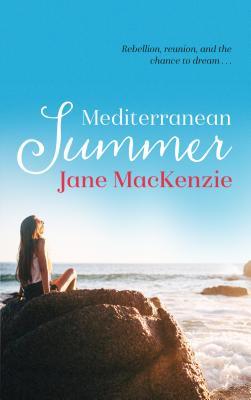
Mediterranean Summer by Jane MacKenzie was a nice surprise; a book I knew nothing about, by an author I’d never come across before, but one that I ended up really enjoying. It tells the story of Laure, a young art student who finds herself caught up in the excitement of the 1968 student demonstrations at her university in Paris. When the rebellion is over, with her future as an artist in doubt due to her involvement in the protests, Laure returns home for the summer to her parents’ house in the Mediterranean village of Vermeilla. Here, in the small Catalan community of her childhood, she is reacquainted with old friends as well as making new ones – and with the help of Robert, a lawyer, she begins to search for a way to rescue her career.

This is a lovely summer read; the descriptions of the fictional Vermeilla and the surrounding area are so beautiful I wished I could go and spend the rest of the summer there myself! There’s an interesting selection of characters to get to know too, mostly very likeable, but with one or two who could be considered villains. As for the historical background, I knew almost nothing about the Paris student protests in the 1960s, so I learned something new there, and I was also interested to read about the Nobel dynamite factory in Paulilles and the shocking lack of regard for the health and safety of the employees. I loved Mediterranean Summer and would be happy to try Jane MacKenzie’s previous novels.
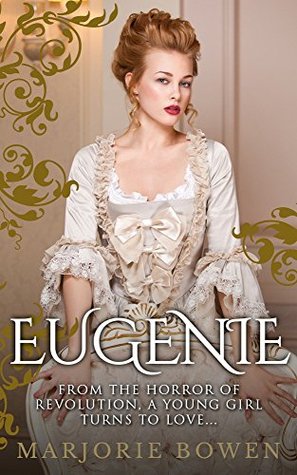
The next book I want to talk about takes us further back in time, to the French Revolution. Published in 1917 (originally titled The Third Estate), Eugenie by Marjorie Bowen introduces us to two sisters, Eugenie and Pélagie Haultpenne. Pélagie, the eldest, is heiress to a fortune and, at the beginning of the book, is engaged to a handsome young nobleman, the Marquis de Sarcey. As soon as the Marquis sees her beautiful sister Eugenie, however, Pélagie is forgotten. Can he find a way to be with Eugenie without giving up his claim to the Haultpenne fortune?

I have read a few of Marjorie Bowen’s other historical novels and have found them to vary widely in style and quality. This is not one of the better ones, but despite the off-putting cover, it’s still an entertaining read. The historical aspect of the story is interesting; it focuses less on the Revolution itself than on the factors leading to it, such as the Estates General and the role of the Comte de Mirabeau. This is a novel that you would read more for the plot than because you wanted to learn some history, though. It reminded me slightly of Louisa May Alcott’s A Long Fatal Love Chase; it’s fun, as long as you don’t mind lots of melodrama, swooning heroines and an anti-hero who is “a creature expert in every vice, used to every dishonour, useless, arrogant, a parasite on the labour of others!”

Finally, I read A Week in Paris by Rachel Hore, a dual timeline novel. One thread of the story is set in 1961 and follows music student Fay Knox who is in Paris for a week with her orchestra. Fay has grown up knowing very little about her early childhood as her mother refuses to talk about it or to tell her what happened to her father, other than that he was killed during the war. However, when memories start coming back to her, she has reason to believe that the first years of her life may have been spent in France. Over the course of her week in Paris, Fay decides to find out the truth about her past – and is shocked by what she discovers. Meanwhile, she is reacquainted with an old friend, Adam, but could he also be hiding secrets?

The other storyline is written from the perspective of Fay’s mother, Kitty, who falls in love with Gene, an American doctor, during World War II. The two end up trapped in occupied Paris – and their actions during this period will have consequences that live on into the next generation.

I found this an enjoyable novel, after a slow start, though not as good as similar books by other authors such as Lucinda Riley or Susanna Kearsley. The 1940s storyline is much more engaging than the 1960s one, not just because of the drama of the war itself, but also because the romance between Kitty and Gene is more convincing than the one between Fay and Adam (and less reliant on coincidence and chance meetings). I really cared about what happened to the wartime characters and was gripped by the details of life in a city under Nazi occupation, but I wouldn’t have minded if the framing story involving Fay had been left out altogether.

Three very different books, but I found different things to like about all of them!

Thanks to Jane MacKenzie for the copy of Mediterranean Summer; the other two were both taken from the outstanding titles on my NetGalley shelf.
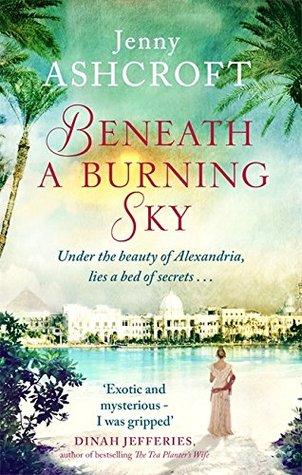
Beneath a Burning Sky by Jenny Ashcroft

I was drawn to Beneath a Burning Sky by the setting – Egypt in the late 19th century – and comparisons to other authors I’ve enjoyed, such as Victoria Hislop and Dinah Jefferies, made it sound even more appealing. Including it on my 20 Books of Summer list ensured that I got to it quickly but, although I did find a lot to like, I was left with feelings that were much more mixed than I’d hoped.

The plot is an exciting one. It begins shortly after twenty-two-year-old Olivia marries businessman Alistair Sheldon and leaves England to live with him in Egypt, the country where she spent her own early childhood. It’s not long before she becomes aware of the true nature of her cruel, abusive husband, but she is unwilling to admit to anyone just how unhappy her marriage is and devotes herself instead to settling into her new home in Alexandria and to getting to know her sister Clara, with whom she has just been reacquainted after many years.

When Clara disappears on a trip into the city – seemingly abducted from a busy street – Olivia is devastated. This is the second time she has lost her sister and she is determined to do everything she can to rescue her. As she searches for clues to explain Clara’s disappearance, however, she becomes convinced that her own husband, Alistair, may have had something to do with it. It’s a terrible situation to be in and even the one bright spot in Olivia’s life – her relationship with Edward Bertram, Alistair’s lodger – is just another additional complication. As the story unfolds, there is plenty of the “love and betrayal and mystery” promised by the blurb; all the ingredients for a great novel, so I was disappointed that, for me, they didn’t quite come together to form a successful whole.

My biggest problem with the book was the beginning. I found the opening chapters confusing and muddled. A lot of characters seemed to be introduced all at once – and had such involved and eventful backstories that I wondered if this was actually a sequel and if the early lives of Olivia and Clara had already been covered in a previous book (it isn’t and they hadn’t). Things did settle down after a while, but I still felt that some aspects of the plot were never fully explained or resolved.

Although I came to like and care about the two main characters, Olivia and Edward, and wanted them to find some happiness together, I thought the novel’s villains were just too evil to be true. Alistair had no nuances to his character and no redeeming qualities at all, while Olivia and Clara’s grandmother Mildred, a bitter, spiteful woman, had a hatred for her granddaughters which seemed out of proportion to the explanation that was given. There were some interesting characters amongst the Egyptians, though, particularly Nailah, a young woman whose story is linked with Olivia’s in ways which don’t become clear until the end of the book. The decision to write the novel from the perspectives of both Egyptian and British characters provided an opportunity to compare lifestyles and attitudes and to see things from more than one angle.

I didn’t feel that I learned much about the history of the period but, to be fair, it wasn’t really that sort of book. I think it will have more appeal to readers who enjoy romantic suspense rather than those who are looking for a more detailed work of historical fiction – personally I enjoy both, so despite my problems with Beneath a Burning Sky I still liked it enough to keep reading to the end, curious to see what had happened to Clara and whether Olivia and Edward could find a way to be together.

Thanks to the publisher for providing a copy of this book for review via NetGalley.

This is Book 7/20 for my 20 Books of Summer challenge.

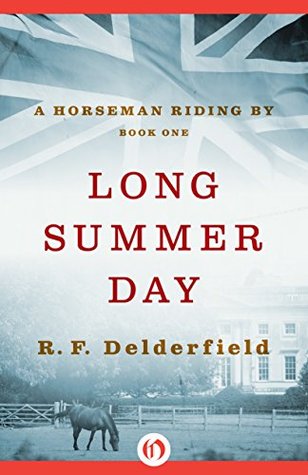
Long Summer Day by RF Delderfield

Long Summer Day was a long summer read, but I enjoyed every minute of it! First published in 1966, this is the first part of RF Delderfield’s A Horseman Riding By trilogy (originally just two books rather than three, as this one and Post of Honour were intended to form one huge volume; the final book, The Green Gauntlet, came a few years later).

Long Summer Day begins in 1902, early in the reign of King Edward VII, and ends in 1911, shortly after the coronation of his successor, George V. The novel takes its title from the fact that this period of history, coming just before the horrors of the First World War, came to be looked back on with nostalgia and described as the ‘Long Edwardian Summer’. Set in rural Devon, it follows the story of Paul Craddock, a young man who is injured during the Boer War and, with his military career at an end, decides to use his inheritance from his father to buy an estate in the countryside.

At first the inhabitants of the Sorrel Valley are suspicious of their new Squire, but through his efforts to befriend and understand them, Paul quickly earns their respect and acceptance. As he gets to know each of the families who live in and around the valley, we, the reader, have a chance to get to know them all too. It’s a very large cast and at first it’s hard to keep track of who’s who, but eventually each character, however minor, becomes a fully formed human being and is given a storyline of his or her own.

I can’t mention all of the characters here, but some that I found particularly memorable include Ikey Palfrey, the stableboy Paul informally adopts and sends to school; Will Codsall and Elinor Willoughby, a young couple whose marriage forms one of the novel’s first small dramas; the agent John Rudd who manages the estate and provides Paul with both advice and friendship; and Hazel Potter, the wild youngest daughter of one of the valley’s most notorious families. In such a tight-knit community, the stories of each of these characters and many more are closely intertwined so that the actions of one may have repercussions on the lives of the others.

As an eligible young bachelor, Paul attracts the attention of several of his female neighbours almost from the moment he arrives in Devon, but only two come to play an important role in his life. One of them is Claire Derwent, daughter of one of his tenant farmers, and the other is Grace Lovell, a cousin of the family who previously owned Shallowford, Paul’s estate. Grace is a fiercely independent person, a feminist who believes passionately in women’s suffrage. I felt that I should like her, but although I did admire her strength and courage, her prickly nature made it difficult for me to warm to her. Claire, though, I loved from the start – and my opinion of her never changed. Although she has little interest in politics and keeps herself busy with more domestic tasks, it’s clear that she is happy with this and that it’s her choice. I found her sensible, down-to-earth, kind-hearted and a strong person too, although not in the same way as Grace. To discover which of these women Paul chooses, you’ll have to read the book for yourself!

The personal stories of the characters are played out against a backdrop of events from Edwardian history: Edward VII’s illness and delayed coronation, the political conflict between the Conservative and Liberal parties (it’s plain to see where the author’s own political sympathies lie) and the beginnings of the suffragette movement. We also find out how the characters react when change and progress finally makes its way to the Devon countryside and they see their first ‘horseless carriage’.

Long Summer Day is one of my books of the year so far, without a doubt. It’s written in the sort of warm, comforting, old-fashioned style that I love, and despite its length I felt that the pages were going by very quickly because I was so absorbed in the lives of Paul and his friends – it’s one of those books where you truly feel as though you’ve escaped into another world for a little while!

A Horseman Riding By was adapted by the BBC in the 1970s, with Nigel Havers as Paul Craddock. Has anyone seen it?

This is book 6/20 for my 20 Books of Summer challenge.

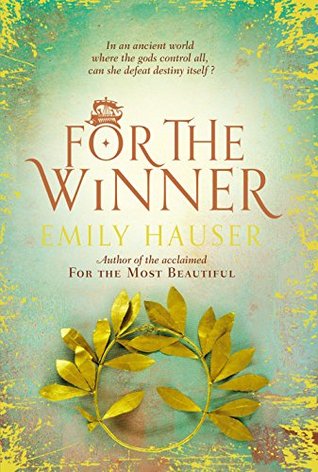
For the Winner by Emily Hauser

I mentioned recently that I wanted to read more fiction set in Ancient Greece and, having already read Emily Hauser’s first novel, For the Most Beautiful, I was sure that her second, For the Winner, would be a good choice! Hauser’s two books retell stories from Greek mythology from a female perspective – in For the Most Beautiful we see the events of the Trojan War unfold through the eyes of Krisayis and Briseis; For the Winner reimagines the story of Jason and the Argonauts with a focus on Atalanta, another lesser-known woman of the time. The books are part of a planned trilogy – the Golden Apple trilogy – but can be read in any order.

Abandoned on a mountain as a baby, Atalanta is rescued by a peasant and his wife who raise her as their own child. Growing up unaware of her true parentage, there are hints that Atalanta is destined for something special: by the time she is a teenager she has taught herself to hunt, to run with extraordinary speed and to use a bow and arrow with breathtaking skill. And then, one day, she learns the truth: the father who had left her to die on Mount Pelion was King Iasus of Pagasae.

To prove herself to her father, Atalanta decides to join the group of Greek heroes who are preparing for a voyage to the faraway land of Colchis in search of the legendary Golden Fleece. The quest will be led by the King’s nephew, Jason, whose reward for returning with the Fleece will be the kingdom of Pagasae itself – the kingdom Atalanta believes is rightfully hers. Can she win a place on board the Argo and find the Golden Fleece before Jason does?

I loved For the Winner. For the Most Beautiful was an enjoyable read too, but I thought this one was better – there were none of the little problems I remember experiencing with the other book. The biggest improvement was with the scenes depicting the Greek gods and goddesses looking down on the world from Mount Olympus, interfering and intervening in human affairs and arguing amongst themselves. With Zeus taking Atalanta’s side and Hera doing whatever she can to help Jason, I was particularly interested in the role of Iris, whose feelings and motives are less clear. The gods really added something special to the story this time and I looked forward to their appearances rather than finding them irritating as I did in the previous novel.

Although, as I’ve admitted before, my knowledge of Greek myth is quite limited, I was already familiar with the story of Jason and the Argonauts (and also have vague memories of watching the 1963 film version, years ago). However, the story told in this novel is very different, bringing in other characters and elements and mixing them together to create something new and original. Choosing to write from Atalanta’s perspective was a great decision because she is such a wonderful character. I loved following her adventures, but I don’t want to say too much more about her or give away too many details of her story! There were other characters I came to care about too, particularly Atalanta’s friend Myrtessa – and one of the men from the Argo who becomes the novel’s love interest. Jason, on the other hand, is portrayed as cruel, arrogant and completely unlikeable, but his rivalry with our heroine is what drives the plot forward.

I think what I appreciated most about For the Winner, though, was the way it explores the question of choice and free will – and how each of us has the power to defy fate and control our own destiny. Now I’m looking forward to the third book in the trilogy and am curious to see which Greek myth Emily Hauser tackles next.

Thanks to Doubleday for providing a copy of this book for review.

This is Book 5/20 for my 20 Books of Summer challenge. (I’m actually doing better with this challenge than it appears – I have another two books waiting to be reviewed and am in the middle of reading two more!)

The Essex Serpent by Sarah Perry

What is the Essex Serpent? A magical beast? A wonder of science? A judgement from God? William Ransome, vicar of the parish of Aldwinter, where the legendary serpent is said to have been sighted, is reluctant to give any credence at all to the rumours, viewing them as a distraction from the religious faith he is trying to instil in his parishioners. Cora Seaborne, however, is fascinated by tales of the fearsome sea monster lurking in the marshes of Essex, stealing away livestock and claiming human lives. Unusually for a woman in 1893, Cora is an amateur naturalist, with a particular interest in the work of the fossil collector Mary Anning. When she hears of the Essex Serpent, she wonders whether it could be an undiscovered species – or some sort of dinosaur?

Cora will have plenty of opportunities to test her theories and investigate further; having been recently widowed, she and her son Francis have moved from London to Colchester in Essex. It is on a visit to nearby Aldwinter that she meets William Ransome. Although their views are very different – not just on the serpent, but also on science, religion, and just about everything else – the two find themselves drawn together and a friendship begins to develop; a friendship which could become something more, if it wasn’t for the fact that Will is already married and that his wife, Stella, is dying of tuberculosis.

Although it is the relationship between Cora and William which drives the novel forward, there are many other subplots involving a large number of other characters. There’s Cora’s companion Martha, for example, a socialist who is campaigning to improve the living conditions of London’s poorest people, and Luke Garrett, a surgeon who closely follows all the latest advances in medicine and is itching for an opportunity to try them out for himself. A lot of time is also devoted to Francis, a serious, solitary boy who would probably be diagnosed today with a form of autism, and to Stella who, as her health declines, develops an obsession with collecting anything blue. I couldn’t help feeling, at times, that Sarah Perry was trying to do too much – trying to include every possible social issue of the 19th century – but on the whole I thought this was a fascinating, intelligent novel, with ideas spilling out of every page.

The Essex Serpent is one of those novels which is not only set in the Victorian era, but also attempts to capture the tone and style of a Victorian novel – while at the same time, being written in the modern day, bringing a new perspective to topics and themes which Victorian authors had less freedom to explore. The French Lieutenant’s Woman by John Fowles is a good comparison – although I have to say I enjoyed this book a lot more than Fowles’. I thought Sarah Perry’s writing was excellent, especially her descriptions of the landscape and the natural world, but occasionally her choice of language (particularly the use of contractions such as I’d’ve and shouldn’t’ve) pulled me out of the 19th century world she had otherwise so carefully created.

The criticisms I have of this book, though, are just minor ones; overall I was very impressed and can certainly understand why it has been so popular and so successful. It’s also nice to find a book that lives up to the promise of its beautiful cover!

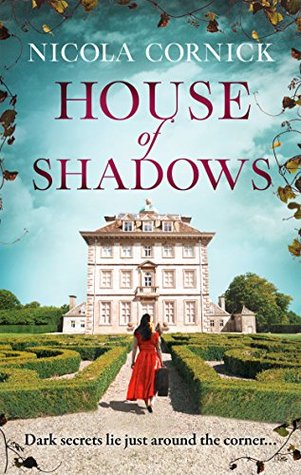
House of Shadows by Nicola Cornick

After reading Nicola Cornick’s time-slip novel The Phantom Tree earlier this year, I was hoping for an opportunity to read her previous book, House of Shadows – and my chance came when I spotted it on the shelf on a recent visit to the library. Although House of Shadows doesn’t include physical time travel in the same way that The Phantom Tree does, it still features storylines set in different time periods with several close links between them. It’s not my favourite of the two books, but I did enjoy it.

It’s difficult to know where to begin writing a summary of a book like this, so I’ll start in the modern day where we meet artist and glass-engraver Holly Ansell who has just received a desperate call from her niece, telling her that her father (Holly’s brother Ben) has disappeared. Heading straight for the old Mill House in Ashdown, Oxfordshire, where Ben was last seen alive, all Holly is able to learn is that prior to his disappearance he had been researching his family tree and had discovered the diary of Lavinia Flyte, a 19th century courtesan.

Hoping for clues that will lead her to Ben, Holly begins to read Lavinia’s journal and quickly finds herself caught up in the memoirs of a brave, resourceful young woman who once lived at nearby Ashdown House. But before we can understand the links between Lavinia and the Ansell family, we have to go further back in time, to the 17th century, to follow the story of Elizabeth Stuart, known as the Winter Queen. The daughter of James I of England and VI of Scotland, Elizabeth was briefly Queen of Bohemia, through her marriage to Frederick V. However, it is her relationship with the soldier William Craven which provides the connection to the other two threads of the novel.

All three storylines are interesting and I’m sorry I can’t say too much about any of them without straying into spoiler territory. What I can say is that there are two objects which play an important role in each of the time periods – a mysterious crystal mirror and a priceless jewel known as the Sistrin Pearl, both believed to possess magical powers and said to have been used in the divination and prophecies of the Knights of the Rosy Cross. It seems that Frederick and Elizabeth really are thought to have possibly had some involvement with the Knights, so this aspect of the novel is not as far-fetched as it may sound – although I’m assuming the mirror and jewel themselves, or at least their powers, are fictional.

The Elizabeth sections of the novel were my favourites, partly because I know so little about her and partly because I enjoy reading about 17th century Europe. As far as I can tell, there is no real evidence to prove whether William Craven was romantically involved with Elizabeth, but they certainly knew each other and the story Nicola Cornick weaves around them is maybe not beyond the realms of possibility. Lavinia’s diary entries set in Regency England also held my attention – although they are quite brief, compared with the longer chapters devoted to Holly and Elizabeth, she is a vividly written character with a strong voice. I did also like Holly, but I found the contemporary storyline the least interesting – possibly because most of the action takes place in the historical sections, while Holly has more of a passive role, trying to piece together the stories of the other two women.

Ashdown House in Oxfordshire, the house at the heart of the novel and the one pictured on the front cover, really exists; it is now owned by the National Trust and Nicola Cornick volunteers there. It’s always nice to discover that the setting for a novel you’ve been reading is based on a real place – I’ve made a note to try to visit it if I’m in that part of the country.

Nicola Cornick has written several other books, but they seem to be more conventional historical romances, so I think I’ll wait and hope that she writes more that are similar to this one and The Phantom Tree!

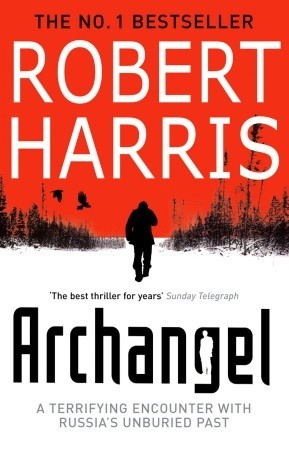
Archangel by Robert Harris

After reading Conclave recently and reminding myself of how much I love Robert Harris, I was pleased to find a copy of Archangel at the library. Although this was not one that sounded particularly appealing to me and I suspected it wasn’t going to be a favourite, I still wanted to read it – the other Harris novels I’ve read have been his newer ones and I was curious to see what his earlier books were like (Archangel was published in 1998).

The story is set in Russia in the 1990s, during the Boris Yeltsin years just after the dissolution of the Soviet Union. British historian Christopher Kelso – better known as ‘Fluke’, for reasons which are explained within the novel – is attending a conference in Moscow at which the recent opening of the Soviet archives will be discussed. During the conference, Fluke is approached by Papu Rapava, an elderly man who claims that he was present at the death of Joseph Stalin in 1953 and that he witnessed the theft of a black notebook which belonged to Stalin and was believed to be his secret diary.

This diary, if it really exists, could be the academic breakthrough Fluke needs to revive his career, but it will also be dangerous if it falls into the wrong hands. Choosing to believe that Rapava is telling the truth, Fluke begins a search for the notebook – but what he finds is not quite what he had expected. Following a trail of clues leading north to the remote city of Archangel, he makes a discovery that could affect not only his own future but Russia’s future as well.

The first thing to say is that this book, being more of a conventional thriller, is quite different from the other five Robert Harris books I’ve read. It’s also my least favourite so far, but I’d had a feeling that would be the case, so at least my expectations weren’t too high! I did find things to enjoy and at times I was completely gripped, but there were too many other aspects of the book that were a problem for me.

First of all, the characters: because of the nature of the story, most of the characters are very unlikeable – a mixture of ambitious politicians, unscrupulous journalists and people with dangerous ideas. As for Fluke Kelso, our hero, I found him bland and uninteresting, especially when compared with the protagonists of other Harris novels; he certainly lacked the depth and complexity of Cardinal Lomeli in my most recent Harris read, Conclave. The character who was potentially most engaging, Rapava’s daughter Zinaida, had an important role but we didn’t see as much of her as I would have liked.

In terms of plot, the novel gets off to a promising start, with Fluke learning about the night of Stalin’s death and then following clues which he hopes will lead him to the mysterious black notebook. However, the big revelation, when it comes, is something so far-fetched I just couldn’t believe in it, and the scenes which follow feel over the top and implausible too, which was a shame after so much care had been put into building the tension and creating a sense of mystery.

The descriptions of 1990s Moscow and snowbound Archangel are very well done and, as I’ve said, the book is quite a pageturner at times, so I still think it’s worth reading – particularly if you are more interested in Soviet history than I am. Apparently there was a BBC adaptation in 2005 starring Daniel Craig. Has anyone seen it?