Midnight Blue by Simone van der Vlugt

Midnight Blue is a novel set in the Netherlands in the 17th century and written by Dutch author Simone van der Vlugt. Originally published in Dutch, this edition from HarperCollins features an English translation by Jenny Watson.

As the novel opens in 1654, we meet Catrin, a young woman who lives in the village of De Rijp and who has recently been widowed. Hoping to make a new start, Catrin says goodbye to her family and sets out on the long journey to Amsterdam, where she has been offered work. Arriving in the city, she takes up her new position as housekeeper to the merchant Adriaan van Nulandt.

As she settles into her job and gets to know the family, an attraction forms between Catrin and Adriaan’s younger brother, the charismatic and adventurous Matthias. She also watches with envy and fascination as Adriaan’s wife, Brigitta, is encouraged to pursue her passion for painting, something for which Catrin also has a talent. It’s not long, however, before a face Catrin thought she had left behind reappears, threatening to tear apart the new life she has built for herself – and so she decides it’s time to move on again, this time to Delft and the home of another Van Nulandt brother, Evert. Evert owns a pottery workshop and it is here that Catrin finds an opportunity to put her artistic abilities to good use at last…

Although Catrin’s personal story is fictional, the world in which Simone van der Vlugt places her is grounded in historical fact. My knowledge of Dutch history is very limited, picked up mainly from the few other novels I’ve read set in the country, and it’s always good to have the opportunity to learn something new! The period covered by the novel includes such notable events as the Delft Explosion of 1654 and an outbreak of the plague. Life in Catrin’s home village of De Rijp and the cities of Amsterdam and Delft is vividly described, and as Catrin spends so much time travelling from one place to another, we are also given descriptions of the scenery seen from the canals and rivers which link her various destinations.

The time during which the novel is set – known as the Dutch Golden Age – saw art, science, trade and industry flourishing in the Netherlands, including the pottery industry which forms such an important part of the story. You can expect to learn a lot about mixing chemicals, painting designs, glazing pots and firing them in kilns…and you’ll come away from the novel with an admiration for Delft Blue, the blue and white pottery produced at Evert’s workshop. Several historical figures from the art world are incorporated into the story too, although I found it difficult to believe that Catrin would have come into contact with so many famous artists of the period – Rembrandt, Vermeer, Nicolaes Maes and Carel Fabritius all make an appearance and all have words of advice or encouragement for Catrin.

Catrin herself is an interesting character. The novel is written in first person present tense, which is not my favourite for historical fiction, but it does mean that we get to know our narrator quite well. Even so, we don’t know everything about her immediately; Catrin keeps some parts of her past hidden to be revealed later on – and when the past does begin to catch up with her, this introduces a thriller element to the novel which adds another layer of interest. I was occasionally pulled out of the 17th century by the use of a word or phrase which felt too modern, but it’s difficult to say how much of this was due to the translation and how much to the original text.

Midnight Blue is a light and entertaining novel which I would recommend to readers who have enjoyed other books with Dutch settings such as Girl with a Pearl Earring or The Miniaturist. I read this as part of a blog tour, so if you would like to see more reviews, you can find the rest of the schedule below. And thanks to the publisher for providing a copy of the book for review!

My Commonplace Book: April 2017

A selection of words and pictures to represent April’s reading

My Commonplace Book

commonplace book
Definition:
noun
a notebook in which quotations, poems, remarks, etc, that catch the owner’s attention are entered

Collins English Dictionary

~

“What a beautiful situation,” he said, “The house nestles so contentedly.”

She smiled. “That is very poetic, Master Marcus. I have never thought of it like that.”

“That is because you are used to it. Rare beauty is treated as something quite ordinary by those who see it every day.”

To Sleep No More by Deryn Lake (1987)

~

I began to see how people could need drink to cover up embarrassments, and I remembered many sticky church functions which might have been improved if somebody had happened to open a bottle of wine. But people like us had to rely on the tea-urn and I felt that some credit was due to us for doing as well as we did on that harmless stimulant.

Excellent Women by Barbara Pym (1952)

~

She glanced uncertainly at Timothy, who said at once, “Sit down and answer the kind policeman truthfully, my child.”

She obeyed but said reluctantly, “It sounds so unlikely!”

“Most of the stories I have to listen to do,” observed Hemingway. “And they’re not always lies either!”

Duplicate Death by Georgette Heyer (1951)

~

Surely those were the things that mattered – the little everyday things, the family to be cooked for, the four walls that enclosed the home, the one or two cherished possessions. All the thousands of ordinary people on the earth, minding their own business, and tilling the earth, and making pots and bringing up families and laughing and crying, and getting up in the morning and going to bed at night. They were the people who mattered, not these Angels with wicked faces who wanted to make a new world and who didn’t care whom they hurt to do it.

They Came to Baghdad by Agatha Christie (1951)

~

Aviatrix Hélène Dutrieu

And then, something mysterious happened. Now that her body had had time to adjust, and the same for her mind, once she realised she wasn’t going to drop from the air she was suffused with elation, streaming out of her fingertips and toes and hair and eyes and she just couldn’t believe she was there, up, up, up, above the world. It was so beautiful, so beautiful!

The Wild Air by Rebecca Mascull (2017)

~

“A foolish, foolish situation. Each, as an individual would pull the other out of the water; each would succour the other, even at considerable danger to himself. But each, as the representative of his tribe, will batter the other with great guns and small; sink, burn and destroy at the drop of a hat. A foolish, foolish situation, that must be dealt with by men of sense, not by gamecocks stalking about on stilts and high horses.”

Desolation Island by Patrick O’Brian (1977)

~

Her most recent life – four years at a good college, and then a few years of shelving books – had given her a vague sense of freedom with no disorder attached, apart from her inner misery.

In other words, nothing in her previous experience had prepared her for the feeling of being suddenly locked in a monastic room with a stranger five thousand miles from the Blue Ridge Mountains, holding an urn containing the ashes of another stranger.

The Shadow Land by Elizabeth Kostova (2017)

~

Charles Edward Stuart (‘Bonnie Prince Charlie’)

But when he was alone, when the door had closed with a certain air of finality on one whom he knew to be at least a faithful friend, a wave of melancholy swept over his young, impetuous heart.

He thought of his truly precarious position, and how this house, his pension, his servants, his very clothes, and the money in his pocket might melt away like fairy gold which, gleaming over-night, is but withered leaves in the morning.

Everything depended on France.

Mr Misfortunate by Marjorie Bowen (1919)

~

He never cried. He could often feel a cry trying to come up from his heart, but he always forced it down. Because this was how Emilie had told him to behave in the world. He had to master himself. The world was alive with wrongdoing, she said, but Gustav had to emulate his father who, when wronged, had behaved like an honourable man; he had mastered himself. In this way, Gustav would be prepared for the uncertainties to come.

The Gustav Sonata by Rose Tremain (2016)

~

“You must not let your artistic talents go to waste. It is such a lovely thing to be able to show the world how you see it, the shadows and the light, and the spaces in between. We miss those details in everyday life. Art reminds us of what we have no time to see.”

A Dictionary of Mutual Understanding by Jackie Copleton (2015)

~

Magdalen Tower, Oxford

We are never quite the same person with everyone, he found; the clash of personality upon personality strikes out a different flame in every case and those we love the best are those whose impact upon us creates most light and warmth.

Towers in the Mist by Elizabeth Goudge (1937)

~

So I was ugly. So what? I was sturdy and squat, a bit squashed, with features uneven, I knew. But so were some of my favourite mountains: lumpy, offkilter, with mismatching planes and pointy bits.
And I was clever. This woman, Daisy’s mother, was wrong.

The Valentine House by Emma Henderson (2017)

~

Joan of Kent

The lines of the troubadour’s song revolved again and again in my mind.

Love is soft and love is sweet, and speaks in accents fair;
Love is mighty agony, and love is mighty care;
Love is utmost ecstasy and love is keen to dare;
Love is wretched misery. To live with it’s despair.

The Shadow Queen by Anne O’Brien (2017)

~

Favourite books read in April: They Came to Baghdad, The Wild Air, Towers in the Mist

More mini-reviews: The Sea Road West; Circle of Pearls; The Silver Swan

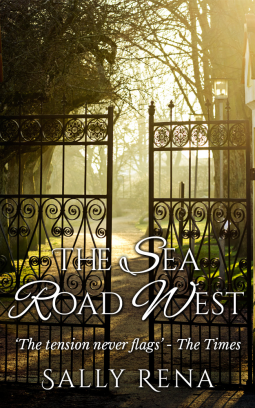
Time for another trio of mini-reviews! I’ll start with The Sea Road West, a 1975 novel by Scottish author Sally Rena. Set in a small community in the Scottish Highlands, the novel begins with the death of the parish priest, Father Macabe. It’s not long before a replacement arrives, but Father James, being young, idealistic and English, is not quite what the people of Kintillo were expecting. Struggling to settle into his new home and job, Father James is sure that he is destined to remain an outsider; the only person with whom he feels any connection is Meriel, the granddaughter of the elderly Laird. As his relationship with Meriel develops, there is a sense that it can only end in tragedy for everyone concerned.

I found this a strange and atmospheric story. Although it’s short enough to be read in just a few sittings, the pace is slow, with not much actually happening until the final pages. Instead, the focus is on the characters; there are not many of them, but as well as Father James and Meriel and her family, we get to know Miss Morag, the eccentric housekeeper obsessed with memories of Father Macabe, and Magnus Laver, a retired doctor with an unhappy past who lives alone in a tiny cottage and seeks solace in alcohol. They are not a particularly likeable assortment of characters and the overall tone of the novel is quite a sad, melancholy one. There are some nice descriptions of the Scottish countryside and coastline, though, and an exploration of one of my favourite themes – the coming of change and progress to a community which still clings to the old ways and old traditions.

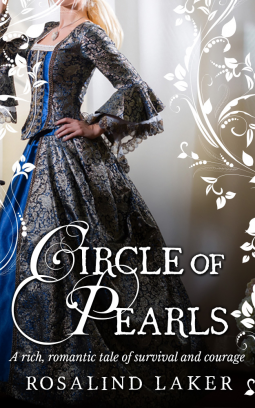
The Sea Road West was an interesting read, but the next book I’m going to write about here, Circle of Pearls by Rosalind Laker, was more to my taste. Set in 17th century England and spanning the eventful period of history from the end of the Civil War through to the Restoration, the plague and the Great Fire of London, this is the story of the Pallisters, a Royalist family who live at Sotherleigh Manor in Sussex. Being on the losing side in the war, the family go through a great deal of turmoil during the years of Oliver Cromwell’s rule before King Charles II is restored to the throne and their fortunes change again.

There are several romantic threads to the story; our heroine, Julia Pallister, is in love with her brother’s friend, who happens to be Christopher Wren, the architect and scientist who would become famous for redesigning St Paul’s Cathedral after the Great Fire, but she is also romantically involved with the son of a neighbouring Roundhead colonel. Meanwhile, Julia’s brother Michael rescues a young woman from being hanged and brings her home to go into hiding at Sotherleigh – but before their relationship has a chance to go anywhere, he is forced to flee the country for exile in France. There’s more to the story than the romance, though. I loved the drama of the plague and Fire sections, the triumphant return of Charles II to London, and the descriptions of the ribbon-making business Julia establishes.

On the negative side, I thought the book felt longer than it needed to be and there were too many changes of perspective, sometimes several times within the same page, making it hard to become fully absorbed early on. Although I did enjoy Circle of Pearls, I think it suffered from being read too soon after Pamela Belle’s excellent Wintercombe, which is also set in an English country house during the Civil War and which, in my opinion, is a better book.

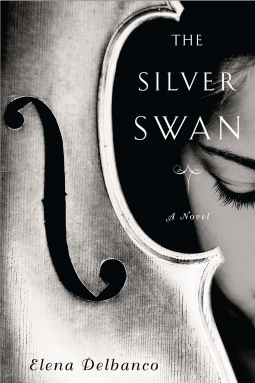
Back to a modern day setting with the final book I want to discuss in this post, Elena Delbanco’s The Silver Swan, one that I think will particularly appeal to classical music lovers, although with a plot involving secrets, lies and family drama, there’s enough to interest non-musical readers too.

When Mariana’s father, the world-famous cellist Alexander Feldmann, dies just days after his ninetieth birthday in 2010, Mariana expects to inherit his beloved cello, a Stradivarius known affectionately as the Silver Swan. However, when the will is read, she is shocked to learn that he has left the valuable instrument to Claude Roselle, one of his former students. The fate of the cello brings Mariana and Claude together and as they get to know each other and to understand the reasons for Alexander’s choice, Mariana must decide whether or not she is ready to give up her claim to the Swan.

The Silver Swan is not a bad novel – it’s quite a pageturner in fact – but I finished it with a mixture of positive and negative feelings. Half of the novel is written from Mariana’s perspective and half from Claude’s (in the form of alternating chapters) which I thought worked well as they are both equally important to the story. However, I struggled to engage with either of them; they didn’t seem like real people to me, although that could be partly because the world they live in is so different from my own that I just couldn’t identify with them. There are some plot twists, but I found them too easy to predict and wasn’t at all surprised when the truth was revealed. Anyway, this was a quick read and one that I enjoyed without feeling that it was anything special.

Have you read any of these? Do any of them tempt you?

The Wild Air by Rebecca Mascull

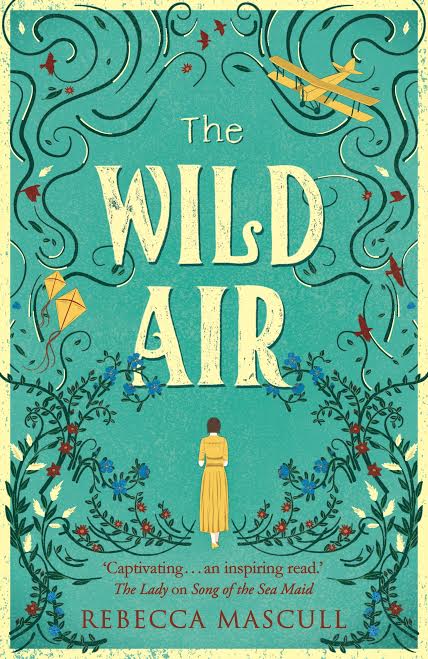
This wonderful story of a young woman with a passion for aviation is the first book I’ve read by Rebecca Mascull, but I enjoyed it so much I will certainly be going back to read her previous two novels. Set in the Lincolnshire town of Cleethorpes in the first two decades of the 20th century, The Wild Air is both fascinating and inspirational, with a heroine I loved and connected with immediately.

Her name is Cordelia Dobbs – Della for short – and her interest in flying begins at the age of fourteen when her Great Aunt Betty comes home from America, where she has lived for the last twenty years. Della is a quiet girl who often feels overshadowed by her more attractive and talented siblings, but things begin to change with Betty’s arrival. As the sister of a railway engineer, during her time in North Carolina Betty has been paying special attention to all the latest developments in engineering and flight and has even had the opportunity to see the planes produced by the famous Wright brothers.

Seeing that she has a kindred spirit in Della, Betty takes the girl under her wing (pun intended) and together they take part in kite-flying sessions on the beach while making plans to design their own flying machine one day. Despite the disapproval of her father, Della is determined to turn her hobby into a career and become an aviatrix – a female pilot. It isn’t easy – on approaching a flying instructor to ask for lessons, Della is told that ‘the air is not the place for a woman’ – but now that her mind is made up, she will stop at nothing to achieve her ambition.

I don’t personally share the characters’ love of aviation, but their enthusiasm – and the author’s – shines through on every page. Even though the descriptions of Della’s flights and the technical details of planes and flying didn’t always interest me, I could tell that they fascinated Della and that was all that mattered. I could also appreciate how much research Rebecca Mascull must have carried out to be able to write so convincingly about the subject. She brings each scene to life so well: visiting the Blackburn School of Flying on the beach at Filey, an air show Della attends with Auntie Betty – and her first flight as a passenger with the Belgian aviatrix Hélène Dutrieu, going through the full range of emotions from fear to wonder during this amazing experience. I know I would never have been brave enough to do what Della did; bearing in mind how new aeroplanes were at that time, how unreliable they could be, and that accidents – often fatal – did happen, I’m sure I would have been terrified to go up alone in one. We owe so much to these early pioneers of aviation who were prepared to take risks and try something new.

I wondered at first whether Della was a real person, but I quickly discovered that she wasn’t. However, I didn’t mind at all that I was reading about a fictional aviator rather than a real one; it allowed the author to take the story in different directions and develop personal storylines and relationships for Della without worrying about sticking to biographical facts. I loved the relationship that forms between Della and Auntie Betty as this quiet, reserved girl finds someone with whom she shares a bond and something she can put her heart and soul into. One of the most interesting relationships, though, is the one Della has with her father, Pop, a former actor who has been left angry and bitter after an injury brought his theatrical career to an end. Della feels that Pop has never shown her any love or encouragement and as the story progressed I kept hoping that the two of them would find a way to understand and accept each other.

In the second half of the book, World War I dominates as several of Della’s loved ones go off to fight and Della herself searches for ways in which she can play a part. Towards the end of the war, things take a dramatic turn and, without going into details and spoiling the story, this was the only part of the novel that I thought stretched the imagination a bit too far…until I decided that actually it was consistent with Della’s personality and just the sort of thing she would try to do. If I haven’t already made it clear, I loved this book – and now I really must read The Visitors and Song of the Sea Maid sooner rather than later!

This post is part of a blog tour for The Wild Air. For more reviews and features, please see the tour schedule below. And thanks to the publisher for providing a copy of the book for review via NetGalley.

Elizabeth Goudge Day: Towers in the Mist

I have Lory of The Emerald City Book Review to thank for introducing me to the work of Elizabeth Goudge. Last year, for her Elizabeth Goudge Day (hosted on the author’s birthday, 24th April) I read The White Witch, and the year before I read The Child from the Sea. I loved both so there was no question of not taking part again this year – and I had high hopes for my third Goudge novel, Towers in the Mist, which was first published in 1937.

Not all of Goudge’s novels are historical, but it’s the historical ones that I’ve been drawn to first. Towers in the Mist is set in Oxford in the Elizabethan period and, like the other two I’ve read, it’s a truly beautiful novel. It begins on May Day with Faithful Crocker’s first sight of the “fragile city spun out of dreams, so small that he could have held it on the palm of his hand and blown it away into silver mist”. At the age of fourteen, Faithful has found himself alone in the world and has made his way to Oxford where he hopes to achieve his ambition of becoming a scholar and attending university. With no money, no friends and not even any decent clothes to wear, this may seem unlikely, but Faithful’s fortunes improve when he catches the eye of Canon Leigh of Christ Church, who takes him into his household and treats him as one of the family.

Following the death of his wife several years earlier, Canon Leigh has been left to raise his children alone and most of the responsibility has fallen on his eldest daughter, Joyeuce. Joyeuce is devoted to her younger brothers and sisters, but when student Nicolas de Worde enters her life, she will have to decide what is more important to her. We also follow the stories of the domestically-minded Grace, who longs to step out of her sister Joyeuce’s shadow and take control of the Leigh household, and of four-year-old Diccon, who is thought to have been switched at birth as he is so different in looks and temperament to the rest of the family. These are the people with whom Faithful will build his new life, sharing in their small everyday dramas – such as the chaos of the Spring Wash – as well as the larger ones which affect the entire city and university.

I loved getting to know Faithful and the Leighs (and Nicolas, who ended up being one of my favourite characters after undergoing a bit of a transformation which I hadn’t expected at the beginning) but there are also several real historical figures from the Elizabethan age who play a part in the story. The most prominent are the poet Philip Sidney and the poet/explorer Walter Raleigh who, at the time during which the novel is set, are both young men attending university along with Faithful, Nicolas and Giles Leigh. I loved the contrast between the two characters – the flamboyant, daring Raleigh and the quiet, sensitive Sidney – and I enjoyed the little insights we are given into the work of a poet: “The loveliest phrases are winged, and when the poet opens the door of the place where he put them he finds that the tiresome creatures have flown away.”

Each chapter opens with a passage from a poem by Sidney, Raleigh or another 16th century poet and I thought this was a nice touch which helped to set the mood for the story. Goudge admits in her note at the beginning that not everything in the book will be entirely accurate historically, but I think she is very successful at capturing the overall feel of the Elizabethan period even if it may not be correct in every detail.

Towers in the Mist is a lovely book, but it does have a few flaws and could be too sentimental for many modern day readers. Although the descriptions of Oxford are beautiful and Goudge’s own love for the place shines through, sometimes she goes into long digressions on the history of the city and university which add very little to the plot – you either have the patience for that sort of thing or you don’t. As with the other Goudge novels I’ve read, there’s also a strong religious element which won’t be for everyone either (in fact, it’s not really for me, although it didn’t bother me at all when there was so much else to enjoy).

So, that’s three books by Elizabeth Goudge that I’ve read now and three that I’ve loved. Which one should I read next?

A Dictionary of Mutual Understanding by Jackie Copleton

For many years, Amaterasu has been grieving for the loss of her daughter and grandson, believed to have been killed when the atomic bomb was dropped on Nagasaki in 1945. Even now, Amaterasu still struggles with the feeling of guilt – why did she survive when they did not? – and with the need to find someone to blame. When a stranger comes to her door, claiming to be her lost grandson Hideo, she is unable to believe that it’s truly him. To prove he really is who he says he is, he gives Amaterasu a package of diaries and letters which shed some light on what happened all those years ago and help her to decide whether this man could possibly be Hideo.

As Amaterasu sits and reads the papers she has been given, she is forced to revisit moments from the past which she would rather forget and in the process comes to know more about her daughter Yuko than she did while she was alive. It’s obvious from the start that the villain of the story, as far as Amaterasu is concerned, is Jomei Sato, Yuko’s lover, but we don’t know at first why she dislikes him so much and why she believes he played a part in her daughter’s death. Before we can make sense of the chain of events that led to Yuko standing in a cathedral in Nagasaki which was destroyed when the bomb fell, we have to go back in time to see the beginnings of Yuko’s relationship with Sato – and then further back again to discover Amaterasu’s own personal story and to understand what makes her feel the way she does.

A Dictionary of Mutual Understanding is a beautifully written novel dealing with a subject which I’m sure must have been difficult and emotional to research and to write about. Although Jackie Copleton didn’t actually live through the bombing of Nagasaki herself, her descriptions of the bombing (or pikadon, from the Japanese words for flash and boom) and its aftermath are vivid, intense and shocking. This is not just a novel about war, however. The events of that terrible day in August 1945 are just one part of the story, along with other topics and themes such as family, love, forgiveness and how different people cope with loss and heartbreak.

My knowledge of Japanese history and culture is very limited so I can’t really comment on the accuracy of the novel, apart from to say that it all seemed convincing enough to me! Every chapter begins with a Japanese word or term and its English translation, each one giving us some insight into one small aspect of Japanese life. Sometimes the relevance of the word and its definition to the chapter which follows is obvious, but sometimes I had to think about why a particular word was chosen to represent a particular chapter.

This was an interesting read (especially as it’s one of my goals to read more historical fiction set in Japan) but, with the exception of the pikadon chapter, I didn’t find it quite as moving as I’d expected. This could partly be because of the structure of the novel – the story takes the form of Amaterasu’s memories interspersed with short extracts from Yuko’s diaries and Sato’s letters, and this meant that I was always very aware that I was reading about events that were already in the past, rather than actually being there with the characters sharing their experiences as they happened. I think it might have been this lack of immediacy which stopped me from fully connecting with the characters on an emotional level.

Still, I thought this was a very impressive novel, particularly as it is Jackie Copleton’s first. I would say that I enjoyed it, but ‘enjoyed’ is not really the right word to use given the subject of the book. Instead I’ll say that it is fascinating, gripping and informative and I would be very happy to read more books by this author.

Desolation Island by Patrick O’Brian

The fifth book in Patrick O’Brian’s Aubrey/Maturin series and probably my favourite so far! For once I found that I was able to follow everything that was happening – the nautical parts are finally becoming easier to understand and, now that I’m five books in, the characters are starting to feel like old friends. If you’re not familiar yet with the adventures of Captain Jack Aubrey and Dr Stephen Maturin, you may like to read my review of the first in the series – Master and Commander; otherwise, I have made the rest of this post as spoiler-free as possible, but can’t help referring to certain characters and elements of the previous four books.

Like most, if not all, of the books in the series so far, this one begins on land. Jack Aubrey is in a much better position financially than he was in at the beginning of the previous novel, The Mauritius Command, and is able to provide a comfortable home for his wife Sophie and their expanding family (the twins now have a baby brother called George). It seems that trouble could be on the horizon, however, as less scrupulous men prepare to take advantage of Jack’s open, trusting nature, and much as Sophie loves her husband, she knows he needs to get back to sea again as quickly as possible. An opportunity soon arises when Jack is asked to take command of HMS Leopard on a voyage to Australia to assist the notorious Captain Bligh (of mutiny on the Bounty fame) who is having difficulties in his new position as Governor of New South Wales.

Stephen Maturin is joining Jack on the Leopard as ship’s surgeon, but there is another reason for his presence on the voyage which has not been revealed to Jack. The ship is carrying a cargo of convicts to Australia and among them is a beautiful female prisoner, Mrs Wogan, who is suspected of being an American spy. Stephen has been asked to keep an eye on her throughout the journey to see if he can catch her in the act of espionage. This mission is of particular interest to Stephen because Mrs Wogan is a friend of Diana Villiers, the woman he loves, who has fled to America after also being accused of spying.

I’ve enjoyed all of the previous four books in the series (some more than others) but I struggled at times with the last one, The Mauritius Command, because of the large proportion of the book devoted to naval battles. I didn’t have that problem with Desolation Island. Although there is a sea chase and a brief battle – involving the Dutch ship Waakzaamheid – this forms a relatively small part of the story. Instead, there is more focus on the daily lives of the people aboard the ship and the challenges and dangers they face on a long voyage. The crew consider the Leopard (or “the horrible old Leopard” as they call it) to be an unlucky ship and it does seem to be living up to its reputation with rumours of a ghost aboard, a sickness which breaks out amongst the prisoners and a close encounter with an iceberg!

Another reason I preferred this novel to the previous one is that more time was spent on the personal relationships between the characters. I didn’t feel that we saw much of Jack and Stephen together in The Mauritius Command, but in this book they have more opportunities to talk and to indulge their shared love of music. With some of the misfortunes that befall the Leopard towards the end of the book, Jack needs all the loyal friends he can get! With Jack kept in the dark about the true reasons for Mrs Wogan’s presence on the ship, Stephen is unable to confide in him as much as he would like to and is left to wrestle privately with his feelings regarding Mrs Wogan and her connections with Diana. With most of the novel spent at sea, he doesn’t have as many chances to observe the flora and fauna as usual, but once they reach the shores of Desolation Island, he is able to study albatrosses, seals and penguins.

There’s so much left unresolved at the end of this book that I’m sure it won’t be long before I’m tempted to pick up the next one, The Fortune of War. With Jack’s mission incomplete and the War of 1812 about to begin, I’m looking forward to seeing how the story continues!