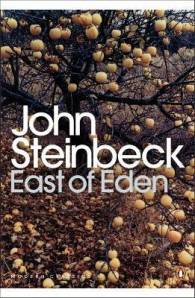
 You would think that by now I would be a good judge of which books I would be likely to enjoy or not enjoy, wouldn’t you? Well, apparently not. East of Eden has been on my Classics Club list for years now and I’ve been resisting reading it for all this time, convinced that I wouldn’t like it. I’m not sure why I felt that way – maybe because I have memories of reading Steinbeck’s novella The Pearl at school and being unimpressed. Anyway, none of that matters now, because I have finally read East of Eden and loved it!
The novel opens with a description of the Salinas Valley in California. Right from the beginning, I knew I was going to like Steinbeck’s writing in this book.
The Salinas was only a part-time river. The summer sun drove it underground. It was not a fine river at all, but it was the only one we had and so we boasted about it—how dangerous it was in a wet winter and how dry it was in a dry summer. You can boast about anything if it’s all you have. Maybe the less you have, the more you are required to boast.
Samuel Hamilton, the grandfather of the narrator (whom we can assume to be Steinbeck himself), is an Irish immigrant who settles in the valley with his wife, Liza, and their nine children towards the end of the 19th century. Over the course of the novel we get to know the various members of the Hamilton family – some better than others – but of much more interest to me was the story of another family: the Trasks.
Originally from New England, Adam Trask was once nearly killed by his jealous half-brother, Charles, who believed that their father loved Adam more. With the Biblical title of the book (inspired by the line from Genesis: “And Cain went out from the presence of the Lord, and dwelt in the Land of Nod, on the east of Eden”) it’s easy to equate the characters of Charles and Adam with Cain and Abel, especially as they begin with the same letters.
Although the brothers have since been reconciled, when Adam marries he and his new wife, Cathy, move to the Salinas Valley, leaving Charles behind to take care of the family farm. It is here in California that Cathy gives birth to twins Aron and Cal (A and C again) and history seems to be about to repeat itself.
The characters in East of Eden range from the very good – such as Adam and Aron – to the completely evil, like Cathy:
There was a time when a girl like Cathy would have been called possessed by the devil. She would have been exorcised to cast out the evil spirit, and if after many trials that did not work, she would have been burned as a witch for the good of the community. The one thing that may not be forgiven a witch is her ability to distress people, to make them restless and uneasy and even envious.
Between the two extremes, there are characters like Cal, whose natures are more nuanced and ambiguous. The idea at the heart of the novel is that there is the potential for both good and evil in each of us and that it’s up to the individual person to choose what they want to be:
“But the Hebrew word, the word timshel—’Thou mayest’— that gives a choice. It might be the most important word in the world. That says the way is open. That throws it right back on a man. For if ‘Thou mayest’—it is also true that ‘Thou mayest not.'”
Like Charles before him, Cal desperately wants some love and attention from his father and is envious of his brother Aron, but being a complex human being, we see him struggling against temptation and trying to do what he knows is right, sometimes successfully and sometimes not.
My favourite character, though, is definitely Lee, Adam’s Chinese servant: he’s so wise, so loyal, so patient and uncomplaining. Over the course of the novel he becomes much more than just a servant to the Trask family, helping to raise the children, providing valuable insights and offering advice and friendship.
I found East of Eden a surprisingly compelling read; I honestly hadn’t expected to love it as much as I did or to find myself wanting to turn the pages so quickly. I now feel much more enthusiastic about reading more Steinbeck – not immediately, but soon.

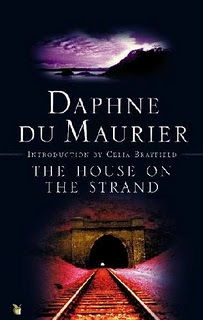
 I can’t talk about time-slip novels without mentioning Susanna Kearsley, whose books have impressed me more than Erskine’s. Not all of them involve a form of time travel, but those that do include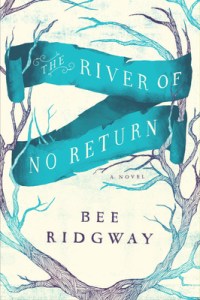
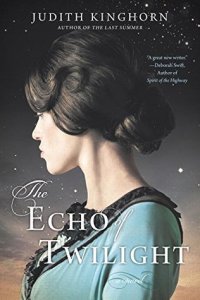 It’s 1914 and Pearl Gibson, a young woman in her twenties, is about to take up a new position as lady’s maid. Her new employer, Ottoline Campbell, has estates in Northumberland and Scotland, which means Pearl will have to leave London and move north. She’s prepared to do this, however, because it’s not as if she has much to leave behind – her relationship with her boyfriend, Stanley, already seems to be fizzling out, and she has no other friends or family. Her mother killed herself just after Pearl’s birth and Pearl was raised by a great-aunt who is also now dead.
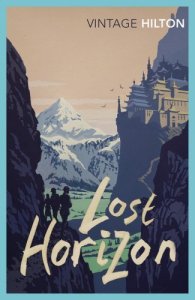 I’m very happy with the way my reading is going so far this year. I’ve read some great books already and this is another one. Published in 1933, Lost Horizon is the novel which introduced into popular culture the idea of Shangri-La as a sort of earthly paradise. It’s a fascinating story and very absorbing – I started it on a Saturday and was finished by Sunday; at just over 200 pages it’s a quick read but also the sort of book that leaves the reader with a lot to think about after the final page is turned.
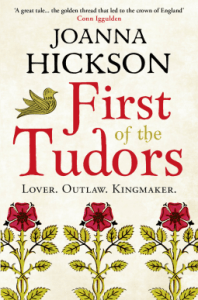 Yes, I’ve been reading yet another Wars of the Roses novel! One of the things I’m enjoying about reading so many books set in the same time period is seeing the variety of ways in which different authors choose to approach the same subject as they search for a new angle and some fresh insights. In First of the Tudors, Joanna Hickson takes us right back to the early days of the conflict and the beginnings, more or less, of the Tudor dynasty to tell the story of Jasper Tudor, uncle of the future Henry VII.
 I was drawn to this book first by the cover – and then by the mention of Russian fairy tales and folklore. It seemed a little bit different from the usual books I read and I hoped it would prove to be an enchanting, magical read, perfect for the winter months.


 She Reads Novels